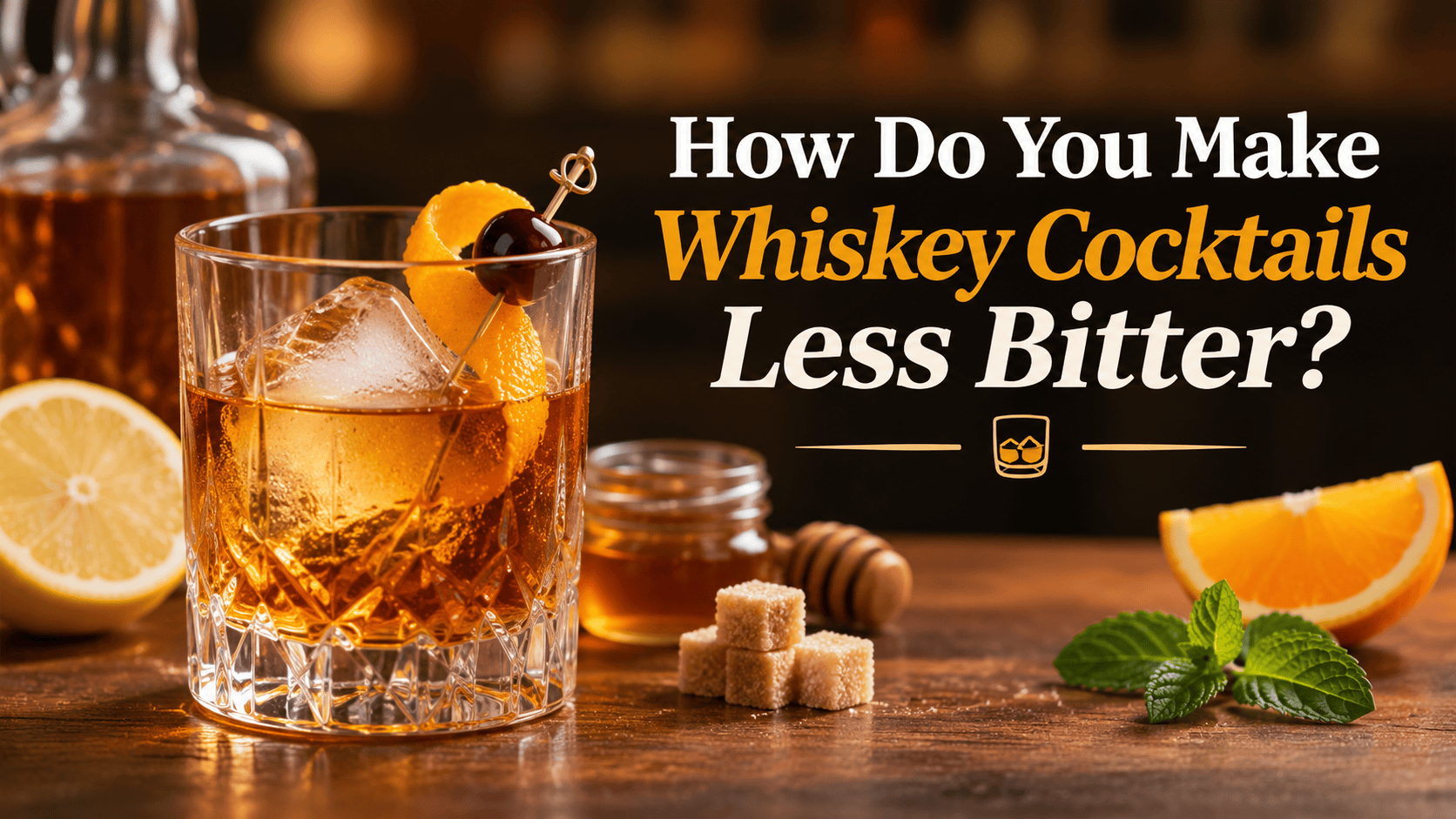
Whiskey cocktails are known for their rich flavors, smooth finishes, and complex combinations of sweetness, spice, oak, and sometimes bitterness. While a little bitterness can make a whiskey cocktail more interesting, too much can overpower the drink and make it difficult to enjoy.
Whether you are making an Old Fashioned, Whiskey Sour, Manhattan, or experimenting with your own whiskey creations, learning how to reduce bitterness can help you create a smoother, more balanced cocktail.
The good news is that you do not need expensive ingredients or professional bartending experience to improve the flavor of your whiskey drinks. Simple adjustments involving sweetness, citrus, mixers, dilution, and ingredient selection can make a noticeable difference.
In this guide, we will explore why whiskey cocktails sometimes taste bitter, how to fix an overly bitter drink, and the best ingredients to use when you want a smoother whiskey cocktail.
Why Do Whiskey Cocktails Taste Bitter?
Before learning how to reduce bitterness, it helps to understand where bitter flavors originate.
Whiskey naturally contains compounds that contribute to its complex flavor. Depending on the whiskey, you may notice hints of oak, spice, vanilla, caramel, smoke, or dried fruit.
However, certain ingredients and preparation methods can make those flavors more bitter than intended.
1. Too Much Cocktail Bitters
Cocktail bitters are concentrated flavoring ingredients commonly used in whiskey drinks.
Popular examples include aromatic bitters, orange bitters, and chocolate bitters.
A few dashes can enhance a cocktail, but adding too much may create an unpleasantly bitter flavor.
For example, an Old Fashioned traditionally contains whiskey, sugar, and bitters. If you add significantly more bitters than the recipe requires, the drink may become unbalanced.
2. Strong Oak Flavors in Whiskey
Whiskey aged in oak barrels can develop tannins and other compounds that contribute dryness and bitterness.
Some heavily oaked bourbons or older whiskeys may have stronger woody flavors.
Although these characteristics are desirable to some whiskey enthusiasts, they can be overwhelming for beginners.
3. Bitter Mixers
Certain mixers naturally contain bitter ingredients.
Examples include:
-
Tonic water
-
Grapefruit juice
-
Bitter lemon soda
-
Campari
-
Certain herbal liqueurs
These ingredients can create excellent cocktails when properly balanced, but excessive amounts may overpower the whiskey.
4. Too Much Citrus Peel
Orange and lemon peels are frequently used to garnish whiskey cocktails.
The colorful outer peel contains aromatic oils that enhance the drink.
However, the white portion underneath, called the pith, can taste noticeably bitter.
Using too much pith or aggressively muddling citrus peels may introduce unwanted bitterness.
5. Improper Ingredient Balance
A well-made cocktail balances several flavor elements.
These typically include sweetness, acidity, bitterness, alcohol strength, and dilution.
When one element becomes too dominant, the cocktail may taste harsh or unpleasant.
Fortunately, adjusting these components can often rescue an overly bitter whiskey drink.
10 Ways to Make Whiskey Cocktails Less Bitter
1. Add a Little Simple Syrup
One of the easiest ways to reduce the perception of bitterness is to introduce a small amount of sweetness.
Simple syrup is commonly made by dissolving equal parts sugar and water.
Because the sugar is already dissolved, it mixes easily into cold cocktails.
How to use it:
Start by adding ¼ teaspoon of simple syrup to your whiskey cocktail.
Stir thoroughly and taste.
If the drink still tastes too bitter, add another small amount.
Avoid adding too much at once because excessive sweetness can overpower the whiskey.
Simple syrup works particularly well in Old Fashioneds and other spirit-forward whiskey cocktails.
2. Use Honey Syrup for a Softer Flavor
Honey adds sweetness along with floral and earthy flavors that complement many whiskeys.
However, thick honey does not always dissolve easily in cold drinks.
Making honey syrup solves this problem.
Easy honey syrup recipe:
Ingredients:
-
½ cup honey
-
½ cup warm water
Instructions:
-
Combine the honey and warm water.
-
Stir until completely blended.
-
Allow the mixture to cool.
-
Store in a clean, covered container in the refrigerator.
Add a small amount to your whiskey cocktail and adjust according to taste.
Honey syrup is especially delicious in bourbon cocktails, whiskey lemonades, and variations of the Whiskey Sour.
3. Add Fresh Lemon Juice
Fresh lemon juice can brighten a whiskey cocktail and help balance its overall flavor.
Although lemon juice does not chemically remove bitterness, its acidity can change how the other flavors are perceived.
This is especially helpful when a drink tastes heavy, overly sweet, or flat.
For a cocktail that already tastes very tart, however, adding more lemon may make it less enjoyable.
Start with a small splash and taste before adding more.
Fresh lemon juice works particularly well in Whiskey Sours and whiskey-based highballs.
4. Choose a Sweeter Whiskey
Not all whiskeys taste the same.
Some have pronounced oak, smoke, spice, or tannic characteristics, while others offer softer notes of vanilla, caramel, honey, and fruit.
If your whiskey cocktails consistently taste bitter, the whiskey itself may be contributing to the problem.
Consider experimenting with:
-
Wheated bourbon
-
Irish whiskey
-
Mellow blended whiskey
-
Bourbon with prominent vanilla and caramel notes
Wheated bourbons often have a softer flavor profile than rye-heavy bourbons, although individual brands vary considerably.
Irish whiskey can also be a good option for people who prefer lighter, smoother cocktails.
Choosing a whiskey you enjoy on its own makes it easier to create a balanced drink.
5. Reduce the Amount of Bitters
Sometimes the simplest solution is using fewer bitters.
For example, if your Old Fashioned tastes too bitter, try reducing the amount of aromatic bitters in your next drink.
Start with one dash rather than two or three.
You can always add more later.
Another option is switching to orange bitters, which may provide a different flavor profile, although they still contribute bitterness.
Remember that cocktail bitters are intended to enhance the drink rather than dominate it.
6. Add More Ice or a Small Amount of Water
Dilution plays an important role in cocktail preparation.
When whiskey cocktails are properly stirred or shaken with ice, some ice melts and softens the intensity of the alcohol.
This can make bitter, woody, or spicy flavors seem less aggressive.
If your drink tastes harsh, try adding a small splash of cold water or stirring it briefly with fresh ice.
For stronger cocktails, a little additional dilution can improve the overall balance.
However, too much water can make a cocktail taste weak.
Add it gradually.
7. Use Fruit Juice to Balance Bitter Flavors
Fruit juices can introduce sweetness, acidity, and fresh flavors that make whiskey cocktails easier to enjoy.
Some excellent choices include:
Apple juice: Offers gentle sweetness and a familiar fruit flavor that pairs well with bourbon.
Pineapple juice: Adds tropical sweetness and acidity, making it useful in refreshing whiskey cocktails.
Orange juice: Provides citrus sweetness and brightness.
Cranberry juice: Can create a refreshing cocktail, although unsweetened cranberry juice may add tartness and astringency rather than reduce bitterness.
Peach juice: Adds a mellow, fruity sweetness that complements vanilla and caramel notes in bourbon.
When using juice, start with a modest amount and adjust to your preferred balance.
8. Try Ginger Ale Instead of Bitter Mixers
Ginger ale is a popular whiskey mixer because it offers sweetness, carbonation, and a mild ginger flavor.
It can soften the perception of whiskey’s stronger characteristics without completely hiding its flavor.
For a simple whiskey and ginger ale:
Ingredients:
-
2 ounces whiskey
-
4–6 ounces ginger ale
-
Ice
-
Lemon or lime wedge, optional
Instructions:
-
Fill a highball glass with ice.
-
Pour in the whiskey.
-
Add the ginger ale.
-
Stir gently.
-
Garnish with a lemon or lime wedge if desired.
This combination is approachable for people who find straight whiskey too intense.
Ginger beer can also work, although some varieties have a stronger, spicier flavor and are less sweet.
9. Avoid Muddling Citrus Pith
Citrus garnishes can significantly affect the taste of whiskey cocktails.
When preparing an Old Fashioned or another citrus-forward drink, use a thin strip of orange or lemon peel with minimal white pith.
Gently twist the peel over the glass to release its aromatic oils.
Then add it to the drink as a garnish.
Avoid crushing large amounts of peel or pith into the cocktail.
This helps preserve the pleasant citrus aroma without introducing unnecessary bitterness.
10. Balance the Cocktail Instead of Hiding the Whiskey
The goal of reducing bitterness should not necessarily be eliminating every bitter note.
A little bitterness contributes complexity and helps prevent cocktails from tasting overly sweet.
Instead, focus on creating balance.
A successful whiskey cocktail should allow the whiskey’s character to remain noticeable while the other ingredients complement it.
If a cocktail tastes bitter, consider whether it needs more sweetness, additional dilution, a different mixer, or less of a bitter ingredient.
Making small adjustments is usually more effective than dramatically changing the recipe.
What Is the Best Sweetener for Whiskey Cocktails?
Different sweeteners create different flavor experiences.
| Sweetener | Flavor profile | Best use |
|---|---|---|
| Simple syrup | Clean, neutral sweetness | Old Fashioneds and Whiskey Sours |
| Honey syrup | Floral, rich, mellow | Bourbon and lemon cocktails |
| Maple syrup | Caramel-like, earthy | Autumn whiskey cocktails |
| Agave syrup | Mild, rounded sweetness | Fruity whiskey cocktails |
| Demerara syrup | Rich sugar and molasses notes | Spirit-forward whiskey drinks |
| Grenadine | Sweet, fruity, sometimes tart | Fruity whiskey mixed drinks |
For beginners, simple syrup is usually the easiest option because it provides predictable sweetness without adding strong flavors.
Honey syrup and maple syrup are excellent alternatives when you want more complexity.
How Do You Fix an Old Fashioned That Is Too Bitter?
The Old Fashioned is one of the most recognizable whiskey cocktails.
It traditionally combines whiskey, sugar, bitters, and a citrus garnish.
Because the recipe contains relatively few ingredients, small mistakes can noticeably affect the flavor.
If your Old Fashioned tastes too bitter, try adding a small amount of simple syrup.
Stir the drink gently with ice and taste again.
If the whiskey itself tastes excessively woody or harsh, a little additional dilution may help.
For your next Old Fashioned, consider using fewer bitters or choosing a bourbon with a sweeter flavor profile.
Easy, Less-Bitter Old Fashioned Recipe
Ingredients:
-
2 ounces bourbon
-
¼ ounce simple syrup
-
1 dash aromatic bitters
-
Ice
-
Orange peel
Instructions:
-
Add bourbon, simple syrup, and bitters to a mixing glass.
-
Fill the mixing glass with ice.
-
Stir until chilled and appropriately diluted.
-
Strain into a rocks glass over fresh ice.
-
Express the oils from an orange peel over the drink.
-
Garnish with the peel and serve.
This version emphasizes bourbon’s sweetness while keeping the bitters relatively restrained.
How Do You Make a Whiskey Sour Less Bitter?
A Whiskey Sour typically combines whiskey, lemon juice, and a sweetener.
Unlike an Old Fashioned, a standard Whiskey Sour does not require cocktail bitters.
If your Whiskey Sour tastes bitter, the problem may come from the whiskey, excessive citrus peel, or an additional bitter ingredient.
Increasing the sweetener slightly may improve the balance.
Smooth Whiskey Sour Recipe
Ingredients:
-
2 ounces bourbon
-
¾ ounce fresh lemon juice
-
¾ ounce simple syrup
-
Ice
-
Lemon wheel or cherry, optional
Instructions:
-
Add the bourbon, lemon juice, and simple syrup to a cocktail shaker.
-
Fill with ice.
-
Shake vigorously for approximately 10–15 seconds.
-
Strain into a rocks glass over fresh ice or into a chilled coupe.
-
Garnish if desired.
For a sweeter version, increase the simple syrup slightly.
If the drink tastes overly sour, reduce the lemon juice a little in the next batch rather than automatically adding more sugar.
How Do You Make a Manhattan Less Bitter?
A traditional Manhattan contains whiskey, sweet vermouth, and aromatic bitters.
Rye whiskey is commonly used, although bourbon is also popular.
A Manhattan can taste bitter because of the whiskey’s spice, the bitters, or the herbal characteristics of the vermouth.
To make a smoother Manhattan, consider using bourbon instead of rye.
You can also reduce the bitters and experiment with a slightly higher proportion of sweet vermouth.
Smoother Bourbon Manhattan Recipe
Ingredients:
-
2 ounces bourbon
-
1 ounce sweet vermouth
-
1 dash aromatic bitters
-
Ice
-
Cocktail cherry
Instructions:
-
Combine bourbon, sweet vermouth, and bitters in a mixing glass.
-
Add ice.
-
Stir until chilled.
-
Strain into a chilled cocktail glass.
-
Garnish with a cocktail cherry.
Use fresh, properly refrigerated sweet vermouth because oxidized vermouth can develop unpleasant flavors.
Can Sugar Completely Remove Bitterness From Whiskey?
Sugar does not physically remove the compounds responsible for bitterness.
Instead, sweetness can suppress the perception of bitterness and create a more balanced taste.
This is why sugar is commonly paired with bitter ingredients in cocktails, coffee, and certain foods.
However, there is a limit to how much sweetness can improve a drink.
If a whiskey cocktail contains excessive bitters or a strongly bitter mixer, adding large amounts of sugar may simply produce a drink that tastes both bitter and overly sweet.
In those situations, reducing the concentration of the bitter ingredient or remaking the cocktail may produce better results.
Does Adding Water Make Whiskey Less Bitter?
Adding water can make whiskey taste less intense, but the result depends on the whiskey and the amount of water used.
Dilution lowers the alcohol concentration and changes how flavors and aromas are experienced.
In some cases, this softens harshness and makes the whiskey seem smoother.
In other cases, adding water may reveal flavors that were previously less noticeable.
For cocktails, controlled dilution is generally beneficial because it integrates the ingredients.
Start with a teaspoon of cold water if you are adjusting an already prepared spirit-forward drink.
Taste before adding more.
What Are the Best Mixers for a Smooth, Less-Bitter Whiskey Cocktail?
If you prefer whiskey drinks that are sweet, refreshing, and approachable, choosing the right mixer can make a significant difference.
Some popular options include:
-
Ginger ale: Sweet, lightly spicy, and refreshing.
-
Cola: Adds caramel sweetness and familiar soda flavors.
-
Apple juice: Offers mellow fruit sweetness.
-
Lemonade: Combines sweetness with refreshing acidity.
-
Peach nectar: Creates a rich, fruity cocktail.
-
Pineapple juice: Adds tropical sweetness and brightness.
-
Lemon-lime soda: Provides citrus flavor and carbonation.
-
Sweet iced tea: Creates a smooth, Southern-inspired whiskey drink.
The best mixer depends on your preferred flavor and the type of whiskey you are using.
For bourbon, ginger ale, apple juice, and lemonade are particularly approachable starting points.
Common Mistakes That Make Whiskey Cocktails Too Bitter
Even experienced home bartenders occasionally create drinks that taste unbalanced.
Avoiding a few common mistakes can improve your results.
Adding too many bitters: Measure carefully and start with fewer dashes when experimenting.
Using overly bitter mixers: Consider how tonic water, grapefruit, and herbal liqueurs will interact with the whiskey.
Choosing whiskey without considering its flavor: A heavily oaked or smoky whiskey may not suit a cocktail intended to taste light and sweet.
Using too much citrus pith: Focus on the aromatic outer peel rather than the bitter white layer.
Skipping proper dilution: Stirring or shaking with ice is an important part of balancing many cocktails.
Adding too much sugar at once: Small adjustments make it easier to achieve the desired flavor without creating an overly sweet drink.
Frequently Asked Questions
What Cancels Out Bitterness in Whiskey Cocktails?
Sweeteners such as simple syrup, honey syrup, and maple syrup can reduce the perception of bitterness. Dilution and adjusting the amount of bitter ingredients can also help.
Does Lemon Juice Reduce Bitterness in Whiskey?
Lemon juice can improve the overall balance of some whiskey cocktails, but it does not eliminate bitterness. Too much lemon juice can make a drink excessively tart.
Is Bourbon Less Bitter Than Rye Whiskey?
Bourbon often has sweeter perceived flavors, including vanilla and caramel, while rye whiskey frequently emphasizes spice and herbal notes. However, bitterness varies by brand, barrel aging, and individual whiskey.
Can You Make an Old Fashioned Without Bitters?
Yes. You can combine bourbon, simple syrup, and orange peel to make a pleasant whiskey drink without bitters. However, it will lack one of the defining flavor components of a traditional Old Fashioned.
What Is the Smoothest Mixer for Whiskey?
Ginger ale, apple juice, cola, and lemonade are popular choices for making whiskey drinks taste sweeter and more approachable.
Why Does My Whiskey Cocktail Taste Bitter Even With Sugar?
The drink may contain too much cocktail bitters, a strongly bitter mixer, or whiskey with pronounced oak tannins. Adding more sugar may not fully correct these flavors.
Does Ice Reduce Whiskey Bitterness?
Ice chills the drink and gradually dilutes it as it melts. This can soften the perception of harsh alcohol and bitter flavors, although the effect varies by cocktail.
What Whiskey Is Best for Someone Who Dislikes Bitter Drinks?
A mellow bourbon with vanilla and caramel notes, a wheated bourbon, or a lighter Irish whiskey can be a good starting point. Individual preferences and brands vary.
Final Thoughts: How Do You Make Whiskey Cocktails Less Bitter?
Making whiskey cocktails less bitter is primarily about understanding flavor balance.
Simple changes, such as adding a little simple syrup, using fewer cocktail bitters, choosing a softer whiskey, or allowing proper dilution, can transform a harsh drink into something smoother and more enjoyable.
For beginners, starting with bourbon, ginger ale, fresh fruit juice, or a modest amount of honey syrup can make whiskey cocktails more approachable.
For classic cocktails like the Old Fashioned, Manhattan, and Whiskey Sour, careful ingredient measurements and small adjustments are usually the best approach.
Remember that bitterness is not always a flaw. In the right amount, it adds depth, contrast, and complexity to whiskey cocktails.
The goal is to find a balance that allows you to appreciate the whiskey without letting any single flavor overwhelm the drink.
Ultimately, the best whiskey cocktail is one that suits your personal taste, whether you prefer it bold and complex, lightly sweet, or smooth and refreshing.

Leave a Reply