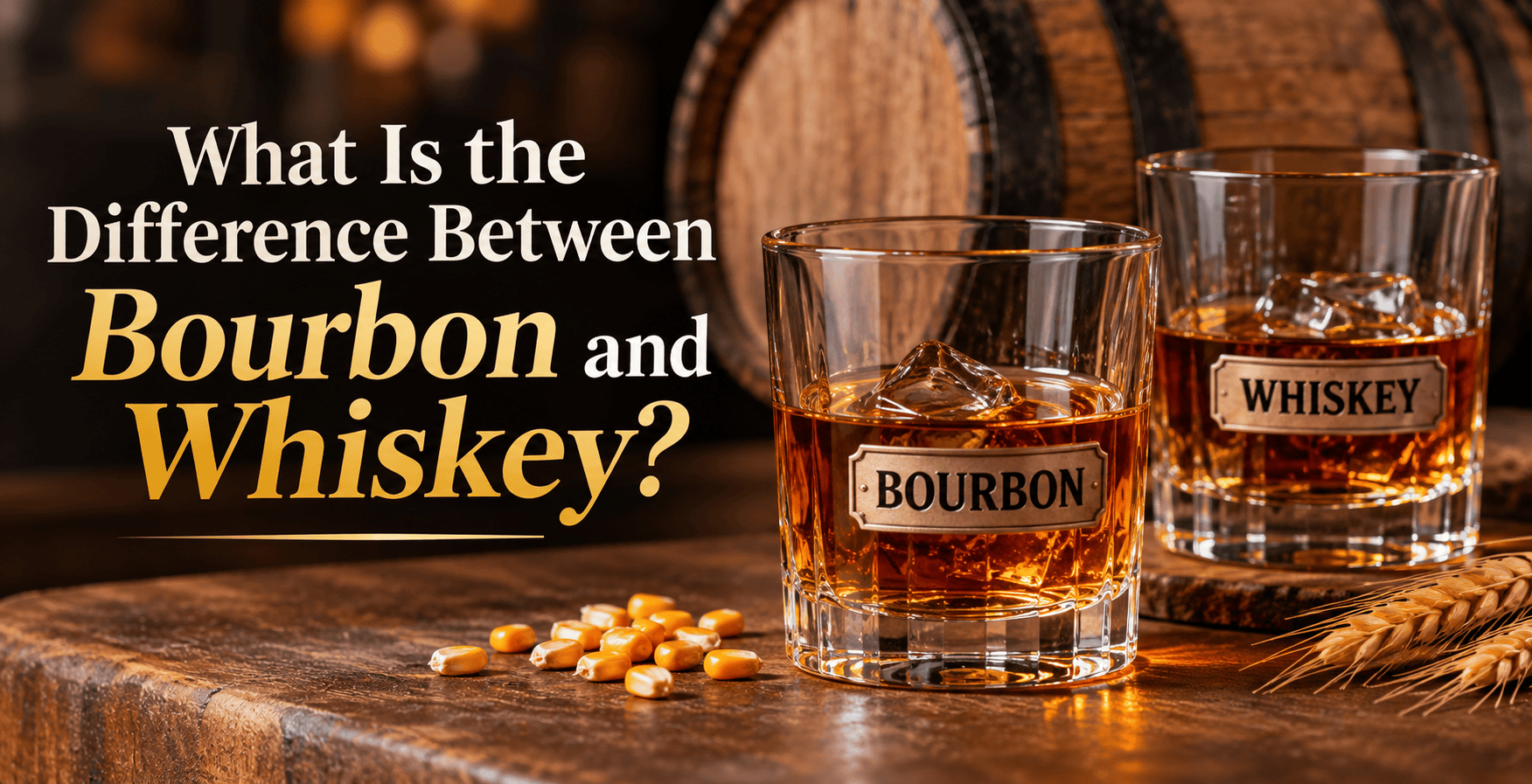
Bourbon and whiskey are two of the most popular spirits in the world, but many people are unsure what makes them different. Although bourbon is a type of whiskey, not every whiskey qualifies as bourbon. The distinction comes down to ingredients, production methods, aging requirements, geographical origins, and flavor characteristics.
Whether you are new to whiskey, exploring different spirits, or trying to understand what makes bourbon unique, knowing these differences can help you make more informed choices.
From the sweet, caramel-rich flavors of bourbon to the smoky, spicy, and complex characteristics found in other whiskey styles, each offers a distinctive drinking experience.
What Is Whiskey?
Whiskey is a distilled alcoholic beverage made from fermented grains and typically matured in wooden barrels.
Depending on where it is produced, whiskey may be made from corn, barley, rye, wheat, or combinations of these grains.
The grains are mashed, fermented, distilled, and often aged to develop their characteristic flavors.
Whiskey is produced in numerous countries, including the United States, Scotland, Ireland, Canada, and Japan.
Each region has its own traditions, regulations, and production techniques that influence the finished spirit.
Common Types of Whiskey
Several major categories of whiskey are recognized worldwide.
Bourbon Whiskey: An American whiskey made from a grain mixture containing at least 51% corn and aged in new charred oak containers.
Scotch Whisky: Produced in Scotland and aged for at least three years in oak casks. Scotch can range from light and fruity to rich and smoky.
Irish Whiskey: Produced in Ireland and generally known for approachable, smooth flavor profiles, although styles vary considerably.
Rye Whiskey: American rye whiskey must contain at least 51% rye grain, giving it a characteristically spicy flavor.
Tennessee Whiskey: A style of American whiskey commonly associated with charcoal mellowing before aging.
Canadian Whisky: Produced in Canada and often characterized by blended styles, although Canadian whisky can have a wide range of flavors.
Japanese Whisky: Produced in Japan, with traditions influenced by Scottish whisky-making and an emphasis on balance and craftsmanship.
All bourbon belongs to the whiskey family, but these other whiskey varieties follow different production standards.
What Is Bourbon?
Bourbon is a distinctive American whiskey made according to specific legal production requirements.
It is particularly associated with Kentucky, where bourbon production has a long history.
However, bourbon does not have to be produced in Kentucky.
It can be made anywhere in the United States, provided it meets the applicable bourbon standards.
What Are the Requirements for Bourbon?
To legally qualify as bourbon whiskey under U.S. standards, a spirit must meet several requirements.
1. Made in the United States: Bourbon must be produced in the United States.
2. At Least 51% Corn: Its grain mixture, known as the mash bill, must contain at least 51% corn.
3. Distilled at No More Than 160 Proof: Bourbon cannot be distilled above 80% alcohol by volume.
4. Stored in New Charred Oak Containers: Bourbon must be aged in new charred oak containers rather than previously used barrels.
5. Entered Into the Barrel at No More Than 125 Proof: Bourbon cannot enter its aging container above 62.5% alcohol by volume.
6. Bottled at a Minimum of 80 Proof: Bourbon must contain at least 40% alcohol by volume when bottled.
7. No Added Flavoring or Coloring: Standard bourbon cannot contain added flavoring or coloring materials.
These requirements help establish bourbon’s distinctive identity.
What Is the Main Difference Between Bourbon and Whiskey?
The biggest difference is that bourbon follows a specific set of American production standards, while whiskey is a broader category of distilled spirits.
Whiskey can be produced using various grains, aging methods, and regional traditions.
Bourbon must follow stricter rules concerning its grain composition, distillation, barrel entry proof, and aging containers.
For example, Scotch whisky may mature in previously used barrels, while bourbon must be aged in new charred oak containers.
Similarly, American rye whiskey must contain at least 51% rye, while bourbon must contain at least 51% corn.
These differences influence the taste, aroma, texture, and overall drinking experience.
Bourbon vs. Whiskey: Quick Comparison
| Feature | Bourbon | Whiskey |
|---|---|---|
| Category | A specific type of whiskey | Broad family of spirits |
| Origin | United States | Produced worldwide |
| Main grain | At least 51% corn | Corn, rye, barley, wheat, and others |
| Aging containers | New charred oak | Requirements vary by type |
| Typical flavor | Sweet, vanilla, caramel, oak | Sweet, spicy, fruity, smoky, or malty |
| Minimum aging | No general minimum for bourbon | Varies by category |
| Alcohol content | At least 40% ABV | Depends on style and regulations |
| Examples | Maker’s Mark, Buffalo Trace | Scotch, Irish, rye, bourbon |
Why Does Bourbon Taste Sweeter Than Other Whiskey?
One of bourbon’s most recognizable characteristics is its tendency toward sweeter flavors.
This sweetness comes from several factors, including its corn-heavy grain mixture and the use of new charred oak containers.
Corn contributes to bourbon’s rounded, often sweet-tasting character.
During aging, the whiskey interacts with compounds in the oak, developing flavors commonly described as vanilla, caramel, toasted sugar, and baking spices.
The charring and toasting of oak help transform wood compounds into flavor-producing substances.
However, bourbon does not necessarily contain added sugar.
Its perceived sweetness primarily comes from the natural flavors and aromas created during production and maturation.
Common Bourbon Flavor Notes
Bourbon frequently features flavors such as:
-
Vanilla and caramel
-
Brown sugar and toffee
-
Toasted oak
-
Cinnamon and baking spices
-
Honey and maple-like sweetness
-
Roasted nuts
-
Dark fruit
Not every bourbon tastes the same.
Some are particularly sweet and mellow, while others are bold, spicy, woody, or dry.
The grain recipe, barrel conditions, aging period, and production techniques all influence the final result.
Does Whiskey Taste Different From Bourbon?
Yes. Other whiskey styles can taste noticeably different from bourbon.
Because whiskey encompasses numerous production traditions, its flavor possibilities are exceptionally broad.
Scotch Whisky
Scotch can have flavors of malt, dried fruit, honey, smoke, peat, and oak.
Some Scotch whiskies are heavily smoky, while others are delicate and fruity.
Irish Whiskey
Irish whiskey often features flavors of cereal grains, vanilla, orchard fruit, and gentle spice.
Many popular Irish whiskeys have an approachable character, although some are rich, robust, or smoky.
Rye Whiskey
Rye whiskey typically delivers a spicier flavor than bourbon.
Common tasting notes include black pepper, cinnamon, cloves, herbs, and dry oak.
Canadian Whisky
Canadian whisky varies considerably, with some expressions offering light vanilla and grain flavors and others featuring pronounced rye spice.
Japanese Whisky
Japanese whisky can feature floral aromas, delicate fruit, malt, honey, oak, and occasionally smoke.
The particular distillery and production style are more important than assuming every Japanese whisky tastes alike.
Is Bourbon Only Made in Kentucky?
No. Bourbon can legally be produced anywhere in the United States.
Kentucky is strongly associated with bourbon because of its history, established distilleries, climate, and whiskey-making traditions.
The state’s seasonal temperature changes can influence how whiskey interacts with its aging containers.
However, distilleries in Tennessee, Texas, New York, California, Indiana, and other states also produce bourbon.
The essential requirement is that bourbon must be produced in the United States and comply with federal bourbon standards.
A bottle labeled Kentucky bourbon must meet the applicable geographical requirements for that designation.
Does Bourbon Have to Be Aged Longer Than Whiskey?
Not necessarily.
One of the most common misconceptions is that bourbon must be aged for a minimum of two years.
In reality, standard bourbon has no general minimum aging period, although it must be stored in new charred oak containers.
The two-year requirement applies to straight bourbon whiskey.
Straight bourbon must be aged for at least two years and meet additional regulatory requirements.
If straight bourbon is aged for less than four years, its label generally must include an age statement.
Other whiskey categories have their own requirements.
For example, Scotch whisky must mature for at least three years in oak casks.
Irish whiskey also has a minimum maturation period of three years.
Longer aging does not automatically make a whiskey better.
Aging can develop complexity, but excessive oak influence can create bitter, dry, or overly woody flavors.
The ideal aging period depends on the spirit, barrel, climate, and intended flavor profile.
What Is the Difference Between Bourbon and Tennessee Whiskey?
Bourbon and Tennessee whiskey share many production characteristics.
Both commonly use corn-heavy grain recipes and mature in new charred oak barrels.
The primary distinctions involve geographical origin and production traditions.
Tennessee whiskey is made in Tennessee and is generally associated with the Lincoln County Process.
This process involves filtering or mellowing the whiskey through sugar maple charcoal before barrel aging.
The charcoal treatment can influence the whiskey’s flavor and texture.
Jack Daniel’s is one of the most recognizable examples of Tennessee whiskey.
Tennessee whiskey and bourbon can have overlapping flavor profiles, but their labeling and production requirements are not identical.
What Is the Difference Between Bourbon and Scotch?
Bourbon and Scotch are both whiskeys, but they come from different countries and follow different production regulations.
Bourbon must be made in the United States, while Scotch must be produced in Scotland.
Bourbon contains at least 51% corn.
Scotch production varies by category, but malt Scotch is associated with malted barley.
Another major difference involves barrel aging.
Bourbon must use new charred oak containers.
Scotch can mature in previously used oak casks, including barrels that once held bourbon or sherry.
Scotch must also be aged for at least three years.
Flavor differences can be significant.
Bourbon often emphasizes vanilla, caramel, and sweet oak, while Scotch may emphasize malt, fruit, spice, maritime notes, or peat smoke.
Neither is inherently better.
They simply offer different drinking experiences.
Is Bourbon Stronger Than Whiskey?
Bourbon is not automatically stronger than other types of whiskey.
Alcohol strength depends on the particular bottle rather than the whiskey category alone.
Most commonly available bourbon and whiskey products contain approximately 40% to 50% alcohol by volume.
Some expressions are considerably stronger.
Understanding Whiskey Proof
In the United States, proof is twice the alcohol percentage.
For example:
| Proof | Alcohol by Volume |
|---|---|
| 80 proof | 40% ABV |
| 90 proof | 45% ABV |
| 100 proof | 50% ABV |
| 110 proof | 55% ABV |
| 120 proof | 60% ABV |
Barrel-proof or cask-strength whiskeys are bottled at strengths close to those found in the barrel and can be significantly stronger than standard bottlings.
A higher proof does not necessarily mean higher quality.
It simply indicates a higher alcohol concentration.
Is Bourbon Smoother Than Whiskey?
Bourbon can taste smoother than certain whiskeys, but smoothness is subjective.
A person who enjoys sweeter, vanilla-forward flavors may find bourbon more approachable than a heavily peated Scotch or spicy rye whiskey.
However, many Irish whiskeys, Canadian whiskies, and blended Scotch whiskies can also have gentle, approachable profiles.
Several factors affect perceived smoothness, including alcohol strength, grain selection, maturation, and blending.
A whiskey with intense alcohol heat may seem harsh, while a well-balanced expression can feel softer.
Personal taste plays a major role in determining which whiskey seems smoothest.
What Are Some Popular Bourbon Brands?
Several bourbon brands are widely recognized in the United States.
Maker’s Mark
Maker’s Mark is known for its wheated bourbon recipe, which uses wheat rather than rye as the secondary flavoring grain.
Its flavor profile commonly features vanilla, caramel, and soft baking spices.
Buffalo Trace
Buffalo Trace offers a traditional bourbon profile with caramel, vanilla, oak, and spice.
It is often considered an approachable example of Kentucky straight bourbon.
Woodford Reserve
Woodford Reserve is known for a layered flavor profile featuring dried fruit, vanilla, toasted oak, and baking spices.
Wild Turkey
Wild Turkey produces bourbons known for bold flavor, including caramel, oak, spice, and a pronounced whiskey character.
Four Roses
Four Roses uses multiple mash bills and yeast strains to create bourbons with different flavor profiles.
Its expressions can feature floral, fruity, spicy, and sweet characteristics.
These brands demonstrate how varied bourbon can be even when producers follow the same fundamental regulations.
Which Is Better for Beginners: Bourbon or Whiskey?
For beginners, bourbon can be an accessible introduction to whiskey.
Its familiar vanilla, caramel, and toasted oak flavors may appeal to people who prefer sweeter-tasting spirits.
However, a lighter Irish whiskey or blended Scotch can be equally approachable.
The best starting point depends on personal flavor preferences.
Someone who enjoys sweet flavors might prefer a softer wheated bourbon.
Someone who prefers spicy flavors might enjoy rye whiskey.
A person who likes smoky flavors may find peated Scotch more interesting.
Beginners who choose to taste whiskey should pay attention to aroma, flavor, alcohol strength, and finish rather than assuming one category is superior.
Can You Substitute Bourbon for Whiskey in Cocktails?
Yes. Bourbon can replace other whiskey styles in many cocktails, although the flavor will change.
Because bourbon tends to emphasize caramel, vanilla, and sweet oak, it can produce a richer, sweeter-tasting drink.
Rye whiskey often contributes more spice and dryness.
Scotch may introduce malty or smoky flavors.
Popular Cocktails Made With Bourbon
Old Fashioned: A classic combination of bourbon or rye, bitters, sugar, and citrus garnish.
Whiskey Sour: Whiskey combined with lemon juice and a sweetening ingredient.
Mint Julep: Bourbon traditionally combined with mint, sugar, and crushed ice.
Manhattan: A cocktail commonly prepared with rye or bourbon, sweet vermouth, and bitters.
Boulevardier: Bourbon or rye mixed with Campari and sweet vermouth.
Bourbon also works in simple mixed drinks with cola, ginger ale, soda water, or lemonade.
Substituting bourbon for another whiskey can make a familiar cocktail taste noticeably different.
Is Bourbon Better for Drinking Neat or on the Rocks?
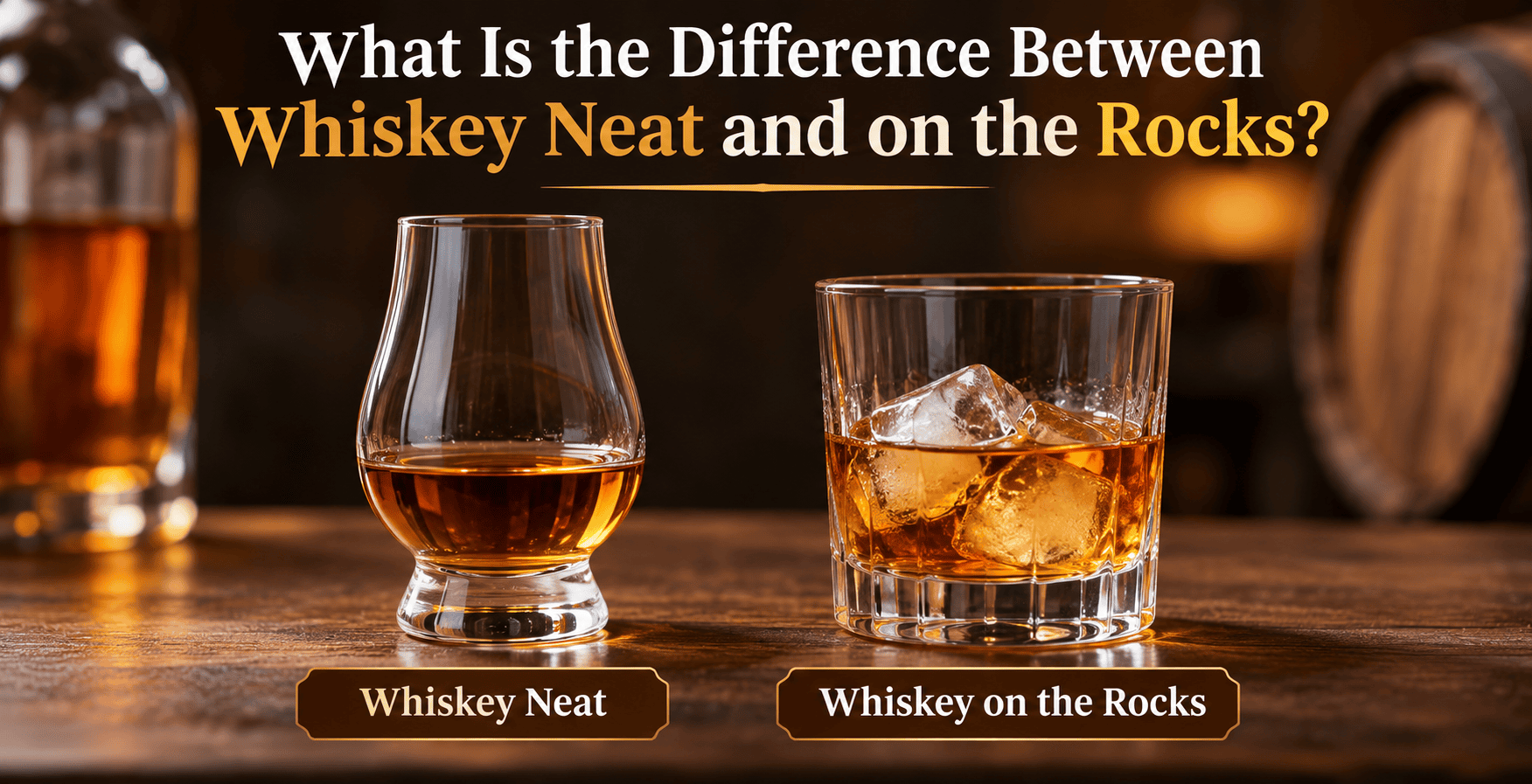
Bourbon can be enjoyed neat, with ice, or diluted with a little water.
There is no universally correct method.
Drinking Bourbon Neat
Drinking bourbon neat means serving it without ice or mixers.
This allows its aroma, texture, and flavor to be experienced without dilution.
Drinking Bourbon on the Rocks
Serving bourbon over ice gradually cools and dilutes the whiskey.
The lower temperature can soften the perception of alcohol heat, although it may also reduce the intensity of certain aromas.
Adding Water to Bourbon
A small amount of water can change how bourbon’s aromas and flavors are perceived.
Some people find that dilution makes stronger bourbons easier to appreciate.
The preferred serving method comes down to individual taste.
Does Expensive Bourbon Taste Better Than Cheap Whiskey?
Not always.
Price does not guarantee better flavor.
Some affordable bourbons offer excellent balance, complexity, and character.
Meanwhile, expensive bottles may command higher prices because of limited availability, age statements, brand reputation, packaging, or collector demand.
An expensive bourbon might feature deeper oak flavors or greater complexity, but those characteristics may not appeal to everyone.
Similarly, a moderately priced Scotch or Irish whiskey may be more enjoyable to someone who prefers its particular flavor profile.
The most useful way to evaluate whiskey is by considering its flavor, balance, production quality, and personal appeal rather than price alone.
Frequently Asked Questions About Bourbon and Whiskey
Is All Bourbon Whiskey?
Yes. All bourbon is whiskey because bourbon is a legally defined category of American whiskey.
However, not all whiskey qualifies as bourbon.
Why Is Bourbon Called Bourbon?
The exact origin of the name is debated.
Common explanations connect bourbon to Bourbon County, Kentucky, or Bourbon Street in New Orleans, both named in connection with the French Bourbon dynasty.
The historical evidence does not establish one universally accepted explanation.
Can Bourbon Be Made Outside the United States?
No. Under U.S. standards, bourbon is a distinctive product of the United States.
A whiskey produced outside the United States cannot legally be labeled bourbon for the U.S. market.
Is Jack Daniel’s Bourbon or Whiskey?
Jack Daniel’s Old No. 7 is marketed as Tennessee whiskey.
Its production shares important characteristics with bourbon, including a corn-heavy mash bill and aging in new charred oak barrels.
However, its Tennessee whiskey identity and charcoal-mellowing process distinguish its labeling and production tradition.
Is Jim Beam Bourbon or Whiskey?
Jim Beam is bourbon whiskey.
It meets the requirements for bourbon and is produced in Kentucky.
Is Bourbon Made From Corn?
Yes. Bourbon must contain at least 51% corn in its mash bill.
The remaining grain mixture can include rye, wheat, malted barley, or other permitted grains.
Does Bourbon Contain Sugar?
Standard bourbon does not contain added sugar.
Its sweet-tasting characteristics generally come from the grain recipe and compounds developed during fermentation, distillation, and barrel maturation.
Which Has More Calories, Bourbon or Whiskey?
When bourbon and another whiskey have the same alcohol strength and serving size, their calorie counts are generally similar.
A 1.5-ounce serving of 80-proof bourbon or whiskey contains approximately 97 calories.
Higher-proof spirits contain more calories per equivalent serving because alcohol contributes approximately seven calories per gram.
Sweetened mixers can substantially increase the total calorie content of a drink.
Does Bourbon Get Better With Age?
Bourbon changes as it ages in oak, but more time does not always mean better flavor.
Longer maturation can increase oak influence and complexity, but it can also produce excessive bitterness or dryness.
Once bourbon is bottled, it does not continue aging in the same way it does inside a barrel.
Final Thoughts: What Is the Difference Between Bourbon and Whiskey?
The simplest way to understand the difference is to remember one important rule: All bourbon is whiskey, but not all whiskey is bourbon.
Whiskey is a broad category of distilled spirits produced around the world using different grains, techniques, and aging traditions.
Bourbon is a specifically American whiskey that must contain at least 51% corn and be aged in new charred oak containers while meeting additional legal production standards.
These requirements help create bourbon’s familiar flavors of caramel, vanilla, toasted oak, and baking spices.
Other whiskey styles offer their own distinctive characteristics, from the peppery spice of rye to the malty richness and occasional smokiness of Scotch.
Neither bourbon nor another whiskey style is automatically superior.
Understanding their differences makes it easier to appreciate the craftsmanship, history, and traditions behind each bottle.
Ultimately, the best choice depends on the flavors you enjoy, how you prefer your spirits served, and the experience you are looking for. When consuming alcohol, moderation matters, and there is no risk-free level of drinking.
Leave a Reply