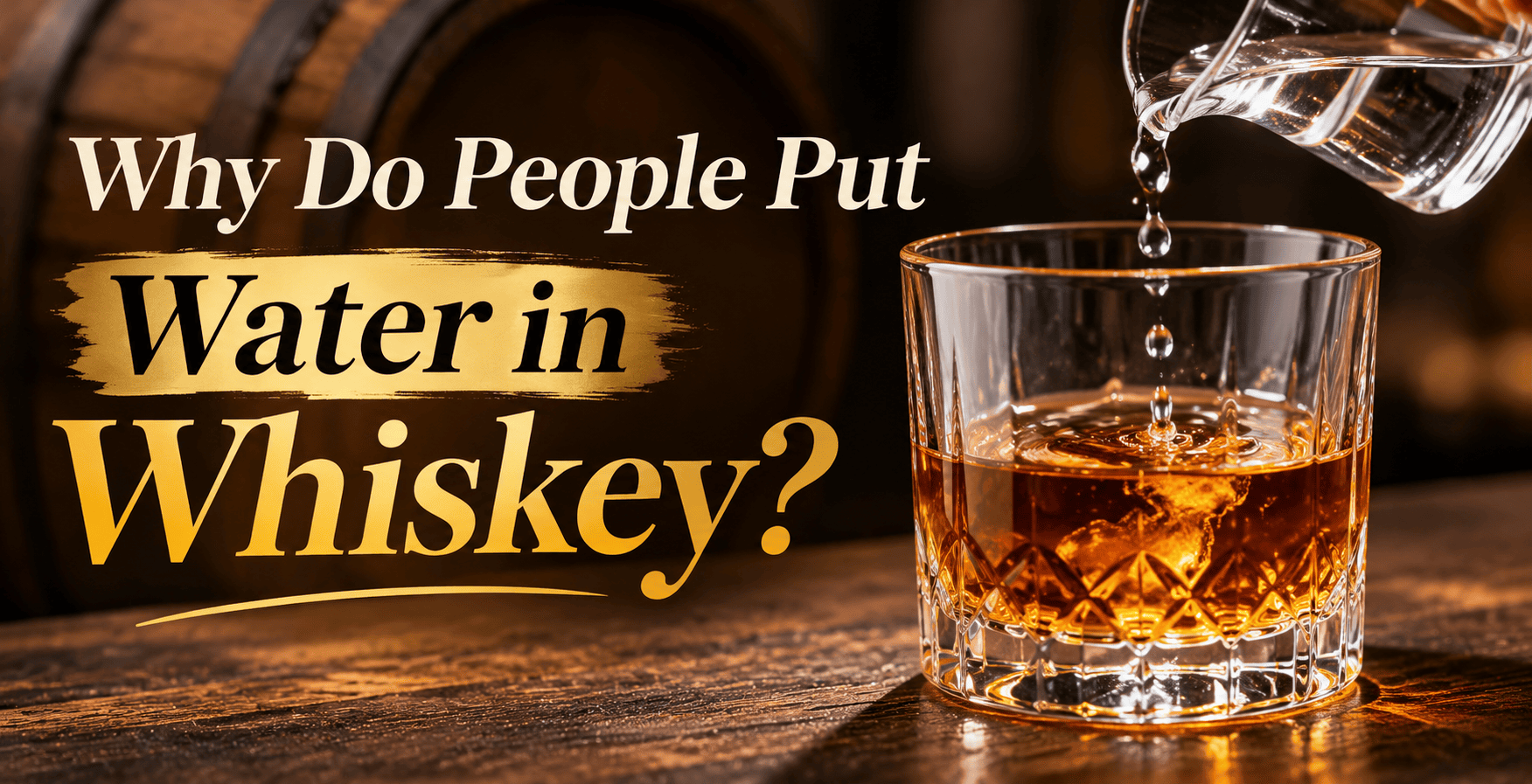
Whiskey is one of the most popular spirits in the world, appreciated for its rich flavors, distinctive aromas, and long history of craftsmanship. Whether someone enjoys bourbon, Scotch, Irish whiskey, or rye, there is one question that frequently comes up among beginners and experienced whiskey drinkers alike: Why do people put water in whiskey?
At first glance, adding water to whiskey might seem unnecessary. After all, whiskey makers spend years developing flavors through fermentation, distillation, and barrel aging. Why would anyone want to dilute something that has been carefully crafted?
The answer is surprisingly interesting. Adding a small amount of water can change how whiskey smells, tastes, and feels in your mouth. In some cases, water can help reveal flavors that might otherwise be difficult to notice.
However, adding water is not a requirement, and not every whiskey benefits from dilution in the same way.
Understanding why people add water to whiskey can help you discover new flavors, improve your tasting experience, and determine exactly how you prefer to enjoy your favorite whiskey.
What Happens When You Add Water to Whiskey?
When water is added to whiskey, it lowers the concentration of alcohol in the glass.
Most standard whiskeys are bottled at approximately 40% to 46% alcohol by volume (ABV), although some higher-proof varieties contain considerably more alcohol.
Alcohol plays an important role in carrying whiskey’s aromas and flavors, but it also produces the warming or burning sensation that people sometimes experience when drinking strong spirits.
Adding water changes the balance between alcohol, water, and the various flavor compounds present in whiskey.
These changes can affect several characteristics.
-
Aroma: Certain aromatic compounds may become more noticeable.
-
Flavor: Some flavors may become easier to distinguish.
-
Alcohol intensity: The burning sensation may become less pronounced.
-
Mouthfeel: Whiskey may feel lighter or smoother.
-
Finish: The lingering flavors after swallowing may change.
The amount of water added matters considerably. A few drops may create subtle differences, while a larger splash can noticeably reduce the whiskey’s strength and intensity.
1. Water Can Help Release Whiskey’s Aromas
One of the most common reasons people add water to whiskey is to explore its aroma.
Whiskey contains numerous aromatic compounds developed during fermentation, distillation, and barrel maturation.
Depending on the whiskey, these compounds can contribute aromas such as vanilla, caramel, oak, honey, dried fruit, citrus, smoke, and baking spices.
When whiskey has a high alcohol concentration, the strong smell of ethanol can sometimes make it difficult to identify more delicate aromas.
Adding a small amount of water reduces the alcohol concentration and changes how certain aromatic compounds behave.
Research involving compounds such as guaiacol, which contributes smoky characteristics to some whiskeys, suggests that dilution can affect how flavor molecules are distributed between the liquid and its surface.
This may make certain aromas easier to detect.
However, water does not automatically improve every whiskey’s aroma. Some aromatic compounds become more noticeable, while others may become less prominent.
The best way to discover the difference is to smell a whiskey before and after adding a few drops of water.
2. Water Can Reduce the Alcohol Burn
Another major reason people add water to whiskey is to reduce the burning sensation associated with alcohol.
When someone drinks whiskey neat, especially a high-proof variety, the alcohol can create a strong warming sensation in the mouth and throat.
This sensation is not necessarily a sign of poor-quality whiskey. Even carefully produced premium whiskeys can deliver noticeable alcohol intensity.
Adding water lowers the alcohol concentration, which may make the whiskey feel gentler on the palate.
For example, a whiskey bottled at 60% ABV will generally deliver a more intense alcohol sensation than the same whiskey diluted to 45% ABV.
Reducing that intensity may allow someone to focus more easily on the whiskey’s other characteristics.
Instead of primarily noticing alcohol heat, they might begin identifying flavors such as toasted oak, cinnamon, vanilla, or dark chocolate.
This is particularly useful for people who are new to drinking whiskey or those who prefer a less intense tasting experience.
3. Adding Water Can Reveal Different Flavors
Whiskey is a complex beverage containing many compounds that contribute to its overall taste.
Some flavors are immediately noticeable, while others are more subtle.
Adding water can change the balance of those flavors.
For example, someone tasting a barrel-proof bourbon might initially notice strong oak, spice, and alcohol warmth.
After adding a small amount of water, the whiskey might seem sweeter, with more noticeable vanilla, caramel, or fruit characteristics.
A smoky Scotch might reveal additional citrus, floral, or malt notes after slight dilution.
These changes happen because water alters the concentration and interactions of alcohol and flavor compounds.
However, it is important to understand that water does not create entirely new flavors.
Instead, dilution changes how existing compounds are perceived.
The results vary depending on the whiskey’s composition, proof, temperature, and the amount of water added.
Some whiskeys become more expressive with water, while others lose intensity or complexity.
4. Water Can Make High-Proof Whiskey Easier to Enjoy
High-proof whiskey has become increasingly popular among enthusiasts.
These whiskeys are often bottled at higher alcohol strengths than standard releases.
Common examples include barrel-proof bourbon, cask-strength Scotch, and certain limited-edition rye whiskeys.
Some contain 55%, 60%, or even more alcohol by volume.
While these whiskeys can deliver concentrated flavors, their alcohol intensity may overwhelm some drinkers.
Adding water allows the drinker to adjust the whiskey’s strength according to personal preference.
For instance, someone enjoying a 120-proof bourbon might find that adding a little water makes the caramel, oak, and spice notes easier to appreciate.
Another person might prefer that same bourbon without any dilution.
Neither preference is inherently better.
One of the advantages of high-proof whiskey is that it gives drinkers more flexibility to experiment with dilution.
5. Water Can Change the Texture and Mouthfeel
Whiskey tasting involves more than flavor and aroma.
Texture, often called mouthfeel, also contributes to the experience.
Some whiskeys feel thick, oily, creamy, or rich. Others feel lighter, drier, or sharper.
These characteristics depend on factors such as alcohol concentration and the compounds present in the spirit.
Adding water can change the way whiskey feels in the mouth.
A rich, full-bodied whiskey may become lighter after dilution.
A whiskey with a strong alcohol bite may feel softer.
However, adding too much water can make the whiskey seem thin or less flavorful.
This is why many experienced whiskey drinkers recommend adding water gradually rather than pouring in a large amount immediately.
6. Adding Water Is a Traditional Whiskey Tasting Practice
Adding water to whiskey is not a modern invention.
Whiskey drinkers have enjoyed their spirits with water for generations, particularly in Scotland and other whiskey-producing regions.
In Scotland, it is common for some drinkers to enjoy whisky with a small amount of water.
The practice is especially familiar among people tasting cask-strength Scotch.
Professional whiskey tasters and blenders also use controlled dilution during certain stages of evaluation.
Diluting a sample can help them assess particular aroma and flavor characteristics at a consistent alcohol strength.
However, professional tasting methods vary, and not every tasting session involves adding water.
The tradition reflects a simple principle: whiskey can be experienced at different strengths, and each strength may reveal different characteristics.
How Much Water Should You Add to Whiskey?
There is no universal amount of water that works for every whiskey.
The ideal quantity depends on the whiskey’s alcohol strength, flavor profile, and personal preference.
For someone experimenting with water for the first time, the easiest approach is to start with just a few drops.
A Simple Whiskey and Water Tasting Method
-
Pour approximately 1.5 ounces of whiskey into a clean tasting glass.
-
Smell the whiskey and identify its initial aromas.
-
Take a small sip to experience its original flavor.
-
Add two or three drops of room-temperature water.
-
Gently swirl the glass to combine the liquids.
-
Smell the whiskey again and notice any changes.
-
Take another small sip and compare the flavors.
If the whiskey still feels too strong, add another drop or two.
Continue gradually until you find a balance that suits your preference.
This method works particularly well with high-proof bourbon and cask-strength Scotch.
Remember that a few drops may have only a small effect on the overall alcohol concentration, even if they change the tasting experience.
What Kind of Water Is Best for Whiskey?
The type of water used can influence the drinking experience.
Water that has strong mineral flavors, chlorine odors, or other noticeable characteristics may affect the whiskey’s taste.
For this reason, many whiskey enthusiasts prefer clean, neutral-tasting water.
Filtered Water
Filtered water is an excellent everyday choice.
It can reduce unwanted odors and flavors that might interfere with the whiskey’s natural characteristics.
Spring Water
Spring water is another popular option.
However, mineral content varies between sources, and strongly mineralized water may influence the taste.
Distilled Water
Distilled water contains very few dissolved minerals and provides a relatively neutral option for controlled tasting.
Some enthusiasts prefer it because it introduces fewer additional flavor characteristics.
Tap Water
Tap water can work perfectly well if it tastes clean and does not have a noticeable chlorine or mineral flavor.
There is no need to purchase expensive specialty water to enjoy whiskey.
For most people, ordinary filtered drinking water is sufficient.
Should You Add Cold Water or Room-Temperature Water?
Water temperature can affect the whiskey-drinking experience.
Room-temperature water is commonly used for whiskey tasting because it changes the alcohol concentration without significantly cooling the spirit.
Cold water, on the other hand, can lower the whiskey’s temperature.
Cooling may reduce the intensity of certain aromas and change how flavors are perceived.
For someone interested in identifying subtle tasting notes, room-temperature water is a practical starting point.
For someone who simply prefers a cooler, more refreshing drink, chilled water may be more enjoyable.
Both approaches are acceptable.
Is Whiskey Better With Water or Without Water?
Whether whiskey tastes better with water depends entirely on the whiskey and the person drinking it.
Some whiskeys are particularly enjoyable neat because their flavors are already well-balanced at the bottled strength.
Others, especially high-proof expressions, may become easier to appreciate after slight dilution.
Consider the differences.
| Whiskey Neat | Whiskey With Water |
|---|---|
| Original bottled strength | Lower alcohol concentration |
| More concentrated flavors | Potentially softer flavor intensity |
| Stronger alcohol sensation | Usually less alcohol heat |
| Original aroma balance | Altered aroma balance |
| Fuller original mouthfeel | Potentially lighter mouthfeel |
Neither method guarantees a better experience.
A useful approach is to taste a whiskey neat first and then experiment with water.
This allows you to appreciate the original product while discovering how dilution changes its character.
What Is the Difference Between Adding Water and Adding Ice to Whiskey?
Although water and ice both dilute whiskey, they affect the drink differently.
Adding room-temperature water primarily changes the alcohol concentration.
Adding ice changes both the alcohol concentration and the temperature as the ice melts.
These differences can significantly affect the drinking experience.
Whiskey With Water
Adding water allows more direct control over dilution.
The whiskey generally remains close to its original temperature, making it easier to compare aroma and flavor changes.
Whiskey With Ice
Ice cools the whiskey, often making it feel more refreshing and reducing the perceived alcohol intensity.
However, lower temperatures can suppress certain aromas.
As the ice melts, the whiskey also becomes progressively more diluted.
Someone drinking whiskey over ice may notice the flavor changing throughout the experience.
Neither method is wrong. They simply produce different results.
Why Do People Add Water to Bourbon?
Bourbon is an American whiskey known for flavors that often include vanilla, caramel, oak, baking spices, and toasted sugar.
These characteristics develop through its grain recipe, fermentation, distillation, and maturation in new charred oak barrels.
Adding water to bourbon can alter how these flavors are perceived.
This is particularly noticeable with barrel-proof bourbon, which may have a much higher alcohol concentration than standard bottlings.
A small amount of water may soften the alcohol sensation and make sweeter or fruitier notes easier to identify.
However, some lower-proof bourbons may already have a balanced flavor profile.
Adding too much water to those expressions can reduce their intensity.
For beginners, tasting bourbon neat and then adding a few drops of water is a useful way to understand the difference.
Why Do People Add Water to Scotch Whisky?
Scotch whisky can display an enormous range of flavors, from light floral and fruity notes to rich smoke, peat, oak, and maritime characteristics.
Some Scotch enthusiasts add water to explore these different layers.
In certain smoky Scotch whiskies, dilution may change how phenolic compounds are perceived.
In fruitier styles, a small amount of water may make particular aromas easier to notice.
Cask-strength Scotch is especially suitable for experimentation because its higher alcohol concentration allows for greater adjustment.
However, not every Scotch improves with water.
Some delicate expressions may lose flavor intensity when diluted excessively.
The best approach is to experiment slowly and compare the results.
Does Adding Water Make Whiskey Smoother?
Adding water can make whiskey feel smoother by reducing its alcohol concentration and the intensity of alcohol-related irritation.
However, smoothness is subjective.
One person may describe a whiskey as smooth because it produces little burning sensation.
Another may associate smoothness with a balanced flavor, creamy texture, or gentle finish.
Water can influence some of these characteristics, but it cannot automatically turn a poorly balanced whiskey into an exceptional one.
It also cannot eliminate undesirable flavors.
What water can do is change the way those flavors and sensations are experienced.
Does Adding Water Reduce the Alcohol Content of Whiskey?
Adding water reduces whiskey’s alcohol by volume, but it does not remove the alcohol already present in the glass.
For example, consider two ounces of whiskey bottled at 50% ABV.
That serving contains one fluid ounce of pure alcohol.
If you add one ounce of water, the drink now contains three fluid ounces of liquid.
The new alcohol concentration is approximately 33.3% ABV.
However, the total amount of alcohol remains one fluid ounce.
This distinction is important.
Diluted whiskey may taste less intense, but drinking the entire mixture still delivers the same amount of alcohol as the original serving.
Adding water does not make the drink alcohol-free or eliminate the risks associated with alcohol consumption.
Can You Add Too Much Water to Whiskey?
Yes. Although water can change whiskey’s flavor in interesting ways, excessive dilution may make it less enjoyable.
Adding too much water can reduce aroma intensity, weaken flavors, and create a thinner mouthfeel.
A whiskey that originally offered rich caramel, oak, and spice characteristics may begin tasting watery.
The exact point at which dilution becomes excessive depends on the whiskey and individual preference.
A high-proof whiskey may tolerate considerably more water than a standard 80-proof bottle.
This is why gradual dilution is generally preferable.
You can always add more water, but you cannot easily restore the whiskey to its original strength once it has been diluted.
Common Mistakes When Adding Water to Whiskey
People experimenting with whiskey and water sometimes make a few avoidable mistakes.
Adding too much water immediately: Large amounts of water can overwhelm delicate flavors. Start with a few drops.
Using strongly flavored water: Water with noticeable chlorine or mineral flavors may interfere with the tasting experience.
Assuming every whiskey needs water: Some whiskeys are best enjoyed at their bottled strength, depending on personal preference.
Ignoring the original flavor: Tasting whiskey neat first provides a useful comparison.
Believing water removes alcohol: Dilution lowers the alcohol percentage but does not reduce the total alcohol in the original serving.
Avoiding these mistakes makes it easier to understand how water influences different whiskey styles.
Frequently Asked Questions About Putting Water in Whiskey
Why Do Experts Put Drops of Water in Whiskey?
Some whiskey experts add a few drops of water to change the alcohol concentration and explore how the spirit’s aroma and flavor develop.
This can be especially useful when evaluating high-proof whiskey.
Does Water Open Up Whiskey?
The phrase “opening up whiskey” describes changes in aroma and flavor perception after dilution.
Water can make certain compounds more noticeable, although it may reduce the intensity of others.
Is It Normal to Put Water in Expensive Whiskey?
Yes. Adding water is a widely accepted tasting practice, even with premium and rare whiskeys.
The decision should depend on personal preference rather than the price of the bottle.
Should Beginners Drink Whiskey With Water?
Beginners may find whiskey with a small amount of water easier to approach, especially when tasting higher-proof spirits.
However, there is no requirement to add water.
Does Water Make Cheap Whiskey Taste Better?
Water may soften alcohol intensity and alter flavor balance, but it cannot reliably eliminate harsh or unpleasant characteristics.
Whether it improves an inexpensive whiskey depends on the particular product.
Is It Better to Add Water Before or After Tasting Whiskey?
Tasting whiskey neat first allows you to experience its original characteristics.
Adding water afterward makes it easier to compare the changes.
Can You Mix Whiskey With Sparkling Water?
Yes. Whiskey and sparkling water are commonly combined to create a refreshing highball-style drink.
However, sparkling water introduces carbonation, making the experience different from adding a few drops of still water during a tasting.
Final Thoughts: Why Do People Put Water in Whiskey?
People put water in whiskey for several reasons, including reducing alcohol intensity, exploring different aromas, changing flavor balance, and adjusting the overall drinking experience.
A small amount of water can sometimes reveal characteristics that are less noticeable when whiskey is consumed at its original strength.
This is especially useful with high-proof bourbon, cask-strength Scotch, and other concentrated whiskeys.
However, adding water is not a rule that every whiskey drinker must follow.
Some people prefer whiskey neat, others enjoy it with a splash of water, and many appreciate it over ice.
The most important thing is understanding how each method changes the experience.
If you are curious about what water can do for your favorite whiskey, try tasting a small amount neat before adding a few drops of clean, room-temperature water.
Pay attention to the aromas, flavors, texture, and finish.
You may discover something about a familiar whiskey that you had never noticed before.
Ultimately, the best way to enjoy whiskey is the way that suits your taste, with moderation and responsible consumption always in mind.


Leave a Reply