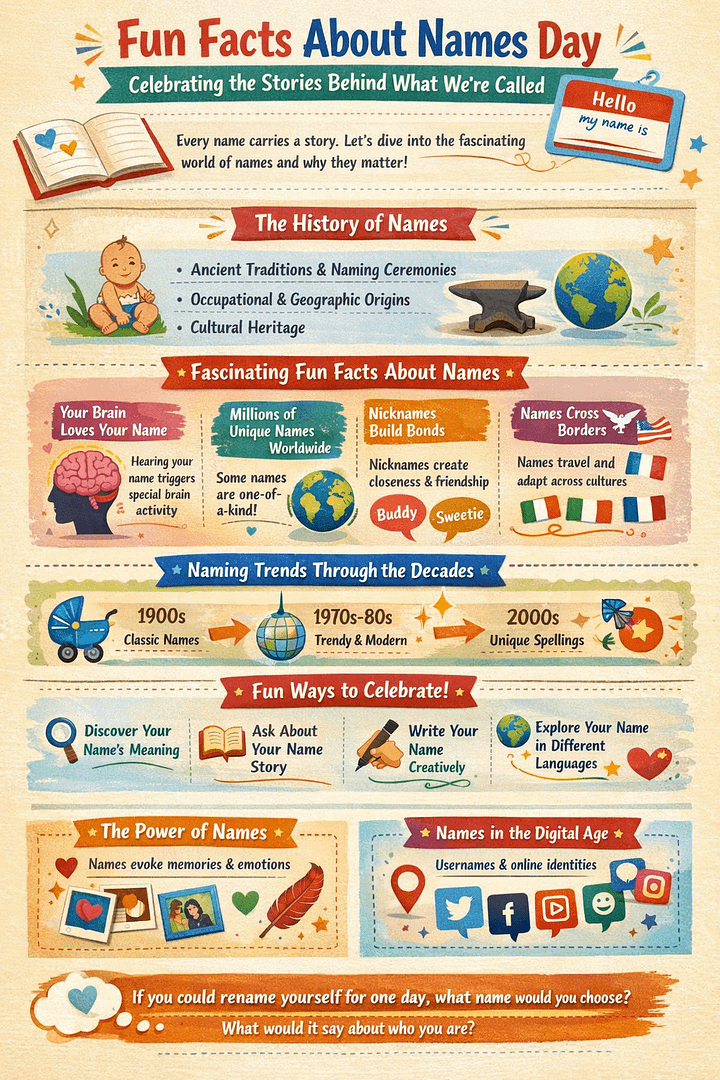
Every name carries a story — a quiet beginning to a lifetime of identity, relationships, and personal meaning. Fun Facts About Names Day is more than just a quirky observance; it’s a celebration of language, culture, history, and individuality. Names connect generations, reflect traditions, and often reveal more about us than we realize.
From ancient naming rituals to modern creative spellings, this day encourages people to pause and appreciate one of the most personal parts of human identity: the name.
The History and Purpose Behind Names
Long before written records, names helped humans establish belonging and recognition within communities. Early societies used names to describe:
Physical traits
Personality characteristics
Occupations
Geographic origins
Family lineage
For example, surnames like Smith, Baker, or Taylor originated from professions, while names such as Hill or Brooks reflected landscapes.
In many cultures, naming ceremonies were sacred events believed to influence a child’s destiny or spiritual protection. Even today, some families wait days or weeks before naming a newborn, emphasizing how meaningful the decision can be.
Names as Cultural Time Capsules
Names preserve culture across centuries. They often survive wars, migrations, and societal change, acting as living history.
Irish names reflect Gaelic heritage and storytelling traditions.
African names frequently represent circumstances of birth or hopes for the child’s future.
Japanese names may combine characters symbolizing virtues like strength, beauty, or harmony.
Indigenous names often connect individuals to nature or ancestral spirits.
When someone shares their name, they may also be sharing pieces of cultural heritage that stretch far beyond their lifetime.
Fascinating Fun Facts About Names
1. Your Name Activates Your Brain Differently
Studies show that hearing your own name triggers unique brain activity. Even in a noisy environment, people instantly recognize their name — a phenomenon sometimes called the “cocktail party effect.”
2. The World Has Millions of Unique Names
While some names are extremely common worldwide, countless rare names exist that may belong to only a handful of people — or even a single individual.
The internet age has made originality easier, allowing parents to invent entirely new names or combine existing ones.
3. Nicknames Strengthen Social Bonds
Nicknames often signal closeness and trust. Psychologists suggest that giving or receiving a nickname can strengthen emotional connections because it represents shared experiences.
4. Names Travel Across Borders
Globalization has allowed names to move freely between cultures. A name once tied to one region can now be found worldwide, reflecting how interconnected humanity has become.
5. Some People Change Their Names to Mark New Chapters
Name changes often symbolize transformation — marriage, personal growth, gender identity, spiritual awakening, or simply reclaiming individuality. A new name can represent a fresh beginning.
The Psychology of Names
Names influence perception more than most people realize. Research suggests that people may unconsciously associate certain traits with specific names based on familiarity, media exposure, or cultural expectations.
This doesn’t define who someone is, but it highlights how deeply names are embedded in social interaction.
Interestingly, many people report feeling more confident when addressed by name during conversations. It creates recognition and respect — a small gesture with powerful emotional impact.
Naming Trends Through the Decades
Every generation leaves its mark on naming culture.
Early 1900s: Classic and biblical names dominated.
1950s–70s: Traditional yet modern-sounding names gained popularity.
1990s–2000s: Unique spellings and celebrity-inspired names surged.
Today: Parents often seek balance — meaningful, distinctive, and globally adaptable names.
Social media, entertainment, and global culture now influence naming trends faster than ever before.
Fun Ways to Celebrate Fun Facts About Names Day
Make the celebration interactive and personal:
🔎 Discover Your Name’s Story
Search the origin, language, and historical meaning of your name. You may uncover unexpected symbolism.
👨👩👧 Talk With Family
Ask parents or relatives why your name was chosen. Many people discover heartfelt stories they never knew existed.
✍️ Get Creative
Write your name using:
Calligraphy
Digital art
Different alphabets
Poetry or storytelling
🌍 Explore Global Variations
Learn how your name is spoken or translated in other languages.
💬 Share Name Compliments
Tell someone why you like their name or what it reminds you of. Small conversations can create meaningful connections.
The Emotional Power Behind a Name
Names are deeply tied to memory. Hearing your name spoken by a loved one, written in a letter, or remembered after years apart carries emotional weight.
A name can remind us of:
Childhood moments
Relationships that shaped us
Achievements and milestones
Personal transformation
For some, reclaiming or redefining their name becomes an act of empowerment — a declaration of identity and self-acceptance.
Names in the Digital Age
Today, names extend beyond introductions into usernames, online identities, and personal brands. Choosing how we present our names online has become part of storytelling itself.
Handles, screen names, and creator identities show how names continue evolving alongside technology. Yet despite digital change, the emotional significance remains the same: names help us be seen and remembered.
A Celebration of Identity and Connection
Fun Facts About Names Day reminds us that names are more than labels — they are bridges between past and present, individuality and community. Every name carries intention, history, and meaning, even when we don’t realize it.
Taking time to explore names encourages empathy. When we learn the story behind someone’s name, we often learn something about their journey as well.
So today, celebrate the simple magic of names. Say them carefully. Learn their stories. Share their meanings. Because behind every name is a life unfolding — unique, meaningful, and worthy of recognition.
Read More Holidays & National Days
Leave a Reply