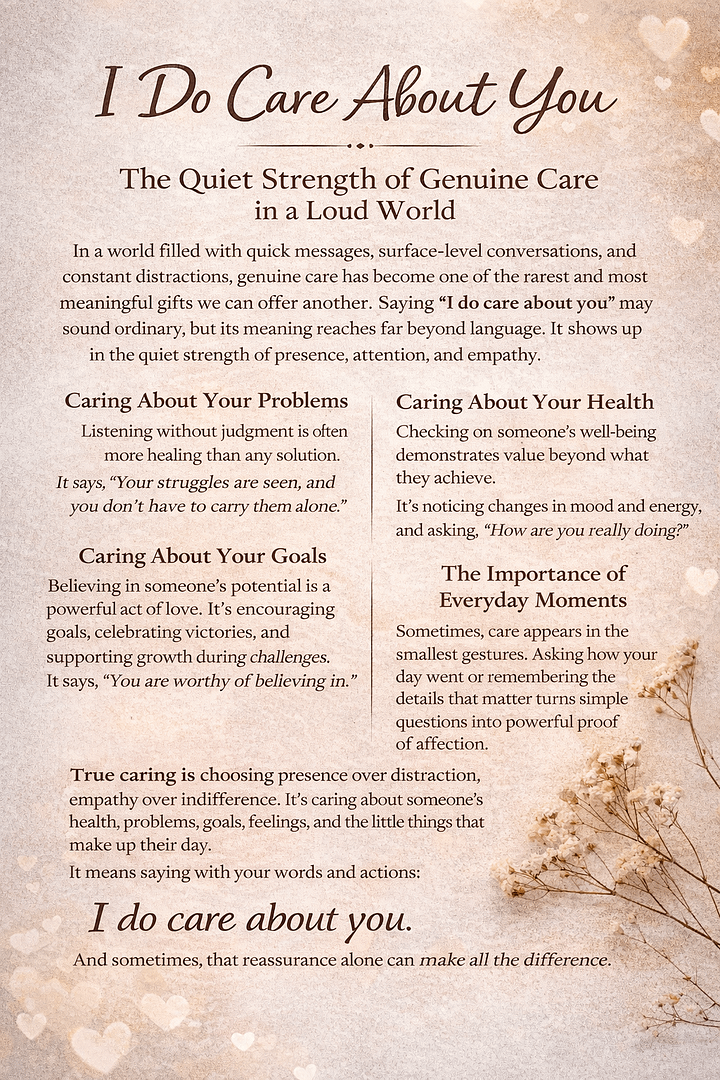
In a world that moves faster every day, genuine care has become one of the most powerful — and sometimes overlooked — forms of human connection. We live surrounded by notifications, quick replies, and conversations that often skim the surface of who we truly are. Yet beneath all the noise, people are longing for something simple and deeply human: to feel seen, valued, and understood.
The words “I do care about you” may sound ordinary, but their meaning reaches far beyond language. They represent attention, emotional presence, and a willingness to stand beside someone not only during joyful moments but also through uncertainty, struggle, and vulnerability.
Real care is not proven by grand declarations. It is revealed through consistency — through small, repeated acts that quietly say, you matter to me.
Caring About Someone’s Problems
Everyone carries invisible battles. Some struggles are spoken openly, while others remain hidden behind smiles and routine conversations. When you genuinely care about someone’s problems, you offer more than advice — you offer understanding.
Caring does not always mean solving issues. Often, the most meaningful support comes from simply listening without judgment. Sitting with someone in their discomfort sends a powerful message: Your pain is not inconvenient to me.
In a culture that often encourages people to “fix” emotions quickly, patience becomes an act of love. Allowing someone space to feel heard can be more healing than any solution.
Caring About Health — Seen and Unseen
True care recognizes that well-being goes beyond physical health. Emotional exhaustion, anxiety, and silent stress can weigh just as heavily as physical illness. When someone checks on your health, they are acknowledging that your life matters beyond productivity or appearances.
It may look like reminding someone to rest, encouraging healthier choices, or noticing when their energy changes. Sometimes it is asking the simplest yet most meaningful question: “How are you really doing?”
These moments remind us that care is rooted in awareness — paying attention to what others may not openly express.
Supporting Goals and Dreams
One of the deepest ways to care for someone is to believe in their potential. Caring about someone’s goals means investing emotionally in their future. It means celebrating victories, encouraging perseverance during setbacks, and reminding them of their strength when self-doubt appears.
Support does not require complete understanding of another person’s dream. It only requires respect for what matters to them.
When someone stands behind your ambitions, they become part of your journey. Their belief can become the motivation that keeps you moving forward when confidence fades.
The Meaning Behind Everyday Conversations
Asking how someone’s day went may seem small, but it carries profound emotional significance. These daily check-ins create connection through routine. They communicate interest, reliability, and emotional availability.
Relationships are rarely strengthened by extraordinary moments alone. Instead, they grow through ordinary interactions repeated over time — shared laughter, small updates, and consistent presence.
Care lives in these everyday exchanges.
Being Present Through Communication
In modern relationships, communication has taken new forms through calls, texts, and messages. Responding, reaching out, and maintaining connection may appear simple, yet they signal priority.
When someone makes time to communicate, they are offering attention — one of the most valuable resources we possess. Attention cannot be faked for long; it reflects genuine interest.
Consistent communication reassures people that they are not forgotten, ignored, or alone in their experiences.
Valuing Opinions and Feelings
To care about someone is to respect their inner world — their thoughts, perspectives, and emotions. This requires empathy, humility, and openness.
Listening does not mean agreeing with everything. It means acknowledging that another person’s feelings are valid and worthy of consideration.
When people feel emotionally safe enough to share openly, trust deepens. And trust is the foundation upon which meaningful relationships are built.
Understanding What Bothers Someone
Care also involves awareness of emotional boundaries — knowing what hurts someone, what comforts them, and what brings them peace. This understanding develops over time through attention and compassion.
It requires remembering details, recognizing patterns, and adjusting behavior out of respect rather than obligation.
This kind of attentiveness communicates something powerful: I see you as an individual, not just a presence in my life.
The Courage to Care
Caring deeply requires vulnerability. It means risking disappointment, misunderstanding, or emotional pain. Many people hesitate to show care openly because it exposes their hearts.
Yet choosing to care is an act of courage. It means deciding that connection is worth the risk.
When we allow ourselves to care fully, we create spaces where authenticity can exist — spaces where people feel safe enough to be themselves without fear of rejection.
Why Caring Matters More Than Ever
Loneliness has become increasingly common despite constant digital connection. Many people communicate daily yet still feel emotionally unseen. Genuine care breaks through this isolation.
It reminds us that relationships are not measured by frequency of interaction but by depth of understanding.
A single person who truly cares can change how someone experiences the world. They can restore hope, rebuild confidence, and remind another human being of their worth.
The Simple Truth
At its heart, caring is not complicated. It is choosing presence over distraction, empathy over indifference, and patience over convenience.
It is caring about someone’s problems, health, goals, feelings, and daily experiences. It is noticing what troubles them and celebrating what brings them joy.
And ultimately, it is saying — through both words and actions:
I do care about you.
Because sometimes the most life-changing thing a person can hear is not advice or solutions, but the reassurance that they matter deeply to someone else.
Read More Of Love & Relationships
Leave a Reply