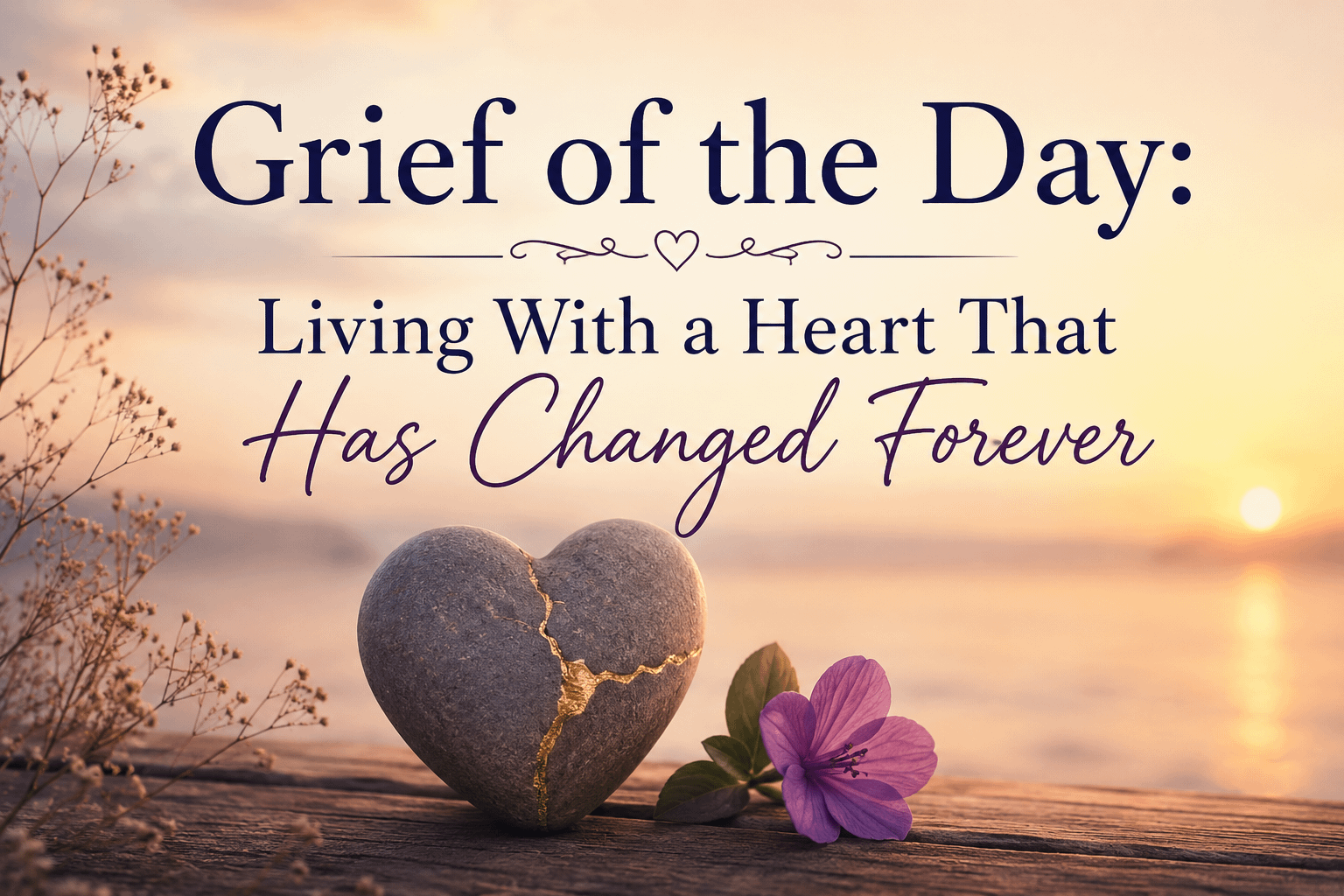
Grief is not simply an emotion—it is a transformation. It changes the way we think, feel, love, and experience the world around us. The day we lose someone we deeply love, a part of our heart changes forever. While time may soften the sharpest edges of our pain, it never returns us to the person we were before loss.
Many people who have never experienced profound grief expect healing to mean “getting back to normal.” But anyone who has walked this difficult road knows there is no returning to the life that existed before. There is only learning how to carry a heart that has been forever altered by love and loss.
If you’re grieving today, know this: there is nothing wrong with the person you’ve become. Your heart has changed because your love was real. That love deserves to be honored, not forgotten.
Grief Creates a New Version of You
The person you were before your loss lived in a completely different reality.
You woke up expecting to hear their voice.
You assumed they would be there for birthdays, holidays, family dinners, and ordinary Tuesday afternoons.
You made plans that included them.
You imagined a future where they were part of every milestone.
Then everything changed.
Loss creates a dividing line in life.
There is life before.
And there is life after.
The world may continue spinning exactly as it always has, but your world becomes unrecognizable.
That isn’t because you’re weak.
It’s because someone who helped define your life is no longer physically present.
Grief asks you to build an entirely new life without someone you never imagined living without.
That is one of the hardest things any human being can face.
Love Leaves Permanent Marks
People often say that time heals all wounds.
For many grieving hearts, that statement doesn’t feel true.
Time changes grief.
It teaches us how to carry it.
But love leaves permanent fingerprints on our hearts.
Every memory…
Every conversation…
Every laugh…
Every hug…
Every lesson…
They become part of who we are.
That is why grief never completely disappears.
Love never disappears.
When someone changes your life, their absence changes your life too.
Those two truths will always exist together.
The World Doesn’t Always Understand
One of the loneliest parts of grief is realizing that the world often expects you to recover on a schedule.
After a few weeks…
After a few months…
After a year…
People begin asking if you’re doing better.
Some stop mentioning your loved one’s name because they’re afraid of making you sad.
Others assume you’ve “moved on.”
But grief doesn’t work according to calendars.
Some days you may feel peaceful.
The next day, a familiar song, a favorite restaurant, a birthday, or a photograph can bring tears that feel just as fresh as they did years ago.
That doesn’t mean you’ve taken steps backward.
It means love still lives inside you.
Grief doesn’t travel in a straight line.
It moves like the ocean.
Some days the waves are gentle.
Other days they crash unexpectedly.
Both are normal.
Your Heart Notices Things It Never Did Before
One unexpected result of grief is how it changes the way you see other people.
You begin noticing silent pain.
You recognize sadness hidden behind smiles.
You become more patient with strangers.
You become more understanding of people carrying invisible burdens.
Because now you know something many people don’t.
Everyone is fighting battles that cannot be seen.
Grief teaches compassion in ways no classroom ever could.
It softens judgment.
It deepens empathy.
It reminds us that kindness often matters more than being right.
A changed heart often becomes a gentler heart.
Joy Can Feel Confusing
Many grieving people struggle the first time they genuinely laugh again.
They wonder…
“Should I feel guilty?”
“Am I forgetting them?”
“Would they want me to be happy?”
These questions are incredibly common.
The truth is this:
Joy does not replace love.
Laughter does not erase memories.
Smiling again does not mean you’ve stopped grieving.
In fact, allowing yourself moments of happiness often honors the people who loved you most.
Think about someone you deeply love.
Would you want them to spend the rest of their life trapped in sorrow after losing you?
Of course not.
You would want them to remember you.
To laugh.
To love.
To live.
Your loved one would likely want the very same for you.
Grief and Gratitude Can Live Together
One of the greatest lessons grief eventually teaches is that two emotions can exist at the same time.
You can miss someone desperately while feeling thankful they were part of your life.
You can cry over their absence while smiling because of a treasured memory.
You can feel broken while recognizing moments of incredible beauty.
Grief doesn’t erase gratitude.
Sometimes it actually deepens it.
After loss, sunsets seem more meaningful.
Family gatherings become more precious.
Ordinary conversations become gifts.
You begin appreciating moments you once rushed past.
Not because life became easier.
Because you finally understand how fragile life truly is.
Your Heart Carries Them Everywhere
People often ask grieving parents, spouses, siblings, and friends whether they still think about the person they lost.
The answer is almost always the same.
Every day.
Sometimes every hour.
Sometimes every minute.
Love doesn’t require physical presence.
Your loved one lives in the recipes you cook.
The music you play.
The places you visit.
The traditions you continue.
The stories you tell.
The lessons you share.
The values they helped shape.
Every act of kindness inspired by them becomes another way they continue touching the world.
That is one of grief’s quiet miracles.
Death ends a life.
It does not end love.
The Invisible Weight Others Cannot See
Many grieving people become experts at appearing okay.
They go to work.
They smile politely.
They answer questions.
They attend family gatherings.
They complete everyday responsibilities.
Yet inside, they carry an ache few people ever notice.
Grief is often invisible.
The strongest people you know may be carrying heartbreak they never speak about.
This is why compassion matters.
A kind word.
A sincere hug.
A simple “I’m thinking about you.”
These small gestures can mean more than you realize.
Never underestimate the healing power of showing someone they are not alone.
Healing Doesn’t Mean Letting Go
Perhaps one of the greatest myths about grief is that healing requires letting go.
But healing is not forgetting.
Healing is not replacing.
Healing is not pretending the loss never happened.
Healing is learning how to carry both sorrow and hope.
It is discovering how to build new memories while honoring old ones.
It is allowing your loved one’s influence to continue shaping your life.
You don’t have to stop loving someone in order to keep living.
In fact, your continuing love is often what gives you the strength to move forward.
Finding Purpose Through Pain
Many people eventually discover that grief changes not only who they are but also why they do what they do.
Some become counselors.
Some volunteer.
Some mentor others.
Some write books.
Some begin charities.
Some simply become the friend they wish they had during their darkest days.
Pain often creates compassion.
Compassion creates purpose.
Purpose creates hope.
Your story—no matter how heartbreaking—may one day become the reason someone else chooses to keep going.
Living With Hope
Hope after loss looks different.
It isn’t pretending everything will be okay.
It isn’t denying the pain.
Hope simply whispers:
“You can survive today.”
Tomorrow it whispers again.
Eventually those small whispers become a life built one day at a time.
Hope doesn’t erase grief.
It walks beside it.
Just as love walks beside it.
Your heart can carry all three.
Final Thoughts
Living with a heart that has changed forever is not something you chose.
If given the chance, every grieving person would gladly trade their scars for one more conversation, one more hug, one more ordinary day with the person they miss.
But because love is eternal, your heart continues carrying them wherever you go.
The tears you cry are evidence of love.
The memories you treasure are evidence of love.
The compassion you’ve developed is evidence of love.
The strength you’ve discovered is evidence of love.
Your heart has changed forever—not because grief has defeated you, but because love has forever transformed you.
One day, the pain may become quieter.
The memories may bring more smiles than tears.
The weight may become easier to carry.
But your heart will always remember.
And perhaps that is one of the most beautiful things about love.
It never truly leaves us.
It simply finds a new way to live within us.
So if today your heart feels different than it once did, don’t see it as broken beyond repair.
See it as a heart that has loved deeply, lost greatly, and continues to beat with courage every single day.
That is not weakness.
That is extraordinary strength.
Read More Of Grief & Child Loss
Leave a Reply