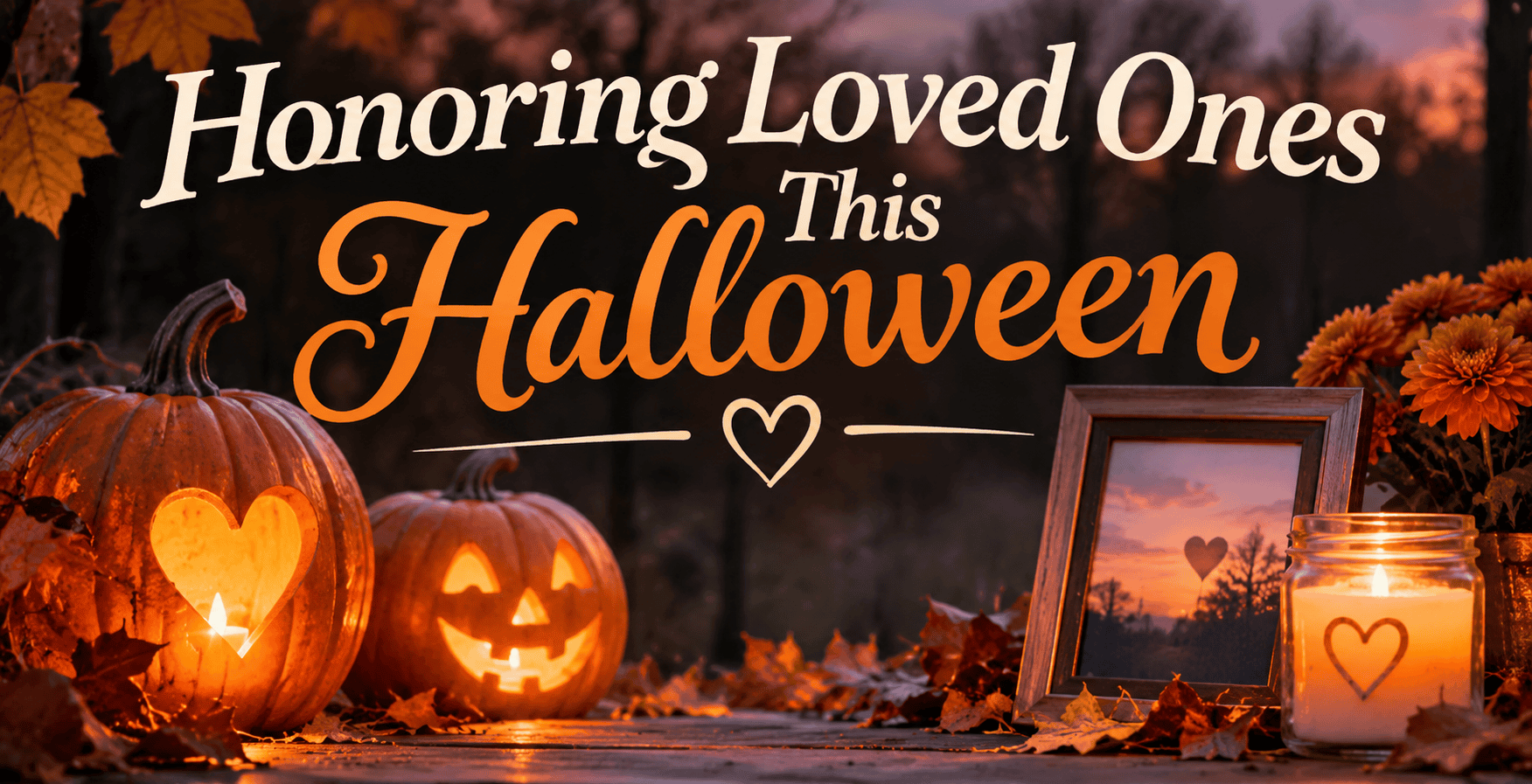
Halloween is often associated with costumes, candy, haunted houses, pumpkins, and spooky celebrations. For many families, it is a night filled with laughter, excitement, and traditions that bring people together. However, for those who have lost someone they love, Halloween can carry a much deeper meaning.
Behind the decorations and celebrations, there may be an empty chair, a missing voice, or a familiar tradition that no longer feels the same. The holiday can bring back memories of loved ones who once shared those special moments but are no longer physically present.
Honoring loved ones this Halloween is about more than remembering the past. It is about keeping their love, memories, and legacy alive while finding meaningful ways to include them in the present.
Whether you are grieving a child, parent, spouse, sibling, grandparent, or close friend, Halloween can become an opportunity to celebrate the life they lived and the love that continues beyond their passing.
Why Halloween Can Be Difficult After Losing Someone
Holidays have a way of making grief feel more noticeable. Even when we believe we are managing our emotions, familiar sights, sounds, and traditions can suddenly remind us of someone we miss.
Halloween is no exception.
Perhaps you remember taking your child trick-or-treating, helping them choose a costume, or watching their excitement as they counted their candy at the end of the night.
Maybe you remember decorating pumpkins with a parent, watching scary movies with a spouse, or attending Halloween parties with a friend who always made everyone laugh.
These memories can be beautiful and heartbreaking at the same time.
For grieving parents, Halloween can be particularly painful. Seeing children dressed in costumes or families walking together may bring back memories of celebrations that will never happen in quite the same way again.
Parents who have lost an only child may find the silence especially overwhelming when they remember how much excitement once filled their home.
For others, Halloween may simply be another reminder that someone important is missing.
There is no correct way to experience these emotions. Some people find comfort in participating in familiar traditions, while others need to step away from celebrations.
Both responses are understandable.
1. Light a Candle in Their Memory
One of the simplest and most meaningful ways to honor a loved one on Halloween is by lighting a candle.
A candle can symbolize remembrance, love, hope, and the continuing presence of someone in our hearts.
You might place a candle beside a photograph of your loved one or create a small remembrance area in your home.
Take a few quiet moments to reflect on the memories you shared.
You can speak their name, say a prayer, or simply sit in silence.
For some people, lighting a candle becomes a personal tradition repeated every Halloween.
It serves as a reminder that although their loved one is no longer physically present, the love they shared continues.
If you prefer, a battery-operated candle can provide the same symbolic comfort without an open flame.
2. Create a Halloween Memorial Display
Halloween decorations do not always have to focus on frightening images or spooky themes.
You can create a meaningful memorial display that celebrates someone special.
Consider including photographs, favorite Halloween decorations, meaningful keepsakes, or items that represent their personality.
If your loved one enjoyed Halloween, you might incorporate their favorite colors, pumpkins, or decorations.
A memorial display can be as simple or elaborate as you wish.
Some families dedicate a small table or shelf to remembering those who have passed away.
Others create an outdoor display that allows friends and neighbors to share in the remembrance.
The purpose is not to make Halloween a sad occasion. It is to acknowledge that someone important remains part of your family’s story.
3. Carve a Pumpkin in Their Honor
Pumpkin carving is one of Halloween’s most recognizable traditions, and it can also become a meaningful way to remember someone.
Instead of carving a traditional jack-o’-lantern, consider creating a pumpkin dedicated to your loved one.
You might carve their initials, a heart, a star, or another meaningful symbol.
Some people prefer painting a pumpkin with their loved one’s name or a short remembrance message.
Others recreate a pumpkin design their loved one enjoyed making.
If you have children or grandchildren, inviting them to participate can create an opportunity to share memories and stories.
A remembrance pumpkin can become a beautiful symbol of love during a holiday that might otherwise feel difficult.
4. Continue Their Favorite Halloween Traditions
When someone dies, the traditions we once shared can become painful reminders of their absence.
However, continuing those traditions can sometimes provide comfort.
Perhaps your loved one enjoyed decorating the house, handing out candy, baking Halloween treats, or watching a particular scary movie.
You might choose to continue one of those activities in their honor.
If your child loved dressing up for Halloween, you could display photographs of their favorite costumes.
If your spouse enjoyed hosting Halloween gatherings, you might invite family members over for a smaller celebration.
If your parent always made a special Halloween dessert, preparing that recipe can become a meaningful tribute.
Continuing a tradition does not mean pretending everything is the same.
It means allowing something beautiful from the past to remain part of your life today.
And if continuing a tradition feels too painful, you have permission to create something new.
5. Share Stories and Say Their Name
One of the greatest gifts we can give someone who is grieving is the opportunity to talk about the person they love.
Unfortunately, people sometimes avoid mentioning someone who has died because they worry about causing sadness.
But for many grieving families, hearing their loved one’s name brings comfort.
Halloween provides an opportunity to share stories about past celebrations.
Talk about the funniest costume they wore, the Halloween decorations they loved, or the memories that still make you smile.
You might remember a child who insisted on wearing the same costume every year or a parent who always bought too much candy.
These stories matter.
They remind us that our loved ones were more than the circumstances surrounding their deaths.
They were people with personalities, dreams, laughter, traditions, and countless moments worth remembering.
Saying their name helps keep their story alive.
6. Visit Their Resting Place
For some families, visiting a loved one’s grave or memorial site on Halloween provides an opportunity for reflection.
You might bring flowers, a small pumpkin, or another meaningful decoration if cemetery rules allow it.
Some people choose to sit quietly and remember happier times.
Others speak aloud to their loved one, sharing what has happened in their lives since their passing.
There is no requirement to visit a cemetery to demonstrate love or remembrance.
Some people find these visits comforting, while others find them emotionally overwhelming.
The important thing is choosing what feels meaningful to you.
Your connection to someone you love is not measured by how often you visit their resting place.
7. Prepare Their Favorite Halloween Treat
Food has a powerful connection to memory.
A familiar smell or taste can bring back moments we thought we had forgotten.
If your loved one had a favorite Halloween candy, dessert, or seasonal meal, consider preparing or sharing it in their honor.
Perhaps they loved caramel apples, pumpkin pie, homemade popcorn balls, or a particular type of candy.
You might make their favorite treat and share stories about why they enjoyed it.
For families with children, this can become a gentle way to introduce remembrance into Halloween celebrations.
It can also remind us that honoring someone does not always require a solemn ceremony.
Sometimes remembrance can be found in the simplest acts of everyday life.
8. Make a Donation or Perform an Act of Kindness
Another meaningful way to honor a loved one is by doing something positive in their memory.
You might donate to a charity they supported, help a family in need, or volunteer for a cause that mattered to them.
If your loved one enjoyed making children happy on Halloween, consider donating costumes or candy to a community organization.
If they cared deeply about animals, you might support a local animal shelter.
If you are remembering a child, you could perform an act of kindness that reflects their personality or interests.
These gestures allow love to continue making a difference in the world.
While no act of kindness can replace someone we have lost, it can create a meaningful connection between their memory and the lives of others.
9. Create a Memory Box
A Halloween memory box can become a treasured family keepsake.
You might include photographs from past celebrations, old costume accessories, handwritten notes, decorations, or other small reminders.
Each year, you can open the box and spend time remembering.
You may also add new letters or reflections about how your loved one continues to influence your life.
For grieving parents, a memory box might include photographs of their child’s Halloween costumes, artwork, or favorite holiday decorations.
These objects can carry enormous emotional meaning.
They represent moments that cannot be recreated but can still be cherished.
There is no need to complete the memory box all at once. You can add items whenever you feel ready.
10. Include Their Memory in Family Celebrations
Grief does not have to mean withdrawing from every holiday celebration.
Some families find comfort in creating a small remembrance ritual before beginning their Halloween activities.
You might gather together, light a candle, share a favorite memory, or say a short prayer.
Others may place a photograph of their loved one near the Halloween decorations.
If the person being remembered was a child, siblings or other family members might choose a special pumpkin or decoration in their honor.
These gestures acknowledge that someone is missing without requiring the entire celebration to revolve around sadness.
They allow remembrance and happiness to exist together.
And that is an important part of living with grief.
We can miss someone deeply while still finding moments of joy.
11. Write a Letter to Your Loved One
Sometimes grief leaves us with words we wish we could say.
Halloween may bring back memories of celebrations, conversations, and traditions that we long to experience again.
Writing a letter can provide a private space to express those emotions.
You might write about your favorite Halloween memory together, how much you miss them, or what life has been like without them.
You can also tell them about the traditions you are continuing in their honor.
There is no need to make the letter perfect.
It does not have to be poetic or beautifully written.
It only needs to express what is in your heart.
Some people keep these letters in a journal, while others place them in a memory box.
For those who find comfort in writing, this practice can become a meaningful annual tradition.
12. Honor Loved Ones Through Cultural Traditions
Halloween falls close to several remembrance observances around the world.
One of the most recognized is Día de los Muertos, or Day of the Dead, celebrated primarily on November 1 and 2 in Mexico and by communities elsewhere.
Although Día de los Muertos and Halloween occur around the same time, they are distinct traditions with different cultural and historical meanings.
During Día de los Muertos, many families create ofrendas, or altars, featuring photographs, candles, flowers, and favorite foods to honor deceased loved ones.
All Saints’ Day and All Souls’ Day are also observed by many Christian communities in early November as occasions for remembering saints and those who have died.
These traditions remind us that remembrance has long been an important part of human culture.
Families around the world have developed meaningful ways to acknowledge death while celebrating love, memory, and connection.
Learning about these observances can also encourage greater appreciation for how different communities honor those who have passed.
Honoring a Child Who Has Passed Away on Halloween
For a parent who has lost a child, Halloween may never feel the same again.
The costumes, candy buckets, neighborhood decorations, and excitement of children running from house to house can bring overwhelming memories.
A parent may remember holding a small hand while crossing the street, helping with a costume, or listening to their child’s laughter.
As children grow older, Halloween memories may change to parties, scary movies, or conversations about their plans for the evening.
When that child dies, those memories become precious reminders of a life that ended far too soon.
There may be no new Halloween photographs, no new costumes, and no opportunity to create the future memories a parent once imagined.
That reality can be devastating.
But a child’s place in their parent’s heart does not disappear with death.
Parents can continue honoring their children by displaying photographs, sharing stories, creating memorial pumpkins, or simply speaking their names.
Some parents choose to give out candy in their child’s memory. Others may turn off the porch light and spend the evening privately remembering.
Neither choice represents greater love.
A parent’s love does not end when their child’s life ends.
It continues through memories, traditions, stories, and the countless ways that child forever changed their world.
When Halloween Memories Become Overwhelming
Even with the best intentions, Halloween remembrance activities can bring unexpected waves of grief.
You might begin the evening feeling peaceful and suddenly become overwhelmed after seeing a familiar costume or hearing a song.
You might enjoy a family gathering but feel sadness when you return to a quiet home.
You may even feel guilty for laughing or enjoying yourself when someone you love is no longer here.
These emotions can be part of grieving.
Happiness does not mean you have forgotten your loved one.
Laughter does not diminish your love.
Participating in Halloween traditions does not mean you have moved on from someone who mattered deeply.
It simply means you are continuing to live while carrying their memory.
If the evening becomes too difficult, it is okay to leave a gathering, change your plans, or spend time alone.
You do not owe anyone an explanation for how you choose to grieve.
Supporting Someone Who Is Grieving This Halloween
If you know someone who has lost a loved one, Halloween can be an opportunity to show compassion.
You do not need to organize an elaborate memorial or find the perfect words.
Sometimes the most meaningful support comes from a simple message acknowledging the person who is missing.
You might say:
“I was thinking about you and your loved one today. I know Halloween may bring back a lot of memories.”
Or:
“I remember how much they loved Halloween. I still think about those wonderful times.”
If a grieving parent has lost a child, mentioning that child’s name can be especially meaningful.
Offer an invitation without placing pressure on them to participate.
Respect their decision if they prefer to stay home.
And remember that grief does not disappear after the first holiday season or the first anniversary.
Someone who lost a loved one many years ago may still experience profound sadness during Halloween.
Continuing to acknowledge their loss can help them feel less alone.
Finding Meaning in Halloween After Loss
There is no single way to honor loved ones during Halloween.
For some people, remembrance involves candles, photographs, and quiet reflection.
For others, it means continuing traditions, sharing laughter, or doing something kind in a loved one’s name.
Some may find comfort in prayer or spiritual reflection, while others prefer personal rituals that focus on memories and gratitude.
What matters most is that the remembrance feels genuine.
You do not have to transform your grief into a celebration.
You do not have to force yourself to participate in traditions that now feel painful.
And you do not have to hide your sadness simply because everyone around you is enjoying the holiday.
Halloween can hold different meanings for different people.
It can be a night of excitement, a night of remembrance, or a mixture of both.
A Halloween Prayer for Loved Ones in Heaven
Heavenly Father,
As Halloween arrives and memories of the past fill our hearts, we remember the loved ones who are no longer here with us.
We thank You for the time we shared, the laughter we experienced, and the love that continues to shape our lives.
Lord, comfort those who are grieving tonight.
Be especially close to parents missing their children, spouses missing their partners, and families feeling the emptiness left behind by someone they deeply love.
When memories bring tears, give us strength.
When loneliness becomes overwhelming, surround us with peace.
Help us remember our loved ones with gratitude while acknowledging the pain of their absence.
Guide us as we continue their traditions, share their stories, and honor the lives they lived.
May their memories remain a blessing, and may love continue to guide us through the difficult moments.
In Jesus’ name, Amen.
Final Thoughts: Love Never Ends With Goodbye
Halloween may be known for costumes, candy, pumpkins, and spooky traditions, but it can also become a meaningful time to remember the people who made our lives special.
For those living with grief, the holiday may bring both treasured memories and painful reminders of what has been lost.
There may be an empty chair at the table, a costume that will never be worn again, or a familiar voice we long to hear.
Yet within those memories lives something death cannot erase: the love we shared.
Honoring loved ones this Halloween does not mean refusing to accept their absence. It means recognizing that their lives mattered, their stories deserve to be remembered, and their influence continues.
Whether you light a candle, carve a memorial pumpkin, share a favorite story, or simply whisper their name, your act of remembrance has meaning.
You can celebrate Halloween and still miss someone.
You can smile at a memory and cry a moment later.
You can create new traditions without abandoning the old ones.
Most importantly, you can continue loving someone even though they are no longer physically beside you.
Because the people we love are never reduced to the day we lost them. They remain part of every memory, every tradition, and every piece of love they left behind.
This Halloween, who will you be remembering, and what is one special memory of them that you will always carry in your heart?
Leave a Reply