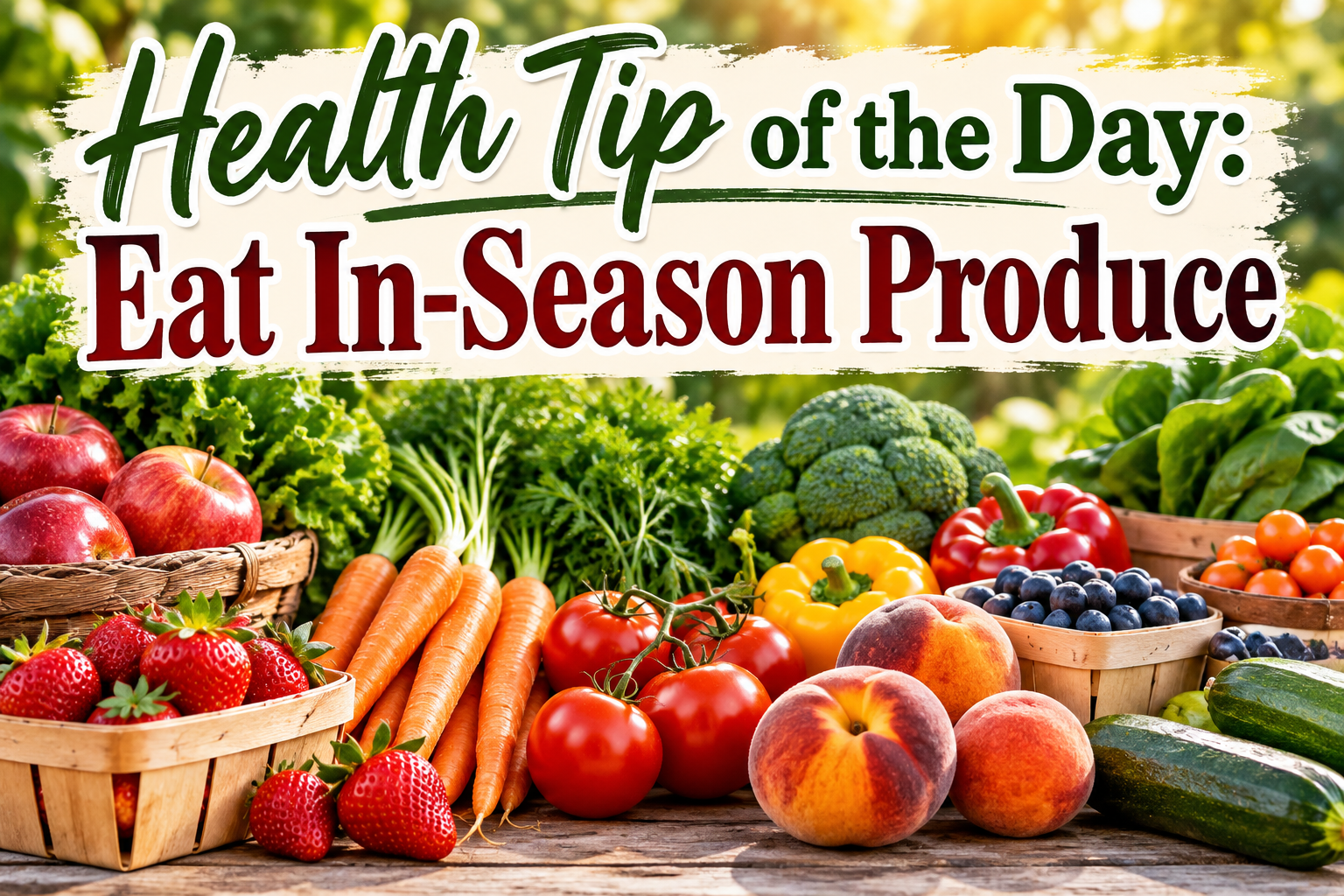
Eating healthy doesn’t have to be complicated or expensive. Sometimes, one of the simplest ways to improve your diet is to pay attention to what’s growing around you. Choosing fresh, in-season fruits and vegetables can help you enjoy delicious flavors, add more nutrients to your meals, and make healthier eating a natural part of your everyday routine.
Today’s Health Tip of the Day is all about eating in-season produce and discovering how this small change can make a big difference in your overall well-being.
What Does Eating In-Season Produce Mean?
Eating in-season produce means choosing fruits and vegetables that are naturally harvested during a particular time of year in your region.
Different fruits and vegetables grow best under different weather conditions. Some thrive during warm summer months, while others flourish in the cooler temperatures of fall and winter.
When you choose produce that’s in season, you’re often getting fruits and vegetables at their peak freshness, flavor, and availability.
Seasonal eating also encourages you to explore different foods throughout the year instead of relying on the same ingredients every week.
Why Eating In-Season Produce Is Good for Your Health
1. Enjoy Fresh and Nutritious Foods
Fresh fruits and vegetables provide essential vitamins, minerals, fiber, and antioxidants that support your overall health.
Seasonal produce harvested near its peak may offer excellent flavor and nutritional quality, especially when it reaches your kitchen soon after picking.
However, seasonal produce isn’t automatically more nutritious than frozen or out-of-season options. The most important thing is eating a variety of fruits and vegetables regularly.
2. Support a Strong Immune System
Many seasonal fruits and vegetables contain nutrients that help your immune system function properly.
For example:
- Oranges and strawberries provide vitamin C.
- Sweet potatoes and carrots contain beta-carotene, which the body converts into vitamin A.
- Spinach and kale provide vitamins and antioxidants.
- Broccoli contains vitamin C, fiber, and other beneficial plant compounds.
Including these foods in a balanced diet helps your body get the nutrients it needs to stay healthy.
3. Improve Digestive Health
Fruits and vegetables are excellent sources of dietary fiber, which plays an important role in healthy digestion.
Fiber helps support regular bowel movements, contributes to a healthy gut environment, and can help you feel satisfied after meals.
Seasonal choices such as apples, pears, squash, berries, and leafy greens can make it easier to increase your daily fiber intake.
4. Make Healthy Eating More Affordable
One of the biggest advantages of buying seasonal produce is that it can sometimes cost less.
When fruits and vegetables are abundant, grocery stores and farmers markets may offer better prices.
This means you can fill your plate with nutritious foods while keeping your grocery budget under control.
Buying produce that’s on sale, choosing frozen vegetables, and planning meals around affordable ingredients are also excellent ways to save money.
5. Add More Variety to Your Diet
Eating the same foods every day can become boring.
Seasonal eating encourages you to try different fruits, vegetables, recipes, and cooking methods throughout the year.
A varied diet also helps you consume a wider range of nutrients that support different functions throughout your body.
Best Fruits and Vegetables to Eat During Each Season
Seasonal availability depends on your location and growing conditions, but these are some common examples in the United States.
Spring: Fresh and Colorful
Spring brings tender vegetables and refreshing fruits that are perfect for lighter meals.
Spring produce includes:
- Asparagus
- Strawberries
- Spinach
- Radishes
- Peas
- Artichokes
- Spring onions
Healthy eating idea: Prepare a fresh spinach salad with sliced strawberries, walnuts, and a light balsamic dressing.
Summer: Juicy and Refreshing
Summer is known for colorful produce that helps make warm-weather meals fresh and satisfying.
Summer produce includes:
- Watermelon
- Blueberries
- Peaches
- Tomatoes
- Cucumbers
- Zucchini
- Bell peppers
Healthy eating idea: Make a refreshing summer salad with tomatoes, cucumbers, fresh herbs, and a drizzle of olive oil.
Fall: Comforting and Nutrient-Rich
Fall brings hearty fruits and vegetables that are perfect for warm, comforting meals.
Fall produce includes:
- Apples
- Pears
- Pumpkins
- Butternut squash
- Sweet potatoes
- Brussels sprouts
- Cauliflower
Healthy eating idea: Roast sweet potatoes, Brussels sprouts, and butternut squash with olive oil, garlic, and your favorite herbs.
Winter: Hearty and Nourishing
Winter offers plenty of nutritious vegetables and fruits that can brighten colder days.
Winter produce includes:
- Oranges
- Grapefruit
- Kale
- Cabbage
- Carrots
- Beets
- Turnips
Healthy eating idea: Prepare a warm vegetable soup with carrots, cabbage, kale, and beans for a satisfying meal.
Simple Ways to Eat More Seasonal Produce
You don’t have to completely change your diet to start enjoying seasonal fruits and vegetables.
Here are a few easy ways to begin:
- Visit your local farmers market. Explore what’s freshly harvested and available in your area.
- Check grocery store specials. Seasonal fruits and vegetables are often featured in weekly sales.
- Plan meals around fresh ingredients. Choose one or two seasonal vegetables and build your meals around them.
- Try something new each week. Experiment with a fruit or vegetable you don’t normally eat.
- Prepare healthy snacks. Keep washed fruit, sliced vegetables, or homemade vegetable dips ready.
- Freeze extra produce. Preserve seasonal fruits and vegetables for use throughout the year.
- Keep your meals colorful. Include different colors of fruits and vegetables to help increase variety.
How Much Produce Should You Eat Every Day?
The amount of fruits and vegetables you need depends on your age, sex, and activity level.
For many adults following a 2,000-calorie eating pattern, general dietary guidance recommends approximately:
- 2 cups of fruit daily
- 2½ cups of vegetables daily
These amounts can be adjusted based on individual nutritional needs.
Fresh, frozen, canned, and dried produce can all contribute to a healthy diet. When choosing canned options, look for vegetables with less added sodium and fruits packed in water or their own juice.
The goal is to make fruits and vegetables a regular part of your meals rather than worrying about perfection.
A Healthy Seasonal Eating Challenge
This week, challenge yourself to add at least one seasonal fruit or vegetable to your daily meals.
You might enjoy a fresh apple with breakfast, add roasted squash to dinner, or snack on crunchy carrots in the afternoon.
Pay attention to the flavors, textures, and different ways you can prepare these foods.
You may discover new favorites that make healthy eating more enjoyable.
Final Thoughts
Eating in-season produce is a simple, practical way to bring more freshness, variety, and nutrition into your daily routine.
Seasonal fruits and vegetables can inspire healthier meals, introduce you to new flavors, and sometimes help you save money on groceries.
Remember, you don’t need a perfect diet to improve your health. Small, consistent choices can lead to meaningful improvements over time.
Whether you’re enjoying juicy summer peaches, crisp fall apples, fresh spring asparagus, or hearty winter greens, every serving of fruits and vegetables is an opportunity to nourish your body.
Health Tip of the Day: Choose one fruit or vegetable that’s in season this week and find a delicious way to add it to your meals. Healthy living starts with simple choices, one fresh bite at a time.
A healthier you begins with what you put on your plate!



Leave a Reply