Life has a way of filling every available minute. Work deadlines, family obligations, household chores, appointments, emails, social media, and unexpected responsibilities often leave little room for one important person—you. Many people wake up each morning already thinking about everyone else they need to help before considering their own well-being.
If this sounds familiar, you’re not alone.
One of the healthiest habits you can develop isn’t a new diet, exercise routine, or supplement. It’s making a conscious decision to set aside time for yourself every single day.
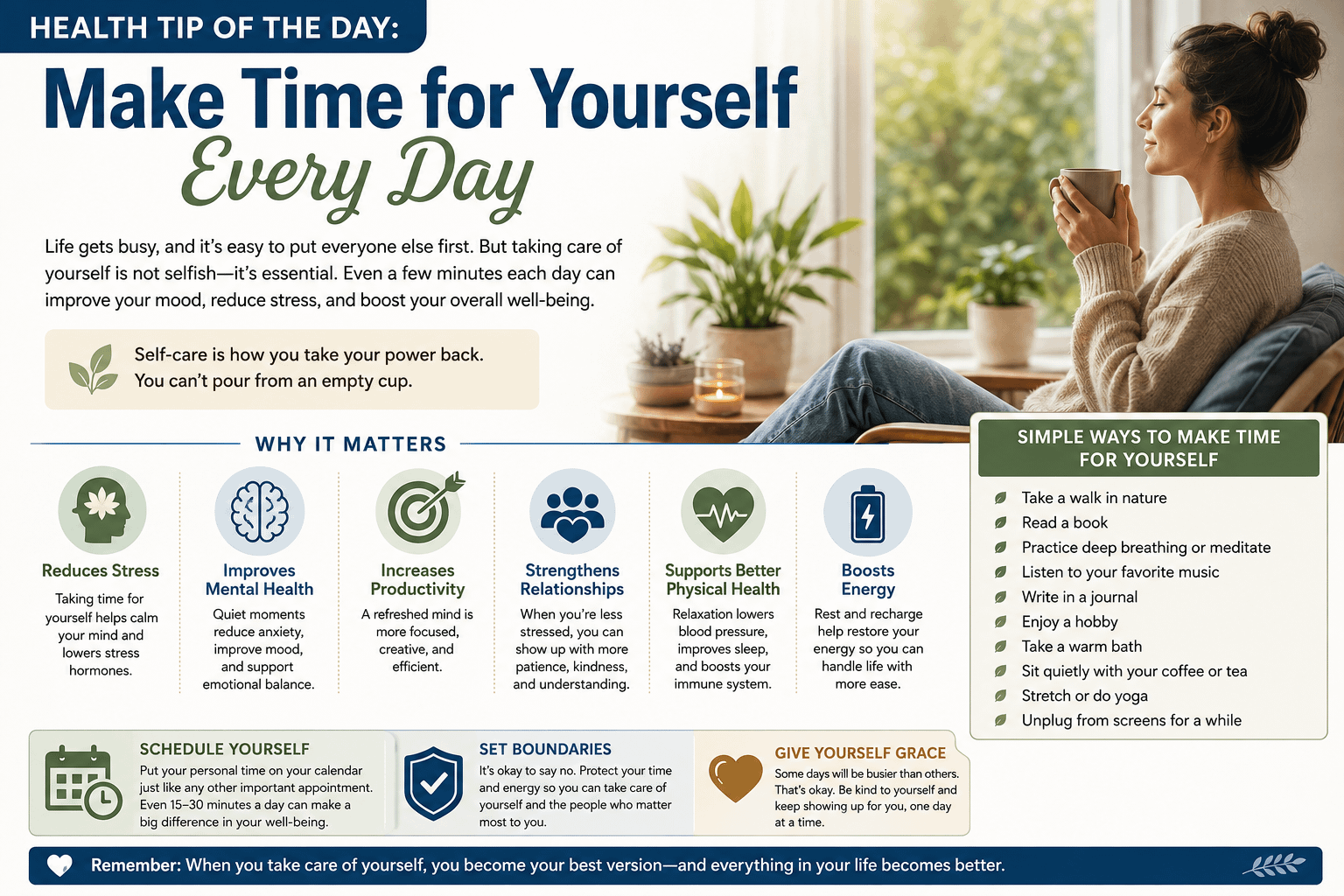
Today’s Health Tip: Make time for yourself every day.
This doesn’t require hours of free time or an expensive getaway. Even 15 to 30 minutes devoted entirely to your own physical, mental, or emotional well-being can make a remarkable difference. Those small moments of self-care can improve your mood, reduce stress, sharpen your focus, strengthen your relationships, and help you become healthier in every area of life.
Taking care of yourself isn’t selfish—it is one of the most important investments you can make.
Why We Often Put Ourselves Last
Many people have been taught that putting others first is the right thing to do. Parents sacrifice for children. Caregivers devote themselves to loved ones. Employees stay late to finish projects. Friends become the person everyone relies on.
While generosity and responsibility are admirable qualities, constantly neglecting your own needs can have serious consequences.
When you continuously give without allowing yourself time to recover, your energy slowly disappears. Stress builds, patience becomes harder to find, and eventually even simple tasks begin to feel overwhelming.
You may notice signs such as:
- Feeling exhausted even after sleeping
- Losing motivation
- Becoming easily irritated
- Feeling emotionally numb
- Struggling to concentrate
- Experiencing headaches or muscle tension
- Having difficulty sleeping
- Feeling anxious throughout the day
These are often your body’s way of saying it needs rest and attention.
Your Health Depends on Recovery
Think about athletes.
Professional athletes don’t improve because they train nonstop. They become stronger because they combine hard work with proper recovery.
Your mind works the same way.
Constant mental activity without breaks eventually decreases productivity, creativity, and emotional resilience.
Daily personal time allows your brain to recover from the demands of life.
During moments of relaxation:
- Your breathing slows.
- Your heart rate decreases.
- Stress hormones begin to decline.
- Your muscles release tension.
- Your nervous system becomes more balanced.
Over time, these small periods of recovery can significantly improve your overall health.
The Physical Benefits of Daily Personal Time
Many people think self-care only benefits mental health, but it also improves physical health.
Making time to relax each day may help:
Lower Blood Pressure
Chronic stress keeps your body in “fight or flight” mode. Regular relaxation helps your cardiovascular system recover.
Improve Sleep Quality
People who consistently unwind before bedtime often fall asleep faster and experience deeper, more restorative sleep.
Strengthen Your Immune System
Long-term stress weakens immune function. Relaxation allows your body to better defend itself against illness.
Reduce Muscle Tension
Stress often causes tight shoulders, neck pain, headaches, and back discomfort. Quiet moments and gentle stretching help release built-up tension.
Increase Energy
Although resting seems like doing less, it actually helps restore the energy needed to accomplish more later.
Mental Health Benefits
Taking daily personal time also supports emotional wellness.
Reduces Anxiety
Stepping away from constant demands gives your mind an opportunity to slow racing thoughts and regain perspective.
Improves Focus
A rested brain processes information more efficiently, helping you make better decisions throughout the day.
Encourages Creativity
Many of our best ideas appear during quiet moments rather than busy ones. Walking, journaling, or simply sitting outside can inspire creative thinking.
Improves Emotional Control
When you’re well-rested emotionally, you’re less likely to react impulsively during stressful situations.
You Can’t Pour from an Empty Cup
Imagine carrying a pitcher of water and pouring a little into everyone else’s glass all day long.
Eventually, the pitcher becomes empty.
No matter how much you want to help others, you can’t give what you no longer have.
Your emotional energy works exactly the same way.
Self-care refills your pitcher.
When you regularly care for yourself, you have more patience, kindness, compassion, and energy to share with others.
What Personal Time Looks Like
One of the biggest misconceptions about self-care is that it has to be elaborate.
It doesn’t.
Your daily personal time should simply be something that helps you feel refreshed.
Some ideas include:
Enjoy Nature
Take a walk around your neighborhood.
Sit by a lake.
Listen to birds singing.
Watch a sunset.
Fresh air and natural surroundings often calm the mind.
Read
Even reading ten pages of a good book can transport your mind away from daily stress.
Journal
Writing down your thoughts helps organize emotions, reduce anxiety, and improve self-awareness.
Try writing:
- Three things you’re grateful for.
- One goal for tomorrow.
- A challenge you’re facing.
- Something that made you smile today.
Exercise
Movement doesn’t have to mean an intense workout.
A leisurely walk, gentle stretching, yoga, or cycling can improve both physical and mental health.
Pray or Meditate
Quiet reflection helps many people find peace, hope, and perspective during difficult seasons.
Listen to Music
Your favorite songs can instantly improve your mood and reduce stress.
Enjoy a Hobby
Painting, woodworking, photography, baking, knitting, fishing, gardening, or playing an instrument all provide healthy mental breaks.
Schedule Yourself
One reason self-care often doesn’t happen is because we expect it to happen naturally.
Unfortunately, busy schedules rarely leave extra time.
Treat personal time like an appointment.
Put it on your calendar.
Protect it the same way you would protect:
- A doctor’s appointment
- A work meeting
- A family event
- An important deadline
When you schedule yourself, you’re communicating that your well-being matters too.
Learn the Power of Saying No
Sometimes making time for yourself requires setting healthy boundaries.
Many people overcommit because they don’t want to disappoint others.
However, constantly saying yes often means saying no to yourself.
Healthy boundaries might sound like:
- “I can’t today.”
- “I’m unavailable this evening.”
- “I need some time to recharge.”
- “Maybe another day.”
Protecting your time isn’t rude.
It’s responsible.
Reduce Screen Time
Technology is useful, but it also demands constant attention.
Many people spend several hours every day:
- Checking social media
- Reading emails
- Watching television
- Scrolling news feeds
- Responding to messages
Consider spending part of your personal time away from screens.
Instead:
- Sit outside.
- Read a printed book.
- Practice breathing exercises.
- Take a walk.
- Have an uninterrupted conversation.
- Simply enjoy silence.
You may be surprised how refreshing it feels.
The Importance of Doing Nothing
Modern society celebrates constant productivity.
We often feel guilty if we’re not accomplishing something.
But resting is productive.
Doing nothing for a few minutes allows your brain to process information, recover from stress, and prepare for the next challenge.
Silence isn’t wasted time.
It’s healing time.
Self-Care Changes Relationships
When you’re constantly exhausted, even small frustrations can feel overwhelming.
When you’re rested, you’re more likely to:
- Listen patiently.
- Communicate kindly.
- Solve problems calmly.
- Show empathy.
- Enjoy spending time with loved ones.
Taking care of yourself improves every relationship in your life.
Small Habits Create Big Results
You don’t have to completely redesign your schedule.
Start with simple habits:
- Wake up 15 minutes earlier.
- Drink your morning coffee outside.
- Take a short walk after dinner.
- Read before bed.
- Stretch each morning.
- Practice gratitude every evening.
- Listen to calming music during your commute.
Small daily habits often create life-changing results over months and years.
Give Yourself Grace
There will be days when life gets busy and your routine is interrupted.
That’s okay.
Self-care isn’t about perfection.
It’s about consistency.
Tomorrow is another opportunity to make yourself a priority.
Celebrate progress rather than striving for perfection.
Final Thoughts
Your responsibilities are important.
Your family is important.
Your career is important.
But so are you.
Making time for yourself every day isn’t about escaping responsibilities or avoiding hard work. It’s about giving your body, mind, and spirit the care they need to continue living well.
When you regularly recharge, you’ll have more energy to pursue your goals, care for the people you love, and enjoy the moments that make life meaningful.
Remember, self-care isn’t a luxury reserved for special occasions. It’s a daily habit that helps you become healthier, stronger, calmer, and happier.
Today’s health tip is one worth practicing every day:
Make time for yourself.
Even a few quiet moments today can become the foundation of a healthier tomorrow.
Leave a Reply