Snacking sometimes gets a bad reputation. When people hear the word “snack,” they may immediately think about potato chips, cookies, candy, pastries, or other foods that are easy to grab but may not provide much nutrition.
But snacking itself is not necessarily unhealthy.
In fact, choosing the right snacks can be a useful part of a balanced diet. A healthy snack can help satisfy hunger between meals, provide important nutrients, and make it easier to avoid reaching for less nutritious options when you become extremely hungry.
The important question is not necessarily whether you should snack.
It is what you choose to snack on.
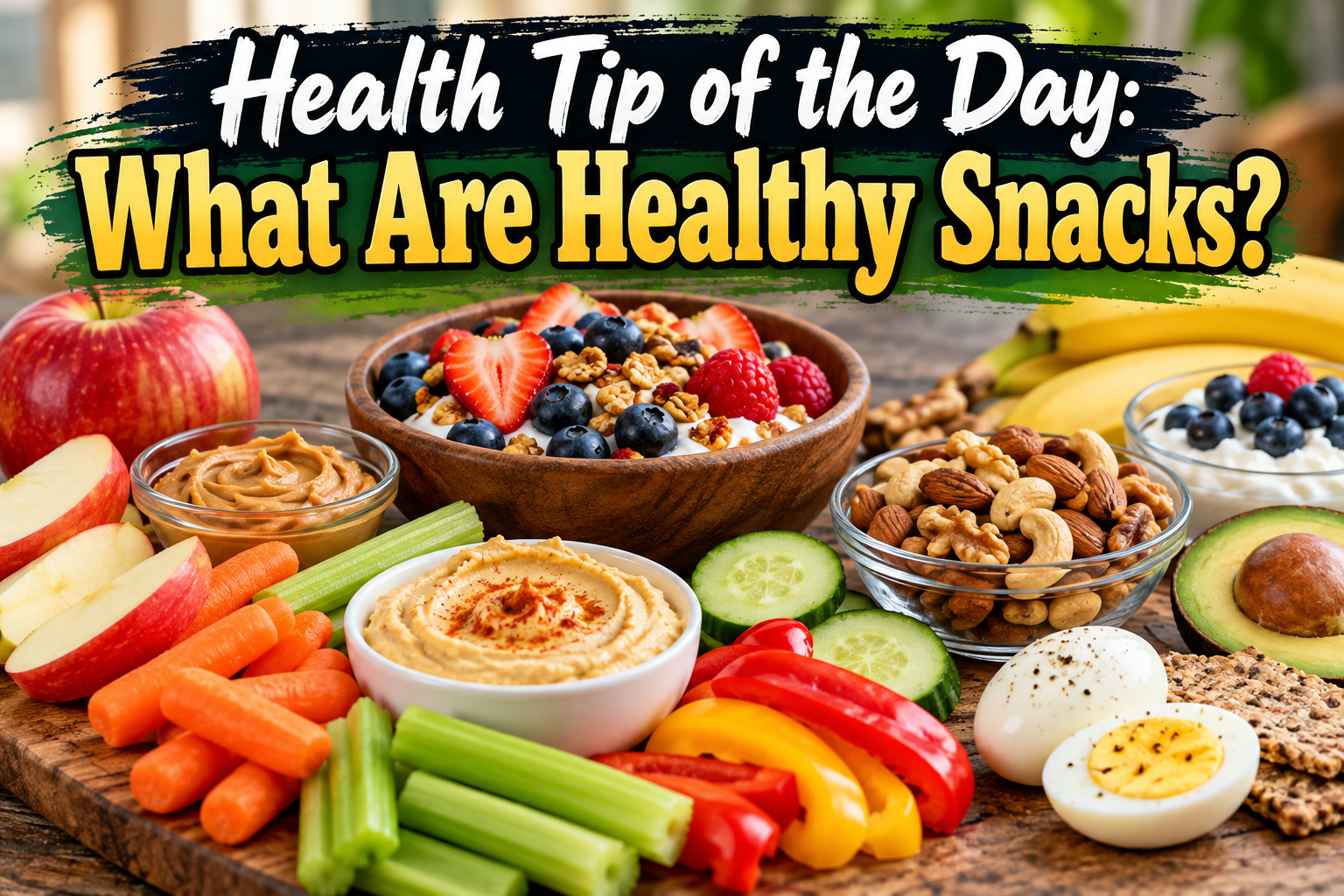
Healthy snacks generally contain foods that provide nutritional value while helping you feel satisfied. Fruits, vegetables, whole grains, nuts, seeds, yogurt, eggs, beans, and other nutrient-dense foods can all be part of a healthy snacking routine.
Today’s health tip is simple:
When you need a snack, choose something that gives your body nutrition instead of simply giving you something to eat.
What Makes a Snack Healthy?
There is no single food that qualifies as the perfect healthy snack for everyone.
People have different nutritional needs, activity levels, medical considerations, preferences, and goals. However, healthy snacks generally emphasize nutrient-dense foods rather than foods containing large amounts of added sugar, sodium, or highly refined ingredients.
One useful approach is to combine protein, fiber, or healthy fats.
These nutrients can make a snack more satisfying.
For example, an apple is a nutritious snack on its own. Pairing that apple with a small amount of peanut or another nut butter adds protein and fat, potentially making the snack more filling.
Instead of thinking only about calories, consider asking yourself:
What nutrition am I getting from this snack?
That simple question can change the way you choose food.
1. Fresh Fruit
Fruit is one of the easiest healthy snacks.
Apples, bananas, oranges, strawberries, blueberries, grapes, peaches, pears, watermelon, pineapple, and many other fruits provide vitamins, minerals, fiber, and naturally occurring sugars.
Fruit is also convenient.
An apple or banana requires almost no preparation, making it a practical choice when you need something quickly.
Try keeping fruit somewhere visible at home. When healthier foods are convenient and easy to see, you may be more likely to choose them.
Some simple choices include:
- Apple slices
- Banana
- Orange
- Grapes
- Berries
- Pear
- Peach
- Watermelon
- Pineapple
- Mixed fruit bowl
Fruit can also be combined with other foods for a more substantial snack.
2. Apple Slices With Peanut Butter
Apple slices and peanut butter are a classic combination.
The apple provides fiber and carbohydrates, while peanut butter provides fat and protein.
Just pay attention to portion size with nut butters because they are calorie-dense. You can also look for varieties without large amounts of added sugar or unnecessary ingredients.
If peanut butter is not your preference, almond, cashew, or sunflower seed butter can provide alternatives.
3. Greek Yogurt With Berries
Plain Greek yogurt can be another nutritious snack because it provides protein and calcium.
Add blueberries, strawberries, raspberries, or another favorite fruit for sweetness and additional nutrients.
You can also add a small amount of nuts or seeds for texture.
When shopping for yogurt, check the nutrition label. Some flavored yogurts contain substantial amounts of added sugar.
Choosing plain yogurt and adding your own fruit gives you more control over the sweetness.
4. Vegetables With Hummus
Sometimes we automatically associate snacks with sweet foods.
They do not have to be sweet.
Carrots, celery, cucumber slices, bell peppers, broccoli, snap peas, and other vegetables can make excellent snacks.
Pair them with hummus for additional flavor and nutrients.
Preparing vegetables ahead of time can make this option much easier. Wash and cut several servings at once and store them in the refrigerator.
When hunger arrives, your snack is already waiting.
5. A Small Handful of Nuts
Almonds, walnuts, pistachios, cashews, peanuts, and other nuts can provide protein, healthy fats, fiber, vitamins, and minerals.
They are also extremely portable.
You can keep a small portion in your bag, desk, or another convenient location.
However, nuts are calorie-dense, so portions matter.
Instead of eating directly from a large container, put a reasonable portion into a small bowl or container.
6. Hard-Boiled Eggs
Eggs are not only breakfast food.
A hard-boiled egg can be a convenient protein-rich snack.
Prepare several ahead of time and keep them refrigerated so you have something ready when hunger hits.
You could pair an egg with vegetables or a piece of fruit for a more balanced snack.
7. Cottage Cheese and Fruit
Cottage cheese provides protein and can pair well with different fruits.
Try it with:
- Pineapple
- Peaches
- Berries
- Banana slices
- Melon
If you prefer something savory, cottage cheese can also be combined with tomatoes, cucumber, pepper, or herbs.
8. Air-Popped Popcorn
Popcorn can actually be a whole-grain snack.
The problem often comes from what gets added to it.
Large quantities of butter, salt, caramel, cheese flavoring, or sugary coatings can dramatically change its nutritional profile.
Air-popped popcorn with modest seasoning can be a lighter snack that still provides plenty of volume.
Try experimenting with herbs and spices instead of automatically covering it with butter and salt.
9. Whole-Grain Crackers With Cheese
Whole-grain crackers paired with cheese can provide carbohydrates, fiber, protein, and fat.
Again, portion size matters.
Instead of sitting down with an entire box of crackers and a large block of cheese, prepare your serving first.
A small plate makes it easier to see how much you are actually eating.
10. Oatmeal
Oatmeal does not have to be reserved for breakfast either.
A small bowl of oatmeal can make a satisfying snack, particularly when you want something warm.
Try adding:
- Cinnamon
- Blueberries
- Banana
- Strawberries
- Chopped walnuts
- Chia seeds
Try to avoid turning oatmeal into dessert by adding excessive amounts of sugar, syrup, or sweet toppings.
11. Homemade Trail Mix
Trail mix can be nutritious, but commercial versions sometimes contain large quantities of candy, chocolate, sugar, or salt.
Making your own gives you control over the ingredients.
You might combine unsalted nuts, seeds, a modest amount of dried fruit, and whole-grain cereal.
Remember that dried fruit and nuts are both concentrated sources of calories, so a relatively small serving can be satisfying.
12. Avocado on Whole-Grain Toast
Avocado provides unsaturated fats, fiber, and other nutrients.
Spread some avocado over a slice of whole-grain toast and add pepper or another seasoning.
You could also add tomato slices for extra flavor.
This is a good example of a snack that feels more like a small meal when you need something more substantial.
13. Banana With Nut Butter
Bananas are portable, inexpensive, and naturally sweet.
Pair a banana with peanut, almond, or another nut butter and you have carbohydrates, fiber, fat, and protein in one simple snack.
This can also be useful before or after physical activity, depending on your individual nutritional needs.
14. Roasted Chickpeas
If you enjoy crunchy snacks, roasted chickpeas can be an alternative to chips.
Chickpeas provide plant-based protein and fiber.
You can season them with spices such as garlic, paprika, cumin, or pepper and roast them until crispy.
The result is something crunchy and flavorful that also provides useful nutrients.
15. Smoothies
A smoothie can be healthy—or it can become an extremely sugary drink.
It depends on what goes into it.
A simple smoothie might contain plain Greek yogurt or milk, fruit, leafy greens, and ice.
You do not necessarily need syrups, ice cream, or large amounts of fruit juice.
Whole fruits also provide fiber that juice often lacks.
Healthy Snacks Don’t Have to Be Boring
One reason people give up on healthier eating is because they believe nutritious food has to be bland.
It doesn’t.
Seasoning and different combinations can completely change your snacks.
Experiment with cinnamon, garlic, pepper, paprika, herbs, lemon juice, lime juice, or other flavors you enjoy.
Healthy eating becomes much easier to maintain when you actually enjoy what you are eating.
Watch Out for the “Healthy” Label
One of the biggest mistakes you can make is assuming something is nutritious simply because the package uses words such as:
“Natural.”
“Organic.”
“Protein.”
“Made with whole grains.”
“Low fat.”
“Gluten free.”
Those descriptions do not automatically mean a food is nutritionally balanced.
Turn the package around and look at the Nutrition Facts label and ingredients.
Pay attention to serving size, added sugars, sodium, saturated fat, fiber, and protein.
Marketing appears on the front.
The useful nutritional information is usually on the back.
Portion Size Still Matters
A nutritious food can still provide more calories than you intended if portions become very large.
Nuts are a perfect example.
They contain valuable nutrients, but eating several large handfuls is very different from having a modest serving.
The same principle applies to nut butter, cheese, trail mix, dried fruit, and other calorie-dense foods.
Healthy eating is not about fearing calories.
It is about becoming more aware of how much you’re eating and whether that amount matches your needs.
Plan Your Snacks Before You’re Hungry
This might be one of the most practical tips of all.
Do not wait until you are extremely hungry to decide what to eat.
That is when convenience usually wins.
Prepare healthy options ahead of time.
Wash your fruit.
Cut your vegetables.
Boil some eggs.
Portion your nuts.
Prepare yogurt and berries.
Make individual containers of hummus and vegetables.
When healthy food becomes the easiest option available, making a healthier choice requires much less effort.
Keep Healthy Snacks Where You Can See Them
Your environment can influence your choices.
If cookies, chips, and candy are sitting on the counter while apples are hidden in the back of the refrigerator, guess which foods are easier to grab?
Reverse the situation.
Keep a fruit bowl somewhere visible.
Place prepared vegetables near the front of the refrigerator.
Keep healthier snacks in convenient locations.
Make the better choice the easy choice.
Are Chips, Cookies, and Candy Completely Off Limits?
Healthy eating does not have to mean never eating your favorite foods again.
For many people, an all-or-nothing approach is difficult to maintain.
A cookie occasionally does not erase an otherwise nutritious diet.
A handful of chips does not automatically make someone unhealthy.
Your overall eating pattern matters much more than a single snack.
The goal is not perfection.
The goal is making nutritious choices more often.
Listen to Your Hunger
Before grabbing a snack, ask yourself whether you are actually hungry.
Sometimes we eat because we are bored, stressed, tired, watching television, or simply because food is nearby.
There is nothing wrong with enjoying food, but becoming aware of why you’re eating can help you develop a healthier relationship with it.
If you’re genuinely hungry, eat.
If you’re bored, perhaps you need something else—a walk, conversation, activity, rest, or simply something to occupy your attention.
A Simple Formula for Building a Healthy Snack
You do not need complicated recipes.
Try combining a food containing fiber or complex carbohydrates with something containing protein or healthy fat.
For example:
Apple + peanut butter.
Berries + Greek yogurt.
Carrots + hummus.
Whole-grain crackers + cheese.
Banana + almond butter.
Whole-grain toast + avocado.
Fruit + nuts.
The combinations are almost endless.
Small Choices Add Up
Improving your health rarely comes down to one dramatic decision.
It usually happens through hundreds of small decisions repeated over time.
Choosing an apple instead of candy once will not transform your health.
But making that type of choice regularly can contribute to a healthier overall eating pattern.
You do not have to change everything overnight.
Start with one snack.
The next time hunger hits between meals, instead of automatically reaching for chips, cookies, or candy, try fruit, yogurt, nuts, vegetables, hummus, eggs, or another nutrient-dense option.
Then do it again tomorrow.
Over time, healthier choices can become normal choices.
Health Tip of the Day
Prepare your healthy snacks before you need them.
Keep fruits, vegetables, yogurt, nuts, eggs, hummus, and other nutritious options readily available.
Healthy eating becomes much easier when you don’t have to make a complicated decision every time you’re hungry.
You do not need a perfect diet.
You simply need to keep making choices that support your health more often than choices that don’t.
What is your favorite healthy snack when you get hungry between meals?

Leave a Reply