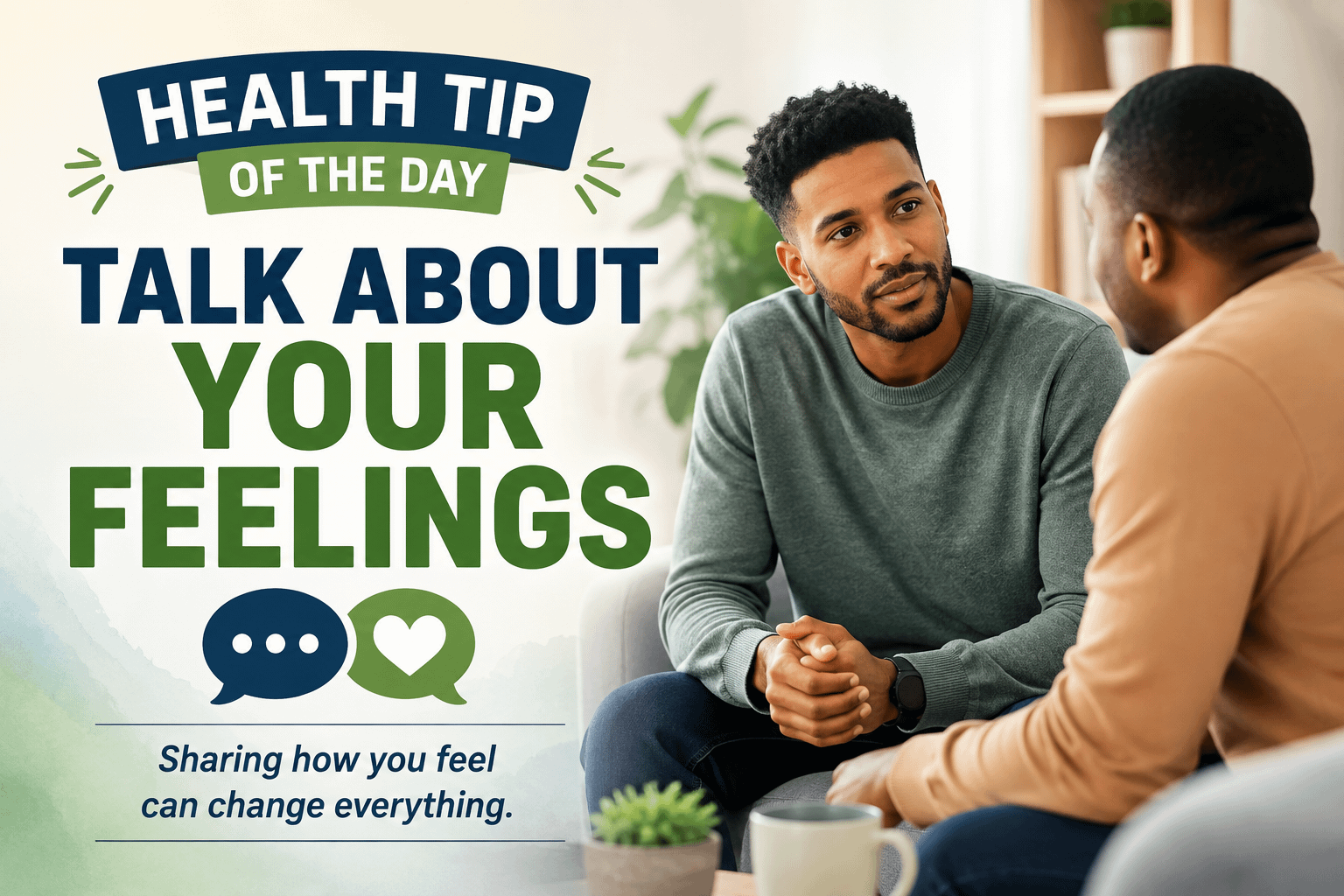
Category: Health & Wellness

  • Health Tip of the Day: Talk About Your Feelings

    Health Tip of the Day: Talk About Your Feelings

    Talking about your feelings may sound simple, but for many people, it is one of the hardest things to do.

    We learn how to take care of our physical health in countless ways. We are told to eat healthier foods, drink enough water, exercise regularly, get enough sleep, and schedule medical checkups. Yet emotional health deserves attention too.

    Sometimes taking care of yourself begins with three simple words:

    “I’m not okay.”

    Other times, it might sound like:

    “I’m overwhelmed.”

    “I’m scared.”

    “I’m hurting.”

    “I feel alone.”

    “I need someone to talk to.”

    You don’t have to wait until everything becomes unbearable before talking about what you are feeling. Sharing your emotions with someone you trust can help you process difficult experiences, feel supported, and recognize that you don’t have to carry every burden silently.

    Feelings Are Part of Being Human

    Everyone experiences emotions.

    Happiness. Sadness. Anger. Fear. Loneliness. Excitement. Frustration. Grief. Love. Anxiety. Hope. Disappointment.

    There are times when several of these emotions can exist at once.

    You can be grateful for your life while still struggling.

    You can love someone while being frustrated with them.

    You can smile while carrying sadness that nobody around you sees.

    You can experience moments of happiness while grieving someone you deeply miss.

    Emotional health isn’t about feeling happy every moment of the day. It is about recognizing what you are feeling, understanding those emotions, and finding healthy ways to respond to them.

    One of those ways is talking.

    Why We Sometimes Keep Everything Inside

    There are countless reasons people hide their emotions.

    Some people don’t want to burden their families or friends. Others are afraid they will be judged or misunderstood. Some have opened up before and received a response that made them regret saying anything.

    Others were raised to believe emotions should remain private.

    This can be especially difficult for men.

    Many men grow up hearing messages such as:

    “Be strong.”

    “Don’t cry.”

    “Handle it yourself.”

    “Get over it.”

    “Don’t show weakness.”

    After hearing those messages for years, opening up can feel uncomfortable or even wrong. A man may become incredibly good at saying, “I’m fine,” regardless of what is happening internally.

    But strength doesn’t have to mean silence.

    Sometimes strength means admitting that something hurts.

    Sometimes strength means telling someone you are struggling.

    Sometimes strength means asking for help before you reach your breaking point.

    You Don’t Have to Explain Everything

    Talking about your feelings doesn’t mean sitting down and telling someone every detail of your life.

    Start wherever you are comfortable.

    You might simply say:

    “I’ve had a difficult week.”

    That sentence can open a door.

    Maybe the next sentence becomes:

    “I’ve been feeling overwhelmed lately.”

    And eventually:

    “There’s something I’ve been carrying that I think I need to talk about.”

    You control how much you share and when you share it.

    Sometimes people avoid opening up because they don’t know exactly how to describe what they are feeling. That’s okay too.

    You can say:

    “I don’t really know how to explain it. I just know I haven’t felt like myself lately.”

    You don’t need the perfect words.

    You just need somewhere to begin.

    Find Someone You Trust

    Not everyone deserves access to your most vulnerable thoughts and emotions.

    Choose someone who has demonstrated that they can listen without immediately judging, criticizing, dismissing, or turning the conversation back toward themselves.

    That person might be your spouse or partner, family member, close friend, mentor, faith leader, counselor, therapist, or another trusted person.

    The important thing is finding someone with whom you feel emotionally safe.

    Sometimes one meaningful conversation with the right person can make a difficult day feel a little less lonely.

    They may not be able to solve your problem.

    They don’t necessarily need to.

    Sometimes what we desperately need isn’t a solution.

    We need someone to listen.

    Talking Can Help You Understand What You’re Feeling

    Have you ever had something racing through your mind for hours, only to understand it differently once you finally said it out loud?

    There is something powerful about putting emotions into words.

    When thoughts stay inside your head, they can become tangled together.

    You might simultaneously feel angry, hurt, disappointed, scared, and confused without completely understanding why.

    Talking forces you to slow those thoughts down.

    You begin identifying what is actually happening.

    Instead of:

    “Everything is terrible.”

    You may realize:

    “I’m overwhelmed because I have too many responsibilities right now.”

    Instead of:

    “Nobody cares.”

    You might discover:

    “I’ve been feeling lonely because I haven’t spent meaningful time with anyone lately.”

    Naming what you’re experiencing doesn’t automatically make the problem disappear, but understanding the problem can help you determine what you need next.

    Don’t Judge Yourself for What You Feel

    One of the biggest obstacles to emotional openness is believing you shouldn’t feel a certain way.

    You may think:

    “I shouldn’t be sad about this.”

    “I shouldn’t still be grieving.”

    “I shouldn’t be angry.”

    “I should be stronger.”

    “I should have moved on already.”

    But emotions don’t always follow the timeline we think they should.

    You may understand something logically while still struggling with it emotionally.

    Instead of judging yourself immediately, become curious about what you are experiencing.

    Ask yourself:

    What am I actually feeling right now?

    Then ask:

    Why might I be feeling this way?

    Finally:

    What do I need?

    Sometimes you need rest.

    Sometimes you need reassurance.

    Sometimes you need boundaries.

    Sometimes you need companionship.

    Sometimes you need to cry.

    Sometimes you need professional support.

    And sometimes you simply need someone to sit beside you and listen.

    Talking About Grief Is Especially Important

    Grief can be incredibly isolating.

    When someone you love dies, the world continues moving even though part of your world has stopped.

    People return to their routines.

    Conversations become normal again.

    Holidays continue arriving.

    Birthdays appear on the calendar.

    Years pass.

    Yet love doesn’t disappear simply because time has passed.

    Talking about the person you miss can be an important part of carrying grief.

    Say their name.

    Tell their stories.

    Share the memories that make you laugh.

    Talk about the moments that still make you cry.

    Tell someone when an anniversary, birthday, song, photograph, smell, or unexpected memory has made the grief feel especially heavy.

    You don’t have to pretend that someone stopped mattering simply because they are no longer physically here.

    Sometimes talking about grief isn’t about trying to “move on.”

    It is about giving your love somewhere to go.

    Your Feelings Don’t Always Need to Be Fixed

    One reason people hesitate to talk is because conversations sometimes turn into unwanted advice.

    You tell someone you’re hurting, and they immediately start explaining what you should do.

    But sometimes you don’t want a solution.

    You want understanding.

    It is perfectly reasonable to tell someone what you need from the conversation.

    Try saying:

    “I don’t really need advice right now. I just need someone to listen.”

    That simple statement can completely change the conversation.

    A good listener doesn’t always need to have an answer.

    Sometimes the most meaningful response is:

    “I’m here.”

    Writing Can Help When Talking Feels Too Difficult

    If speaking about your emotions feels overwhelming, start by writing them down.

    You don’t have to show anyone what you write.

    Open a notebook, journal, or note on your phone and complete this sentence:

    “Today I feel…”

    Then keep writing.

    Don’t worry about grammar.

    Don’t worry about spelling.

    Don’t worry about whether your feelings make sense.

    Just write honestly.

    You may discover emotions you didn’t realize you were carrying.

    Writing can also help you prepare for a conversation. If you struggle to explain yourself verbally, write down what you want to say beforehand.

    You can even send someone a message such as:

    “There’s something I’ve been struggling with, and I’d really like to talk when you have some time.”

    You don’t have to start with the entire story.

    Start with the invitation.

    Check In With the People You Love

    Talking about feelings isn’t only about sharing your own.

    It is also about creating space for other people to share theirs.

    Instead of always asking:

    “How are you?”

    Try asking:

    “How are you really doing?”

    Then give the person time to answer.

    If they say they are struggling, resist the urge to immediately compare their experience to yours.

    Listen.

    Ask questions.

    Let them know they don’t have to pretend around you.

    Sometimes the person who appears strongest is carrying something nobody knows about.

    Sometimes the funniest person in the room is hurting.

    Sometimes the person who is constantly helping everyone else desperately needs someone to ask how they are doing.

    Pay attention to the people you love.

    Make Emotional Check-Ins a Habit

    You don’t have to wait for a crisis to talk about your emotional health.

    Make it part of your regular routine.

    Once a day, take a moment and ask yourself:

    What am I feeling today?

    What has been weighing on me?

    What made me happy today?

    Is there something I’m avoiding?

    Do I need to talk to someone?

    The goal isn’t to analyze every emotion endlessly. It is simply to become more aware of what is happening inside you.

    Emotions are easier to address when you notice them before they become overwhelming.

    Know When You Need More Support

    Friends and family can provide tremendous emotional support, but sometimes what you’re experiencing requires additional help.

    If difficult emotions are persistent, interfering with everyday life, damaging relationships, affecting your ability to work or sleep, or becoming increasingly difficult to manage, consider speaking with a qualified mental health professional.

    Therapy and counseling provide structured spaces where you can discuss emotions, experiences, grief, stress, relationships, and other challenges.

    Seeking professional support isn’t an admission that you have failed.

    It is another way of taking your health seriously.

    Just as you might see a medical professional when something is wrong physically, there are times when getting professional support for your emotional well-being makes sense.

    And if you ever feel that you might hurt yourself or someone else, seek immediate help from emergency services or an appropriate crisis resource where you live.

    Being Vulnerable Can Strengthen Relationships

    Healthy relationships require more than conversations about schedules, bills, errands, work, children, and weekend plans.

    They require emotional connection.

    That means sometimes saying:

    “That hurt me.”

    “I’m afraid of losing you.”

    “I’ve been feeling disconnected.”

    “I appreciate you.”

    “I need you right now.”

    “I love you.”

    Vulnerability carries risk because you are allowing someone to see parts of yourself you normally protect.

    But when vulnerability is met with compassion and respect, it can create deeper trust.

    People cannot always understand what you need if you never tell them what you’re experiencing.

    You Can Be Strong and Still Need Someone

    There is a harmful idea that strong people should be able to handle everything alone.

    But human beings aren’t designed to live completely disconnected from one another.

    We need relationships.

    We need conversation.

    We need encouragement.

    We need people who celebrate with us when life is good and sit beside us when life becomes painful.

    You can be independent and still need support.

    You can be resilient and still have difficult days.

    You can be strong and still cry.

    You can encourage everyone around you and still need encouragement yourself.

    Needing someone doesn’t erase your strength.

    Don’t Wait Until You’re Falling Apart

    One of the most important lessons about emotional health is learning to speak before everything becomes unbearable.

    Talk when you’re frustrated.

    Talk when you’re lonely.

    Talk when you’re grieving.

    Talk when you’re confused.

    Talk when you’re afraid.

    Talk when something is bothering you and you can’t seem to shake it.

    And don’t forget to talk about the good things too.

    Share your excitement.

    Celebrate your victories.

    Tell someone when you’re proud of yourself.

    Express gratitude.

    Tell the people you love how much they mean to you.

    Emotional openness isn’t only for painful moments.

    It allows us to experience life’s joyful moments more deeply too.

    Today’s Health Tip

    Talk about your feelings.

    You don’t have to tell everyone everything.

    You don’t have to become vulnerable with people you don’t trust.

    And you don’t have to find the perfect words.

    Just stop convincing yourself that you always have to carry everything alone.

    Find someone safe.

    Start small.

    Tell the truth about how you’re doing.

    Listen when others do the same.

    And remember that taking care of your emotional well-being is part of taking care of your overall health.

    Sometimes the healthiest thing you can do today isn’t another workout, another glass of water, or another healthy meal.

    Sometimes it’s sitting across from someone you trust and finally saying:

    “Can we talk? I’ve been holding something inside for a while.”

    That conversation might not solve everything.

    But it may make what you’re carrying feel a little less heavy.

    Who is someone in your life you feel safe enough to talk to when you need to share what’s really on your heart?
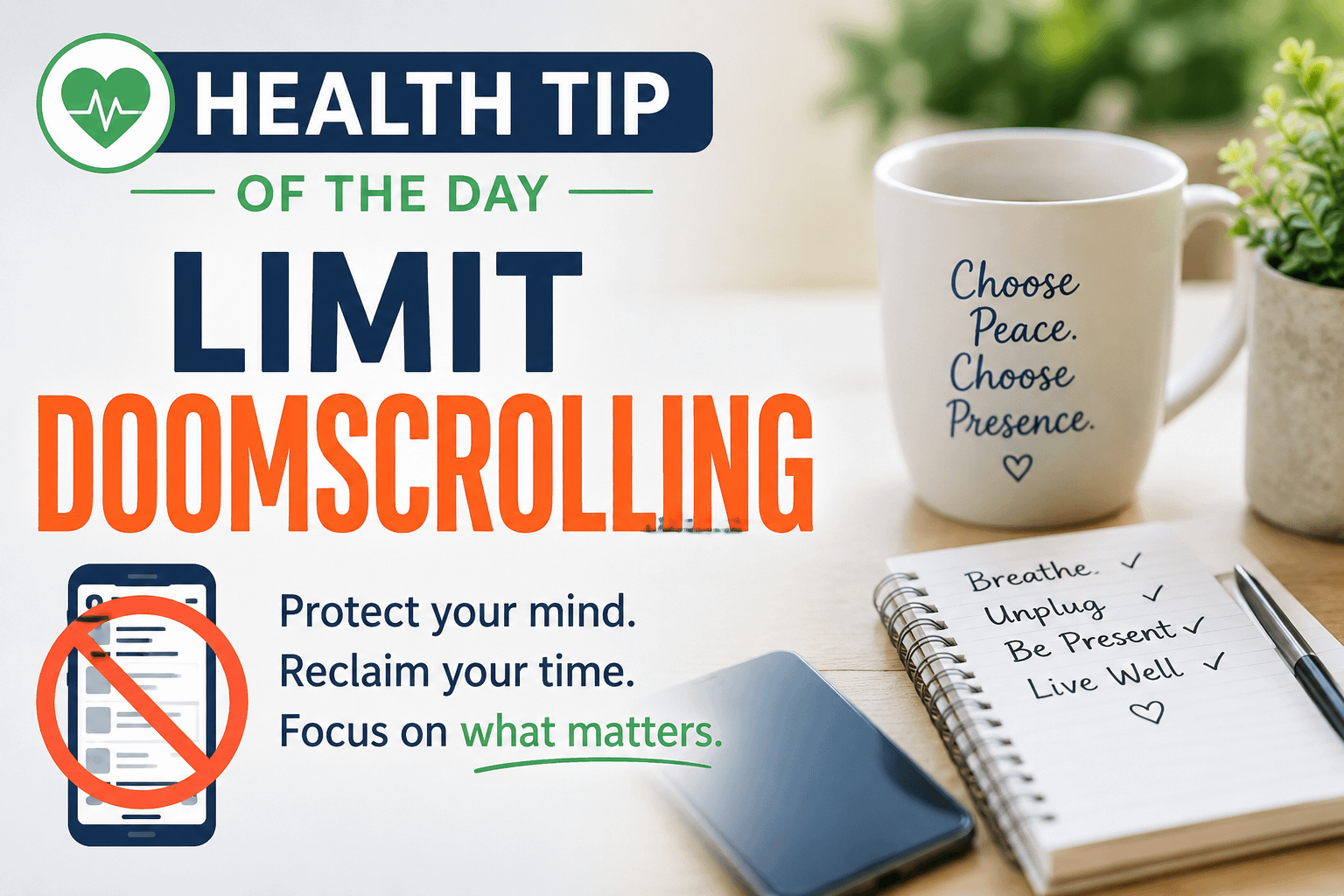

  • Health Tip of the Day: Limit Doomscrolling

    Health Tip of the Day: Limit Doomscrolling

    It starts innocently enough. You pick up your phone to check a notification, read a message, or see what is happening in the world. A few minutes later, you are scrolling through breaking news, upsetting headlines, arguments, disasters, political conflicts, crime stories, and troubling posts.

    Before you realize it, 30 minutes—or even an hour—has disappeared.

    This habit is commonly called doomscrolling, and while staying informed is important, constantly consuming negative or emotionally intense information can leave you feeling mentally exhausted.

    Today’s Health Tip of the Day is simple: Limit doomscrolling and give your mind permission to disconnect.

    Your brain needs breaks from bad news just as your body needs breaks from physical activity. Creating healthier boundaries around your phone, social media, and news consumption can help protect your time, attention, sleep, and emotional well-being.

    What Is Doomscrolling?

    Doomscrolling is the habit of continuously scrolling through negative, frightening, stressful, or upsetting information online.

    You may know you should stop, yet you keep looking.

    One headline leads to another. One video leads to another. One social media post leads to a comment section, which leads to another discussion, another article, and another search.

    The problem isn’t simply reading bad news. Difficult events are part of life, and staying informed about important issues can be valuable.

    The problem begins when consuming negative information becomes repetitive and difficult to control.

    Instead of learning what you need to know and moving on with your day, you become trapped in an endless cycle of searching for more information.

    And there will almost always be more.

    Why Is Doomscrolling So Hard to Stop?

    Human beings naturally pay attention to potential threats.

    For much of human history, noticing danger quickly was essential for survival. While the threats we encounter today may look very different, our brains can still become highly focused on information that appears dangerous, uncertain, or emotionally significant.

    Your mind may essentially be asking:

    What happened?

    Could this affect me?

    Has anything changed?

    Is there something else I need to know?

    The problem is that the internet never really gives you an answer of “You’re finished.”

    There is always another update.

    Another opinion.

    Another video.

    Another comment.

    Another headline.

    Another notification.

    Social media feeds and news platforms can provide seemingly endless amounts of information. If you don’t intentionally decide when to stop, you can continue scrolling much longer than you originally intended.

    Doomscrolling Can Steal Your Time

    One of the most noticeable consequences of doomscrolling is lost time.

    You might intend to spend five minutes checking your phone and suddenly discover that you’ve been scrolling for 45 minutes.

    Think about what that time could have been used for.

    You could have taken a walk.

    Called someone you care about.

    Prepared a healthy meal.

    Read a few chapters of a book.

    Worked on a personal goal.

    Played with your children.

    Cleaned part of your home.

    Spent time outside.

    Listened to music.

    Prayed or reflected.

    Or simply rested.

    You don’t need to turn every free minute into something productive. Rest is valuable too.

    But there is a significant difference between intentionally choosing to relax and accidentally losing an hour to your phone.

    Taking control of your scrolling habits allows you to decide where your time goes instead of allowing an algorithm to decide for you.

    Pay Attention to How You Feel After Scrolling

    One useful way to evaluate your online habits is to notice how you feel afterward.

    Ask yourself:

    Do I feel better after spending 30 minutes scrolling?

    Sometimes the answer may be yes. Perhaps you laughed at something, learned something useful, connected with friends, or discovered an interesting idea.

    Other times, you may notice that you feel worse.

    You might feel:

    • Anxious
    • Angry
    • Frustrated
    • Overwhelmed
    • Helpless
    • Distracted
    • Mentally exhausted
    • Irritable
    • Afraid
    • Discouraged

    Those feelings are worth noticing.

    You don’t necessarily need to eliminate social media or stop following current events. Instead, become more intentional about what you consume and how much of it you allow into your day.

    Staying Informed Doesn’t Mean Staying Connected Constantly

    One of the biggest reasons people continue checking the news is the fear that they will miss something important.

    But you usually don’t need to monitor events every few minutes to stay informed.

    Consider checking reliable news sources at specific times instead.

    For example, you might check the news once in the morning and once later in the afternoon.

    Read the important developments.

    Learn what you need to know.

    Then move on with your day.

    If something truly significant happens, chances are you will hear about it.

    Being informed and being constantly connected are not the same thing.

    You can care deeply about what is happening in the world without allowing every breaking-news alert to interrupt your life.

    Create a Time Limit for Scrolling

    Setting a time limit can be one of the easiest ways to reduce doomscrolling.

    Instead of opening social media with no stopping point, decide beforehand how long you will spend there.

    Maybe you give yourself 10 or 15 minutes.

    You can even set a timer.

    When the timer goes off, close the app.

    At first, this might feel surprisingly difficult. You may immediately think:

    “Just one more post.”

    That’s exactly when the boundary becomes valuable.

    You are teaching yourself that you control when the scrolling ends.

    Don’t Start and End Your Day With Bad News

    The first and last parts of your day deserve special protection.

    Imagine waking up, reaching for your phone, and immediately reading about disasters, violence, arguments, financial worries, political conflicts, and other upsetting events.

    Before you have even gotten out of bed, your mind is already processing stress.

    Now imagine beginning your day differently.

    Stretch.

    Drink some water.

    Open the curtains.

    Take a shower.

    Eat breakfast.

    Pray.

    Write down something you’re grateful for.

    Take a short walk.

    Talk to someone you love.

    Give yourself a little time to enter the day before inviting the entire world’s problems into your mind.

    The same principle applies before bed.

    Late-night doomscrolling can keep your mind engaged when it should be winding down.

    Consider creating a phone-free period before bedtime.

    Use that time for something quieter: reading, stretching, listening to calming music, preparing for tomorrow, talking with your family, or simply resting.

    Turn Off Unnecessary Notifications

    Every notification is an invitation to pick up your phone.

    Breaking news.

    Social media alerts.

    Trending topics.

    Recommended videos.

    Suggested posts.

    Someone commented.

    Someone liked something.

    Someone posted something.

    Something is happening somewhere.

    Most of these notifications aren’t emergencies.

    Turning off unnecessary alerts reduces the number of times your attention is pulled toward your phone throughout the day.

    You don’t have to respond to everything immediately.

    The internet will still be there later.

    Make Doomscrolling Slightly More Difficult

    Small barriers can make a surprisingly big difference.

    Try moving social media apps away from your phone’s home screen.

    Log out after using them.

    Disable automatic notifications.

    Remove news widgets from your lock screen.

    Use your phone’s built-in screen-time limits.

    Keep your phone away from your bed.

    Charge it across the room at night.

    You don’t necessarily need enormous changes.

    Sometimes adding just a few seconds between the urge to scroll and actually opening an app gives you enough time to reconsider.

    You may catch yourself thinking:

    “Why am I opening this?”

    That moment of awareness can help break an automatic habit.

    Replace Scrolling Instead of Simply Removing It

    Habits are often easier to change when you replace them.

    If you normally scroll when you’re bored, ask yourself what else you could do during those moments.

    You might:

    • Walk around the block.
    • Listen to a podcast.
    • Read a book.
    • Make coffee or tea.
    • Stretch for five minutes.
    • Work on a hobby.
    • Write in a journal.
    • Call a friend.
    • Sit outside.
    • Play with a pet.
    • Listen to your favorite music.
    • Work on something you’ve been putting off.

    You don’t need to replace doomscrolling with something impressive.

    The goal is simply to give your mind another option.

    Be Selective About Who and What You Follow

    Your social media feed doesn’t appear randomly.

    It is partly shaped by what you follow, click, watch, comment on, and interact with.

    Take some time to clean up your feed.

    Unfollow or mute accounts that consistently leave you angry, anxious, discouraged, or emotionally drained.

    Then intentionally add content that contributes something positive to your life.

    Follow accounts related to:

    Healthy recipes.

    Exercise.

    Nature.

    Art.

    Comedy.

    History.

    Faith.

    Personal development.

    Travel.

    Animals.

    Music.

    Hobbies.

    Educational topics.

    Inspirational stories.

    Your online environment affects what you see every day.

    Curating that environment can make your time online healthier and more intentional.

    Don’t Live in the Comment Section

    Sometimes the original article isn’t what causes the most stress.

    It’s the comments underneath it.

    People argue.

    Insult each other.

    Spread rumors.

    Make extreme claims.

    Attack strangers.

    Turn complicated situations into angry debates.

    You can easily spend far more time reading people’s reactions than reading the actual information.

    Give yourself permission to skip the comments.

    You don’t need to know what hundreds of strangers think about every issue.

    Sometimes reading the facts and closing the page is enough.

    Ask Yourself One Question Before Opening an App

    Before opening social media or a news app, ask:

    “What am I looking for?”

    Maybe you’re checking today’s weather.

    Maybe you’re responding to a message.

    Maybe you’re looking for a recipe.

    Maybe you’re checking the latest headlines.

    Maybe you’re simply taking a short break.

    Having a purpose helps prevent mindless scrolling.

    Once you’ve accomplished what you intended to do, close the app.

    This small habit can transform your relationship with technology from automatic consumption into intentional use.

    Your Attention Is Valuable

    Every app, website, advertisement, video, and headline is competing for one thing:

    Your attention.

    Your attention is limited.

    Where you place it influences your thoughts, emotions, habits, relationships, and priorities.

    That doesn’t mean you should ignore difficult realities.

    It means you should decide how much access those realities receive to your mind each day.

    You cannot personally carry every tragedy happening around the world.

    You cannot solve every problem you read about.

    And consuming another 100 upsetting posts doesn’t necessarily make you more informed or more prepared.

    Sometimes the healthiest thing you can do is close the screen.

    Give Your Brain Some Quiet

    Modern life provides very few naturally quiet moments.

    Standing in line?

    Check the phone.

    Waiting for food?

    Check the phone.

    Sitting in the car before an appointment?

    Check the phone.

    Commercial break?

    Check the phone.

    Five minutes before bed?

    Check the phone.

    We’ve become accustomed to filling nearly every empty moment with information.

    But your brain doesn’t need constant stimulation.

    Try allowing yourself to experience small moments without reaching for your phone.

    Look out the window.

    Notice your surroundings.

    Think.

    Daydream.

    Pray.

    Breathe.

    Listen.

    Let yourself be bored for a few minutes.

    Quiet isn’t wasted time.

    Sometimes it is exactly what your mind needs.

    Try a Daily Digital Reset

    Consider creating one period each day when you intentionally step away from screens.

    It doesn’t need to be several hours.

    Start with 20 or 30 minutes.

    Put your phone somewhere else and do something offline.

    Take a walk.

    Eat dinner without your phone.

    Sit outside.

    Work in the yard.

    Cook.

    Exercise.

    Talk with your family.

    Read.

    Take a shower.

    Clean.

    Relax.

    The activity itself isn’t particularly important.

    What matters is reminding yourself that you can exist without constantly checking what is happening online.

    Over time, those small breaks can become something you look forward to.

    Don’t Let the World’s Worst Moments Become Your Entire View of the World

    News naturally focuses on unusual and significant events.

    Unfortunately, those events are often negative.

    Accidents.

    Crime.

    War.

    Conflict.

    Natural disasters.

    Economic problems.

    Political controversies.

    Scandals.

    If this becomes most of what you consume, it can become easy to believe that everything everywhere is terrible.

    But while difficult things are happening, countless good things are happening too.

    Someone is helping a stranger.

    Someone is recovering.

    Someone is volunteering.

    Someone is falling in love.

    Someone is adopting a pet.

    Someone is rebuilding their life.

    Someone is graduating.

    Someone is feeding a hungry family.

    Someone is forgiving another person.

    Someone is starting over.

    Someone is quietly doing something kind without ever posting about it.

    The internet’s loudest stories don’t represent every moment of human life.

    Sometimes you need to look away from your screen and notice the world directly around you.

    You Don’t Have to Know Everything Right Now

    One of the healthiest boundaries you can create with information is accepting that you don’t need to know everything immediately.

    The latest update can wait.

    The trending topic can wait.

    The argument can wait.

    The comments can wait.

    The notification can wait.

    You are allowed to put your phone down.

    You are allowed to enjoy dinner without checking the news.

    You are allowed to watch a movie without checking social media.

    You are allowed to spend an afternoon outside without knowing what is trending.

    You are allowed to protect some parts of your day from the constant stream of information.

    A Healthier Relationship With Your Phone

    The goal isn’t necessarily to delete every social media account or completely disconnect from the internet.

    Technology can be incredibly useful.

    It helps us communicate, learn, work, discover new ideas, stay informed, and maintain relationships.

    The goal is intentional use.

    Use technology when it serves you.

    Put it down when it starts consuming your attention without giving anything meaningful back.

    Some days you’ll do this better than others.

    That’s okay.

    Changing digital habits takes practice.

    Start small.

    Turn off a few notifications.

    Move one distracting app.

    Set one time limit.

    Take one phone-free walk.

    Stop scrolling 30 minutes before bed.

    Small boundaries can gradually create healthier habits.

    Final Thoughts

    Doomscrolling can make you feel as though you’re accomplishing something because you’re gathering information. But there comes a point when more information stops being useful and simply becomes more mental noise.

    You don’t have to carry the weight of the entire internet.

    Stay informed about the things that matter.

    Pay attention to what is happening in your community and around the world.

    But also recognize when you’ve had enough for today.

    Close the app.

    Put down your phone.

    Step outside.

    Talk to someone.

    Listen to music.

    Make dinner.

    Watch the sunset.

    Read something uplifting.

    Spend time with people you love.

    Give your mind an opportunity to experience life beyond the screen.

    The world will still be there when you return.

    Health Tip of the Day: Set boundaries around news and social media consumption, especially first thing in the morning and before bed. Even a short daily break from constant scrolling can help you reclaim your attention and make more room for the people, activities, and experiences happening right in front of you.

    How much time could you reclaim each day if you replaced just 30 minutes of doomscrolling with something that genuinely makes you feel better?

  • Health Tip of the Day: Spend Time in Nature

    Health Tip of the Day: Spend Time in Nature

    In a world filled with screens, notifications, deadlines, traffic, responsibilities, and constant stimulation, one of the simplest things you can do for your well-being is also one of the easiest to overlook: go outside and spend some time in nature.

    You don’t need to climb a mountain, hike for miles, or disappear into the wilderness for an entire weekend. Spending time in nature can be as simple as sitting underneath a tree, walking through a neighborhood park, tending a garden, watching the sunset, listening to birds, or drinking your morning coffee outside.

    Nature gives us an opportunity to slow down.

    It reminds us that life doesn’t always have to move at full speed.

    Sometimes the healthiest thing you can do is put down the phone, step away from your responsibilities for a few minutes, breathe deeply, and notice the world around you.

    Nature Gives Your Mind a Break

    Our minds rarely get true rest anymore.

    Even during downtime, many of us are scrolling through social media, checking emails, watching television, reading news, responding to messages, or thinking about everything we still need to accomplish.

    The brain is constantly receiving information.

    Spending time outdoors can provide a much-needed change of environment. Instead of staring at another screen, you might notice clouds moving across the sky, leaves blowing in the wind, birds flying overhead, or sunlight reflecting off the water.

    These simple observations can help bring your attention back to the present moment.

    You don’t have to solve anything.

    You don’t have to accomplish anything.

    You can simply exist for a few minutes and allow yourself to notice what is happening around you.

    A Simple Way to Reduce Everyday Stress

    Stress is part of life, but constantly carrying stress without giving yourself opportunities to recover can leave you feeling mentally and physically exhausted.

    Nature can become one of those places where you allow yourself to decompress.

    Imagine taking a slow walk through a park after a difficult day. You hear birds instead of notifications. You feel a breeze instead of sitting underneath fluorescent lights. You see trees, flowers, water, and open sky instead of another computer screen.

    Your problems may still be waiting when you return, but you may feel better prepared to deal with them.

    Sometimes we don’t need to escape our responsibilities.

    We simply need a short break from them.

    You Don’t Need a Wilderness Adventure

    When people hear the phrase “spend time in nature,” they sometimes imagine hiking deep into the mountains or camping miles away from civilization.

    Those experiences can certainly be wonderful, but they aren’t necessary.

    Nature is often much closer than we realize.

    You can spend time outdoors by:

    • Walking around your neighborhood.
    • Visiting a local park.
    • Sitting underneath a tree.
    • Eating lunch outside.
    • Gardening.
    • Watching the sunrise or sunset.
    • Walking along a beach, river, or lake.
    • Visiting a botanical garden.
    • Sitting on your porch or patio.
    • Taking your dog for a longer walk.
    • Watching birds or wildlife.
    • Drinking your morning coffee outdoors.

    The goal isn’t to create another complicated health routine.

    The goal is simply to spend more time outside.

    Walking in Nature Adds Movement to Your Day

    Another benefit of spending time outdoors is that it naturally encourages movement.

    You may tell yourself you’re only going outside for a few minutes, but once you begin walking, you might continue farther than expected.

    That movement matters.

    Walking is one of the most accessible forms of physical activity for many people. It doesn’t require expensive equipment or a gym membership. Depending on your abilities and surroundings, you can simply put on comfortable shoes and begin moving.

    A walk through a park may feel very different from walking on a treadmill because your environment is constantly changing.

    There are trees to notice.

    Birds to hear.

    People walking their dogs.

    Flowers blooming.

    Clouds changing.

    The scenery can make movement feel less like a workout and more like an enjoyable break from your day.

    Nature Encourages You to Slow Down

    Modern life often rewards speed.

    Answer the message quickly.

    Finish the project faster.

    Get to the next appointment.

    Complete the next task.

    Move on to the next goal.

    Eventually, we can become so accustomed to rushing that slowing down feels uncomfortable.

    Nature operates differently.

    Trees don’t rush to grow.

    Flowers don’t compete to bloom first.

    Rivers continue moving at their own pace.

    The seasons change gradually.

    Watching nature can remind us that not everything meaningful has to happen immediately.

    Some things take time.

    Growth takes time.

    Healing takes time.

    Change takes time.

    Rest is part of the process too.

    Spend a Few Minutes Without Your Phone

    One of the best ways to experience nature is to actually experience it.

    That sounds obvious, but it’s surprisingly easy to walk through a beautiful park while staring at your phone the entire time.

    Try putting your phone in your pocket for part of your outdoor time.

    Then pay attention to your surroundings.

    What can you hear?

    What can you smell?

    What does the air feel like?

    How many different shades of green can you see?

    Are there birds nearby?

    Can you hear leaves moving?

    What does the sky look like?

    This simple practice can help pull your attention away from everything demanding your attention and bring you back into the moment you’re actually living.

    Take the picture if you want.

    Then put the phone away and enjoy the view with your own eyes.

    Morning Nature Can Set the Tone for Your Day

    Spending a few minutes outside in the morning can become a peaceful daily ritual.

    Instead of immediately reaching for your phone after waking up, consider stepping outside for a few minutes when possible.

    Drink your coffee outdoors.

    Take a short walk.

    Sit quietly on your porch.

    Listen to the morning sounds around you.

    Look at the sky.

    Take several slow breaths.

    You don’t need an elaborate morning routine.

    Even five or ten peaceful minutes outside can create a different beginning to your day.

    Rather than immediately entering a world of notifications and responsibilities, you give yourself a moment to simply wake up and be present.

    Take Your Lunch Break Outside

    Many people spend nearly their entire workday indoors.

    They drive to work, enter a building, sit underneath artificial lighting, eat lunch at their desks, continue working, and then drive home.

    If your schedule and location allow it, try taking part of your lunch break outside.

    Find a bench.

    Walk around the building.

    Sit underneath a tree.

    Eat at an outdoor table.

    Even a short change of scenery can help break up the day.

    Instead of spending your entire break scrolling through your phone, allow your mind to experience something different.

    Nature Can Become Part of Your Evening Routine

    Evenings are another excellent opportunity to spend time outdoors.

    After dinner, consider taking a short walk instead of immediately sitting down in front of the television.

    Watch the sunset.

    Sit outside while the temperature begins to cool.

    Listen to the sounds of the evening.

    Walk around your neighborhood.

    This can become a peaceful transition between the responsibilities of the day and the quieter hours of the night.

    Some days will be stressful.

    Some days will feel overwhelming.

    But watching the sun disappear below the horizon can remind you that the day is ending.

    Tomorrow will bring another opportunity.

    Gardening Counts Too

    You don’t have to leave home to connect with nature.

    Gardening can be a wonderful way to spend more time outdoors while also giving you something enjoyable to care for.

    You could grow flowers, herbs, vegetables, or even a few plants in containers.

    There is something satisfying about planting something small, caring for it, and watching it grow over time.

    Even if you don’t have a yard, container gardening may work on a balcony, porch, patio, or windowsill.

    Nature doesn’t have to be far away.

    Sometimes you can bring a little more of it into your everyday surroundings.

    Visit the Water

    If you live near a lake, river, creek, pond, or ocean, spending time near the water can provide another beautiful way to enjoy the outdoors.

    You don’t necessarily need to swim, fish, kayak, or participate in another activity.

    You can simply sit.

    Watch the movement of the water.

    Listen to the waves.

    Notice the reflections.

    Watch birds flying across the surface.

    Allow yourself to enjoy the scenery without feeling like you need to turn the experience into something productive.

    Not every moment needs a purpose beyond enjoying it.

    Make Nature Social

    Spending time outdoors doesn’t always have to be a solitary activity.

    Invite someone you care about to join you.

    Instead of meeting for coffee indoors, grab coffee and walk through a park.

    Take your family on a nature walk.

    Meet a friend for an outdoor lunch.

    Take your children to explore a trail.

    Walk your dog somewhere new.

    Visit a local garden together.

    These experiences provide opportunities for conversation and connection while also getting everyone outside.

    Sometimes the best conversations happen while walking side by side without the distractions of televisions, phones, and other screens.

    Nature Can Also Be a Place for Solitude

    There are also times when being alone outside is exactly what you need.

    Solitude doesn’t have to mean loneliness.

    Sometimes solitude gives you space to think.

    A quiet walk can help you process your thoughts.

    Sitting beside the water can give you time to reflect.

    Watching a sunset can create a moment of gratitude.

    You may discover that some of your clearest thoughts arrive when you aren’t actively trying to force them.

    Give yourself permission to have quiet moments.

    Pay Attention to the Seasons

    One way to appreciate nature more is to intentionally notice how it changes throughout the year.

    Look for the first flowers of spring.

    Notice how green everything becomes.

    Enjoy long summer evenings.

    Watch leaves begin changing colors.

    Notice cooler air arriving.

    Pay attention to winter skies.

    The seasons remind us that change is natural.

    Nothing stays exactly the same forever.

    There are periods of growth, periods of transition, and periods of rest.

    Our lives often move through seasons too.

    Start Small

    One of the biggest mistakes people make when trying to improve their health is believing every change has to be dramatic.

    It doesn’t.

    You don’t need to promise yourself that you’re going to hike five miles every morning.

    Start with ten minutes.

    Walk outside.

    Sit in the sunshine.

    Visit the park.

    Water your plants.

    Watch the sunset.

    If ten minutes becomes twenty, great.

    If it remains ten minutes, that’s still ten minutes you intentionally spent away from screens and surrounded by the natural world.

    Small habits are often easier to maintain because they fit naturally into everyday life.

    Create a Personal Outdoor Spot

    If possible, find a place where you enjoy spending time outdoors.

    It might be a bench at a nearby park.

    A chair on your porch.

    A quiet spot beside a lake.

    A walking trail.

    A shady tree.

    A corner of your backyard.

    Return to that place regularly.

    Over time, it can become somewhere you associate with slowing down, thinking, reflecting, praying, reading, or simply enjoying a few peaceful minutes.

    Having a familiar place can make it easier to turn outdoor time into a habit.

    Let Nature Remind You to Be Present

    There is always something else we could be thinking about.

    Yesterday.

    Tomorrow.

    Bills.

    Work.

    Relationships.

    Responsibilities.

    Mistakes.

    Goals.

    The future.

    But while our minds travel everywhere else, the present moment continues happening.

    Nature has a beautiful way of bringing attention back to what is right in front of us.

    A bird doesn’t care about tomorrow’s schedule.

    A sunset doesn’t wait until your inbox is empty.

    Flowers don’t stop blooming because you’re busy.

    Life continues happening around us.

    Sometimes we simply need to notice it.

    Make Spending Time in Nature Part of Your Health Routine

    Healthy living isn’t only about what you eat or how often you exercise.

    It also includes creating moments where your mind and body can slow down.

    Spending time outdoors can become one of those moments.

    You don’t need special equipment.

    You don’t need a complicated plan.

    You don’t need to travel somewhere spectacular.

    Open the door.

    Step outside.

    Walk slowly.

    Look around.

    Breathe.

    Listen.

    Notice something beautiful.

    Give yourself a few minutes where you aren’t trying to accomplish anything.

    In a world constantly asking for your attention, spending time in nature gives you an opportunity to reconnect with something simple, peaceful, and real.

    Health Tip of the Day

    Make spending time in nature a regular part of your routine. Start with just 10–20 minutes outside when you can. Take a walk, sit beneath a tree, enjoy your morning coffee outdoors, tend a garden, or watch the sunset.

    You don’t have to go far to experience the benefits of slowing down and reconnecting with the world around you.

    Sometimes better health begins with something as simple as stepping outside.

    What is your favorite way to spend time in nature—a peaceful walk, sitting by the water, gardening, watching the sunset, or something else?

  • Health Tip of the Day: Learn to Say No Without Guilt

    Health Tip of the Day: Learn to Say No Without Guilt

    Saying “no” can be one of the smallest things you do for your health—and one of the hardest.

    Many of us become accustomed to saying yes. We say yes because we want to help. We say yes because we don’t want to disappoint anyone. We say yes because we want people to like us. Sometimes, we even say yes because explaining why we don’t want to do something seems harder than simply agreeing to it.

    But every yes has a cost.

    When you constantly agree to things you don’t have the time, energy, or emotional capacity for, you can gradually become exhausted, stressed, frustrated, and even resentful.

    That’s why today’s Health Tip of the Day is simple:

    Learn to say no without feeling guilty about protecting your well-being.

    Saying no doesn’t automatically make you selfish, uncaring, or difficult. Sometimes, saying no simply means recognizing your limits and respecting them.

    Why Saying No Can Feel So Difficult

    For such a short word, “no” can carry an incredible amount of emotional weight.

    You might worry:

    • Will they be upset with me?
    • Will they think I don’t care?
    • What if they stop asking me for things?
    • What if I disappoint them?
    • What if they think I’m selfish?
    • What if saying no damages the relationship?

    These concerns can make it tempting to say yes even when everything inside you wants to decline.

    Some people have spent years being the dependable person everyone calls when they need something. When that becomes part of your identity, setting boundaries can feel uncomfortable.

    You may even feel responsible for solving other people’s problems.

    But being supportive doesn’t mean you have to be available every moment of every day.

    You are allowed to have limits.

    Your Time and Energy Are Limited

    There are only so many hours in a day.

    You also have a limited amount of physical and emotional energy.

    Think about everything competing for that energy: work, family, relationships, household responsibilities, finances, errands, appointments, exercise, sleep, hobbies, friendships, and your own emotional needs.

    Then someone asks for one more favor.

    And another.

    And another.

    Eventually, something has to give.

    Unfortunately, the first thing many people sacrifice is themselves.

    They sleep less.

    They skip exercise.

    They don’t relax.

    They cancel their personal plans.

    They stop doing things they enjoy.

    They spend their entire day helping everyone else and have nothing left for themselves.

    That isn’t sustainable.

    Protecting some of your time isn’t selfish. It’s necessary.

    Saying Yes When You Mean No Creates Stress

    Imagine someone asks you to do something on your only free afternoon.

    You immediately want to decline.

    Instead, you hear yourself saying:

    “Sure, I can do that.”

    Almost immediately, you regret it.

    Now you’re thinking about everything you planned to accomplish. You may feel frustrated with the person who asked, even though technically you agreed.

    This is one way poor boundaries can create unnecessary stress.

    When we repeatedly say yes while internally wanting to say no, resentment can build.

    Eventually, we may become irritated with people who aren’t necessarily aware they’re asking too much.

    A healthier approach is communicating your limits before resentment develops.

    You Don’t Need a Long Explanation

    One reason people struggle with saying no is that they think they need an elaborate excuse.

    You don’t.

    A respectful response can be simple:

    “I’m sorry, but I can’t today.”

    “I appreciate you asking, but I’m not available.”

    “I can’t take that on right now.”

    “I have too much on my plate at the moment.”

    “Thank you for thinking of me, but I’ll have to pass.”

    Notice that none of these responses require an elaborate story.

    You don’t have to create an excuse.

    You don’t have to defend yourself.

    You don’t have to convince the other person that your reason is important enough.

    A polite no can be a complete answer.

    Stop Automatically Saying Yes

    If you’re accustomed to pleasing people, you might agree to requests before you’ve even considered whether you actually want to do them.

    Someone asks for something and your automatic response is:

    “Sure.”

    Then five minutes later you’re wondering why you agreed.

    One useful habit is to stop answering immediately.

    Instead, say:

    “Let me check and get back to you.”

    That small pause gives you time to think.

    Ask yourself:

    Do I actually have time for this?

    Do I have the energy?

    Do I want to do it?

    Will agreeing interfere with something important?

    Am I saying yes because I genuinely want to help—or because I’m afraid of disappointing someone?

    Giving yourself time before answering can prevent commitments you later regret.

    Guilt Doesn’t Always Mean You’re Doing Something Wrong

    This is an important distinction.

    Feeling guilty doesn’t necessarily mean you’ve done something wrong.

    Sometimes guilt appears simply because you’re doing something differently.

    If you’ve spent years saying yes to everyone, saying no can feel uncomfortable at first.

    Your mind may tell you:

    “You should have helped.”

    “You disappointed them.”

    “You’re being selfish.”

    But discomfort isn’t proof that your decision was wrong.

    You may simply be learning a healthier way of protecting your time and energy.

    With practice, saying no can become easier.

    Boundaries Can Protect Your Mental Well-Being

    Constantly feeling responsible for everyone else’s needs can become emotionally exhausting.

    Healthy boundaries help define what you are—and aren’t—responsible for.

    You can care about someone without solving every problem for them.

    You can love someone without agreeing with everything they want.

    You can support someone without sacrificing your own well-being.

    You can be generous without being endlessly available.

    Boundaries don’t have to be walls that push people away.

    They can be guidelines that help relationships remain healthier.

    Saying No Can Protect Your Physical Health Too

    Stress isn’t only emotional.

    When you’re constantly overwhelmed, your body can feel the effects as well. Ongoing stress can interfere with sleep, concentration, mood, appetite, and healthy routines.

    If your schedule is overloaded because you’re constantly agreeing to additional responsibilities, you may also have less time for the basics that support your health.

    Exercise gets postponed.

    Healthy meals become less convenient.

    Bedtime gets later.

    Appointments get delayed.

    Relaxation disappears.

    Learning to say no occasionally can create room for activities that support your physical and emotional health.

    Protect Your Rest

    Rest is one area where boundaries are especially important.

    Many people treat rest as something they are only allowed to have after everything else is finished.

    But there’s always something else to do.

    Another email.

    Another chore.

    Another favor.

    Another phone call.

    Another task.

    If you wait until absolutely everything is finished before allowing yourself to rest, you may never truly rest.

    Sometimes you have to intentionally protect that time.

    You might have to say:

    “No, I’m staying home tonight.”

    “No, I can’t take another shift.”

    “No, I can’t help this weekend.”

    “No, I need some downtime.”

    You don’t have to earn every moment of rest by completely exhausting yourself first.

    Learn the Difference Between Helping and Overextending Yourself

    Helping people can be deeply rewarding.

    There is nothing wrong with generosity.

    The problem begins when helping others consistently comes at the expense of your own health, responsibilities, or emotional well-being.

    Before saying yes, ask yourself whether helping will genuinely fit into your life.

    There’s a big difference between:

    “I want to help.”

    and

    “I feel like I have no choice but to help.”

    Healthy generosity involves choice.

    If you’re constantly helping because you’re terrified of what people will think if you decline, that’s something worth examining.

    Not Every Request Is Your Responsibility

    Someone else’s emergency doesn’t automatically become your responsibility.

    Someone else’s disappointment doesn’t necessarily mean you made the wrong decision.

    Someone else’s poor planning doesn’t always require you to rearrange your entire schedule.

    There will certainly be situations where helping is the compassionate thing to do.

    But you can’t solve everything for everyone.

    Part of setting healthy boundaries is recognizing where your responsibility ends.

    You can care without carrying everything.

    People May Need Time to Adjust

    When you begin establishing boundaries, not everyone will immediately appreciate the change.

    People who are accustomed to hearing yes may be surprised when you start saying no.

    Someone may push back.

    They may ask again.

    They may want an explanation.

    They may even try to make you feel guilty.

    That doesn’t automatically mean your boundary is unreasonable.

    Sometimes people simply need time to understand that your availability has changed.

    Stay calm and respectful.

    You don’t have to turn the situation into an argument.

    You can simply repeat:

    “I understand, but I can’t do that.”

    Consistency matters.

    Saying No Can Make Your Yes More Meaningful

    When you say yes to everything, your commitments can become overwhelming.

    But when you become selective, you can devote more attention to the things you genuinely care about.

    You can give your time intentionally instead of reluctantly.

    Your yes becomes meaningful because it’s actually a choice.

    Instead of agreeing because you feel pressured, you agree because you genuinely want to participate.

    That can make relationships, volunteer work, friendships, family time, and other commitments feel more rewarding.

    Make Yourself Part of Your Own Priority List

    Many people create long lists of people they need to care for.

    Children.

    Partners.

    Parents.

    Friends.

    Coworkers.

    Customers.

    Neighbors.

    Everyone gets a place on the list except themselves.

    But your needs matter too.

    That doesn’t mean your needs always come first.

    It means they shouldn’t always come last.

    You need sleep.

    You need downtime.

    You need enjoyable experiences.

    You need opportunities to recharge.

    You need time to think.

    You need space to take care of your health.

    Making yourself a priority occasionally doesn’t mean you’ve stopped caring about others.

    It means you’re recognizing that you’re a person who needs care too.

    Start With Small Boundaries

    If saying no feels extremely uncomfortable, don’t expect yourself to become an expert overnight.

    Start small.

    Decline something minor.

    Turn down an invitation when you’re exhausted.

    Don’t answer a nonurgent message immediately when you’re resting.

    Tell someone you’re unavailable instead of rearranging your entire day.

    Say no to an extra responsibility when your schedule is already full.

    Each small boundary helps build confidence.

    Eventually, you may realize something surprising:

    The world didn’t fall apart because you said no.

    The people who genuinely respect you will usually learn to respect your boundaries too.

    A Healthy No Can Sound Kind

    Saying no doesn’t require being rude.

    You can be compassionate and firm at the same time.

    For example:

    “Thank you for asking me, but I can’t commit to that right now.”

    “I’d love to help, but I don’t have enough time to give it the attention it deserves.”

    “I appreciate the invitation, but I’m going to stay home tonight.”

    “I understand why you need help, but I’m not able to take this on.”

    Kindness and boundaries can exist together.

    Don’t Turn Every No Into a Negotiation

    Some people hear no and immediately begin searching for another way to get a yes.

    “But it will only take an hour.”

    “Can’t you just do it this once?”

    “I really need you.”

    “Nobody else can help.”

    If you’ve already decided that you can’t or don’t want to do something, you don’t necessarily have to keep debating your decision.

    You can calmly repeat your answer.

    “I understand, but I’m still not available.”

    You don’t have to become angry.

    You don’t have to justify yourself repeatedly.

    Sometimes maintaining a boundary simply means refusing to negotiate against yourself.

    Pay Attention to Resentment

    Resentment can sometimes be a warning sign that your boundaries need attention.

    If you constantly think:

    “Why does everyone always ask me?”

    “Why am I always the one helping?”

    “Why doesn’t anyone care what I need?”

    It may be worth asking whether you’re agreeing to things you don’t actually want to do.

    Other people can’t always know you’ve reached your limit unless you communicate it.

    Instead of waiting until you’re completely frustrated, try expressing your limits earlier.

    You Can’t Pour From an Empty Cup

    It’s a familiar saying because the idea is important.

    If you’re physically exhausted, emotionally drained, stressed, and overwhelmed, your ability to support other people may eventually suffer anyway.

    Taking care of yourself can help you show up more fully for the people and responsibilities that truly matter.

    Rest.

    Eat well.

    Move your body.

    Protect your sleep.

    Spend time doing things you enjoy.

    Give yourself moments when nobody needs anything from you.

    Sometimes saying no to something else is exactly what makes those things possible.

    Today’s Health Challenge

    Before automatically agreeing to something today, give yourself a moment.

    Pause.

    Consider your schedule.

    Consider your energy.

    Consider your priorities.

    And ask yourself:

    “Do I genuinely want to say yes, or am I afraid to say no?”

    If the answer is that you don’t have the time, energy, or desire to take something on, practice declining respectfully.

    You don’t have to be harsh.

    You don’t have to feel angry.

    And you don’t need to provide a five-minute explanation.

    Simply honor your limit.

    Final Thoughts

    Learning to say no without guilt is really about learning to respect yourself.

    Your time has value.

    Your energy has value.

    Your peace has value.

    Your health has value.

    Being a caring person doesn’t require sacrificing yourself every time someone asks something of you.

    There will always be moments when making sacrifices for the people you love is worthwhile. That’s part of relationships, family, friendship, and community.

    But sacrifice shouldn’t become your permanent state of existence.

    Sometimes the healthiest answer you can give is:

    “No, I can’t do that right now.”

    And then allow yourself to move forward without replaying the conversation, questioning your worth, or punishing yourself with guilt.

    You can be kind and still have boundaries.

    You can be generous and still protect your time.

    You can care deeply about others and still take care of yourself.

    What is one thing you need to start saying no to so you can make more room for your health, peace, and happiness?

  • Health Tip of the Day: Take a Mental Health Break

    Health Tip of the Day: Take a Mental Health Break

    Life can become overwhelming before we even realize it. Work, family responsibilities, financial concerns, relationships, social media, news, and everyday obligations can constantly compete for our attention. We often keep pushing forward because we believe stopping means falling behind.

    But sometimes one of the healthiest things you can do is simply give your mind permission to rest.

    Today’s Health Tip of the Day: Take a mental health break.

    A mental health break doesn’t necessarily mean taking an entire day off or escaping your responsibilities. It can be as simple as stepping away for a few minutes, disconnecting from something stressful, and allowing your mind to slow down.

    Your brain needs recovery just like your body does.

    Your Mind Needs Rest Too

    We understand that muscles need recovery after strenuous exercise. Yet when it comes to our minds, many of us expect ourselves to keep going indefinitely.

    We wake up thinking about what needs to be done. Throughout the day, we’re responding to messages, solving problems, making decisions, worrying about tomorrow, and thinking about situations we cannot control.

    Even when we finally sit down, our minds may still be racing.

    Mental exhaustion can gradually affect your mood, concentration, motivation, patience, and ability to handle everyday stress. Taking intentional breaks gives you an opportunity to recharge before stress becomes overwhelming.

    Rest isn’t wasted time. It is part of taking care of yourself.

    Recognize When You Need a Break

    Sometimes your mind gives you warning signs that you’ve been carrying too much for too long.

    You might notice that you’re becoming irritated more easily, struggling to concentrate, losing motivation, feeling mentally drained, procrastinating more than usual, or having difficulty enjoying things you normally appreciate.

    You may also find yourself constantly thinking, “I just need a break.”

    Pay attention to that feeling.

    You don’t always have to wait until you’re completely exhausted before allowing yourself to rest.

    Step Away From the Noise

    One of the easiest ways to take a mental health break is to temporarily remove yourself from whatever is demanding your attention.

    Put your phone down.

    Close the laptop.

    Turn off the television.

    Step away from social media.

    Walk outside.

    Sit somewhere quiet.

    You don’t have to accomplish anything during those few minutes. The purpose is simply to create some space between you and everything demanding your attention.

    Even ten or fifteen quiet minutes can feel refreshing when you’ve been mentally overloaded.

    Spend Some Time Outside

    Nature can provide a peaceful environment for taking a mental break.

    Take a short walk through your neighborhood. Sit underneath a tree. Visit a park. Spend some time near a lake, river, beach, or another peaceful outdoor space.

    Instead of staring at your phone, notice what’s happening around you.

    Feel the breeze.

    Listen to the birds.

    Watch the clouds.

    Notice the sunlight.

    Allow yourself to simply experience the moment without worrying about what comes next.

    Sometimes changing your surroundings can help change your state of mind.

    Give Yourself Permission to Do Nothing

    We live in a culture that often celebrates productivity. There can be pressure to constantly accomplish something.

    But every moment of your life doesn’t need to be productive.

    Sometimes you need to sit down.

    Sometimes you need a nap.

    Sometimes you need to watch your favorite television show.

    Sometimes you need to listen to music.

    Sometimes you need to sit quietly with a cup of coffee.

    And sometimes you need to do absolutely nothing.

    Rest doesn’t have to be earned by reaching complete exhaustion.

    Disconnect From Social Media

    Social media can be entertaining and helpful, but constantly scrolling through other people’s opinions, arguments, accomplishments, problems, and carefully selected moments can become mentally exhausting.

    Give yourself permission to disconnect.

    You don’t need to respond immediately to every notification.

    You don’t need to participate in every conversation.

    You don’t need to know everything happening online.

    The world will continue turning while your phone sits quietly on the table.

    Sometimes protecting your peace means temporarily disconnecting from the digital world.

    Do Something You Actually Enjoy

    A mental health break can also involve doing something that brings you happiness without creating additional pressure.

    Listen to your favorite music.

    Watch something funny.

    Read a book.

    Work on a hobby.

    Cook something you enjoy.

    Take a drive.

    Spend time with someone you care about.

    Play with your pet.

    Sit outside and enjoy the weather.

    Choose something that allows your mind to focus on enjoyment instead of responsibilities.

    Stop Trying to Solve Everything at Once

    One major source of mental exhaustion is trying to solve every problem simultaneously.

    You may have several things happening in your life that require attention. But they don’t necessarily need to be handled at the same moment.

    Ask yourself:

    What actually needs my attention today?

    Everything else may be able to wait.

    Break large problems into smaller steps and focus on what you can realistically control.

    You don’t have to have your entire life figured out today.

    Sometimes peace begins when you stop demanding immediate answers to every problem.

    Take a Few Slow Breaths

    When life becomes stressful, take a moment to focus on your breathing.

    Slow down.

    Take a comfortable breath in.

    Pause briefly.

    Then slowly breathe out.

    Repeat several times while allowing your shoulders and body to relax.

    The goal isn’t to magically eliminate everything bothering you. It’s simply to give yourself a quiet moment before returning to whatever you need to handle.

    A few peaceful minutes can sometimes make a difficult day feel more manageable.

    Protect Your Peace Without Feeling Guilty

    Taking care of your mental well-being may occasionally require boundaries.

    You may need to say no.

    You may need to postpone something.

    You may need some time alone.

    You may need to walk away from an unnecessary argument.

    You may need to stop answering messages for a while.

    You may need to tell someone, “I need a little time to myself.”

    Protecting your peace doesn’t mean you don’t care about other people. It means recognizing that you have limits too.

    Talk to Someone When You Need Support

    A mental health break can be helpful for everyday stress, but you don’t have to handle persistent emotional struggles alone.

    Talking with someone you trust can provide support and perspective. That might be a friend, family member, counselor, therapist, doctor, faith leader, or another trusted person.

    Seeking professional support can be especially important when stress, anxiety, sadness, or other emotional difficulties are persistent, severe, or interfering with everyday life.

    Taking care of your mental health is part of taking care of your overall health.

    Make Mental Health Breaks Part of Your Routine

    Don’t wait until you’re completely overwhelmed before slowing down.

    Build small moments of peace into your normal routine.

    Maybe it’s ten quiet minutes before everyone wakes up.

    Maybe it’s a short walk during lunch.

    Maybe it’s putting your phone away for an hour in the evening.

    Maybe it’s listening to music during your commute.

    Maybe it’s sitting outside after dinner.

    Small breaks can become valuable reminders that your life doesn’t always have to move at full speed.

    Today’s Reminder

    You don’t have to carry everything every second of every day.

    Some things can wait.

    Some problems can be handled tomorrow.

    Some messages don’t need an immediate response.

    Some responsibilities can be temporarily placed on hold.

    Give yourself permission to slow down.

    Take a walk. Turn off your phone. Listen to music. Sit somewhere peaceful. Spend time with someone you love. Pray, meditate, breathe, laugh, or simply enjoy a few quiet minutes.

    Then return to your day when you feel ready.

    Your mind works hard for you every day. Give it permission to rest too.

    What is your favorite way to take a mental health break when life starts feeling overwhelming?

  • Health Tip of the Day: Practice Gratitude Every Day

    Health Tip of the Day: Practice Gratitude Every Day

    It is easy to focus on what is missing.

    We notice the things that went wrong, the plans that did not work out, the bills that need to be paid, the problems waiting for solutions, and the goals we have not reached yet. We can spend so much time thinking about what we wish were different that we overlook the good things already surrounding us.

    That is where gratitude can make a difference.

    Health Tip of the Day: Practice Gratitude Every Day.

    Gratitude does not require pretending that everything in your life is perfect. It does not mean ignoring pain, disappointment, stress, grief, or uncertainty. Instead, gratitude is the intentional practice of recognizing the good that exists alongside life’s difficulties.

    Sometimes that good is something significant—a loving relationship, a new opportunity, a major accomplishment, or a beautiful experience.

    Other times, it is remarkably simple.

    A hot cup of coffee.

    A comfortable bed.

    A conversation with someone you care about.

    A beautiful sunset.

    A favorite song.

    A quiet moment.

    A good meal.

    A laugh you did not expect.

    Another morning to wake up and try again.

    When you intentionally begin noticing these moments, gratitude can become more than an occasional feeling. It can become a daily habit that supports your emotional well-being, relationships, perspective, and overall quality of life.

    Gratitude Is More Than Saying “Thank You”

    Most of us learn to say “thank you” when we are children. Someone gives us something, helps us, or does something kind, and we are taught to acknowledge it.

    That is an important form of gratitude, but practicing gratitude goes much deeper.

    Gratitude is about developing awareness.

    It means slowing down enough to recognize the people, experiences, opportunities, comforts, and small joys that might otherwise pass unnoticed.

    Think about how many ordinary things you experience every day without giving them much thought.

    Running water.

    Electricity.

    A warm shower.

    Transportation.

    Food in the refrigerator.

    A phone call from someone who cares about you.

    The ability to hear music.

    The ability to see the sky.

    The smell of breakfast cooking.

    The feeling of fresh air.

    These things may seem ordinary because we experience them regularly. But when we intentionally notice them, ordinary moments can become reminders that life contains more goodness than we sometimes realize.

    Why Our Minds Often Notice the Negative First

    Human beings naturally pay attention to potential problems.

    If ten things go well during your day and one thing goes badly, which one are you most likely to think about when you are lying in bed that night?

    For many people, it is the negative experience.

    Maybe someone made a rude comment.

    Perhaps you made a mistake at work.

    Maybe traffic was terrible.

    Perhaps you received disappointing news.

    Suddenly, that single frustrating moment begins dominating your thoughts while the many positive or neutral experiences disappear into the background.

    Practicing gratitude encourages you to deliberately notice what your mind might otherwise overlook.

    Instead of allowing one difficult moment to define your entire day, you can recognize the complete picture.

    You might say:

    “Today was stressful, but I had a great conversation with a friend.”

    “I am dealing with uncertainty, but I am thankful for the people supporting me.”

    “I did not accomplish everything I wanted today, but I made progress.”

    “This season of life is difficult, but something still made me smile today.”

    Gratitude does not erase the difficult part of those statements.

    It simply prevents difficulty from becoming the only thing you see.

    Gratitude Can Help Change Your Perspective

    Imagine looking through a camera.

    Whatever you point the camera toward becomes the picture.

    Life works similarly.

    There may be hundreds of things happening around you at any given moment, but your attention determines what receives the greatest focus.

    If your attention constantly searches for problems, disappointments, comparisons, and frustrations, your world may begin feeling overwhelmingly negative.

    Gratitude encourages you to intentionally redirect some of that attention.

    You begin asking different questions.

    Instead of:

    “What went wrong today?”

    You might ask:

    “What went right today?”

    Instead of:

    “What don’t I have?”

    Ask:

    “What do I already have that I appreciate?”

    Instead of:

    “Why isn’t my life better?”

    Ask:

    “What is something good about my life right now?”

    These questions do not magically solve problems.

    They do something equally important: they remind you that your problems are not the entirety of your life.

    Start Your Morning With Gratitude

    The first few minutes of your morning can influence the tone of your day.

    Many people wake up and immediately reach for their phones.

    Within minutes, they may be reading emails, checking social media, looking at news stories, thinking about work, or mentally reviewing everything they need to accomplish.

    Before the day has even started, stress has already entered the room.

    Try creating a different morning habit.

    Before checking your phone, identify three things you are thankful for.

    They do not have to be profound.

    You might think:

    “I’m thankful I slept well.”

    “I’m thankful for another morning.”

    “I’m thankful for the coffee I’m about to drink.”

    “I’m thankful for my family.”

    “I’m thankful I have work today.”

    “I’m thankful for the roof over my head.”

    “I’m thankful the sun is shining.”

    “I’m thankful for someone who checked on me yesterday.”

    Starting your morning this way encourages your mind to begin the day by recognizing something positive before outside distractions demand your attention.

    Keep a Gratitude Journal

    One of the simplest ways to develop a gratitude habit is to write things down.

    You do not need an expensive journal or complicated system.

    A notebook works.

    A notes app on your phone works.

    Even a piece of paper beside your bed works.

    Each evening, write down three things you appreciated about your day.

    For example:

    1. I had a delicious lunch.
    2. Someone made me laugh.
    3. The weather was beautiful during my walk.

    Some days your list may include major events.

    Other days it might contain extremely ordinary things.

    That is perfectly fine.

    The purpose is not to create an impressive list.

    The purpose is to train yourself to notice.

    After practicing this regularly, you may discover something interesting: you start looking for things to appreciate throughout the day because you know you will be writing them down later.

    A beautiful moment happens and you think, “That’s going in my gratitude journal tonight.”

    That shift in awareness can be powerful.

    Appreciate the Small Things

    We sometimes convince ourselves that happiness will arrive after something major happens.

    When I get the promotion.

    When I make more money.

    When I lose the weight.

    When I buy the house.

    When I take the vacation.

    When I reach my goal.

    Goals are valuable, but life cannot consist entirely of waiting for the next major accomplishment.

    Much of life happens between the milestones.

    Gratitude helps you appreciate those ordinary spaces.

    The smell of dinner cooking.

    Your favorite chair.

    A cool breeze through an open window.

    A funny message from a friend.

    Your pet greeting you when you walk through the door.

    Finding your favorite song on the radio.

    Watching the sunrise.

    Sitting outside with a cup of coffee.

    Hearing someone you love laugh.

    These moments might never become major memories, but collectively they make up a tremendous portion of our lives.

    Do not become so focused on extraordinary experiences that you forget to appreciate ordinary happiness.

    Tell People You Appreciate Them

    Gratitude becomes even more meaningful when it is shared.

    Think about someone who has made a positive difference in your life.

    When was the last time you told them?

    You do not need to wait for a birthday, holiday, anniversary, or special occasion.

    Send a text.

    Make a phone call.

    Write a note.

    Tell them in person.

    You could simply say:

    “Thank you for always being there.”

    “I appreciate everything you do.”

    “I’m grateful you’re part of my life.”

    “You probably don’t realize how much your support means to me.”

    “I’m thankful for our friendship.”

    “I just wanted you to know I appreciate you.”

    These simple words can strengthen relationships while reminding both people that their connection matters.

    Do not assume people know how much they mean to you.

    Tell them.

    Gratitude Does Not Mean Ignoring Difficult Emotions

    One misunderstanding about gratitude is the idea that you should always be positive.

    That is not realistic.

    There will be days when you are angry.

    There will be disappointments.

    There will be fear.

    There will be loneliness.

    There will be grief.

    There will be days when finding something to appreciate feels incredibly difficult.

    Gratitude does not require denying those emotions.

    You can be thankful and sad at the same time.

    You can appreciate something while grieving something else.

    You can recognize blessings while still wishing circumstances were different.

    You can have hope while admitting that today hurts.

    Human emotions are complicated enough to hold more than one truth simultaneously.

    Sometimes gratitude during difficult seasons is incredibly simple.

    “I’m thankful I made it through today.”

    “I’m thankful someone called me.”

    “I’m thankful I had enough strength to get out of bed.”

    “I’m thankful for the memories I still carry.”

    “I’m thankful tomorrow gives me another opportunity.”

    On difficult days, gratitude does not have to be big.

    Sometimes noticing one small thing is enough.

    Stop Comparing Your Life to Everyone Else’s

    Comparison can quickly steal gratitude.

    Social media makes this especially easy.

    You see someone’s vacation.

    Their new house.

    Their relationship.

    Their promotion.

    Their body transformation.

    Their successful business.

    Their seemingly perfect family.

    Then you look at your own life and begin wondering why you are not where they are.

    But you are comparing your complete life—including struggles, insecurities, setbacks, and ordinary days—to a small portion of someone else’s life.

    Gratitude redirects your attention toward your own journey.

    Instead of asking why someone else has something you do not, consider what exists in your life that deserves appreciation.

    Someone else’s success does not reduce the value of what you have.

    You can celebrate other people while still appreciating your own progress.

    Turn Complaints Into Gratitude When Possible

    Everyone complains occasionally.

    But sometimes complaints become automatic.

    “I have to go to work.”

    “I have to cook dinner.”

    “I have to exercise.”

    “I have to clean the house.”

    “I have to drive the kids somewhere.”

    Try occasionally replacing “I have to” with “I get to.”

    “I get to work and earn an income.”

    “I get to prepare food.”

    “I get to move my body.”

    “I get to take care of my home.”

    “I get to spend time with my family.”

    This does not mean every responsibility suddenly becomes enjoyable.

    It simply changes the perspective.

    Things we sometimes consider inconveniences may also represent opportunities or privileges we could easily overlook.

    Create Gratitude Reminders

    Building any new habit takes repetition.

    If gratitude does not come naturally yet, create reminders.

    Set a notification on your phone that says:

    “What are you grateful for right now?”

    Put a sticky note on your bathroom mirror.

    Keep a gratitude journal beside your bed.

    Make gratitude part of your morning coffee routine.

    Ask your family at dinner:

    “What was the best part of your day?”

    Attach gratitude to something you already do regularly.

    Eventually, the reminder may become unnecessary because noticing things to appreciate begins happening naturally.

    End Your Day Looking for Something Good

    Before falling asleep, take a moment to review your day.

    Do not ask whether the entire day was good.

    Ask whether there was something good within the day.

    Maybe someone smiled at you.

    Maybe you completed a task you had been avoiding.

    Maybe you enjoyed dinner.

    Maybe you heard from an old friend.

    Maybe you watched a beautiful sunset.

    Maybe you had a peaceful ten minutes to yourself.

    Maybe you laughed.

    Maybe you helped someone.

    Maybe someone helped you.

    Maybe nothing particularly exciting happened, and you are simply grateful for a quiet day.

    Identify one moment worth appreciating.

    Then let that be one of the final thoughts you carry into the night.

    Try the Seven-Day Gratitude Challenge

    If you want to make gratitude part of your routine, try practicing intentionally for one week.

    Day 1: Write down three things you are grateful for.

    Day 2: Thank someone who has helped you.

    Day 3: Notice something beautiful in nature.

    Day 4: Identify something about your health or body that you appreciate.

    Day 5: Write down a happy memory.

    Day 6: Appreciate something you normally take for granted.

    Day 7: Reflect on the entire week and write down the best thing that happened.

    At the end of seven days, ask yourself whether you noticed more positive moments than you normally would.

    Then consider continuing the practice.

    Gratitude Can Become a Way of Living

    The goal is not to create a perfect gratitude routine.

    You do not have to write ten things every morning.

    You do not need a beautiful journal.

    You do not have to force yourself to feel thankful every minute of every day.

    Simply practice noticing.

    Notice the person who holds the door for you.

    Notice the meal in front of you.

    Notice the person who asks how you are doing.

    Notice the sunrise.

    Notice the music.

    Notice the laughter.

    Notice the memories.

    Notice the opportunities.

    Notice your progress.

    Notice the fact that you are still here, still learning, still growing, and still moving forward.

    Life moves quickly. If we are not careful, we can spend so much time chasing what comes next that we forget to appreciate what is happening now.

    Health Tip of the Day: Find Something to Be Thankful for Today

    You do not need to wait until life is perfect to practice gratitude.

    You can begin exactly where you are.

    Take a moment today and identify three things you appreciate.

    Maybe they are big.

    Maybe they are small.

    Maybe nobody else would understand why they matter to you.

    That does not matter.

    They are yours to appreciate.

    Then tomorrow, do it again.

    Over time, gratitude can become a habit of noticing the good that was always there but was sometimes overshadowed by everything demanding your attention.

    You will still have difficult days.

    Problems will still happen.

    Life will still bring unexpected challenges.

    But gratitude gives you another place to look.

    It reminds you that even during imperfect seasons, there can still be something worth appreciating.

    Sometimes happiness is not found by getting everything we want.

    Sometimes it begins by recognizing the value of what we already have.

    What are three things you are grateful for today?

  • Health Tip of the Day: Wake Up at the Same Time Every Morning

    Health Tip of the Day: Wake Up at the Same Time Every Morning

    How you start your morning can influence how you feel for the rest of the day. While many people focus on what they eat for breakfast, how much exercise they get, or how many hours they sleep, one simple habit often receives less attention: waking up at approximately the same time every morning.

    A consistent wake-up time may seem like a small change, but it can provide structure for your entire sleep-wake routine. Your body operates according to an internal biological clock known as the circadian rhythm. This rhythm helps regulate when you feel sleepy, when you become alert, and many other processes throughout the day.

    When your sleeping and waking schedule changes dramatically from one day to the next, your body may have a harder time anticipating when it should be awake and when it should prepare for sleep.

    That is why today’s health tip is simple:

    Try to wake up at the same time every morning—even on days when you do not have anywhere to be.

    You do not have to create a perfect schedule overnight. Consistency is the goal, not perfection.

    Your Body Likes a Predictable Schedule

    Human beings naturally operate according to daily biological rhythms.

    Your circadian rhythm follows roughly a 24-hour cycle and is strongly influenced by environmental cues, particularly light and darkness. Your sleep schedule, meals, physical activity, and daily routines can also reinforce your body’s sense of timing.

    Think about what happens when you regularly wake up around the same time.

    Eventually, you may notice yourself beginning to wake naturally shortly before your alarm. Your body has become accustomed to the routine.

    The opposite can happen when your schedule constantly changes.

    You might wake at 6:00 a.m. Monday through Friday but sleep until 10:30 a.m. Saturday and Sunday. Then Sunday night arrives, and suddenly you cannot fall asleep when you normally would.

    Monday morning comes around, the alarm sounds at 6:00 a.m., and getting out of bed feels miserable.

    Part of the problem is that your weekend schedule shifted significantly away from your weekday routine.

    Keeping your wake-up time relatively consistent can make your schedule more predictable for your body.

    A Consistent Wake-Up Time Can Support Better Sleep Habits

    People frequently assume that improving sleep starts at bedtime.

    Sometimes it starts in the morning.

    If you wake up at dramatically different times every day, it becomes harder to establish a predictable bedtime because your sleep pressure and circadian timing may vary.

    Imagine waking up at 6:30 a.m. one morning and 11:00 a.m. the next.

    You probably will not feel sleepy at exactly the same time that night.

    But if you consistently wake around 6:30 or 7:00 each morning, your body has a more stable daily schedule.

    Eventually, you may start becoming tired around a similar time each evening.

    That creates a healthier cycle:

    Wake consistently → stay awake throughout the day → become naturally sleepy at night → sleep → wake consistently again.

    The morning becomes the anchor for your daily sleep schedule.

    Stop Treating Your Alarm Like a Daily Negotiation

    For many people, the first decision of the morning happens when the alarm rings.

    Get up?

    Or snooze?

    Five more minutes.

    Then another five.

    And another.

    Before long, 30 or 45 minutes have passed, and the morning begins with rushing instead of intention.

    Creating a consistent wake-up routine can gradually remove some of that negotiation.

    When your alarm goes off, make getting out of bed part of your normal routine rather than a decision you reconsider every morning.

    You might place your alarm across the room so you have to stand up to turn it off.

    Once you’re standing, avoid crawling back into bed.

    Open the curtains.

    Drink some water.

    Use the bathroom.

    Wash your face.

    Turn on the lights.

    Begin moving.

    The hardest part is often those first few minutes.

    Once your morning has started, the temptation to return to bed may decrease.

    Get Morning Light

    One of the most useful things you can do after waking is expose yourself to light.

    Natural morning light provides an important signal to your brain that daytime has begun.

    Open the curtains or blinds soon after getting out of bed.

    If conditions allow, step outside for a few minutes.

    You might drink your morning coffee outside, walk around the block, sit on the porch, or simply stand outdoors while preparing for your day.

    You don’t need to turn it into a complicated wellness ritual.

    The goal is simply to give your body clear signals:

    It is morning. It is time to be awake.

    Then, as evening approaches, reducing bright light—especially when you’re trying to wind down—can help create the opposite signal.

    Give Yourself Enough Time to Sleep

    There is an important catch to maintaining a consistent wake-up time.

    You still need enough sleep.

    If you decide that you are going to wake up at 6:00 a.m. every morning but regularly stay awake until 1:30 a.m., your consistent wake time does not magically compensate for insufficient sleep.

    Adults generally need substantial sleep each night, although individual needs vary.

    If you must wake at a particular time, work backward when planning your evening.

    Suppose you need to get up at 6:30 a.m.

    You cannot consistently stay awake extremely late and expect to feel refreshed simply because your alarm rings at the same time every morning.

    Your bedtime needs to support your wake time.

    This is where many people struggle.

    They know what time they have to wake up, but they treat bedtime as optional.

    Another episode.

    Another video.

    Another scroll through social media.

    Another hour watching television.

    Suddenly it is midnight.

    Then 1:00 a.m.

    The morning alarm doesn’t care.

    Protecting your sleep sometimes means protecting your evening.

    Weekends Can Throw Off Your Routine

    Sleeping late on weekends can feel wonderful, especially after an exhausting week.

    Occasionally sleeping longer isn’t automatically a problem. Your body may genuinely be tired.

    However, regularly shifting your wake-up time by several hours every weekend can make returning to your weekday routine more difficult.

    You essentially create a small schedule shift every Friday night and then ask your body to reverse it Sunday night.

    That is one reason Sunday nights can sometimes be frustrating.

    You slept late Saturday.

    You stayed up late Saturday night.

    You slept late Sunday.

    Then you try going to bed early Sunday because Monday morning requires an early start.

    But you aren’t sleepy.

    Instead of completely abandoning your schedule on weekends, consider keeping your wake-up time reasonably close to your weekday routine.

    You can still enjoy slower mornings.

    Wake up, make breakfast, drink coffee, read, relax, watch television, or simply enjoy having nowhere to rush.

    A consistent wake-up time doesn’t mean every morning has to be busy.

    Create a Morning You Actually Want to Wake Up For

    Getting out of bed becomes easier when your morning includes something you enjoy.

    Your morning routine doesn’t need to be impressive.

    Maybe you love coffee.

    Maybe you enjoy sitting quietly before everyone else wakes up.

    Maybe you want 20 minutes to read.

    Perhaps you enjoy watching the sunrise.

    Maybe you like listening to music while preparing breakfast.

    Perhaps you want time to pray, journal, meditate, stretch, or walk.

    Give yourself something positive to associate with waking up.

    Your routine could be incredibly simple:

    Wake up.

    Open the curtains.

    Drink a glass of water.

    Make coffee or tea.

    Sit quietly for ten minutes.

    Eat breakfast.

    Get ready.

    Start your day.

    There is nothing revolutionary about that routine.

    That is exactly the point.

    Healthy habits often succeed because they are simple enough to repeat.

    Don’t Immediately Reach for Your Phone

    For many people, the smartphone has become both an alarm clock and the first source of stimulation each morning.

    The alarm rings.

    You turn it off.

    Then you check notifications.

    Email.

    Social media.

    News.

    Messages.

    Videos.

    Suddenly, you have spent 30 minutes in bed staring at a screen.

    Consider giving yourself a short phone-free period after waking.

    Even ten or fifteen minutes can create space between waking up and absorbing everything happening online.

    Get out of bed first.

    Open the curtains.

    Drink water.

    Take care of yourself.

    Then check your phone.

    You don’t have to completely eliminate technology from your morning. Simply avoid letting your phone determine how your day begins.

    Make Your Wake-Up Time Realistic

    If you currently wake at 8:30 a.m., you probably don’t need to suddenly decide that tomorrow you are becoming a 5:00 a.m. person.

    There is nothing inherently healthier about waking up extremely early.

    The goal is consistency.

    Some people naturally need to wake early because of work, school, children, or other responsibilities.

    Others have schedules that allow them to wake later.

    Choose a wake-up time that fits your actual life.

    If you want to move your schedule earlier, consider doing it gradually.

    Instead of:

    8:30 a.m. today
    5:30 a.m. tomorrow

    Try moving your schedule in smaller increments.

    For example:

    8:30 a.m.
    8:15 a.m.
    8:00 a.m.
    7:45 a.m.

    Give yourself time to adjust.

    Gradual changes are often easier to maintain than dramatic ones.

    Prepare the Night Before

    A successful morning often begins the previous evening.

    Think about what makes you hit snooze.

    Are you staying up too late?

    Is your bedroom uncomfortable?

    Do you dread rushing around in the morning?

    Do you spend too much time deciding what to wear or preparing what you need?

    Reduce morning friction by preparing ahead.

    Lay out your clothes.

    Prepare your lunch.

    Set up the coffee maker.

    Put your keys where you can find them.

    Charge your phone away from the bed.

    Write down tomorrow’s priorities.

    Set your alarm.

    Then begin winding down.

    These tiny preparations make mornings easier.

    When mornings become easier, maintaining a consistent wake-up time becomes easier too.

    Your Bedroom Environment Matters

    If you’re having difficulty waking up consistently, examine your sleeping environment.

    A bedroom that is excessively noisy, bright, uncomfortable, or disruptive can interfere with restful sleep.

    Try creating an environment that supports sleep.

    Keep the room comfortable.

    Reduce unnecessary noise.

    Limit disruptive light at night.

    Make your bed comfortable.

    Avoid turning your bedroom into an extension of your workplace whenever possible.

    Your brain can develop associations with environments.

    Ideally, your bedroom should communicate:

    This is where I sleep.

    Then your morning environment should communicate:

    Sleep is over.

    Opening curtains, turning on lights, standing up, and leaving the bedroom can help create that transition.

    What If You Had a Terrible Night?

    Consistency does not mean ignoring your body’s needs.

    Everyone occasionally experiences a difficult night.

    Maybe you couldn’t fall asleep.

    Maybe something woke you repeatedly.

    Maybe you were caring for a child.

    Maybe you were traveling.

    Maybe life simply happened.

    One imperfect night doesn’t destroy your routine.

    Health is not built through perfection.

    It is built through patterns.

    If your schedule gets disrupted, return to your normal routine when reasonably possible rather than deciding that everything has been ruined.

    The same principle applies to most healthy habits.

    Missed your walk?

    Walk tomorrow.

    Had an unhealthy meal?

    Make the next meal better.

    Stayed awake too late?

    Return to your normal sleep schedule.

    One unusual day doesn’t define your health.

    Consistency Can Make Mornings Feel Less Chaotic

    There is another benefit to establishing a regular wake-up time that goes beyond sleep.

    It gives your day structure.

    When you don’t know whether you’re waking at 6:30, 8:00, 9:30, or 11:00, the rest of your routine can become unpredictable.

    Breakfast changes.

    Exercise changes.

    Medication schedules may change.

    Work changes.

    Meal timing changes.

    Bedtime changes.

    A consistent wake-up time creates an anchor.

    Once you know when your day begins, you can build other routines around it.

    For example:

    Wake up at 7:00.

    Drink water.

    Eat breakfast.

    Take a morning walk.

    Shower.

    Begin work.

    Eat lunch around a consistent time.

    Finish your responsibilities.

    Relax during the evening.

    Prepare for bed.

    Repeat.

    Predictability can reduce the number of decisions you have to make every day.

    Don’t Chase the Perfect Morning Routine

    Social media can make morning routines unnecessarily complicated.

    You may see someone waking at 4:30 a.m., taking an ice bath, meditating for 30 minutes, running five miles, preparing an elaborate breakfast, reading 50 pages, journaling, and completing half a day’s work before sunrise.

    Good for them.

    You don’t have to do that.

    Your morning routine only needs to work for your life.

    You might wake at 7:00 a.m., stretch for five minutes, make coffee, eat breakfast, shower, and go to work.

    That can be an excellent morning routine.

    Health does not require turning every moment of your life into a productivity competition.

    Sometimes the healthiest routine is the one you can realistically maintain.

    Give Your New Schedule Time

    If your sleep schedule has been inconsistent for years, don’t expect everything to change after three mornings.

    Your body needs time to adjust.

    At first, your alarm may still feel unpleasant.

    You may still want to sleep late.

    You may struggle to become sleepy at the time you want.

    Keep working toward consistency.

    Wake around the same time.

    Seek morning light.

    Stay active during the day.

    Avoid excessive late-day stimulation when possible.

    Create a relaxing evening routine.

    Go to bed when you are genuinely sleepy while still allowing yourself adequate opportunity for rest.

    Over time, your schedule may begin to feel increasingly natural.

    Pay Attention to Persistent Sleep Problems

    A consistent schedule can support healthy sleep habits, but it isn’t a cure for every sleep problem.

    If you regularly struggle to fall asleep, repeatedly wake during the night, experience overwhelming daytime sleepiness, snore heavily, wake gasping or choking, have persistent morning headaches, or never feel rested despite spending enough time in bed, consider discussing your symptoms with a healthcare professional.

    Sleep disorders and other health conditions can interfere with sleep quality.

    Good sleep hygiene is valuable, but persistent problems deserve proper evaluation rather than simply trying harder to wake up on schedule.

    Start With Tomorrow Morning

    You don’t need an expensive device, complicated program, or elaborate morning routine to begin.

    Choose a realistic wake-up time.

    Set your alarm.

    Give yourself enough opportunity to sleep tonight.

    When the alarm rings tomorrow morning, get out of bed.

    Open the curtains.

    Get some light.

    Drink some water.

    Begin your day.

    Then try again the following morning.

    And the morning after that.

    The power isn’t necessarily in one perfect morning.

    It is in repetition.

    Health Tip of the Day

    Wake up at approximately the same time every morning.

    A consistent wake-up time can help anchor your sleep-wake schedule, reinforce your body’s natural circadian rhythm, and create more structure around your mornings and evenings.

    You don’t have to wake up at 5:00 a.m.

    You don’t need an elaborate two-hour morning routine.

    And you don’t have to be perfect seven days a week.

    Find a realistic schedule that works with your responsibilities and gives you enough opportunity for sleep.

    Then practice consistency.

    Small habits repeated regularly can become powerful foundations for better health.

    Tomorrow morning, instead of asking yourself whether you should hit the snooze button one more time, remember why you set the alarm in the first place.

    Get up.

    Let some light into the room.

    Start moving.

    Give yourself a few minutes to wake up.

    And begin another day.

    What time do you usually wake up every morning?

  • Health Tip of the Day: Limit Caffeine Late in the Day

    Health Tip of the Day: Limit Caffeine Late in the Day

    For many people, caffeine is part of the daily routine. A hot cup of coffee in the morning can make it easier to wake up and get moving. Tea can provide a pleasant afternoon boost, and caffeinated sodas or energy drinks are often used when energy begins to fade.

    Caffeine itself isn’t necessarily the problem. The bigger issue can be when you consume it.

    Today’s Health Tip of the Day is simple: limit caffeine late in the day.

    That afternoon coffee, evening soda, or energy drink may seem harmless, especially if you can still fall asleep afterward. However, caffeine can remain in your body for hours. Consuming too much too late can interfere with your ability to fall asleep, reduce sleep quality, and contribute to a cycle in which poor sleep leads you to reach for even more caffeine the next day.

    Protecting your sleep may begin long before your head touches the pillow.

    Why Caffeine Makes You Feel More Awake

    Caffeine is a stimulant that affects the central nervous system. One of the main reasons it makes you feel more alert is that it interferes with the action of adenosine, a chemical in the body associated with increasing sleepiness as the day progresses.

    Throughout the day, the natural buildup of adenosine contributes to that feeling of being ready for sleep. Caffeine temporarily blocks adenosine receptors, making you feel less tired.

    That’s useful at 7:00 in the morning when you’re trying to start your day.

    It may be much less useful at 7:00 at night when your body should be preparing for rest.

    The stimulating effects of caffeine don’t necessarily disappear as soon as you finish your drink. Caffeine has a half-life that commonly lasts several hours, although the exact amount of time varies considerably between individuals.

    That means some of the caffeine from an afternoon beverage can still be circulating in your body later that evening.

    You May Be More Sensitive to Caffeine Than You Realize

    Caffeine affects everyone differently.

    One person might drink coffee after dinner and claim to sleep perfectly. Someone else may have a caffeinated beverage in the middle of the afternoon and struggle to fall asleep that night.

    Several factors can influence caffeine sensitivity, including:

    • How frequently you consume caffeine
    • The amount you consume
    • Your age
    • Genetics
    • Certain medications
    • Pregnancy
    • Individual metabolism
    • Your normal sleeping habits

    This is why there isn’t one caffeine cutoff time that works perfectly for everyone.

    The important thing is to pay attention to your own body.

    If you’re regularly struggling to fall asleep, waking frequently during the night, or feeling poorly rested in the morning, your afternoon or evening caffeine consumption is worth examining.

    Falling Asleep Isn’t the Only Consideration

    One common response to advice about limiting caffeine is:

    “Coffee doesn’t bother me. I can drink it and go right to sleep.”

    Being able to fall asleep doesn’t necessarily mean caffeine has no effect on your sleep.

    Sleep quality matters too.

    You need more than simply being unconscious for several hours. Your body goes through different stages of sleep throughout the night, and healthy sleep supports physical recovery, memory, mood, immune function, and overall well-being.

    If caffeine contributes to lighter or more disrupted sleep, you may wake up feeling less refreshed even though you technically spent enough hours in bed.

    That’s one reason it can be useful to experiment with moving your caffeine earlier in the day.

    You may discover that your sleep improves more than you expected.

    The Caffeine-Sleep Cycle

    Late-day caffeine can sometimes create a frustrating cycle.

    You don’t sleep well.

    You wake up tired.

    Because you’re tired, you drink more coffee or another caffeinated beverage.

    Your energy falls during the afternoon, so you have another one.

    That caffeine remains in your system into the evening.

    You sleep poorly again.

    The cycle repeats.

    Eventually, it may feel as though caffeine is the only thing helping you function when excessive or poorly timed caffeine may be contributing to the problem in the first place.

    Reducing caffeine late in the day can help interrupt this pattern.

    You don’t necessarily have to give up your morning coffee. Instead, adjusting when you consume caffeine may make a significant difference.

    What Time Should You Stop Drinking Caffeine?

    There isn’t a universal cutoff that applies to everyone.

    A practical approach is to avoid caffeine for at least several hours before bedtime. Some people may find that stopping six or more hours before bed works well, while people who are particularly sensitive may benefit from stopping even earlier.

    For example, if you normally go to bed around 10:00 p.m., you could experiment with making your last caffeinated beverage sometime in the early afternoon.

    Try it consistently rather than for just one night.

    Give yourself several days or a couple of weeks and pay attention to whether you:

    • Fall asleep faster
    • Wake less frequently
    • Feel more rested in the morning
    • Experience less afternoon fatigue
    • Need less caffeine the following day

    Think of it as a personal experiment.

    Your body can provide valuable feedback.

    Remember That Caffeine Isn’t Just in Coffee

    When people hear “caffeine,” they often immediately think about coffee.

    Coffee is certainly one of the most common sources, but caffeine can appear in many other foods, beverages, medications, and supplements.

    Possible sources include:

    Tea

    Black tea and green tea usually contain caffeine, although amounts vary.

    Soda

    Many colas and other soft drinks contain caffeine.

    Energy drinks

    These can contain substantial amounts of caffeine, sometimes combined with other stimulant ingredients.

    Chocolate

    Chocolate naturally contains small amounts of caffeine, with darker chocolate generally containing more than milk chocolate.

    Pre-workout products

    Some exercise supplements contain significant quantities of caffeine.

    Certain medications

    Some over-the-counter headache and pain-relief products contain caffeine.

    If you’re trying to reduce your evening caffeine consumption, check labels instead of focusing only on coffee.

    Watch the Afternoon Energy Drink

    Energy drinks deserve special attention because they can contain considerable amounts of caffeine.

    Someone experiencing the afternoon slump might grab an energy drink at 3:00 or 4:00 p.m. without thinking about what it could mean for bedtime.

    The temporary energy boost may feel helpful, but if it contributes to poor sleep that night, tomorrow’s fatigue may be worse.

    Before automatically reaching for another energy drink, consider what your body may actually need.

    Sometimes the answer is:

    Water.

    Sometimes it’s:

    Food.

    Sometimes it’s:

    Movement.

    And sometimes you’re simply tired because you didn’t sleep enough.

    Caffeine can temporarily disguise fatigue, but it doesn’t replace adequate sleep.

    Try Decaf Later in the Day

    If drinking coffee or tea is part of your afternoon or evening ritual, you don’t necessarily have to abandon the ritual itself.

    Switching to decaffeinated options can be an easy compromise.

    You could enjoy:

    • Decaffeinated coffee
    • Herbal tea
    • Warm milk
    • Caffeine-free flavored water
    • Sparkling water
    • Hot water with lemon
    • Other caffeine-free beverages

    Keep in mind that “decaf” doesn’t always mean completely caffeine-free, but it generally contains much less caffeine than regular coffee.

    Sometimes what we enjoy most isn’t actually the caffeine.

    It’s holding the warm mug.

    It’s taking a break.

    It’s sitting quietly for a few minutes.

    It’s the familiar taste and routine.

    You can keep the comforting ritual while reducing the stimulant.

    What About the Afternoon Slump?

    Many people reach for caffeine because their energy naturally falls during the afternoon.

    Before automatically pouring another cup of coffee, try a few other strategies.

    Drink Some Water

    Fatigue can sometimes accompany inadequate hydration. Keep water nearby throughout the day and drink regularly.

    Take a Short Walk

    Even a brief walk can help you feel more awake and break up long periods of sitting.

    Step Outside

    Fresh air and daylight can provide a mental reset, particularly if you’ve spent hours indoors.

    Eat a Balanced Snack

    If several hours have passed since your last meal, your body may simply need fuel. Consider a snack containing protein, fiber, or other nutrient-dense foods rather than relying exclusively on caffeine.

    Stretch

    Stand up and move your body for several minutes. Stretch your shoulders, back, legs, and neck.

    Give Your Eyes a Screen Break

    Hours of staring at a computer or phone can leave you mentally exhausted. Walk away from the screen for a few minutes if possible.

    These strategies may not create the immediate jolt associated with caffeine, but they can help support energy without potentially interfering with your sleep later.

    Be Careful About Reducing Caffeine Too Quickly

    If you consume a lot of caffeine every day, suddenly eliminating it can be unpleasant.

    Some people experience caffeine withdrawal symptoms such as headaches, fatigue, irritability, difficulty concentrating, or feeling unusually sleepy.

    Instead of immediately going from several caffeinated beverages a day to none, consider gradually reducing your intake.

    For example, you might begin by eliminating your latest caffeinated beverage.

    If you normally have coffee at:

    7:00 a.m.

    10:00 a.m.

    1:00 p.m.

    4:00 p.m.

    Start by replacing the 4:00 p.m. coffee with a caffeine-free alternative.

    Once that feels normal, decide whether you need to make another adjustment.

    Small changes are often easier to maintain than drastic ones.

    Better Sleep Begins During the Day

    We often think of sleep as something we deal with at bedtime.

    In reality, many daytime habits can affect what happens at night.

    Caffeine timing is just one part of healthy sleep habits.

    Other helpful practices may include maintaining a reasonably consistent sleep schedule, getting regular physical activity, limiting excessive screen exposure close to bedtime, creating a comfortable sleeping environment, and developing a relaxing evening routine.

    Think about your entire day as preparation for tonight’s sleep.

    The choices you make at 2:00 p.m. can sometimes influence how you feel at 10:00 p.m.

    Don’t Use Caffeine to Continually Override Exhaustion

    There will always be occasional days when you don’t get enough sleep.

    Maybe work ran late.

    Maybe you traveled.

    Maybe responsibilities kept you awake.

    Maybe life simply happened.

    Using caffeine occasionally to get through a difficult day is one thing. Regularly depending on large amounts of caffeine because you’re chronically exhausted is something different.

    Persistent fatigue is your body’s way of telling you something.

    Instead of continually covering it with stimulants, look at the bigger picture.

    Are you getting enough sleep?

    Is your sleep restful?

    Are you staying hydrated?

    Are you eating regularly?

    Are you physically active?

    Are you under significant stress?

    If you’re getting adequate sleep but remain unusually or persistently tired, consider discussing the issue with a healthcare professional rather than continually increasing caffeine.

    Caffeine Can Also Affect Your Evening Routine

    Sleep isn’t the only reason you might want to reduce caffeine later in the day.

    For some people, excessive caffeine can contribute to feelings such as jitteriness, restlessness, a racing heartbeat, or increased nervousness.

    Those sensations aren’t exactly ideal when you’re trying to relax in the evening.

    Your nighttime routine should ideally help your body shift from activity toward rest.

    Dimmer lights, quiet activities, comfortable surroundings, and fewer stimulants can help create a stronger distinction between daytime and bedtime.

    Instead of using caffeine to extend the active part of your day, consider allowing your energy to naturally decrease as bedtime approaches.

    Being tired in the evening isn’t necessarily something you need to fix.

    Sometimes it simply means your body is ready for rest.

    Read Labels Carefully

    Caffeine amounts can vary widely between products.

    Even different sizes and varieties of coffee can contain dramatically different quantities.

    Don’t assume that one cup always equals one standard amount of caffeine.

    The same applies to energy drinks, teas, sodas, supplements, and other products.

    When caffeine content is provided on the label, take a moment to read it.

    You may discover you’re consuming much more caffeine than you thought.

    The U.S. Food and Drug Administration notes that for most healthy adults, 400 milligrams of caffeine per day is an amount not generally associated with negative effects, but individual sensitivity varies considerably. Some people may need substantially less.

    Certain people should also seek individualized medical advice about caffeine consumption, particularly if they’re pregnant, breastfeeding, taking medications, or managing health conditions that could be affected by stimulants.

    Make Your Morning Coffee More Meaningful

    There’s another benefit to cutting back on late-day caffeine: you may appreciate your morning coffee even more.

    Instead of drinking caffeinated beverages continuously throughout the day, turn your morning cup into something intentional.

    Sit down.

    Enjoy it.

    Give yourself a few quiet minutes.

    Then allow caffeine to gradually leave the picture as the day continues.

    Coffee doesn’t have to be the enemy of healthy sleep.

    Timing and moderation can make all the difference.

    Try a One-Week Caffeine Cutoff Challenge

    If you’re curious whether caffeine is affecting your sleep, try a simple experiment for seven days.

    Choose a caffeine cutoff time that is several hours before your normal bedtime.

    After that time, switch exclusively to caffeine-free beverages.

    Each morning, ask yourself:

    How quickly did I fall asleep?

    Did I wake during the night?

    How rested do I feel?

    How much caffeine do I feel like I need today?

    You don’t need complicated sleep-tracking technology. Simply becoming more aware of how you feel can teach you a lot.

    After a week, compare your experience with your usual routine.

    If you’re sleeping better and waking more refreshed, you’ve learned something valuable about your body’s relationship with caffeine.

    Small Changes Can Have a Big Impact

    Improving your health doesn’t always require completely changing your lifestyle.

    Sometimes one small adjustment can influence several areas at once.

    Moving your last caffeinated beverage a few hours earlier might help you sleep better.

    Better sleep can help you feel more energetic.

    More energy may reduce your reliance on caffeine.

    Feeling rested can make physical activity easier.

    Adequate sleep can also support concentration, mood, recovery, and overall health.

    It becomes a positive cycle rather than a negative one.

    And it can begin with something as simple as saying:

    “I’m done with caffeine for today.”

    Health Tip of the Day

    Limit caffeine late in the day and pay attention to how your sleep responds.

    You don’t necessarily need to eliminate coffee, tea, or other caffeinated beverages from your life. Instead, become more intentional about when and how much you consume.

    Enjoy your morning coffee.

    Have your tea.

    But as the afternoon progresses, consider switching to water or caffeine-free alternatives and giving your body an opportunity to naturally prepare for sleep.

    Your energy isn’t supposed to remain at its morning peak all day long. Feeling sleepy as evening approaches is part of your body’s natural transition toward rest.

    Don’t automatically fight that feeling with another dose of caffeine.

    Listen to it.

    Your body may simply be telling you that the day is winding down.

    A better night’s sleep can begin with a decision you make hours before bedtime.

    What time will you make your last caffeinated drink of the day?

  • Health Tip of the Day: Avoid Heavy Meals Before Bed

    Health Tip of the Day: Avoid Heavy Meals Before Bed

    After a long day, sitting down to a big, satisfying meal can feel comforting. Sometimes dinner gets pushed later because of work, errands, family responsibilities, or simply a busy schedule. Other times, nighttime becomes an opportunity for extra snacking while watching television or relaxing.

    But when bedtime is approaching, eating a large, heavy meal may not be the best choice for your body.

    Health Tip of the Day: Avoid heavy meals before bed.

    Giving your body some time between a substantial meal and going to sleep can support more comfortable digestion, reduce the likelihood of nighttime heartburn, and help you establish healthier eating and sleeping habits.

    You don’t necessarily have to go to bed hungry. The goal is to recognize the difference between genuine hunger and eating a large meal simply because food is available, you’re bored, or late-night eating has become part of your routine.

    Why Heavy Meals Before Bed Can Be Uncomfortable

    Your digestive system doesn’t simply turn off when you go to sleep. Your body will continue digesting the food you’ve eaten.

    However, lying down shortly after consuming a large meal can sometimes create problems.

    A heavy dinner may leave you feeling overly full, bloated, uncomfortable, or restless when you’re trying to fall asleep. Foods that are particularly rich, fatty, spicy, or acidic may be especially troublesome for some people.

    Think about how you feel after eating a huge holiday dinner. You might feel stuffed, sluggish, and ready to loosen your waistband.

    That’s not necessarily the feeling you want when you’re climbing into bed.

    Eating an appropriately sized dinner earlier in the evening gives your body more time to begin digestion before you lie down for the night.

    Late-Night Meals and Heartburn

    One of the biggest reasons to avoid heavy meals immediately before bed is acid reflux.

    Acid reflux occurs when stomach contents travel backward into the esophagus. This can create the uncomfortable burning sensation commonly known as heartburn.

    Lying down can make reflux more noticeable for some people because gravity is no longer helping keep stomach contents where they belong.

    Someone might eat a large dinner, lie down shortly afterward, and suddenly experience burning in the chest or throat.

    Other possible symptoms associated with reflux can include:

    • A sour or acidic taste in the mouth
    • Regurgitation
    • Throat irritation
    • Coughing
    • Difficulty getting comfortable
    • A feeling of fullness
    • Burping
    • Disrupted sleep

    Not everyone experiences these symptoms, and different foods affect different people.

    If you’ve noticed that heartburn frequently appears after late dinners, consider experimenting with eating dinner earlier and giving yourself more time before lying down.

    Persistent or severe reflux symptoms should be discussed with a healthcare professional.

    Give Yourself Time Between Dinner and Bed

    Instead of finishing a large meal and immediately heading to bed, try creating some space between dinner and sleep.

    For many people, finishing a substantial meal around two to three hours before bedtime can be a practical goal. Individual needs vary, particularly for people who have reflux or other digestive conditions.

    For example, if you normally go to bed around 10:30 p.m., you might aim to finish dinner around 7:30 or 8:00 p.m. rather than eating a huge dinner at 10:00.

    You don’t have to follow an exact schedule every night.

    Life happens.

    Sometimes you’re going to get home late. Sometimes you’re traveling. Sometimes a special event includes a late dinner.

    Healthy living isn’t about following every recommendation perfectly.

    It’s about what you do consistently.

    Heavy Doesn’t Always Mean Unhealthy

    It’s important to understand that a “heavy meal” doesn’t necessarily mean a meal containing unhealthy foods.

    Even nutritious foods can become uncomfortable when consumed in very large quantities immediately before lying down.

    A giant dinner containing chicken, vegetables, potatoes, salad, bread, and fruit might include plenty of nutritious foods, but the sheer amount of food could still leave you feeling extremely full.

    Portion size matters.

    Instead of thinking only about whether a food is “good” or “bad,” consider how much you’re eating and how close the meal is to bedtime.

    A balanced dinner that leaves you comfortably satisfied rather than painfully stuffed is usually a better approach.

    Be Careful With High-Fat Meals Late at Night

    Fat is an essential nutrient, and healthy fats absolutely have a place in a balanced diet.

    However, meals that are especially high in fat can take longer to digest and may worsen reflux symptoms for some people.

    A late-night meal consisting of large portions of fried foods, pizza, burgers, creamy dishes, or similar foods may leave some people feeling overly full when bedtime arrives.

    You don’t necessarily need to eliminate these foods.

    Instead, consider timing and portion size.

    If you’re going to enjoy a richer meal, having it earlier in the evening may give your body more time to digest it before you lie down.

    Spicy Foods Can Be Another Trigger

    Some people can eat extremely spicy foods without experiencing any problems.

    Others aren’t so lucky.

    Hot sauce, chili peppers, spicy wings, heavily seasoned dishes, and similar foods may contribute to heartburn or digestive discomfort in susceptible individuals.

    If you frequently experience nighttime heartburn, pay attention to whether spicy evening meals seem to trigger your symptoms.

    Keeping a simple food journal can help.

    Write down what you ate, approximately when you ate it, and whether you experienced symptoms afterward.

    Over time, you may begin noticing patterns.

    Your body can provide valuable information when you pay attention to it.

    Don’t Forget About Dessert

    Dinner isn’t always the problem.

    Sometimes it’s everything that happens afterward.

    You might eat a perfectly reasonable dinner at 6:30 p.m. and then spend the next four hours snacking.

    Ice cream at 8:00.

    Cookies at 9:00.

    Chips at 9:30.

    Another snack at 10:00.

    By bedtime, you’ve essentially consumed another meal.

    Occasional nighttime treats aren’t automatically a problem, but mindless snacking can quickly add significant amounts of food without you realizing how much you’ve eaten.

    Before grabbing another nighttime snack, ask yourself:

    Am I actually hungry?

    Sometimes the answer will be yes.

    Other times, you might realize you’re eating because you’re bored, stressed, lonely, watching television, or simply following a habit.

    Recognizing the difference can help you make more intentional choices.

    What If You’re Actually Hungry Before Bed?

    Avoiding heavy meals before bed doesn’t mean you should ignore genuine hunger.

    If you’re truly hungry, a small snack may be more comfortable than trying to fall asleep while your stomach is growling.

    Keep it simple.

    Depending on your nutritional needs and tolerances, possible options might include a small serving of yogurt, fruit, oatmeal, whole-grain crackers, or another light snack.

    The important word is small.

    A bedtime snack and a second dinner are very different things.

    You want something that takes the edge off your hunger without leaving you feeling stuffed.

    People with diabetes, digestive disorders, or other health conditions may need individualized advice regarding meal timing and bedtime snacks, so their healthcare professional’s recommendations should take priority.

    Slow Down While Eating Dinner

    Sometimes people accidentally eat a heavy dinner because they’re eating too quickly.

    When you’re extremely hungry, it’s easy to sit down and start eating rapidly.

    Before you realize it, you’ve finished a large plate and gone back for seconds.

    Slowing down gives you more opportunity to notice when you’re becoming comfortably satisfied.

    Try putting your fork down occasionally.

    Take a sip of water.

    Have a conversation.

    Chew your food thoroughly.

    Give yourself time to enjoy the meal.

    Dinner doesn’t need to become a race.

    Plan Ahead for Busy Evenings

    One of the most common reasons people eat huge meals late at night is poor planning.

    Imagine skipping lunch, working all afternoon, running errands after work, and finally arriving home at 9:00 p.m.

    You’re probably going to be extremely hungry.

    When you’re that hungry, portion control becomes much harder.

    Planning your meals and snacks throughout the day can help prevent the extreme hunger that leads to oversized late-night dinners.

    Even having a simple dinner plan can make a difference.

    You might prepare ingredients ahead of time, cook meals in batches, save leftovers, or keep convenient nutritious options available.

    The easier you make healthy choices, the more likely you are to make them.

    Create a Kitchen Closing Routine

    Some people find it helpful to establish a general time when the kitchen “closes” for the evening.

    This doesn’t have to be an absolute rule.

    It’s simply a habit.

    After dinner, you might:

    • Put leftovers away.
    • Clean the kitchen.
    • Fill your water bottle for tomorrow.
    • Prepare anything you need for breakfast.
    • Brush your teeth.
    • Turn off the kitchen lights.

    These small actions can send a mental signal that eating for the day is mostly finished.

    If you’re genuinely hungry later, you can still have something appropriate.

    The goal isn’t restriction.

    It’s intentional eating.

    Pay Attention to Liquid Calories Too

    Food isn’t the only thing that can add significantly to your nighttime intake.

    Large sugary drinks, specialty coffees, milkshakes, and other calorie-dense beverages can sometimes function almost like another meal.

    Alcohol can also affect sleep quality even if it initially makes you feel sleepy.

    Caffeinated beverages consumed later in the day may interfere with sleep for people who are sensitive to caffeine.

    Water is generally a simple choice when you’re thirsty in the evening, although drinking huge amounts immediately before bed may result in repeated bathroom trips during the night.

    Again, balance matters.

    Your Evening Routine Affects Your Morning

    Healthy habits tend to connect with one another.

    What you do at night can influence how you feel the next morning.

    If you eat an enormous meal immediately before going to sleep and experience indigestion throughout the night, you might wake up feeling tired.

    When you’re exhausted, exercising may become less appealing.

    You might rely on extra caffeine.

    You may crave convenient foods.

    You may feel less motivated.

    One evening decision can sometimes influence several decisions the following day.

    On the other hand, a balanced dinner followed by a relaxing evening routine can help create a healthier rhythm.

    Build a Balanced Dinner

    Instead of focusing exclusively on what you shouldn’t eat, think about what you can include in a satisfying dinner.

    A balanced meal might contain:

    Protein: Chicken, turkey, fish, eggs, beans, lentils, tofu, or another protein source.

    Vegetables: Add vegetables you enjoy in whatever form works for you—fresh, roasted, steamed, grilled, or sautéed.

    Whole grains or other carbohydrates: Brown rice, quinoa, potatoes, whole-grain pasta, or whole-grain bread can provide energy and help create a satisfying meal.

    Healthy fats: Nuts, seeds, avocado, olive oil, and similar foods can be included in appropriate portions.

    You don’t have to build the perfect dinner.

    Aim for something balanced, satisfying, and reasonable in portion size.

    Don’t Turn This Into a Strict Food Rule

    Nutrition advice can sometimes become unnecessarily rigid.

    You don’t need to panic because you ate dinner later than usual.

    Eating a heavy meal before bed once in a while isn’t going to erase every healthy choice you’ve made.

    Birthday celebrations happen.

    Vacations happen.

    Family dinners run late.

    Restaurants have long waits.

    Schedules change.

    Healthy habits should work in real life.

    Focus on your overall routine rather than one isolated meal.

    If most nights you can eat a balanced dinner and allow some time before going to sleep, you’re building a useful habit.

    Make One Small Change Tonight

    You don’t need to completely redesign your diet.

    Start with one simple change.

    If you normally eat dinner immediately before going to bed, try eating slightly earlier.

    If earlier isn’t possible, consider making the late dinner smaller.

    If nighttime snacking is your challenge, decide what you’ll have before you start watching television rather than repeatedly returning to the kitchen.

    If heartburn is your concern, start paying attention to which foods and meal times seem to trigger it.

    Small changes are easier to maintain than dramatic restrictions.

    Consistency Matters More Than Perfection

    Your health isn’t determined by one dinner.

    It’s shaped by hundreds of everyday decisions made over weeks, months, and years.

    Some days you’ll eat exactly how you planned.

    Other days you won’t.

    That’s normal.

    The goal isn’t perfection.

    The goal is developing habits that support your health more often than not.

    Avoiding oversized meals immediately before bedtime is one small habit that can help some people feel more comfortable at night and support a better evening routine.

    Eat enough to nourish your body.

    Enjoy your food.

    Pay attention to your hunger.

    Notice how different meals make you feel.

    And when possible, give your body a little time to digest dinner before you lie down for the night.

    Health Tip of the Day

    Avoid heavy meals right before bed. Try to finish larger meals a few hours before bedtime when your schedule allows, and choose a small snack instead of another full meal if you’re genuinely hungry later.

    You don’t need to change everything tonight.

    Sometimes improving your health begins with something as simple as changing when—and how much—you eat at the end of the day.

    How long before bedtime do you usually eat your last meal of the day?

  • Health Tip of the Day: Make Your Bedroom Sleep-Friendly

    Health Tip of the Day: Make Your Bedroom Sleep-Friendly

    Sleep is one of the most important foundations of good health, yet it is often one of the first things we sacrifice when life gets busy. We stay up later to finish work, watch another episode, scroll through our phones, catch up on household responsibilities, or simply enjoy a little quiet time after a long day.

    Then morning arrives, and we wonder why we feel exhausted.

    While your daily habits and sleep schedule matter, there is another part of healthy sleep that can easily be overlooked:

    Your bedroom environment.

    The room where you sleep can influence how comfortable and relaxed you feel at bedtime. Light, noise, temperature, electronics, clutter, bedding, and other environmental factors can all affect your ability to settle down for the night.

    Creating a sleep-friendly bedroom doesn’t require an expensive renovation or a collection of high-tech sleep products.

    Sometimes the most effective improvements are also the simplest.

    Turn down the temperature.

    Darken the room.

    Silence unnecessary notifications.

    Clear clutter from around your bed.

    Find comfortable bedding.

    Give yourself a peaceful place where the demands of the day can finally become quiet.

    Today’s Health Tip of the Day is to make your bedroom a place designed for sleep, relaxation, and recovery.


    Your Bedroom Can Send Your Brain a Message

    Think about how different environments affect the way you feel.

    Walk into a busy restaurant filled with conversation, bright lights, music, televisions, and activity, and your brain naturally becomes more alert.

    Walk into a quiet room with dim lighting, comfortable furniture, and few distractions, and you may immediately begin feeling calmer.

    Your bedroom works the same way.

    When your bedroom is filled with bright lights, television noise, work materials, constant notifications, or other stimulating distractions, it may be more difficult to mentally transition from daytime activity to nighttime rest.

    A calmer environment helps establish a different message:

    The day is finished.

    You don’t need to accomplish anything else right now.

    It’s time to rest.

    Developing that association can become an important part of a healthy bedtime routine.


    Why Sleep Deserves to Be a Priority

    Sleep isn’t simply an empty space between one day and the next.

    Your body and brain remain remarkably active while you sleep.

    Healthy sleep supports important functions related to memory, learning, mood, concentration, physical recovery, immune function, metabolism, and cardiovascular health.

    Most adults generally need at least seven hours of sleep each night, although individual sleep needs vary.

    But duration isn’t the only consideration.

    Quality matters too.

    You might spend eight hours in bed but still wake exhausted if your sleep is repeatedly interrupted by noise, uncomfortable temperatures, bright lights, notifications, or other disturbances.

    That is why improving your sleeping environment can be worthwhile.

    You’re not simply decorating your bedroom.

    You’re creating better conditions for one of your body’s most important recovery periods.


    1. Start With Temperature

    Have you ever tried sleeping in a room that felt unbearably hot?

    You toss.

    You turn.

    You kick off the blankets.

    You put them back on.

    You flip the pillow.

    Then you repeat the process.

    Temperature can have a significant influence on nighttime comfort.

    Your body’s temperature naturally changes as part of its sleep-wake cycle, and many people find that a relatively cool bedroom is more comfortable for sleeping.

    There isn’t one perfect thermostat setting that works for everyone. Your ideal temperature can depend on your bedding, clothing, climate, personal preference, and other factors.

    Instead of focusing on one magic number, focus on comfort.

    Ask yourself:

    Do I regularly wake because I’m too hot or too cold?

    If the answer is yes, experiment.

    Try lighter blankets during warmer months. Use breathable sheets or pajamas. Run a fan when appropriate. During colder months, use layers that can easily be added or removed.

    Your goal is simple:

    Create a temperature where you can remain comfortable without constantly adjusting yourself throughout the night.


    2. Make Your Bedroom Dark

    Light is one of the strongest environmental signals influencing your internal body clock.

    During the day, exposure to light supports alertness. As evening approaches and your environment becomes darker, your body begins preparing for nighttime.

    Unfortunately, modern bedrooms can contain plenty of unwanted light.

    Streetlights shine through windows.

    Digital clocks glow from across the room.

    Televisions display standby lights.

    Phones illuminate nightstands.

    Chargers and electronics can create surprisingly bright little spots in an otherwise dark room.

    Stand in your bedroom tonight after turning off the lights.

    Look around.

    You might be surprised by how much light remains.

    Consider blackout curtains or shades if outside lighting is a problem. An eye mask may also be useful for some people.

    You can also cover or reposition unnecessary electronic lights.

    Even before getting into bed, consider gradually lowering the amount of light around you.

    Instead of keeping every bright overhead light on until the moment you go to sleep, dim the environment as your bedtime approaches.

    Think of it as giving your body a visual countdown.

    Morning is bright. Nighttime is dark.


    3. Protect Yourself From Unnecessary Noise

    A perfectly silent bedroom isn’t possible for everyone.

    You may live near traffic.

    Neighbors may keep different schedules.

    Someone in your household may wake earlier than you.

    Dogs bark.

    Cars pass.

    Doors close.

    Air conditioners turn on.

    Life doesn’t stop simply because you’re sleeping.

    However, you can reduce some unnecessary noise.

    Start with the things you control.

    Silence phone notifications.

    Turn off televisions.

    Close windows if outside noise is disruptive.

    Ask household members to reduce unnecessary nighttime noise when possible.

    Some people also find that consistent background sound helps cover unpredictable noises.

    A fan, white-noise machine, or similar steady sound may help make sudden noises less noticeable.

    The objective isn’t necessarily complete silence.

    The objective is consistency and comfort.


    4. Stop Letting Your Phone Sleep Beside You

    For many of us, the smartphone has become a permanent resident of the nightstand.

    We take it to bed.

    We check it before falling asleep.

    We reach for it if we wake during the night.

    Then we check it again immediately after waking.

    The problem isn’t only the light coming from the screen.

    Phones provide unlimited opportunities for mental stimulation.

    One notification becomes a conversation.

    One social media post becomes 20 minutes of scrolling.

    One news story leads to another.

    One short video turns into ten.

    Suddenly, the bedtime you planned has quietly moved another hour later.

    Consider establishing a nighttime boundary with your phone.

    You might decide that 30 minutes before bedtime, your phone goes on the charger across the room.

    Or perhaps you establish a personal rule:

    Once I’m in bed, I’m done scrolling for the night.

    You don’t have to abandon technology.

    Simply stop allowing technology to determine when your day ends.


    5. Make Your Bed Somewhere You Actually Want to Sleep

    Your mattress, pillows, sheets, and blankets don’t need to be luxurious.

    They need to be comfortable for you.

    Pay attention to how you feel when you wake.

    Are you constantly adjusting your pillow?

    Does your mattress feel uncomfortable?

    Are your sheets scratchy?

    Do you frequently wake sweating beneath heavy blankets?

    Are you cold during the early morning hours?

    Small adjustments can sometimes make a noticeable difference.

    Wash your bedding regularly.

    Replace pillows when they no longer provide adequate comfort or support.

    Choose blankets appropriate for the season.

    Experiment with pillow positions if necessary.

    The goal is to remove unnecessary physical distractions.

    When you climb into bed, you should be able to settle in rather than spending the first half hour trying to get comfortable.


    6. Declutter the Area Around Your Bed

    Your bedroom doesn’t need to be spotless.

    Life happens.

    Laundry piles up.

    Shoes get left on the floor.

    Mail accumulates.

    Water glasses appear on the nightstand.

    However, if your bedroom constantly feels chaotic, you may find it more difficult to mentally disconnect from everything that needs your attention.

    Try creating a calmer immediate sleeping area.

    You don’t have to organize your entire bedroom tonight.

    Start with your nightstand.

    Remove old cups.

    Throw away trash.

    Put unnecessary objects somewhere else.

    Then clear the floor around your bed.

    Put clothes into the hamper.

    Straighten the blankets.

    Make the room feel a little more intentional.

    Sometimes creating visual calm can contribute to mental calm.


    7. Make Your Bedroom a Work-Free Zone When Possible

    Working from home has blurred the boundaries between personal and professional spaces.

    For some people, the bedroom has become an office, conference room, entertainment center, dining room, and sleeping area.

    When possible, try to create separation.

    Avoid answering work emails from bed.

    Don’t bring paperwork underneath the blankets.

    Try not to associate your pillow with deadlines.

    If space is limited and you must work in your bedroom, designate a specific location for work.

    A small desk or table can create an important psychological boundary.

    When you’re finished working, close the laptop and leave the work area.

    Then allow the bed to remain associated with rest.


    8. Use Lighting to Create a Nighttime Atmosphere

    Bright lighting is helpful when you’re cleaning your bedroom or getting ready in the morning.

    It may not be ideal when you’re trying to mentally prepare for sleep.

    As bedtime approaches, gradually switch to softer lighting.

    Use a bedside lamp.

    Turn off unnecessary overhead lights.

    Lower the brightness of screens.

    The transition doesn’t have to happen hours before bedtime.

    Even 30–60 minutes of a calmer environment can help create a recognizable nighttime routine.

    Pair softer lighting with relaxing activities.

    Read.

    Stretch.

    Journal.

    Listen to peaceful music.

    Pray.

    Reflect on something you’re grateful for.

    Have a quiet conversation with someone you love.

    Give your brain something gentler than another hour of breaking news, social media arguments, emails, or work.


    9. Pay Attention to the Smell and Air Quality

    Your bedroom should also feel fresh and comfortable.

    A stuffy room can make sleeping uncomfortable.

    When appropriate, allow fresh air into the room during the day. Keep bedding clean and address excessive dust.

    If you enjoy relaxing scents, you might find a familiar gentle fragrance calming as part of your bedtime routine.

    However, strong fragrances aren’t necessary and can be irritating for some people.

    The goal isn’t to make your bedroom smell like a perfume store.

    Clean, fresh, and comfortable is enough.


    10. Create a Consistent Bedtime Routine

    Your sleep-friendly bedroom becomes even more powerful when paired with predictable habits.

    Humans respond well to routines.

    Think about the routines we establish for children.

    Bath.

    Pajamas.

    Story.

    Lights out.

    Those repeated steps gradually communicate that bedtime is approaching.

    Adults can benefit from their own version of this transition.

    Your nighttime routine might include:

    • Putting your phone on the charger
    • Dimming the lights
    • Taking a shower
    • Washing your face
    • Brushing your teeth
    • Preparing tomorrow’s clothes
    • Reading for 15 minutes
    • Stretching gently
    • Writing in a journal
    • Practicing relaxation breathing
    • Saying a nighttime prayer
    • Turning down the thermostat
    • Closing the curtains
    • Getting into bed around a consistent time

    You don’t need to do everything on that list.

    Choose a few activities that feel natural.

    The important part is repetition.

    Eventually, the routine itself becomes a signal:

    It’s time to sleep.


    11. Don’t Turn Bedtime Into Worry Time

    Sometimes the bedroom is perfectly comfortable, but your mind refuses to cooperate.

    The lights are off.

    The room is quiet.

    Your pillow feels perfect.

    And suddenly your brain remembers everything you’ve ever worried about.

    Tomorrow’s responsibilities.

    Money.

    Work.

    Family.

    Relationships.

    Something embarrassing you said five years ago.

    A problem you cannot solve at midnight.

    If this happens frequently, try giving your worries somewhere else to go.

    Keep a notebook nearby and write down important thoughts before bedtime.

    If you’re worried you’ll forget something tomorrow, write it down.

    If you have several tasks waiting for you, make a short list.

    You’re telling your brain:

    I don’t have to solve this tonight. I’ve written it down, and I can return to it tomorrow.


    12. Avoid Watching the Clock All Night

    Few things make insomnia more frustrating than constantly checking the time.

    11:48 p.m.

    “I need to fall asleep.”

    12:37 a.m.

    “Now I’m going to be exhausted tomorrow.”

    1:16 a.m.

    “If I fall asleep right now, I’ll only get…”

    The calculation itself creates stress.

    If you frequently watch the clock, turn it away from you or move it somewhere you cannot easily see it from bed.

    Your bedroom should encourage relaxation—not turn sleep into a countdown.


    13. Keep Pets in Mind

    Pets can provide tremendous comfort.

    For many people, having a dog or cat nearby feels relaxing and reassuring.

    But pets can also move, scratch, snore, jump on and off the bed, or wake you during the night.

    There isn’t one correct answer about whether pets should sleep in your bedroom.

    Simply pay attention.

    If your pet sleeps peacefully and doesn’t disturb you, there may be no problem.

    If you’re waking repeatedly because your dog is taking over half the mattress or your cat decides 3 a.m. is playtime, you may need to adjust the arrangement.

    Your sleep matters too.


    14. Use Your Bedroom Primarily for Sleep

    The more activities you bring into bed, the less distinct bedtime can become.

    Eating dinner.

    Working.

    Watching hours of television.

    Scrolling.

    Paying bills.

    Having stressful conversations.

    Doing paperwork.

    All of these activities can keep the brain engaged.

    Whenever possible, reserve your bed primarily for sleep and relaxation.

    Over time, you want your brain to develop a powerful association:

    Bed = sleep.


    15. Notice What Your Bedroom Is Telling You

    Sometimes we become so accustomed to our surroundings that we stop noticing obvious problems.

    Take five minutes tomorrow and look at your bedroom as though you’re seeing it for the first time.

    Ask yourself:

    Is this room designed for sleep?

    Look for potential distractions.

    Is the room too bright?

    Too warm?

    Too noisy?

    Too cluttered?

    Is your phone beside your pillow?

    Is the television always running?

    Is your mattress uncomfortable?

    Are your blankets too heavy?

    Do you have work piled beside the bed?

    You don’t have to fix everything at once.

    Identify the biggest problem and begin there.


    The 15-Minute Sleep-Friendly Bedroom Challenge

    Tonight, give yourself 15 minutes before bed and transform your bedroom into a more relaxing space.

    Minutes 1–5: Clear the Space

    Put dirty clothes in the hamper.

    Remove dishes and trash.

    Clear unnecessary items from the nightstand.

    Straighten the bed.

    Minutes 6–10: Adjust the Environment

    Lower the temperature if needed.

    Close the curtains.

    Turn off unnecessary lights.

    Reduce distracting sounds.

    Make your bedding comfortable.

    Minutes 11–15: Disconnect

    Plug your phone in away from your pillow.

    Silence unnecessary notifications.

    Turn off the television.

    Dim the lights.

    Take a few slow breaths.

    Then allow the day to end.

    It doesn’t need to be complicated.

    Small changes can completely change how your bedroom feels.


    Make Your Bedroom Your Personal Retreat

    Your bedroom doesn’t need to resemble a five-star hotel.

    It doesn’t need expensive furniture.

    It doesn’t need designer sheets.

    It doesn’t need the latest sleep technology.

    What it needs is an atmosphere that works for you.

    Quiet.

    Comfortable.

    Dark.

    Cool.

    Relaxing.

    Free from unnecessary distractions.

    When the rest of your life feels busy, your bedroom can become the place where you intentionally stop.

    There will always be another email.

    There will always be another notification.

    There will always be something else you could accomplish.

    There will always be another video you could watch.

    But eventually, you need to give yourself permission to say:

    That’s enough for today.


    Better Nights Can Create Better Mornings

    Imagine waking tomorrow after a genuinely restful night.

    Instead of immediately feeling exhausted, you have more energy.

    Your mind feels clearer.

    You’re less tempted to hit snooze repeatedly.

    You feel more prepared to face the day.

    Not every morning will feel perfect, of course. Sleep can be affected by stress, health conditions, medications, schedules, caregiving responsibilities, and many other circumstances beyond bedroom design.

    But creating better conditions for sleep is something many of us can influence.

    Your bedroom is one piece of that puzzle.

    And improving it can begin tonight.


    Don’t Try to Change Everything at Once

    One of the biggest mistakes people make when trying to improve their health is attempting a complete transformation overnight.

    You don’t need to redesign your entire bedroom today.

    Choose one thing.

    Tonight: Move your phone farther away.

    Tomorrow: Make the room darker.

    This weekend: Organize your nightstand.

    Next week: Evaluate your pillow or bedding.

    Gradually create a bedroom that supports the kind of sleep you want.

    Small improvements become habits.

    Habits become routines.

    And routines can eventually become part of a healthier lifestyle.


    When Bedroom Changes Aren’t Enough

    A better sleep environment can help support healthy sleep, but it isn’t a cure for every sleep problem.

    If you regularly struggle to fall asleep, frequently wake throughout the night, experience loud snoring or gasping during sleep, wake with headaches, experience significant daytime sleepiness, or continue feeling exhausted despite spending enough time in bed, consider discussing your symptoms with a healthcare professional.

    Persistent sleep difficulties sometimes deserve medical attention rather than simply another pillow or darker curtains.

    Your sleep is an important part of your overall health, and ongoing problems shouldn’t automatically be dismissed as something you just have to live with.


    Final Thoughts: Give Yourself a Place to Rest

    We spend so much time preparing ourselves for tomorrow.

    We make schedules.

    Set alarms.

    Create to-do lists.

    Prepare meals.

    Answer emails.

    Plan meetings.

    Set goals.

    But preparing for tomorrow also means allowing yourself to recover from today.

    That’s what sleep provides.

    Your bedroom should support that recovery rather than compete with it.

    Tonight, walk into your bedroom and ask one simple question:

    Does this room make me want to relax?

    If the answer is no, don’t become overwhelmed.

    Change one thing.

    Turn off an unnecessary light.

    Clear your nightstand.

    Lower the temperature.

    Put your phone across the room.

    Close the curtains.

    Turn off the television.

    Straighten your blankets.

    Then climb into bed knowing you’ve created a little more space between yourself and the demands of the day.

    Sometimes taking better care of yourself isn’t about doing more.

    Sometimes it’s about creating the right environment to finally stop doing.

    Your body needs rest. Your mind needs quiet. And your bedroom can become the place where you give yourself both.


    Health Tip of the Day

    Make your bedroom sleep-friendly by keeping it cool, dark, quiet, comfortable, and free from unnecessary distractions. Build a calming bedtime routine and give your mind and body a consistent signal that the day is finished and it’s time to recover.

    You don’t need to create the perfect bedroom tonight.

    Just create a slightly more peaceful one than you had yesterday.

    Question of the Day

    What is the biggest thing keeping your bedroom from being the peaceful, sleep-friendly space you want it to be?