In a world filled with screens, notifications, deadlines, traffic, responsibilities, and constant stimulation, one of the simplest things you can do for your well-being is also one of the easiest to overlook: go outside and spend some time in nature.
You don’t need to climb a mountain, hike for miles, or disappear into the wilderness for an entire weekend. Spending time in nature can be as simple as sitting underneath a tree, walking through a neighborhood park, tending a garden, watching the sunset, listening to birds, or drinking your morning coffee outside.
Nature gives us an opportunity to slow down.
It reminds us that life doesn’t always have to move at full speed.
Sometimes the healthiest thing you can do is put down the phone, step away from your responsibilities for a few minutes, breathe deeply, and notice the world around you.
Nature Gives Your Mind a Break
Our minds rarely get true rest anymore.
Even during downtime, many of us are scrolling through social media, checking emails, watching television, reading news, responding to messages, or thinking about everything we still need to accomplish.
The brain is constantly receiving information.
Spending time outdoors can provide a much-needed change of environment. Instead of staring at another screen, you might notice clouds moving across the sky, leaves blowing in the wind, birds flying overhead, or sunlight reflecting off the water.
These simple observations can help bring your attention back to the present moment.
You don’t have to solve anything.
You don’t have to accomplish anything.
You can simply exist for a few minutes and allow yourself to notice what is happening around you.
A Simple Way to Reduce Everyday Stress
Stress is part of life, but constantly carrying stress without giving yourself opportunities to recover can leave you feeling mentally and physically exhausted.
Nature can become one of those places where you allow yourself to decompress.
Imagine taking a slow walk through a park after a difficult day. You hear birds instead of notifications. You feel a breeze instead of sitting underneath fluorescent lights. You see trees, flowers, water, and open sky instead of another computer screen.
Your problems may still be waiting when you return, but you may feel better prepared to deal with them.
Sometimes we don’t need to escape our responsibilities.
We simply need a short break from them.
You Don’t Need a Wilderness Adventure
When people hear the phrase “spend time in nature,” they sometimes imagine hiking deep into the mountains or camping miles away from civilization.
Those experiences can certainly be wonderful, but they aren’t necessary.
Nature is often much closer than we realize.
You can spend time outdoors by:
- Walking around your neighborhood.
- Visiting a local park.
- Sitting underneath a tree.
- Eating lunch outside.
- Gardening.
- Watching the sunrise or sunset.
- Walking along a beach, river, or lake.
- Visiting a botanical garden.
- Sitting on your porch or patio.
- Taking your dog for a longer walk.
- Watching birds or wildlife.
- Drinking your morning coffee outdoors.
The goal isn’t to create another complicated health routine.
The goal is simply to spend more time outside.
Walking in Nature Adds Movement to Your Day
Another benefit of spending time outdoors is that it naturally encourages movement.
You may tell yourself you’re only going outside for a few minutes, but once you begin walking, you might continue farther than expected.
That movement matters.
Walking is one of the most accessible forms of physical activity for many people. It doesn’t require expensive equipment or a gym membership. Depending on your abilities and surroundings, you can simply put on comfortable shoes and begin moving.
A walk through a park may feel very different from walking on a treadmill because your environment is constantly changing.
There are trees to notice.
Birds to hear.
People walking their dogs.
Flowers blooming.
Clouds changing.
The scenery can make movement feel less like a workout and more like an enjoyable break from your day.
Nature Encourages You to Slow Down
Modern life often rewards speed.
Answer the message quickly.
Finish the project faster.
Get to the next appointment.
Complete the next task.
Move on to the next goal.
Eventually, we can become so accustomed to rushing that slowing down feels uncomfortable.
Nature operates differently.
Trees don’t rush to grow.
Flowers don’t compete to bloom first.
Rivers continue moving at their own pace.
The seasons change gradually.
Watching nature can remind us that not everything meaningful has to happen immediately.
Some things take time.
Growth takes time.
Healing takes time.
Change takes time.
Rest is part of the process too.
Spend a Few Minutes Without Your Phone
One of the best ways to experience nature is to actually experience it.
That sounds obvious, but it’s surprisingly easy to walk through a beautiful park while staring at your phone the entire time.
Try putting your phone in your pocket for part of your outdoor time.
Then pay attention to your surroundings.
What can you hear?
What can you smell?
What does the air feel like?
How many different shades of green can you see?
Are there birds nearby?
Can you hear leaves moving?
What does the sky look like?
This simple practice can help pull your attention away from everything demanding your attention and bring you back into the moment you’re actually living.
Take the picture if you want.
Then put the phone away and enjoy the view with your own eyes.
Morning Nature Can Set the Tone for Your Day
Spending a few minutes outside in the morning can become a peaceful daily ritual.
Instead of immediately reaching for your phone after waking up, consider stepping outside for a few minutes when possible.
Drink your coffee outdoors.
Take a short walk.
Sit quietly on your porch.
Listen to the morning sounds around you.
Look at the sky.
Take several slow breaths.
You don’t need an elaborate morning routine.
Even five or ten peaceful minutes outside can create a different beginning to your day.
Rather than immediately entering a world of notifications and responsibilities, you give yourself a moment to simply wake up and be present.
Take Your Lunch Break Outside
Many people spend nearly their entire workday indoors.
They drive to work, enter a building, sit underneath artificial lighting, eat lunch at their desks, continue working, and then drive home.
If your schedule and location allow it, try taking part of your lunch break outside.
Find a bench.
Walk around the building.
Sit underneath a tree.
Eat at an outdoor table.
Even a short change of scenery can help break up the day.
Instead of spending your entire break scrolling through your phone, allow your mind to experience something different.
Nature Can Become Part of Your Evening Routine
Evenings are another excellent opportunity to spend time outdoors.
After dinner, consider taking a short walk instead of immediately sitting down in front of the television.
Watch the sunset.
Sit outside while the temperature begins to cool.
Listen to the sounds of the evening.
Walk around your neighborhood.
This can become a peaceful transition between the responsibilities of the day and the quieter hours of the night.
Some days will be stressful.
Some days will feel overwhelming.
But watching the sun disappear below the horizon can remind you that the day is ending.
Tomorrow will bring another opportunity.
Gardening Counts Too
You don’t have to leave home to connect with nature.
Gardening can be a wonderful way to spend more time outdoors while also giving you something enjoyable to care for.
You could grow flowers, herbs, vegetables, or even a few plants in containers.
There is something satisfying about planting something small, caring for it, and watching it grow over time.
Even if you don’t have a yard, container gardening may work on a balcony, porch, patio, or windowsill.
Nature doesn’t have to be far away.
Sometimes you can bring a little more of it into your everyday surroundings.
Visit the Water
If you live near a lake, river, creek, pond, or ocean, spending time near the water can provide another beautiful way to enjoy the outdoors.
You don’t necessarily need to swim, fish, kayak, or participate in another activity.
You can simply sit.
Watch the movement of the water.
Listen to the waves.
Notice the reflections.
Watch birds flying across the surface.
Allow yourself to enjoy the scenery without feeling like you need to turn the experience into something productive.
Not every moment needs a purpose beyond enjoying it.
Make Nature Social
Spending time outdoors doesn’t always have to be a solitary activity.
Invite someone you care about to join you.
Instead of meeting for coffee indoors, grab coffee and walk through a park.
Take your family on a nature walk.
Meet a friend for an outdoor lunch.
Take your children to explore a trail.
Walk your dog somewhere new.
Visit a local garden together.
These experiences provide opportunities for conversation and connection while also getting everyone outside.
Sometimes the best conversations happen while walking side by side without the distractions of televisions, phones, and other screens.
Nature Can Also Be a Place for Solitude
There are also times when being alone outside is exactly what you need.
Solitude doesn’t have to mean loneliness.
Sometimes solitude gives you space to think.
A quiet walk can help you process your thoughts.
Sitting beside the water can give you time to reflect.
Watching a sunset can create a moment of gratitude.
You may discover that some of your clearest thoughts arrive when you aren’t actively trying to force them.
Give yourself permission to have quiet moments.
Pay Attention to the Seasons
One way to appreciate nature more is to intentionally notice how it changes throughout the year.
Look for the first flowers of spring.
Notice how green everything becomes.
Enjoy long summer evenings.
Watch leaves begin changing colors.
Notice cooler air arriving.
Pay attention to winter skies.
The seasons remind us that change is natural.
Nothing stays exactly the same forever.
There are periods of growth, periods of transition, and periods of rest.
Our lives often move through seasons too.
Start Small
One of the biggest mistakes people make when trying to improve their health is believing every change has to be dramatic.
It doesn’t.
You don’t need to promise yourself that you’re going to hike five miles every morning.
Start with ten minutes.
Walk outside.
Sit in the sunshine.
Visit the park.
Water your plants.
Watch the sunset.
If ten minutes becomes twenty, great.
If it remains ten minutes, that’s still ten minutes you intentionally spent away from screens and surrounded by the natural world.
Small habits are often easier to maintain because they fit naturally into everyday life.
Create a Personal Outdoor Spot
If possible, find a place where you enjoy spending time outdoors.
It might be a bench at a nearby park.
A chair on your porch.
A quiet spot beside a lake.
A walking trail.
A shady tree.
A corner of your backyard.
Return to that place regularly.
Over time, it can become somewhere you associate with slowing down, thinking, reflecting, praying, reading, or simply enjoying a few peaceful minutes.
Having a familiar place can make it easier to turn outdoor time into a habit.
Let Nature Remind You to Be Present
There is always something else we could be thinking about.
Yesterday.
Tomorrow.
Bills.
Work.
Relationships.
Responsibilities.
Mistakes.
Goals.
The future.
But while our minds travel everywhere else, the present moment continues happening.
Nature has a beautiful way of bringing attention back to what is right in front of us.
A bird doesn’t care about tomorrow’s schedule.
A sunset doesn’t wait until your inbox is empty.
Flowers don’t stop blooming because you’re busy.
Life continues happening around us.
Sometimes we simply need to notice it.
Make Spending Time in Nature Part of Your Health Routine
Healthy living isn’t only about what you eat or how often you exercise.
It also includes creating moments where your mind and body can slow down.
Spending time outdoors can become one of those moments.
You don’t need special equipment.
You don’t need a complicated plan.
You don’t need to travel somewhere spectacular.
Open the door.
Step outside.
Walk slowly.
Look around.
Breathe.
Listen.
Notice something beautiful.
Give yourself a few minutes where you aren’t trying to accomplish anything.
In a world constantly asking for your attention, spending time in nature gives you an opportunity to reconnect with something simple, peaceful, and real.
Health Tip of the Day
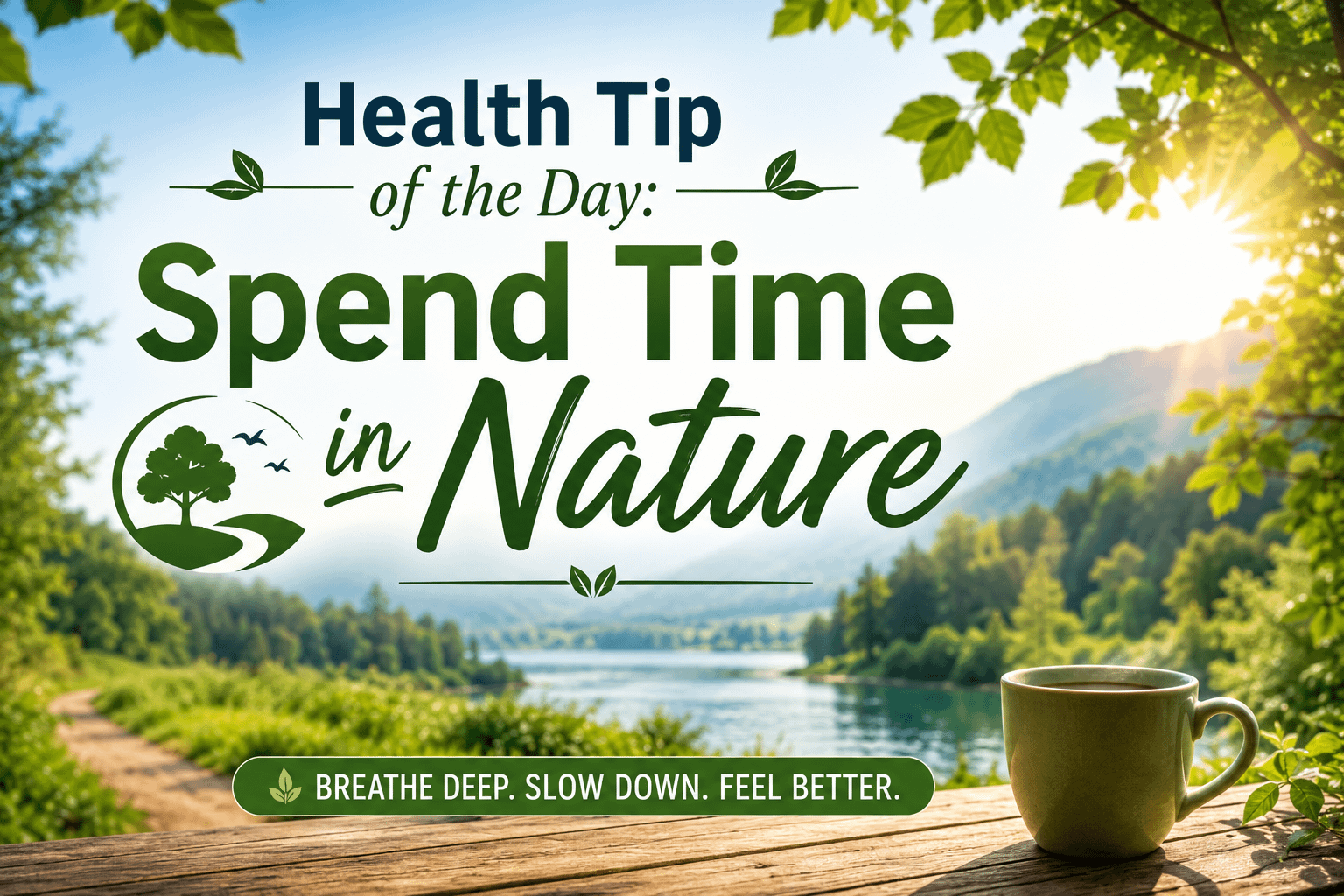
Make spending time in nature a regular part of your routine. Start with just 10–20 minutes outside when you can. Take a walk, sit beneath a tree, enjoy your morning coffee outdoors, tend a garden, or watch the sunset.
You don’t have to go far to experience the benefits of slowing down and reconnecting with the world around you.
Sometimes better health begins with something as simple as stepping outside.
What is your favorite way to spend time in nature—a peaceful walk, sitting by the water, gardening, watching the sunset, or something else?
Leave a Reply