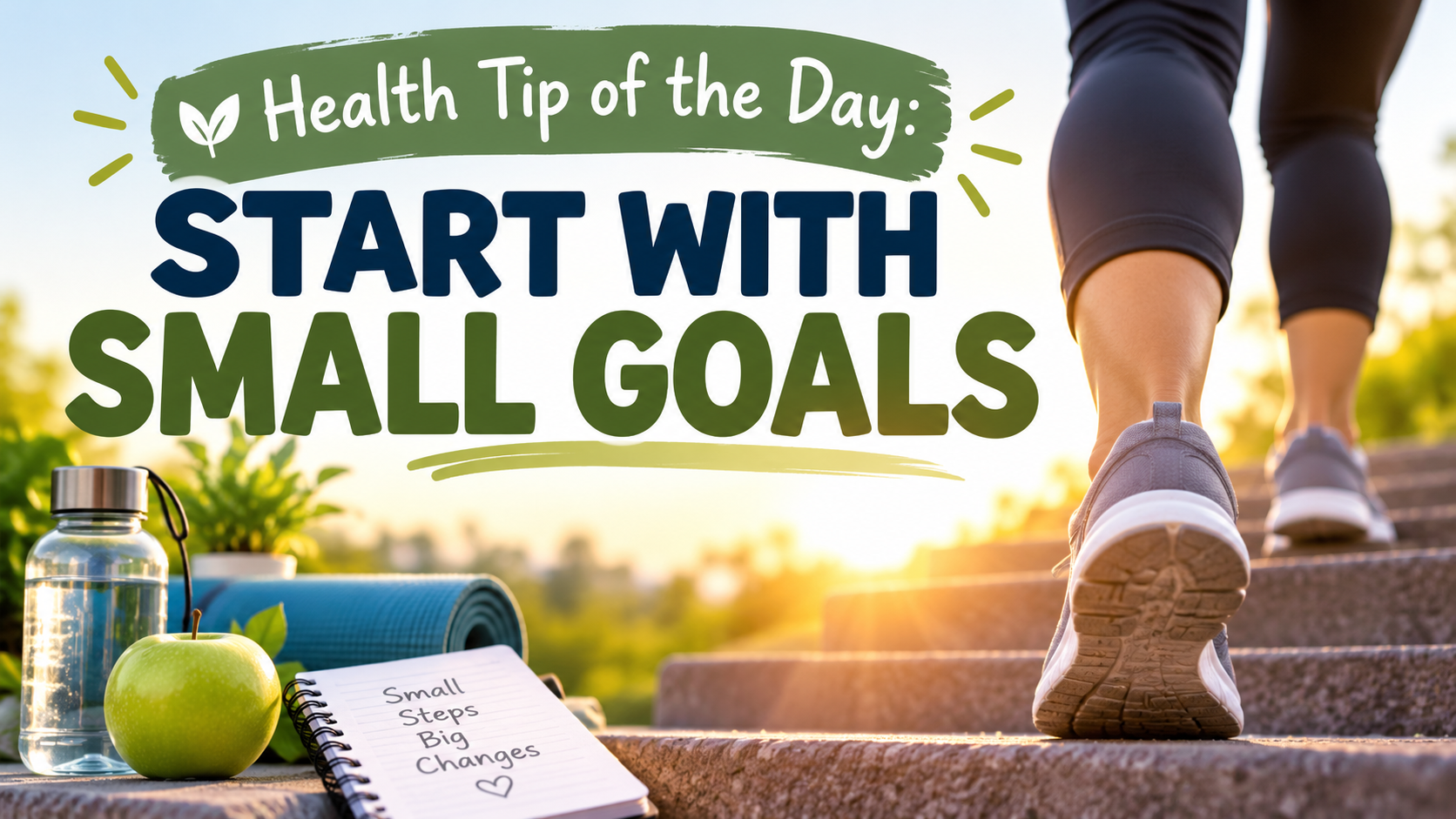
When it comes to improving your health, one of the biggest mistakes people make is trying to change everything at once. They want to lose weight, eat healthier, exercise daily, drink more water, sleep better, and eliminate unhealthy habits overnight.
While these goals are admirable, attempting too much too quickly can lead to frustration, exhaustion, and eventually giving up.
The truth is, you don’t have to change your entire life in one day to improve your health. Sometimes, the smallest steps lead to the biggest transformations.
Today’s Health Tip of the Day is a simple but powerful reminder: Start with small goals, stay consistent, and give yourself time to grow.
Why Starting With Small Goals Matters
Making healthy lifestyle changes can feel overwhelming, especially when you focus on everything you want to accomplish instead of what you can realistically do today.
Small goals make improving your health more manageable.
Instead of expecting immediate results, you begin building habits that can become part of your everyday routine.
For example, walking for five minutes may not seem like much compared to completing an hour-long workout. However, those five minutes represent progress, particularly if you have been physically inactive.
Drinking one additional glass of water each day might seem insignificant, but it can be a useful starting point for someone trying to improve their hydration habits.
Choosing fruit instead of a sugary snack once a day can be another positive step toward healthier eating.
Every healthy decision matters, regardless of how small it may seem.
The goal isn’t perfection. The goal is progress.
1. Focus on One Healthy Habit at a Time
One of the easiest ways to become overwhelmed is by trying to improve several areas of your health simultaneously.
Instead, choose one habit you want to develop and focus on making it part of your daily routine.
Some examples include:
-
Drinking water with breakfast every morning.
-
Walking for five minutes after lunch.
-
Adding one vegetable to dinner.
-
Going to bed 15 minutes earlier.
-
Taking a short break from your phone before bedtime.
-
Practicing deep breathing for two minutes.
Once your new habit becomes comfortable, consider adding another.
This approach allows you to gradually create a healthier lifestyle without putting unnecessary pressure on yourself.
Remember, building healthy habits is not a race.
2. Set Goals You Can Realistically Achieve
Setting unrealistic goals can make improving your health feel like an impossible challenge.
For example, someone who rarely exercises might struggle with a goal of working out for an hour every day.
A more realistic starting goal could be walking for five or ten minutes three times a week.
As your endurance and confidence improve, you can gradually increase your activity level.
The same principle applies to nutrition.
Instead of immediately eliminating every food you enjoy, start by making one healthier choice each day.
Consider replacing one sugary beverage with water or adding a serving of vegetables to your lunch.
A realistic goal should challenge you without making you feel defeated before you begin.
The best health goal is one you can consistently work toward.
3. Celebrate Small Victories
People often overlook their progress because they are too focused on the final result.
If your goal is to lose weight, you might become discouraged when the number on the scale doesn’t change as quickly as you hoped.
However, improvements in health are not always measured by weight.
You might notice that:
-
You can walk longer without becoming tired.
-
You have more energy throughout the day.
-
You are sleeping more consistently.
-
You are making healthier food choices.
-
You feel more confident about your abilities.
-
You are becoming more consistent with your routine.
These achievements deserve recognition.
Celebrating small victories helps reinforce positive behavior and reminds you that your efforts are making a difference.
You don’t need to reach your final destination before being proud of how far you’ve come.
4. Understand That Consistency Matters More Than Perfection
One of the most important lessons in building healthy habits is understanding that you will not always have a perfect day.
There may be mornings when you feel too tired to exercise.
There may be evenings when you choose convenience food instead of preparing a healthy meal.
There may be days when unexpected responsibilities interrupt your routine.
That doesn’t mean you’ve failed.
It means you’re human.
Instead of allowing one difficult day to become a reason to quit, focus on returning to your healthy habits when you can.
If you miss your daily walk, try again tomorrow.
If you forget to drink enough water, make a conscious effort to improve the following day.
If you stay up later than planned, return to your normal bedtime routine.
A single setback does not erase the progress you’ve already made.
Long-term health improvements come from the habits you practice consistently over time, not from doing everything perfectly.
5. Make Movement Part of Your Daily Routine
Physical activity is an important part of maintaining overall health, but getting started doesn’t require expensive equipment or a gym membership.
Small amounts of movement can be a practical starting point.
Depending on your abilities and health needs, you might try:
-
Taking a short walk around your neighborhood.
-
Standing up and stretching after sitting for an extended period.
-
Walking around your home during television commercials.
-
Doing gentle chair exercises.
-
Gardening or completing light household activities.
-
Taking a few extra steps during your normal daily routine.
For adults, general physical activity guidelines recommend eventually working toward at least 150 minutes of moderate-intensity aerobic activity per week, along with muscle-strengthening activities on two days.
However, you do not need to reach those recommendations immediately.
If you’re currently inactive, beginning with a few manageable minutes can help you establish a routine.
People with significant mobility limitations, medical conditions, or concerning symptoms should discuss suitable activity with a healthcare professional.
The important thing is to find movement that is safe, enjoyable, and appropriate for your current abilities.
6. Start Making Small Improvements to Your Diet
Healthy eating doesn’t have to involve complicated meal plans, expensive ingredients, or giving up everything you enjoy.
Sometimes, improving your diet begins with simple substitutions.
For example:
-
Choose whole-grain bread instead of refined white bread.
-
Add fruit to your breakfast.
-
Include vegetables with lunch or dinner.
-
Choose water or unsweetened beverages more often.
-
Prepare a homemade meal instead of ordering takeout.
-
Pay attention to portion sizes.
-
Keep nutritious snacks available when hunger strikes.
Rather than labeling foods as completely good or bad, focus on creating an overall balanced eating pattern.
A healthy diet can include a variety of vegetables, fruits, whole grains, protein sources, and healthy fats.
You don’t need to overhaul your entire kitchen overnight.
Start with one healthier meal, one better snack, or one improved food choice.
Over time, those choices can become regular habits.
7. Set Small Goals for Better Sleep
Sleep plays an important role in physical health, emotional well-being, concentration, and everyday functioning.
Unfortunately, many people overlook sleep when setting health goals.
If you struggle with getting enough rest, start by making small adjustments to your nighttime routine.
Consider:
-
Going to bed 15 minutes earlier.
-
Waking up at approximately the same time each morning.
-
Limiting caffeine later in the day.
-
Reducing screen use before bedtime.
-
Keeping your bedroom cool, quiet, and comfortable.
-
Creating a relaxing routine before going to sleep.
Most adults need at least seven hours of sleep per night, although individual needs vary.
If your sleep schedule is inconsistent, don’t expect to correct it overnight.
Gradual changes may make it easier to establish healthier sleeping habits.
Getting enough quality sleep can also support your ability to maintain other healthy behaviors.
8. Don’t Forget About Your Mental and Emotional Health
Improving your health involves more than exercise and nutrition.
Your mental and emotional well-being matter just as much.
Life can become overwhelming when you’re dealing with responsibilities, financial pressure, personal challenges, grief, or everyday stress.
Sometimes, taking care of yourself means allowing yourself a few minutes to rest.
Small mental health goals might include:
-
Spending five minutes in quiet reflection.
-
Writing down something you’re grateful for.
-
Taking a break from social media.
-
Talking with someone you trust.
-
Spending time outdoors.
-
Practicing mindfulness or breathing exercises.
-
Setting healthy boundaries.
-
Making time for something you enjoy.
You don’t have to solve every problem in your life today.
Sometimes, the healthiest decision is simply recognizing that you need a moment to recharge.
Taking care of your emotional health is not a luxury. It is an important part of taking care of yourself.
9. Track Your Progress Without Becoming Obsessed With Results
Tracking your goals can help you recognize improvements and stay motivated.
However, it is important to avoid becoming overly focused on numbers.
You don’t need complicated fitness applications or expensive tracking devices.
A simple notebook, calendar, or checklist can work.
For example, you might record:
-
How many days you walked this week.
-
How often you included vegetables in your meals.
-
Whether you followed your bedtime routine.
-
How your energy levels felt throughout the day.
-
Which healthy habits became easier.
Tracking your progress can help you identify patterns and understand what works best for you.
It also gives you something encouraging to look back on when progress feels slow.
Remember that improvement isn’t always a straight line.
Some weeks will be better than others, and that’s perfectly normal.
10. Be Patient With Yourself
One of the most difficult parts of improving your health is accepting that meaningful changes take time.
We live in a world where people often expect immediate results.
Advertisements promise rapid weight loss, dramatic physical transformations, and effortless lifestyle changes.
But sustainable improvements usually develop through repeated effort over weeks, months, and years.
You may not notice dramatic differences after one week of walking.
You may not feel completely different after choosing healthier meals for a few days.
That doesn’t mean your efforts are wasted.
Every time you follow through on a healthy habit, you are practicing a behavior that can support your long-term well-being.
Instead of asking yourself, “Why haven’t I reached my goal yet?” consider asking, “What positive step did I take today?”
That simple change in perspective can help you remain motivated.
How to Set SMART Health Goals
A helpful way to make your health goals more achievable is to use the SMART goal-setting method.
SMART stands for:
-
Specific: Clearly identify what you want to accomplish.
-
Measurable: Choose something you can track.
-
Achievable: Make sure your goal is realistic.
-
Relevant: Choose a goal that supports your personal health needs.
-
Time-bound: Establish a reasonable timeframe.
For example, instead of saying, “I want to exercise more,” you could say:
“I will walk for ten minutes after breakfast on Monday, Wednesday, and Friday for the next two weeks.”
This goal is clear, realistic, and measurable.
At the end of two weeks, evaluate how you feel and decide whether you want to continue, adjust, or gradually increase your activity.
The purpose of setting SMART goals is not to create pressure.
It is to give yourself a practical direction.
Your 7-Day Small Goals Health Challenge
If you’re ready to start improving your health, consider trying this simple seven-day challenge.
Seven days of small healthy choices
Track your progress
0 of 7 completed
0%
Drink a glass of water with breakfast.
Take a five-minute walk or try gentle movement.
Add a serving of vegetables to one meal.
Spend five minutes relaxing without distractions.
Begin your bedtime routine 15 minutes earlier.
Choose a nutritious snack you enjoy.
Reflect on your progress and choose one habit to continue.
Reset challenge
These activities are suggestions, not requirements. Adjust them to your abilities, dietary needs, and daily schedule.
At the end of the challenge, ask yourself which activity felt easiest and which one you’d like to continue.
You may discover that one small change is enough to inspire another.
What If You Don’t Reach Your Goal?
Not every goal will work exactly as planned.
Sometimes, a goal that initially seemed realistic turns out to be too difficult.
Perhaps you planned to walk every morning, but your work schedule makes that impossible.
Maybe you wanted to prepare healthier dinners, but your evenings are consistently busy.
Rather than abandoning your goal, consider adjusting it.
Could you walk during your lunch break instead?
Could you prepare ingredients ahead of time?
Could you reduce your goal to something more manageable?
Changing your approach doesn’t mean you’re giving up.
It means you’re finding a way to make your goals fit your life.
Health goals should support your well-being, not become another source of unnecessary stress.
The Long-Term Benefits of Starting Small
Small goals can help you build a foundation for lasting improvements.
Over time, consistently practicing healthy behaviors may contribute to:
-
Better cardiovascular fitness.
-
Improved physical strength and endurance.
-
More consistent sleep.
-
Better stress management.
-
Healthier eating patterns.
-
Greater confidence in managing your health.
-
Improved overall quality of life.
Results vary depending on your health, circumstances, and the habits you adopt.
The greatest benefit of starting small may be discovering that improving your health doesn’t require changing everything about yourself.
It simply requires choosing a realistic place to begin.
Final Thoughts: Every Small Step Is a Step Forward
Improving your health is a lifelong journey, not a competition.
You don’t have to compare your progress to someone else’s.
You don’t have to exercise for hours, follow a perfect diet, or accomplish every health goal immediately.
What matters is making choices that support your well-being and continuing to build on them over time.
If all you can manage today is a five-minute walk, let that be your accomplishment.
If your goal is to drink more water, begin with one additional glass when appropriate for your health needs.
If you want to improve your sleep, start by adjusting your bedtime routine.
And if today is difficult, remember that tomorrow offers another opportunity.
Small goals create small victories. Small victories build confidence. And consistent healthy habits can lead to meaningful changes over time.
Don’t underestimate the power of starting small.
You don’t have to be perfect to make progress.
You simply have to begin.
Today’s Health Reminder
“Your health journey doesn’t have to begin with a giant leap. Sometimes, the smallest step in the right direction is the one that changes everything.”
Question for Readers
What’s one small health goal you can start working toward today, and how will you make it part of your daily routine?


Leave a Reply