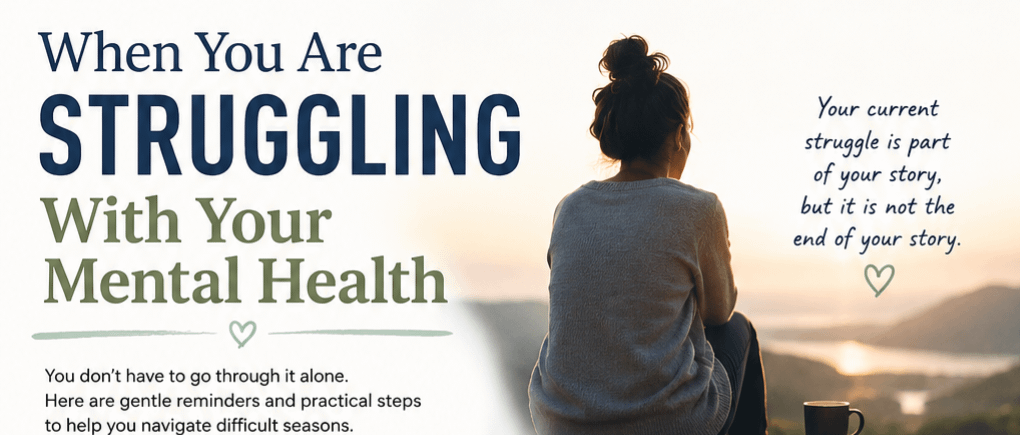
There are moments in life when simply making it through the day feels exhausting. You may smile for others, go to work, handle responsibilities, and appear fine on the outside while silently fighting battles no one can see. Mental health struggles often hide beneath the surface, making people feel isolated even when surrounded by others.
If you are currently struggling with your mental health, the most important thing to know is this: you are not alone, and you are not weak.
The Silent Weight Many People Carry
Mental health challenges affect millions of people from every walk of life. They do not discriminate based on age, gender, income, faith, or success. Some people experience anxiety that keeps their minds racing day and night. Others battle depression that drains their energy and steals their motivation. Some feel overwhelmed by stress, grief, loneliness, or emotional exhaustion.
What makes mental health struggles especially difficult is that they are often invisible. A broken bone can be seen on an X-ray. Emotional pain frequently goes unnoticed by everyone except the person experiencing it.
Because of this, many people suffer in silence.
Recognizing the Signs
Mental health struggles can look different for everyone, but common signs include:
- Constant feelings of sadness or hopelessness
- Excessive worry or anxiety
- Difficulty concentrating
- Changes in sleeping habits
- Loss of interest in activities once enjoyed
- Increased irritability or anger
- Feeling emotionally numb
- Withdrawal from friends and family
- Low energy and fatigue
- Feeling overwhelmed by everyday tasks
These symptoms can develop gradually or appear suddenly after a major life event such as the loss of a loved one, financial hardship, relationship problems, health issues, or traumatic experiences.
It’s Okay to Admit You’re Not Okay
One of the greatest obstacles to healing is the belief that we should always be strong. Society often encourages people to hide their struggles and push through their pain. Unfortunately, ignoring emotional wounds rarely makes them disappear.
Strength is not pretending everything is fine.
Strength is acknowledging when you are hurting and being willing to seek help.
Everyone faces difficult seasons. Struggling does not mean you have failed. It means you are human.
Give Yourself Grace
When mental health becomes difficult, many people become their own harshest critics. They judge themselves for not being productive enough, happy enough, or strong enough.
Instead of criticizing yourself, practice self-compassion.
Ask yourself:
- Would I speak this way to a friend who was struggling?
- Am I expecting perfection from myself?
- Have I given myself permission to rest and heal?
Healing requires patience. Some days progress may be obvious. Other days simply getting out of bed may be your biggest accomplishment. Both deserve recognition.
Small Steps Matter
When you’re overwhelmed, thinking about fixing everything at once can make things worse. Instead, focus on small, manageable actions.
You might:
- Drink a glass of water.
- Take a short walk outside.
- Spend a few minutes in prayer or meditation.
- Write your thoughts in a journal.
- Call someone you trust.
- Listen to uplifting music.
- Take a shower and get dressed.
These simple actions may seem insignificant, but they create momentum and remind you that progress often happens one step at a time.
Don’t Isolate Yourself
Mental health struggles often convince people to withdraw from others. While solitude can sometimes be helpful, prolonged isolation often deepens feelings of loneliness and hopelessness.
Reach out to someone you trust.
You don’t need to have all the answers. You don’t even need to explain everything perfectly. Simply telling someone, “I’m having a hard time right now,” can open the door to support and understanding.
The people who care about you would rather listen than lose you.
Seek Professional Support
There is no shame in seeking professional help. Therapists, counselors, support groups, and mental health professionals are trained to help people navigate emotional challenges and develop healthy coping strategies.
Just as you would see a doctor for a physical illness, it’s perfectly reasonable to seek treatment for emotional and mental health concerns. Professional support can provide guidance, tools, and hope when things feel overwhelming.
Hold Onto Hope
Mental health struggles can make it feel like things will never improve. In your darkest moments, hope may seem distant. Yet countless people who once felt completely overwhelmed have found healing, strength, and renewed purpose.
Your current struggle is part of your story, but it is not the end of your story.
There are better days ahead.
There are people who care.
There is help available.
And there is hope, even when you cannot see it right now.
Final Thoughts
If you are struggling with your mental health today, be gentle with yourself. Take a deep breath. Focus on the next step instead of the entire journey. Allow yourself the same compassion you would offer someone you love.
You are valuable.
You are needed.
You are worthy of support.
Most importantly, remember that asking for help is not a sign of weakness—it is often the first step toward healing.
If you are in immediate emotional distress or having thoughts of self-harm, contact the 988 Suicide & Crisis Lifeline by calling or texting 988. Confidential support is available 24 hours a day, seven days a week.
Leave a Reply