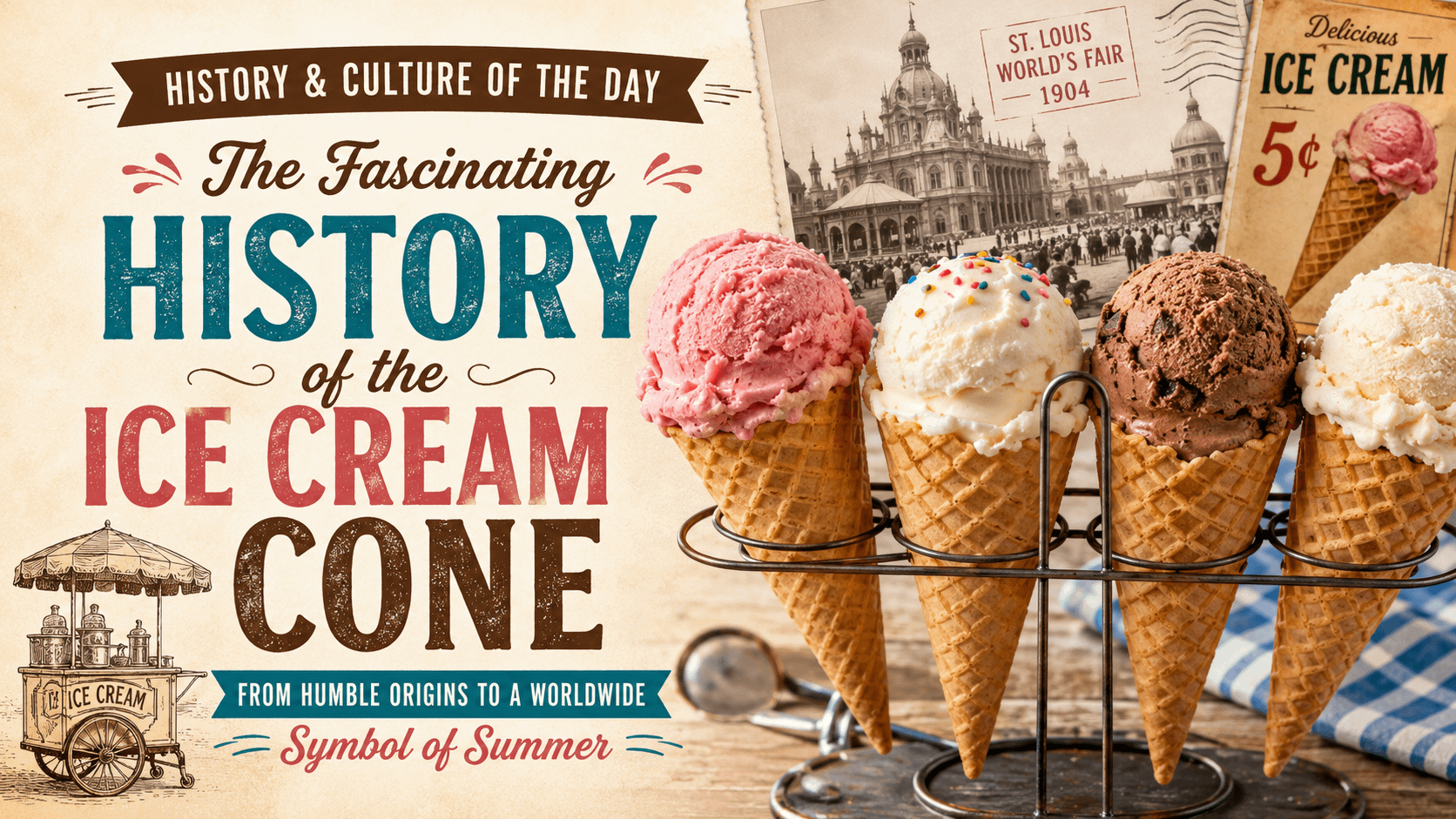
The Fascinating History of the Ice Cream Cone: From Humble Origins to a Worldwide Symbol of Summer
Meta Description: Discover the rich history of the ice cream cone, from its debated origins and rise in popularity at the 1904 World’s Fair to its lasting influence on cultures around the globe.
A Simple Treat with an Extraordinary Story
Few foods evoke feelings of happiness and nostalgia quite like an ice cream cone. Whether it’s enjoyed on a hot summer afternoon, during a family vacation, after a baseball game, or while walking through a local fair, the combination of creamy ice cream and a crunchy edible cone has become one of the world’s most beloved desserts.
For many people, eating an ice cream cone brings back childhood memories of neighborhood ice cream trucks, family outings, county fairs, amusement parks, and celebrations with loved ones. It’s a dessert that crosses generations, cultures, and continents.
Yet behind this simple treat lies a fascinating story filled with innovation, competition, entrepreneurship, and a little mystery. Historians still debate who truly invented the ice cream cone, but one thing is certain—it changed the dessert industry forever.
Today’s History & Culture of the Day explores how one of the simplest inventions became one of the most recognizable symbols of summer around the world.
Ice Cream Before the Cone
Before cones existed, enjoying ice cream wasn’t nearly as convenient.
Ice cream itself dates back centuries. Ancient civilizations, including the Chinese, Persians, and Romans, enjoyed frozen desserts made from snow, ice, fruit juices, and sweetened flavorings. Wealthy families often stored mountain snow underground to create primitive frozen treats long before refrigeration existed.
By the 1700s and 1800s, ice cream had become increasingly popular in Europe and America. However, it was generally reserved for wealthy households because producing ice cream required large amounts of hand-churned labor and harvested ice.
When ice cream became available to the public during the nineteenth century, vendors served it in several ways:
- Glass dishes
- Ceramic bowls
- Tin cups
- Paper containers
- Reusable “penny lick” glasses
The penny lick became especially common throughout cities.
Customers paid a penny for a small serving of ice cream placed into a tiny thick glass. After eating the ice cream, the customer returned the glass, which was quickly rinsed—or sometimes barely cleaned at all—before being used again.
Although economical, this practice eventually became a public health concern as cities grew and awareness of disease transmission increased.
People wanted a disposable, sanitary alternative.
The Search for a Better Way
By the late nineteenth century, inventors and food vendors began experimenting with edible containers.
Thin wafers had long been served alongside desserts throughout Europe. Bakers discovered that warm wafer cookies could be rolled into tubes or cups before they cooled and hardened.
These edible pastries were delicious, lightweight, and eliminated the need for reusable serving dishes.
Several entrepreneurs began selling wafer cups and edible containers before the famous 1904 World’s Fair.
Because of this, historians generally agree that no single individual deserves complete credit for inventing the modern ice cream cone.
Instead, the cone evolved through years of experimentation by multiple creative minds.
The Famous 1904 St. Louis World’s Fair
Although edible cones likely existed earlier, the event most closely associated with their popularity is the 1904 Louisiana Purchase Exposition, better known as the St. Louis World’s Fair.
The fair celebrated the centennial of the Louisiana Purchase and welcomed nearly twenty million visitors from around the world.
It showcased incredible innovations, architecture, cultures, foods, and inventions that would shape the twentieth century.
Among the countless food vendors were ice cream sellers and waffle makers.
According to the most famous story, one busy ice cream vendor unexpectedly ran out of bowls during a rush of customers.
A nearby waffle baker stepped in to help by rolling one of his freshly baked waffles into a cone while it was still warm.
The ice cream vendor placed scoops inside the rolled waffle.
Customers loved it.
Instead of returning bowls or carrying fragile dishes, they could simply eat the entire container.
Whether completely accurate or partly legendary, this story became one of the World’s Fair’s most enduring tales.
Who Really Invented the Ice Cream Cone?
Like many famous inventions, several people claimed to be first.
Italo Marchiony
An Italian immigrant living in New York City, Italo Marchiony patented an edible ice cream cup in 1903.
He sold frozen desserts from street carts and wanted a solution that prevented customers from walking away with his expensive serving glasses.
His patented edible cups closely resembled early waffle cones.
Ernest Hamwi
Ernest Hamwi, a Syrian immigrant, sold a crispy pastry called zalabia during the 1904 World’s Fair.
According to popular accounts, he rolled his pastries into cone shapes to help an ice cream vendor who had run out of dishes.
Although historians question some details, Hamwi became one of the names most associated with popularizing the cone.
Abe Doumar
Another claimant was Abe Doumar, who reportedly served rolled waffle cones at the World’s Fair before opening a successful cone business.
His company would later manufacture waffle cone machines and help expand commercial production throughout the United States.
The Likely Answer
Most historians now believe the cone wasn’t invented by one individual but instead evolved through multiple inventors, bakers, and entrepreneurs working independently.
The World’s Fair simply introduced the concept to millions of people at exactly the right moment.
The Rise of Commercial Ice Cream
Following the World’s Fair, demand exploded.
Ice cream shops quickly adopted cones because they offered several advantages:
- Less cleanup
- Lower serving costs
- Faster customer service
- No dishes to wash
- A fun eating experience
As mechanical refrigeration improved during the early twentieth century, ice cream became more affordable than ever before.
Entire businesses formed around cone production.
Factories manufactured sugar cones, waffle cones, and cake cones in enormous quantities.
The ice cream cone had officially become part of American life.
Ice Cream During the Great Depression
Despite difficult economic times during the 1930s, ice cream remained one of America’s most affordable luxuries.
For only a few cents, families could enjoy a cone together.
Children often saved spare change to buy treats after school.
Ice cream parlors became gathering places where neighbors socialized despite financial hardships.
The cone represented something important during uncertain times—small moments of happiness.
The Birth of the Ice Cream Truck
Following World War II, suburban neighborhoods expanded rapidly across America.
Ice cream trucks became a familiar summertime sight.
The cheerful music announcing the truck’s arrival could send children running outside with coins in hand.
For many families, the neighborhood ice cream truck became a treasured summer tradition.
Today, hearing those familiar melodies still brings instant nostalgia to many adults.
A Favorite at Fairs and Ballparks
The ice cream cone became closely tied to American recreation.
Visitors enjoyed cones at:
- County fairs
- State fairs
- Baseball games
- Boardwalks
- Carnivals
- Zoos
- Amusement parks
- Beaches
These locations helped cement the cone as a symbol of fun, family, and celebration.
Even today, many people associate eating an ice cream cone with vacations and carefree summer afternoons.
Ice Cream Cones Around the World
Although often viewed as an American classic, the cone has become an international favorite.
Italy
Italy pairs crisp cones with rich, handcrafted gelato in countless flavors, from pistachio to stracciatella.
Japan
Japanese shops offer beautifully crafted cones featuring matcha, black sesame, sakura, melon, and seasonal fruits.
Presentation is considered just as important as flavor.
Turkey
Turkey’s famous dondurma contains natural ingredients that make the ice cream stretchy and chewy.
Street vendors entertain customers with playful tricks before finally handing over the cone.
Mexico
Mexican ice cream shops often feature tropical fruits, cinnamon, chili powder, tamarind, mango, and coconut flavors.
South Korea
Creative soft-serve cones topped with colorful candies, flowers, cookies, and elaborate decorations have become social media favorites.
Different Types of Ice Cream Cones
Today’s consumers enjoy several varieties.
Cake Cone
Light, crispy, and slightly sweet, cake cones are made from a batter similar to a crisp cookie.
Sugar Cone
Sweeter and crunchier than cake cones, sugar cones hold larger scoops and remain popular at ice cream shops.
Waffle Cone
Made from rich waffle batter, waffle cones are thicker, more flavorful, and often baked fresh in stores where their sweet aroma fills the air.
Chocolate-Dipped Cone
Many specialty shops coat the rim in chocolate before adding sprinkles, nuts, or candies for an extra indulgent treat.
Fun Facts About Ice Cream Cones
- Americans consume billions of ice cream cones every year.
- Vanilla remains one of the most popular ice cream flavors worldwide.
- Waffle cones are often considered the premium option because of their buttery flavor.
- National Ice Cream Day is celebrated each July in the United States.
- Some giant novelty cones measure several feet tall and are displayed at festivals and museums.
- Ice cream remains one of the world’s most popular desserts regardless of season.
Why the Ice Cream Cone Matters
The ice cream cone represents much more than dessert.
It tells a story about innovation solving an everyday problem.
It reflects how immigrants brought new baking traditions to America.
It demonstrates how major public events like the World’s Fair helped spread new ideas across the country.
Most importantly, it reminds us that culture is often shaped by ordinary objects that become extraordinary through everyday use.
Countless birthdays, first dates, family vacations, Little League games, county fairs, beach walks, and summer evenings have included an ice cream cone.
Those shared experiences transformed it into an enduring cultural icon.
Lessons from an Everyday Invention
History isn’t only found in wars, governments, or famous leaders.
Sometimes the most meaningful stories are hidden within ordinary objects we use without giving them much thought.
The ice cream cone reminds us that innovation often comes from practical needs. A simple edible container improved sanitation, reduced waste, lowered costs, and created an entirely new way to enjoy a beloved dessert.
More than a century later, that clever idea continues to bring smiles to millions of people around the world.
Final Thoughts
The next time you enjoy an ice cream cone, take a moment to appreciate the remarkable journey behind it.
From ancient frozen desserts and nineteenth-century street vendors to bustling World’s Fairs and modern ice cream shops, the cone has traveled a long road to become one of the most recognizable treats in history.
Its story is one of creativity, entrepreneurship, cultural exchange, and joyful traditions passed from one generation to the next.
That is what makes the ice cream cone more than just a dessert—it is a delicious piece of history and a lasting symbol of culture, celebration, and the simple pleasures that connect us all.
Leave a Reply