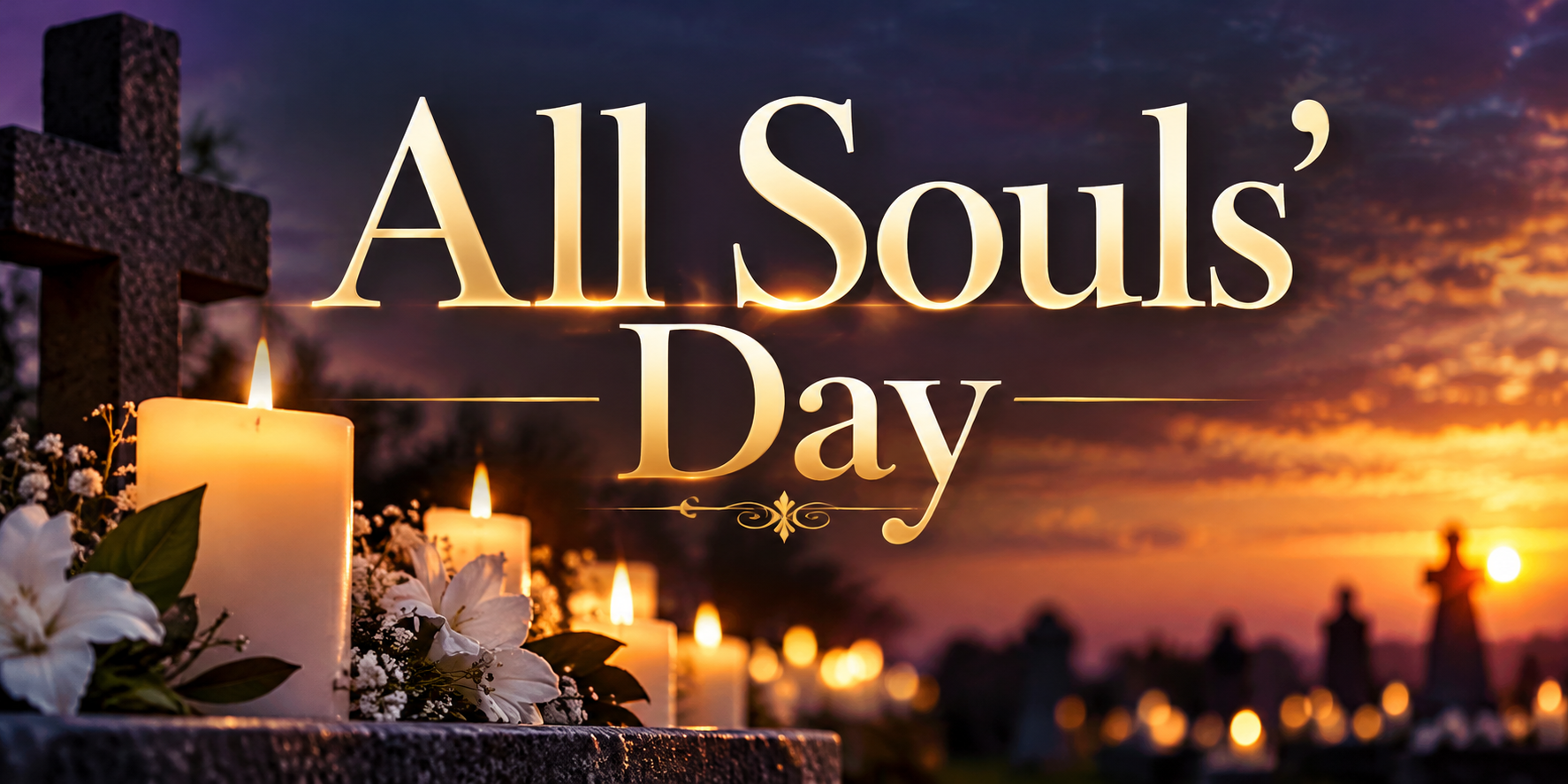
November 2 | A Day to Remember the Departed, Celebrate Their Lives, and Keep Their Memories Alive
Every year on November 2, millions of people around the world observe All Souls’ Day, a sacred occasion dedicated to remembering those who have passed away, praying for departed souls, and reflecting on the powerful connection between love, faith, grief, and remembrance.
For many, All Souls’ Day is much more than a religious observance. It is a deeply personal day filled with memories of parents, grandparents, spouses, children, siblings, friends, and other loved ones who are no longer physically present.
It is a time to remember their laughter, the lessons they taught us, the love they shared, and the moments that continue to live within our hearts.
For anyone who has experienced the loss of someone they deeply love, especially a parent who has lost a child, All Souls’ Day can carry extraordinary emotional meaning.
The day reminds us that although death changes our relationship with someone, it does not erase the love we shared.
Love does not end when a life ends. It continues through memories, traditions, faith, and the ways we honor those who have gone before us.
What Is All Souls’ Day?
All Souls’ Day, also known as the Commemoration of All the Faithful Departed, is a Christian observance celebrated annually on November 2.
The day is particularly significant within the Roman Catholic Church, where believers pray for the souls of the faithful departed, especially those undergoing purification before entering heaven.
According to Catholic teaching, these prayers are an expression of spiritual love and solidarity with those who have died.
The observance is rooted in the belief that the bonds of Christian community extend beyond earthly life.
Although All Souls’ Day is most closely associated with Catholic traditions, remembrance of the departed is also important in various other Christian communities, even when their beliefs and practices differ.
At its heart, the day encourages reflection on three meaningful aspects of life:
-
Remembrance: Honoring the lives and legacies of those who have passed away.
-
Prayer: Asking God to grant eternal rest and peace to departed souls.
-
Hope: Finding comfort in faith, the promise of eternal life, and the belief that death does not have the final word.
For grieving families, these traditions can provide opportunities to acknowledge losses that others may no longer recognize.
When Is All Souls’ Day Celebrated?
All Souls’ Day is observed every year on November 2, immediately following All Saints’ Day on November 1.
These observances are part of a period in the Western Christian calendar traditionally associated with remembering the saints and the departed.
The three connected occasions are:
October 31 — All Hallows’ Eve: The evening before All Saints’ Day, which eventually became associated with modern Halloween traditions.
November 1 — All Saints’ Day: A celebration honoring all saints, including those whose names are not formally recognized.
November 2 — All Souls’ Day: A day dedicated to praying for and remembering the faithful departed.
Together, these observances have historically been known as Allhallowtide.
Although their religious meanings differ, they share themes of mortality, faith, remembrance, and the relationship between the living and the dead.
The History and Origins of All Souls’ Day
The tradition of praying for the dead stretches back to the earliest centuries of Christianity.
Early Christian communities remembered deceased believers through prayers, commemorations, and religious services.
These practices reflected the belief that death did not completely separate members of the Christian community from one another.
The Influence of St. Odilo of Cluny
The widespread observance of All Souls’ Day on November 2 is commonly associated with St. Odilo of Cluny, a Benedictine abbot in France.
Around the year 998, Odilo established a commemoration for the faithful departed within the monasteries associated with Cluny.
The observance spread throughout Europe over the following centuries and eventually became firmly established in Western Catholic tradition.
Church services, prayers, and visits to burial sites became important ways of marking the occasion.
Over time, families also developed their own customs, often influenced by local cultures and traditions.
These practices helped transform All Souls’ Day into both a religious observance and a meaningful occasion for family remembrance.
The Spiritual Meaning of All Souls’ Day
For Catholics, All Souls’ Day carries a particular theological significance.
Catholic teaching holds that some souls who die in God’s grace undergo purification, traditionally called purgatory, before entering the fullness of heaven.
Prayers offered on All Souls’ Day are understood as acts of charity and spiritual support for these souls.
The observance also emphasizes God’s mercy, the hope of resurrection, and the Christian belief in eternal life.
One Bible passage often associated with Christian hope in the face of death is John 11:25:
“I am the resurrection, and the life: he that believeth in me, though he were dead, yet shall he live.” — John 11:25 (KJV)
These words have comforted generations of Christians facing the death of someone they love.
They express the hope that earthly death is not the end of existence.
For those grieving, faith can offer reassurance that their loved ones remain within God’s care, even when they can no longer see or speak with them.
At the same time, it is important to recognize that Christians hold different theological understandings of prayers for the dead, purgatory, and the afterlife.
Some Protestant denominations do not practice prayer for departed souls but still honor deceased loved ones through memorial services, thanksgiving, and remembrance.
Despite these differences, the desire to remember those who have died remains deeply meaningful across many faith traditions.
How All Souls’ Day Is Celebrated Around the World
All Souls’ Day is observed in different ways depending on a country’s religious traditions, cultural history, and family customs.
Some celebrations are solemn and quiet, while others involve gatherings, music, food, flowers, and community activities.
1. Mexico — Día de los Muertos
In Mexico, All Souls’ Day overlaps with the celebration of Día de los Muertos, or the Day of the Dead.
Although the traditions are connected historically, Día de los Muertos is a distinct cultural celebration that blends Indigenous customs with Catholic influences.
Families may create beautifully decorated altars called ofrendas, featuring photographs, candles, marigolds, favorite foods, and meaningful personal belongings.
These displays honor deceased relatives and welcome their memory into family celebrations.
Rather than focusing exclusively on sadness, Día de los Muertos often emphasizes love, family connections, storytelling, and the celebration of life.
2. Philippines — Undas
In the Philippines, the period surrounding All Saints’ Day and All Souls’ Day is commonly known as Undas.
Families visit cemeteries to clean graves, light candles, offer flowers, and pray for deceased relatives.
Many families spend hours together at burial sites, sharing food, stories, and memories.
For some, these gatherings become important opportunities for extended families to reconnect.
3. Poland — Zaduszki
In Poland, All Souls’ Day is known as Zaduszki.
Families visit cemeteries and place candles and flowers on graves.
During this period, Polish cemeteries are often illuminated by thousands of glowing memorial candles.
The lights symbolize prayer, remembrance, and enduring respect for the departed.
4. Italy — Commemoration of the Dead
In Italy, All Souls’ Day is traditionally known as Commemorazione dei Defunti.
Families attend religious services, visit cemeteries, and remember deceased relatives.
Some regions also prepare traditional foods associated with the observance.
These customs reflect the importance of family bonds and the passing of traditions between generations.
5. United States — Prayer and Personal Remembrance
In the United States, many Catholic churches celebrate special Masses dedicated to the faithful departed.
Families may visit cemeteries, light candles, bring flowers, or spend time in prayer.
Others choose more personal forms of remembrance, including looking through photographs, sharing stories, or preparing a loved one’s favorite meal.
There is no single way every family must observe the day.
What matters is the intention behind the remembrance.
Why All Souls’ Day Matters to People Who Are Grieving
Grief does not follow a calendar.
The pain of losing someone does not automatically disappear after a funeral, a few months, or even several years.
For many people, grief becomes a lifelong expression of love.
All Souls’ Day provides something especially meaningful: permission to remember openly.
In everyday life, grieving people sometimes feel pressure to move forward, appear strong, or avoid discussing their loss.
Friends and relatives may stop mentioning the person who died because they worry about causing sadness.
But silence can sometimes make grief feel even lonelier.
All Souls’ Day creates an opportunity to speak the names of those we miss.
It allows us to acknowledge that someone important lived, loved, mattered, and continues to hold a place in our hearts.
Remembering a loved one does not mean refusing to live in the present.
It means recognizing that the past helped shape who we are today.
The Importance of Saying Their Name
One of the most meaningful ways to honor someone who has died is simply to say their name.
Share a story about them.
Talk about something funny they did.
Remember their kindness, personality, accomplishments, and dreams.
A person’s life should never be reduced to the circumstances of their death.
They were someone with hopes, relationships, interests, and experiences that deserve to be remembered.
For parents who have lost children, hearing their child’s name can be particularly meaningful.
A parent never stops being a parent simply because their child has died.
The relationship changes, but the love remains.
All Souls’ Day and the Grief of Losing a Child
There are few experiences as devastating as the death of a child.
Parents expect to watch their children grow older, celebrate milestones, build relationships, and create futures of their own.
When a child dies, those expectations are shattered.
The grief is not limited to missing the person who has passed away.
Parents may also mourn the future they expected to share.
They miss birthdays that will never be celebrated together, conversations that will never happen, and everyday moments that once seemed ordinary.
For a grieving mother or father, All Souls’ Day can become a sacred opportunity to honor their child’s life.
It might mean lighting a candle beside a favorite photograph.
It might mean visiting a cemetery, writing a letter, or spending time somewhere that holds special memories.
Sometimes, it means sitting quietly and allowing the tears to come.
And sometimes, it means smiling while remembering a beautiful moment.
Both responses are expressions of love.
A child’s life is never measured only by the number of years they lived. Their impact is measured by the love they gave, the memories they created, and the hearts they forever changed.
All Souls’ Day reminds grieving parents that their children deserve to be remembered, not only on birthdays or death anniversaries, but whenever love brings their memory close.
10 Meaningful Ways to Observe All Souls’ Day
Whether you participate in religious traditions or prefer a personal approach, there are many meaningful ways to honor someone who has died.
1. Light a Candle in Their Memory
Lighting a candle is one of the simplest and most powerful remembrance traditions.
The gentle flame can symbolize love, faith, hope, and the lasting presence of memory.
Spend a few quiet moments reflecting on your loved one’s life.
2. Visit Their Resting Place
If possible, visit the cemetery or memorial site where your loved one is buried or remembered.
Bring flowers, clean the area, or simply spend time reflecting.
If visiting is emotionally difficult or physically impossible, you can honor them from wherever you are.
3. Share Your Favorite Memories
Gather with family members or friends and share stories about the person you miss.
Remember the joyful moments, the funny conversations, and the lessons they taught you.
Stories help preserve someone’s legacy for future generations.
4. Create a Memorial Space at Home
Choose a quiet area of your home to display photographs, keepsakes, flowers, or other meaningful items.
A memorial space can become a comforting place for reflection throughout the year.
5. Write a Letter to Your Loved One
Writing can be a powerful way to express grief.
Tell your loved one what you miss about them, what has happened since their passing, and what you wish you could say.
You do not need to share the letter with anyone.
Sometimes, the act of writing is meaningful enough.
6. Prepare Their Favorite Meal
Food often carries powerful memories.
Preparing a loved one’s favorite recipe can bring back moments of family gatherings, celebrations, and ordinary days spent together.
Share the meal with others and talk about the memories associated with it.
7. Perform an Act of Kindness in Their Honor
Consider helping someone who is struggling, donating to a meaningful cause, or volunteering in your community.
Acts of kindness can become living tributes to the people we have lost.
Their influence continues through the compassion we extend to others.
8. Spend Time in Prayer or Reflection
For those who practice Christianity, prayer can be an important part of All Souls’ Day.
Others may prefer quiet meditation, journaling, or simply sitting with their memories.
Choose what brings you comfort.
9. Create a Memory Book
Collect photographs, letters, stories, and meaningful keepsakes.
Write down the details you never want to forget.
A memory book can become something future generations treasure.
10. Speak Their Name and Keep Their Story Alive
Perhaps the most important thing you can do is continue remembering.
Talk about their life.
Share their accomplishments.
Remember their dreams.
Let others know how much they mattered.
Someone does not need to be physically present to remain an important part of your story.
How to Support Someone Who Is Grieving on All Souls’ Day
All Souls’ Day can be emotionally difficult for people who have recently experienced a loss, as well as those who have carried grief for many years.
If you know someone who is grieving, consider reaching out.
You do not need to find perfect words.
Sometimes, a simple message can mean more than an elaborate gesture.
You might say:
-
“I’m thinking about you and your loved one today.”
-
“I still remember them, and they haven’t been forgotten.”
-
“Would you like to share a favorite memory?”
-
“I’m here if you want someone to listen.”
-
“You don’t have to go through today alone.”
Avoid placing expectations on how someone should feel.
Some people want company, while others prefer solitude.
Some find comfort in religious services, while others need a quiet day at home.
Supporting someone through grief means respecting their needs without judgment.
Most importantly, remember that grief continues long after the world stops acknowledging the loss.
A thoughtful message on an ordinary day can be just as meaningful as one sent on a recognized day of remembrance.
The Connection Between Faith, Grief, and Hope
Faith and grief often exist side by side.
A person can believe in heaven and still desperately miss someone who has died.
They can trust God while struggling with questions that have no easy answers.
They can feel grateful for the years they shared and heartbroken over the years they lost.
These emotions do not necessarily contradict one another.
They reflect the complexity of love and loss.
One of the most comforting passages in Scripture is Revelation 21:4:
“And God shall wipe away all tears from their eyes; and there shall be no more death, neither sorrow, nor crying, neither shall there be any more pain: for the former things are passed away.” — Revelation 21:4 (KJV)
For Christians, this verse offers hope in a future where suffering and death no longer exist.
All Souls’ Day provides an opportunity to reflect on that hope while acknowledging the very real pain of living without someone we love.
Faith does not always remove grief.
Sometimes, it simply provides the strength to face another day.
Why Remembering Our Loved Ones Is Important
Remembering someone who has died is not simply about looking backward.
It is also about carrying their influence into the future.
The people we love help shape our values, beliefs, traditions, and understanding of the world.
A parent’s guidance may influence how we raise our own children.
A friend’s kindness may inspire us to help others.
A child’s courage may teach us the true meaning of strength.
Even after death, these influences can continue.
Memories remind us that our loved ones were here and that their lives mattered.
They also give us opportunities to share their stories with people who never had the chance to meet them.
A grandchild may learn about a grandparent through family photographs.
A younger sibling may discover stories about a brother or sister they barely knew.
A community may remember someone through charitable work performed in their honor.
In these ways, remembrance becomes an active expression of love.
Is It Normal to Feel Sad on All Souls’ Day?
Absolutely.
Days dedicated to remembrance can bring powerful emotions to the surface.
Even if someone has been coping well, a photograph, song, familiar scent, or family tradition may suddenly bring back intense feelings of loss.
This is sometimes described as a grief trigger.
You may experience sadness, loneliness, gratitude, anger, peace, or a combination of emotions.
There is no correct emotional response to All Souls’ Day.
You might cry while looking through old photographs.
You might laugh while remembering something your loved one said.
You might feel comforted by prayer or find yourself struggling with unanswered questions.
You might even choose not to participate in the observance because it feels too overwhelming.
All of these experiences can be understandable.
Grief is deeply personal.
You do not need to prove your love through public displays of sadness or particular rituals.
Your relationship with your loved one remains meaningful regardless of how you spend the day.
Moving Forward Without Forgetting Those We Have Lost
One of the most difficult parts of grief is learning how to continue living after someone important has died.
For some people, moving forward feels like betrayal.
They worry that finding happiness means they are forgetting the person they lost.
But remembering someone and building a meaningful future are not opposing goals.
You can carry your loved one’s memory while making new memories.
You can experience joy without denying your sadness.
You can develop new relationships while honoring the relationships that shaped your past.
And you can discover purpose without pretending that your loss was necessary or fair.
Moving forward does not mean leaving your loved one behind. It means finding ways to carry their love with you into the life that remains.
All Souls’ Day can remind us that honoring someone is not limited to mourning their absence.
It can also mean living according to the lessons they taught us.
It can mean showing kindness because they were kind.
It can mean pursuing a dream they encouraged.
It can mean helping someone else through grief because we understand what loneliness feels like.
Sometimes, the most meaningful memorial is the life we choose to live in their honor.
A Prayer for All Souls’ Day
Heavenly Father,
Today, we come before You with hearts filled with love, memories, and longing for those who have gone before us.
We remember our parents, grandparents, spouses, children, siblings, friends, and everyone whose absence has left an empty place in our lives.
Lord, we ask You to surround the departed with Your eternal love, mercy, and peace.
Comfort the families who are grieving today.
Be especially close to the mothers and fathers who have lost children, the spouses who miss their partners, and those who feel forgotten in their sorrow.
Give us strength when memories bring tears, peace when loneliness feels overwhelming, and hope when the future seems uncertain.
Help us remember the beautiful moments we shared instead of allowing our grief to be defined only by the pain of separation.
Teach us to honor our loved ones through compassion, kindness, faith, and the way we treat others.
Remind us that love is one of the greatest gifts You have given us and that the lives of those we miss will always matter.
Until the day when all tears are wiped away, help us walk forward with courage, gratitude, and hope.
In Jesus’ name,
Amen.
Final Thoughts: All Souls’ Day Is a Reminder That Love Never Dies
All Souls’ Day is more than a date on the calendar.
It is an opportunity to remember the people who changed our lives, shaped our hearts, and left memories that time cannot erase.
For some, the day is filled with prayer and religious traditions.
For others, it is spent visiting graves, lighting candles, looking through photographs, or quietly remembering someone they miss.
And for those who have experienced the heartbreaking loss of a child, spouse, parent, sibling, or close friend, it can be a day to acknowledge the love that remains despite physical separation.
There is no expiration date on love.
There is no deadline for missing someone.
And there is no requirement to stop speaking about a person simply because years have passed since their death.
The people we have lost were more than the dates written on their gravestones.
They were individuals who laughed, dreamed, struggled, loved, and made a difference in the lives of others.
Their stories deserve to be remembered.
Their names deserve to be spoken.
And their memories deserve to remain part of our lives.
This November 2, whether you light a candle, say a prayer, visit a cemetery, or simply close your eyes and remember someone you love, take comfort in knowing that remembrance itself can be a beautiful act of love.
Because the people we love may leave this world, but the love they gave us can remain in our hearts for the rest of our lives.
Who will you be remembering this All Souls’ Day, and what is one beautiful memory of them that you will always carry in your heart?



Leave a Reply