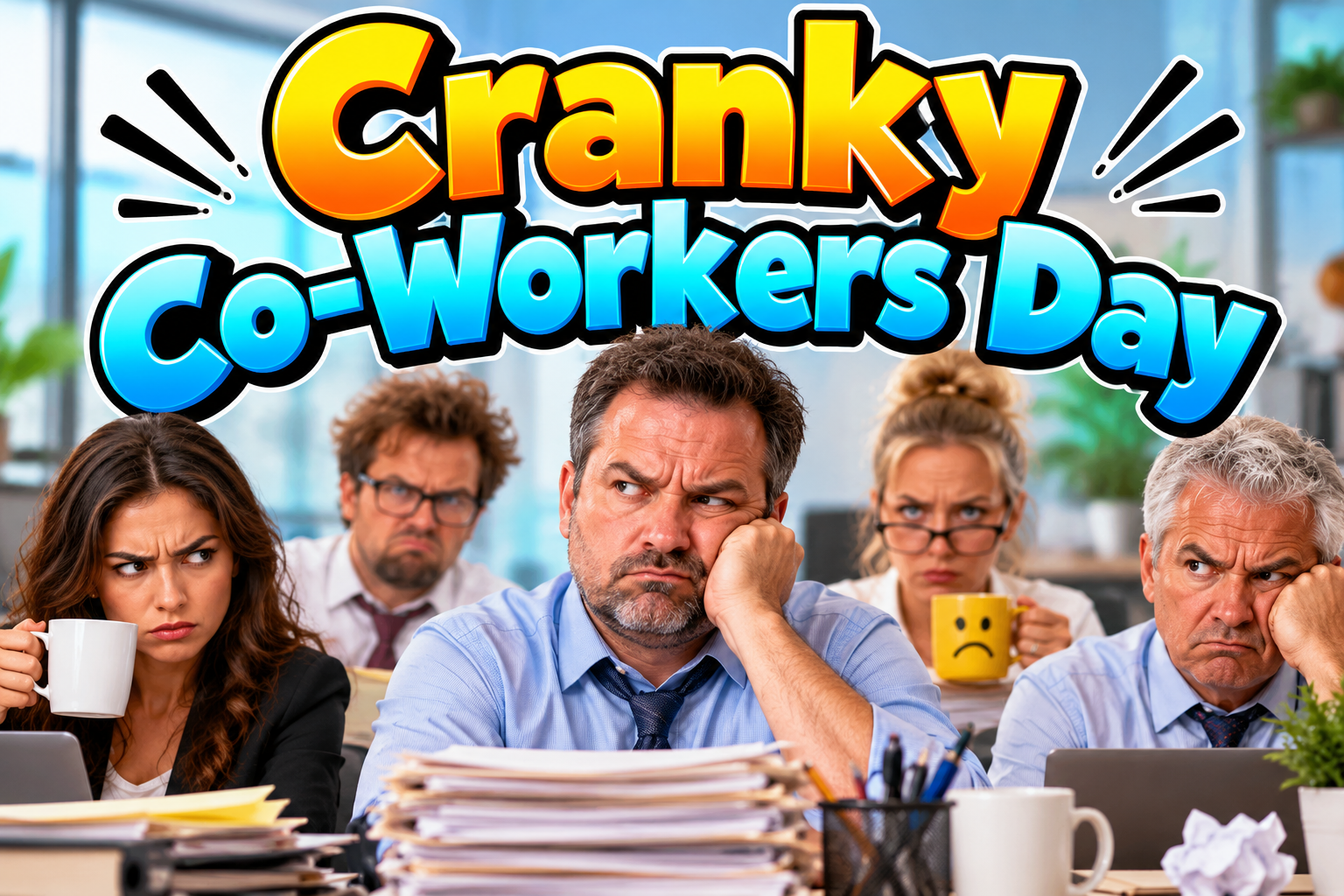
Every workplace has its share of personalities. Some co-workers arrive with a smile, ready to tackle the day, while others seem irritated before their first cup of coffee. Whether it is someone complaining about everything, a colleague who never seems satisfied, or a person whose mood changes throughout the day, dealing with cranky co-workers is something many employees understand.
Cranky Co-Workers Day, observed annually on October 27, is a lighthearted occasion dedicated to recognizing those workplace personalities who sometimes make the workday a little more challenging.
Although the name might inspire a few laughs, this unusual observance also offers an opportunity to think about workplace stress, communication, kindness, and the importance of treating others with patience and understanding.
After all, everyone has a bad day occasionally.
What Is Cranky Co-Workers Day?
Cranky Co-Workers Day is an unofficial observance that brings attention to the frustrations and challenges of working alongside people who may be irritable, impatient, negative, or simply difficult to please.
The day encourages employees to find humor in everyday workplace situations while remembering that someone’s unpleasant attitude may have an explanation.
Perhaps a co-worker is overwhelmed with responsibilities, dealing with personal problems, struggling with exhaustion, or feeling unappreciated.
Sometimes, the person who appears cranky is simply having a difficult day.
Rather than treating the occasion as an opportunity to criticize colleagues, Cranky Co-Workers Day can remind us that understanding and compassion often accomplish more than arguments and frustration.
When Is Cranky Co-Workers Day Celebrated?
Cranky Co-Workers Day takes place every year on October 27.
The observance is not an official federal holiday, and businesses generally operate according to their regular schedules.
Instead, it belongs to the growing collection of unusual and humorous national days that recognize ordinary experiences.
While its exact origins are not well documented, the occasion has become a fun way to acknowledge a workplace situation almost everyone has experienced.
Whether you work in an office, restaurant, retail store, warehouse, hospital, school, or remotely, difficult workplace interactions are part of professional life.
The important question is how we respond to them.
Why Do Some Co-Workers Seem Cranky All the Time?
It is easy to assume that someone with a negative attitude is simply an unpleasant person.
However, workplace irritability can develop for many reasons.
1. Workplace Stress
Heavy workloads, demanding deadlines, and constant pressure can leave employees feeling exhausted.
When people feel overwhelmed, even small inconveniences can become frustrating.
2. Lack of Sleep
Poor sleep can affect mood, concentration, patience, and emotional regulation.
A co-worker who appears irritated may simply be struggling with fatigue.
3. Personal Problems
Financial difficulties, relationship challenges, family responsibilities, and other personal concerns do not disappear when someone arrives at work.
Employees often carry emotional burdens that their colleagues know nothing about.
4. Feeling Unappreciated
People who believe their contributions are overlooked may become frustrated or resentful.
A simple expression of appreciation can sometimes make a meaningful difference.
5. Poor Workplace Communication
Confusing instructions, unexpected changes, and misunderstandings can create unnecessary tension.
Clear communication helps prevent many workplace disagreements.
6. Personality Differences
Some people are naturally more reserved, serious, or direct than others.
A quiet or straightforward personality should not automatically be mistaken for hostility.
7. Burnout
Long-term workplace stress can lead to emotional exhaustion, cynicism, and reduced motivation.
When burnout develops, employees may become less patient and more easily irritated.
Understanding these possibilities does not excuse disrespectful behavior, but it can help us respond more thoughtfully.
10 Signs You Might Have a Cranky Co-Worker
Some workplace behaviors make irritability particularly noticeable.
Here are ten familiar examples:
-
The Constant Complainer: Finds something wrong with nearly every situation.
-
The Monday Morning Grump: Seems especially unhappy at the beginning of the workweek.
-
The Coffee-First Colleague: Prefers not to speak to anyone before having caffeine.
-
The Meeting Critic: Complains about meetings before, during, and afterward.
-
The Deadline Worrier: Becomes visibly stressed whenever assignments are due.
-
The Temperature Complainer: Thinks the workplace is always too hot or too cold.
-
The Technology Frustration Expert: Gets irritated whenever computers or equipment malfunction.
-
The Noise Complainer: Finds conversations, music, or everyday sounds distracting.
-
The Everything-Is-Urgent Employee: Treats even minor problems as emergencies.
-
The End-of-Day Grump: Becomes increasingly impatient as the workday progresses.
Most employees can probably recognize at least one of these behaviors.
And if we are willing to admit it, we might recognize ourselves occasionally.
How to Deal With Cranky Co-Workers Professionally
Working with someone who frequently seems irritated can be challenging, especially when their attitude begins affecting your own mood.
Fortunately, several strategies can make difficult workplace relationships easier to manage.
Stay Calm
Responding to irritation with more irritation usually makes a situation worse.
Maintaining a calm tone can prevent disagreements from escalating.
Avoid Taking Everything Personally
A colleague’s unpleasant mood may have nothing to do with you.
Try not to assume every frustrated comment is a personal criticism.
Communicate Clearly
Misunderstandings often contribute to workplace tension.
Keep conversations respectful, direct, and focused on the issue.
Show Kindness
A friendly greeting, sincere compliment, or simple offer of assistance can sometimes improve someone’s day.
Small gestures can have a surprising impact.
Establish Healthy Boundaries
Being understanding does not mean accepting repeated insults, intimidation, or disrespect.
It is appropriate to communicate your expectations and seek assistance from a supervisor when necessary.
Avoid Workplace Gossip
Complaining about a difficult colleague behind their back may create additional problems.
Whenever possible, address concerns constructively rather than spreading negativity.
Give People Space
Not everyone wants conversation when they are frustrated.
Sometimes allowing someone a little time to regroup is the most helpful response.
Recognize Positive Behavior
When a frequently irritated colleague handles a challenging situation well, acknowledging their effort can encourage more positive interactions.
10 Fun Ways to Celebrate Cranky Co-Workers Day
Cranky Co-Workers Day does not need to become another source of workplace frustration.
Instead, use the occasion to encourage humor, appreciation, and better relationships.
-
Bring in breakfast treats. Donuts, muffins, or fresh fruit can brighten the morning.
-
Share a workplace-friendly joke. Choose humor that brings people together rather than embarrassing anyone.
-
Give someone a genuine compliment. A few kind words can change the tone of a conversation.
-
Organize a coffee break. Encourage colleagues to step away from work briefly and relax.
-
Thank a hardworking employee. Recognize someone whose contributions often go unnoticed.
-
Practice extra patience. Make a conscious effort not to react negatively to minor frustrations.
-
Offer to help a colleague. Assisting someone with a difficult task may reduce their stress.
-
Share an encouraging message. Positive words can help improve workplace morale.
-
Take a moment to laugh at yourself. Remember that everyone occasionally becomes the cranky co-worker.
-
End the day on a positive note. Thank your colleagues for their efforts and wish them a pleasant evening.
The goal is not to single out anyone for being difficult. It is to make the workplace a little more enjoyable for everyone.
What If You Are the Cranky Co-Worker?
Sometimes the hardest workplace truth to accept is that we might be contributing to the negativity around us.
Everyone experiences frustration, but recognizing our own behavior is an important step toward improving professional relationships.
Ask yourself a few questions.
Have I been complaining more than usual? Am I allowing stress to affect how I speak to others? Have I been impatient with people who are simply trying to do their jobs? Am I taking enough time to rest and recharge?
Self-awareness does not require perfection.
It simply means recognizing when our behavior may be affecting others and making an effort to improve.
Taking short breaks, practicing gratitude, getting adequate rest, and addressing sources of stress can all help create a more balanced attitude.
And when you make a mistake, a sincere apology can go a long way.
The Importance of Kindness in the Workplace
Kindness is sometimes overlooked in professional environments where productivity, deadlines, and results receive most of the attention.
However, how employees treat one another plays an important role in workplace morale.
A respectful workplace encourages cooperation, strengthens relationships, and makes difficult days more manageable.
Kindness does not require grand gestures.
Holding a door open, offering encouragement, listening without interrupting, or thanking someone for their help can make a difference.
People do not always remember every task completed during a workday, but they often remember how their colleagues made them feel.
Cranky Co-Workers Day reminds us that a little kindness may be exactly what someone needs.
When Crankiness Becomes a Serious Workplace Problem
Although this observance is intended to be humorous, there is an important distinction between occasional irritability and ongoing harmful behavior.
A co-worker having a bad morning is different from someone who repeatedly insults, threatens, humiliates, or intimidates others.
Persistent bullying or harassment should not be dismissed as someone’s personality.
Employees deserve to work in an environment where they are treated with dignity and respect.
If difficult behavior becomes persistent or harmful, documenting incidents and following appropriate workplace reporting procedures may be necessary.
Compassion and accountability can exist together.
You can recognize that someone may be struggling while still expecting respectful treatment.
How Employers Can Create a More Positive Workplace
Workplace attitudes are not solely the responsibility of individual employees.
Managers and employers also influence the environment in which people work.
Organizations can encourage healthier relationships by setting realistic expectations, communicating clearly, recognizing employee contributions, and addressing workplace conflicts fairly.
Providing opportunities for breaks, encouraging respectful feedback, and taking employee concerns seriously can also help reduce unnecessary frustration.
A positive workplace does not mean everyone must be cheerful every minute.
It means employees feel respected, supported, and comfortable communicating honestly.
When people feel valued, they may be better equipped to handle everyday challenges.
A Little Humor Can Make a Difficult Day Easier
Sometimes the best way to handle ordinary workplace frustrations is with a little humor.
Perhaps the printer jams five minutes before an important meeting.
Maybe someone finishes the last cup of coffee without making another pot.
Or perhaps a co-worker sighs dramatically every time another email arrives.
These situations can be annoying, but they can also become stories people laugh about later.
Appropriate humor helps employees connect through shared experiences.
The key is making sure everyone is laughing together rather than laughing at someone’s expense.
A workplace that allows room for laughter can feel more welcoming, even during demanding days.
Remember That Everyone Is Fighting Battles You Cannot See
One of the most meaningful lessons behind Cranky Co-Workers Day is that appearances rarely tell the entire story.
The colleague who seems unusually quiet may be worried about a loved one.
The employee who becomes impatient may be dealing with problems outside work.
The person who rarely smiles may be carrying grief, exhaustion, or emotional stress that nobody else recognizes.
We cannot always know what someone is experiencing.
That is why patience and compassion matter.
A person who seems difficult today may simply need understanding rather than judgment.
Of course, kindness does not guarantee that someone will change their behavior.
But it allows us to respond in a way that reflects our own values.
Final Thoughts: Choose Patience Over Frustration
Cranky Co-Workers Day on October 27 may sound like an excuse to laugh about difficult colleagues, but its message can be much more meaningful.
Every workplace has challenging moments, different personalities, and occasional disagreements.
Nobody arrives at work in a perfect mood every single day.
What matters is how we treat one another when those difficult moments happen.
A little patience can prevent an argument. A sincere compliment can brighten someone’s day. A small act of kindness can remind a struggling colleague that they are appreciated.
And sometimes, the person who needs that patience and kindness most is us.
This Cranky Co-Workers Day, instead of focusing only on the people who make work frustrating, consider what you can do to make someone’s workday better.
Because you never know how much difference one kind word, one understanding conversation, or one simple smile might make.
What is the funniest experience you have ever had with a cranky co-worker, and how did you handle it?


Leave a Reply