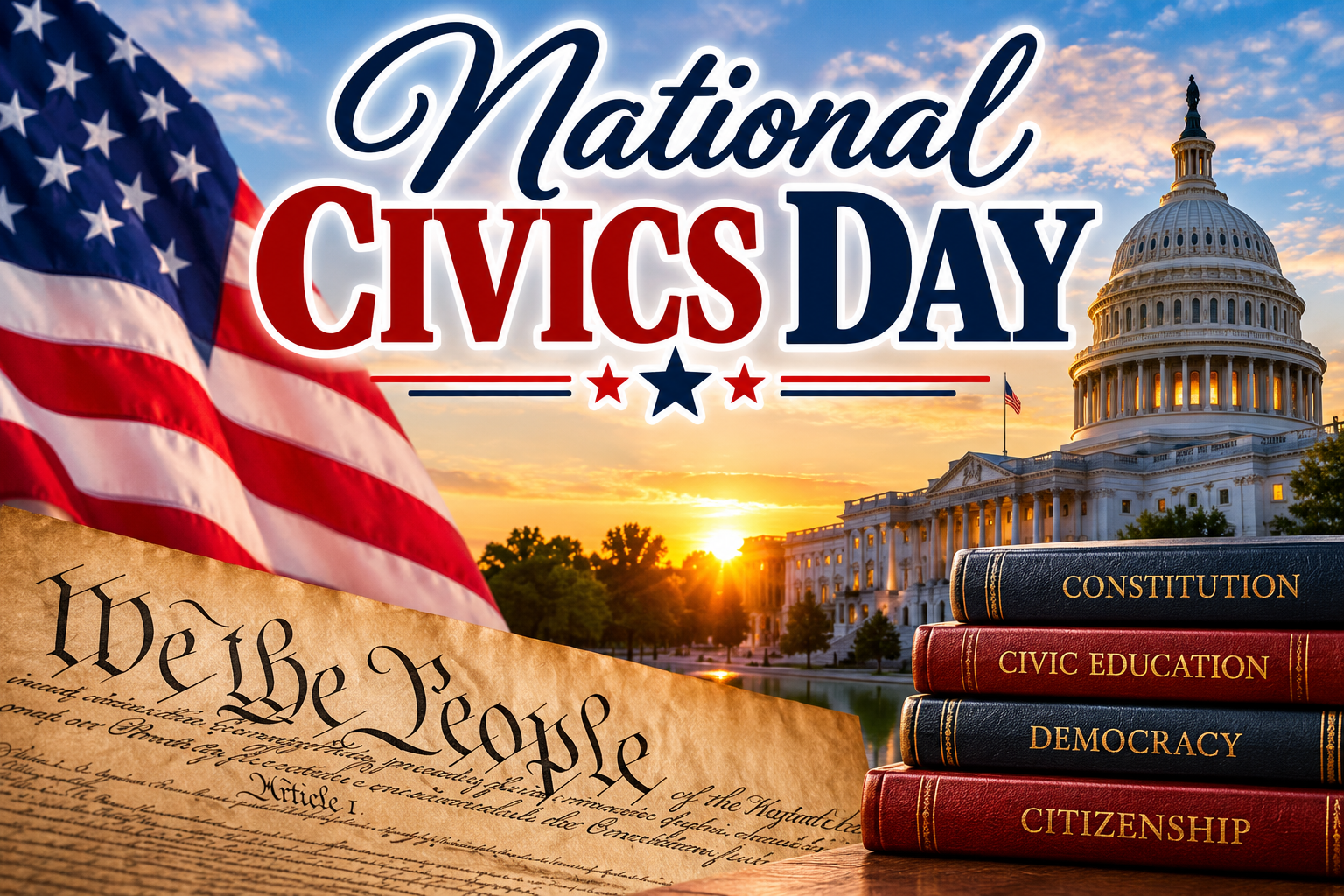
Every year on October 27, Americans observe National Civics Day, a day dedicated to understanding the principles of democracy, appreciating the rights and responsibilities of citizenship, and recognizing the importance of participating in our communities and government.
National Civics Day reminds us that democracy is more than a system of government. It is a shared responsibility that depends on informed citizens, active participation, respectful discussions, and a commitment to protecting the freedoms that shape our nation.
Whether through voting, volunteering, learning about the Constitution, or simply staying informed about issues affecting our communities, every American has an opportunity to contribute to the future of the country.
As we celebrate National Civics Day, it is worth reflecting on what citizenship truly means, how American democracy developed, and why civic education remains essential for future generations.
When Is National Civics Day?
National Civics Day is observed annually on October 27 in the United States.
The observance commemorates an important moment in American history. On October 27, 1787, the first of the Federalist Papers was published, beginning a series of essays that helped explain and defend the proposed United States Constitution.
These writings played an influential role in the debate surrounding the Constitution’s ratification and continue to provide insight into the principles of American government.
National Civics Day encourages Americans to explore their constitutional rights, understand how government works, and recognize the responsibilities that accompany citizenship.
The History of National Civics Day
National Civics Day was established in 2021 by the educational organization iCivics to encourage greater civic understanding and participation.
The date was selected to recognize the publication of the first Federalist Paper, written by Alexander Hamilton under the pseudonym Publius.
Between 1787 and 1788, Alexander Hamilton, James Madison, and John Jay wrote 85 essays collectively known as the Federalist Papers.
These essays explained the proposed Constitution and argued for its ratification.
The Federalist Papers addressed important questions about federalism, individual liberty, the separation of powers, and the relationship between citizens and their government.
Today, they remain valuable historical documents for understanding the ideas and debates that shaped the American constitutional system.
National Civics Day connects this history with the modern importance of civic education.
What Is Civics?
Civics is the study of the rights, responsibilities, and duties of citizens, along with the structure and functions of government.
It helps individuals understand how laws are created, how public officials are selected, and how people can participate in decisions affecting their communities.
Civic education covers several important subjects, including:
-
The United States Constitution and Bill of Rights.
-
The three branches of federal government.
-
Federal, state, and local government responsibilities.
-
Voting and the electoral process.
-
Individual rights and civil liberties.
-
The responsibilities of citizenship.
-
Community service and civic engagement.
-
The importance of informed public discussion.
Understanding these subjects gives people the knowledge necessary to participate meaningfully in democratic society.
Civics is not simply about memorizing historical dates or identifying government officials. It is about understanding how citizens can influence decisions and hold public institutions accountable.
Why National Civics Day Matters
A functioning democracy depends on people understanding their rights and responsibilities.
When citizens understand how government operates, they are better equipped to evaluate public policies, participate in elections, and advocate for improvements in their communities.
Civic knowledge also encourages critical thinking.
In an age when information spreads rapidly through social media and digital platforms, the ability to distinguish reliable information from misleading claims is increasingly important.
National Civics Day encourages Americans to become thoughtful participants rather than passive observers.
It also emphasizes that civic participation extends beyond political elections.
Helping a neighbor, volunteering at a community organization, attending a public meeting, and supporting local improvements are all meaningful forms of civic engagement.
Small contributions can create lasting positive changes.
Understanding the Three Branches of Government
One of the most important lessons in American civics involves understanding the three branches of the federal government.
1. Legislative Branch
The legislative branch consists of Congress, which includes the Senate and the House of Representatives.
Congress is responsible for making federal laws, approving federal spending, and conducting oversight of the executive branch.
2. Executive Branch
The executive branch is headed by the President of the United States.
Its responsibilities include implementing and enforcing federal laws, conducting foreign policy, and overseeing federal executive departments and agencies.
3. Judicial Branch
The judicial branch includes the Supreme Court and other federal courts.
Federal courts interpret and apply laws, resolve legal disputes within their jurisdiction, and determine whether government actions comply with the Constitution when such questions are properly presented.
The separation of powers and system of checks and balances help prevent excessive concentration of governmental authority.
Understanding these branches allows citizens to recognize how decisions are made and which institutions are responsible for particular issues.
The Rights and Responsibilities of American Citizens
American citizenship includes important constitutional protections and opportunities for participation.
The Bill of Rights protects fundamental freedoms, including freedom of speech, religion, the press, peaceful assembly, and petitioning the government.
Other constitutional amendments and laws protect additional rights.
However, citizenship also involves responsibilities that help society function.
These include obeying laws, paying legally required taxes, serving on juries when summoned and eligible, and respecting the rights of others.
Voting, volunteering, staying informed, and participating in community discussions are important civic activities, although they are not all legal obligations.
National Civics Day encourages Americans to recognize that exercising rights and fulfilling responsibilities can strengthen communities and public institutions.
10 Meaningful Ways to Celebrate National Civics Day
National Civics Day provides an opportunity for individuals, families, schools, and communities to become more engaged.
1. Read the United States Constitution. Explore the document that establishes the framework of the federal government.
2. Learn about the Bill of Rights. Understand the first ten amendments and the freedoms they protect.
3. Research your elected representatives. Discover who represents your community at local, state, and federal levels.
4. Register to vote or check your registration. Review your state’s eligibility requirements, registration deadlines, and election procedures.
5. Attend a local government meeting. Observe how community decisions are discussed and made.
6. Volunteer in your community. Support a food bank, neighborhood cleanup, school, or nonprofit organization.
7. Discuss civic issues respectfully. Practice listening to different perspectives and evaluating ideas thoughtfully.
8. Teach children about democracy. Explain elections, government responsibilities, and the importance of respecting others.
9. Explore American history. Learn about the events, movements, and individuals that influenced the nation’s development.
10. Encourage civic participation. Help others discover ways to become informed and involved in their communities.
Celebrating National Civics Day does not require a major event. Even spending a few minutes learning something new about government can make the observance meaningful.
Why Civic Education Is Important for Children
Children are the future participants, voters, community leaders, and public servants of the nation.
Introducing civic education at an early age helps young people understand how their communities function and how their voices can make a difference.
Schools play an important role in teaching American history, constitutional principles, government structures, and democratic participation.
However, civic education should also continue at home.
Parents and caregivers can encourage children to ask questions, follow age-appropriate current events, participate in community activities, and learn how decisions affect everyday life.
Activities such as classroom elections, student councils, mock legislative debates, and community service projects provide practical opportunities to develop civic skills.
When young people learn that their opinions matter and that responsible participation can produce positive change, they are better prepared for adulthood.
The Importance of Respectful Civic Discussions
Democracy brings together people with different experiences, beliefs, priorities, and opinions.
Disagreement is a natural part of public life.
However, productive civic discussions require respect, patience, and a willingness to consider evidence.
Listening to someone with a different perspective does not mean abandoning personal convictions.
Instead, respectful discussion creates opportunities for better understanding and more informed decisions.
National Civics Day encourages Americans to remember that disagreement does not have to result in hostility.
Communities benefit when people can debate important issues while recognizing the dignity and rights of others.
How Civic Engagement Strengthens Communities
Civic engagement is not limited to national politics.
Some of the most meaningful improvements begin at the neighborhood level.
Residents who participate in local meetings can help identify problems involving public safety, transportation, education, parks, and community services.
Volunteers can provide assistance to families experiencing hardship.
Community organizations can bring neighbors together around shared goals.
These activities demonstrate that civic responsibility is not only about government institutions. It is also about the relationships and actions that help communities thrive.
When people become involved, they gain opportunities to understand local challenges and work collaboratively toward solutions.
Interesting Facts About American Civics
American civic history contains many important milestones and traditions.
-
The United States Constitution was signed on September 17, 1787.
-
The Constitution went into effect under the new federal government in 1789.
-
The Bill of Rights was ratified on December 15, 1791.
-
The Federalist Papers consist of 85 essays written by Alexander Hamilton, James Madison, and John Jay.
-
The 15th Amendment prohibited denying voting rights on the basis of race, color, or previous condition of servitude.
-
The 19th Amendment prohibited denying voting rights on the basis of sex.
-
The 26th Amendment lowered the voting age to 18 for citizens otherwise eligible to vote.
-
The United States operates under a federal system in which authority is divided between national and state governments.
-
Local governments make many decisions that directly affect residents’ daily lives.
-
Jury service is an important way eligible citizens participate in the justice system.
These facts highlight the development of American constitutional government and the continuing importance of civic knowledge.
National Civics Day and the Future of Democracy
The future of democracy depends partly on the willingness of each generation to understand and participate in civic life.
Technology has made information more accessible, but it has also created challenges involving misinformation, polarization, and declining trust in institutions.
Civic education can help people navigate these challenges by encouraging thoughtful analysis, historical understanding, and responsible participation.
It also reminds Americans that democracy is not something maintained automatically.
Democratic institutions require public attention, accountability, lawful processes, and a commitment to constitutional principles.
Every generation has a role in preserving these foundations while working toward a more informed and engaged society.
Final Thoughts: Every Citizen Has the Power to Make a Difference
National Civics Day is more than an annual recognition of American government. It is a reminder that every citizen has an opportunity to contribute to the country and community they call home.
Understanding the Constitution, respecting individual freedoms, participating in elections, and helping neighbors are all ways to strengthen civic life.
You do not have to hold public office or become a political expert to make a difference.
Sometimes, meaningful change begins with something as simple as asking a question, learning about an issue, attending a community meeting, or encouraging someone else to become involved.
On October 27, take time to appreciate the principles that shape American democracy and consider how your actions can help create a stronger community.
Democracy is strengthened when citizens remain informed, engaged, and willing to work together for the common good.
What is one thing you believe every American should understand about their rights, responsibilities, or government?

Leave a Reply