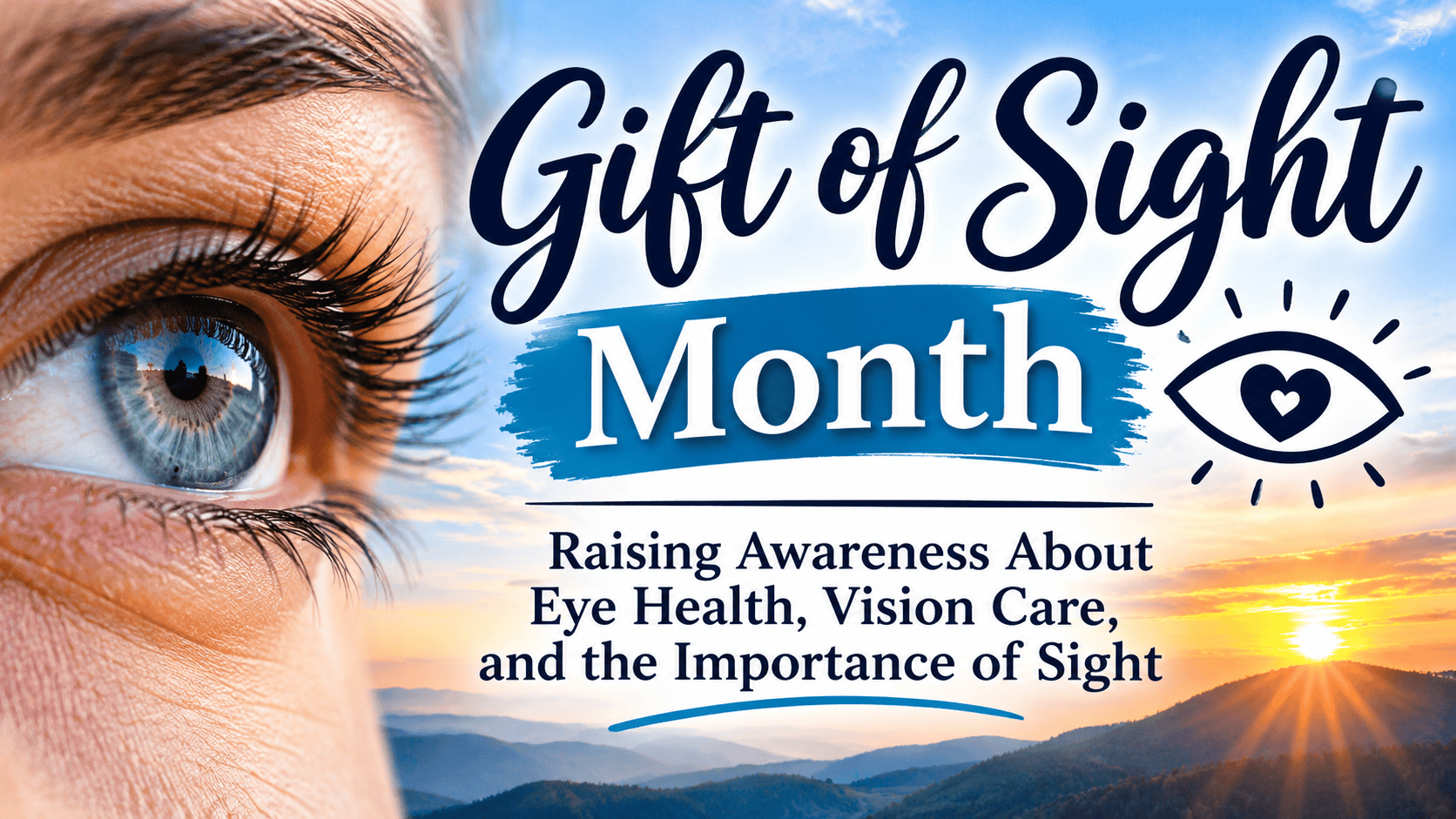
Every December, Gift of Sight Month reminds us of something many people take for granted: the ability to see the world around us. From watching a beautiful sunrise to recognizing the faces of loved ones, our eyesight plays an essential role in how we experience life.
Yet millions of people live with vision problems, eye diseases, or preventable vision impairment. Some conditions develop gradually without noticeable symptoms, while others can cause sudden changes that require immediate medical attention.
Gift of Sight Month, observed throughout December, encourages people to prioritize eye health, schedule comprehensive eye examinations, learn about vision-threatening conditions, and appreciate the extraordinary gift of sight.
It is also a time to recognize eye care professionals, support individuals experiencing vision loss, and raise awareness about the importance of early detection and treatment.
What Is Gift of Sight Month?
Gift of Sight Month is an annual awareness observance held during December to emphasize the importance of healthy vision and accessible eye care.
The observance encourages individuals and families to become more proactive about protecting their eyesight.
Our eyes allow us to navigate our surroundings, communicate with others, enjoy everyday activities, and maintain independence. Unfortunately, many people do not recognize the importance of regular eye examinations until they begin experiencing vision difficulties.
Gift of Sight Month promotes several important messages:
-
Regular comprehensive eye examinations can help detect problems early.
-
Healthy lifestyle choices can support long-term eye health.
-
Certain eye diseases may develop without obvious warning signs.
-
Children and older adults have unique vision care needs.
-
Early diagnosis and appropriate treatment can help prevent some forms of vision loss.
-
Access to affordable eye care can improve quality of life.
The month also reminds us that eyesight deserves attention throughout the year, not just when something goes wrong.
Why Is the Gift of Sight So Important?
Vision is one of the primary ways we understand and interact with our environment.
Our eyesight helps us recognize people, read information, appreciate nature, perform daily tasks, and respond to potential dangers.
Consider the everyday experiences that depend on healthy vision.
Watching children play, reading a favorite book, driving safely, preparing meals, enjoying holiday decorations, and seeing the expressions on someone’s face are all activities that rely heavily on sight.
Vision also contributes to independence and emotional well-being.
When someone experiences significant vision loss, activities that once seemed simple may become more challenging. Changes in eyesight can affect mobility, employment, social relationships, and confidence.
However, vision loss does not mean a person cannot live a meaningful, independent, and fulfilling life. Rehabilitation services, assistive technology, accessible environments, and supportive communities can make an enormous difference.
Gift of Sight Month encourages appreciation for vision while promoting dignity, inclusion, and opportunities for people living with visual impairments.
Common Eye Conditions Everyone Should Know About
Understanding common eye diseases is an important part of protecting long-term vision.
Some conditions cause noticeable symptoms, while others may progress quietly for years.
1. Cataracts
Cataracts occur when the normally clear lens of the eye becomes cloudy.
They commonly develop with age and may cause blurry vision, difficulty seeing at night, sensitivity to glare, and faded colors.
Cataracts are a leading cause of vision impairment worldwide, but surgery can often restore clearer vision.
2. Glaucoma
Glaucoma refers to a group of eye diseases that damage the optic nerve.
It is frequently associated with elevated eye pressure, although glaucoma can also occur when eye pressure is within the normal range.
The most common form often develops without noticeable symptoms during its early stages.
Without appropriate treatment, glaucoma can cause permanent vision loss.
3. Age-Related Macular Degeneration
Age-related macular degeneration, commonly called AMD, affects the macula, the part of the retina responsible for detailed central vision.
People with AMD may experience difficulty reading, recognizing faces, or seeing objects directly in front of them.
The condition is more common among older adults.
4. Diabetic Retinopathy
Diabetic retinopathy is an eye complication associated with diabetes.
High blood sugar levels over time can damage blood vessels in the retina.
Without appropriate monitoring and treatment, diabetic retinopathy can lead to significant vision impairment.
Regular dilated eye examinations are particularly important for individuals with diabetes.
5. Dry Eye Disease
Dry eye disease occurs when the eyes do not produce enough tears or when tears do not function properly.
Symptoms may include burning, irritation, redness, fluctuating blurry vision, and a gritty sensation.
Although many cases are manageable, persistent symptoms should be evaluated by an eye care professional.
Why Regular Eye Exams Matter
One of the most important messages of Gift of Sight Month is the value of routine eye examinations.
Many people assume they only need an eye exam when their vision becomes blurry.
However, some serious eye conditions can develop before noticeable symptoms appear.
A comprehensive eye examination may include an assessment of visual acuity, eye pressure, eye movement, and the health of internal eye structures.
Depending on age, medical history, symptoms, and risk factors, an eye care professional may recommend additional testing.
Regular examinations can help identify conditions such as glaucoma, cataracts, diabetic eye disease, and macular degeneration.
How often should you have an eye exam?
The appropriate schedule varies depending on your age, medical conditions, family history, and individual risk factors.
Children, adults with diabetes, people with a family history of eye disease, and older adults may require different examination schedules.
An optometrist or ophthalmologist can recommend a schedule based on individual needs.
10 Everyday Habits That Can Help Protect Your Vision
Protecting eyesight involves more than wearing glasses or contact lenses.
Healthy daily habits can support eye health and reduce certain risks.
1. Schedule Comprehensive Eye Exams
Follow the examination schedule recommended by your eye care professional.
Early detection can make a significant difference in managing many eye conditions.
2. Wear Sunglasses With UV Protection
Ultraviolet radiation from sunlight can contribute to certain eye problems.
Choose sunglasses that block 99% to 100% of UVA and UVB rays.
3. Eat Foods That Support Eye Health
A balanced diet provides nutrients important for maintaining healthy eyes.
Leafy greens, colorful vegetables, fruits, fish, nuts, and seeds can contribute valuable vitamins, minerals, and healthy fats.
4. Take Breaks From Digital Screens
Extended screen use can contribute to eye discomfort, dryness, and temporary blurry vision.
Try the 20-20-20 rule: every 20 minutes, look at something approximately 20 feet away for at least 20 seconds.
5. Avoid Smoking
Smoking increases the risk of several eye diseases, including cataracts and age-related macular degeneration.
Avoiding tobacco supports both eye health and overall well-being.
6. Manage Chronic Health Conditions
Conditions such as diabetes and high blood pressure can affect the eyes.
Following a healthcare professional’s recommendations for managing these conditions can help reduce the risk of complications.
7. Wear Protective Eyewear
Safety glasses or goggles can help prevent eye injuries during activities such as construction, woodworking, home repairs, and certain sports.
8. Practice Proper Contact Lens Hygiene
Follow professional instructions for cleaning, storing, replacing, and wearing contact lenses.
Poor contact lens hygiene can increase the risk of serious eye infections.
9. Get Adequate Sleep
Sufficient sleep supports overall health and can help reduce symptoms of eye fatigue and discomfort.
10. Pay Attention to Vision Changes
Do not ignore sudden or persistent changes in eyesight.
Sudden vision loss, a curtain-like shadow over vision, new flashes with many floaters, or severe eye pain may indicate an emergency requiring immediate medical attention.
Children’s Eye Health: Building a Foundation for Lifelong Vision
Healthy eyesight plays an important role in childhood development.
Children depend on vision for reading, learning, coordination, social interaction, and participation in everyday activities.
Unfortunately, children may not always recognize or communicate that something is wrong with their eyesight.
Parents and caregivers should pay attention to potential warning signs, including frequent squinting, holding books unusually close, difficulty seeing classroom materials, persistent eye rubbing, or complaints of headaches.
These signs do not necessarily indicate a serious condition, but they may justify an eye examination.
Routine vision screening and appropriate comprehensive eye care can help identify problems that might otherwise interfere with development and learning.
Gift of Sight Month offers families an opportunity to discuss eye health and establish positive habits early in life.
Eye Health and Aging
As people grow older, changes in vision become increasingly common.
Some changes, such as difficulty focusing on nearby objects, are normal parts of aging.
Other conditions, including cataracts, glaucoma, and macular degeneration, require medical evaluation and appropriate care.
Older adults may also experience challenges with glare, contrast sensitivity, and adapting to changes in lighting.
Maintaining healthy vision can help support mobility, independence, and participation in daily activities.
Simple household adjustments, such as improving lighting, reducing tripping hazards, and using high-contrast markings, can make living spaces safer and more accessible.
Regular eye examinations are especially important as age-related risks increase.
The Importance of Vision Care Accessibility
Not everyone has equal access to eye care.
Financial limitations, transportation difficulties, lack of insurance coverage, geographic barriers, and limited availability of specialists can prevent people from receiving necessary examinations and treatment.
For some individuals, even obtaining a basic pair of prescription glasses can be difficult.
Gift of Sight Month highlights the importance of improving access to vision services.
Community organizations, charitable programs, public health initiatives, and volunteer eye care professionals can help address these challenges.
Supporting accessible vision care can improve educational opportunities, employment prospects, independence, and quality of life.
The ability to receive necessary eye care should not depend entirely on someone’s financial circumstances.
How to Observe Gift of Sight Month
December provides an opportunity to take meaningful steps toward better eye health.
Here are several ways individuals, families, and communities can participate.
Schedule an Eye Examination
Make an appointment with an eye care professional if you are due for an examination.
Encourage family members to follow their recommended screening and examination schedules as well.
Share Eye Health Information
Use conversations, community newsletters, or social media to explain the importance of early detection and preventive care.
Accurate information can motivate others to seek appropriate care.
Donate Eyeglasses
Some charitable organizations accept usable prescription glasses for redistribution or recycling.
Check with a reputable organization to learn which types of eyewear it accepts.
Support Vision-Related Charities
Consider supporting organizations that provide eye examinations, prescription glasses, treatment assistance, or rehabilitation services.
Encourage Healthy Screen Habits
Remind family members to take regular breaks during extended screen use and maintain comfortable lighting.
Recognize Eye Care Professionals
Optometrists, ophthalmologists, technicians, vision rehabilitation specialists, and other professionals play important roles in protecting eyesight.
A simple expression of appreciation can acknowledge their contributions.
Learn About Living With Vision Loss
Explore how accessible technology, mobility training, and community support help people with visual impairments navigate everyday life.
Greater awareness can encourage more inclusive communities.
The Emotional Meaning Behind the Gift of Sight
The importance of vision extends beyond physical health.
Sight connects us to memories, relationships, and experiences that give life meaning.
We remember the faces of people we love, the places we have visited, and the moments that have shaped our lives.
A familiar smile, a beautiful sunset, or an old family photograph can bring back powerful emotions.
For many people, these visual memories become treasured reminders of meaningful experiences.
Gift of Sight Month encourages us to appreciate these moments while they are happening.
It also reminds us that meaningful connections are not dependent on eyesight alone.
Love, friendship, joy, creativity, and belonging can be experienced through many senses and forms of communication.
The true message of this observance is both appreciation and compassion: value the vision you have, protect it when possible, and support those whose visual experiences are different from your own.
Frequently Asked Questions About Gift of Sight Month
When Is Gift of Sight Month Observed?
Gift of Sight Month is observed annually throughout December.
What Is the Purpose of Gift of Sight Month?
Its purpose is to raise awareness about eye health, encourage regular eye examinations, promote early detection of eye diseases, and highlight the importance of accessible vision care.
Can Vision Loss Be Prevented?
Some causes of vision loss can be prevented, treated, or managed when detected early. However, not all eye diseases or forms of vision impairment are preventable.
Regular eye care and healthy habits can help reduce certain risks.
What Foods Are Good for Eye Health?
Leafy green vegetables, carrots, sweet potatoes, citrus fruits, fish, nuts, and seeds provide nutrients that support eye health.
A balanced diet is generally more beneficial than relying on one particular food.
What Are Warning Signs of Eye Problems?
Warning signs may include persistent blurry vision, eye discomfort, double vision, difficulty seeing at night, or changes in peripheral vision.
Sudden vision loss or other abrupt, severe symptoms require urgent evaluation.
How Can I Help Someone Experiencing Vision Loss?
Offer assistance respectfully, ask what support would be useful, encourage accessible environments, and learn about resources that promote independence.
Avoid assuming that a person with vision loss cannot perform everyday activities.
Final Thoughts: Appreciating and Protecting the Gift of Sight
Gift of Sight Month is more than an awareness campaign. It is a reminder that healthy vision contributes to independence, safety, connection, and quality of life.
Every December, we have an opportunity to reflect on the importance of eyesight and take practical steps to protect it.
Whether that means scheduling an overdue eye examination, encouraging a loved one to seek care, supporting a vision-related charity, or simply appreciating the beauty around us, small actions can make a meaningful difference.
We cannot prevent every eye condition, but awareness, early detection, appropriate treatment, and accessible care can help protect vision and improve lives.
This Gift of Sight Month, take time to appreciate what you see, care for the health of your eyes, and help others experience the world with greater independence and opportunity.
Because the gift of sight is not only about seeing the world. It is also about recognizing the people, moments, and experiences that make life meaningful.


Leave a Reply