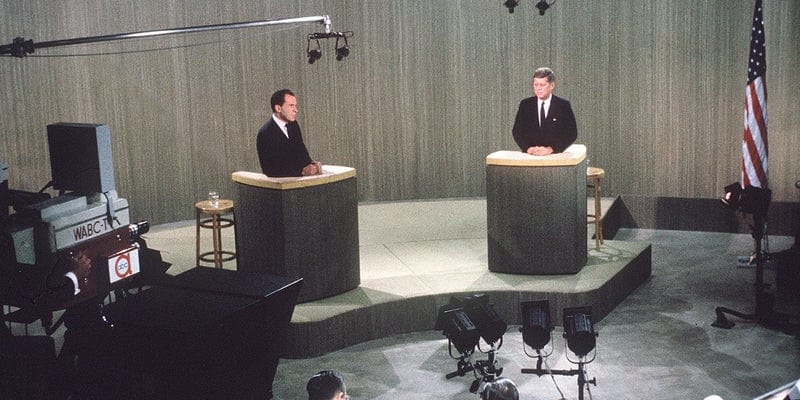
On September 26, 1960, Americans witnessed a political turning point that forever changed the way campaigns were run. For the first time in history, a presidential debate was broadcast live on television, pitting Democratic Senator John F. Kennedy against Republican Vice President Richard Nixon. What unfolded that night in Chicago’s CBS studios was more than just a clash of policy ideas—it was a demonstration of the growing power of television to shape public perception.
The debate reached an estimated 70 million viewers, a record-breaking audience at the time. Kennedy, youthful and confident, arrived tanned and well-prepared, exuding calmness under the studio lights. Nixon, recovering from a recent hospital stay and having refused professional makeup, appeared pale, tired, and visibly uncomfortable. On radio, listeners believed Nixon held his own, but on television, Kennedy’s poise and polished image resonated more strongly.
The topics ranged from the Cold War and relations with the Soviet Union to domestic economic growth and civil rights. Kennedy pressed for stronger leadership, presenting himself as the energetic candidate ready to take America into a new decade. Nixon, with years of foreign policy experience, emphasized his background and close work with President Dwight D. Eisenhower, but his delivery lacked the vitality that Kennedy projected.
In the aftermath, analysts noted that the debate underscored the growing influence of television as a political tool. Those who watched on TV overwhelmingly thought Kennedy had won, while radio listeners were more likely to give Nixon the edge. This contrast demonstrated how much appearance, presentation, and stage presence could matter in the television age.
The Kennedy-Nixon debate not only shifted momentum in the 1960 election—helping propel Kennedy to a narrow victory—but also set the precedent for how modern presidential campaigns would be conducted. From that moment forward, candidates recognized that debates were no longer just about substance, but about style, image, and the ability to connect with Americans through the lens of a camera.
Read More Holidays & National Days
Leave a Reply