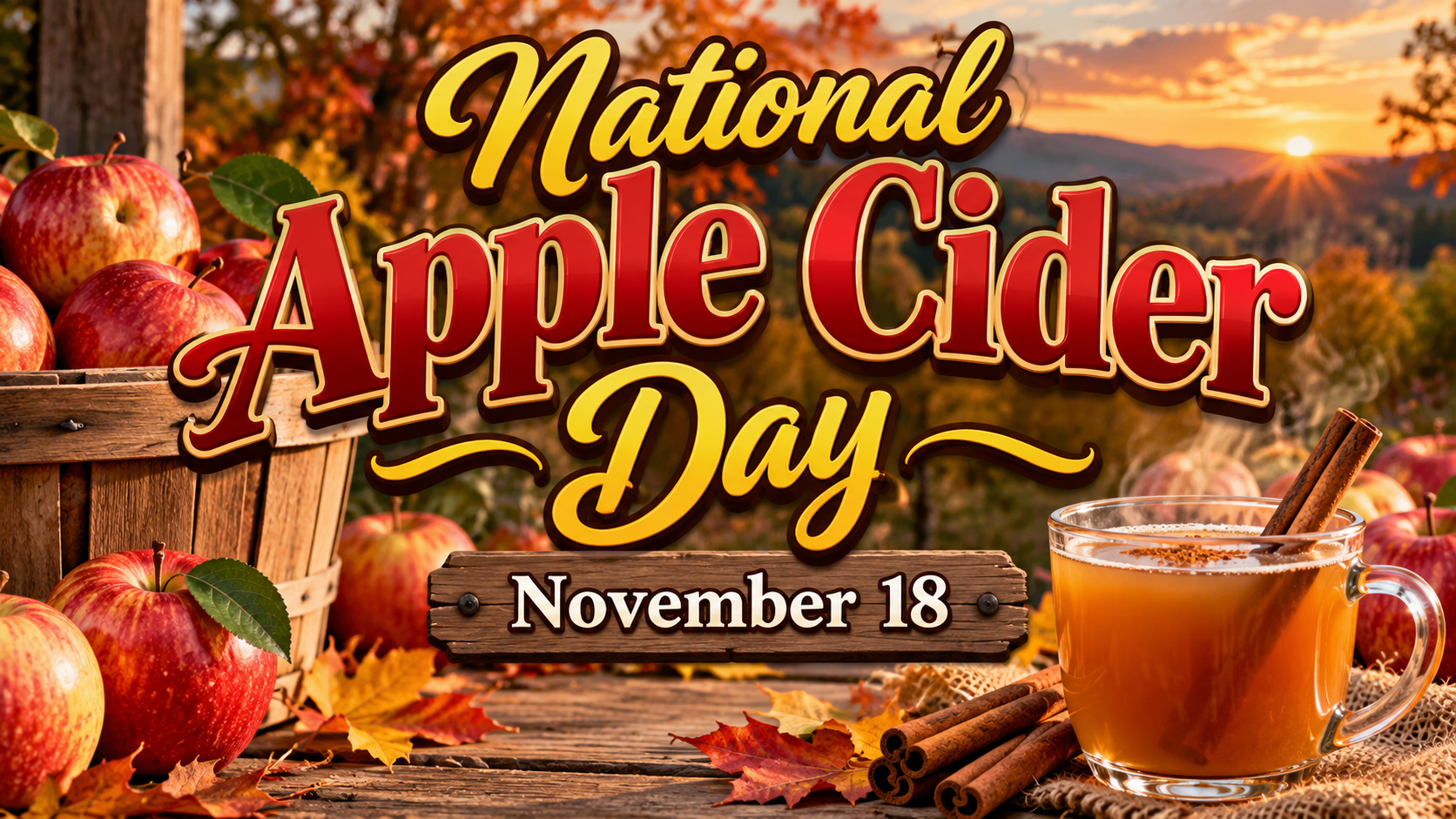
Every year on November 18, National Apple Cider Day celebrates one of autumn’s most beloved beverages. Whether enjoyed warm with cinnamon on a chilly evening or served cold alongside a delicious homemade meal, apple cider has a special way of bringing comfort, warmth, and nostalgia to the season.
As the leaves change colors and temperatures begin to drop, apple cider becomes a favorite drink for families, friends, and anyone who appreciates the natural sweetness of fresh apples. Its rich flavor, comforting aroma, and long history make it much more than an ordinary beverage.
National Apple Cider Day is an opportunity to appreciate the traditions behind this classic drink, discover its history, explore its varieties, and enjoy creative ways to incorporate apple cider into everyday life.
From apple orchards and fall festivals to holiday gatherings and homemade recipes, apple cider has become a symbol of autumn celebrations.
When Is National Apple Cider Day?
National Apple Cider Day is celebrated annually on November 18.
This informal food and beverage observance honors apple cider and the traditions associated with making and enjoying it.
November is an especially fitting month for this celebration because it falls during the autumn harvest season and just before Thanksgiving in the United States.
During this time of year, many people enjoy warm apple cider while preparing holiday meals, decorating their homes, or spending time with loved ones.
Although National Apple Cider Day is not a federal holiday, it provides a wonderful excuse to celebrate one of the season’s most recognizable flavors.
The History of Apple Cider
Apple cider has a history stretching back thousands of years.
Apples have been cultivated for centuries across parts of Asia and Europe, and fermented apple beverages eventually became important in several European cultures.
The word cider has historical connections to terms used for fermented beverages. Over time, cider-making developed into an established tradition, particularly in regions where apple orchards flourished.
Apple Cider in Early Europe
Cider became especially popular in England, France, and parts of Spain.
Farmers cultivated different apple varieties, including apples specifically suited for cider production.
Unlike ordinary eating apples, traditional cider apples often contained different combinations of sweetness, acidity, and tannins, which contributed to the finished beverage’s distinctive taste.
In many European communities, cider was an important agricultural product and a common beverage.
Different regions developed their own methods of pressing, fermenting, and storing cider.
These traditions continue today, with many European cider-producing regions maintaining distinctive styles and techniques.
Apple Cider Comes to America
European settlers brought apple seeds and cider-making traditions to North America.
During the colonial period, apple orchards became increasingly common, particularly in New England.
Apples were valuable because they could be eaten fresh, cooked, preserved, or pressed into cider.
Fermented cider was especially common in early American communities, partly because apples could be grown locally and processed into a beverage that could be stored.
Over time, cider became closely associated with American agriculture and rural traditions.
As refrigeration, food processing, and beverage preferences changed, fresh nonalcoholic apple cider became an increasingly familiar seasonal product in the United States.
Today, apple cider remains a favorite at farmers markets, orchards, grocery stores, and fall festivals.
What Is Apple Cider?
Apple cider is a beverage made by pressing apples to extract their juice.
In the United States, the term usually refers to fresh, nonalcoholic apple juice that is often cloudy and less filtered than commercially processed apple juice.
The flavor depends on the varieties of apples used, their ripeness, and the production process.
Some apple ciders are naturally sweet, while others have a slightly tart flavor.
Fresh cider may contain tiny particles of apple pulp, giving it a cloudy appearance and fuller texture.
Many commercial apple ciders are pasteurized or otherwise treated to reduce harmful microorganisms.
In other countries, particularly the United Kingdom, the word cider usually refers to an alcoholic beverage made from fermented apple juice.
Understanding these differences helps explain why cider can mean different things depending on where it is enjoyed.
Apple Cider vs. Apple Juice: What’s the Difference?
Although apple cider and apple juice come from apples, there are some common differences.
Apple Cider
Fresh American-style apple cider is often:
-
Cloudy or slightly opaque
-
Less filtered
-
Rich in fresh apple flavor
-
Sold seasonally
-
Refrigerated when required
-
Enjoyed hot or cold
Apple Juice
Commercial apple juice is often:
-
Clear or translucent
-
More thoroughly filtered
-
Consistent in flavor
-
Available throughout the year
-
Processed for a longer shelf life
-
Commonly served chilled
However, there is no single universal distinction between apple cider and apple juice in American retail labeling. Processing methods and appearances can overlap.
Both beverages can be delicious, and choosing between them often comes down to personal preference.
Why Apple Cider Is Associated With Fall
Few beverages capture the feeling of autumn quite like apple cider.
One reason is that apples are traditionally harvested during late summer and fall in many parts of the United States.
Apple orchards become popular destinations as families gather to pick apples, enjoy seasonal treats, and participate in harvest activities.
Fresh cider is often sold at these orchards, creating a direct connection between the beverage and the apple harvest.
Another reason is its comforting aroma.
When apple cider is heated with cinnamon sticks, cloves, orange slices, and other spices, it fills the home with a fragrance associated with autumn and the holidays.
For many people, the smell of warm apple cider brings back memories of family gatherings, pumpkin patches, Thanksgiving celebrations, and cool evenings spent together.
Apple cider represents more than a drink. It represents the traditions and experiences that make fall special.
How Apple Cider Is Made
Making apple cider begins with selecting apples.
Producers may combine different apple varieties to create a balance of sweetness, tartness, and flavor.
The basic process includes several steps.
1. Selecting the Apples
Fresh apples are chosen based on their quality, flavor, and ripeness.
A mixture of sweet and tart varieties often produces a well-balanced cider.
2. Washing the Apples
The apples are thoroughly washed to remove dirt and debris.
Damaged or spoiled fruit is removed before processing.
3. Crushing the Apples
The apples are crushed or ground into a coarse pulp.
This step makes it easier to extract the juice.
4. Pressing the Apples
The pulp is placed in a cider press, where pressure extracts the liquid.
The freshly pressed juice becomes apple cider.
5. Processing and Packaging
Commercial producers may pasteurize the cider or use another validated treatment to improve safety.
The cider is then packaged and stored according to its processing requirements.
Fresh cider that requires refrigeration should be kept cold and consumed according to the product’s instructions.
How to Celebrate National Apple Cider Day
There are many enjoyable ways to celebrate National Apple Cider Day on November 18.
Whether you prefer a simple glass of cider or a full autumn gathering, this observance offers opportunities to create seasonal memories.
Enjoy a Warm Mug of Apple Cider
One of the easiest ways to celebrate is by heating apple cider with cinnamon sticks and orange slices.
The combination creates a comforting drink perfect for a cool November evening.
Visit a Local Apple Orchard
Apple orchards are wonderful places to learn about apple growing and cider production.
Some orchards offer cider tastings, farm stores, seasonal treats, and demonstrations of traditional pressing methods.
Make Homemade Apple Cider
Try making your own cider-inspired beverage using fresh apples, water, and spices.
A slow cooker can make the process especially convenient.
Host an Apple Cider Tasting
Purchase several different varieties of cider and compare their flavors.
Try sweet, tart, spiced, and sparkling versions.
Invite family or friends to choose their favorites.
Bake With Apple Cider
Apple cider can add flavor to many recipes, including cakes, doughnuts, muffins, sauces, and glazes.
Reducing cider on the stovetop concentrates its apple flavor, making it especially useful in desserts.
Share Apple Cider With Someone
A warm drink can be a simple gesture of kindness.
Consider inviting a friend, neighbor, or family member over for cider and conversation.
Sometimes the simplest moments become the most meaningful memories.
Homemade Hot Apple Cider Recipe
One of the best ways to celebrate National Apple Cider Day is by preparing a batch of warm, spiced apple cider.
This easy recipe brings together the sweetness of apples with classic autumn spices.
Preparation time: 5 minutes
Cooking time: 25–30 minutes
Servings: 8
Ingredients
-
8 cups apple cider
-
2 cinnamon sticks
-
1 orange, sliced
-
4 whole cloves
-
2 star anise pods (optional)
-
2 tablespoons maple syrup (optional)
-
1 apple, sliced, for garnish
Instructions
-
Pour the apple cider into a large saucepan.
-
Add the cinnamon sticks, orange slices, cloves, and optional star anise.
-
Heat over medium heat until the cider begins to steam.
-
Reduce the heat to low and gently simmer for 20–25 minutes.
-
Taste and add maple syrup if additional sweetness is desired.
-
Remove the whole spices and orange slices.
-
Pour into mugs and garnish with fresh apple slices or cinnamon sticks.
-
Serve warm and enjoy.
Tips for the Best Homemade Hot Apple Cider
Use good-quality apple cider for the richest flavor.
Avoid boiling the cider aggressively because prolonged boiling can change its flavor and reduce the liquid.
For a stronger cinnamon flavor, allow the cider to steep a little longer over low heat.
If serving a group, transfer the prepared cider to a slow cooker on its warm setting, following the appliance’s food-safety instructions.
Delicious Foods to Pair With Apple Cider
Apple cider pairs beautifully with a variety of sweet and savory foods.
Its natural sweetness and acidity complement many popular autumn dishes.
Some delicious pairings include apple cider doughnuts, cinnamon rolls, pumpkin bread, roasted pork, baked chicken, sharp cheddar cheese, caramel apples, oatmeal cookies, and warm apple pie.
For a holiday gathering, consider serving hot cider alongside a platter of seasonal baked goods.
The combination creates a welcoming atmosphere without requiring an elaborate celebration.
Is Apple Cider Healthy?
Apple cider can be part of a balanced diet, but its nutritional value depends on how it is prepared.
Because cider is made from apples, it can provide small amounts of certain nutrients and naturally occurring plant compounds.
However, pressing apples into juice removes much of the fiber found in whole fruit.
Apple cider also contains naturally occurring sugars, even when no additional sugar is added.
Drinking large quantities can contribute significant amounts of sugar and calories.
For people who want to moderate their sugar intake, smaller portions or unsweetened alternatives may be preferable.
Whole apples generally provide more fiber and are a better choice when the goal is to increase fruit consumption.
A Note About Unpasteurized Apple Cider
Unpasteurized apple cider can contain harmful bacteria.
Children, older adults, pregnant people, and individuals with weakened immune systems are particularly vulnerable to serious illness from contaminated juice.
Choosing pasteurized cider or cider that has received an equivalent validated safety treatment is the safer option.
Fun Facts About Apple Cider
Apple cider has an interesting history filled with agricultural traditions and regional differences.
Here are a few facts worth sharing on National Apple Cider Day.
1. Apple cider has been enjoyed in various forms for centuries.
2. Traditional cider production often involves blending different apple varieties.
3. Fresh American apple cider is usually nonalcoholic, while cider in many European countries is typically fermented.
4. Cider apples may contain higher levels of tannins than common dessert apples.
5. The cloudy appearance of fresh cider often comes from suspended apple particles.
6. Apple cider vinegar is produced through fermentation that converts apple sugars into alcohol and then alcohol into acetic acid.
7. Mulled cider is a warm beverage flavored with spices such as cinnamon and cloves.
8. Apple cider doughnuts are popular seasonal treats at many American apple orchards.
9. Sparkling nonalcoholic cider is frequently served during holiday celebrations.
10. November 18 is recognized informally as National Apple Cider Day.
Apple Cider Traditions Around the World
Although apple cider is strongly associated with American autumn celebrations, cider traditions exist around the world.
United States
Fresh, nonalcoholic apple cider is popular during fall, particularly at orchards, harvest festivals, and Thanksgiving gatherings.
England
Traditional English cider is generally fermented and alcoholic.
Several regions have long histories of growing apples specifically for cider production.
France
French cider, particularly from Normandy and Brittany, is often associated with regional cuisine and traditional fermentation methods.
Spain
Northern Spain has a distinctive cider culture, especially in Asturias and the Basque Country.
Traditional cider houses are important parts of local food culture.
These regional traditions demonstrate how one fruit can inspire many different beverages and customs.
Why National Apple Cider Day Matters
National Apple Cider Day may seem like a simple celebration of a seasonal beverage, but it also recognizes traditions that connect people to agriculture, food, and community.
Apple growing supports orchards, farmers, producers, and local businesses.
Cider-making reflects generations of agricultural knowledge and regional craftsmanship.
For families, apple cider can become part of annual traditions that bring everyone together.
For some people, it recalls childhood trips to an orchard.
For others, it brings back memories of holiday dinners, family recipes, or evenings spent around a fire.
The traditions surrounding apple cider remind us that meaningful celebrations do not always require expensive gifts or elaborate plans.
Sometimes all it takes is a warm drink, good company, and a moment to appreciate the season.
Frequently Asked Questions About National Apple Cider Day
When is National Apple Cider Day celebrated?
National Apple Cider Day is celebrated every year on November 18.
Is National Apple Cider Day an official holiday?
No. It is an informal food and beverage observance rather than an official federal holiday.
Is apple cider alcoholic?
In the United States, fresh apple cider is typically nonalcoholic. Hard cider contains alcohol produced through fermentation. In many other countries, cider generally refers to the alcoholic version.
Can apple cider be served cold?
Yes. Apple cider is delicious both hot and cold. Chilled cider offers a refreshing apple flavor, while heated cider is especially popular during autumn and winter.
Can apple cider be used for cooking?
Absolutely. Apple cider can be used in marinades, sauces, glazes, baked goods, and slow-cooked meals.
Does apple cider need to be refrigerated?
Fresh refrigerated cider should be kept cold. Some commercially processed, shelf-stable products can be stored unopened at room temperature. Always follow the storage instructions on the packaging.
What spices go well with apple cider?
Cinnamon, cloves, nutmeg, ginger, allspice, and star anise are popular choices. Orange slices can also add a pleasant citrus flavor.
Final Thoughts: Celebrate the Comfort of Apple Cider
National Apple Cider Day on November 18 is a wonderful opportunity to celebrate the flavors, traditions, and memories associated with one of autumn’s favorite beverages.
From its long history in European and American agriculture to its place at modern holiday gatherings, apple cider continues to bring seasonal enjoyment to people of all ages.
Whether you prefer a chilled glass of fresh cider, a steaming mug filled with cinnamon and spices, or a homemade dessert featuring apple cider, there are countless ways to enjoy this special day.
More importantly, National Apple Cider Day encourages us to appreciate the simple pleasures that make life meaningful.
The warmth of a favorite drink, the beauty of the changing seasons, and the comfort of spending time with people we care about are all worth celebrating.
This November 18, pour yourself a glass of apple cider, enjoy the flavors of fall, and make a new memory.
Happy National Apple Cider Day!
What’s your favorite way to enjoy apple cider—hot with cinnamon, cold and refreshing, or incorporated into a delicious homemade recipe?


Leave a Reply