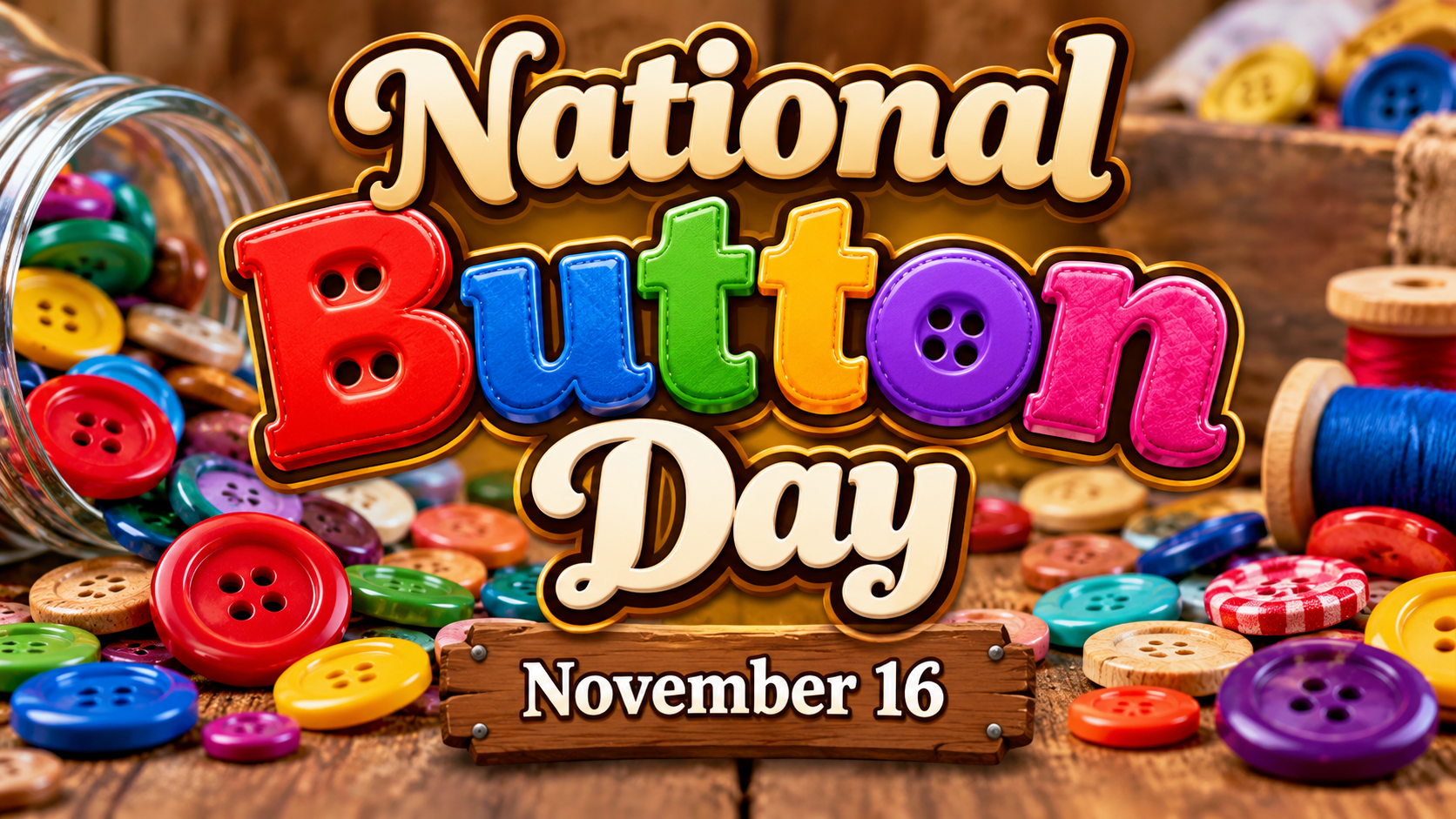
Every year on November 16, people across the United States celebrate National Button Day, a fun and fascinating observance dedicated to one of the smallest yet most useful objects in everyday life. Buttons may seem ordinary, but these tiny fasteners have played an important role in fashion, history, culture, art, and personal expression for thousands of years.
From the buttons on our favorite shirts to the decorative buttons found on vintage clothing, these small objects have an incredible story to tell. Some buttons represent family memories, while others reflect changing fashion trends, craftsmanship, and historical traditions.
National Button Day encourages us to appreciate the creativity, practicality, and history behind something we often take for granted.
Whether you enjoy collecting antique buttons, creating handmade crafts, learning about fashion history, or simply appreciating everyday inventions, November 16 offers an opportunity to celebrate the humble button.
What Is National Button Day?
National Button Day is observed annually on November 16 and celebrates buttons of all shapes, sizes, colors, and purposes.
The observance is especially popular among button collectors, sewing enthusiasts, fashion historians, artists, and people who appreciate vintage accessories.
Although buttons are primarily used to fasten clothing, they have served many other purposes throughout history, including decoration, identification, communication, and artistic expression.
National Button Day also provides an opportunity to recognize the National Button Society, an American organization established in 1938 to encourage the study, collection, and preservation of buttons.
Today, the observance inspires people to discover the fascinating history behind buttons and explore creative ways to reuse and appreciate them.
When Is National Button Day Celebrated?
November 16 every year
In 2026, National Button Day falls on Monday, November 16.
National Button Day is an informal observance rather than an official federal holiday. Schools, craft groups, collectors, and individuals can participate through educational activities, creative projects, and historical exploration.
The Fascinating History of Buttons
Buttons have existed for thousands of years, making them one of humanity’s oldest clothing accessories.
Ancient beginnings
Archaeological discoveries suggest that buttons were used as decorative objects in the Indus Valley Civilization around 2800–2600 BCE.
Some early buttons were made from shells and featured small holes that allowed them to be attached to clothing.
Unlike modern buttons, these ancient examples were often ornamental rather than functional fasteners.
As civilizations developed, buttons appeared in different regions and cultures, sometimes representing wealth, craftsmanship, or social standing.
Buttons in medieval Europe
During the Middle Ages, buttons became increasingly important in European clothing.
By the 13th century, functional buttons and buttonholes were helping transform garment construction.
Tailors could create more fitted clothing, allowing people to wear garments that followed the shape of the body.
Buttons also became fashionable decorative accessories.
Wealthy individuals sometimes wore buttons made from precious metals, ivory, or other expensive materials.
The number, design, and quality of buttons could reflect a person’s financial status and position in society.
The Industrial Revolution
The Industrial Revolution transformed button manufacturing.
Before widespread mechanization, many buttons were individually handmade, making decorative examples relatively expensive.
As manufacturing technology improved during the 18th and 19th centuries, buttons became easier and cheaper to produce.
Factories manufactured buttons using materials such as metal, glass, wood, bone, shell, and eventually plastics.
Mass production helped make buttons widely available and contributed to the growth of the modern clothing industry.
Buttons in modern fashion
Today, buttons remain essential components of clothing.
They appear on shirts, coats, jackets, jeans, dresses, uniforms, and countless other garments.
Modern buttons are manufactured from many materials, including plastic, metal, wood, shell, and fabric.
Although zippers, snaps, and hook-and-loop fasteners offer alternatives, buttons continue to be popular because of their functionality, durability, and decorative appeal.
Why Are Buttons So Important?
Buttons may be small, but their influence extends far beyond fastening clothing.
1. Practical functionality
Buttons allow clothing to open and close securely. They help garments fit comfortably and make dressing easier.
2. Fashion and personal style
Buttons contribute to the appearance of clothing. A simple jacket can look completely different depending on whether it features wooden, metallic, colorful, or decorative buttons.
3. Historical significance
Buttons can provide clues about the time period in which clothing was manufactured. Archaeologists and historians sometimes study buttons to understand past fashion, trade, and everyday life.
4. Cultural identity
Military uniforms, ceremonial clothing, and traditional garments frequently feature distinctive buttons that represent organizations, communities, or cultural traditions.
5. Sentimental memories
An old button from a parent’s coat, a grandparent’s sewing collection, or a childhood outfit can carry powerful personal meaning.
Sometimes the smallest objects preserve the most meaningful memories.
The National Button Society
One of the most interesting organizations associated with National Button Day is the National Button Society.
Founded in 1938, the organization promotes the collection, study, and preservation of buttons.
Members share an appreciation for the historical, artistic, and cultural significance of buttons.
Button collecting is more than simply gathering unusual objects. Collectors often study manufacturing techniques, materials, historical periods, and decorative styles.
Some buttons are valued for their rarity, while others are appreciated for their craftsmanship or personal significance.
The National Button Society helps preserve this specialized area of material history through educational activities, exhibitions, and collecting events.
Its work reminds us that even everyday objects can offer valuable insights into the past.
10 Interesting Facts About Buttons
Buttons have a surprisingly fascinating history. Here are ten interesting facts worth sharing on National Button Day.
1. Buttons are thousands of years old. Some of the earliest known examples date back to the ancient Indus Valley Civilization.
2. Early buttons were often decorative. Before they became common clothing fasteners, buttons were frequently used as ornaments.
3. Buttons once represented wealth. Expensive materials and elaborate craftsmanship made certain buttons symbols of social status.
4. Military buttons can reveal history. Their designs sometimes identify military units, organizations, and historical periods.
5. Buttons are made from unexpected materials. Examples include coconut shell, horn, glass, ceramics, wood, and mother-of-pearl.
6. Button collecting is a recognized hobby. Enthusiasts collect buttons based on their age, design, material, and historical significance.
7. Buttons helped change fashion. Functional buttons made more closely fitted garments practical.
8. Some buttons are miniature works of art. Historical examples feature intricate carvings, painted scenes, and elaborate metalwork.
9. Buttons can be reused creatively. Old buttons are popular materials for jewelry, decorations, and handmade gifts.
10. National Button Day takes place every November 16. It provides an annual opportunity to appreciate these small but important objects.
How to Celebrate National Button Day
You do not need to be a fashion expert or button collector to participate in National Button Day.
There are plenty of simple, enjoyable ways to celebrate.
Start a button collection
Look through old clothing, sewing boxes, or craft supplies for interesting buttons.
You might discover vintage designs, unusual materials, or colorful shapes.
Organize your collection by size, color, material, or style.
You can also record where each button came from, creating a collection filled with personal stories.
Create button artwork
Buttons make excellent materials for creative projects.
Use different colors and sizes to design flowers, animals, trees, or abstract artwork.
Attach buttons to canvas, paper, or fabric to create decorative pieces.
This activity can be especially enjoyable for families, classrooms, and craft groups. Young children should use age-appropriate materials with adult supervision because small buttons can be choking hazards.
Repair clothing
National Button Day is an excellent reminder to repair clothing instead of immediately replacing it.
Find a shirt, jacket, or coat with a missing or loose button.
Learning to sew a button is a practical skill that can extend the life of your favorite garments.
Repairing clothing also helps reduce unnecessary textile waste.
Explore family memories
Ask relatives whether they have old sewing supplies, vintage clothing, or collections of buttons.
You might discover buttons that belonged to grandparents or other family members.
These small objects can inspire meaningful conversations about family history, childhood memories, and traditions.
Make button jewelry
Transform unused buttons into necklaces, bracelets, earrings, or decorative accessories.
Colorful vintage buttons can create unique handmade gifts.
Experiment with different combinations to develop a style that reflects your personality.
Learn about historical fashion
Explore how buttons changed throughout different historical periods.
Compare decorative buttons from the Victorian era with modern plastic buttons.
Consider how manufacturing, clothing styles, and cultural preferences influenced their development.
Creative Button Crafts for Families
National Button Day can also become a fun family activity.
One easy project is creating a button tree.
Draw or paint a tree trunk and branches on paper or canvas. Then attach colorful buttons where the leaves would appear.
Another idea is making personalized greeting cards using buttons as decorations.
Buttons can become balloons, flowers, snowmen, or other creative designs.
Families can also decorate picture frames, make button bookmarks, or create seasonal ornaments.
These projects encourage creativity while demonstrating how everyday objects can be reused instead of discarded.
The Environmental Benefits of Reusing Buttons
National Button Day also offers an opportunity to think about sustainability.
Millions of garments are discarded every year, and many still contain perfectly usable buttons.
Removing buttons from clothing that can no longer be repaired allows those materials to serve another purpose.
Reusable buttons can help repair garments, replace missing fasteners, or become part of creative projects.
Rather than purchasing new craft materials, people can use buttons they already own.
Although reusing a handful of buttons may seem insignificant, small habits can encourage a broader appreciation for reducing waste.
National Button Day reminds us that practical sustainability sometimes begins with simple everyday choices.
Buttons as Symbols of Memories and Connection
Perhaps one of the most meaningful aspects of buttons is their ability to preserve memories.
An old coat hanging in a closet may contain buttons that someone fastened hundreds of times.
A grandmother’s sewing box might hold buttons collected over decades.
A child’s first jacket may have small colorful buttons that bring back memories of growing up.
Objects do not have to be expensive or extraordinary to carry emotional value.
Sometimes a button is more than a button.
It can represent a person, a moment, a tradition, or a connection to the past.
That is part of what makes National Button Day special. It encourages us to recognize the stories hidden within ordinary belongings.
Why National Button Day Still Matters Today
In a world filled with advanced technology and constantly changing fashion trends, buttons remain remarkably relevant.
They demonstrate how a simple invention can continue serving humanity for thousands of years.
Buttons also connect different generations through craftsmanship, sewing traditions, clothing design, and personal memories.
For collectors, they represent history.
For designers, they provide creative possibilities.
For families, they can preserve sentimental connections.
For everyday people, they remain useful objects that make life a little easier.
National Button Day reminds us that innovation does not always require complicated technology. Sometimes the most successful inventions are the simplest ones.
Final Thoughts: Celebrating the Little Things on National Button Day
National Button Day, celebrated every November 16, is more than an observance dedicated to clothing fasteners.
It is a celebration of history, creativity, craftsmanship, sustainability, and the everyday objects that quietly shape our lives.
Buttons have traveled through centuries of human history, evolving from decorative ornaments into practical accessories found around the world.
They have represented wealth, reflected fashion trends, supported clothing design, and preserved meaningful memories.
The next time you button your shirt, fasten your coat, or discover an old button in a sewing box, consider the remarkable history behind that tiny object.
National Button Day teaches us an important lesson: Sometimes the smallest things in life have the biggest stories to tell.
So, this November 16, take a moment to appreciate the humble button. Repair something, create something, learn something, or share a memory.
You might discover that something so small can hold a surprising amount of history and meaning.
Have you ever collected buttons, discovered an unusual vintage button, or kept a button because it reminded you of someone special? What story does that button tell?

Leave a Reply