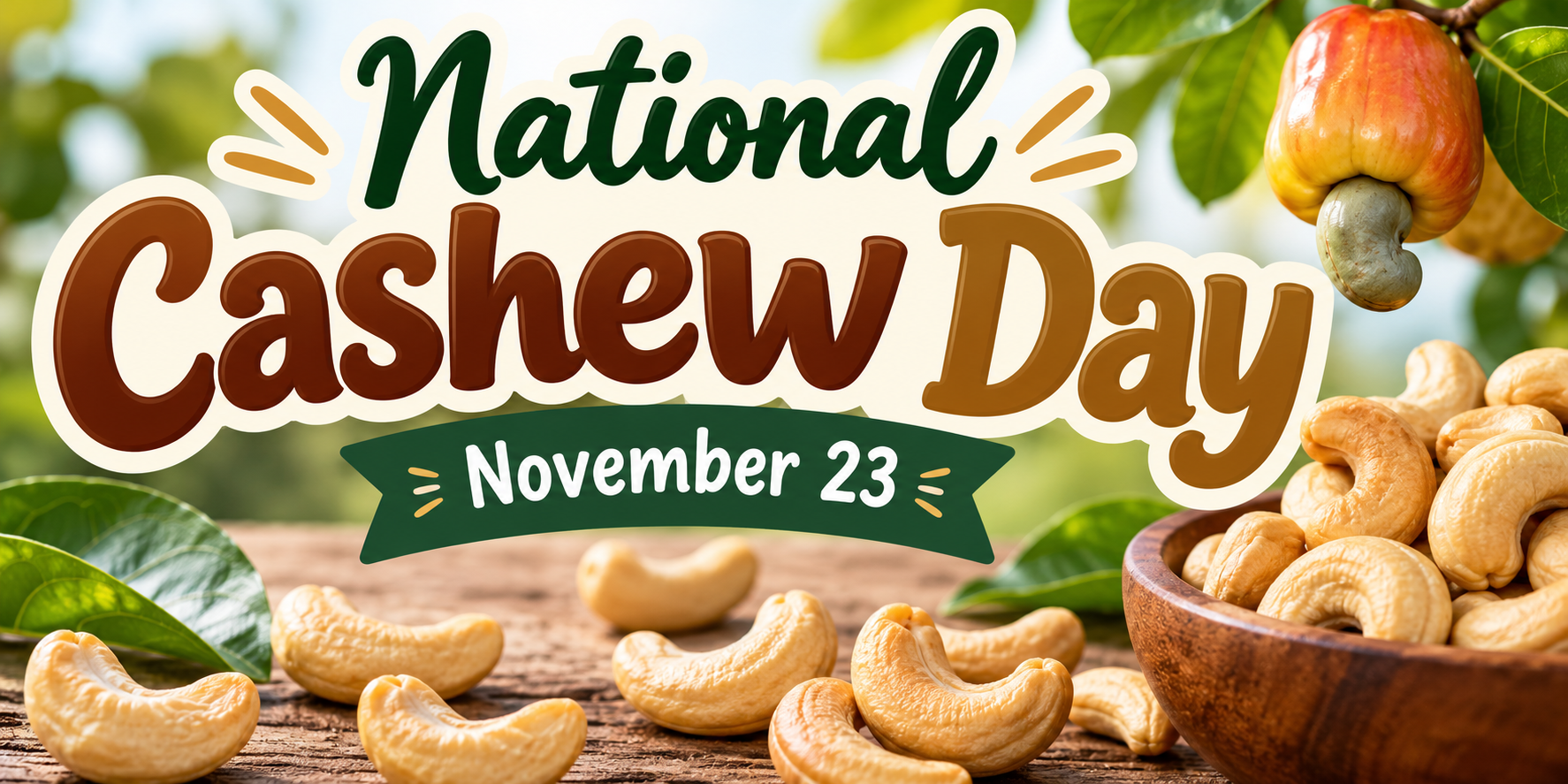
Every year on November 23, food lovers across the United States celebrate National Cashew Day, a delicious occasion dedicated to one of the world’s most popular and versatile nuts. Whether enjoyed as a crunchy snack, blended into creamy sauces, sprinkled over salads, or incorporated into sweet desserts, cashews have earned a special place in kitchens around the world.
Known for their rich, buttery flavor and smooth texture, cashews offer much more than a satisfying snack. They contain essential nutrients, have a fascinating history, and play an important role in international agriculture and cuisine.
National Cashew Day is the perfect opportunity to discover what makes cashews special, explore their nutritional benefits, learn about their origins, and find creative ways to enjoy them.
What Is National Cashew Day?
National Cashew Day is an informal food observance celebrated annually on November 23. It recognizes the popularity, versatility, and nutritional value of cashews while encouraging people to enjoy them in different ways.
Although National Cashew Day is not an official federal holiday, it has become one of the many food celebrations that highlight ingredients enjoyed in everyday cooking.
Cashews are particularly interesting because, despite being commonly called nuts, they are botanically seeds. They grow attached to the bottom of a fleshy structure known as the cashew apple.
This unusual growing process makes cashews different from many other foods found in the snack aisle.
National Cashew Day provides an opportunity to appreciate not only their flavor but also the agricultural work required to bring them from tropical orchards to grocery stores.
The Fascinating History of Cashews
Cashews originated in northeastern Brazil, where Indigenous communities used the cashew tree for food and other purposes long before the crop became internationally traded.
The cashew tree, scientifically known as Anacardium occidentale, thrives in warm tropical climates.
During the 16th century, Portuguese traders helped introduce cashew trees from Brazil to other parts of the world, including India and regions of Africa.
Initially, cashew trees were sometimes planted to help reduce soil erosion. Over time, their seeds became valuable agricultural products.
As international trade expanded, cashews gained popularity in European, Asian, and American markets.
Today, cashews are cultivated in numerous tropical countries, with significant production and processing industries in Asia and Africa.
Their worldwide popularity reflects centuries of agricultural development, trade, and culinary innovation.
Why Are Cashews So Special?
Cashews stand apart from many other nuts because of their distinctive shape, texture, and flavor.
Their curved, kidney-like appearance makes them instantly recognizable, while their naturally mild and buttery taste allows them to complement both sweet and savory dishes.
Unlike some nuts with stronger or more bitter flavors, cashews have a delicate sweetness that works particularly well in cooking.
Their texture also changes depending on how they are prepared.
Raw-style commercially processed cashews have a relatively soft texture, while roasted cashews develop a deeper flavor and satisfying crunch.
When soaked and blended, cashews can become remarkably smooth, making them useful for creating dairy-free sauces, spreads, and desserts.
This versatility is one reason cashews have become popular in vegetarian, vegan, and plant-based cooking.
The Nutritional Benefits of Cashews
Cashews are more than a delicious snack. They provide a variety of nutrients that can contribute to a balanced diet.
A typical one-ounce serving of unsalted cashews, approximately 18 individual cashews, contains about:
-
157 calories
-
5 grams of protein
-
12 grams of fat
-
9 grams of carbohydrates
-
1 gram of fiber
Cashews also contain minerals and other nutrients that support normal bodily functions.
1. Support Heart Health
Cashews contain predominantly unsaturated fats, including monounsaturated and polyunsaturated fats.
Replacing foods high in saturated fat with foods containing unsaturated fats can support healthier cholesterol levels.
Choosing unsalted cashews may also help people who are monitoring their sodium intake.
However, cashews are calorie-dense, making portion awareness important.
2. Provide Important Minerals
Cashews are a useful source of magnesium, copper, phosphorus, and zinc.
Magnesium contributes to normal muscle and nerve function, while copper plays a role in energy metabolism and connective tissue formation.
Phosphorus helps maintain bones and teeth, and zinc supports normal immune function.
Including cashews as part of a varied diet can help people obtain these essential nutrients.
3. Offer Plant-Based Protein
Cashews provide plant-based protein, making them a convenient addition to vegetarian and vegan meals.
Although they do not contain as much protein as certain other nuts and seeds, they can contribute to daily protein intake when combined with other foods.
Adding cashews to oatmeal, salads, stir-fries, or grain bowls can increase the protein content of a meal.
4. Help Promote Satisfaction After Eating
The combination of fat, protein, and a small amount of fiber makes cashews a satisfying snack.
Eating a measured portion may help people feel satisfied between meals.
Pairing cashews with fresh fruit or vegetables can create a balanced snack with additional fiber and nutrients.
5. Supply Antioxidant Compounds
Cashews contain plant compounds with antioxidant activity.
Antioxidants help protect cells from oxidative damage, although eating cashews alone does not prevent or cure disease.
Their greatest nutritional value comes from including them within an overall balanced eating pattern.
How Cashews Grow: A Surprising Natural Process
One of the most fascinating facts about cashews is how they grow.
Unlike almonds or walnuts, cashews develop outside a fleshy structure rather than inside a conventional fruit shell.
The cashew tree produces a swollen, colorful structure commonly called the cashew apple.
This structure can appear yellow, orange, or red when mature.
Attached to its bottom is a hard, kidney-shaped shell containing a single cashew seed.
The cashew apple is edible and is used in beverages, preserves, and other foods in regions where cashews grow.
However, the shell surrounding the cashew seed contains irritating substances that must be carefully removed during processing.
This is why commercially sold cashews undergo specialized processing before reaching consumers.
Even cashews labeled “raw” in grocery stores have generally been processed to make them safe to eat.
Never attempt to eat cashews directly from their untreated shells.
10 Delicious Ways to Celebrate National Cashew Day
National Cashew Day offers plenty of opportunities to experiment with cashews in the kitchen.
Whether you prefer sweet treats, savory meals, or simple snacks, there are countless ways to enjoy them.
1. Enjoy Roasted Cashews
One of the easiest ways to celebrate is with a handful of roasted cashews.
Try lightly salted, unsalted, or seasoned varieties.
Roasting enhances their natural flavor and creates a satisfying crunch.
2. Make Homemade Cashew Butter
Cashew butter is a creamy alternative to peanut or almond butter.
Blend roasted, unsalted cashews in a food processor until smooth, scraping down the sides as needed.
Spread it on toast, add it to smoothies, or serve it with apple slices.
3. Prepare Cashew Chicken
Cashew chicken is a popular dish featuring tender chicken, vegetables, and crunchy cashews.
A savory sauce made with ingredients such as soy sauce, garlic, and ginger brings the flavors together.
Serve it over steamed rice for a satisfying meal.
4. Add Cashews to Salads
Cashews make an excellent topping for green salads, grain bowls, and Asian-inspired vegetable dishes.
Their crunch provides a pleasant contrast to fresh vegetables and tender grains.
5. Create a Cashew Trail Mix
Combine cashews with dried cranberries, pumpkin seeds, almonds, and a small amount of dark chocolate.
This homemade snack is convenient for road trips, hiking, and busy afternoons.
6. Make Creamy Cashew Sauce
Soaked cashews can be blended with water, garlic, lemon juice, and seasonings to create a creamy sauce.
Use it over pasta, roasted vegetables, or baked potatoes.
This preparation is especially useful for people seeking dairy-free alternatives.
7. Bake Cashew Cookies
Chopped cashews add a buttery flavor and pleasant texture to cookies.
Try incorporating them into chocolate chip cookies, oatmeal cookies, or shortbread.
8. Prepare a Cashew Smoothie
Blend cashews or cashew butter with a banana, milk or a milk alternative, cinnamon, and ice.
The result is a creamy beverage that works well as part of breakfast or an afternoon snack.
9. Make Cashew-Crusted Fish
Finely chopped cashews can be used as a coating for fish.
Combine them with breadcrumbs and seasonings before baking until the fish is fully cooked.
The cashews add texture and a subtle nutty flavor.
10. Try Cashew-Based Desserts
Cashews are frequently used in dairy-free cheesecakes, frozen desserts, and creamy puddings.
When soaked and blended, they create a smooth base that pairs well with vanilla, chocolate, and fruit.
Interesting Facts About Cashews
Cashews have several unusual characteristics that make them worth celebrating.
Fact 1: Cashews are technically seeds. Although commonly classified as tree nuts for culinary and allergy purposes, they are botanically seeds.
Fact 2: Cashews grow outside the cashew apple. The seed develops within a hard shell attached to the bottom of the fleshy cashew apple.
Fact 3: Cashew apples are edible. In cashew-growing regions, people use them to prepare juices, jams, and other products.
Fact 4: Cashew shells require careful handling. Their shells contain irritating compounds, which is why commercial processing is essential.
Fact 5: Cashews are popular in plant-based cooking. Their creamy texture makes them especially useful in dairy-free sauces and desserts.
Fact 6: Cashews originated in Brazil. Portuguese traders later helped spread the crop to other tropical regions.
Fact 7: Cashews contain copper. This mineral contributes to several important functions in the human body.
Fact 8: Cashews can be enjoyed in sweet and savory recipes. Their mild flavor makes them exceptionally adaptable.
Cashews Around the World
Cashews are enjoyed in many different culinary traditions.
In India, they are frequently incorporated into rich curries, festive sweets, and creamy sauces. Ground cashews can help thicken dishes while adding a subtle richness.
In Chinese-inspired cooking, cashews are commonly paired with chicken, vegetables, and savory sauces.
In Thailand, cashews are used in stir-fries and other dishes that combine sweet, salty, and spicy flavors.
In Brazil, the cashew apple is an important regional ingredient used in beverages and food preparations.
Across parts of Africa, cashews are an important agricultural crop that supports farming communities and processing industries.
These diverse uses demonstrate how one ingredient can become part of many different food cultures.
Are Cashews Good for Everyone?
Although cashews offer nutritional benefits, they are not suitable for everyone.
People with tree nut allergies may experience serious allergic reactions to cashews. Cashew allergies can be particularly severe, and individuals with known allergies should avoid them and follow medical advice.
Cashews are also relatively calorie-dense, so serving size matters for those managing their calorie intake.
Flavored and heavily salted varieties may contain substantial amounts of sodium, added sugar, or other ingredients.
For everyday snacking, unsalted or lightly salted cashews are often practical choices.
As with most foods, moderation and variety are important.
How to Store Cashews Properly
Proper storage helps preserve the flavor and quality of cashews.
Because they contain natural oils, cashews can become rancid when exposed to heat, light, and air for extended periods.
Store them in an airtight container in a cool, dry location.
For longer storage, refrigeration or freezing can help maintain freshness.
Always check for unusual odors, discoloration, or an unpleasant taste before eating stored cashews.
Keeping them properly sealed also helps prevent moisture absorption and protects their texture.
Why National Cashew Day Matters
National Cashew Day may seem like a simple food celebration, but it also provides an opportunity to appreciate agriculture, nutrition, and the cultural importance of food.
Every cashew represents a journey that begins on a tropical tree and continues through harvesting, processing, transportation, and preparation.
The cashew industry supports farmers, agricultural workers, processors, and businesses in many countries.
The day can also encourage people to explore new recipes and discover ingredients they may not normally use.
Something as simple as adding cashews to a familiar dish can introduce new textures and flavors.
Food celebrations remind us that everyday ingredients often have extraordinary histories.
How to Celebrate National Cashew Day on November 23
Celebrating National Cashew Day does not require elaborate plans.
You might prepare a cashew-inspired dinner, experiment with homemade cashew butter, or share a favorite snack with family and friends.
For those who enjoy cooking, November 23 is a wonderful opportunity to try a new recipe.
Families can also use the occasion to teach children about where foods come from and how different crops grow, while taking appropriate precautions around food allergies.
Sharing interesting cashew facts or favorite recipes on social media is another way to participate.
Whether your celebration is simple or creative, the purpose is to appreciate an ingredient that brings flavor and variety to meals around the world.
Final Thoughts: A Small Seed Worth Celebrating
National Cashew Day, celebrated every November 23, reminds us that even the smallest foods can have remarkable stories.
From their origins in Brazil to their widespread use in international cuisine, cashews have become a beloved ingredient thanks to their rich flavor, creamy texture, and versatility.
They provide beneficial nutrients, complement countless recipes, and offer an enjoyable way to add variety to everyday meals.
Whether you prefer them roasted, blended, baked, or sprinkled over your favorite dish, National Cashew Day is an excellent excuse to enjoy this delicious seed.
Sometimes the simplest foods deserve a little extra appreciation.
Happy National Cashew Day!
What’s your favorite way to enjoy cashews: roasted and salted, mixed into a savory dish, or transformed into a delicious dessert?


Leave a Reply