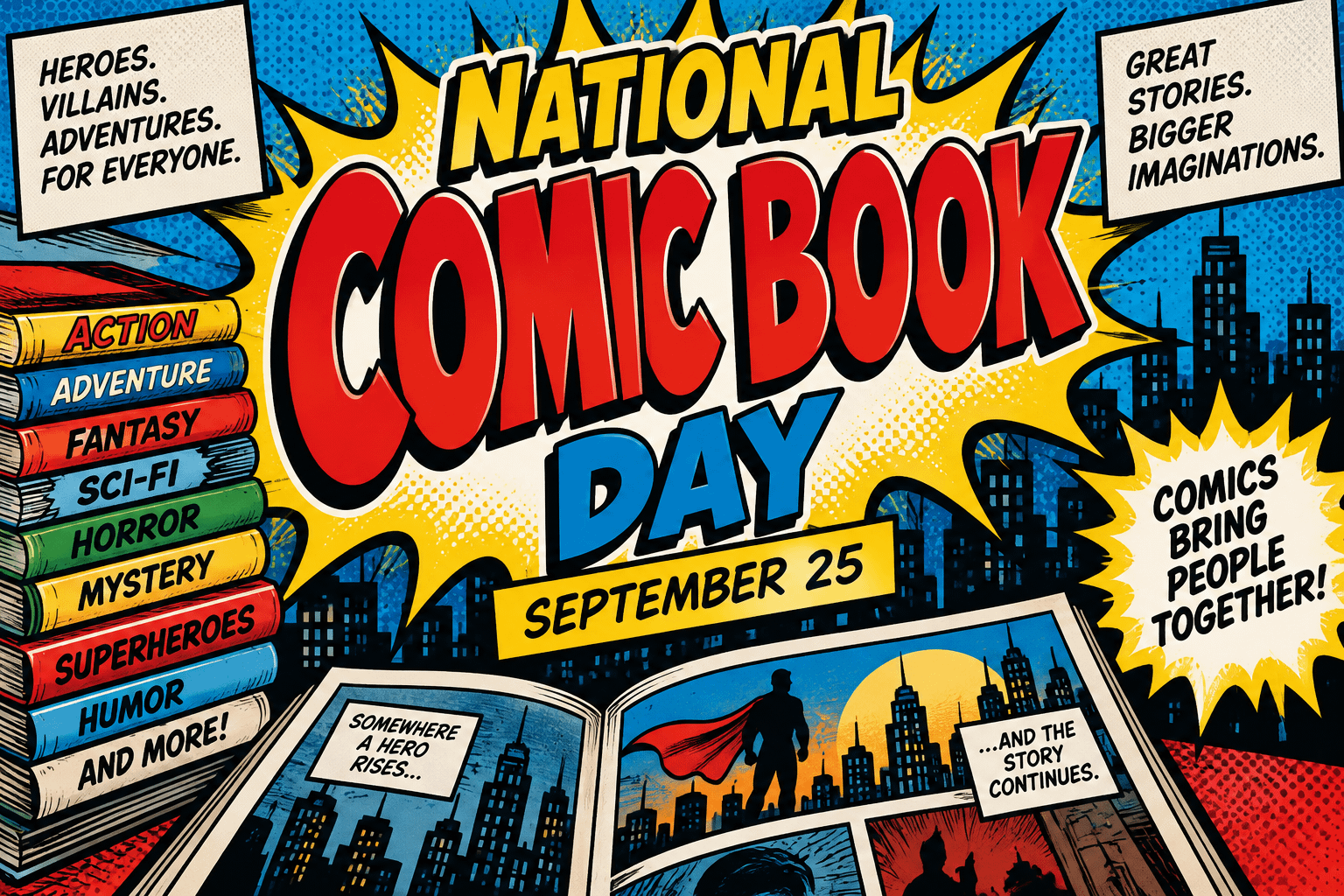
Every year on September 25, comic book fans have another reason to celebrate the colorful pages, unforgettable heroes, imaginative worlds, and incredible stories that have entertained generations. National Comic Book Day is a celebration of comic books and the creativity behind them—from legendary superheroes and masked vigilantes to independent comics, graphic novels, humor, horror, science fiction, fantasy, and countless other genres.
Comic books are much more than pictures accompanied by speech bubbles. At their best, they combine writing and visual art to tell stories in a way few other mediums can duplicate. A single page can contain action, emotion, humor, suspense, and powerful symbolism.
For longtime collectors, National Comic Book Day can be an excuse to pull an old favorite from the collection. For casual readers, it might be the perfect opportunity to visit a comic shop or discover a new series. And for someone who has never read a comic book before, September 25 offers a great reason to see what the medium has to offer.
The Magic of Comic Books
There is something special about opening a comic book.
Before reading a single word, the artwork begins telling the story. Characters leap across panels. Cities stretch across dramatic backgrounds. Facial expressions reveal emotions that dialogue alone might never capture.
Then the words add another layer.
Writers and artists work together to control the pace of the story. A page might contain a dozen small panels showing a rapid sequence of events, while the next page might feature one enormous image designed to make the reader stop and stare.
That combination of art and storytelling gives comics their unique personality.
Readers aren’t simply told what happens—they are invited to experience it visually.
A Brief Look at Comic Book History
The roots of comics extend much further back than the superheroes most people associate with the medium. Illustrated stories, political cartoons, newspaper comic strips, and sequential artwork all helped shape what eventually became the modern comic book.
During the early decades of the 20th century, publishers began collecting comic strips and producing publications devoted specifically to comics.
Then superheroes changed everything.
The late 1930s introduced characters who would become cultural icons. Superheroes quickly captured readers’ imaginations, and comic books became enormously popular.
Throughout the following decades, comics continued evolving.
Superhero stories remained important, but creators explored many other genres, including westerns, romance, crime, horror, war stories, science fiction, fantasy, comedy, and adventure.
Different generations discovered different characters and storytelling styles.
Comic books eventually grew from inexpensive entertainment into a major part of popular culture.
More Than Superheroes
When people hear the phrase “comic book,” superheroes are often the first thing that comes to mind.
That makes sense.
Superheroes have become some of the most recognizable fictional characters in the world.
But comic books are much broader than superheroes.
There are mystery comics, historical comics, autobiographical graphic novels, fantasy adventures, science-fiction epics, horror stories, romantic dramas, comedy series, children’s comics, manga, educational comics, and independent stories covering almost every imaginable subject.
Some graphic novels explore serious historical events.
Others deal with grief, family, friendship, discrimination, identity, war, mental health, growing up, or finding purpose.
Others simply want to make you laugh.
That’s one of the greatest things about comics: there is probably a comic for almost every kind of reader.
Why Superheroes Continue to Inspire Us
Superheroes remain one of the most enduring parts of comic book culture because their stories often deal with questions that go far beyond superpowers.
What does it mean to do the right thing?
How much should someone sacrifice to help another person?
What happens when a good person makes a terrible mistake?
Can someone overcome tragedy?
Can people change?
What does courage look like when you’re afraid?
Behind the masks and extraordinary abilities are often very human struggles.
Many superheroes experience loss, rejection, loneliness, responsibility, failure, and doubt. Yet they continue moving forward.
That is part of their appeal.
Readers may never fly through the sky or possess superhuman strength, but they understand what it means to struggle.
Sometimes the greatest superpower in a comic isn’t strength.
It’s perseverance.
Heroes Aren’t Perfect
Some of the most memorable comic book characters aren’t perfect heroes.
They make mistakes.
They become angry.
They question themselves.
They lose people they love.
Sometimes they fail.
Those imperfections make their victories more meaningful.
A hero who never struggles isn’t nearly as interesting as someone who has every reason to quit but decides to keep going.
Comic books frequently remind readers that courage doesn’t mean never being afraid.
Courage means moving forward even when fear is present.
And strength isn’t always about defeating the villain.
Sometimes strength means surviving another day.
The Importance of Comic Book Villains
Every memorable hero needs a challenge.
That’s where great villains come in.
The best comic book villains aren’t simply evil characters waiting to be defeated. They often represent opposing philosophies, temptations, fears, or distorted versions of the hero’s own beliefs.
A powerful villain forces the hero to make difficult choices.
Physical strength might win a fight, but it doesn’t necessarily solve a moral dilemma.
That tension can transform a simple adventure into something much deeper.
In some stories, readers may even understand the villain’s motivation while disagreeing with the actions taken.
Those complicated conflicts have helped comic storytelling mature over the decades.
Comic Books and Childhood Memories
For many people, comics are closely connected to childhood.
Maybe you remember buying one from a convenience store.
Maybe someone gave you a stack of old comics.
Perhaps you traded them with friends.
Maybe you spent hours imagining yourself becoming your favorite superhero.
Those memories can stay with someone for decades.
Opening an old comic can sometimes feel like opening a time capsule.
You may remember where you were when you first read it, who your favorite character was, or why a particular story captured your imagination.
That nostalgia is one reason comic collecting remains popular.
Collectors aren’t always preserving pieces of paper.
Sometimes they’re preserving memories.
The Art Behind Every Page
Comic book artists deserve enormous recognition.
Creating a comic requires much more than simply drawing characters.
Artists must think about composition, movement, perspective, emotion, lighting, environments, pacing, and visual storytelling.
Every panel needs to help move the story forward.
Even something as simple as the size and shape of a panel can change how readers experience a scene.
A large dramatic image can make a moment feel enormous.
Several narrow panels can make events feel fast.
A silent page without dialogue can sometimes communicate more emotion than an entire page of words.
Writers, pencillers, inkers, colorists, letterers, editors, designers, and other creative professionals can all contribute to bringing a finished comic book to life.
National Comic Book Day is a great opportunity to appreciate those creators.
Comic Book Shops and Their Communities
Local comic book stores have also played an important role in comic culture.
They’re more than stores.
For many fans, they’re gathering places.
People visit to discover new releases, search for older issues, discuss favorite characters, learn about upcoming stories, participate in events, collect merchandise, and meet other people who share their interests.
A good comic shop can introduce someone to a series they might never have discovered otherwise.
National Comic Book Day provides an excellent excuse to visit one.
Ask an employee for a recommendation.
Browse something outside your usual genre.
Pick up an independent title.
You might discover your next favorite story.
Comic Book Collecting
For some people, reading comics is only part of the hobby.
Collecting them can become an adventure of its own.
Collectors may search for first appearances, important storylines, favorite artists, limited editions, variant covers, older issues, or simply books connected to personal memories.
Some rare comics have become extremely valuable, but financial value isn’t the only reason people collect.
A comic worth only a few dollars can be priceless to the person who remembers receiving it from a parent, grandparent, sibling, child, or friend.
Personal meaning doesn’t always have a price tag.
Comics on the Big Screen
Comic book characters have become a massive part of modern entertainment.
Movies, television shows, animation, games, toys, collectibles, clothing, and theme-park attractions have introduced comic characters to audiences who may never have opened a traditional comic book.
That success has helped turn characters once primarily known by comic readers into worldwide cultural icons.
But movies and television can also lead people back to the original stories.
If you love a comic-inspired movie or television series, try reading some of the comics connected to those characters.
You may discover decades of stories waiting for you.
Digital Comics Have Changed Reading
Comic books are no longer limited to printed pages.
Digital comics allow readers to carry enormous libraries on phones, tablets, computers, and other devices.
This has made comics more accessible to people who don’t live near a comic shop or don’t have room for shelves filled with physical issues.
Printed comics still have their special charm—the cover, the pages, the artwork, and the feeling of holding the story—but digital comics have opened another door for readers.
Both formats help keep the medium alive.
Comic Books Can Encourage Reading
Comic books can also be a valuable gateway into reading.
Someone intimidated by a large novel may feel more comfortable starting with a comic or graphic novel.
The artwork provides context while the dialogue and narration encourage readers to continue developing vocabulary and comprehension.
Most importantly, comics can make reading feel exciting.
When people discover stories they genuinely enjoy, reading stops feeling like an obligation.
It becomes entertainment.
And sometimes one comic book can create a lifelong reader.
Create Your Own Comic
National Comic Book Day doesn’t have to be only about reading comics.
Try creating one.
You don’t have to be a professional artist.
Draw a few panels.
Create a character.
Invent a superhero.
Design a villain.
Write a funny conversation.
Imagine an entirely new world.
Even stick figures can tell a story.
The goal doesn’t have to be creating the next famous comic book franchise.
The goal can simply be having fun and using your imagination.
Ways to Celebrate National Comic Book Day
There are plenty of ways to enjoy September 25.
You can reread your favorite comic, start a graphic novel, visit a local comic book store, organize your collection, watch a comic-inspired movie, learn about a favorite creator, introduce someone to a series you love, draw your own comic, or share your favorite characters with friends.
You could also dig through your old collection.
You might be surprised by what you find.
Sometimes seeing an old cover can instantly bring back memories you haven’t thought about in years.
Support Comic Book Creators
National Comic Book Day is also an opportunity to support the people who continue creating comics.
Explore independent creators.
Try a smaller publisher.
Attend a convention or local signing.
Follow artists and writers whose work you enjoy.
Recommend good comics to friends.
When readers support creative work, they help make future stories possible.
And somewhere right now, an unknown writer or artist may be developing a character who could become someone’s favorite hero years from now.
The Stories Behind the Heroes
One reason comics have survived for generations is simple: human beings love stories.
We love heroes.
We love adventures.
We love watching someone face impossible odds.
But perhaps most importantly, we love seeing characters fall and rise again.
The costumes, superpowers, secret identities, fantastic worlds, and dramatic battles make comics exciting.
The emotions underneath them make the stories memorable.
Loss.
Hope.
Friendship.
Sacrifice.
Love.
Fear.
Courage.
Redemption.
Those themes aren’t limited to fictional worlds.
They’re part of our lives too.
National Comic Book Day Is for Everyone
You don’t need a room filled with collectibles to celebrate National Comic Book Day.
You don’t need to know every superhero’s history.
You don’t need to debate which character would win a fictional battle.
You simply need a story you’re interested in reading.
Pick up a comic.
Turn the page.
Explore another world for a little while.
Maybe you’ll meet a hero you’ve never encountered before.
Maybe you’ll rediscover one you loved as a child.
Or maybe you’ll discover that the best comic book stories aren’t really about people who can fly, lift buildings, or save the universe.
They’re about people facing impossible situations and finding the courage to keep going.
And that’s something almost everyone can understand.
Happy National Comic Book Day!
What comic book, superhero, villain, or graphic novel has left the biggest impression on you?
Leave a Reply