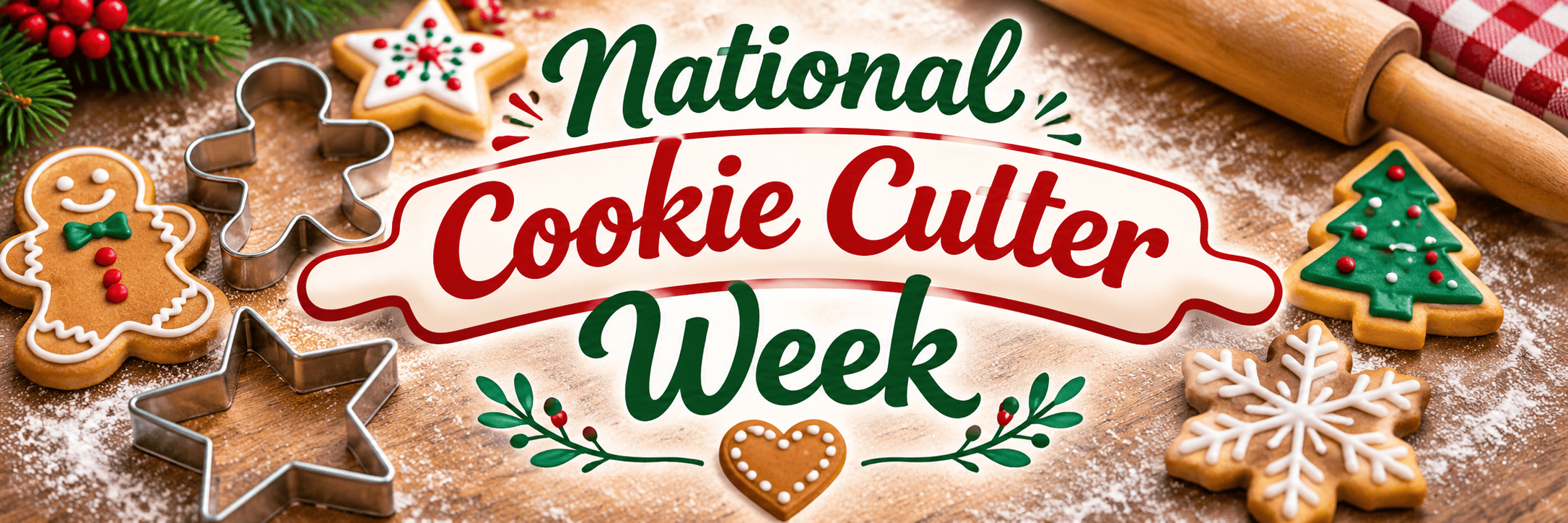
Every holiday season brings familiar traditions that fill homes with warmth, laughter, and delicious aromas. Among the most beloved is baking homemade cookies, especially those shaped into festive designs with cookie cutters. National Cookie Cutter Week celebrates this simple kitchen tool and the creativity, family memories, and baking traditions it represents.
Whether you enjoy making gingerbread men, Christmas trees, snowflakes, stars, or hearts, cookie cutters transform ordinary dough into something special. They encourage creativity, bring families together, and make baking an activity that people of all ages can enjoy.
National Cookie Cutter Week is more than a celebration of baking supplies. It recognizes the traditions passed down through generations, the memories created around kitchen tables, and the joy of sharing homemade treats with loved ones.
When Is National Cookie Cutter Week?
National Cookie Cutter Week is traditionally celebrated during the first week of December, making it a fitting occasion for the beginning of the Christmas baking season.
The celebration encourages home bakers, families, and cookie enthusiasts to explore the creative possibilities of cookie cutters while enjoying one of the most popular holiday baking traditions.
December is especially meaningful because many households begin preparing Christmas cookies, decorating gingerbread creations, and assembling homemade treats for holiday gatherings.
During this week, people can celebrate by baking their favorite cookies, experimenting with new shapes, decorating festive treats, or introducing children to the joy of holiday baking.
The History of National Cookie Cutter Week
National Cookie Cutter Week is associated with the tradition of collecting, preserving, and celebrating decorative cookie cutters.
The Cookie Cutter Collectors Club, an organization dedicated to the history and appreciation of cookie cutters, helped promote recognition of these baking tools and their cultural significance.
The observance is commonly traced to the 1990s, although accounts of its exact establishment vary.
Cookie cutters themselves have a much longer history.
For centuries, bakers have used molds and cutting tools to create decorative baked goods for religious celebrations, holidays, weddings, and other special occasions.
European baking traditions played an important role in the development of shaped cookies. German and Dutch immigrants brought decorative baking customs to America, helping popularize cookies made in recognizable shapes.
Over time, cookie cutters evolved from handmade metal tools into widely available kitchen accessories produced in countless designs.
Today, cookie cutters represent both practical baking equipment and cherished collectibles.
The History of Cookie Cutters
Cookie cutters have roots in centuries-old European baking traditions.
Before commercially manufactured cutters became common, bakers shaped dough using knives, carved molds, and handmade metal forms.
Decorative cookies were often associated with important celebrations, particularly Christmas and other religious holidays.
Early European Baking Traditions
In parts of Europe, bakers developed elaborate methods for shaping and decorating cookies.
German baking traditions included gingerbread and molded cookies, while Dutch baking customs featured decorative biscuits and holiday treats.
These traditions influenced American baking as immigrants brought their recipes and kitchen tools to the United States.
Cookie Cutters in Early America
Early American cookie cutters were frequently handmade from tin or other metals.
Skilled craftspeople created shapes representing animals, people, flowers, stars, and seasonal symbols.
Because these cutters were often made by hand, individual designs could be unique.
Families sometimes passed their favorite cutters from one generation to another.
The Rise of Commercial Cookie Cutters
During the nineteenth and twentieth centuries, advances in manufacturing made cookie cutters more affordable and widely available.
Companies began producing standardized shapes, allowing home bakers to purchase sets designed for particular holidays and occasions.
Christmas trees, bells, stars, and gingerbread people became especially popular.
Today, cookie cutters are manufactured from stainless steel, tin-plated metal, plastic, and other food-safe materials.
Modern designs include everything from traditional holiday shapes to animals, sports equipment, cartoon-inspired figures, and personalized creations.
Why National Cookie Cutter Week Is Special
Although cookie cutters are simple kitchen tools, they hold a meaningful place in family traditions.
For many people, the sight of a familiar cookie cutter brings back memories of childhood baking sessions, holiday gatherings, and time spent with loved ones.
National Cookie Cutter Week celebrates these experiences.
1. Cookie Cutters Encourage Creativity
Cookie cutters turn baking into an opportunity for artistic expression.
A simple sugar cookie can become a colorful Christmas tree, a decorated snowman, or a sparkling star.
Different icing colors, sprinkles, edible decorations, and frosting techniques allow bakers to personalize each creation.
2. Baking Brings Families Together
Making shaped cookies is an activity that children, parents, and grandparents can enjoy together.
Young children can help press cutters into dough, while older children can decorate cookies and experiment with designs.
These shared experiences often become treasured family memories.
3. Cookie Cutters Preserve Traditions
Many families have cookie cutters that have been used for decades.
A particular star, bell, or gingerbread-shaped cutter may appear every Christmas, connecting current celebrations with earlier generations.
Using these familiar tools helps preserve family customs and stories.
4. Homemade Cookies Make Thoughtful Gifts
Cookies created with decorative cutters are perfect for homemade holiday gifts.
A box of beautifully decorated cookies can express appreciation, friendship, and love.
Unlike expensive gifts, homemade treats carry the personal touch of time and effort.
5. Baking Provides a Relaxing Creative Activity
For many people, baking offers a welcome break from busy schedules.
Rolling dough, cutting shapes, and decorating cookies can encourage mindfulness and provide a satisfying creative outlet.
The finished cookies are an enjoyable reward.
Popular Cookie Cutter Shapes
Cookie cutters come in thousands of designs, but some shapes remain especially popular.
Christmas Cookie Cutters
Christmas trees: One of the most recognizable holiday designs, often decorated with green frosting, colorful sprinkles, and edible ornaments.
Snowflakes: Beautiful winter-themed cookies that can be decorated with white icing and sparkling sugar.
Gingerbread people: A classic holiday favorite, especially popular with children.
Stars: Simple, versatile shapes that work well for Christmas, patriotic celebrations, and birthdays.
Candy canes: Festive shapes commonly decorated with alternating red and white icing.
Bells: Traditional Christmas symbols that look beautiful with gold, silver, or colorful decorations.
Other Popular Cookie Cutter Designs
Cookie cutters are not limited to Christmas.
Heart-shaped cutters are popular for Valentine’s Day, while pumpkins, ghosts, and bats are favorites for Halloween.
Easter celebrations often feature bunny, egg, and flower designs.
Birthdays may include numbers, letters, balloons, and stars.
Animal shapes, vehicles, dinosaurs, and sports-themed cutters are also popular for children’s parties.
The possibilities are nearly endless.
How to Celebrate National Cookie Cutter Week
National Cookie Cutter Week offers plenty of opportunities to enjoy baking, creativity, and family activities.
Here are ten enjoyable ways to celebrate.
1. Bake Homemade Sugar Cookies
Classic sugar cookies are among the best choices for cookie cutters because properly chilled dough can hold detailed shapes during baking.
Choose several favorite designs and create a batch of festive treats.
2. Host a Cookie Decorating Party
Invite friends or family members to decorate homemade cookies.
Provide different frosting colors, sprinkles, candies, and decorative toppings.
Everyone can create their own designs and take home a collection of cookies.
3. Start a Family Cookie Cutter Collection
Purchase a new cookie cutter each year to commemorate a holiday, special occasion, or family milestone.
Over time, the collection can become a meaningful part of your family’s baking traditions.
4. Teach Children How to Bake
Introduce children to measuring ingredients, rolling dough, using cookie cutters, and decorating cookies.
Baking provides opportunities to practice basic math, follow instructions, and develop creativity.
Adults should supervise oven use and sharp metal cutters.
5. Try Unusual Cookie Cutter Shapes
Experiment with designs beyond traditional holiday favorites.
Animals, flowers, geometric patterns, and personalized shapes can make baking more interesting.
6. Make Homemade Cookie Gifts
Package decorated cookies in decorative tins, gift boxes, or food-safe bags.
Include a handwritten message for a thoughtful holiday present.
7. Organize a Cookie Exchange
Invite friends, neighbors, or coworkers to participate in a holiday cookie exchange.
Each participant prepares a batch of cookies and trades with others.
8. Explore Vintage Cookie Cutters
Look through family collections or visit antique shops to discover older cookie cutter designs.
Vintage cutters can reveal interesting details about historical baking traditions.
9. Create Cookie Cutter Crafts
Cookie cutters can also serve as templates for crafts.
Trace their shapes onto paper to create holiday cards, ornaments, gift tags, or decorations.
Keep craft-only cutters separate from those used for food.
10. Share Cookies With Someone Special
One of the most meaningful ways to celebrate is by sharing homemade cookies.
Consider delivering a small package to a neighbor, friend, teacher, or someone who could use a thoughtful gesture.
Classic Cut-Out Sugar Cookie Recipe
No National Cookie Cutter Week celebration would be complete without a dependable sugar cookie recipe.
These classic cookies are buttery, lightly sweet, and ideal for decorating.
Homemade Cut-Out Sugar Cookies
Prep & chilling
1 hr 20 min
Bake time
8–10 min
Yield
24–30 cookies
Ingredients
-
2¾ cups all-purpose flour
-
1 teaspoon baking powder
-
½ teaspoon salt
-
1 cup unsalted butter, softened
-
1 cup granulated sugar
-
1 large egg
-
2 teaspoons vanilla extract
-
½ teaspoon almond extract (optional)
Instructions
-
In a medium bowl, whisk together the flour, baking powder, and salt.
-
In a separate large bowl, beat the softened butter and sugar until light and fluffy.
-
Add the egg, vanilla extract, and optional almond extract. Mix until combined.
-
Gradually add the dry ingredients to the butter mixture, mixing until a soft dough forms.
-
Divide the dough into two portions, flatten into disks, wrap, and refrigerate for at least one hour.
-
Preheat the oven to 350°F and line baking sheets with parchment paper.
-
Roll the chilled dough on a lightly floured surface to approximately ¼-inch thickness.
-
Use cookie cutters to create your desired shapes.
-
Arrange cookies on the prepared baking sheets, leaving approximately one inch between them.
-
Bake for 8–10 minutes, or until the edges are just beginning to turn golden.
-
Allow the cookies to cool on the baking sheets for several minutes before transferring them to wire racks.
-
Once completely cooled, decorate with icing, frosting, or sprinkles.
Tips for Perfect Cut-Out Cookies
For the best results, keep the dough chilled before cutting and baking.
Avoid adding too much flour when rolling the dough, as this can make cookies dry.
Try to roll the dough evenly so the cookies bake at approximately the same rate.
For detailed shapes, refrigerate the cut cookies for an additional 10–15 minutes before baking.
Always allow cookies to cool completely before decorating.
Creative Cookie Decorating Ideas
Decorating cookies is one of the most enjoyable parts of National Cookie Cutter Week.
A few simple techniques can turn homemade cookies into beautiful treats.
Royal Icing Decorations
Royal icing is popular for creating smooth surfaces and detailed designs.
It can be piped around cookie edges and used to fill larger areas with color.
For beginners, a simple glaze made with powdered sugar, milk, and vanilla can be easier to work with.
Sprinkles and Colored Sugar
Sprinkles are an easy way to decorate cookies without complicated techniques.
Colored sanding sugar adds sparkle, while festive sprinkles create playful designs.
Chocolate Decorations
Melted chocolate can be drizzled over cookies or used to create decorative patterns.
White chocolate works especially well for winter-themed cookies.
Personalized Cookies
Use letter-shaped cutters or icing to create names, initials, and special messages.
Personalized cookies make memorable gifts for birthdays, weddings, and holiday celebrations.
Fun Facts About Cookie Cutters
Cookie cutters have a surprisingly interesting history and many uses beyond baking.
-
Antique cookie cutters are collected for their craftsmanship, rarity, and historical significance.
-
Some early cutters were handmade by tinsmiths.
-
Cookie cutters can be used for sandwiches, pancakes, biscuits, and certain fruits and vegetables.
-
Metal cutters often produce sharper edges than flexible plastic cutters.
-
Cookie cutter collections may include hundreds or even thousands of designs.
-
Specialty cutters can be custom-made for weddings, businesses, birthdays, and celebrations.
-
Cookie cutters can help make food more appealing to children by creating familiar shapes.
-
The phrase “cookie-cutter” is also used to describe things that are nearly identical or lacking individuality.
Despite that last expression, using cookie cutters in baking can actually inspire considerable creativity.
Cookie Cutters Beyond Cookies
Although cookie cutters are traditionally associated with baking, they can be used for many other kitchen activities.
Fun-Shaped Sandwiches
Use large cookie cutters to transform ordinary sandwiches into stars, hearts, animals, or seasonal shapes.
These are especially popular for children’s lunches and parties.
Decorative Pancakes
Cookie cutters designed for safe use on a griddle can help create shaped pancakes. Use heat-safe metal molds with appropriate handles and caution around hot surfaces.
Fruit Shapes
Watermelon, cantaloupe, and other firm fruits can be cut into decorative shapes.
These colorful pieces make attractive additions to fruit platters.
Homemade Biscuits
Round and decorative cutters can shape biscuit dough before baking.
Creative Cheese Platters
Firm slices of cheese can be cut into stars, hearts, and other designs for party platters.
These alternative uses make cookie cutters useful throughout the year.
How to Care for Cookie Cutters
Proper care can help cookie cutters remain useful for many years.
Wash cutters according to the manufacturer’s instructions after each use.
Dry metal cutters thoroughly to help prevent rust.
Avoid soaking older tin cutters for extended periods, particularly if they have delicate seams or decorative details.
Store cutters in a dry location where they will not become bent or damaged.
Plastic cutters should be kept away from excessive heat unless the manufacturer identifies them as heat-safe.
For collectible antique cutters, consider preserving them for display rather than using them in food preparation, particularly when their materials or finishes are uncertain.
With proper care, quality cookie cutters can become family keepsakes.
The Emotional Meaning of Holiday Baking Traditions
For many families, holiday baking represents something much deeper than preparing desserts.
It is about togetherness, love, and creating memories.
A familiar cookie cutter may remind someone of baking with a grandparent, decorating cookies with a parent, or celebrating Christmas with children.
The simple act of rolling dough and cutting familiar shapes can reconnect people with meaningful moments from their past.
For those who have lost someone they love, these traditions can carry both comfort and sadness.
Using a loved one’s favorite cookie cutter or preparing a recipe they once enjoyed can become a meaningful way to honor their memory.
Traditions do not always remain the same as families change, but they can continue to provide a connection between past and present.
National Cookie Cutter Week offers an opportunity to celebrate those connections while creating new memories.
Frequently Asked Questions About National Cookie Cutter Week
When is National Cookie Cutter Week celebrated?
National Cookie Cutter Week is traditionally observed during the first week of December, coinciding with the beginning of the Christmas baking season.
What is the purpose of National Cookie Cutter Week?
The observance celebrates the history, creativity, and traditions associated with cookie cutters. It encourages people to enjoy baking and appreciate the role these simple tools play in family celebrations.
Who started National Cookie Cutter Week?
The observance is associated with the Cookie Cutter Collectors Club, which has promoted the appreciation and preservation of cookie cutters.
What are the best cookies for cookie cutters?
Sugar cookies, gingerbread cookies, and certain shortbread recipes work particularly well because their dough can retain defined shapes during baking.
How do you prevent cut-out cookies from spreading?
Chill the dough, measure ingredients accurately, avoid over-creaming the butter and sugar, and use a recipe specifically designed for cut-out cookies.
Can cookie cutters be used for foods other than cookies?
Yes. Cookie cutters can shape sandwiches, fruits, cheese, biscuits, and other foods, provided the cutters are clean and appropriate for the intended use.
Are vintage cookie cutters valuable?
Some vintage cookie cutters are collectible, especially unusual handmade examples, rare designs, and cutters associated with particular historical periods.
Their value depends on factors such as age, condition, rarity, and collector demand.
Why National Cookie Cutter Week Still Matters
In a world filled with busy schedules and modern conveniences, simple traditions can be especially meaningful.
National Cookie Cutter Week reminds us that creating something by hand can bring satisfaction and joy.
A batch of homemade cookies does not need to look perfect to be special.
A slightly crooked Christmas tree, an uneven gingerbread person, or a star covered with too many sprinkles can become part of a cherished family memory.
The experience of baking together often matters more than the appearance of the finished cookies.
This celebration also helps preserve traditional baking skills and encourages younger generations to participate in activities that families have enjoyed for generations.
By sharing recipes, teaching children, and continuing familiar customs, people keep these traditions alive.
Final Thoughts: Celebrating National Cookie Cutter Week
National Cookie Cutter Week is a wonderful reminder that some of life’s happiest moments begin with simple activities.
A rolling pin, a bowl of dough, a few cookie cutters, and the people we love can create memories that last far longer than the cookies themselves.
Whether you are baking Christmas sugar cookies, decorating gingerbread people, collecting vintage cutters, or preparing homemade gifts, this celebration offers an opportunity to embrace creativity and togetherness.
It is also a time to appreciate the family traditions that connect generations and give ordinary moments lasting meaning.
This December, bring out your favorite cookie cutters, prepare a batch of homemade dough, and enjoy the simple pleasure of creating something special.
Because sometimes the sweetest part of baking isn’t the cookies we make.
It’s the memories we create while making them.


Leave a Reply