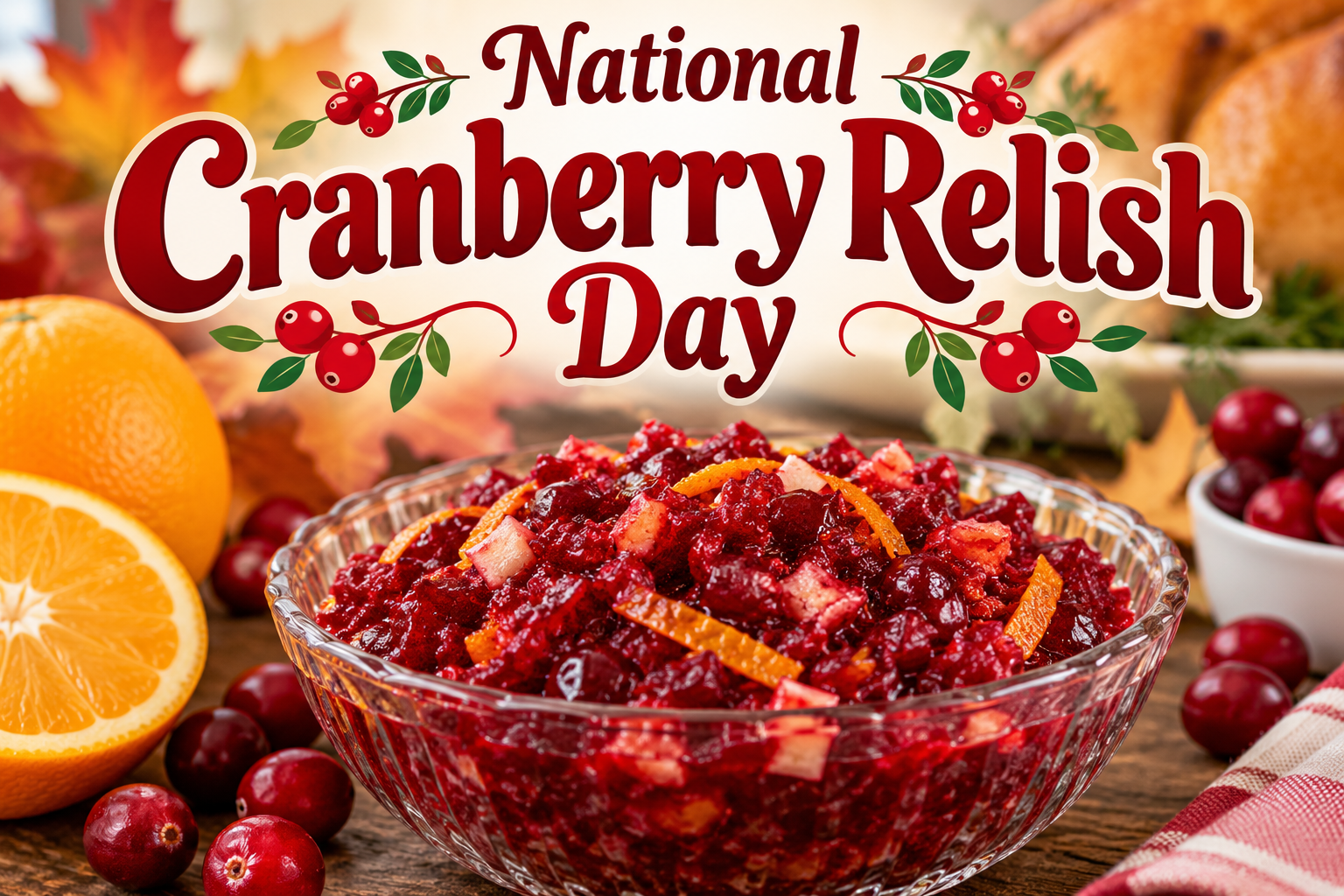
Every year on November 22, food lovers across America celebrate National Cranberry Relish Day, a delicious occasion dedicated to one of the most colorful and flavorful dishes found on the Thanksgiving table. While turkey, stuffing, mashed potatoes, and pumpkin pie often receive most of the attention, cranberry relish brings something special to the holiday meal: a refreshing combination of sweetness, tartness, and tradition.
For generations, cranberry dishes have been an important part of American holiday celebrations. Whether prepared using a treasured family recipe or made with a creative modern twist, cranberry relish offers a burst of flavor that complements many traditional Thanksgiving favorites.
National Cranberry Relish Day is more than an opportunity to enjoy a delicious side dish. It is also a celebration of American food history, seasonal ingredients, family recipes, and the memories created when loved ones gather around the dinner table.
When Is National Cranberry Relish Day?
National Cranberry Relish Day is celebrated annually on November 22, just as many Americans begin preparing for Thanksgiving.
The timing makes this observance especially appropriate. Fresh cranberries are widely available during the fall, and many families are planning their holiday menus.
Unlike Thanksgiving, which falls on the fourth Thursday of November, National Cranberry Relish Day remains on the same calendar date every year.
The holiday encourages people to appreciate this traditional dish, experiment with different recipes, and perhaps introduce cranberry relish to someone who has never tried it before.
What Is Cranberry Relish?
Cranberry relish is a flavorful mixture traditionally made from fresh cranberries, sugar, and citrus fruits such as oranges.
Unlike traditional cranberry sauce, which is usually cooked until the cranberries soften and release their natural juices, cranberry relish is commonly prepared using raw ingredients.
The ingredients are chopped or processed together to create a fresh, slightly chunky mixture with a bright, tangy flavor.
The natural tartness of cranberries combines with the sweetness of sugar and the refreshing citrus flavor of oranges to create a distinctive holiday accompaniment.
Some recipes also include apples, nuts, cinnamon, ginger, or other ingredients to add texture and complexity.
Cranberry relish can be served alongside roasted turkey, ham, chicken, and many other dishes. Its acidity helps balance the richness of traditional holiday foods.
The History of Cranberries in America
Cranberries have a long history in North America, extending far beyond modern Thanksgiving celebrations.
Native American communities used cranberries for food and other purposes long before European settlers arrived.
Indigenous peoples incorporated cranberries into various traditional foods, including preparations combining dried meat, fat, and berries. Cranberries were also valued for their natural color and versatility.
When European settlers encountered cranberries in North America, they gradually began incorporating the fruit into their own cooking traditions.
Over time, cranberry dishes became increasingly associated with autumn harvests and holiday meals.
Commercial cranberry cultivation expanded in the United States during the nineteenth century, particularly in Massachusetts and other northeastern regions.
Today, Wisconsin and Massachusetts are especially well known for cranberry production, although the fruit is also cultivated in other states.
The cranberry’s deep red color, distinctive tartness, and seasonal availability have helped make it an enduring symbol of American holiday cooking.
How Cranberry Relish Became a Thanksgiving Favorite
Cranberries have become strongly associated with Thanksgiving, but the precise origins of cranberry relish as a holiday staple are difficult to establish.
Early American cooks prepared cranberries in several ways, including sweetened preserves, sauces, and fruit mixtures.
As sugar became more accessible and home cooking evolved, cranberry preparations became increasingly popular.
The combination of cranberries and oranges eventually emerged as a particularly appealing holiday recipe.
Oranges provide natural sweetness, citrus fragrance, and a pleasant contrast to the tart flavor of cranberries.
By the twentieth century, cranberry-orange relish had become a familiar addition to many American Thanksgiving menus.
Family recipes were passed down through generations, with each household developing its own preferred combination of ingredients.
Some families favor a simple three-ingredient relish, while others include chopped pecans, walnuts, apples, or warm holiday spices.
These personal variations are part of what makes cranberry relish such a meaningful holiday tradition.
Cranberry Relish vs. Cranberry Sauce: What Is the Difference?
Although cranberry relish and cranberry sauce are often served during the same holiday meal, they are not exactly the same.
Cranberry Relish
Cranberry relish is generally made using uncooked cranberries and other fresh ingredients.
It typically has a chunky texture, bright flavor, and refreshing citrus notes.
Because the cranberries remain raw, the finished dish retains a particularly vibrant and tart character.
Cranberry Sauce
Cranberry sauce is usually prepared by simmering cranberries with sugar and water or fruit juice.
As the berries cook, they burst and release natural pectin, which helps thicken the mixture.
The finished sauce may be smooth or chunky, depending on the preparation method.
Cranberry sauce often has a softer texture and more mellow flavor than raw cranberry relish.
Both dishes are delicious, and many families enjoy serving them together.
Classic Homemade Cranberry Orange Relish Recipe
One of the best ways to celebrate National Cranberry Relish Day is by preparing a fresh batch of homemade cranberry-orange relish.
This traditional recipe requires only a few ingredients and very little preparation time.
Recipe details
Prep time
15 minutes
Cooking time
None
Chill time
2 hours
Servings
8
Ingredients
-
12 ounces fresh cranberries, rinsed and sorted
-
1 large seedless orange, washed and cut into pieces
-
½ to ¾ cup granulated sugar, adjusted to taste
-
1 medium apple, cored and chopped (optional)
-
½ teaspoon ground cinnamon (optional)
-
¼ cup chopped pecans or walnuts (optional)
Instructions
-
Rinse the cranberries thoroughly under cold running water. Remove any damaged or overly soft berries.
-
Wash the orange carefully. Cut it into smaller pieces, removing any seeds. Keep some or all of the peel for extra citrus flavor, if desired.
-
Place the cranberries and orange pieces into a food processor.
-
Pulse the ingredients until finely chopped but still slightly chunky. Avoid processing them into a completely smooth puree.
-
Transfer the mixture to a large mixing bowl.
-
Add the sugar gradually, stirring until evenly combined.
-
If desired, fold in chopped apple, cinnamon, or nuts.
-
Cover the bowl and refrigerate for at least two hours to allow the flavors to blend.
-
Taste before serving and adjust the sweetness if necessary.
-
Serve chilled as a refreshing accompaniment to your holiday meal.
Helpful tip: Cranberry relish often tastes even better after resting overnight in the refrigerator. Preparing it the day before Thanksgiving can save time and allow the flavors to develop.
Creative Cranberry Relish Variations to Try
While the classic cranberry-orange combination remains a favorite, there are many ways to personalize this holiday dish.
1. Cranberry Apple Relish
Add finely chopped sweet apples for extra crunch and natural sweetness. Honeycrisp, Fuji, and Gala apples are excellent choices.
2. Cranberry Pineapple Relish
Mix crushed pineapple into the cranberry mixture for a tropical variation. Drain excess liquid to prevent the relish from becoming watery.
3. Cranberry Pecan Relish
Add toasted pecans for a nutty flavor and satisfying crunch. This variation pairs especially well with roasted turkey.
4. Cranberry Ginger Relish
Include a small amount of freshly grated ginger to create a slightly spicy, aromatic flavor.
5. Cranberry Cinnamon Relish
A pinch of cinnamon brings warmth to the fresh fruit mixture and makes the dish feel especially festive.
6. Cranberry Pomegranate Relish
Add fresh pomegranate seeds for extra color, texture, and a delightful burst of juicy flavor.
7. Cranberry Pear Relish
Finely chopped ripe pears provide gentle sweetness that balances the tart cranberries beautifully.
Experimenting with different ingredients can turn a familiar Thanksgiving side dish into something entirely new.
Are Cranberries Healthy?
Cranberries are known for containing several nutrients and naturally occurring plant compounds.
They provide vitamin C, dietary fiber, and antioxidants, including polyphenols.
These compounds contribute to the fruit’s nutritional value and are part of why cranberries are frequently included in discussions about healthy eating.
However, cranberry relish often contains added sugar to balance the fruit’s natural tartness.
The nutritional profile of the finished dish depends on the recipe, serving size, and amount of sweetener used.
For those who want a less sweet version, reducing the added sugar or incorporating naturally sweet fruits may be an option.
Cranberries can be part of a balanced diet, but cranberry relish should not be considered a treatment or cure for any medical condition.
Delicious Ways to Serve Cranberry Relish
Although cranberry relish is traditionally associated with Thanksgiving turkey, it can be enjoyed in many other ways.
Try spooning cranberry relish over roasted chicken or pork, serving it alongside baked ham, or adding it to a leftover turkey sandwich.
It also makes a flavorful topping for plain yogurt, oatmeal, or breakfast toast.
For entertaining, cranberry relish can be served with cream cheese and crackers as a colorful holiday appetizer.
Another creative option is to use a small amount as a topping for baked brie.
Its refreshing tartness makes cranberry relish particularly useful when paired with rich, savory foods.
Fun Facts About Cranberries
Cranberries have several interesting characteristics that make them unique among American fruits.
-
Cranberries are one of the few major commercially cultivated fruits native to North America.
-
Cranberry plants are perennial vines that can remain productive for many years.
-
Cranberries contain small air pockets that allow them to float in water.
-
Many commercial cranberry harvests use water to help collect the floating berries.
-
Cranberries are naturally tart because they contain relatively little sugar and various organic acids.
-
The United States is one of the world’s leading cranberry-producing countries.
-
Cranberries are commonly used in juices, dried fruit products, sauces, baked goods, and holiday recipes.
These qualities have helped cranberries remain an important part of American agriculture and culinary traditions.
How to Celebrate National Cranberry Relish Day
Celebrating National Cranberry Relish Day does not require an elaborate gathering or expensive ingredients.
Sometimes the simplest traditions are the most meaningful.
Prepare a homemade cranberry relish using a favorite family recipe. If you have never made it before, try the classic cranberry-orange version.
Invite family members to share their favorite holiday recipes and stories about past Thanksgiving celebrations.
You might also experiment with an unfamiliar ingredient or create a new version that could become a family tradition.
For those who enjoy cooking with children, preparing cranberry relish can be a fun introduction to holiday food preparation, with adult supervision when using kitchen equipment.
Sharing a homemade dish with a neighbor, friend, or someone spending the holiday alone is another thoughtful way to observe the day.
National Cranberry Relish Day offers an opportunity to appreciate both the food itself and the connections that holiday traditions create.
The Importance of Keeping Family Food Traditions Alive
Food has a remarkable ability to connect generations.
A familiar recipe can bring back memories of childhood kitchens, holiday gatherings, and loved ones who once prepared the same dish.
For some families, cranberry relish is simply a favorite Thanksgiving side.
For others, it represents something deeper.
Perhaps it was a grandmother’s special recipe, a parent’s annual holiday contribution, or a dish that always appeared on the table during family celebrations.
Continuing those recipes can be a meaningful way to preserve family history.
Even when holiday traditions change, preparing familiar foods can provide a sense of continuity and connection.
And when families create new recipes together, they begin building memories that future generations may cherish.
Why National Cranberry Relish Day Matters
Not every food holiday needs an elaborate origin story or a major public celebration to have meaning.
National Cranberry Relish Day highlights a modest but beloved part of American holiday cooking.
It reminds us that the dishes accompanying a meal can be just as memorable as the main course.
Cranberry relish represents the flavors of the fall harvest, the creativity of home cooks, and the traditions that families carry forward.
Its combination of sweet and tart flavors also reflects the wonderful variety found in American food culture.
Whether enjoyed as a traditional Thanksgiving accompaniment or incorporated into a modern recipe, cranberry relish continues to earn its place at the holiday table.
Final Thoughts: Celebrate the Flavor of Tradition
National Cranberry Relish Day, celebrated every November 22, is a wonderful reminder that even the simplest foods can carry rich traditions and meaningful memories.
With its vibrant red color, refreshing citrus flavor, and unmistakable tartness, cranberry relish adds something special to Thanksgiving meals and other autumn gatherings.
Whether you prefer a classic cranberry-orange recipe, a version filled with apples and nuts, or a creative combination of seasonal ingredients, this holiday offers the perfect excuse to enjoy a dish that has become part of American holiday cooking.
As Thanksgiving approaches, consider making a fresh batch of cranberry relish, sharing it with someone special, and celebrating the traditions that bring people together.
After all, some of the most cherished holiday memories begin with simple recipes made with care.
Do you enjoy homemade cranberry relish at Thanksgiving, or does your family have a special cranberry recipe that has been passed down through generations?


Leave a Reply