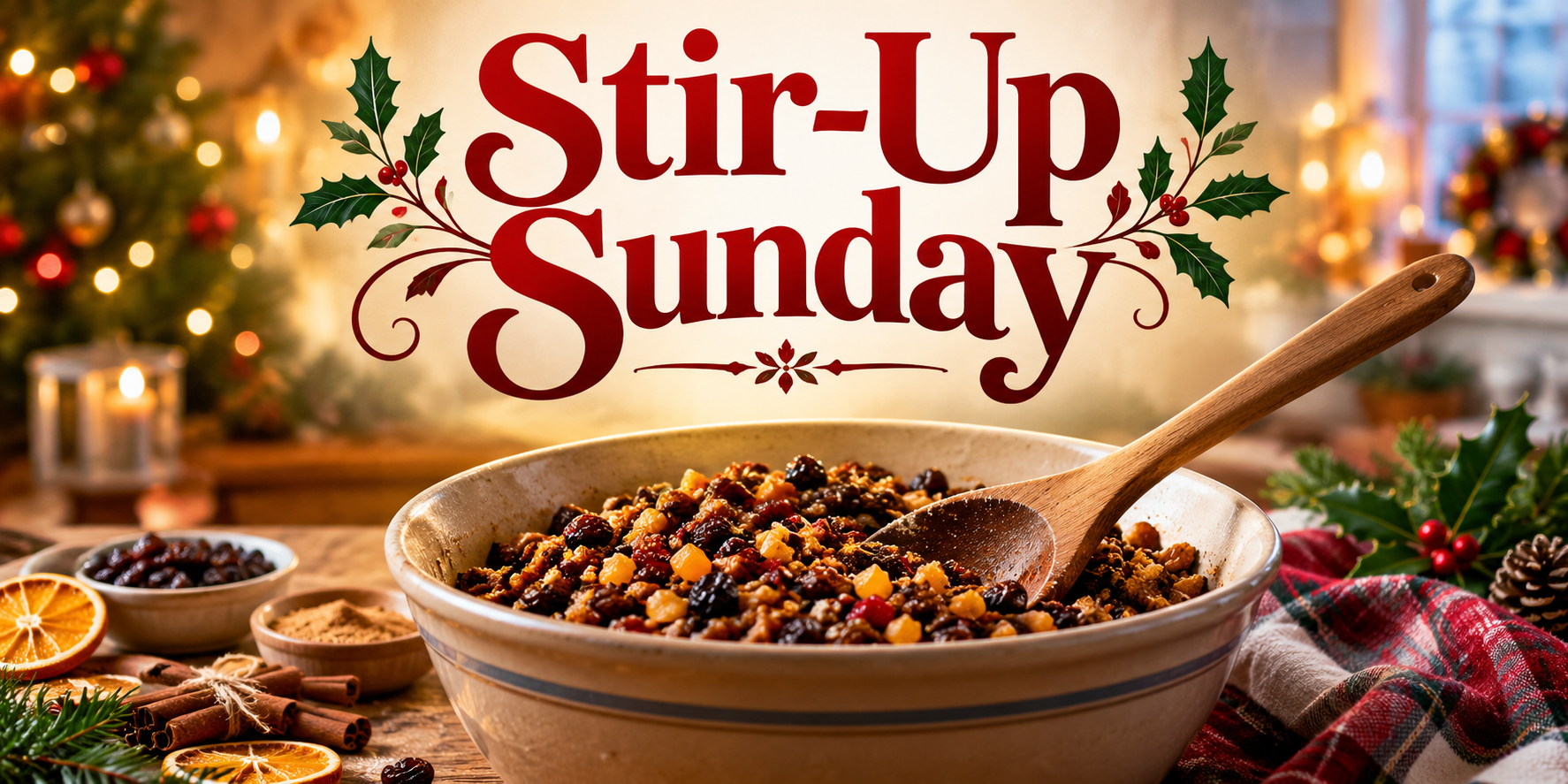
As the Christmas season approaches, families around the world begin preparing for one of the most cherished times of the year. Homes fill with decorations, kitchens come alive with the aromas of seasonal baking, and traditions passed down through generations bring loved ones together. Among these treasured customs is Stir-Up Sunday, a centuries-old British tradition that marks the beginning of Christmas pudding preparations.
Celebrated on the last Sunday before Advent, Stir-Up Sunday is more than an opportunity to make a delicious holiday dessert. It is a tradition rooted in Christian history, family togetherness, good fortune, and the anticipation of Christmas.
From stirring a rich mixture of dried fruits and spices to making wishes for the coming year, Stir-Up Sunday offers families a meaningful way to celebrate the approaching holiday season.
When Is Stir-Up Sunday in 2026?
Stir-Up Sunday falls on November 22, 2026.
The observance traditionally takes place on the Sunday immediately before the beginning of Advent in Western Christian calendars that follow this custom.
Because Advent begins on a different date each year, Stir-Up Sunday also changes annually.
In 2026, the first Sunday of Advent falls on November 29, making November 22 the traditional day for preparing Christmas puddings.
Although Stir-Up Sunday is especially associated with Britain, families in other countries also participate in this festive custom.
What Is Stir-Up Sunday?
Stir-Up Sunday is a traditional occasion when families gather to prepare their Christmas puddings several weeks before Christmas Day.
Christmas pudding, sometimes called plum pudding, is a rich steamed dessert traditionally made with dried fruits, spices, breadcrumbs, suet or other fats, sugar, and sometimes alcohol.
Unlike many desserts prepared immediately before serving, traditional Christmas pudding is often made weeks in advance.
This resting period allows the flavors to develop and deepen, creating the distinctive taste associated with British Christmas celebrations.
On Stir-Up Sunday, family members traditionally take turns stirring the pudding mixture while making a wish.
For many families, the occasion is about more than baking. It provides an opportunity to spend time together, share stories, and continue customs handed down through generations.
The Religious Origins of Stir-Up Sunday
The name Stir-Up Sunday has its origins in the Christian church.
In the traditional Anglican Book of Common Prayer, the collect appointed for the Sunday before Advent begins with the words:
“Stir up, we beseech thee, O Lord, the wills of thy faithful people.”
The prayer asks God to inspire believers toward good works and spiritual preparation.
Over time, the words “stir up” became humorously associated with stirring Christmas pudding ingredients.
The connection between the church prayer and holiday baking helped establish the popular name Stir-Up Sunday.
Although the religious prayer was not originally about preparing food, its association with Christmas pudding became an enduring part of British holiday culture.
Today, the tradition combines religious history with the warmth and joy of family celebrations.
The History of Christmas Pudding
To understand Stir-Up Sunday, it helps to explore the history of Christmas pudding itself.
The origins of Christmas pudding can be traced to medieval British food traditions, when dishes containing meat, dried fruit, grains, and spices were common.
Early preparations were quite different from the sweet Christmas puddings enjoyed today.
One predecessor was a dish known as frumenty, which could contain grains, milk or broth, fruit, and other ingredients.
Over the centuries, British festive dishes evolved, and richer mixtures of dried fruits, spices, sugar, and fats became associated with Christmas.
By the Victorian era, Christmas pudding had become a recognizable centerpiece of holiday dining.
Queen Victoria’s reign helped popularize many Christmas traditions that remain familiar today, including decorated Christmas trees, family celebrations, and elaborate holiday meals.
Christmas pudding became an important part of these festivities, particularly in Britain.
The tradition of preparing pudding in advance also made practical sense because the dessert benefited from time spent developing its flavors.
Why Do Families Stir the Christmas Pudding?
One of the most recognizable Stir-Up Sunday customs involves everyone in the household taking a turn stirring the pudding mixture.
Traditionally, family members stir the mixture from east to west.
According to popular tradition, this direction represents the journey of the Wise Men who traveled from the East to visit the infant Jesus.
As each person stirs, they make a wish for the coming year.
Children often enjoy this part of the celebration because it allows them to participate in preparing a special Christmas dessert.
Parents and grandparents may use the opportunity to explain family traditions, share childhood memories, or tell stories about Christmas celebrations from years past.
The stirring ritual symbolizes togetherness, hope, and the continuation of family customs.
While not every household follows the same rules, the spirit of the tradition remains remarkably consistent.
The Symbolism of Christmas Pudding Ingredients
Christmas pudding contains ingredients that have acquired symbolic meanings through religious and cultural traditions.
Some traditional interpretations connect the pudding’s ingredients to Christianity.
For example, certain customs associate thirteen ingredients with Jesus Christ and his twelve apostles.
However, these interpretations are not universal, and Christmas pudding recipes vary widely.
Common ingredients include:
- Raisins, currants, and sultanas for sweetness and richness.
- Mixed peel for a distinctive citrus flavor.
- Cinnamon, nutmeg, and cloves for festive warmth.
- Breadcrumbs and flour to help bind the mixture.
- Eggs to provide structure.
- Suet or butter for richness.
- Brown sugar or treacle for sweetness and color.
- Brandy, rum, stout, or fruit juice for moisture and flavor.
The combination creates a dense, fragrant pudding that has become a traditional feature of British Christmas dinners.
The Tradition of Hiding Coins in Christmas Pudding
Another well-known Christmas pudding custom involves placing a coin inside the mixture.
Historically, families sometimes included a silver sixpence in the pudding.
The person who discovered the coin in their serving was believed to receive good fortune, wealth, or happiness during the coming year.
Other symbolic objects were occasionally included in historical versions of the tradition.
These objects could represent different predictions about a person’s future.
However, placing coins or small objects inside food presents choking, dental, and food-safety risks.
Families wishing to preserve the custom can instead award a symbolic coin or small prize separately from the pudding.
This allows everyone to enjoy the tradition without introducing hazardous objects into the dessert.
How to Celebrate Stir-Up Sunday at Home
Celebrating Stir-Up Sunday does not require elaborate preparations or generations of family recipes.
Even those who have never made Christmas pudding can enjoy participating in this meaningful tradition.
1. Gather the Family
Invite family members to spend time together in the kitchen.
Children, parents, grandparents, and friends can all participate.
The goal is not simply to prepare food but to create an experience everyone can remember.
2. Prepare the Ingredients
Gather dried fruits, spices, sugar, breadcrumbs, eggs, and the other ingredients required by your chosen Christmas pudding recipe.
Some families begin soaking their dried fruits before Stir-Up Sunday to enhance the flavor.
3. Take Turns Stirring
Allow each family member to stir the mixture.
Encourage everyone to make a wish or think about something meaningful they hope for in the coming year.
4. Share Family Memories
While preparing the pudding, talk about Christmas celebrations from previous years.
Older family members may have stories about traditions that younger generations have never experienced.
These conversations can become some of the most meaningful moments of the celebration.
5. Cook and Store the Pudding Safely
Traditional Christmas puddings are usually steamed for several hours.
Follow a tested recipe for cooking, cooling, wrapping, and storing the pudding. Storage requirements depend on the ingredients, preparation method, and recipe.
Do not assume every homemade pudding can safely remain at room temperature for weeks. Refrigerate or freeze it when directed by the recipe, and reheat it thoroughly before serving.
Why Is Christmas Pudding Made So Early?
Many people wonder why Christmas pudding is traditionally prepared several weeks before Christmas.
The primary reason is flavor development.
Christmas pudding contains numerous dried fruits, spices, and other rich ingredients.
Allowing a properly prepared pudding to mature gives those flavors time to blend.
Traditional recipes often produce a deeper, more complex flavor after a resting period.
Preparing the pudding early also reduces the amount of cooking required during the busy days immediately before Christmas.
For families hosting large holiday gatherings, completing this task in November can make Christmas preparations more manageable.
Is Stir-Up Sunday Celebrated Outside Britain?
Although Stir-Up Sunday is most closely associated with British Christmas traditions, related customs can be found in countries influenced by British culture.
Christmas pudding remains familiar in places such as Australia, New Zealand, Canada, and Ireland, although practices vary by household and region.
Some families continue the traditional pudding-stirring ceremony, while others simply prepare Christmas desserts ahead of time.
In the United States, Stir-Up Sunday is less widely observed, but it can be an enjoyable tradition for families interested in international holiday customs.
It offers an opportunity to learn about British history while creating new Christmas memories.
Stir-Up Sunday and the Importance of Family Traditions
One of the most meaningful aspects of Stir-Up Sunday is its emphasis on family participation.
In a world where daily schedules often leave little time for togetherness, traditions like this encourage people to slow down and enjoy one another’s company.
The simple act of stirring a bowl of ingredients can become a moment of connection between generations.
Grandparents can teach grandchildren recipes they learned decades earlier.
Parents can share stories about their childhood Christmas celebrations.
Children can experience the excitement of helping prepare something that will be enjoyed on Christmas Day.
These moments remind us that holiday traditions are not always about elaborate decorations or expensive gifts.
Sometimes, the simplest activities create the strongest memories.
Creating New Traditions While Honoring Old Ones
Not every family celebrates Christmas in the same way, and traditions naturally change over time.
Some households may prefer a modern Christmas pudding recipe.
Others might prepare fruitcake, cookies, or another favorite holiday dessert.
Families who do not enjoy traditional Christmas pudding can still embrace the spirit of Stir-Up Sunday by gathering together to bake something meaningful.
The essential elements are participation, anticipation, and togetherness.
It is also an opportunity to remember loved ones who are no longer physically present.
Preparing a recipe once made by a parent, grandparent, or another beloved family member can bring treasured memories into the holiday season.
For those experiencing grief, familiar traditions may bring both comfort and sadness.
There is no requirement to celebrate exactly as before. Continuing a meaningful custom, changing it, or creating something entirely new are all valid ways to approach the holidays.
What matters most is making room for love, remembrance, and connection.
The Meaning of Stir-Up Sunday Today
Stir-Up Sunday has survived because it represents something deeper than preparing a holiday dessert.
It celebrates anticipation.
It encourages families to begin preparing their hearts and homes for Christmas.
It connects modern households with centuries of history.
Most importantly, it reminds us that traditions gain meaning through the people who share them.
The Christmas pudding itself may eventually disappear from the table, but the memories created while preparing it can last for years.
A child who once stood beside a grandparent stirring the mixture may someday teach the same tradition to another generation.
In this way, Stir-Up Sunday becomes a bridge between the past, present, and future.
Frequently Asked Questions About Stir-Up Sunday
What date is Stir-Up Sunday in 2026?
Stir-Up Sunday is observed on Sunday, November 22, 2026, the Sunday immediately before Advent begins.
Why is it called Stir-Up Sunday?
The name comes from the opening words of a traditional Anglican prayer, which begins “Stir up, we beseech thee, O Lord.” The phrase later became associated with stirring Christmas pudding.
What do people traditionally make on Stir-Up Sunday?
Families traditionally prepare Christmas pudding, a rich steamed dessert made with dried fruits, spices, and other ingredients.
Why do people make wishes while stirring Christmas pudding?
Making a wish is a longstanding folk custom associated with hopes for good fortune and happiness in the coming year.
Do you have to make Christmas pudding to celebrate?
No. Families can celebrate by preparing another holiday dessert, sharing stories, or enjoying time together.
Is Stir-Up Sunday a religious holiday?
Stir-Up Sunday has roots in Christian liturgy, but the pudding-making tradition is also celebrated as a cultural and family custom.
Final Thoughts: A Tradition Worth Keeping
Stir-Up Sunday is a reminder that Christmas is about more than presents, decorations, and festive meals.
It is also about the memories we create, the traditions we preserve, and the people who make the holiday season meaningful.
Whether you prepare a traditional British Christmas pudding, bake a favorite family dessert, or simply gather with loved ones, November 22, 2026, offers an opportunity to begin the Christmas season with warmth and purpose.
A wooden spoon, a bowl of ingredients, and a few shared wishes may seem like small things.
Yet sometimes those small things become the traditions we remember most.
Have you ever celebrated Stir-Up Sunday or prepared a Christmas pudding with your family? What holiday baking tradition holds the most special memories for you?

Leave a Reply