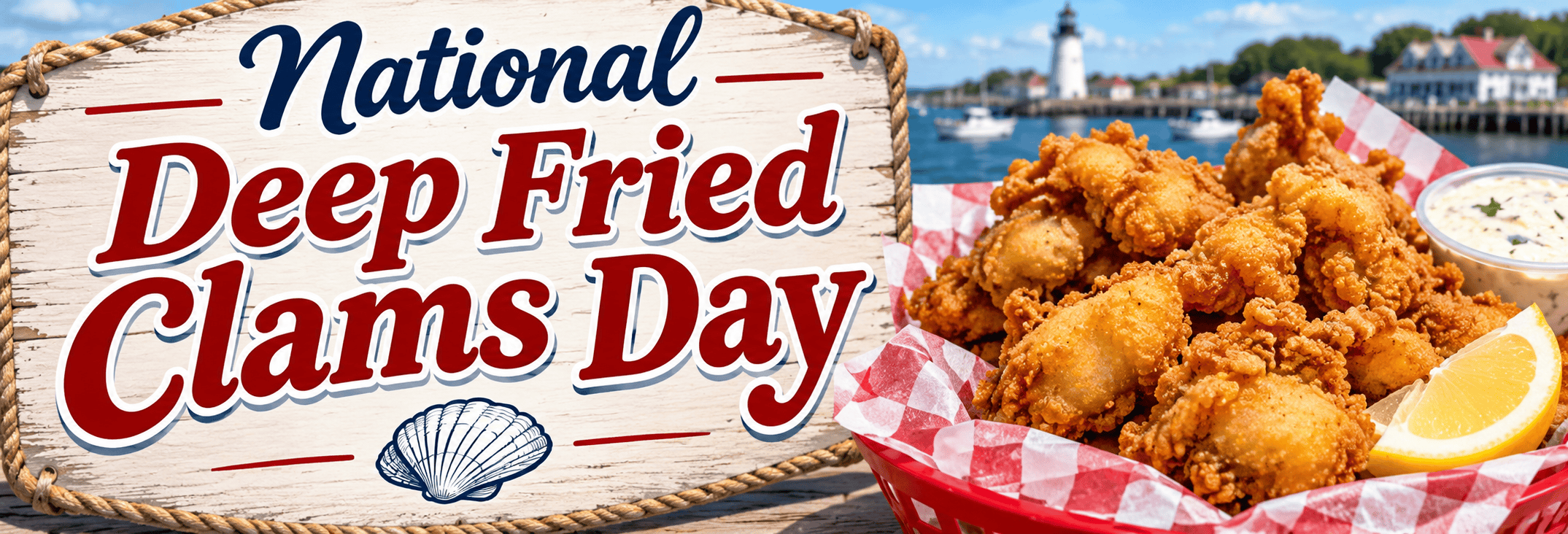
Every year on November 1, seafood lovers across the United States have a delicious reason to celebrate National Deep Fried Clams Day. This food holiday honors one of America’s most beloved coastal dishes, featuring tender clams coated in a seasoned batter or breading and fried until golden brown and crispy.
Deep-fried clams have long been a favorite at seafood restaurants, beachside stands, family gatherings, and summer festivals. Whether served in a basket with French fries, tucked into a sandwich, or enjoyed with tartar sauce and lemon, fried clams represent a comforting part of American seafood culture.
National Deep Fried Clams Day is more than an opportunity to enjoy a tasty meal. It is also a chance to explore the history of fried clams, their connection to New England, and the traditions that helped make this simple seafood dish a nationwide favorite.
When Is National Deep Fried Clams Day?
National Deep Fried Clams Day is celebrated annually on November 1.
Although it is an informal food holiday rather than an official federal observance, it provides seafood enthusiasts with an opportunity to appreciate a classic American dish.
The celebration is particularly meaningful in coastal communities where clamming and seafood preparation have been important parts of local history and culinary traditions.
For many people, fried clams bring back memories of family vacations, summer afternoons near the ocean, and meals shared at favorite seafood restaurants.
Even though November marks the beginning of colder weather in much of the country, National Deep Fried Clams Day offers a reminder of the flavors and experiences associated with America’s coastlines.
The History of Deep-Fried Clams in America
Clams have been part of North American food traditions for centuries.
Indigenous peoples living along the Atlantic coastline harvested clams and other shellfish long before European settlers arrived. Shellfish provided an important source of food, and coastal communities developed various methods of preparing and preserving them.
As European settlement expanded, clams became increasingly common in regional American cooking.
New England, in particular, developed a strong seafood culture built around clams, oysters, lobster, and fish.
Clam chowder, steamed clams, clam cakes, and other seafood dishes became regional favorites.
However, the deep-fried whole-belly clam dish familiar to many Americans today has a more specific history.
The Birth of Modern Fried Clams
One of the most widely recognized stories about the origins of modern fried clams centers on Lawrence “Chubby” Woodman of Essex, Massachusetts.
According to the traditional account, Woodman and his wife, Bessie, operated a small roadside food stand selling items such as potato chips and fresh clams.
On July 3, 1916, Woodman reportedly experimented with coating clams in a mixture similar to the one used for frying potatoes.
He placed the clams into hot oil, creating a crispy seafood dish that became an immediate attraction.
Although people had prepared fried shellfish before this time, Woodman’s version is widely credited with helping popularize New England-style fried whole-belly clams.
The Woodman family business grew into Woodman’s of Essex, a restaurant that became famous for its fried clams.
Today, the story remains an important part of Massachusetts culinary history.
Why New England Is Famous for Fried Clams
New England has become closely associated with fried clams because of its geography, seafood industry, and longstanding coastal food traditions.
States such as Massachusetts, Maine, New Hampshire, Rhode Island, and Connecticut have communities where fresh seafood is central to local cuisine.
Clams harvested from coastal waters have historically supplied restaurants, fish markets, and home kitchens throughout the region.
During the twentieth century, roadside seafood stands and clam shacks became popular destinations for travelers exploring New England’s coastline.
These establishments often served simple meals featuring freshly fried seafood, French fries, coleslaw, and traditional sauces.
Fried clams became especially popular during summer vacations when families visited beaches and coastal towns.
The combination of fresh seafood, casual dining, and oceanfront scenery helped establish fried clams as a recognizable symbol of New England cuisine.
Even today, visitors to the region often consider eating a basket of fried clams an essential part of the coastal experience.
What Makes Deep-Fried Clams So Delicious?
The appeal of deep-fried clams comes from the contrast between their crispy exterior and tender interior.
When properly prepared, the coating becomes golden brown while the clam remains moist and flavorful.
Clams naturally have a slightly sweet, salty flavor that reflects their marine environment.
The frying process adds richness and texture without completely covering the seafood’s distinctive taste.
Seasonings such as salt, black pepper, garlic powder, and paprika can enhance the flavor.
Some recipes use a light flour coating, while others rely on cornmeal or a combination of flour and cornmeal.
A few preparations use a wet batter to create a thicker, crunchier exterior.
Regardless of the coating, the goal is to create a balanced dish where the natural clam flavor remains the star.
Whole-Belly Clams vs. Clam Strips
One of the most interesting aspects of fried clam culture is the difference between whole-belly clams and clam strips.
Although both are popular, they offer noticeably different eating experiences.
Whole-Belly Fried Clams
Whole-belly fried clams are typically made using soft-shell clams, sometimes called steamers.
The edible clam meat includes the belly, which contributes a rich, sweet, and distinctly briny flavor.
Whole-belly clams tend to have a softer texture and a more pronounced seafood taste.
Many traditional New England seafood enthusiasts consider them the classic choice.
They are commonly served at clam shacks and restaurants specializing in regional seafood.
Fried Clam Strips
Clam strips are generally made from portions of larger clams, commonly Atlantic surf clams.
The meat is cut into strips before being breaded and fried.
Clam strips tend to have a firmer, chewier texture and a milder flavor than whole-belly clams.
They are widely available in seafood restaurants, casual dining establishments, and frozen seafood products.
For people who prefer a less intense clam flavor, strips can be an appealing introduction to fried seafood.
Both versions deserve recognition on National Deep Fried Clams Day.
How to Make Classic Deep-Fried Clams at Home
Celebrating National Deep Fried Clams Day does not require visiting a seafood restaurant.
With the right ingredients and preparation, you can make a delicious batch of fried clams in your own kitchen.
Ingredients
-
1 pound cleaned, shucked clams suitable for frying
-
1 cup all-purpose flour
-
½ cup yellow cornmeal
-
1 teaspoon salt
-
½ teaspoon black pepper
-
½ teaspoon paprika
-
½ teaspoon garlic powder
-
1 cup buttermilk
-
Vegetable or canola oil for frying
-
Lemon wedges for serving
-
Tartar sauce, optional
Instructions
Step 1: Prepare the clams.
Begin with fresh, properly cleaned, shucked clams purchased from a reputable seafood supplier. Drain them thoroughly and gently pat away excess moisture.
Step 2: Prepare the coating.
In a shallow bowl, combine the flour, cornmeal, salt, black pepper, paprika, and garlic powder. Mix until the seasonings are evenly distributed.
Step 3: Add the buttermilk.
Place the buttermilk in a separate bowl. Dip the clams into the buttermilk, allowing excess liquid to drip away.
Step 4: Coat the clams.
Transfer the clams into the seasoned flour mixture. Toss gently until each clam is evenly coated.
Step 5: Heat the oil.
Pour several inches of frying oil into a deep, heavy-bottomed pot or use a countertop deep fryer. Heat the oil to approximately 350°F.
Step 6: Fry in small batches.
Carefully lower the coated clams into the hot oil without overcrowding the pot. Fry for approximately 2–3 minutes, depending on their size, until golden brown and fully cooked. Shellfish should reach a safe internal temperature of 145°F.
Step 7: Drain and serve.
Remove the clams using a slotted spoon and transfer them to a wire rack or paper towel-lined plate.
Serve immediately with fresh lemon wedges, tartar sauce, and your favorite side dishes.
Tips for Making Perfect Fried Clams
The secret to delicious fried clams is proper preparation and careful temperature control.
Keep the frying oil near 350°F to achieve a crispy coating without making the seafood excessively greasy.
Avoid overcrowding the fryer because adding too many clams at once can lower the oil temperature.
Use fresh, properly handled seafood whenever possible.
Clams should also be cleaned thoroughly to remove sand and grit.
Finally, serve fried clams immediately after cooking. Their crispy texture is best enjoyed while they are still hot.
The Best Side Dishes to Serve With Fried Clams
Fried clams are delicious on their own, but traditional side dishes can transform them into a satisfying seafood meal.
French fries are among the most popular accompaniments. Their crispy texture and mild flavor complement the richness of the clams.
Coleslaw adds a refreshing crunch and a slightly tangy contrast.
Hush puppies, particularly popular in Southern seafood cooking, provide a savory cornmeal-based addition.
Other excellent choices include onion rings, potato salad, corn on the cob, and a simple garden salad.
For a classic New England-style seafood basket, serve fried clams with French fries, coleslaw, lemon wedges, and tartar sauce.
Popular Sauces for Deep-Fried Clams
A good dipping sauce can enhance the flavor of fried clams without overpowering the seafood.
Tartar sauce is one of the most traditional choices. Its creamy texture and tangy flavor pair especially well with crispy fried seafood.
Cocktail sauce offers a sharper taste, combining tomato-based sweetness with horseradish heat.
Remoulade sauce provides a more seasoned option, often featuring mustard, herbs, and spices.
Some people prefer hot sauce for an extra kick.
Others enjoy their fried clams with nothing more than a squeeze of fresh lemon juice.
The best sauce ultimately depends on personal preference.
Interesting Facts About Deep-Fried Clams
Deep-fried clams have a surprisingly rich history, with several facts that make this food holiday worth exploring.
1. Modern New England Fried Clams Date Back to 1916
Lawrence “Chubby” Woodman is widely credited with popularizing the modern whole-belly fried clam in Essex, Massachusetts, on July 3, 1916.
2. Fried Clams Are a New England Tradition
Although enjoyed throughout the country, fried clams remain particularly associated with Massachusetts and other New England coastal states.
3. Whole-Belly Clams Have a Distinctive Flavor
Unlike clam strips, whole-belly clams include the soft belly portion, which contributes much of their characteristic rich and briny taste.
4. Clam Shacks Helped Popularize the Dish
Casual seafood stands along coastal highways made fried clams accessible to generations of travelers and vacationing families.
5. Fried Clams Can Be Served in Sandwiches
In addition to traditional seafood baskets, fried clams can be served in toasted rolls or sandwich buns with lettuce and tartar sauce.
6. Clams Are a Source of Important Nutrients
Clams naturally contain protein, vitamin B12, iron, and other minerals. Deep-frying adds calories and fat, so preparation methods and portion sizes influence the overall nutritional profile.
7. Clam Strips Became a Popular Alternative
Breaded clam strips helped make fried clams available to a wider audience, particularly through frozen seafood products and chain restaurants.
8. Fresh Lemon Is a Classic Addition
Lemon juice adds acidity that balances the richness of fried seafood and complements the natural flavor of clams.
9. Fried Clams Are Often Associated With Summer
Although National Deep Fried Clams Day falls in November, the dish remains strongly connected to warm-weather beach trips and coastal vacations.
10. Fried Clams Remain an American Comfort Food
For many families, a basket of fried clams represents more than a meal. It recalls favorite restaurants, family traditions, and memorable days near the ocean.
How to Celebrate National Deep Fried Clams Day
There are several enjoyable ways to recognize National Deep Fried Clams Day on November 1.
Visit a seafood restaurant. Support a local seafood establishment by ordering a basket of fried clams.
Prepare homemade fried clams. Try making the dish from scratch using fresh seafood and your favorite seasoned coating.
Compare different styles. Sample whole-belly fried clams and clam strips to discover which you prefer.
Create a seafood dinner. Serve fried clams alongside French fries, coleslaw, and other traditional seafood favorites.
Explore New England food history. Learn about the coastal communities and restaurants that helped make fried clams famous.
Share a family memory. Talk about a favorite beach vacation, seafood restaurant, or memorable meal involving fried clams.
Introduce someone to the dish. Invite a friend or family member who has never tried fried clams to enjoy them with you.
These simple activities can turn an informal food holiday into a memorable occasion.
The Cultural Importance of Fried Clams in America
Food often tells the story of a region, and fried clams are an excellent example.
In New England, seafood traditions reflect generations of people whose livelihoods depended on the Atlantic Ocean.
Fishing, clamming, and seafood preparation shaped local economies and family businesses.
Restaurants serving fried clams became gathering places where residents and visitors could enjoy meals together.
For some families, visiting a particular clam shack became an annual tradition passed from one generation to the next.
These experiences helped transform a simple fried seafood dish into an important part of regional identity.
The popularity of fried clams also demonstrates how local foods can become recognized across the country.
What began as a coastal specialty eventually appeared on restaurant menus and in grocery store freezers throughout the United States.
Despite these changes, traditional New England fried clams continue to hold a special place in American culinary history.
Are Deep-Fried Clams Healthy?
Clams themselves are naturally rich in several essential nutrients.
They provide protein, vitamin B12, iron, selenium, and other minerals that support normal bodily functions.
However, deep-frying changes the nutritional profile of the dish.
The flour or cornmeal coating adds carbohydrates, while the frying process increases the amount of fat and calories.
Sodium content can also rise depending on the seasonings and sauces used.
For people who enjoy fried clams, moderation and balanced meal choices can help make them part of a varied diet.
Serving fried clams with vegetables or a fresh salad instead of multiple fried side dishes is one option.
Baking or air-frying breaded clams may also reduce the amount of added oil, although the texture will differ from traditional deep-fried versions.
People with shellfish allergies should avoid clams, and anyone preparing them at home should follow proper seafood handling and cooking guidelines.
Why National Deep Fried Clams Day Matters
National Deep Fried Clams Day may not be among America’s most widely recognized celebrations, but it highlights an important part of the country’s culinary heritage.
It recognizes the creativity of cooks who transformed simple ingredients into beloved regional dishes.
It also celebrates coastal communities, seafood businesses, and family traditions that have helped preserve the popularity of fried clams.
For some people, the holiday is an excuse to enjoy a favorite seafood dinner.
For others, it provides an opportunity to remember childhood vacations, explore regional food history, or discover a dish they have never tasted.
Food holidays have a way of connecting people through shared experiences, and National Deep Fried Clams Day is no exception.
Final Thoughts
National Deep Fried Clams Day, celebrated every November 1, honors a crispy, flavorful seafood favorite with deep roots in American coastal cooking.
From the famous fried clam traditions of Essex, Massachusetts, to seafood restaurants across the country, deep-fried clams have earned their place among America’s classic comfort foods.
Whether you prefer traditional whole-belly clams, crispy clam strips, or homemade fried clams served with lemon and tartar sauce, this holiday offers a delicious reason to appreciate the history and flavor of the dish.
More importantly, it reminds us that some of our favorite foods carry stories of family, community, tradition, and generations of shared meals.
So this November 1, consider celebrating with a basket of golden, crispy fried clams and enjoying a taste of American seafood history.
How do you prefer your fried clams—traditional whole-belly clams or crispy clam strips?


Leave a Reply