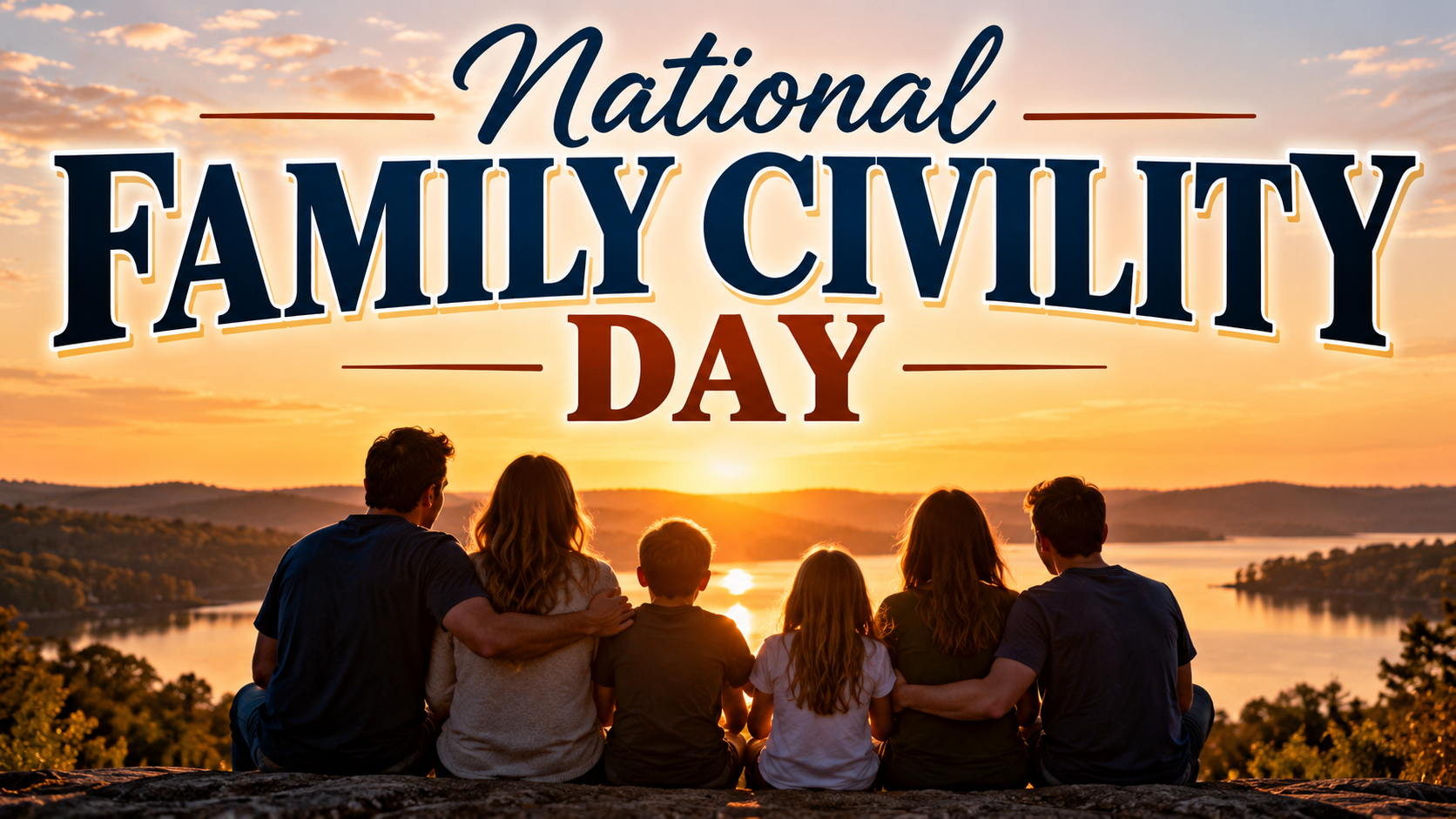
Every family has its own story. Some families are filled with laughter, love, and unforgettable memories, while others experience disagreements, misunderstandings, and difficult moments. Regardless of our differences, one thing remains important: the way we treat one another.
National Family Civility Day, observed annually on November 15, is an opportunity to recognize the importance of respect, kindness, understanding, and positive communication within families. It encourages us to reflect on how our words, actions, and attitudes affect the people closest to us.
Families are not perfect. Disagreements happen, emotions sometimes get the best of us, and relationships can become strained. However, practicing civility helps create an environment where family members feel valued, respected, and heard.
National Family Civility Day reminds us that kindness should not be reserved for strangers, coworkers, or friends. It should begin with the people we call family.
What Is National Family Civility Day?
National Family Civility Day is a day dedicated to promoting respectful behavior, healthy communication, and stronger relationships among family members.
The observance encourages families to practice patience, empathy, compassion, and understanding, even when disagreements arise.
Civility means treating others with dignity and respect. It does not require everyone to agree or share the same opinions. Instead, it emphasizes communicating respectfully, listening thoughtfully, and recognizing the feelings of others.
Within families, civility can be demonstrated through everyday actions such as speaking kindly, respecting boundaries, acknowledging mistakes, and showing appreciation.
The purpose of National Family Civility Day is to encourage families to create relationships built on mutual respect rather than criticism, hostility, or unnecessary conflict.
The Meaning Behind National Family Civility Day
The central message of National Family Civility Day is simple: Every family member deserves to be treated with kindness and respect.
Families often consist of individuals with different personalities, beliefs, experiences, and expectations. These differences can sometimes lead to misunderstandings.
However, differences do not have to destroy relationships.
Practicing civility means learning how to disagree without intentionally hurting someone, expressing frustration without cruelty, and recognizing that every person has feelings that matter.
It also means understanding that respect should never depend entirely on whether someone agrees with us.
A strong family is not necessarily one that never argues. It is one where members make an effort to communicate honestly, respect one another, and work through disagreements constructively.
National Family Civility Day encourages families to strengthen those habits.
Why Civility Matters Within Families
The way family members treat one another can influence emotional well-being, confidence, trust, and the overall atmosphere of a household.
When respect and kindness are consistently practiced, family members may feel more comfortable expressing their thoughts, asking for help, and discussing difficult situations.
Civility also helps establish healthier expectations for relationships outside the home.
Children who regularly observe respectful communication can learn valuable lessons about patience, empathy, cooperation, and resolving disagreements.
Adults benefit as well.
A family environment built on mutual respect can make difficult conversations easier and encourage stronger emotional connections.
Civility does not eliminate every problem, but it provides a healthier foundation for addressing challenges.
The Importance of Respecting Family Differences
No two family members are exactly alike.
Parents and children may have different expectations. Siblings may develop different interests, personalities, and lifestyles. Extended family members may hold different beliefs or opinions.
These differences are a natural part of family life.
Problems often arise when individuals begin treating disagreement as disrespect.
Someone having a different opinion does not automatically mean they are rejecting or attacking another person.
Practicing family civility involves recognizing that people can love one another while viewing situations differently.
Respectful families make room for individuality.
They understand that every person deserves the opportunity to develop their own identity, make decisions, and express feelings.
Accepting differences does not mean abandoning personal values. It means recognizing the dignity of others while maintaining your own beliefs and boundaries.
How Communication Strengthens Family Relationships
Communication is one of the most important elements of a healthy family relationship.
Unfortunately, people sometimes speak more harshly to family members than they would to strangers.
Stress, frustration, familiarity, and unresolved disagreements can contribute to hurtful conversations.
National Family Civility Day encourages us to become more aware of how we communicate.
Healthy family communication involves listening without immediately interrupting, expressing feelings without unnecessary accusations, and choosing words carefully during emotional situations.
It also involves recognizing when a conversation needs to be postponed until everyone is calmer.
Sometimes, the most respectful response is not an immediate argument but a willingness to listen.
Simple statements such as “I understand why you feel that way” or “Can we talk about this calmly?” can help reduce tension.
Communication should create opportunities for understanding rather than become a competition over who is right.
10 Ways to Practice Civility With Your Family
National Family Civility Day provides an opportunity to develop habits that strengthen relationships throughout the year.
1. Listen Without Interrupting
Allow family members to express their thoughts before responding. Listening demonstrates that their opinions and feelings matter.
2. Choose Kind Words
Words can encourage, comfort, and strengthen relationships. They can also cause lasting emotional pain. Speak thoughtfully, particularly during disagreements.
3. Show Appreciation
Thank family members for their efforts, kindness, and contributions. Small expressions of gratitude can help people feel recognized.
4. Respect Personal Boundaries
Every family member deserves privacy, independence, and emotional space. Respecting boundaries demonstrates consideration for individual needs.
5. Apologize When Necessary
Everyone makes mistakes. A sincere apology acknowledges hurtful behavior and demonstrates a willingness to take responsibility.
6. Avoid Unnecessary Criticism
Constructive feedback can be helpful, but constant criticism may damage confidence and relationships. Focus on encouragement whenever possible.
7. Spend Meaningful Time Together
Shared meals, conversations, activities, and family traditions provide opportunities to strengthen connections.
8. Practice Patience
Family members experience stress, disappointment, and difficult emotions. Patience can help prevent temporary frustrations from becoming larger conflicts.
9. Celebrate Individual Accomplishments
Recognize birthdays, milestones, personal achievements, and everyday successes. Supporting one another helps create a sense of belonging.
10. Lead Through Your Actions
Respect is demonstrated through behavior. Treating others kindly sets an example that can influence the entire family.
Teaching Children the Importance of Civility
Children learn many of their earliest lessons about relationships through family interactions.
They observe how adults communicate, respond to frustration, and treat people with different opinions.
When adults consistently demonstrate respect, children have opportunities to develop similar habits.
Teaching civility involves more than telling children to be polite.
It includes explaining why kindness matters, helping them recognize emotions, and encouraging them to consider how their behavior affects others.
Children should also understand that respectful communication does not mean remaining silent when something is wrong.
They can learn to express disagreement, establish boundaries, and speak up for themselves without intentionally mistreating others.
When children feel heard and respected, they may become more willing to communicate openly with trusted adults.
Handling Family Disagreements With Respect
Disagreements are unavoidable in most families.
Money, parenting decisions, household responsibilities, personal choices, and past experiences can all create tension.
The goal of civility is not to eliminate disagreements but to prevent them from becoming unnecessarily harmful.
When conflict arises, family members can benefit from focusing on the specific issue rather than attacking someone’s character.
For example, expressing frustration about an unfinished responsibility is different from labeling someone lazy or worthless.
Respectful disagreement also requires recognizing when emotions are becoming overwhelming.
Taking time to calm down before continuing a difficult discussion can help prevent hurtful statements.
Most importantly, families should remember that resolving disagreements does not always require complete agreement.
Sometimes, respecting another person’s decision is the healthiest possible outcome.
When Family Relationships Are Difficult
National Family Civility Day can also bring attention to the reality that not every family relationship is healthy.
Some individuals experience ongoing conflict, estrangement, manipulation, or harmful behavior within their families.
For these individuals, messages about family togetherness may feel complicated.
It is important to recognize that civility does not mean tolerating mistreatment.
Respecting family members does not require accepting abuse, ignoring personal boundaries, or maintaining relationships that threaten emotional or physical safety.
Sometimes, protecting your well-being means creating distance from harmful situations.
Healthy civility includes respecting yourself.
Family relationships can be meaningful, but they should not require someone to sacrifice their dignity or safety.
Remembering Family Members Who Are No Longer With Us
For those who have lost a parent, child, sibling, spouse, or another loved one, National Family Civility Day may bring a mixture of gratitude, sadness, and remembrance.
Family relationships continue to influence us even after someone dies.
We remember conversations, shared experiences, traditions, and the lessons our loved ones taught us.
Sometimes, we also remember disagreements or words we wish we could take back.
Grief can remind us how valuable time with the people we love truly is.
One meaningful way to observe National Family Civility Day is to honor deceased loved ones by practicing the kindness, compassion, and understanding we associate with them.
Their influence can continue through the way we treat others.
For grieving families, the day can also be an opportunity to share memories, acknowledge loss, and support one another without expecting everyone to grieve in the same way.
Families Come in Many Different Forms
Family is not defined by one particular household structure.
Some families include two parents and children. Others consist of single parents, grandparents raising grandchildren, blended families, adoptive families, or relatives living together.
For some people, close friends and supportive community members become chosen family.
What matters most is not whether a family looks a certain way but whether its relationships provide respect, care, and a sense of belonging.
National Family Civility Day encourages kindness across these different family experiences.
Every person deserves meaningful relationships where their humanity is recognized and respected.
How to Celebrate National Family Civility Day
Celebrating National Family Civility Day does not require expensive gifts or elaborate activities.
Often, the most meaningful gestures are simple.
Families can observe the day by sharing a meal, having an uninterrupted conversation, expressing gratitude, or spending time doing something enjoyable together.
Another idea is to establish a family kindness challenge.
Each person can make an effort to perform one thoughtful action for another family member.
Parents might write encouraging notes to their children. Siblings might offer assistance without being asked. Adult children might contact parents or grandparents to express appreciation.
Families can also use the occasion to discuss ways to improve communication and address recurring disagreements.
For those who live far away from relatives, a phone call, thoughtful message, or handwritten letter can provide an opportunity to reconnect.
The most important part of the celebration is making a conscious effort to demonstrate kindness.
Why Family Civility Should Matter Every Day
Although National Family Civility Day is observed on November 15, its message deserves attention throughout the year.
Healthy relationships are developed through repeated actions rather than a single celebration.
One kind conversation cannot resolve every disagreement, just as one apology cannot automatically repair years of hurt.
However, consistent efforts to communicate respectfully can help strengthen relationships over time.
Small actions matter.
Listening when someone needs support, acknowledging another person’s feelings, and showing appreciation can gradually create a more positive family environment.
The goal is progress, not perfection.
Every family will experience difficult moments, but each day provides another opportunity to choose patience, compassion, and respect.
Final Thoughts: Kindness Begins With the People Closest to Us
National Family Civility Day reminds us that the strongest family relationships are not built on perfection. They are built on love, respect, understanding, patience, and the willingness to treat one another with dignity.
We cannot always control disagreements, misunderstandings, or the challenges life brings into our homes.
However, we can make conscious decisions about how we respond.
We can choose to listen rather than dismiss, encourage rather than criticize, and communicate rather than allow unnecessary resentment to grow.
We can also recognize when boundaries are necessary and understand that healthy relationships require mutual respect.
Life moves quickly, and the time we have with the people we love is never guaranteed.
Sometimes, the words we speak today become the memories someone carries tomorrow.
That is why kindness matters.
Not just on November 15, but every day.
National Family Civility Day is an invitation to build stronger relationships, appreciate the people who matter, and remember that respect and compassion can make a meaningful difference in family life.
This November 15, consider one simple question:
What is one thing you could do today to make someone in your family feel more loved, valued, and respected?


Leave a Reply