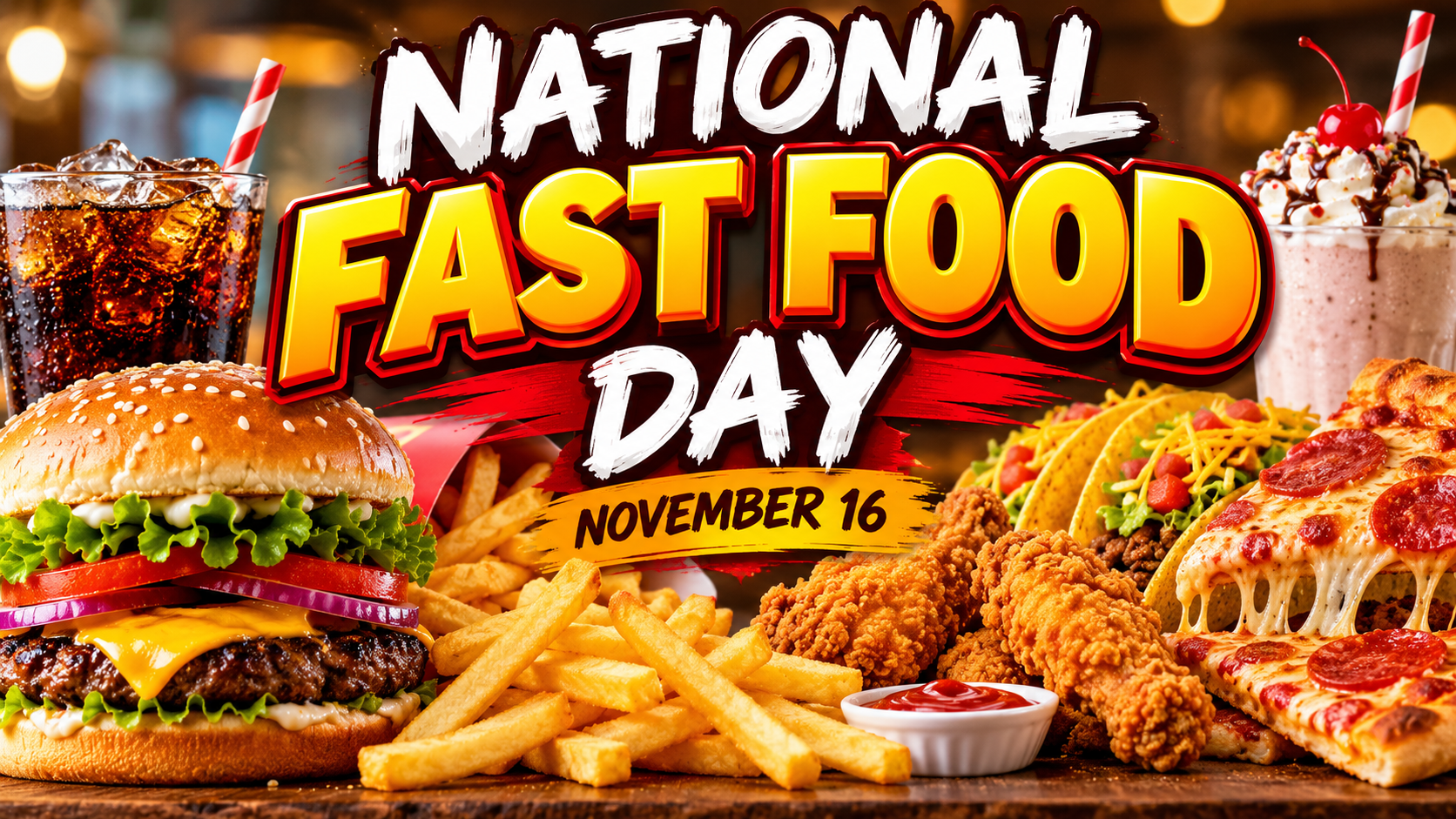
Every year on November 16, food lovers across the United States celebrate National Fast Food Day, a day dedicated to the convenient, affordable, and delicious meals that have become an important part of American culture. From juicy hamburgers and crispy french fries to tacos, fried chicken, pizza, and milkshakes, fast food has influenced the way Americans eat, travel, work, and socialize.
Whether you enjoy grabbing a cheeseburger during your lunch break, ordering pizza for family movie night, or stopping for breakfast on your way to work, fast food has become a familiar part of everyday life.
National Fast Food Day is an opportunity to appreciate the history of fast food, recognize the restaurants that helped shape the industry, explore some interesting facts, and enjoy your favorite quick-service meal.
When Is National Fast Food Day?
National Fast Food Day is celebrated annually on November 16.
This unofficial food holiday recognizes the popularity and cultural influence of fast-food restaurants throughout the United States.
Although it is not a federal holiday, many food enthusiasts celebrate by visiting their favorite restaurants, trying something new, or recreating popular fast-food dishes at home.
The occasion also provides an opportunity to reflect on how fast food has evolved from simple roadside restaurants into a massive global industry.
The History of Fast Food in America
Fast food may seem like a modern invention, but the idea of preparing and serving food quickly has existed for centuries.
Ancient civilizations had street vendors who sold ready-to-eat meals to busy workers and travelers. However, the modern American fast-food industry developed during the late 19th and early 20th centuries.
The Early Days of American Fast Food
As American cities expanded and industrialization changed daily life, workers increasingly needed meals that were inexpensive, convenient, and quick to purchase.
Lunch counters, diners, food stands, and street vendors became popular options.
One of the most significant developments occurred in 1921 when White Castle opened its first restaurant in Wichita, Kansas.
White Castle helped establish a standardized approach to hamburger preparation, emphasizing consistency, cleanliness, and affordability.
Its small square hamburgers became an important part of American fast-food history.
The Rise of Drive-In Restaurants
During the 1920s and 1930s, automobiles became more accessible, transforming how Americans traveled and ate.
Drive-in restaurants allowed customers to enjoy meals without leaving their vehicles.
Carhops delivered food directly to parked cars, creating a dining experience that became especially popular among young Americans.
These restaurants helped establish the connection between automobiles and convenient dining.
The McDonald’s Revolution
In 1940, brothers Richard and Maurice McDonald opened a restaurant in San Bernardino, California.
In 1948, they introduced their Speedee Service System, which simplified food preparation and emphasized efficiency.
Their approach focused on a limited menu, streamlined kitchen operations, and fast customer service.
Ray Kroc later became involved with the business and helped expand McDonald’s into one of the world’s most recognizable restaurant chains.
The success of McDonald’s influenced countless competitors and helped establish the modern fast-food business model.
How Fast Food Became an American Tradition
Following World War II, American suburbs expanded, automobile ownership increased, and families began spending more time traveling.
Fast-food restaurants offered a convenient solution for busy households.
Instead of preparing every meal at home, families could purchase affordable food while shopping, traveling, or attending activities.
By the 1950s and 1960s, recognizable fast-food chains were expanding across the country.
Restaurants such as Burger King, Kentucky Fried Chicken, Taco Bell, and Wendy’s eventually became familiar names in American dining.
Fast food also became associated with road trips, sporting events, school activities, and family outings.
For many Americans, visiting a favorite fast-food restaurant brings back memories of childhood celebrations, late-night meals with friends, or family traditions.
America’s Most Popular Fast Foods
From classic burgers to convenient breakfast favorites, these foods helped define the fast-food experience.
1. Hamburgers and Cheeseburgers
Hamburgers are among the most recognizable American fast foods.
A classic hamburger features a seasoned beef patty served inside a bun, often accompanied by lettuce, tomatoes, onions, pickles, and condiments.
Cheeseburgers add a melted slice of cheese, creating one of the most beloved combinations in American dining.
2. French Fries
Few side dishes are as closely associated with fast food as french fries.
These crispy potato strips are commonly served with burgers, chicken sandwiches, and other quick meals.
Whether thin and crispy, thick-cut, curly, or seasoned, french fries remain a favorite comfort food.
3. Fried Chicken
Fried chicken has become another major part of the fast-food industry.
From crispy chicken sandwiches to nuggets, tenders, and traditional bone-in chicken, restaurants offer countless variations.
Different seasonings, sauces, and cooking methods give each restaurant its own distinctive flavor.
4. Pizza
Pizza is one of America’s favorite choices for convenient family meals.
Fast-food and quick-service pizza restaurants offer everything from traditional pepperoni pizza to specialty combinations with vegetables, meats, and different cheeses.
Delivery and takeout have helped make pizza a popular choice for parties, celebrations, and casual dinners.
5. Tacos and Burritos
Mexican-inspired fast food has become enormously popular throughout the United States.
Tacos, burritos, quesadillas, and nachos offer convenient meals with a variety of ingredients and flavors.
Customers can often customize their orders with different proteins, vegetables, cheeses, and sauces.
6. Hot Dogs
Hot dogs have a long history in American food culture.
They are especially popular at baseball games, fairs, festivals, and roadside food stands.
Common toppings include mustard, ketchup, onions, relish, chili, and cheese.
7. Milkshakes
Milkshakes remain a classic fast-food treat.
Traditional flavors include chocolate, vanilla, and strawberry, while modern restaurants offer creative combinations featuring cookies, candy, and other desserts.
8. Breakfast Sandwiches
Fast-food breakfast has become an important part of the morning routine for millions of Americans.
Popular choices include egg-and-cheese sandwiches, sausage biscuits, breakfast burritos, hash browns, and coffee.
These meals offer a convenient option for commuters and busy families.
10 Interesting Facts About Fast Food
Fast food has a fascinating history filled with innovation, changing consumer preferences, and cultural influence.
1. White Castle opened in 1921. It became one of America’s earliest influential hamburger chains.
2. McDonald’s introduced its Speedee Service System in 1948. This helped establish a model for efficient restaurant operations.
3. The drive-thru transformed convenience. Drive-thru service allowed customers to order meals without leaving their vehicles.
4. Fast-food menus vary internationally. Major restaurant chains frequently adapt their offerings to regional tastes and traditions.
5. French fries are not necessarily French. Their precise historical origins are debated, with Belgium and France both associated with their development.
6. Fast food helped popularize standardized menus. Customers could expect similar products across multiple restaurant locations.
7. Children’s meals became a major marketing innovation. Special packaging, smaller portions, and toys helped make fast food appealing to families.
8. Pizza delivery changed restaurant convenience. Ordering meals directly to homes became an important part of the quick-service industry.
9. Digital ordering continues to transform fast food. Mobile apps, self-service kiosks, and online ordering have changed how customers purchase meals.
10. Fast food exists around the world. While menus differ, quick-service dining is popular in numerous countries and cultures.
The Cultural Impact of Fast Food
Fast food represents more than simply eating a quick meal.
It has influenced American entertainment, advertising, architecture, transportation, and employment.
For generations, fast-food restaurants have served as gathering places where friends meet, families celebrate, and travelers stop during long journeys.
Many Americans remember their first job working at a fast-food restaurant.
These jobs can provide opportunities to develop customer service, teamwork, communication, and time-management skills.
Fast-food restaurants have also become recognizable symbols of American culture around the world.
Their signs, packaging, slogans, and menu items are familiar to millions of people.
At the same time, the industry has faced ongoing conversations about wages, working conditions, nutrition, packaging waste, and environmental responsibility.
These discussions have encouraged some restaurants to introduce new menu options, improve operations, and reconsider their environmental practices.
How to Celebrate National Fast Food Day
There are plenty of enjoyable ways to celebrate November 16 without making the occasion complicated or expensive.
Visit Your Favorite Fast-Food Restaurant
Treat yourself to a meal from a restaurant you already enjoy.
Whether that means a classic cheeseburger, crispy chicken sandwich, tacos, or pizza, choose something that makes the day enjoyable.
Try a Restaurant You’ve Never Visited
National Fast Food Day is an excellent excuse to explore something different.
Consider trying a locally owned burger stand, sandwich shop, or quick-service restaurant.
You might discover a new favorite.
Recreate Fast Food at Home
Making homemade versions of popular fast foods can be a fun family activity.
Try preparing smash burgers, oven-baked fries, chicken sandwiches, or personal pizzas.
Cooking at home also allows you to adjust ingredients, seasonings, and portion sizes.
Support a Local Restaurant
Although national chains dominate much of the industry, independent restaurants also provide convenient meals.
Supporting a locally owned restaurant helps contribute to the surrounding community.
Share a Fast-Food Memory
Think about a restaurant you enjoyed growing up.
Perhaps it was the place your family visited after a sporting event or where you spent time with friends during high school.
Sharing those memories can make the celebration more meaningful.
Can Fast Food Be Part of a Balanced Diet?
Fast food is often criticized for containing high amounts of sodium, saturated fat, or calories.
However, nutritional content varies considerably depending on the restaurant, meal, ingredients, and portion size.
Enjoying fast food occasionally can fit into an overall balanced eating pattern.
Some practical approaches include choosing smaller portions, adding vegetables when available, drinking water instead of sugary beverages, and paying attention to hunger and fullness.
Grilled proteins, salads, fruit, and other options may also be available depending on the restaurant.
The important thing is understanding that no single meal determines someone’s overall health.
National Fast Food Day can be enjoyed while still making thoughtful food choices.
The Future of Fast Food
The fast-food industry continues to evolve as technology and consumer preferences change.
Mobile ordering allows customers to purchase meals before arriving at restaurants.
Delivery services have expanded access to quick-service dining, while automated kitchen equipment and digital systems are being introduced in some locations.
Restaurants are also experimenting with plant-based alternatives, new flavors, customizable meals, and packaging designed to reduce waste.
Convenience remains one of the industry’s greatest strengths, but customers increasingly expect speed, quality, affordability, and variety.
The restaurants that successfully balance these expectations will likely continue shaping the future of fast food.
Why National Fast Food Day Matters
National Fast Food Day is more than an excuse to enjoy burgers, fries, or pizza.
It recognizes an industry that has influenced American life for generations.
Fast food has helped shape family traditions, created employment opportunities, transformed restaurant operations, and introduced convenient dining to communities around the world.
It also reminds us that food often carries memories.
A simple hamburger might remind someone of childhood road trips. A pizza might bring back memories of family movie nights. A milkshake might remind someone of spending time with friends after school.
Sometimes the meals we remember most are not expensive or elaborate.
They are the ones connected to meaningful moments.
Final Thoughts: Celebrating National Fast Food Day on November 16
National Fast Food Day celebrates the convenience, history, and familiar flavors of one of America’s most influential dining traditions.
From the earliest hamburger stands to modern restaurants offering digital ordering and worldwide menus, fast food has undergone remarkable changes.
Whether you prefer a juicy burger, crispy fries, a slice of pizza, or a delicious chicken sandwich, November 16 offers an opportunity to appreciate your favorite quick meal.
You don’t need an expensive dinner or elaborate celebration to enjoy the occasion.
Sometimes a familiar meal shared with someone you care about is enough to create a lasting memory.
Happy National Fast Food Day!
What’s your all-time favorite fast-food restaurant, and what is the one menu item you always order when you visit?
Leave a Reply