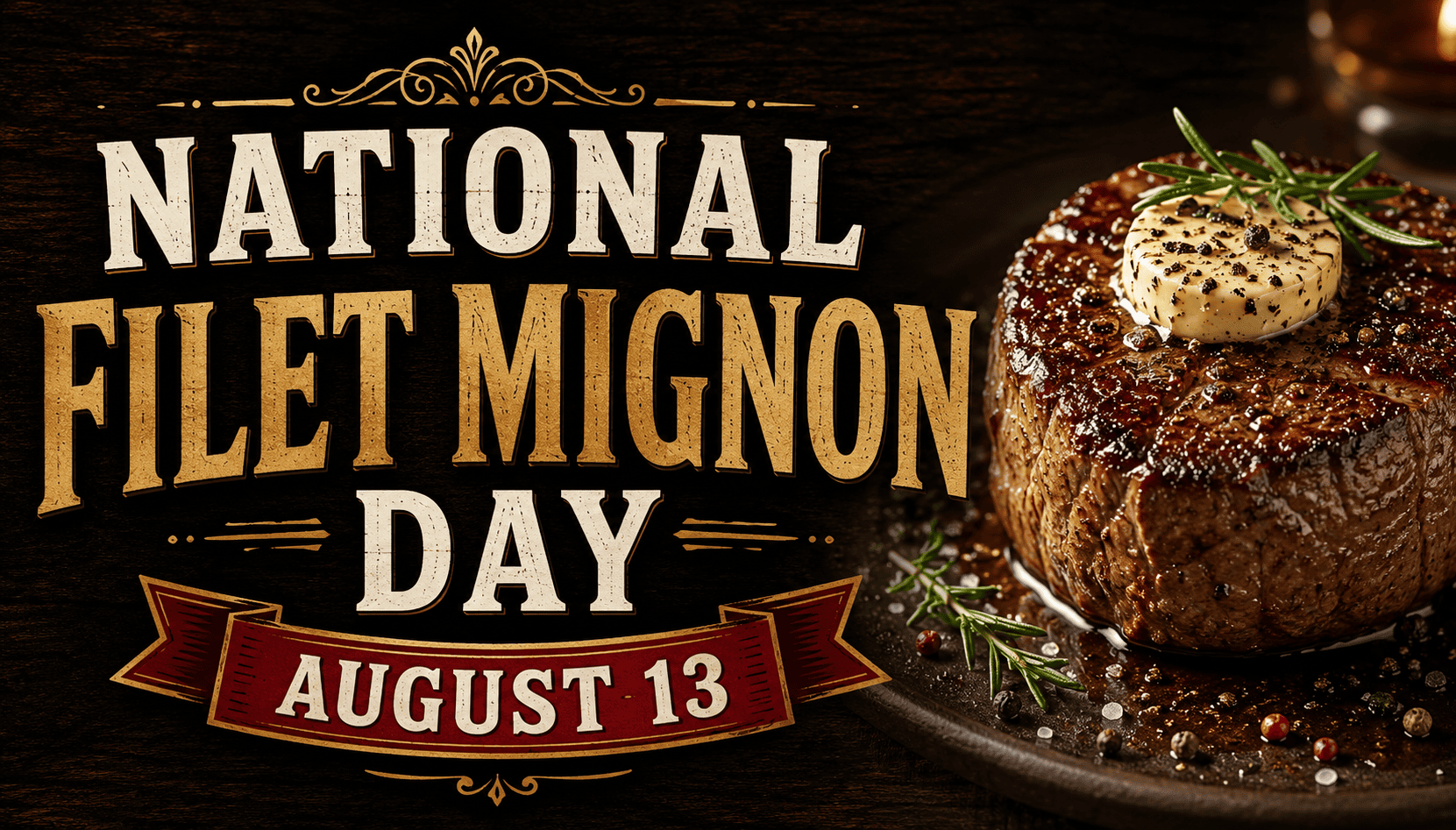
Every year on August 13, steak lovers have an especially delicious reason to heat up the grill, pull out the cast-iron skillet, visit a favorite steakhouse, or plan an unforgettable dinner at home. National Filet Mignon Day celebrates one of the most famous, tender, and luxurious cuts of beef in the world.
https://brettmurphyx.com/holidays–national-days/national-steakhouse-month-celebrating-americas-love-affair-with-steak/
Filet mignon has earned a reputation as a special-occasion steak. You’ll often find it served at upscale restaurants, anniversary dinners, romantic date nights, holiday celebrations, birthday meals, and elegant gatherings. Its smaller size may make it look modest compared with a massive ribeye or porterhouse, but what filet mignon lacks in size, it makes up for with remarkable tenderness.
For many steak enthusiasts, few things compare with slicing into a perfectly cooked filet and discovering a tender, juicy center beneath a beautifully browned crust.
National Filet Mignon Day isn’t simply an excuse to eat steak. It’s also an opportunity to appreciate the craftsmanship involved in selecting, seasoning, and cooking a quality cut of beef.
So grab your steak knife and bring your appetite. Let’s celebrate National Filet Mignon Day.
What Is Filet Mignon?
Filet mignon comes from the beef tenderloin, a long, narrow muscle that runs along the animal’s spine.
The tenderloin performs relatively little strenuous work compared with muscles in areas such as the shoulder or legs. Because of this, it develops less tough connective tissue.
The result is exceptionally tender meat.
Individual steaks cut from portions of the tenderloin are commonly sold as filet mignon or tenderloin steaks.
Filet mignon is usually cut relatively thick, creating the familiar round or slightly oval steak commonly seen at steakhouses.
Unlike ribeye, which is prized for its abundant marbling and rich beef flavor, filet mignon is typically much leaner. Its flavor tends to be milder and more delicate.
But tenderness is where filet mignon shines.
A properly prepared filet can practically melt in your mouth.
Where Does the Name “Filet Mignon” Come From?
The name filet mignon comes from French terminology.
“Filet” can refer to a boneless piece or strip of meat, while “mignon” carries meanings associated with something small, delicate, or dainty.
The name is fitting.
Filet mignon is generally smaller than many traditional steakhouse cuts and is prized for its delicate texture.
Over time, the French name became deeply associated with fine dining in the United States. Today, even people who rarely eat steak often recognize filet mignon as one of the premium choices on a steakhouse menu.
Why Is Filet Mignon So Tender?
Tenderness is the defining characteristic of filet mignon.
Muscles become stronger and often tougher when they’re used frequently. Since the tenderloin doesn’t perform the heavy workload associated with many other muscles, it remains exceptionally soft.
This naturally tender texture means filet mignon doesn’t usually require lengthy marinades or slow cooking methods designed to break down tough fibers.
Instead, it responds beautifully to quick, high-heat cooking.
Searing, grilling, and broiling can all produce excellent results.
The goal is usually to develop a flavorful browned exterior while maintaining a juicy, tender interior.
Why Is Filet Mignon Considered a Premium Steak?
Several factors contribute to filet mignon’s premium reputation.
One of the biggest is availability.
Each animal provides only a relatively small amount of tenderloin compared with the quantity of meat available from larger sections.
Limited supply combined with strong demand makes tenderloin one of the more valuable cuts.
Its famous tenderness also increases its appeal.
When people want to celebrate something important, they’re often willing to spend a little extra on a memorable meal.
That has helped filet mignon become associated with anniversaries, Valentine’s Day, birthdays, promotions, engagements, graduations, holiday dinners, and other milestone occasions.
A Brief History of Filet Mignon
People have eaten beef for thousands of years, but the specific cuts and terminology familiar to today’s diners developed gradually alongside changes in butchery and culinary traditions.
French cooking had an enormous influence on Western fine dining, particularly when it came to sauces, meat preparation, restaurant service, and culinary terminology.
As French-inspired cuisine became influential in hotels and upscale American restaurants, French names and techniques became increasingly familiar to diners.
Filet mignon eventually became firmly established as a luxury steak in American dining culture.
During the growth of classic American steakhouses, premium steaks became symbols of celebration, success, hospitality, and indulgence.
Filet mignon fit perfectly into that world.
Today, it remains a steakhouse favorite while also being readily available for home cooks who want to recreate the experience in their own kitchens.
What Does Filet Mignon Taste Like?
Filet mignon offers a different experience from heavily marbled steaks.
Its flavor is generally mild, clean, and delicate.
A ribeye, for example, contains more internal fat and therefore delivers a richer and often more intense beef flavor.
Filet mignon’s biggest attraction is its texture.
When properly cooked, it should be exceptionally tender and easy to slice.
Because the meat is relatively lean and subtly flavored, filet mignon pairs beautifully with rich ingredients.
Popular accompaniments include:
- Garlic herb butter
- Sautéed mushrooms
- Caramelized onions
- Peppercorn sauce
- Béarnaise sauce
- Red wine reduction
- Blue cheese butter
- Roasted garlic
- Fresh rosemary
- Fresh thyme
- Bacon
These additions complement the steak without taking away from its naturally tender texture.
Choosing Filet Mignon at the Store
Cooking a great steak starts before you ever turn on the stove.
When shopping for filet mignon, look for steaks that are relatively even in thickness. Uniform steaks generally cook more predictably.
Color and freshness are important as well.
If you’re purchasing from a butcher counter, don’t hesitate to ask questions about thickness, grade, preparation, and recommended cooking methods.
For a special meal, choosing thicker steaks can create that impressive steakhouse-style presentation.
Thick steaks also make it possible to achieve a deeply browned exterior while maintaining the desired doneness inside.
Preparing Filet Mignon Before Cooking
Filet mignon doesn’t need complicated preparation.
In fact, simplicity often produces excellent results.
Before cooking, pat the steaks dry with paper towels. Removing excess surface moisture helps create better browning.
Season generously with salt and freshly ground black pepper.
You can also add garlic powder, onion powder, or another favorite steak seasoning, but avoid overwhelming the meat.
A great filet doesn’t need dozens of ingredients.
Salt, pepper, high heat, and good cooking technique can take you surprisingly far.
How to Pan-Sear Filet Mignon
Pan-searing is one of the easiest ways to create steakhouse-style filet mignon at home.
A cast-iron skillet is particularly useful because it retains heat extremely well.
Preheat the skillet until it’s very hot.
Add a small amount of oil suitable for high-heat cooking.
Carefully place the steaks into the pan.
Once the steak touches the skillet, resist the temptation to constantly move it around. Leaving it in place allows a browned crust to develop.
Flip the steak and sear the opposite side.
During the final stages of cooking, add butter, crushed garlic cloves, rosemary, and thyme.
As the butter melts and becomes infused with the aromatics, tilt the skillet slightly and spoon the hot butter over the steaks.
That butter-basting process adds tremendous flavor.
For particularly thick filets, the steaks can be transferred to the oven after searing to finish cooking more evenly.
How to Grill Filet Mignon
There’s something special about steak cooked outdoors.
Preheat your grill thoroughly before cooking.
Season the filet mignon simply and place it over high heat to develop a flavorful crust and attractive grill marks.
Because filet mignon steaks are often thick, you may need to move them to a lower-temperature section of the grill after the initial sear.
This allows the interior to continue cooking without burning the exterior.
Avoid repeatedly flipping or pressing down on the steaks.
Give the grill time to do its job.
Why a Meat Thermometer Is Helpful
Cooking filet mignon entirely by appearance can be difficult, particularly when dealing with thick steaks.
An instant-read meat thermometer removes much of the guesswork.
This is especially useful when cooking expensive cuts.
Remember that meat can continue cooking slightly after it’s removed from the heat.
That phenomenon is often called carryover cooking.
If you’re trying to hit a particular level of doneness, keep that additional temperature increase in mind.
Don’t Forget to Rest the Steak
You’ve cooked your filet perfectly.
Now comes one of the hardest parts.
Wait.
Allow the steak to rest for several minutes before slicing into it.
Resting gives the juices inside the meat time to redistribute.
Cutting immediately can cause more of those flavorful juices to spill onto the plate.
Use the resting time to finish your vegetables, plate the potatoes, pour the drinks, or prepare your sauce.
Then sit down and enjoy.
Bacon-Wrapped Filet Mignon
One of the most popular variations is bacon-wrapped filet mignon.
Because filet mignon is relatively lean, wrapping bacon around the outside adds richness, saltiness, and smoky flavor.
The combination creates a delicious contrast between tender beef and savory bacon.
It’s also visually impressive, making bacon-wrapped filet a popular choice for special occasions.
Pair it with garlic mashed potatoes and roasted vegetables and you have a meal worthy of a steakhouse.
Filet Mignon With Garlic Herb Butter
Compound butter is another easy way to elevate filet mignon.
Combine softened butter with ingredients such as minced garlic, parsley, rosemary, thyme, salt, and black pepper.
Roll the mixture into a log and refrigerate it until firm.
Once your filet mignon has finished cooking, place a slice of the flavored butter on top.
The butter slowly melts across the hot steak, creating an instant sauce.
Simple doesn’t get much better than that.
Classic Sauces for Filet Mignon
While filet mignon can absolutely stand on its own, sauces can transform the steak into something even more luxurious.
Peppercorn sauce adds creamy richness and peppery bite.
Béarnaise sauce brings buttery richness with herbal and slightly tangy notes.
Red wine reduction provides deep, concentrated flavor.
Mushroom sauce adds an earthy element that pairs beautifully with beef.
Blue cheese sauce or butter gives the steak a bold, tangy finish.
Experimenting with different sauces is also a fun way to celebrate National Filet Mignon Day.
The Perfect Side Dishes
Filet mignon deserves equally memorable sides.
Potatoes
It’s difficult to go wrong with steak and potatoes.
Try:
- Garlic mashed potatoes
- Loaded baked potatoes
- Roasted baby potatoes
- Crispy smashed potatoes
- Scalloped potatoes
- French fries
- Potato gratin
Vegetables
Vegetables add freshness and color to the plate.
Excellent choices include:
- Roasted asparagus
- Grilled zucchini
- Green beans
- Broccoli
- Roasted Brussels sprouts
- Creamed spinach
- Glazed carrots
- Grilled corn
Mushrooms and Onions
Few steak toppings are more classic than sautéed mushrooms and onions.
Cook them slowly with butter, garlic, and seasonings until deeply browned and flavorful.
Spoon them over the filet just before serving.
Turn It Into Surf and Turf
Want to make National Filet Mignon Day even more extravagant?
Add seafood.
Filet mignon pairs wonderfully with:
- Lobster tail
- Garlic butter shrimp
- Scallops
- Crab legs
- Crab cakes
The combination of tender beef and seafood creates the classic surf-and-turf dinner.
Add potatoes and vegetables and you’ve created an impressive restaurant-style meal at home.
Filet Mignon vs. Ribeye
One of the great steak debates is filet mignon versus ribeye.
The two steaks offer completely different experiences.
Filet mignon is prized for tenderness. It’s leaner, milder, and incredibly soft.
Ribeye contains considerably more marbling, giving it rich beef flavor and a juicy texture.
Someone who values tenderness may prefer filet mignon.
Someone who prioritizes bold beef flavor may choose ribeye.
Neither steak has to win.
They simply satisfy different cravings.
Filet Mignon vs. New York Strip
New York strip offers another interesting comparison.
Strip steak typically has a firmer texture and more pronounced beef flavor than filet mignon.
Filet is softer and more delicate.
That’s one reason steakhouses sometimes offer meals that allow diners to experience different cuts.
Each section of beef provides its own combination of flavor, tenderness, fat, and texture.
The Classic American Steakhouse Experience
Filet mignon has become deeply connected with American steakhouse culture.
Think about the classic steakhouse atmosphere.
Dim lighting.
Comfortable booths.
Warm bread arriving at the table.
A crisp salad.
Baked potatoes loaded with toppings.
Creamed spinach.
Sautéed mushrooms.
Then comes the centerpiece—a sizzling steak.
Steakhouses aren’t simply about eating beef. For many people, they’re associated with celebrations and memories.
Families gather there for birthdays.
Couples celebrate anniversaries.
Friends celebrate promotions.
Parents take their children out after graduations.
Business partners mark successful deals.
Filet mignon has become part of those experiences.
Create a Steakhouse Night at Home
You don’t need to leave home to enjoy National Filet Mignon Day.
Create your own steakhouse night.
Dim the lights, set the table, put on some music, and prepare a complete meal.
Start with a simple appetizer or salad.
Follow it with filet mignon, mashed potatoes, sautéed mushrooms, and asparagus.
Finish with cheesecake, chocolate cake, crème brûlée, or another favorite dessert.
Sometimes creating an experience around a meal makes the food even more memorable.
Fun Facts About Filet Mignon
Here are a few things that make filet mignon interesting:
Filet mignon comes from the tenderloin. This muscle’s location and limited workload help explain its tenderness.
Only a limited amount is available. That’s one reason tenderloin commands premium prices.
It’s lean compared with several other premium steaks. Filet doesn’t generally have the heavy marbling of ribeye.
Tenderness is its signature characteristic. People frequently choose filet specifically because of its soft texture.
It loves butter. Garlic butter and herb butter are classic filet accompaniments.
Bacon makes a natural partner. Wrapping filet in bacon adds fat and smoky flavor.
It’s perfect for surf and turf. Lobster, shrimp, crab, and scallops all complement filet beautifully.
Simple seasoning works. Salt and pepper may be all you need when starting with quality beef.
Common Filet Mignon Cooking Mistakes
Even a premium steak can disappoint when handled incorrectly.
One common mistake is cooking the steak straight from a wet package without drying the exterior.
Surface moisture can interfere with browning.
Another mistake is using a pan that isn’t hot enough.
Without sufficient heat, the steak may cook before developing that desirable crust.
Overcooking is another risk because filet mignon is relatively lean.
Constantly cutting into the steak to check the center also releases juices and can make presentation less attractive.
Using a thermometer is usually a better approach.
And finally, don’t forget the resting period.
A few minutes of patience can improve the final result.
How to Celebrate National Filet Mignon Day
There are plenty of ways to enjoy August 13.
Prepare filet mignon at home and experiment with cast-iron cooking.
Fire up the backyard grill and invite friends or family over for steak night.
Visit a favorite local steakhouse.
Try bacon-wrapped filet mignon.
Make homemade garlic herb butter.
Create a surf-and-turf dinner.
Experiment with mushroom, peppercorn, blue cheese, or red wine sauce.
Compare filet mignon with another favorite steak cut.
Or simply sit down with someone important to you and enjoy a great meal together.
Food celebrations are often as much about the people around the table as the food itself.
Make the Meal About More Than Steak
One of the best parts about special meals is their ability to bring people together.
A dinner doesn’t need to celebrate a birthday or anniversary to become memorable.
Sometimes an ordinary evening becomes special simply because everyone slows down long enough to enjoy it.
National Filet Mignon Day can be an excuse to do exactly that.
Put away the phones.
Sit around the table.
Share stories.
Laugh.
Enjoy the meal without rushing.
Years from now, you probably won’t remember every steak you’ve eaten.
But you may remember the people who were sitting beside you.
Why National Food Days Are Fun
National food days give us an excuse to discover something new or revisit an old favorite.
They can encourage people to try a new restaurant, experiment in the kitchen, learn about ingredients, or simply enjoy something they already love.
National Filet Mignon Day is especially easy to appreciate.
You don’t need elaborate decorations or complicated traditions.
You just need an appetite.
Whether your filet comes from an upscale steakhouse, neighborhood restaurant, butcher shop, supermarket, or backyard grill, the goal is simply to enjoy it.
Celebrating National Filet Mignon Day on August 13
National Filet Mignon Day celebrates much more than an expensive piece of beef.
It celebrates craftsmanship, cooking, dining traditions, special occasions, and one of the most tender cuts available.
Filet mignon’s appeal comes from simplicity.
Start with quality beef.
Season it well.
Cook it carefully.
Let it rest.
Add your favorite sides.
Then enjoy it with people who make the meal worthwhile.
Whether you prefer your filet grilled over an open flame, seared in cast iron, wrapped in bacon, topped with garlic herb butter, covered with mushrooms, or paired with lobster, there’s no wrong way to join the celebration.
So on August 13, fire up the grill, heat the skillet, make a steakhouse reservation, or plan a special dinner at home.
Raise your fork to one of the world’s most celebrated steaks and enjoy every tender bite.
Happy National Filet Mignon Day!
Read More Holidays & National Days



Leave a Reply