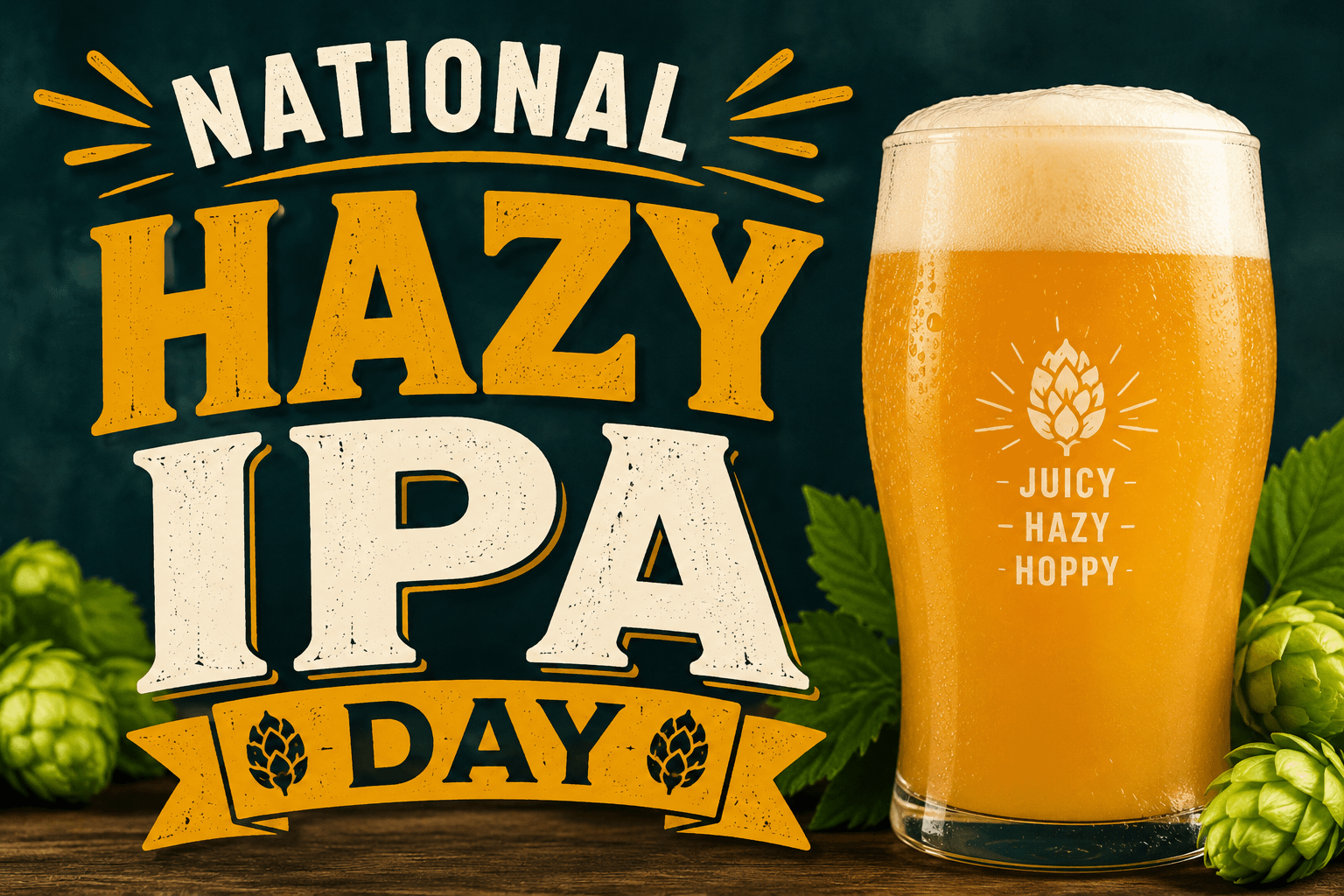
For craft beer enthusiasts who love bold hop aromas, tropical fruit flavors, a smooth mouthfeel, and a beautifully cloudy pour, National Hazy IPA Day is a celebration worth raising a glass to.
Observed on the third Thursday of August, National Hazy IPA Day shines a spotlight on one of the most influential beer styles of the modern American craft brewing movement. In 2026, National Hazy IPA Day falls on Thursday, August 20.
Hazy India Pale Ales have transformed expectations about what an IPA should look, smell, and taste like. Instead of the crystal-clear appearance and assertive bitterness traditionally associated with many American IPAs, Hazy IPAs often deliver an opaque golden appearance, intense hop aroma, tropical and citrus flavors, restrained bitterness, and a remarkably soft texture.
Some look almost like glasses of orange juice.
Others resemble pineapple or grapefruit juice.
But behind that unmistakable haze is an entire brewing philosophy centered on maximizing hop aroma, flavor, and drinkability.
National Hazy IPA Day is a chance to explore that philosophy, learn how the style developed, appreciate the creativity of craft brewers, and perhaps discover a new favorite beer along the way.
What Exactly Is a Hazy IPA?
A Hazy IPA is a style of India Pale Ale recognized for its cloudy appearance, strong hop aroma, fruit-forward flavors, fuller body, and comparatively soft bitterness.
You’ll also frequently encounter the term New England IPA, commonly abbreviated as NEIPA, because the modern style developed largely through brewing innovation in the northeastern United States.
Pour one into a glass and the difference from a traditional IPA can be immediately noticeable.
Instead of seeing clearly through the beer, you may see an opaque liquid ranging from pale yellow to deep orange.
Then comes the aroma.
Depending on the hops, yeast, and brewing methods involved, you might detect characteristics reminiscent of:
- Mango
- Pineapple
- Orange
- Tangerine
- Grapefruit
- Passion fruit
- Peach
- Apricot
- Lemon
- Lime
- Melon
- Berries
- Floral notes
- Fresh herbs
Take a sip and you’ll often discover that the bitterness isn’t as aggressive as the aroma might have led you to expect.
Instead, the beer can be soft, smooth, juicy, and remarkably aromatic.
That’s the experience that helped make Hazy IPA a craft beer sensation.
Why Is a Hazy IPA Hazy?
The name gives away its most obvious characteristic.
It’s hazy.
But why?
Beer clarity is influenced by numerous factors, including proteins, yeast, grains, hops, brewing methods, fermentation, filtration, and conditioning.
Hazy IPA brewers frequently use grains such as wheat and oats, which can contribute proteins and other components associated with the style’s cloudiness and fuller mouthfeel.
Heavy hop additions can also play a role.
Interactions among hop compounds and proteins can contribute to the persistent haze associated with many examples of the style.
Yeast selection and fermentation practices can influence both appearance and flavor as well.
The important point is that the haze in a properly brewed Hazy IPA generally isn’t an accident.
It’s often an intentional result of choices made throughout the brewing process.
Beer Didn’t Always Celebrate Cloudiness
That’s one reason Hazy IPA was initially so controversial.
For generations, beer drinkers were often taught that clarity was desirable. A bright, clear beer could symbolize careful brewing, conditioning, and presentation.
Cloudiness might have caused consumers to question whether something was wrong.
Then the craft beer movement began rewriting the rules.
Brewers increasingly experimented with ingredients, fermentation methods, hop schedules, yeast strains, and traditional style expectations.
Eventually, some discovered that maximizing certain desirable aromas, flavors, and textures could produce beer that wasn’t perfectly clear.
Instead of treating that as a flaw, they embraced it.
Drinkers did too.
Before long, the cloudy appearance became part of the attraction.
The New England Roots of Hazy IPA
The modern Hazy IPA movement is strongly connected with New England, particularly Vermont and surrounding areas.
Brewers in the region began creating hop-forward beers that tasted dramatically different from the aggressively bitter IPAs becoming famous on the West Coast.
Rather than chasing maximum bitterness, these brewers focused heavily on aroma and hop flavor.
The beers could be cloudy.
They could be soft.
They could smell intensely fruity.
And they could deliver huge hop character without punishing the drinker’s palate with bitterness.
At first, these beers were largely regional discoveries.
Then craft beer enthusiasts began talking about them.
People traveled to breweries specifically to buy limited releases. Cans became highly sought after. Beer enthusiasts traded releases with drinkers living in other states.
Social media accelerated the excitement.
Photos of glasses filled with thick-looking, golden-orange beer looked dramatically different from traditional lagers and clear IPAs.
Curiosity grew.
Breweries across the country noticed.
Soon, Hazy IPAs began appearing everywhere.
From Regional Curiosity to Craft Beer Staple
The rise of Hazy IPA demonstrates just how quickly craft beer culture can evolve.
What began as a somewhat unconventional regional approach eventually became one of the most recognizable categories on American tap lists.
Walk into a modern craft brewery and there’s a good chance you’ll encounter at least one hazy or juicy IPA.
Some breweries make several.
You might see:
Hazy Pale Ale — Lower alcohol and often lighter than a traditional Hazy IPA.
Hazy IPA — The classic modern interpretation.
Double Hazy IPA — Bigger in alcohol, hops, aroma, and flavor.
Triple Hazy IPA — An even stronger interpretation designed for intense hop character.
Session Hazy IPA — A lower-alcohol option focused on drinkability.
The popularity of the style has encouraged brewers to experiment continuously.
Hazy IPA vs. West Coast IPA
One of the best ways to understand Hazy IPA is to compare it with another famous American interpretation: the West Coast IPA.
West Coast IPAs are traditionally associated with a clearer appearance, assertive bitterness, citrus, pine, resin, and a relatively dry finish.
Hazy IPAs typically emphasize softer bitterness, fuller body, tropical fruit aromas, and a cloudy appearance.
Imagine two beers brewed with an emphasis on hops.
One says:
“Taste the bitterness.”
The other says:
“Smell and taste the fruit.”
That’s an oversimplification, but it captures an important philosophical difference.
Neither approach is better.
They’re simply different expressions of hops.
And many IPA enthusiasts enjoy both.
The Incredible World of Modern Hops
Hops are among the most fascinating ingredients in beer.
Originally valued partly because their bitterness could balance the sweetness of malt, hops have become one of the primary creative tools of modern craft brewing.
Different varieties can produce dramatically different sensory characteristics.
A brewer might choose hops that suggest:
- Mango
- Pineapple
- Grapefruit
- Tangerine
- Lemon
- Peach
- Passion fruit
- Berries
- Melon
- Pine
- Herbs
- Flowers
Some modern hop varieties have become especially popular in hop-forward beers, including Citra, Mosaic, Galaxy, Amarillo, Simcoe, El Dorado, and Nelson Sauvin.
Brewers rarely have to limit themselves to one.
Combining several hop varieties allows them to build layers of aroma and flavor.
One beer might emphasize orange and grapefruit.
Another might explode with mango and pineapple.
Another could remind you of peach, melon, and passion fruit.
That’s why trying different Hazy IPAs can be such an interesting experience.
Why Does a Hazy IPA Taste So Juicy?
“Juicy” is one of the most common words used to describe Hazy IPA.
That doesn’t necessarily mean actual fruit juice was added.
Much of that impression can come from hops.
Modern hop varieties contain aromatic compounds capable of producing sensory characteristics remarkably similar to fruit.
Brewers also carefully control when hops are introduced during brewing.
Traditionally, hops boiled for longer periods contributed substantial bitterness.
Modern Hazy IPA brewing often places greater emphasis on later hop additions and dry hopping, which can preserve and amplify aroma.
The result can be an incredibly aromatic beer.
Before you’ve even taken your first sip, your nose may already be telling your brain:
Mango. Orange. Pineapple. Peach.
That aroma influences how you perceive the flavor.
What Is Dry Hopping?
If you start exploring Hazy IPAs, you’ll quickly encounter the phrase dry hopped.
Despite the name, it has nothing to do with making the beer dry.
Dry hopping generally refers to adding hops during or after fermentation rather than relying exclusively on additions during the boil.
The goal is often to extract aromatic compounds while avoiding excessive bitterness.
Hazy IPA brewers may use substantial dry-hop additions to create the explosive aromas associated with the style.
Some cans proudly advertise themselves as:
Double Dry Hopped (DDH)
or even variations involving additional hopping techniques.
Those labels generally signal that hop aroma is intended to be a major part of the experience.
The Role of Oats and Wheat
Hops may get the headlines, but the grain bill plays an important supporting role.
Many Hazy IPAs incorporate oats or wheat alongside malted barley.
These ingredients can help contribute to the style’s recognizable body and texture.
Instead of feeling thin or sharply dry, the beer might feel:
- Smooth
- Creamy
- Silky
- Soft
- Full
- Almost pillowy
That mouthfeel works beautifully with tropical hop flavors.
Imagine intense mango and citrus aromas combined with a harsh, watery body.
The experience wouldn’t be the same.
The soft texture helps tie everything together.
Yeast Matters Too
Yeast is another critical ingredient.
Beer is created through fermentation, and yeast does much more than simply produce alcohol.
Different strains can contribute different flavors and aromas.
Certain yeast strains used in Hazy IPA production may emphasize fruity characteristics that complement the hops.
That means the mango, peach, citrus, or tropical impressions you’re experiencing aren’t necessarily coming from one ingredient.
They may be the result of hops, yeast, malt, water, and fermentation interacting with one another.
That’s part of what makes brewing so fascinating.
Water Can Change a Beer
Water may seem like the least exciting ingredient in beer, but it’s enormously important.
Beer is mostly water.
Its mineral composition can influence how bitterness, malt, and mouthfeel are perceived.
Brewers making Hazy IPAs may adjust their brewing water to encourage a softer presentation of hops and a rounder mouthfeel.
This is another example of how much science exists behind something that appears relatively simple.
A great Hazy IPA isn’t just “beer with lots of hops.”
It’s the result of countless decisions.
Why Hazy IPA Won Over So Many Drinkers
Not everyone loves intensely bitter beer.
That’s where Hazy IPA opened an important door.
During earlier stages of the American IPA boom, bitterness sometimes became almost a competition.
Brewers pushed boundaries.
Drinkers compared bitterness.
Some beers seemed designed to challenge the palate.
Craft beer enthusiasts loved it.
But newcomers sometimes took one sip and decided:
“IPAs aren’t for me.”
Hazy IPA changed that conversation.
Suddenly, someone who disliked bitter IPAs could try a juicy version filled with mango, orange, and pineapple characteristics and discover that they actually enjoyed hop-forward beer.
Hazy IPA helped demonstrate that “hoppy” and “bitter” aren’t necessarily the same thing.
How to Properly Taste a Hazy IPA
You don’t need to be a beer expert to appreciate one.
Start with the appearance.
Notice the color.
Is it pale yellow?
Golden?
Deep orange?
Slightly cloudy or completely opaque?
Next, smell the beer before drinking it.
Aroma is a huge part of Hazy IPA.
Take a gentle sniff and ask yourself what you notice.
Orange?
Mango?
Grapefruit?
Pineapple?
Peach?
There’s no need to worry about getting the “correct” answer.
Taste is personal.
Then take a sip.
Notice the initial flavor, bitterness, texture, and finish.
Does the flavor match the aroma?
Is the bitterness stronger or softer than expected?
Does the beer feel creamy?
Does the hop flavor linger?
The more deliberately you taste, the more you’ll begin noticing differences between beers.
Serve It in the Right Glass
You can certainly enjoy a Hazy IPA directly from a can, but pouring it into a glass provides an important advantage:
Aroma.
A glass gives the beer room to release aromatic compounds.
Tulip-shaped beer glasses, IPA glasses, and similar designs can help concentrate aromas toward your nose.
Even an ordinary pint glass allows you to see the beer’s distinctive appearance and experience more of its aroma.
Pour it, admire it, smell it, and then drink it.
Freshness Is Especially Important
Hop-forward beers are generally at their best when fresh and properly stored.
The aromatic characteristics that make Hazy IPAs exciting can change over time.
That’s why checking the packaging date can be useful when buying one.
Whenever possible, follow the brewery’s recommendations regarding refrigeration and freshness.
A freshly packaged Hazy IPA can deliver dramatically expressive hop aroma.
That freshness is one reason visiting a local brewery can be such a rewarding way to celebrate National Hazy IPA Day.
Food Pairings for Hazy IPA
Hazy IPA can pair beautifully with bold foods.
Its tropical fruit character, carbonation, and hop flavor can complement spicy, salty, smoky, and savory dishes.
Consider pairing your Hazy IPA with:
- Buffalo wings
- Fried chicken
- Cheeseburgers
- Bacon burgers
- Barbecue chicken
- Pulled pork
- Smoked brisket
- Fish tacos
- Carne asada tacos
- Spicy sausage
- Nachos
- Jalapeño poppers
- Spicy pizza
- Barbecue chicken pizza
- Thai curry
- Spicy noodles
- Sharp cheddar
- Pepper Jack cheese
- Grilled chicken sandwiches
One particularly enjoyable combination is Hazy IPA and spicy food.
The tropical aromas can create an interesting contrast with chili heat, while carbonation helps refresh your palate between bites.
Pizza and Hazy IPA
Few combinations feel more appropriate for a casual craft beer celebration than pizza and IPA.
Try a Hazy IPA with:
Pepperoni Pizza: Citrus and tropical hops can balance salty, spicy pepperoni.
Hawaiian Pizza: Pineapple flavors can echo the tropical character of certain hops.
Buffalo Chicken Pizza: Fruity hop aromas contrast with Buffalo sauce.
BBQ Chicken Pizza: Sweet and smoky barbecue flavors work nicely alongside citrus-forward hops.
Spicy Sausage Pizza: A soft, juicy IPA can provide balance against heat and richness.
National Hazy IPA Day could easily become pizza night.
Host a Hazy IPA Tasting
Want to make the celebration more interesting?
Invite a few friends of legal drinking age and organize a small Hazy IPA tasting.
Choose three or four different beers.
Instead of drinking full servings of each, pour smaller samples.
Then compare:
Appearance
Which is the haziest?
Aroma
Which beer smells most tropical?
Flavor
Which fruits do you notice?
Bitterness
Which beer has the strongest bitterness?
Mouthfeel
Which feels the smoothest or creamiest?
Finish
Does the flavor disappear quickly or linger?
Overall Impression
Which would you order again?
You might be surprised by how different each beer tastes.
Try a Blind Tasting
For an even more interesting experiment, hide the cans and bottles.
Number the glasses instead.
Without knowing the brewery, price, reputation, or label design, everyone has to judge the beer entirely on taste.
After ranking them, reveal the beers.
Blind tastings can produce surprising results.
Sometimes the expensive or highly hyped beer doesn’t win.
Sometimes the unknown local brewery becomes everyone’s favorite.
Visit Your Local Brewery
One of the best ways to celebrate National Hazy IPA Day is to support the people keeping craft beer creative.
Visit a nearby brewery or taproom and ask what Hazy IPAs are currently available.
Ask about the hops.
You might discover that your beer was brewed with a combination you’ve never tried before.
Ask what flavors the brewer intended.
Then see whether you can identify them yourself.
Breweries frequently release seasonal or limited beers that never receive widespread distribution, making taprooms excellent places for discovering something new.
Build Your Own Hazy IPA Flight
If your brewery offers flights, create your own mini Hazy IPA exploration.
Try four small pours with different hop profiles.
For example:
Beer #1: Citrus-forward
Beer #2: Tropical fruit-forward
Beer #3: Peach or stone-fruit-forward
Beer #4: Double or imperial Hazy IPA
Taste them side by side.
Comparing beers directly makes subtle differences much easier to recognize.
Take Notes on What You Like
Beer tasting doesn’t have to be complicated.
Simply write down:
Beer name
Brewery
Hops
Favorite flavor
Bitterness level
Rating
Would I buy it again?
After trying several Hazy IPAs, patterns may emerge.
Perhaps you consistently love beers featuring Mosaic.
Maybe Galaxy becomes your favorite.
Maybe you prefer citrus-forward beers rather than tropical ones.
Knowing your preferences makes future beer shopping much easier.
Hazy IPA and Craft Beer Creativity
Perhaps the most important thing about Hazy IPA isn’t its appearance.
It’s what the style represents.
Craft beer thrives on experimentation.
Brewers constantly ask:
What if we change this ingredient?
What if we use a different yeast?
What happens if hops are added later?
What happens if we combine these varieties?
What if we prioritize aroma over bitterness?
What if beer doesn’t have to be perfectly clear?
Those questions lead to innovation.
Hazy IPA became successful because brewers were willing to challenge expectations.
From Controversy to Mainstream Success
There was a time when cloudy IPA generated passionate debate among beer enthusiasts.
Some traditionalists considered the appearance undesirable.
Others argued that flavor mattered more than clarity.
Eventually, consumers settled much of the argument themselves.
They bought the beer.
A lot of it.
Demand encouraged breweries across the country to develop their own versions.
Today, Hazy IPA is no longer an obscure regional experiment.
It’s firmly established within modern craft beer culture.
The Instagram Effect
It’s impossible to ignore how visually distinctive Hazy IPA became during the social-media era.
Pour a clear golden lager and photograph it.
Then pour an opaque, glowing orange Hazy IPA beside it.
The hazy beer immediately looks unusual.
Photos of intensely cloudy beers helped generate curiosity.
Consumers wanted to know:
What does that taste like?
Breweries also embraced colorful can artwork and creative beer names, turning many releases into visually memorable products.
The combination of flavor, appearance, limited availability, and social sharing helped fuel the style’s rapid expansion.
Hazy IPA Continues to Evolve
Craft beer never stays still for long.
Brewers continue experimenting with new hop varieties, hop products, yeast strains, brewing techniques, grain combinations, and alcohol levels.
Some Hazy IPAs are relatively restrained and easy-drinking.
Others are enormous double or triple IPAs packed with hop character.
Some emphasize citrus.
Others taste almost like tropical fruit cocktails.
The category continues evolving because brewers continue experimenting.
That’s exactly what makes craft beer interesting.
How to Celebrate National Hazy IPA Day
There are plenty of ways to participate.
You could:
- Visit a local craft brewery.
- Order a Hazy IPA you’ve never tried.
- Compare a Hazy IPA with a West Coast IPA.
- Create a tasting flight.
- Pair a Hazy IPA with pizza or barbecue.
- Learn about the hops in your favorite beer.
- Buy a fresh local release.
- Share your favorite Hazy IPA with friends of legal drinking age.
- Talk with a brewer about how the beer was made.
- Support an independent brewery.
- Photograph your favorite pour.
- Keep notes on which hop varieties you enjoy most.
You don’t need an elaborate celebration.
Sometimes the best way to appreciate craft beer is simply to slow down and pay attention to what’s in your glass.
Don’t Judge a Beer by Its Appearance
Hazy IPA teaches an interesting lesson.
Sometimes something that appears unconventional can become enormously successful precisely because someone was willing to challenge expectations.
Beer was supposed to be clear.
IPA was supposed to be aggressively bitter.
Then brewers started asking:
Why?
Experimentation produced something different.
Drinkers embraced it.
And an entirely new chapter of American craft beer culture emerged.
Celebrate Local Beer
National Hazy IPA Day also offers an opportunity to appreciate your local brewing community.
Independent breweries often become gathering places where people meet friends, celebrate birthdays, watch games, eat together, listen to music, and discover new flavors.
When you buy a pint from a local brewery, you’re supporting the people who brewed it, served it, packaged it, designed its label, and helped bring it to your community.
So consider making National Hazy IPA Day about more than simply drinking a beer.
Make it about discovering who is brewing beer near you.
A Toast to Innovation
Hazy IPA is a perfect example of what can happen when creativity meets tradition.
Brewers took one of the world’s most famous beer styles and reimagined it.
They reduced the emphasis on bitterness.
They amplified aroma.
They experimented with hops.
They embraced oats and wheat.
They explored yeast.
They adjusted water chemistry.
And instead of hiding the haze, they celebrated it.
The result became one of the defining beer trends of the modern craft era.
Raise a Glass on August 20, 2026
On Thursday, August 20, 2026, National Hazy IPA Day gives craft beer lovers an opportunity to celebrate the cloudy, juicy, hop-packed style that changed the way many people think about IPA.
Whether you’re an experienced craft beer enthusiast or simply curious about what makes these cloudy beers so popular, use the day as an excuse to explore.
Find a fresh Hazy IPA.
Pour it into a glass.
Notice its golden-orange haze.
Take a moment to smell it before drinking.
Look for mango, pineapple, grapefruit, orange, peach, passion fruit, or whatever else your senses discover.
Then take a sip and appreciate the combination of brewing science, creativity, experimentation, and craftsmanship behind it.
You may discover your new favorite beer.
And even if Hazy IPA isn’t your preferred style, National Hazy IPA Day is still worth celebrating for what it represents: the willingness to experiment, challenge tradition, and create something new.
Happy National Hazy IPA Day!
Raise a glass to creativity, support your local breweries, explore a beer you’ve never tried before, and celebrate the brewers who continue pushing the boundaries of what an IPA can be.
As always, enjoy responsibly and make sure everyone participating is of legal drinking age.
Read More Holidays & National Days
Leave a Reply