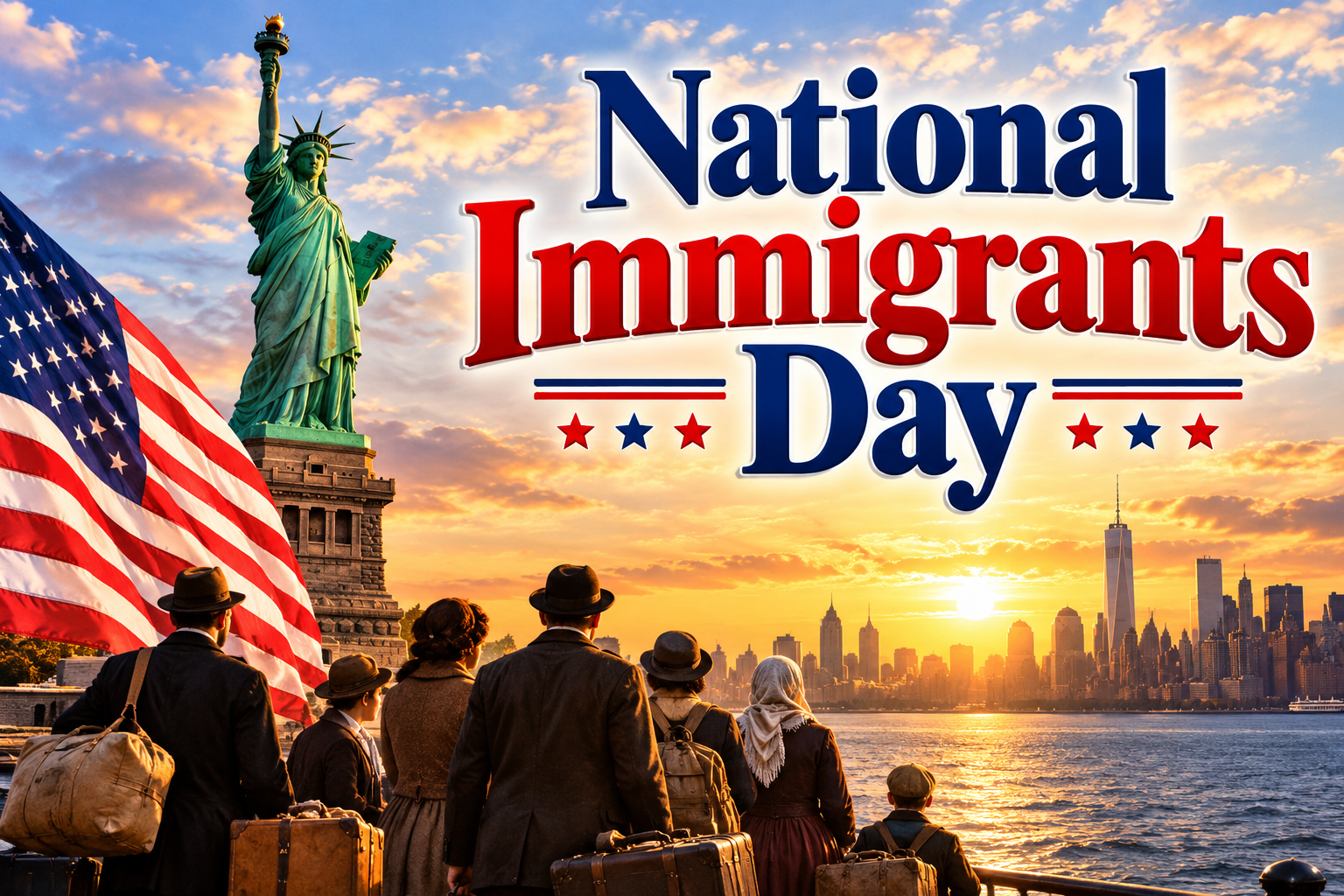
Every year on October 28, National Immigrants Day recognizes the millions of people who have traveled from countries around the world to build new lives in the United States. It is a day to reflect on the courage, determination, sacrifices, and contributions of immigrants who have helped shape American history, culture, communities, and opportunities.
The United States has long been known as a nation of immigrants. From the earliest generations of settlers to families arriving in modern times, people have crossed oceans, borders, and continents in search of freedom, safety, opportunity, and a better future.
Their journeys have not always been easy. Many left behind loved ones, familiar traditions, and everything they had ever known. Others fled poverty, persecution, violence, or circumstances that made remaining in their homelands impossible.
National Immigrants Day reminds us that behind every immigration story is a human story filled with hopes, dreams, challenges, and the desire to create a meaningful life.
When Is National Immigrants Day?
National Immigrants Day is observed annually on October 28 in the United States.
The observance recognizes the history of immigration and the important roles immigrants have played in the country’s development.
October 28 also holds historical significance because the Statue of Liberty was officially dedicated on October 28, 1886.
Although the statue was originally presented as a symbol of liberty and friendship between France and the United States, it eventually became one of the world’s most recognizable symbols of immigration, freedom, and opportunity.
For generations of immigrants arriving by ship, the sight of the Statue of Liberty represented the possibility of beginning again.
The History of Immigration in America
Immigration has been part of American history since before the United States became an independent nation.
Long before European settlement, Indigenous peoples lived throughout North America, developing civilizations, communities, governments, and cultures that continue today.
Over time, people from Europe, Africa, Asia, Latin America, and other regions became part of the country’s population through vastly different circumstances.
Some arrived voluntarily, seeking religious freedom, economic opportunity, or land. Others, particularly enslaved Africans, were forcibly brought to America and denied their freedom.
These different experiences are essential to understanding the complicated history of migration and the development of the United States.
During the nineteenth and early twentieth centuries, immigration increased significantly as people arrived from Ireland, Germany, Italy, Eastern Europe, China, and many other places.
Immigrants helped build railroads, establish businesses, develop industries, cultivate farmland, and expand cities.
They also brought languages, religious traditions, artistic expressions, and cultural practices that became part of American life.
Today, immigration continues to influence the country’s population, workforce, economy, and cultural identity.
Ellis Island and the American Immigration Experience
One of the most recognizable places in American immigration history is Ellis Island in New York Harbor.
<text weight=”medium”>Between 1892 and 1954, more than 12 million immigrants passed through Ellis Island.</text>
For many families, Ellis Island represented the beginning of a new chapter.
Immigrants underwent medical inspections and legal examinations before being admitted into the United States.
Some experienced long waits, uncertainty, or separation from family members.
Others were denied entry and forced to return to the countries they had left behind.
Despite these challenges, millions successfully entered the country and established lives that would influence generations of American families.
Today, countless Americans can trace their ancestry to relatives who passed through Ellis Island.
Their stories represent determination, sacrifice, and the hope of creating opportunities for future generations.
Why National Immigrants Day Matters
National Immigrants Day provides an opportunity to recognize how immigration has influenced American society.
It also encourages people to appreciate the individual experiences behind immigration statistics and historical events.
1. Recognizing Courage and Sacrifice
Leaving one’s homeland requires tremendous courage.
Immigrants may face unfamiliar languages, different customs, financial difficulties, and uncertainty about their futures.
Many must rebuild their lives while missing relatives and communities thousands of miles away.
Their willingness to face these challenges reflects determination and hope.
2. Celebrating Cultural Diversity
Immigration has introduced Americans to countless traditions, cuisines, languages, musical styles, and celebrations.
From neighborhood festivals to family recipes passed down through generations, immigrant cultures contribute to the richness of American communities.
Cultural diversity also creates opportunities for people to learn from one another and develop a greater understanding of the world.
3. Recognizing Economic Contributions
Immigrants contribute to the American economy as workers, entrepreneurs, researchers, educators, and business owners.
They participate in industries including agriculture, construction, healthcare, hospitality, transportation, manufacturing, and technology.
Immigrant-owned businesses create employment opportunities, provide services, and support local economies.
Their contributions extend from small family businesses to major companies and scientific institutions.
4. Understanding American History
Learning about immigration helps explain how American communities developed.
Immigration has influenced population growth, labor movements, political debates, social reforms, and cultural traditions.
Understanding these experiences provides a more complete picture of the nation’s history.
5. Encouraging Respect and Understanding
Immigration is often discussed through political debates and government policies.
National Immigrants Day offers an opportunity to remember that immigration also involves individuals and families.
People may disagree about immigration laws, border security, and public policy while still recognizing the dignity and humanity of those affected.
How Immigrants Have Helped Shape American Culture
American culture reflects influences from countless immigrant communities.
Food is one of the most visible examples.
Pizza, tacos, sushi, pasta, dumplings, and numerous other dishes have become familiar parts of American dining.
Many of these foods evolved as immigrant communities adapted traditional recipes to locally available ingredients and changing tastes.
Music provides another example.
Immigrant communities have contributed to the development and popularity of musical traditions ranging from classical performances and folk music to jazz, salsa, hip-hop, and contemporary popular music.
Language has also been influenced by immigration.
Words, expressions, and regional speech patterns reflect centuries of cultural interaction.
Immigrants have additionally shaped American literature, architecture, fashion, sports, religious practices, and celebrations.
These contributions demonstrate how cultural traditions can evolve while preserving connections to their origins.
Famous Immigrants Who Made a Difference in America
Throughout American history, immigrants have made remarkable contributions in science, business, entertainment, and public service.
Albert Einstein: Born in Germany, Einstein immigrated to the United States in 1933 and became one of the most influential scientists in modern history.
Andrew Carnegie: Born in Scotland, Carnegie immigrated to the United States as a child and became a major industrialist and philanthropist.
Irving Berlin: Born in the Russian Empire, Berlin immigrated to America as a child and became one of the country’s most celebrated songwriters.
Madeleine Albright: Born in Czechoslovakia, Albright immigrated to the United States and later became the first woman to serve as U.S. secretary of state.
Sergey Brin: Born in Moscow, Brin immigrated to the United States as a child and later co-founded Google.
These individuals represent only a small portion of the contributions immigrants have made.
Millions of others have helped shape America without becoming famous.
Their achievements can be found in hospitals, classrooms, neighborhoods, farms, businesses, and homes throughout the country.
The Challenges Immigrants Face
Although immigration can create opportunities, the experience often includes significant challenges.
Language barriers can make everyday activities difficult, including finding employment, accessing healthcare, and communicating with schools.
Financial uncertainty may create additional pressure, particularly for families beginning again with limited resources.
Some immigrants experience discrimination, isolation, or difficulty adjusting to unfamiliar cultural expectations.
Others face complicated legal processes and uncertainty about their immigration status.
Family separation can be especially painful.
Parents may spend years away from children, spouses, or elderly relatives while working to establish stability.
Recognizing these challenges helps create a more complete understanding of the immigrant experience.
How to Celebrate National Immigrants Day
National Immigrants Day can be observed through meaningful activities that encourage learning, appreciation, and community connection.
Learn your family history. Explore the journeys, traditions, and experiences of previous generations. Many families have stories involving migration, relocation, and starting over.
Support immigrant-owned businesses. Visit local restaurants, shops, and service providers operated by immigrants.
Explore another culture. Learn about different languages, foods, music, customs, and historical traditions.
Listen to immigration stories. Personal experiences can provide perspectives that are sometimes missing from broader public discussions.
Visit a museum or historical landmark. Immigration museums and cultural institutions preserve stories that help explain America’s development.
Show kindness to newcomers. A welcoming conversation, practical assistance, or simple act of friendship can make a meaningful difference.
Immigration and the American Dream
For generations, the American Dream has represented the belief that people can improve their circumstances through opportunity, effort, and determination.
Immigrants have often embraced this ideal.
Some arrive hoping to establish successful businesses or pursue educational opportunities.
Others seek stable employment, personal freedom, or safer environments for their children.
The American Dream does not guarantee success, and the opportunities available to immigrants have varied greatly throughout history.
Nevertheless, the desire to create a better future remains a powerful motivation behind many immigration journeys.
For countless families, success is not measured only by wealth or professional achievement.
Sometimes it means providing children with an education, purchasing a first home, establishing stability, or ensuring the next generation has opportunities that were previously unavailable.
These achievements deserve recognition.
The Importance of Remembering Immigrant Stories
Every immigrant family carries stories worth preserving.
Some involve difficult journeys across oceans or borders.
Others describe first jobs, unfamiliar neighborhoods, language lessons, and the kindness of strangers.
There are stories of parents working multiple jobs to provide for their children.
There are stories of young people balancing family traditions with the culture of the country in which they are growing up.
There are also stories of perseverance through rejection, hardship, and uncertainty.
Preserving these experiences allows future generations to understand where their families came from and what earlier generations endured.
It also reminds us that history is not made only by famous leaders and major events.
History is shaped by ordinary people making extraordinary sacrifices for those they love.
A Day to Recognize Our Shared Humanity
National Immigrants Day is more than a celebration of cultural traditions or historical achievements.
It is an opportunity to recognize the hopes and struggles that connect people across different backgrounds.
The desire to protect family, find meaningful work, live safely, and create a better future is not limited to any nationality or culture.
These aspirations are shared by people throughout the world.
Recognizing those similarities does not require everyone to agree about immigration policy.
It simply encourages respect for the individuals whose lives are affected by those decisions.
Final Thoughts: Honoring the Immigrant Spirit
National Immigrants Day on October 28 reminds us that immigration has played a significant role in shaping the United States.
Immigrants have helped build communities, strengthen industries, advance scientific discoveries, establish businesses, and enrich American culture.
Their experiences reflect courage, sacrifice, perseverance, and hope.
Behind every immigration story is someone who faced uncertainty while imagining a different future.
Some traveled for opportunity. Others sought safety or freedom. Many made difficult choices because they wanted something better for their families.
Their journeys are part of America’s history, and their contributions continue to influence its future.
National Immigrants Day is an opportunity to honor those journeys, celebrate the contributions of immigrants, and remember that every person has a story worth hearing.
What immigration story has influenced your family or community, and what lessons do you believe future generations should remember?


Leave a Reply