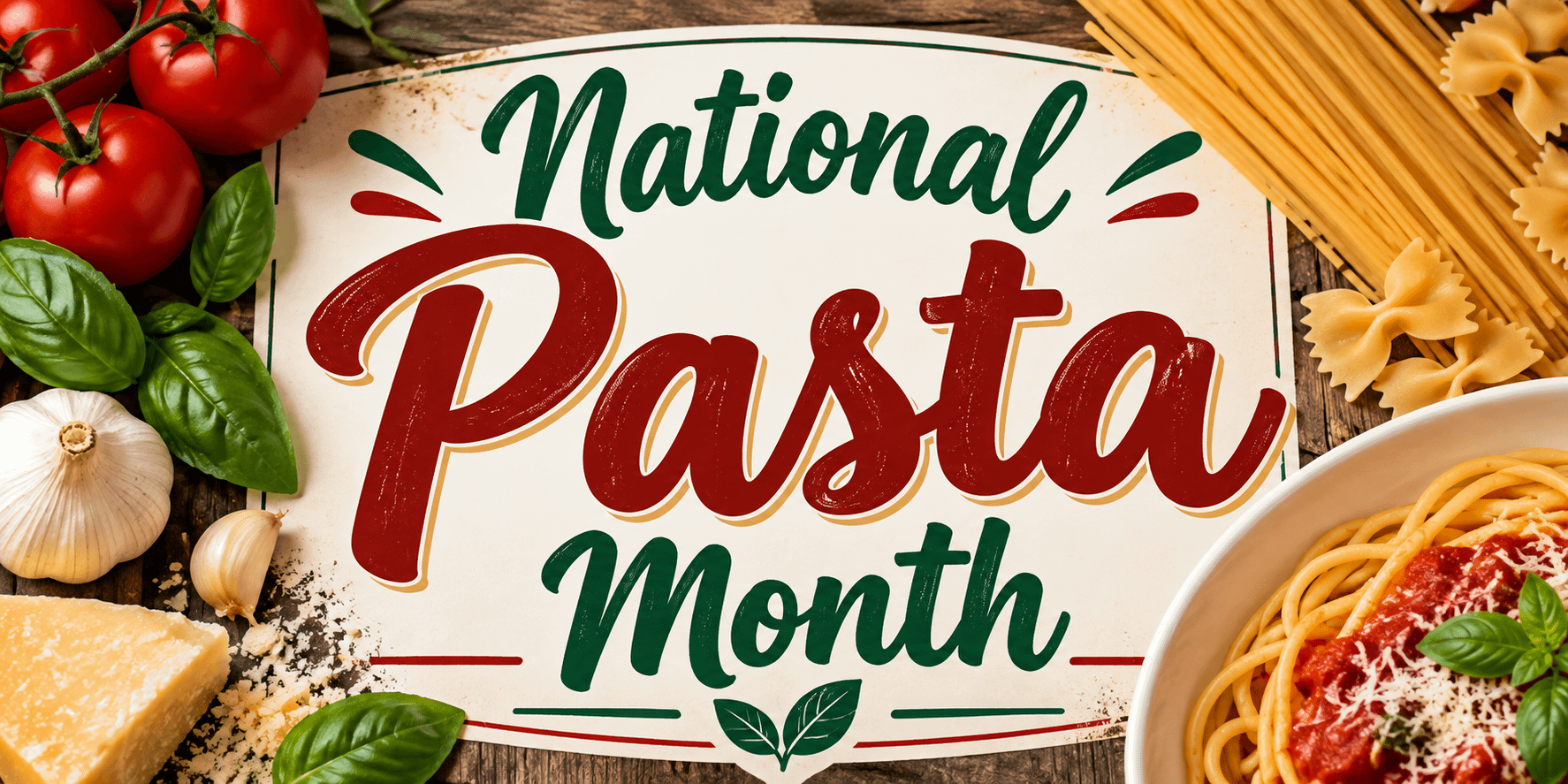
Few foods bring people together quite like pasta. From a bubbling pan of homemade lasagna to a quick bowl of spaghetti after a long day, pasta has earned a permanent place on dinner tables around the world. That makes National Pasta Month, celebrated throughout October, a perfect opportunity to appreciate one of the most versatile and comforting foods ever created.
Pasta can be simple or sophisticated, inexpensive or extravagant. It can be covered in tomato sauce, tossed with garlic and olive oil, baked beneath layers of cheese, served cold in a salad, or combined with meat, seafood, vegetables, and countless other ingredients.
Perhaps that versatility is the real reason pasta has remained so popular. You don’t need to be an experienced chef to make a satisfying pasta dinner. With a pot of water, a package of pasta, and a few ingredients, you can create something delicious.
National Pasta Month is about more than what’s on the plate, though. Pasta represents family dinners, traditional recipes, childhood memories, celebrations, and the simple pleasure of sharing a meal with people we care about.
A Month Dedicated to Pasta
October is widely celebrated as National Pasta Month in the United States, giving pasta lovers an entire month to enjoy old favorites and experiment with new recipes.
It is also fitting that World Pasta Day is observed on October 25, making October an especially appropriate time to celebrate everything from spaghetti and macaroni to ravioli and fettuccine.
You could easily eat a different pasta dish every day of the month without repeating the same meal.
Think about the possibilities:
Spaghetti with meatballs, baked ziti, chicken Alfredo, macaroni and cheese, lasagna, stuffed shells, ravioli, tortellini, linguine with clams, pasta primavera, carbonara, pesto pasta, chicken Parmesan with spaghetti, and dozens of other dishes can all be part of the celebration.
And that’s only the beginning.
The Long History of Pasta
The exact history of pasta is more complicated than many popular stories suggest.
One familiar legend claims that Marco Polo introduced pasta to Italy after traveling to China. However, forms of pasta and pasta-like foods were already known in the Mediterranean before Marco Polo returned from his travels in the late 13th century.
Various cultures developed foods made from mixtures of grain and water, so pasta’s development was not necessarily the result of one person or one moment in history.
What is certain is that pasta eventually became deeply connected with Italian cooking.
Durum wheat and semolina proved particularly useful for producing dried pasta that could be stored for extended periods. Over generations, different regions of Italy developed distinctive pasta shapes and recipes based on locally available ingredients.
Eventually, Italian immigration helped spread those traditions around the world.
In the United States, pasta gradually became part of mainstream American cooking. Dishes that once might have been associated primarily with Italian-American communities became familiar family favorites across the country.
Today, spaghetti, lasagna, ravioli, macaroni and cheese, and other pasta dishes are everyday comfort foods for millions of people.
There Is a Pasta Shape for Almost Everything
Walk through the pasta aisle of a grocery store and you’ll quickly realize just how many choices exist.
Different shapes aren’t merely decorative. Their sizes, textures, curves, ridges, and hollow centers can influence how sauces and other ingredients interact with the pasta.
Long pasta varieties include spaghetti, linguine, fettuccine, angel hair, bucatini, and tagliatelle.
Short pasta varieties include penne, rigatoni, fusilli, farfalle, rotini, ziti, shells, and macaroni.
Then there are filled pastas such as ravioli and tortellini.
Some pasta works especially well with light sauces, while thicker shapes can stand up to heavier meat or cheese sauces.
Rigatoni’s large tubes and ridges, for example, can capture thick sauces beautifully. Fettuccine pairs naturally with creamy sauces. Small shapes such as elbow macaroni are perfect for macaroni and cheese.
One of the most enjoyable ways to celebrate National Pasta Month is simply to choose a pasta shape you’ve never cooked before.
You might discover a new favorite.
Why Pasta Is Such a Popular Comfort Food
Comfort food means something different to everyone, but pasta appears on many people’s lists.
Part of that connection may come from memory.
A bowl of spaghetti might remind someone of childhood dinners around the kitchen table. Lasagna might bring back memories of holidays or Sunday meals. Macaroni and cheese might remind someone of the food their parents or grandparents made.
Food has an incredible ability to connect us with moments from our past.
Sometimes the smell of a familiar sauce simmering on the stove can bring back memories before we even take the first bite.
Pasta also has a naturally comforting quality. Warm noodles, flavorful sauce, melted cheese, herbs, and other ingredients create meals that feel satisfying and familiar.
And unlike some foods that require complicated preparation, pasta can be incredibly simple.
Some nights, that’s exactly what we need.
Classic Pasta Dishes Worth Celebrating
National Pasta Month gives you the perfect excuse to revisit some classic pasta dishes.
Spaghetti and Meatballs
Few pasta meals are more recognizable in American households.
Spaghetti topped with tomato sauce, tender meatballs, Parmesan cheese, and fresh herbs makes a hearty meal that can feed the entire family.
Serve it with garlic bread and a salad for a classic dinner.
Lasagna
Lasagna is comfort food at its finest.
Layers of pasta, sauce, cheese, and meat come together in a rich baked dish that’s perfect for family dinners and gatherings.
There are countless variations, including vegetable lasagna, chicken lasagna, spinach lasagna, and white-sauce versions.
Fettuccine Alfredo
Creamy, rich, and satisfying, fettuccine Alfredo remains a favorite for many pasta lovers.
Chicken, shrimp, broccoli, mushrooms, or other ingredients can easily be added to turn it into a complete meal.
Baked Ziti
Baked ziti combines pasta, tomato sauce, cheese, and often ground beef or Italian sausage before everything is baked until hot and bubbling.
It’s especially useful when cooking for a crowd.
Macaroni and Cheese
Macaroni and cheese proves that pasta doesn’t have to be complicated to be memorable.
From a simple stovetop version to an elaborate baked casserole covered with breadcrumbs and multiple cheeses, there are endless ways to prepare it.
Pasta Primavera
For something filled with vegetables, pasta primavera can combine pasta with ingredients such as zucchini, peppers, tomatoes, broccoli, asparagus, peas, and carrots.
It’s also a great way to use vegetables already sitting in your refrigerator.
Pesto Pasta
Fresh basil pesto can transform ordinary pasta into something incredibly flavorful.
Add grilled chicken, tomatoes, Parmesan, mozzarella, or roasted vegetables for additional flavor and texture.
Pasta Doesn’t Always Need a Heavy Sauce
When people imagine pasta, they sometimes immediately picture thick tomato or cream sauces.
But pasta can be delicious with very little added to it.
Olive oil, garlic, Parmesan cheese, red pepper flakes, lemon juice, herbs, and freshly ground pepper can create a simple meal in minutes.
The simplicity allows individual ingredients to stand out.
A quick garlic-and-oil pasta can also be useful when you don’t have many ingredients in the kitchen.
Sometimes the simplest pasta dishes are among the best.
Don’t Forget Cold Pasta
Pasta doesn’t always have to be served hot.
Pasta salads can be excellent for lunches, picnics, barbecues, potlucks, and meal preparation.
Try combining cooked and cooled pasta with ingredients such as:
- Tomatoes
- Cucumbers
- Bell peppers
- Olives
- Red onions
- Mozzarella
- Feta cheese
- Pepperoni
- Chicken
- Fresh herbs
- Italian dressing or vinaigrette
Cold pasta dishes can be customized almost endlessly.
Make Homemade Pasta
If you’ve always purchased dried pasta, National Pasta Month might be the perfect time to try making pasta from scratch.
Homemade pasta requires more effort, but the process itself can become part of the experience.
Making dough, kneading it, rolling it thin, cutting the noodles, and finally sitting down to eat something you created yourself can be incredibly rewarding.
It can also become a family activity.
Children can help shape pasta, while adults handle more complicated parts of the preparation.
Don’t worry if every noodle isn’t perfect.
Homemade food doesn’t need to look like it came from a restaurant to taste great.
Have a Family Pasta Night
One of the best ways to celebrate National Pasta Month is to turn dinner into an event.
Create a pasta bar where everyone builds their own plate.
Prepare two or three pasta shapes and offer several sauces and toppings.
You could include marinara, Alfredo, pesto, meat sauce, grilled chicken, meatballs, Italian sausage, mushrooms, broccoli, spinach, Parmesan, mozzarella, crushed red pepper, and fresh basil.
Everyone gets to create something they enjoy.
More importantly, everyone sits down together.
In a world where people are constantly rushing between work, school, appointments, activities, and responsibilities, sharing a meal can sometimes become an afterthought.
Pasta night gives everyone a reason to gather around the table again.
Explore Pasta Beyond Italian-American Favorites
National Pasta Month can also encourage us to explore the enormous variety of Italian regional pasta traditions.
Instead of always choosing familiar spaghetti or penne, try something different.
Look for dishes featuring orecchiette, pappardelle, cavatelli, gnocchi, bucatini, tagliatelle, or other varieties.
Explore sauces beyond marinara and Alfredo.
Try pasta with pesto, browned butter and sage, seafood, roasted vegetables, mushrooms, lemon, garlic, or simple olive oil preparations.
The more you explore pasta, the more you realize that there’s always another recipe waiting to be discovered.
Make Pasta Fit Your Preferences
One reason pasta remains so versatile is that it can be adapted to different eating preferences.
Whole-grain pasta provides another option for people who want additional whole grains and fiber in their meals.
There are also pastas made from chickpeas, lentils, rice, corn, and other ingredients for people who prefer or require alternatives to traditional wheat pasta.
Vegetables can easily become a major part of pasta dishes as well.
Add spinach, tomatoes, peppers, onions, mushrooms, broccoli, zucchini, peas, asparagus, or roasted vegetables.
You can also adjust portion sizes and balance pasta with vegetables and protein according to your own nutritional needs.
Pasta doesn’t have to be an all-or-nothing food.
It’s an ingredient that can be incorporated into many different styles of eating.
Turn Leftovers Into Something New
Pasta can also help reduce food waste.
Have leftover chicken from last night’s dinner?
Add it to pasta.
Have vegetables that need to be used before they spoil?
Roast or sauté them and toss them with pasta.
Have a small amount of cheese left in the refrigerator?
Grate it over your meal.
Pasta can become the foundation for meals built around ingredients you already have.
That can save money while preventing perfectly good food from being thrown away.
Try a Pasta Challenge During October
If you really love pasta, create your own National Pasta Month challenge.
Choose several dishes you’ve never made and prepare one each week throughout October.
For example:
Week One: Make homemade spaghetti and meatballs.
Week Two: Try a pasta shape you’ve never eaten.
Week Three: Prepare a regional Italian pasta recipe.
Week Four: Make homemade pasta from scratch.
Then finish the month by recreating your favorite dish.
You could even invite friends or family members to participate and compare what everyone makes.
Pasta Is Better When Shared
There is something special about placing a large bowl of pasta in the center of the table.
It isn’t necessarily fancy.
It doesn’t need to be expensive.
But it can bring people together.
Some of life’s best memories aren’t created during extravagant events. They’re created during ordinary evenings when people sit around a table, eat something good, laugh, talk, and enjoy each other’s company.
Years later, you might not remember exactly what sauce was on the spaghetti.
But you may remember who was sitting beside you.
That’s part of what makes food traditions so meaningful.
Recipes get passed down. Family favorites survive for generations. Children grow up remembering meals their parents made, and someday they may prepare those same dishes for their own families.
Pasta becomes more than dinner.
It becomes part of the story.
Celebrate National Pasta Month Your Way
There isn’t one correct way to celebrate National Pasta Month.
Order your favorite pasta from a local restaurant.
Make your grandmother’s spaghetti recipe.
Experiment with homemade ravioli.
Cook an enormous pan of lasagna for your family.
Try a new pasta shape.
Host a pasta night with friends.
Teach your children how to make spaghetti and meatballs.
Or simply make yourself a comforting bowl of macaroni and cheese after a difficult day.
National Pasta Month doesn’t require an elaborate celebration.
Sometimes all you need is a fork, a bowl of pasta, and a little extra Parmesan.
Final Thoughts
National Pasta Month is a celebration of a food that has crossed cultures, generations, and dinner tables around the world.
Pasta can be affordable, comforting, creative, and endlessly customizable. It can turn a few simple ingredients into dinner or become the centerpiece of an elaborate family gathering.
But perhaps its greatest quality is its ability to bring people together.
Food gives us opportunities to slow down, gather around the table, share stories, and create memories with the people who matter to us.
So this October, boil the water, choose your favorite pasta, prepare a sauce you love, and enjoy one of the world’s great comfort foods.
Whether your favorite is spaghetti and meatballs, creamy fettuccine Alfredo, cheesy baked lasagna, homemade ravioli, macaroni and cheese, or something entirely different, National Pasta Month gives you plenty of reasons to put pasta on the menu.
What’s the one pasta dish you could happily eat again and again?
Leave a Reply