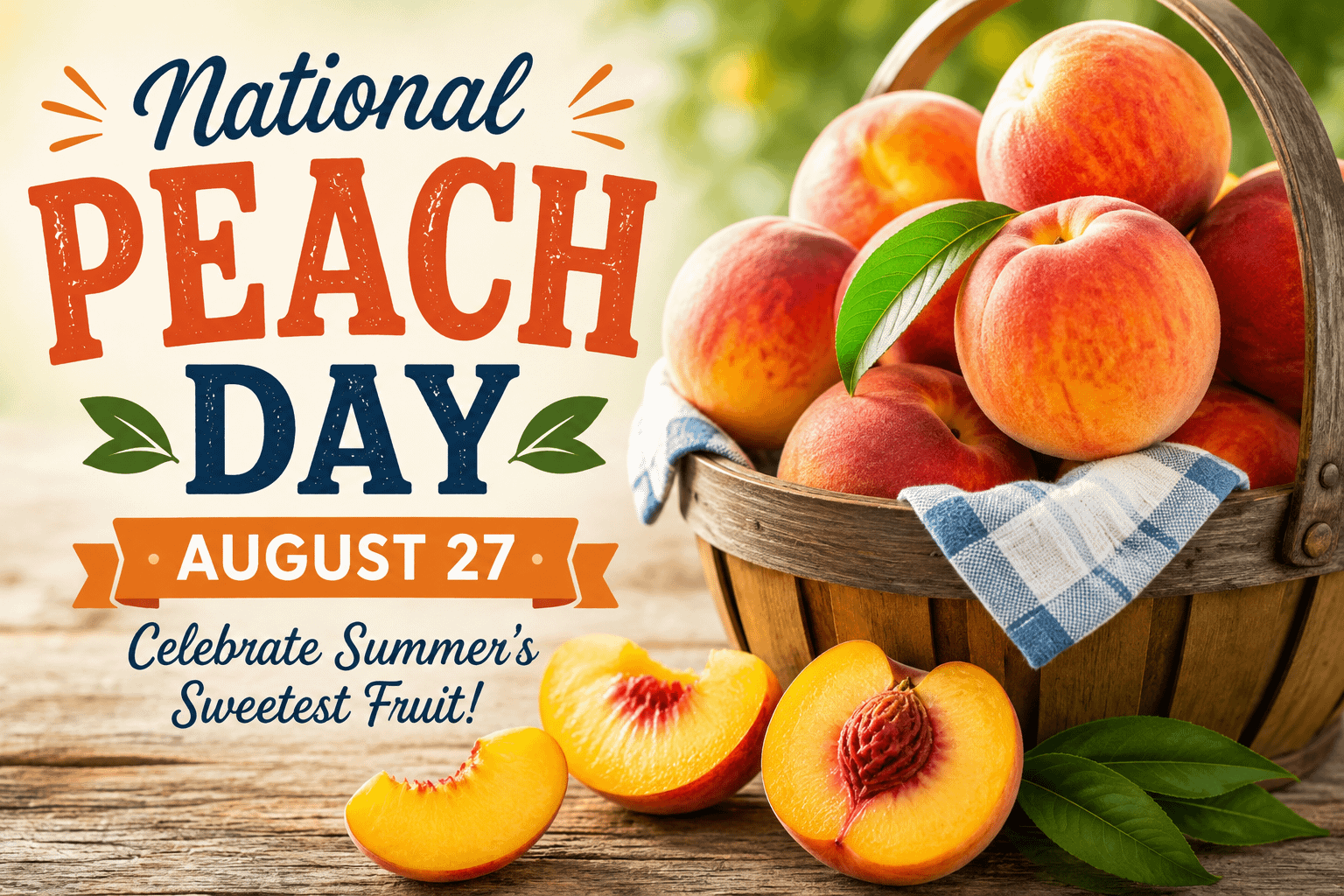
Every year on August 27, National Peach Day gives us another reason to enjoy one of summer’s sweetest, juiciest, and most beloved fruits.
There is something unmistakably summery about a perfectly ripe peach. Its golden-orange skin, delicate fuzz, sweet fragrance, and incredibly juicy flesh make it a seasonal treat worth celebrating. Whether you’re eating one fresh over the kitchen sink, baking peaches into a homemade cobbler, grilling them for dinner, blending them into a refreshing drink, or turning them into preserves for later in the year, peaches offer seemingly endless possibilities.
National Peach Day isn’t just about eating peaches, either. It’s an opportunity to appreciate the history of this ancient fruit, learn about the farmers who grow it, experiment with new recipes, and perhaps even create a few summertime memories along the way.
So grab a napkin—because a good peach is supposed to be juicy—and let’s celebrate National Peach Day.
Why Peaches Feel Like Summer
Certain foods become closely connected to seasons, and peaches are unquestionably associated with summer.
Think about the experience of biting into a perfectly ripe peach.
Before you even taste it, there’s the fragrance. Then comes the first bite, when the soft flesh releases its sweet juice. A truly ripe peach can be so juicy that eating it neatly becomes almost impossible.
That’s part of the experience.
Peaches appear during a time of year associated with vacations, backyard barbecues, farmers markets, road trips, picnics, outdoor gatherings, and long evenings spent with friends and family.
For many people, the first really good peach of the season is one of those small signs that summer has truly arrived.
The Peach Has an Ancient History
Although peaches have become deeply connected with American food culture, they didn’t originate in the United States.
The story of the peach stretches back thousands of years.
Peaches originated in China, where they were cultivated in ancient times and became culturally significant. From China, peaches gradually traveled westward through trade and migration.
They eventually became associated with Persia, which influenced the fruit’s scientific naming and contributed to the historical misconception that peaches originated there.
From Persia, peaches spread throughout Europe.
Eventually, Spanish explorers and settlers introduced peaches to the Americas.
The fruit adapted well to growing conditions in parts of North America and gradually became established throughout numerous regions.
Over generations, peaches went from being an introduced fruit to becoming deeply woven into American agriculture, cooking, and summertime traditions.
How Peaches Became an American Favorite
Peaches flourished in parts of the United States where warm summers and suitable growing conditions helped orchards thrive.
As agriculture expanded and transportation improved, peaches could be grown commercially and transported to consumers farther away.
Peach orchards became especially important in several states.
Today, California, South Carolina, Georgia, and New Jersey are among the states strongly associated with peach production.
Different climates and growing regions also mean consumers can enjoy peaches over an extended season rather than during only a few weeks of the year.
Still, for many people, the best peach experience comes from finding locally grown fruit at the height of summer.
Why Is Georgia Called the Peach State?
Few American states are more closely associated with a fruit than Georgia is with peaches.
Georgia is famously known as “The Peach State.”
The peach became an important symbol of Georgia’s agricultural heritage and eventually became incorporated into the state’s broader cultural identity.
Today, peach imagery appears throughout Georgia, from signs and businesses to souvenirs and tourism promotions.
Interestingly, being known as the Peach State doesn’t necessarily mean Georgia produces more peaches than every other state.
Its reputation developed through history, agriculture, marketing, regional pride, and the quality of peaches grown there.
The connection became so strong that the peach eventually became practically synonymous with Georgia.
California’s Important Role in Peach Production
While Georgia may have the most famous peach nickname, California plays an enormous role in American peach agriculture.
California’s climate and extensive agricultural regions allow farmers to grow significant quantities of peaches.
The state produces peaches for both the fresh market and processing.
That means some peaches are grown specifically to be enjoyed fresh, while others may eventually become canned peaches or ingredients in processed foods.
It’s another reminder that the peach industry extends far beyond the baskets of fresh fruit we see at summertime farmers markets.
What Exactly Is a Peach?
Peaches are known botanically as stone fruits.
The term refers to fruits that contain a hard inner pit, or “stone,” surrounded by fleshy fruit.
Other familiar stone fruits include:
- Nectarines
- Plums
- Cherries
- Apricots
Inside the peach pit is the seed.
Peaches are also members of the rose family, making them botanical relatives of several other familiar fruits.
And yes, those beautiful pink peach blossoms that appear on peach trees before the fruit develops help explain the connection.
Freestone vs. Clingstone Peaches
Not every peach behaves the same way when you cut into it.
One of the most useful distinctions is whether a peach is classified as freestone or clingstone.
Freestone Peaches
With freestone peaches, the flesh separates relatively easily from the pit.
That makes them especially convenient when you’re slicing peaches for:
- Salads
- Desserts
- Fresh eating
- Pies
- Cobblers
- Grilling
If you’ve ever cut a peach in half and easily removed the pit, you were probably enjoying a freestone variety.
Clingstone Peaches
With clingstone peaches, the flesh attaches more tightly to the pit.
Removing the pit can require more effort.
Clingstone peaches are frequently associated with commercial processing and canning, although they can certainly be enjoyed in other ways.
Both types can be delicious—the difference mainly affects how easily the fruit separates from its pit.
Yellow Peaches and White Peaches
Peaches can also differ in flesh color.
Yellow Peaches
Yellow peaches are the classic peach many Americans recognize.
They typically offer a combination of sweetness and noticeable acidity, producing the familiar bright peach flavor.
They work wonderfully for fresh eating and cooking.
White Peaches
White peaches generally have paler flesh and often offer a sweeter, more delicate flavor with lower perceived acidity.
People who prefer exceptionally sweet peaches may especially enjoy white varieties.
Trying several varieties side by side can be a fun National Peach Day activity.
You might be surprised by how different two peaches can taste.
Peaches and Nectarines: What’s the Difference?
Peaches and nectarines are remarkably similar.
The most obvious difference is their skin.
Peaches typically have their famous fuzzy exterior, while nectarines have smooth skin.
Beyond that, the two fruits are extremely closely related.
Both can have yellow or white flesh, both contain pits, and both can be used in many of the same recipes.
If you love peaches but aren’t a fan of fuzzy peach skin, nectarines may be your perfect alternative.
The Nutrition Inside a Peach
National Peach Day may feel like an indulgent food holiday, but fresh peaches can easily fit into a balanced diet.
Peaches naturally provide water along with several important nutrients.
They can contribute:
Vitamin C – Supports normal immune function and plays a role in collagen formation.
Fiber – Helps support normal digestive health.
Potassium – An important mineral involved in several normal body functions.
Antioxidant compounds – Fruits and vegetables provide various naturally occurring plant compounds.
Water – Peaches have a high water content, which contributes to their refreshing quality.
Fresh peaches are also naturally sweet, making them an appealing option when you’re craving dessert.
Of course, adding butter, sugar, pastry, whipped cream, or ice cream changes the nutritional profile considerably.
But National Peach Day only comes once a year, so enjoying peach cobbler alongside your fresh fruit seems perfectly reasonable.
How to Choose the Perfect Peach
Finding a great peach isn’t always as simple as grabbing the reddest one.
Several clues can help you determine whether a peach is ready to eat.
Smell the Peach
A ripe peach often has a noticeable sweet fragrance.
If you can smell that wonderful peach aroma before taking a bite, that’s usually encouraging.
Check the Firmness
Gently press the peach with your fingers.
A peach that’s ready for eating should generally give slightly under gentle pressure.
Avoid squeezing aggressively because peaches bruise easily.
Look at the Background Color
The amount of red on a peach isn’t always the best indicator of ripeness.
Instead, pay attention to the fruit’s underlying color and overall appearance.
Different peach varieties naturally develop different colors.
Avoid Major Damage
Small imperfections aren’t necessarily a problem, especially with locally grown fruit, but avoid peaches with significant bruising, broken skin, mold, or obvious deterioration.
How to Ripen Peaches at Home
Did you buy peaches that are still too firm?
Give them some time.
Leave firm peaches at room temperature and check them regularly.
For faster ripening, people commonly place peaches in a paper bag at room temperature.
Once the peaches reach the ripeness you prefer, refrigeration can help slow further ripening.
Don’t forget about them, though.
The difference between a beautifully ripe peach and an overripe peach can happen surprisingly quickly.
The Simple Joy of Eating a Fresh Peach
You don’t need a complicated recipe to celebrate National Peach Day.
Sometimes the best thing you can do with an excellent peach is absolutely nothing.
Wash it.
Take a bite.
Enjoy it.
A perfectly ripe summer peach already contains everything it needs.
In fact, there’s something wonderfully nostalgic about standing outside—or over the kitchen sink—eating a peach while trying to keep the juice from running down your arm.
That messy sweetness is part of what makes peach season memorable.
Make a Classic Peach Cobbler
If fresh peaches represent summer in fruit form, peach cobbler might represent summer in dessert form.
Warm peaches bubbling beneath a golden topping create one of America’s great comfort-food desserts.
Add cinnamon or other warm spices depending on your preferred recipe.
Then serve the cobbler while it’s still warm.
And don’t forget the vanilla ice cream.
The combination of warm peach filling, buttery topping, and slowly melting vanilla ice cream is difficult to beat.
A homemade peach cobbler can also become the centerpiece of a National Peach Day family dinner.
Bake a Homemade Peach Pie
Peach pie deserves a place beside apple, cherry, and blueberry among classic American fruit pies.
Fresh peaches provide a sweet, juicy filling surrounded by flaky pastry.
Some recipes keep the peach flavor simple, while others incorporate cinnamon, nutmeg, vanilla, brown sugar, or other complementary flavors.
Serve peach pie warm or chilled.
Add whipped cream or vanilla ice cream if you want to make the celebration especially indulgent.
Try Peach Crisp
If making pie dough isn’t your favorite kitchen activity, peach crisp offers another delicious option.
Place sliced peaches into a baking dish and cover them with a crumbly topping typically made from ingredients such as oats, flour, butter, brown sugar, and spices.
Bake until the peaches become tender and bubbling while the topping turns golden.
It’s rustic, comforting, and relatively simple.
Put Peaches on the Grill
Peaches aren’t limited to the oven.
They’re fantastic on the grill.
Choose ripe peaches that are still firm enough to hold their shape.
Cut them in half, remove the pits, and place them cut-side down on a heated grill.
The heat softens the fruit while creating caramelized flavors and attractive grill marks.
Serve grilled peaches with:
- Vanilla ice cream
- Greek yogurt
- Honey
- Chopped nuts
- Whipped cream
- Cinnamon
- Fresh herbs
You can also incorporate grilled peaches into savory meals.
Peaches Belong in Savory Dishes Too
Because peaches are naturally sweet, they create wonderful contrast when paired with salty, smoky, spicy, or tangy ingredients.
Try adding fresh peaches to a summer salad.
Combine sliced peaches with greens and ingredients such as cheese, nuts, herbs, and vinaigrette.
Peaches can also pair nicely with grilled meats.
A peach-based glaze or sauce can add sweetness and acidity to chicken or pork.
The fruit can even be added to sandwiches, flatbreads, pizzas, and grain bowls.
Experimenting with savory peach recipes is one of the most interesting ways to celebrate National Peach Day.
Make Fresh Peach Salsa
Peach salsa combines sweetness, acidity, heat, and freshness.
Start with diced fresh peaches and add ingredients such as:
- Red onion
- Jalapeño
- Cilantro
- Lime juice
- Bell pepper
Adjust the ingredients according to your preferred level of heat.
Serve peach salsa with tortilla chips or spoon it over grilled chicken, fish, shrimp, or tacos.
It’s especially refreshing during hot summer weather.
Peach Drinks Are Perfect for Summer
Peaches also make excellent beverages.
Use fresh peaches, peach purée, peach nectar, or peach syrup to create drinks such as:
- Peach lemonade
- Peach iced tea
- Peach smoothies
- Peach milkshakes
- Peach sparkling water
- Peach punch
- Peach slushies
- Peach mocktails
Adults can also incorporate peach flavors into cocktails using spirits, sparkling wine, or peach liqueurs where appropriate.
A cold peach drink enjoyed outside on a warm August evening can be an excellent way to end National Peach Day.
Make Homemade Peach Ice Cream
Peaches and cream are a natural combination.
That’s one reason peach ice cream remains such a wonderful summertime dessert.
Fresh peach pieces can add bursts of fruit flavor throughout a creamy frozen base.
If you don’t have an ice cream maker, you can still experiment with no-churn peach ice cream or create peach frozen yogurt.
Another easy option is simply adding chopped fresh peaches to vanilla ice cream.
Preserve Summer With Peach Jam
Peach season eventually ends.
But its flavor doesn’t have to disappear completely.
Making peach jam or preserves allows you to capture some of summer’s sweetness and enjoy it months later.
Peach preserves are delicious on:
- Toast
- Biscuits
- English muffins
- Pancakes
- Waffles
- Scones
They can also be used as an ingredient in sauces, glazes, desserts, and baked goods.
If you’re new to home canning, follow a tested food-safety recipe and proper preservation procedures.
Freeze Peaches for Later
Freezing is another way to extend peach season.
Frozen peach slices can later be used in smoothies, baked desserts, sauces, or other recipes.
Imagine making a peach smoothie in the middle of winter using peaches you preserved during August.
It’s a small reminder that summer eventually comes back around.
Visit a Local Farmers Market
One of the best National Peach Day activities is visiting a farmers market.
Local growers may offer peach varieties that aren’t commonly found in large supermarkets.
Ask the farmer about their peaches.
Find out:
- Which variety is sweetest?
- Which is best for baking?
- Which is best for eating immediately?
- Which holds up well on the grill?
- Which is best for jam or preserves?
You might walk away with more than delicious fruit—you may discover a peach variety you’ve never tried before.
Visit a Peach Orchard
If peach orchards operate in your area, National Peach Day can become an entire family outing.
Some farms allow visitors to pick their own fruit during harvest season.
Walking through an orchard and choosing peaches directly from the trees creates a completely different connection to the food you’re eating.
It can also help children understand that fruit doesn’t simply appear in grocery stores.
Behind every peach are growers, orchard workers, weather conditions, careful timing, harvesting, packing, and transportation.
Appreciate the Farmers Behind Every Peach
Food holidays are often treated simply as excuses to eat something delicious, but they’re also opportunities to appreciate agriculture.
Growing peaches requires patience.
Peach trees don’t produce supermarket-ready fruit without work.
Farmers have to manage orchards throughout the year, dealing with weather, pests, diseases, pruning, irrigation, harvesting, labor, and countless other challenges.
A late frost, excessive heat, drought, storms, or other weather conditions can dramatically affect a harvest.
When you purchase locally grown peaches, take a moment to appreciate the work required to bring that fruit from an orchard to your table.
Peaches Have a Place in Southern Food Traditions
Peaches have become especially connected with Southern American cooking.
Peach cobbler, peach preserves, peach pies, peach ice cream, and other peach-based recipes regularly appear at family gatherings, church events, summer celebrations, picnics, and community meals.
Recipes are often handed down through families.
Someone’s “best peach cobbler” might not simply be dessert—it could be a recipe associated with a grandmother, parent, childhood home, or annual family tradition.
That’s one reason food can carry such powerful emotional meaning.
Food Has a Way of Holding Memories
A smell or flavor can transport us back to another time.
Maybe peaches remind you of visiting your grandparents.
Perhaps your family stopped at the same roadside fruit stand every summer.
Maybe someone you loved made an unforgettable peach pie.
Or perhaps you remember eating peaches outside as a child without worrying about juice dripping everywhere.
National Peach Day provides an opportunity to reconnect with those memories.
Make an old family recipe.
Tell your children where it came from.
Share the story behind the food.
Traditions survive when people continue them.
Host a Peach-Themed Dinner
Want to take National Peach Day to another level?
Build an entire meal around peaches.
You could start with a peach salsa appetizer.
Serve a summer salad with sliced peaches.
Prepare grilled chicken or pork with a peach glaze for the main course.
Add grilled peaches as a side.
Finish dinner with peach cobbler, peach pie, or homemade peach ice cream.
Serve peach iced tea or peach lemonade throughout the meal.
Suddenly, National Peach Day becomes an event rather than just another food holiday.
Have a Peach Dessert Taste Test
Can’t decide which peach dessert is best?
Turn the decision into a friendly competition.
Gather several desserts such as:
- Peach cobbler
- Peach pie
- Peach crisp
- Peach cheesecake
- Peach ice cream
- Peach muffins
Have friends or family taste each one and vote for their favorite.
You could even ask everyone to bring a different peach dish.
It’s a simple way to turn the holiday into a gathering.
Introduce Kids to Fresh Peaches
National Peach Day can also be educational.
Let children compare peaches and nectarines.
Cut open a peach and show them the pit.
Talk about how peaches grow on trees.
Visit an orchard or farmers market.
Make a simple peach dessert together.
Kids who participate in choosing and preparing foods may become more curious about trying them.
And cooking together can create memories long after the dishes are washed.
Fun Facts About Peaches
Here are a few peach facts to share on National Peach Day:
- Peaches originated in China.
- They have been cultivated for thousands of years.
- Peaches are classified as stone fruits.
- The hard center is commonly called a pit or stone.
- Peach trees belong to the rose family.
- Nectarines are extremely closely related to peaches.
- Peach flesh can be yellow or white.
- Peaches can be classified as freestone or clingstone.
- Georgia is famously known as “The Peach State.”
- Peach trees produce beautiful blossoms before developing fruit.
- Peaches can be eaten fresh, baked, grilled, frozen, dried, canned, or preserved.
- Peach flavors work in both sweet and savory dishes.
- Peaches are used in everything from pies and cobblers to salsa and barbecue sauces.
Simple Ways to Celebrate National Peach Day
You don’t have to organize a huge celebration.
Try one or several of these ideas:
- Eat a perfectly ripe fresh peach.
- Buy peaches from a local farmer.
- Bake homemade peach cobbler.
- Make peach pie.
- Grill peach halves for dessert.
- Prepare fresh peach salsa.
- Make peach lemonade or iced tea.
- Blend a peach smoothie.
- Try a peach variety you’ve never eaten before.
- Visit a farmers market.
- Visit a peach orchard.
- Make peach jam.
- Freeze fresh peaches for later.
- Prepare a savory peach recipe.
- Share peaches with a neighbor.
- Make a family peach recipe.
- Host a peach-themed dinner.
- Have a peach dessert competition.
- Teach children how peaches grow.
- Share your favorite peach dish with friends online.
Support Local Growers
National Peach Day is also a great reason to support local agriculture.
When peaches are in season, look for farmers markets, roadside stands, orchards, and independent produce markets in your community.
Locally grown peaches may have traveled a shorter distance before reaching you, which can sometimes mean they’re harvested closer to peak ripeness.
You’re also helping support farmers and agricultural businesses in your region.
Ask where your peaches were grown.
Knowing where your food comes from can make eating it even more meaningful.
Share National Peach Day With Someone
Food celebrations become more enjoyable when they’re shared.
Buy an extra basket of peaches for a neighbor.
Bring peach muffins to work.
Bake a cobbler for your family.
Invite friends over for grilled peaches and ice cream.
Drop off homemade peach preserves for someone who could use a small surprise.
It doesn’t need to be elaborate.
Sometimes a simple plate of homemade food is enough to brighten someone’s day.
National Peach Day Is About Enjoying the Season
Modern life makes it possible to purchase many foods throughout much of the year.
But there’s still something special about enjoying produce when it’s naturally associated with the season.
Peaches are one of those foods.
They remind us that some experiences are worth waiting for.
When peach season arrives, enjoy it.
Eat the fruit while it’s wonderfully ripe.
Visit the farmers market.
Bake the cobbler.
Make the jam.
Share a basket with someone else.
Summer won’t last forever.
That’s exactly why its sweetest moments are worth appreciating.
Celebrate National Peach Day on August 27
On August 27, celebrate National Peach Day by enjoying this incredible fruit however you like it best.
Maybe you’ll keep things simple with a cold, juicy peach straight from the refrigerator.
Maybe you’ll bake a bubbling peach cobbler and cover it with vanilla ice cream.
Perhaps you’ll fire up the grill, experiment with peach salsa, visit a farmers market, or preserve a batch of peaches so you can enjoy the flavor of summer months from now.
However you celebrate, take a moment to appreciate the farmers, history, traditions, recipes, and memories connected to this humble fruit.
A peach may seem simple.
But sometimes the simplest things—the smell of fresh fruit, a favorite family recipe, a trip to a roadside farm stand, or dessert shared around a table—become the memories we hold onto the longest.
So grab a peach, share something delicious, and savor one of the sweetest flavors summer has to offer.
Happy National Peach Day!
Join the Conversation
What’s your favorite way to enjoy peaches?
Are you choosing a fresh, juicy peach, homemade peach cobbler, peach pie, peach ice cream, grilled peaches, peach preserves, or something completely different?
Share your favorite peach dish, recipe, or summertime peach memory and celebrate National Peach Day on August 27!
Leave a Reply