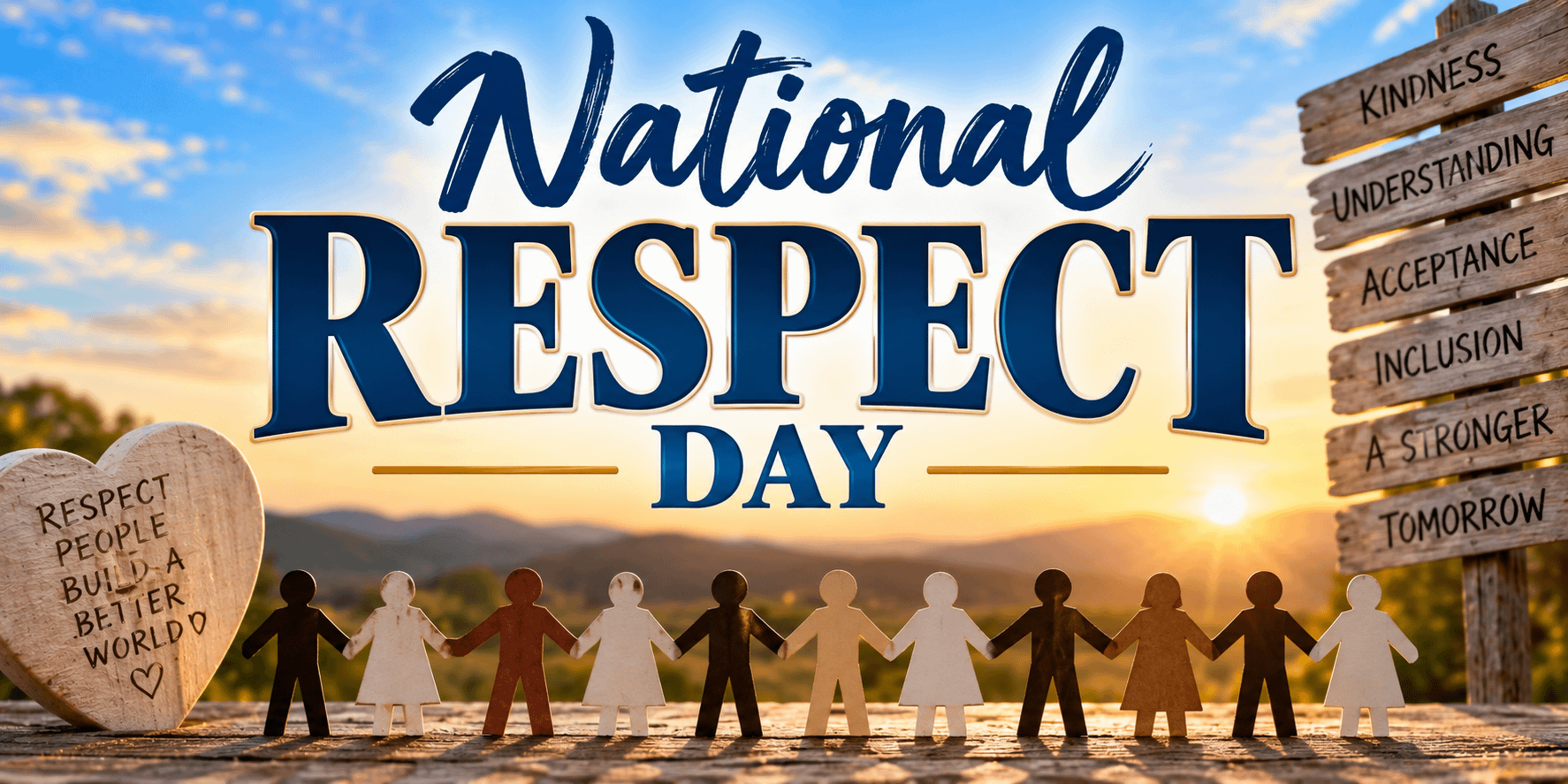
Respect is one of those simple ideas that can have an enormous impact.
It costs nothing to offer, yet it can change the way someone feels about themselves. It can strengthen relationships, calm disagreements, build trust, and remind people that they matter.
National Respect Day, observed on September 18, gives us an opportunity to think about the way we treat the people around us—and the way we allow ourselves to be treated.
Respect isn’t limited to saying “please” and “thank you.” Those things matter, but genuine respect goes much deeper. It means recognizing another person’s dignity even when their experiences, beliefs, backgrounds, or opinions are different from our own.
It means listening.
It means considering how our words affect others.
It means honoring boundaries.
And sometimes, it means choosing kindness when being cruel would be easier.
National Respect Day reminds us that a little more respect could make our homes, workplaces, communities, relationships, and even online conversations much better places.
What Is National Respect Day?
National Respect Day is observed annually on September 18 and encourages people to think about the importance of respectful behavior.
Respect plays a role in nearly every part of life.
Children learn it from parents, teachers, coaches, and other adults. Friendships depend on it. Healthy romantic relationships cannot survive for long without it. Successful workplaces require it. Communities become stronger when people practice it.
Yet respect can sometimes be forgotten when emotions run high.
We may become impatient.
We may interrupt someone before hearing what they have to say.
We may judge someone based on a single mistake.
We may post something online that we would never say to another person’s face.
National Respect Day challenges us to examine those moments.
The goal isn’t perfection.
The goal is awareness.
Are we treating people the way we would want to be treated?
Are we listening as much as we’re talking?
Are we making people feel valued—or dismissed?
Those questions can reveal a great deal about how respect appears in our everyday lives.
Respect Begins With Recognizing Human Dignity
One of the most important forms of respect is recognizing that every person has value.
You don’t have to agree with someone to treat them with dignity.
You don’t have to understand every decision they’ve made.
You don’t have to share their worldview.
Respect doesn’t require agreement.
It requires recognizing that the person standing across from you is still a human being with feelings, struggles, dreams, fears, responsibilities, memories, and experiences you may know nothing about.
That realization can change the way we interact with people.
The cashier moving slowly may be working through a difficult day.
The coworker who seems distracted may have something painful happening at home.
The person who appears unfriendly may simply be exhausted.
We rarely know everything another person is carrying.
Respect leaves room for that possibility.
Listening Is One of the Greatest Forms of Respect
Most people want to feel heard.
Unfortunately, listening has become increasingly difficult.
During conversations, we’re often preparing our next response instead of genuinely hearing what the other person is saying.
Sometimes we’re looking at our phones.
Sometimes we’re waiting for an opportunity to correct them.
Sometimes we’ve already decided what they mean before they’ve finished speaking.
Real listening requires something different.
It requires attention.
When someone is talking, give them the opportunity to finish.
Ask questions when you don’t understand.
Try to understand their perspective before immediately defending your own.
You may still disagree when the conversation ends.
That’s okay.
The purpose of listening isn’t always to change your mind.
Sometimes listening simply tells another person:
“What you have to say matters enough for me to hear it.”
That’s respect.
Respect Doesn’t Mean You Have to Agree
One misconception about respect is that it requires agreement.
It doesn’t.
Two people can disagree strongly while still respecting one another.
You can say:
“I understand your point, but I see it differently.”
You can challenge an idea without attacking the person who holds it.
You can disagree without insults.
You can walk away from a conversation without trying to humiliate someone.
Disagreement is normal.
Disrespect is a choice.
Some of the strongest relationships are between people who don’t always agree but have learned how to communicate without destroying one another in the process.
Respect in Relationships
Respect is one of the foundations of every healthy relationship.
Love may bring two people together, but respect helps them remain connected.
In a respectful relationship, both people understand that the other person’s feelings matter.
That means avoiding humiliation during arguments.
It means not using someone’s insecurities against them.
It means respecting privacy.
It means honoring boundaries.
It means being honest.
It means allowing each other to have friendships, interests, goals, and identities outside the relationship.
Respect also means never intentionally making someone feel small simply because you’re angry.
Arguments happen.
Frustration happens.
Misunderstandings happen.
But when respect disappears, relationships can become emotionally damaging very quickly.
You can be upset with someone and still remember that you care about them.
Respect in the Workplace
Respect can dramatically change workplace culture.
Employees want to know their contributions matter.
Managers want their teams to communicate honestly.
Coworkers want to feel valued rather than ignored or belittled.
Simple actions can make a tremendous difference.
Thank someone for helping you.
Give credit when someone contributes an idea.
Don’t gossip about coworkers.
Respect people’s time.
Listen when someone raises a concern.
Treat everyone with dignity regardless of their job title.
A workplace becomes healthier when respect flows in every direction—not simply from employees toward management.
Leadership deserves respect, but so do the people doing the everyday work that keeps an organization running.
Respecting People Who Serve You
National Respect Day is also a good reminder to think about how we treat people working in service positions.
Restaurant employees.
Retail workers.
Delivery drivers.
Custodians.
Customer-service representatives.
Hotel employees.
Healthcare support staff.
Transportation workers.
And countless others.
These are human beings doing their jobs.
A mistake with an order doesn’t justify screaming at someone.
A long line doesn’t make the employee behind the counter responsible for every inconvenience.
Frustration is understandable.
Cruelty isn’t.
Sometimes one of the clearest demonstrations of someone’s character is how they treat people who cannot offer them anything except a service.
A simple “thank you” can go much further than we realize.
Respect Online Matters Too
The internet has created incredible opportunities for communication, but it has also made disrespect easier.
People sometimes say things behind screens that they would never say face-to-face.
Comments become personal.
Arguments become vicious.
Strangers become targets.
National Respect Day offers a useful reminder:
There is a real person behind the screen.
Before posting an angry comment, consider whether it actually contributes anything useful.
Before sharing someone’s embarrassing moment, think about how you would feel if it were yours.
Before joining a pile-on against someone, remember that you probably don’t know the complete story.
We don’t have to eliminate disagreement from the internet.
But we can make disagreement more human.
Teaching Children Respect
Children learn respect largely by watching adults.
We can tell children to be polite all day long, but they’ll pay close attention to how we actually behave.
How do we speak to restaurant workers?
How do we talk about people we dislike?
How do we behave when we’re angry?
Do we apologize when we’re wrong?
Do we listen when someone else is talking?
Children notice these things.
Teaching respect isn’t simply saying:
“Respect adults.”
It also means showing children that they deserve respect too.
Listen when they speak.
Take their feelings seriously.
Teach them about boundaries.
Correct their behavior without humiliating them.
Children who understand what healthy respect looks like are better prepared to recognize both respectful and disrespectful behavior later in life.
Respect Yourself Too
Respect isn’t only about how you treat other people.
It also includes how you treat yourself.
Self-respect means recognizing your own worth.
It means establishing boundaries.
It means understanding that you don’t have to tolerate constant disrespect simply because you care about someone.
You can love someone and still say:
“You cannot treat me this way.”
You can forgive someone without allowing the same behavior to continue.
You can walk away from environments that constantly damage your confidence or peace.
Self-respect also means paying attention to the way you speak to yourself.
Many people would never talk to another person as harshly as they talk to themselves.
“I’m worthless.”
“I’m a failure.”
“I’ll never be good enough.”
Imagine saying those words to someone you love.
You probably wouldn’t.
You deserve some of that same compassion.
Respect Is Often Found in Small Moments
We sometimes imagine changing the world requires enormous gestures.
But culture is shaped by millions of small interactions.
Holding the door for someone.
Letting another driver merge.
Thanking someone.
Putting your phone away during a conversation.
Helping someone who’s struggling.
Giving someone credit for their work.
Apologizing when you’re wrong.
Waiting patiently.
Remembering someone’s name.
Checking on someone who’s having a difficult day.
Standing up for someone who’s being treated unfairly.
None of these actions will make national headlines.
But they matter.
You never know when a small act of respect will arrive exactly when someone needs it.
Respect Must Go Both Ways
There’s another important part of the conversation surrounding respect.
Respect should not mean allowing someone to mistreat you.
Sometimes people demand “respect” when what they actually want is obedience.
Healthy respect isn’t built through fear.
It’s built through mutual understanding.
You can respect another person’s humanity while still protecting your own boundaries.
You can say no.
You can leave a toxic conversation.
You can refuse to participate in cruelty.
You can distance yourself from someone who repeatedly treats you badly.
Respecting others should never require abandoning respect for yourself.
How to Celebrate National Respect Day
National Respect Day doesn’t require a complicated celebration.
Instead, use September 18 as an opportunity to become more intentional about your interactions.
Try giving someone your complete attention during a conversation.
Thank someone whose work is often overlooked.
Compliment a coworker.
Call someone you’ve neglected.
Apologize for something you’ve handled poorly.
Offer patience to someone who’s struggling.
Encourage a child.
Help a neighbor.
Think before posting an angry comment online.
Most importantly, pay attention to how people feel after interacting with you.
Do they feel heard?
Do they feel valued?
Do they feel respected?
That’s a powerful question to carry far beyond National Respect Day.
Respect Can Change More Than We Realize
Imagine how different everyday life would feel if people practiced just a little more respect.
Families might communicate better.
Relationships might become healthier.
Workplaces might become less stressful.
Online discussions might become more productive.
Children might grow up understanding both kindness and healthy boundaries.
Strangers might feel less invisible.
Respect won’t solve every problem.
People will still disagree.
Mistakes will still happen.
Arguments will still occur.
But respect gives us a better way to navigate those moments.
It allows us to disagree without hatred.
Correct without humiliating.
Lead without intimidating.
Listen without immediately judging.
And care about people even when their lives look completely different from ours.
Make Respect More Than a One-Day Celebration
National Respect Day may fall on September 18, but respect shouldn’t disappear on September 19.
It should become part of how we live.
Respect the people you love.
Respect strangers.
Respect workers.
Respect children.
Respect older adults.
Respect people’s boundaries.
Respect differences.
Respect people’s time.
Respect yourself.
And when someone makes a mistake, remember that you have made mistakes too.
Sometimes the world doesn’t need another argument.
Sometimes it doesn’t need another angry comment.
Sometimes it simply needs someone willing to choose patience, understanding, compassion, and respect.
National Respect Day reminds us that every interaction gives us that opportunity.
How different would the world become if each of us made one extra person feel respected today?
Leave a Reply