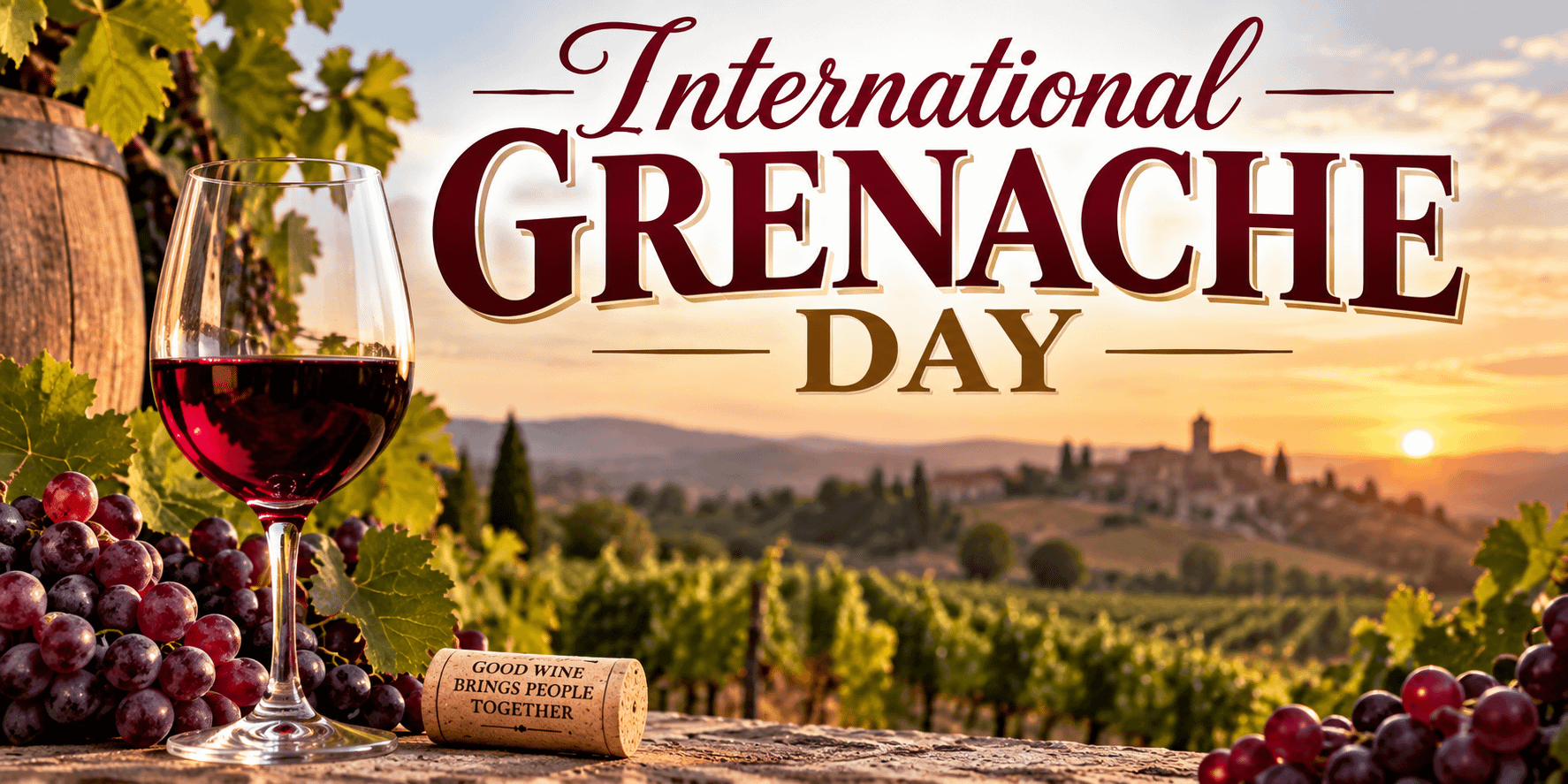
Wine has a remarkable ability to connect us to a place, a culture, and centuries of tradition. Every bottle has a story behind it—from the soil where the vines were planted to the people who harvested the grapes and transformed them into wine.
International Grenache Day is an opportunity to celebrate one grape with an especially impressive story: Grenache.
Known as Garnacha in Spain and Grenache in many other parts of the world, this versatile grape has traveled across countries and continents, becoming an important ingredient in everything from bold red wines to refreshing rosés and complex blends.
Whether you already enjoy Grenache or have never knowingly tried it, International Grenache Day is the perfect excuse to learn more about this fascinating grape and perhaps pour yourself a glass.
When Is International Grenache Day?
International Grenache Day is traditionally celebrated on the third Friday of September.
The celebration brings wine lovers, vineyards, wineries, restaurants, retailers, and winemakers together to recognize Grenache and the many styles of wine produced from it.
Rather than celebrating one particular brand or region, the day highlights the grape itself.
That makes the celebration especially interesting because Grenache can taste remarkably different depending on where it is grown, how ripe the grapes become, how the wine is produced, and whether Grenache is bottled by itself or blended with other varieties.
What Is Grenache?
Grenache is a red wine grape variety known for thriving in warm, dry climates.
The grape typically produces wines with generous fruit flavors, moderate tannins, and relatively high alcohol levels when allowed to ripen fully.
Some of the flavors commonly associated with Grenache include:
- Strawberry
- Raspberry
- Cherry
- Plum
- Red currant
- Herbs
- Pepper
- Licorice
- Dried fruit
- Spice
Older or more complex Grenache wines may develop additional earthy, savory, leathery, or herbal characteristics.
However, there isn’t one universal Grenache flavor.
A young Grenache-based wine designed for immediate drinking may be juicy, fruity, and approachable, while a carefully produced wine from old vines can be concentrated, structured, and capable of developing beautifully with age.
That versatility is part of what makes the grape so fascinating.
Grenache and Garnacha
If you’ve seen bottles labeled Garnacha and Grenache and wondered about the difference, the answer is relatively simple.
They are names for the same grape variety.
Garnacha is the Spanish name, while Grenache is the name commonly used in France and much of the English-speaking wine world.
Spain has a particularly important relationship with the grape, and Garnacha remains closely associated with several Spanish wine regions.
France also became one of Grenache’s great homes, particularly in southern Rhône wines and throughout parts of southern France.
Over generations, Grenache expanded around the world.
Today, producers cultivate it in places including Australia, the United States, South Africa, and other warm wine-growing regions.
A Grape Built for Warm Climates
Grenache has characteristics that make it particularly well suited to hot, dry growing conditions.
Its vines can handle heat and drought relatively well, which helped make the grape successful throughout Mediterranean wine regions.
Grenache is generally a late-ripening variety, meaning it benefits from a long, warm growing season.
When the conditions are right, the grapes can accumulate significant sugar before harvest. During fermentation, that sugar is converted into alcohol, helping explain why some Grenache wines can be relatively powerful.
But Grenache isn’t simply about strength.
Careful vineyard management and winemaking can preserve freshness and acidity, producing wines that balance richness with elegance.
Grenache in Spain
Spain is essential to the story of Garnacha.
The grape has long been grown across parts of the country, where it can produce wines ranging from inexpensive everyday bottles to highly regarded wines made from extremely old vines.
Spanish Garnacha can offer delicious red-fruit flavors accompanied by spice, herbs, earth, and mineral characteristics.
Old vines are particularly prized.
As vines age, their yields often decrease, but the grapes they produce can become highly concentrated. When those grapes come from excellent vineyard sites and are handled carefully, the resulting wines can show impressive depth.
For anyone celebrating International Grenache Day, tasting a Spanish Garnacha is an excellent place to begin.
Grenache in France
Cross into France and you’ll encounter the grape under its more familiar international name: Grenache.
Grenache plays a major role in the wines of southern France, particularly in the Southern Rhône Valley.
It is frequently blended with varieties such as Syrah and Mourvèdre.
This combination is so famous that wine enthusiasts often refer to it simply as a GSM blend:
G – Grenache
S – Syrah
M – Mourvèdre
Each grape contributes something different.
Grenache can provide ripe fruit, warmth, and body. Syrah can contribute darker fruit, spice, structure, and color, while Mourvèdre may add tannin, savory complexity, and additional structure.
Grenache is also important in wines from areas such as Châteauneuf-du-Pape, where it frequently plays a central role in celebrated red blends.
Grenache Around the World
Grenache’s journey didn’t end in Europe.
The grape eventually became established in other wine-producing countries, including Australia.
Australia has a long history with Grenache, including vineyards containing remarkably old vines. For years, some of these grapes were destined primarily for fortified wines or blends.
As consumer tastes changed, producers increasingly recognized the potential of old-vine Grenache as a premium dry red wine.
Modern Australian Grenache can range from rich and powerful to surprisingly fragrant and elegant.
Grenache has also gained attention in California.
Producers in warmer California wine regions have experimented extensively with Rhône-style varieties, and Grenache can thrive in locations offering abundant sunshine.
California examples may showcase ripe strawberry and cherry fruit alongside herbs, spice, and floral aromas.
Exploring Grenache from several countries is one of the most enjoyable ways to appreciate just how adaptable this grape can be.
Grenache Isn’t Only Red Wine
One of Grenache’s greatest strengths is versatility.
While many people associate the grape with red wine, it can also be used to produce rosé.
Grenache’s naturally expressive red-fruit flavors can work beautifully in rosé wines, resulting in refreshing wines featuring notes of strawberry, watermelon, raspberry, citrus, and herbs.
Depending on how the wine is made, Grenache rosé can range from extremely pale and delicate to richer, fruitier styles.
Grenache can also appear in fortified and sweet wines in certain regions.
So someone could explore several completely different wine styles and discover Grenache playing an important role in each one.
What Food Goes With Grenache?
Grenache can be remarkably food-friendly, especially because many examples combine ripe fruit with savory herbs and spices.
A medium-bodied Grenache can pair beautifully with grilled meats, roasted vegetables, barbecue dishes, pizza, burgers, sausages, and Mediterranean-inspired meals.
Try Grenache alongside foods such as roast chicken, grilled pork, lamb, beef stew, barbecue ribs, grilled vegetables, mushroom dishes, charcuterie, aged cheeses, or tomato-based pasta.
The ideal pairing depends on the particular bottle.
A lighter, fruit-driven Grenache may work beautifully with chicken or pork, while a richer old-vine Grenache may stand up better to lamb or slow-cooked beef.
Grenache rosé is another story.
Serve it chilled alongside seafood, salads, grilled chicken, Mediterranean dishes, tacos, or appetizers.
There is plenty of room for experimentation.
How to Celebrate International Grenache Day
The easiest way to celebrate is simply to try Grenache.
Visit a local wine shop and ask for a recommendation. You could choose a Spanish Garnacha, French Grenache blend, Australian old-vine Grenache, California Grenache, or Grenache-based rosé.
Better yet, turn the occasion into a tasting.
Choose three bottles from different regions and compare them side by side.
For example, you might select:
Spanish Garnacha: Look for ripe red fruit, herbs, spice, and earth.
French Grenache blend: Notice how Grenache interacts with other Rhône varieties.
Australian or California Grenache: Compare the fruit intensity, body, spice, and overall style.
You don’t need to be a professional wine critic.
Simply ask yourself a few questions.
What does the wine smell like?
Does it taste mostly fruity, spicy, earthy, or herbal?
Does it feel light or heavy?
Is it smooth or tannic?
Most importantly:
Do you enjoy drinking it?
Wine appreciation doesn’t require complicated vocabulary. Your personal enjoyment matters far more than whether you can identify every aroma in the glass.
Host a Grenache Night
International Grenache Day can also become an excuse to gather friends and family.
Ask everyone to bring a different bottle containing Grenache.
Cover the labels and conduct a casual blind tasting.
Give each person a sheet of paper and have them score the wines based on aroma, flavor, food compatibility, and overall enjoyment.
Then reveal the bottles.
You might be surprised by which wine becomes everyone’s favorite.
Serve simple foods such as cheese, crackers, cured meats, pizza, grilled vegetables, barbecue, and chocolate so guests can experiment with different combinations.
The point isn’t to determine who knows the most about wine.
It’s to discover something together.
Learn the Story Behind Your Bottle
Another meaningful way to celebrate is to research the winery producing your Grenache.
Where are the vineyards?
How old are the vines?
What kind of climate does the region experience?
Was the wine aged in oak, concrete, stainless steel, or another vessel?
Was Grenache used alone or blended with other grapes?
These details can completely change the way you experience a bottle.
Wine becomes much more interesting when you realize you’re not simply drinking fermented grape juice.
You’re experiencing the result of geography, weather, farming, tradition, science, craftsmanship, and human decisions.
Support Local Wine Businesses
International Grenache Day is also an opportunity to support local wine shops, restaurants, tasting rooms, and independent producers.
Instead of automatically choosing a familiar bottle, ask someone working at your local wine shop about Grenache.
Tell them your budget and what styles of wine you normally enjoy.
You might discover a bottle you would never have chosen yourself.
Restaurants with thoughtful wine programs may also offer Grenache by the glass, giving you the opportunity to explore the grape without purchasing an entire bottle.
The Beauty of an Underrated Grape
Cabernet Sauvignon, Chardonnay, Pinot Noir, and Merlot often receive enormous attention.
Grenache sometimes operates more quietly.
Yet it has played an important role in winemaking for generations.
It can stand proudly on its own.
It can support other grapes in a blend.
It can produce red wine.
It can produce rosé.
It can range from affordable everyday wine to bottles capable of commanding serious attention from collectors.
Few grape varieties demonstrate versatility quite as effectively.
Raise a Glass to Grenache
International Grenache Day isn’t simply another date on the wine calendar.
It’s an invitation to explore.
A single grape can take you from the historic vineyards of Spain to southern France, Australia, California, and beyond—all without leaving your dinner table.
You may discover a juicy Spanish Garnacha perfect for pizza.
You might encounter a sophisticated Rhône blend that transforms alongside a slow-cooked dinner.
Perhaps you’ll find an elegant old-vine Grenache that completely changes your perception of the grape.
Or maybe you’ll simply discover an inexpensive bottle that becomes a new favorite.
That’s part of the joy of wine.
There is always something else to taste, another region to explore, and another story waiting behind the next bottle.
So on International Grenache Day, gather some friends, prepare a good meal, open a bottle, and celebrate one of the wine world’s great travelers.
Happy International Grenache Day!
What country or wine region produces your favorite Grenache—or is International Grenache Day going to be your first time trying it?
Leave a Reply