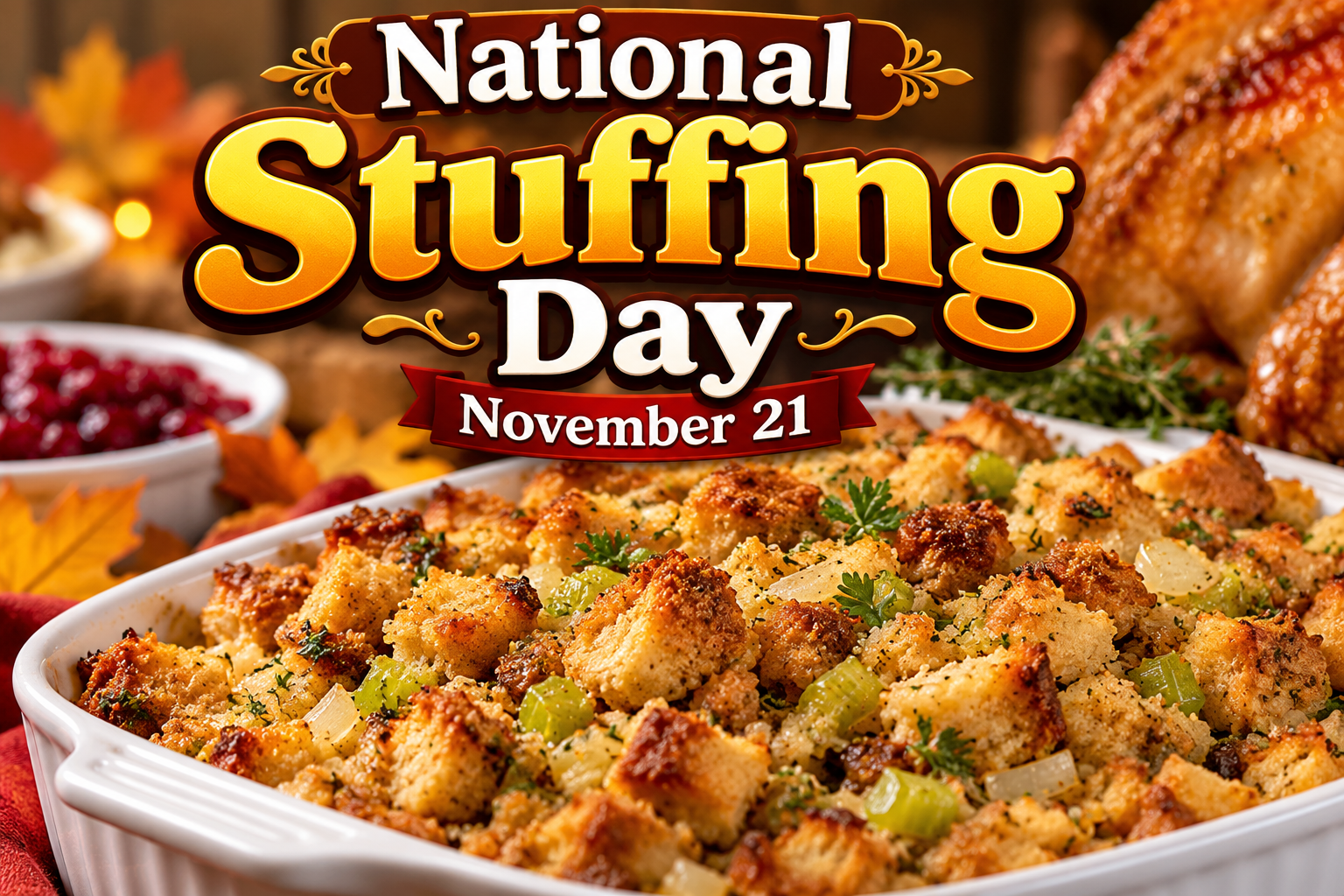
Every year on November 21, food lovers across the United States celebrate National Stuffing Day, a delicious occasion dedicated to one of the most beloved side dishes in American cooking. Whether served alongside a golden roasted turkey, baked in a casserole dish, or prepared using a treasured family recipe, stuffing has become a symbol of comfort, tradition, and togetherness.
Arriving just before the Thanksgiving holiday season, National Stuffing Day provides the perfect opportunity to appreciate the flavors, history, and family memories associated with this classic dish.
From traditional bread stuffing seasoned with sage and onions to creative variations featuring sausage, apples, cranberries, and cornbread, there are countless ways to enjoy this holiday favorite.
When Is National Stuffing Day?
National Stuffing Day is celebrated annually on November 21.
NOV
21
Saturday, November 21, 2026
An informal food holiday celebrated every year
Although National Stuffing Day is not an official federal holiday, it has become a fun culinary observance that encourages home cooks to celebrate their favorite stuffing recipes.
The timing is especially appropriate because Thanksgiving is celebrated on the fourth Thursday of November in the United States.
The History of Stuffing
Stuffing has a much longer history than the American Thanksgiving tradition.
The practice of filling meat, poultry, and other foods with seasoned ingredients dates back thousands of years. Ancient civilizations discovered that adding herbs, grains, vegetables, and other ingredients inside food could enhance flavor and create a more satisfying meal.
One of the earliest surviving collections of Roman recipes, commonly known as Apicius, includes preparations involving stuffed animals and other foods.
As cooking traditions developed throughout Europe, stuffing became an important part of preparing roasted poultry and meats.
Cooks experimented with ingredients such as bread, herbs, nuts, fruits, and spices. Recipes varied depending on regional traditions, seasonal availability, and family preferences.
When European settlers arrived in North America, they brought many of these cooking techniques with them. Over time, stuffing recipes evolved to incorporate ingredients commonly available in different parts of the country.
Today, stuffing remains one of the most recognizable dishes associated with Thanksgiving dinner.
Stuffing vs. Dressing: What’s the Difference?
One of the most common questions surrounding this beloved dish is whether stuffing and dressing are actually the same thing.
Traditionally, the distinction involves how the dish is prepared.
Stuffing generally refers to a seasoned mixture cooked inside poultry or another food.
Dressing usually refers to a similar mixture baked separately in a casserole dish.
However, regional traditions often influence which name people use.
In many Northern states, families commonly call the dish stuffing regardless of whether it is cooked inside or outside the turkey.
In parts of the Southern United States, dressing is often the preferred term, particularly when cornbread is used as the main ingredient.
Despite these differences, both dishes share the same basic purpose: creating a flavorful, comforting side dish that complements the main meal.
For food safety, stuffing cooked inside poultry must reach an internal temperature of 165°F, and the poultry itself must also reach a safe temperature.
Why Stuffing Is a Thanksgiving Favorite
Thanksgiving dinner features many traditional foods, including roasted turkey, mashed potatoes, gravy, cranberry sauce, sweet potatoes, and pumpkin pie.
Yet stuffing often holds a special place at the table.
Its combination of savory herbs, tender bread, vegetables, and rich flavors creates a comforting dish that complements nearly every other part of the meal.
Stuffing is also deeply connected to family traditions.
Some families prepare the same recipe every Thanksgiving, passing cooking techniques and ingredient combinations from one generation to another.
Others enjoy experimenting with new flavors while preserving the familiar taste of traditional stuffing.
For many people, the smell of onions, celery, butter, and sage cooking together immediately brings back memories of holiday gatherings.
Food has a remarkable ability to connect people with meaningful moments, and stuffing is a wonderful example of that connection.
Popular Types of Stuffing
Although traditional bread stuffing remains popular, numerous variations have developed across American kitchens.
1. Traditional Bread Stuffing
Classic bread stuffing typically includes dried bread cubes, butter, onions, celery, broth, sage, thyme, and other seasonings.
Its familiar savory flavor makes it a Thanksgiving favorite.
2. Cornbread Stuffing
Cornbread stuffing, often called cornbread dressing, is especially popular in Southern cooking.
It features crumbled cornbread combined with vegetables, broth, herbs, and sometimes eggs.
3. Sausage Stuffing
Adding cooked sausage gives stuffing a richer flavor and heartier texture.
Breakfast sausage, Italian sausage, and other seasoned varieties can be used.
4. Apple Stuffing
Chopped apples introduce a subtle sweetness that balances the savory flavors of bread, herbs, and onions.
5. Cranberry Stuffing
Dried cranberries provide sweetness, tartness, and festive color.
This variation pairs especially well with roasted turkey.
6. Mushroom Stuffing
Mushrooms contribute an earthy, savory flavor and work particularly well in vegetarian stuffing recipes.
7. Wild Rice Stuffing
Wild rice provides a chewy texture and nutty flavor.
It can be combined with mushrooms, onions, celery, dried fruit, and herbs.
8. Oyster Stuffing
Oyster stuffing is a traditional variation found in several coastal regions.
The oysters add a distinctive briny flavor to the seasoned bread mixture.
Classic Homemade Stuffing Recipe
One of the best ways to celebrate National Stuffing Day is by preparing a homemade batch of traditional stuffing.
RECIPE DETAILS
15 min
Prep time
40 min
Cook time
8
Servings
Ingredients
Instructions
-
Preheat your oven to 350°F and lightly grease a large baking dish.
-
Melt the butter in a large skillet over medium heat.
-
Add the diced onion and chopped celery. Cook for approximately 5–7 minutes, until softened.
-
Stir in the sage, thyme, rosemary, salt, and pepper.
-
Place the dried bread cubes in a large mixing bowl.
-
Pour the butter and vegetable mixture over the bread.
-
Gradually add broth, stirring gently until the bread is evenly moistened but not soggy.
-
Transfer the mixture to the prepared baking dish.
-
Cover with aluminum foil and bake for 25 minutes.
-
Remove the foil and continue baking for approximately 15 minutes, until the top becomes golden brown and the center reaches 165°F.
Sprinkle with fresh parsley before serving.
Cooking tip: For stuffing with a crispier top, bake uncovered during the final portion of cooking. For softer stuffing, keep the dish covered longer.
Tips for Making the Perfect Stuffing
Making delicious stuffing requires more than simply combining bread and broth.
A few cooking techniques can make a noticeable difference.
Use slightly stale bread. Bread that has dried out absorbs broth more effectively without becoming excessively mushy.
Cook vegetables before mixing. Sautéing onions and celery helps develop flavor and ensures they become tender.
Add broth gradually. Too much liquid can make stuffing soggy, while too little can leave it dry.
Season generously. Sage, thyme, rosemary, parsley, and black pepper contribute much of stuffing’s recognizable flavor.
Avoid overmixing. Stir ingredients gently to preserve some texture in the bread.
Bake until golden. A lightly crisp surface creates a pleasant contrast with the moist interior.
Fun Facts About Stuffing
Stuffing has a fascinating culinary history, and several interesting details make this dish worth celebrating.
-
Stuffing has existed in various forms since ancient times.
-
Bread is common in American stuffing, but rice, grains, vegetables, and other ingredients can also form the base.
-
Cornbread dressing is particularly associated with Southern American cooking.
-
Some traditional stuffing recipes contain oysters, chestnuts, or dried fruit.
-
Stuffing can be prepared without meat, making it adaptable for vegetarian meals.
-
Leftover stuffing can be transformed into breakfast dishes, casseroles, or savory patties.
-
Families often preserve stuffing recipes through handwritten recipe cards and holiday cooking traditions.
These traditions demonstrate how one simple dish can take on many different forms while remaining connected to comfort and celebration.
Creative Ways to Use Leftover Stuffing
Thanksgiving leftovers provide an excellent opportunity to enjoy stuffing in entirely new ways.
One popular option is making stuffing waffles. Pressing leftover stuffing into a waffle iron creates a crispy exterior that pairs beautifully with turkey and gravy.
Stuffing can also be shaped into small patties and reheated in a skillet until golden.
Another option is combining stuffing with leftover turkey and vegetables to make a comforting casserole.
For breakfast, stuffing can be served alongside scrambled eggs or topped with a fried egg.
Leftover stuffing should be refrigerated promptly, within two hours of cooking, and generally used within three to four days. Reheat leftovers to 165°F.
How to Celebrate National Stuffing Day
National Stuffing Day offers a simple opportunity to enjoy good food and create meaningful memories.
You can celebrate by preparing your favorite family stuffing recipe or trying a variation you have never made before.
Consider inviting family members to help prepare the ingredients. Cooking together can turn an ordinary meal into a memorable experience.
Another idea is organizing a stuffing tasting with several different recipes. Traditional bread stuffing, cornbread dressing, sausage stuffing, and cranberry stuffing each bring unique flavors to the table.
You could also use the occasion to preserve a family recipe by writing down its ingredients, preparation methods, and the memories associated with it.
Sometimes the greatest value of a family recipe is not found in the ingredients but in the people and traditions connected to it.
The Meaning of Food and Family Traditions
Food often represents much more than nourishment.
Certain recipes remind us of childhood, family gatherings, holidays, and people who have influenced our lives.
For some families, preparing stuffing is a tradition shared between parents and children. For others, it is a recipe inherited from grandparents or relatives who are no longer present.
The familiar aromas and flavors can bring those memories back in powerful ways.
National Stuffing Day reminds us that traditions do not have to be elaborate to be meaningful.
Sometimes something as simple as preparing a familiar side dish can create an opportunity to remember, connect, and appreciate the moments we share with others.
Final Thoughts: Celebrating National Stuffing Day
National Stuffing Day on November 21 is a celebration of one of America’s favorite comfort foods.
From its ancient culinary roots to its important place in modern Thanksgiving celebrations, stuffing has remained a dish associated with flavor, creativity, and family traditions.
Whether you prefer classic bread stuffing, Southern cornbread dressing, sausage stuffing, or a creative homemade variation, this food holiday is the perfect excuse to enjoy a comforting meal.
More importantly, it provides an opportunity to appreciate the people, memories, and traditions that make sharing food meaningful.
As Thanksgiving approaches, National Stuffing Day reminds us that some of life’s most treasured moments happen around the dinner table.
What is your favorite kind of stuffing—traditional bread stuffing, cornbread dressing, sausage stuffing, or a special family recipe passed down through generations?


Leave a Reply