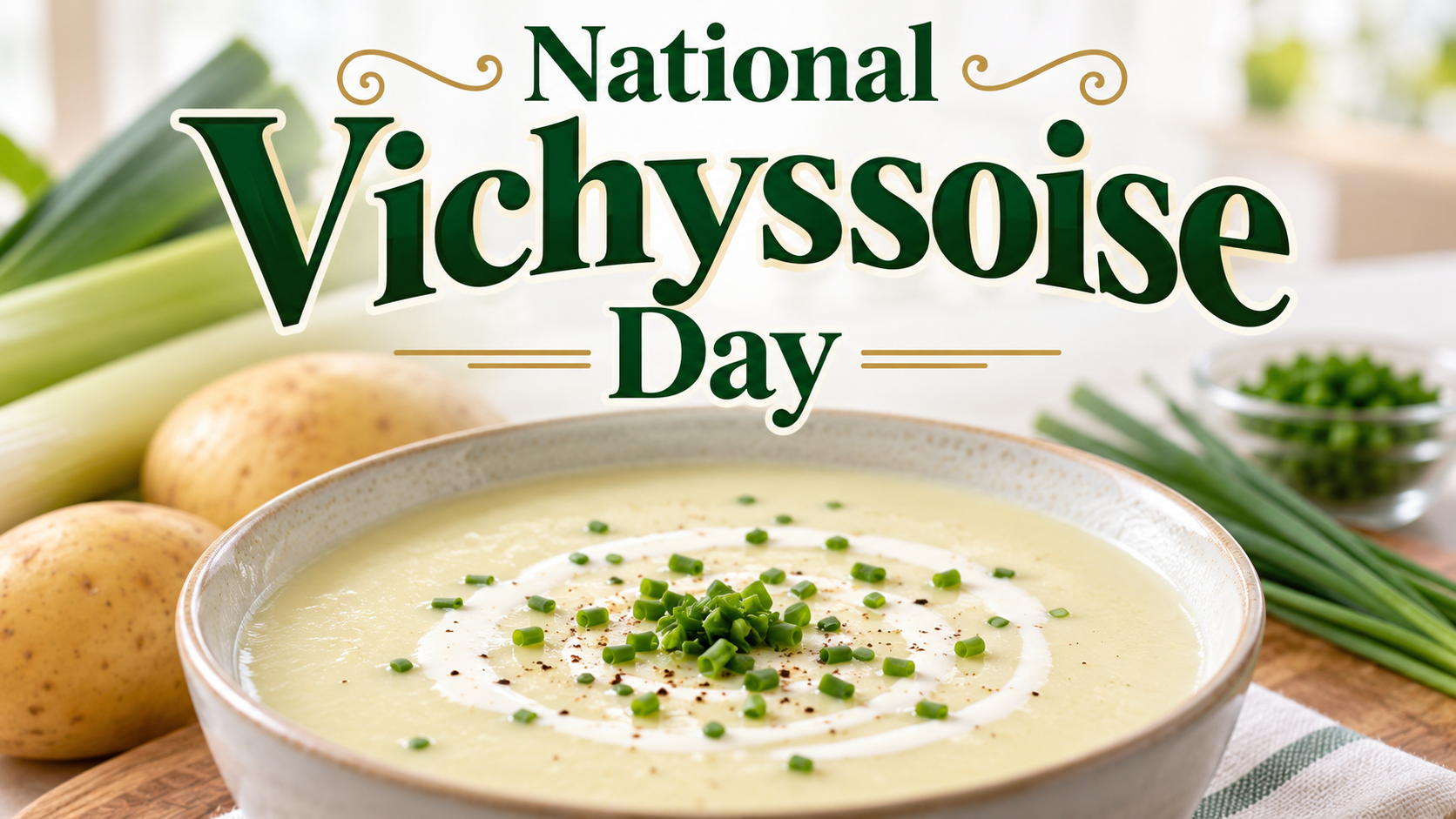
Every year on November 18, food lovers have an opportunity to celebrate a dish that combines simplicity, elegance, and culinary tradition. National Vichyssoise Day honors a classic creamy soup made primarily from potatoes, leeks, onions, broth, and cream. Traditionally served chilled, vichyssoise has become a symbol of refined dining while remaining surprisingly easy to prepare at home.
Although its name sounds distinctly French, the history of vichyssoise connects both French culinary traditions and American restaurant culture. Its delicate flavor, velvety texture, and interesting origins make it a fascinating dish worth discovering.
Whether you have enjoyed this soup at an elegant restaurant or have never heard of it before, National Vichyssoise Day is the perfect occasion to explore its history, learn how to prepare it, and appreciate why this traditional recipe continues to attract food enthusiasts.
What Is National Vichyssoise Day?
National Vichyssoise Day is an informal food holiday observed annually on November 18. It celebrates vichyssoise, a smooth potato and leek soup most commonly served cold.
Unlike many traditional soups that are served steaming hot, vichyssoise is typically refrigerated before serving. This gives it a refreshing quality while allowing its mild ingredients to create a rich, satisfying flavor.
The soup generally contains potatoes, leeks, onions, butter, chicken or vegetable broth, and heavy cream. These ingredients are cooked until tender, blended until smooth, and chilled before being served.
Its simplicity is part of its appeal. Rather than relying on complicated spices or unusual ingredients, vichyssoise highlights the natural sweetness of leeks and the creamy consistency of potatoes.
National Vichyssoise Day encourages people to appreciate this culinary classic, experiment with homemade versions, and discover the history behind one of the world’s best-known chilled soups.
The History of Vichyssoise
The origins of vichyssoise are closely connected to French cooking, but the development of the modern chilled version is generally credited to French chef Louis Diat.
Diat worked at the Ritz-Carlton Hotel in New York City during the early twentieth century. Around 1917, he introduced a chilled potato and leek soup that became associated with the hotel’s sophisticated dining experience.
According to the commonly told story, Diat drew inspiration from the potato and leek soup his mother and grandmother prepared during his childhood in France.
As a child, he reportedly enjoyed cooling the hot soup with milk during warm weather. This memory helped inspire his creation of a chilled version suitable for an elegant restaurant menu.
He named the soup Crème Vichyssoise Glacée, referring to Vichy, a French town near the region where he grew up.
Although potato and leek soups existed in French cooking long before Diat’s creation, his chilled interpretation helped establish vichyssoise as a distinctive dish.
Over time, the soup became popular in fine-dining restaurants and eventually appeared in home cookbooks throughout the United States and beyond.
Today, vichyssoise remains an example of how a familiar family recipe can evolve into an internationally recognized culinary specialty.
Why Is Vichyssoise Traditionally Served Cold?
One of the most interesting characteristics of vichyssoise is its serving temperature.
Most people associate soup with warmth, especially during autumn and winter. However, vichyssoise challenges that expectation by offering a creamy, flavorful experience when chilled.
Serving the soup cold provides several benefits.
First, its smooth consistency makes it enjoyable without the warmth typically associated with creamy soups.
Second, the mild sweetness of leeks and the richness of cream create a delicate flavor that works particularly well at cooler temperatures.
Third, chilled soup can be prepared ahead of time, making it convenient for dinner parties, celebrations, and special occasions.
Finally, vichyssoise offers a refreshing alternative to heavier hot dishes, particularly during warmer weather.
Although traditionally served cold, the soup can also be enjoyed warm. Many home cooks prefer a heated version during the colder months.
National Vichyssoise Day falls in November, making it an excellent opportunity to try both preparations and decide which one you prefer.
What Makes Vichyssoise Special?
Vichyssoise stands apart from many other soups because it transforms ordinary ingredients into something that feels luxurious.
Potatoes provide the thick, creamy body. Leeks contribute a gentle onion-like sweetness. Butter adds richness, while broth creates depth of flavor.
Heavy cream brings everything together, producing the signature velvety consistency.
The finished soup is smooth, mild, and comforting without requiring an extensive list of seasonings.
Another appealing quality is its versatility. Vichyssoise can be presented as a sophisticated first course at a formal dinner or served as a simple homemade meal.
Its elegant appearance also makes it easy to garnish with chopped chives, fresh herbs, or a small swirl of cream.
Despite its reputation as a restaurant specialty, vichyssoise requires relatively basic cooking techniques, making it accessible to beginners.
Traditional Homemade Vichyssoise Recipe
One of the best ways to celebrate National Vichyssoise Day is by preparing a homemade batch.
This traditional-inspired recipe uses familiar ingredients and produces a rich, creamy soup suitable for serving chilled or warm.
Preparation time: 15 minutes
Cooking time: 30 minutes
Chilling time: 3–4 hours
Servings: 6
Ingredients
-
3 medium leeks, white and light green portions only
-
3 medium Yukon Gold potatoes, peeled and diced
-
1 medium onion, finely chopped
-
3 tablespoons unsalted butter
-
4 cups chicken or vegetable broth
-
1 cup heavy cream
-
1 teaspoon salt, or to taste
-
½ teaspoon white pepper
-
2 tablespoons fresh chives, finely chopped
-
Additional cream for garnish, optional
Step-by-Step Instructions
Step 1: Prepare the leeks
Cut off the dark green tops and root ends of the leeks. Slice the remaining portions lengthwise, rinse thoroughly between the layers to remove dirt, and chop into thin pieces.
Leeks often contain trapped soil, so careful washing is important.
Step 2: Melt the butter
Place a large saucepan over medium-low heat and melt the butter.
Add the chopped onion and leeks, cooking gently for approximately 8–10 minutes until softened.
Avoid browning the vegetables, as the goal is to maintain the soup’s delicate flavor and pale color.
Step 3: Add the potatoes
Stir the diced potatoes into the softened vegetables.
Cook for another 2 minutes, allowing the potatoes to absorb some of the buttery flavor.
Step 4: Pour in the broth
Add the chicken or vegetable broth and bring the mixture to a gentle boil.
Reduce the heat and simmer for approximately 15–20 minutes, or until the potatoes are completely tender.
Step 5: Blend until smooth
Remove the saucepan from the heat.
Using an immersion blender, carefully blend the mixture until smooth and creamy.
Alternatively, allow the soup to cool slightly before blending in small batches in a countertop blender. Follow the blender manufacturer’s hot-liquid safety instructions.
Step 6: Add the cream
Stir in the heavy cream, salt, and white pepper.
Taste the soup and adjust the seasoning as needed.
Step 7: Chill the soup
Allow the soup to cool safely, then transfer it into shallow covered containers and refrigerate promptly.
Chill for approximately 3–4 hours, until thoroughly cold. Avoid leaving the soup at room temperature for more than two hours.
Step 8: Serve and garnish
Pour the chilled soup into individual bowls.
Sprinkle with freshly chopped chives and add a small swirl of cream if desired.
Serve immediately.
Tips for Making the Perfect Vichyssoise
Although the recipe is straightforward, a few cooking techniques can improve the finished dish.
Choose the Right Potatoes
Yukon Gold potatoes are an excellent choice because they provide a naturally creamy consistency.
Russet potatoes can also work, although their higher starch content may produce a thicker soup.
Avoid overblending, especially when using a powerful countertop blender, because excessive processing can make potatoes gummy.
Clean the Leeks Thoroughly
Leeks grow in layers that frequently trap soil.
Rinsing between the layers prevents grit from entering the soup and affecting its texture.
Cook the Vegetables Gently
Browning the onions or leeks can change the soup’s flavor and color.
Slowly softening them in butter helps preserve their delicate sweetness.
Adjust the Consistency
Vichyssoise should be creamy but still easy to pour.
If the soup becomes too thick after chilling, stir in a small amount of cold broth or milk until it reaches your preferred consistency.
Season After Chilling
Cold foods can taste less intensely seasoned than hot foods.
Taste the soup after refrigeration and adjust the salt and pepper before serving.
Use Fresh Garnishes
Fresh chives are a traditional finishing touch.
Their mild onion flavor complements the leeks without overpowering the soup.
Delicious Vichyssoise Variations to Try
Traditional vichyssoise is delicious, but creative variations can introduce different flavors and textures.
1. Roasted Garlic Vichyssoise
Add a few cloves of roasted garlic before blending.
The roasted garlic contributes a mellow sweetness and deeper flavor.
2. Cauliflower Vichyssoise
Replace some of the potatoes with cauliflower.
This creates a lighter variation while preserving a creamy texture.
3. Vegan Vichyssoise
Substitute olive oil for butter, vegetable broth for chicken broth, and unsweetened plant-based cream for dairy cream.
The result is a dairy-free version of the traditional soup.
4. Herbed Vichyssoise
Blend in a small amount of fresh parsley, dill, or tarragon.
These herbs add freshness and subtle complexity.
5. Sweet Potato Vichyssoise
Replace some or all of the regular potatoes with sweet potatoes.
This variation produces a slightly sweeter soup with a beautiful golden-orange color.
6. Bacon-Topped Vichyssoise
Sprinkle crispy bacon pieces over the finished soup.
The smoky, salty crunch creates a contrast with the smooth texture.
7. Warm Vichyssoise
Serve the soup gently heated rather than chilled.
This variation is particularly appealing during autumn and winter.
The Difference Between Vichyssoise and Potato Leek Soup
Vichyssoise and traditional potato leek soup share many of the same ingredients, but there are several differences.
| Feature | Vichyssoise | Potato Leek Soup |
|---|---|---|
| Serving temperature | Traditionally cold | Usually hot |
| Texture | Smooth and velvety | Smooth or chunky |
| Cream | Commonly included | Optional |
| Presentation | Often elegant and garnished | Frequently rustic |
| Typical use | Appetizer or light meal | Appetizer or hearty meal |
The distinction is not absolute, and recipes overlap considerably.
However, chilled serving temperature and a particularly smooth texture are defining characteristics of classic vichyssoise.
Is Vichyssoise Healthy?
Vichyssoise contains several nutritious ingredients, although its overall nutritional profile depends on how it is prepared.
Potatoes provide carbohydrates, potassium, and vitamin C, although cooking and preparation can affect vitamin content.
Leeks contribute fiber and beneficial plant compounds, along with vitamins and minerals.
Onions offer additional flavor and plant nutrients.
Broth contributes liquid and may provide some minerals, depending on the variety used.
However, traditional vichyssoise also contains butter and heavy cream, which increase its saturated fat and calorie content.
For a lighter version, consider reducing the cream, replacing part of it with milk, or using additional blended vegetables to maintain the smooth texture.
Low-sodium broth can also help reduce sodium intake.
Vichyssoise can fit into a balanced diet when enjoyed in appropriate portions alongside other nutritious foods.
What to Serve With Vichyssoise
Vichyssoise can be served as an appetizer, a light lunch, or part of a larger meal.
Because its flavor is mild and creamy, it pairs well with foods that provide contrasting textures and fresh flavors.
Crusty French bread is a classic accompaniment, offering a satisfying crunch.
A mixed green salad with a light vinaigrette provides freshness and acidity.
Grilled chicken can transform the soup into part of a more substantial meal.
Roasted vegetables complement its delicate flavor while adding color and variety.
For an elegant dinner, serve small portions of chilled vichyssoise before a main course of fish, chicken, or another lightly seasoned dish.
Its versatility makes it suitable for casual family meals and special occasions alike.
Interesting Facts About Vichyssoise
Vichyssoise has an intriguing history and several characteristics that make it unusual among classic soups.
1. Its modern chilled form is associated with New York City. French chef Louis Diat popularized the dish while working at the Ritz-Carlton Hotel.
2. The name references Vichy, France. The name reflects Diat’s connection to the region near his childhood home.
3. Its culinary roots are French. Potato and leek soups were familiar in French cooking before the chilled restaurant version became famous.
4. It is traditionally served cold. This makes it different from many popular creamy soups.
5. It uses simple ingredients. Potatoes, leeks, broth, butter, and cream form the foundation of the dish.
6. It is associated with fine dining. Its smooth texture and elegant presentation helped establish its sophisticated reputation.
7. It can be served warm. Although cold service is traditional, warm variations are common.
8. Leeks are essential to its classic flavor. Their gentle sweetness gives the soup its distinctive character.
9. It can be prepared in advance. Refrigeration is part of the traditional preparation, making it convenient for entertaining.
10. It has inspired many variations. Modern recipes may feature cauliflower, herbs, roasted garlic, or dairy-free ingredients.
How to Celebrate National Vichyssoise Day
There are several enjoyable ways to recognize National Vichyssoise Day on November 18.
Make Vichyssoise at Home
Prepare a traditional recipe and experience the distinctive flavor of this classic soup.
If you have never tried chilled soup before, this is an excellent introduction.
Experiment With a New Recipe
Try adding roasted garlic, fresh herbs, or different vegetables.
Small changes can create interesting variations without losing the character of the original dish.
Host a Soup-Themed Dinner
Invite friends or family to enjoy a meal featuring different soups.
Include chilled vichyssoise alongside warm favorites to create a contrast in temperatures and textures.
Learn About French Culinary History
Explore the traditions of French cooking and the influence French chefs have had on American restaurant culture.
The story of vichyssoise provides an interesting example of culinary exchange.
Share the Experience
Introduce someone to vichyssoise who has never tasted it before.
Discuss its history, preparation, and unusual serving temperature.
Enjoy a Restaurant Version
Some French restaurants and fine-dining establishments feature vichyssoise on their menus.
Trying a professionally prepared version can provide inspiration for future homemade recipes.
Why National Vichyssoise Day Matters
Food holidays are about more than recognizing individual dishes.
They provide opportunities to explore cultural traditions, discover new flavors, and appreciate the history behind familiar ingredients.
National Vichyssoise Day celebrates the creativity that can emerge from simple cooking.
Potatoes and leeks are everyday ingredients, yet their combination has produced a dish associated with elegant restaurants and international culinary traditions.
The story of vichyssoise also demonstrates how food connects generations.
Louis Diat’s childhood memories of family cooking reportedly influenced the creation of a soup that would become recognized far beyond his home region.
That connection between personal memories and culinary innovation is part of what makes traditional recipes meaningful.
Many cherished dishes begin in family kitchens before eventually becoming part of a larger food culture.
National Vichyssoise Day is an opportunity to recognize those connections while enjoying something delicious.
Frequently Asked Questions About National Vichyssoise Day
When Is National Vichyssoise Day?
National Vichyssoise Day is observed annually on November 18.
Is National Vichyssoise Day an Official Holiday?
No. It is an informal food observance rather than a federal or government-recognized holiday.
What Does Vichyssoise Mean?
The name is associated with Vichy, France, a town near the childhood home region of chef Louis Diat.
Is Vichyssoise French or American?
Its ingredients and culinary foundations come from French cooking, while the modern chilled version is widely credited to French chef Louis Diat during his career in New York City.
Does Vichyssoise Have to Be Served Cold?
Traditional vichyssoise is served chilled, but it can also be enjoyed warm.
Can You Make Vichyssoise Without Cream?
Yes. Milk, unsweetened plant-based cream, or additional blended vegetables can provide alternatives, although the flavor and texture will differ from the traditional recipe.
How Long Does Homemade Vichyssoise Last?
Properly refrigerated homemade vichyssoise is generally best enjoyed within 3–4 days. Keep it at 40°F (4°C) or below in covered containers.
Can You Freeze Vichyssoise?
Yes, but freezing may change its texture. Cream-based soups can separate after thawing, and potatoes may become grainy. For better results, freeze the soup before adding cream and stir in fresh cream after reheating.
Final Thoughts: Celebrating National Vichyssoise Day on November 18
National Vichyssoise Day is a celebration of culinary history, creativity, and the beauty of simple ingredients.
From its French roots to its rise in American fine dining, vichyssoise has earned a lasting place in the world of classic soups.
Its combination of potatoes, leeks, butter, broth, and cream proves that an elegant dish does not always require complicated preparation.
Whether you prefer it traditionally chilled or comfortably warm, vichyssoise offers a delicious way to appreciate the traditions and stories behind food.
On November 18, consider preparing a homemade bowl, trying a new variation, or introducing this distinctive soup to someone who has never experienced it.
Sometimes the most memorable recipes are the ones that transform ordinary ingredients into something extraordinary.
Happy National Vichyssoise Day!
Have you ever tried vichyssoise, and would you prefer this creamy potato and leek soup served cold or warm?


Leave a Reply