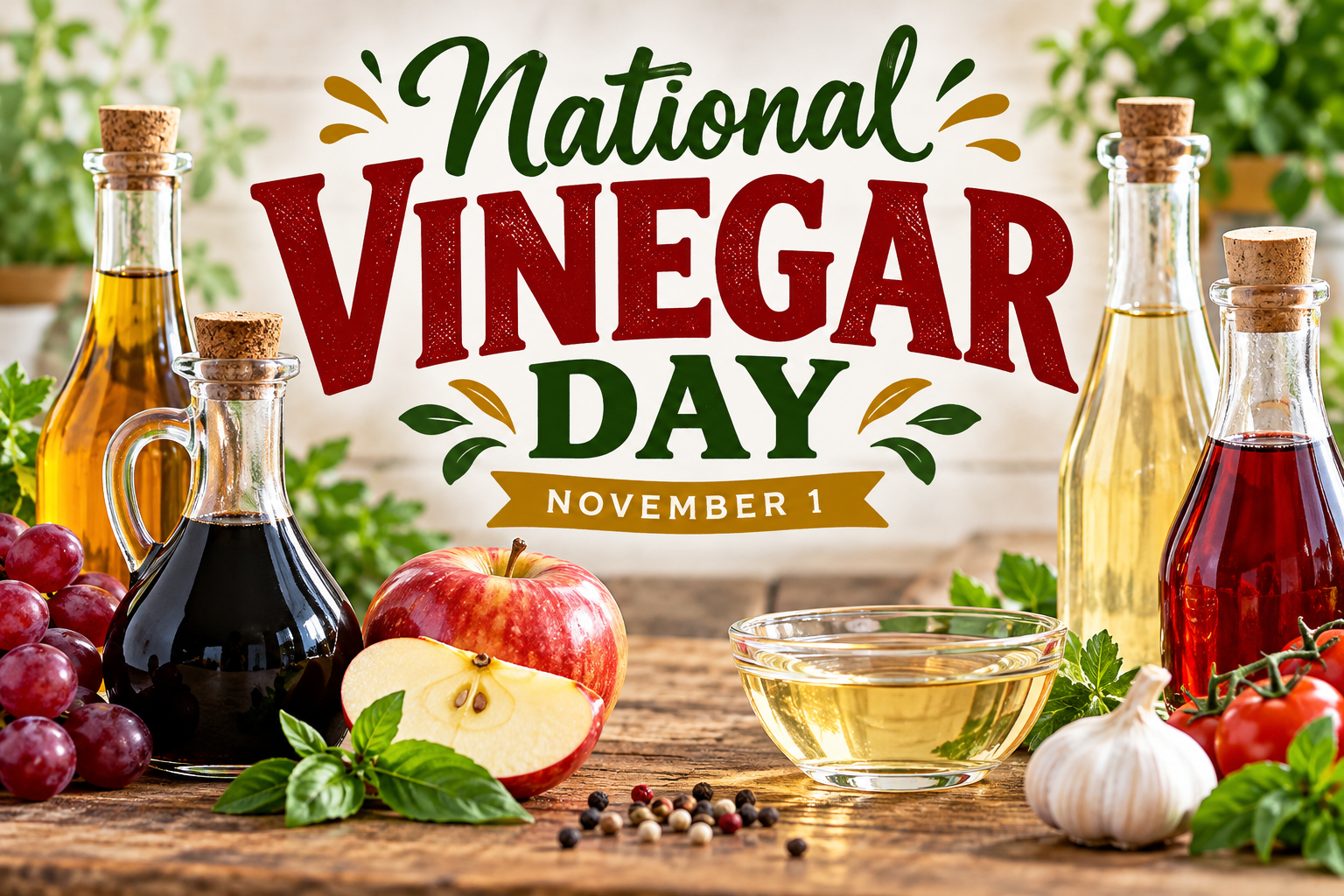
When most people think about vinegar, they picture a bottle sitting in the kitchen cabinet, ready to add flavor to a salad, pickle vegetables, or help clean around the house. But this everyday household staple has a fascinating history, countless practical uses, and an important place in cultures around the world.
Every year on November 1, National Vinegar Day celebrates one of the oldest and most versatile ingredients known to humanity. From ancient civilizations to modern kitchens, vinegar has been used for food preservation, cooking, cleaning, and traditional remedies for thousands of years.
Whether you enjoy the tangy taste of apple cider vinegar, the rich sweetness of balsamic vinegar, or the everyday usefulness of distilled white vinegar, this holiday is an opportunity to appreciate something many of us take for granted.
Let’s explore the history of vinegar, its different varieties, its potential benefits, and some creative ways to celebrate National Vinegar Day.
What Is National Vinegar Day?
National Vinegar Day is observed annually on November 1 in the United States. It recognizes vinegar’s remarkable versatility and its longstanding importance in cooking, preservation, and everyday household activities.
Unlike holidays honoring a particular person or historical event, National Vinegar Day focuses on an ingredient that has played an important role in human civilization.
Vinegar is found in nearly every culture, and different regions have developed their own unique varieties and traditions.
Some people use vinegar primarily for cooking, while others appreciate its cleaning properties or its role in preserving seasonal foods.
Regardless of how you use it, National Vinegar Day offers a reason to discover something new about this familiar ingredient.
The Fascinating History of Vinegar
Vinegar has existed for thousands of years, making it one of the world’s oldest fermented food products.
The word vinegar comes from the Old French expression vin aigre, meaning “sour wine.”
This name reflects how vinegar was traditionally produced when alcoholic beverages underwent further fermentation.
Vinegar in Ancient Civilizations
Historical evidence suggests that vinegar was used in ancient Mesopotamia thousands of years ago.
Early civilizations discovered that fermented alcoholic liquids could develop a sour taste when exposed to certain conditions.
Rather than throwing these liquids away, people found practical uses for them.
Ancient Egyptians used vinegar in food preparation, while Greeks and Romans incorporated it into their diets.
Roman soldiers commonly consumed posca, a drink made with water and vinegar.
In ancient China, vinegar became an important part of cooking traditions, particularly in sauces, marinades, and preserved foods.
Vinegar During the Middle Ages
During the Middle Ages, vinegar became increasingly valuable in European households.
It was used to preserve vegetables, flavor meals, and clean certain household surfaces.
People also believed vinegar could protect against illness, although many historical medical claims about vinegar were not supported by modern scientific evidence.
Vinegar production eventually developed into a specialized craft, with different regions becoming known for distinctive varieties.
Vinegar in Modern Times
Today, vinegar is produced commercially and traditionally around the world.
Modern production methods allow manufacturers to create consistent flavors, acidity levels, and varieties.
Despite these technological advances, the basic process remains connected to the same natural fermentation principles discovered thousands of years ago.
How Is Vinegar Made?
Vinegar is created through a fermentation process involving microorganisms.
The process generally occurs in two stages.
Stage One: Alcoholic Fermentation
Yeast converts sugars from fruits, grains, or other ingredients into alcohol.
For example, apple juice can ferment into hard cider, while grape juice can ferment into wine.
Stage Two: Acetic Acid Fermentation
Acetic acid bacteria convert alcohol into acetic acid in the presence of oxygen.
Acetic acid gives vinegar its characteristic sour flavor and sharp aroma.
The final product typically contains water, acetic acid, and smaller amounts of other compounds that contribute to its flavor.
Most culinary vinegars contain approximately 4% to 8% acetic acid, although concentrations vary.
Different starting ingredients and production methods create different types of vinegar.
10 Popular Types of Vinegar and Their Uses
Not all vinegars taste the same. Each variety has distinctive characteristics that make it useful for particular recipes.
1. Apple Cider Vinegar
Apple cider vinegar is made from fermented apple juice.
It has a fruity aroma and a tangy flavor.
Common uses include salad dressings, marinades, sauces, and certain pickling recipes.
Some people also consume diluted apple cider vinegar for potential health benefits, although evidence supporting many popular claims remains limited.
2. Distilled White Vinegar
Distilled white vinegar is one of the most common household varieties.
It has a sharp, acidic taste and is frequently used in cooking, pickling, and cleaning.
Its relatively neutral flavor makes it useful in recipes where a strong fruit or wine taste is undesirable.
3. Balsamic Vinegar
Balsamic vinegar is closely associated with Italy, particularly the Modena and Reggio Emilia regions.
It is made from grape must, sometimes combined with wine vinegar, depending on the product.
Traditional balsamic vinegar undergoes lengthy aging and develops complex flavors.
It is delicious with roasted vegetables, strawberries, salads, and certain cheeses.
4. Red Wine Vinegar
Red wine vinegar is produced from red wine.
It offers a robust flavor that complements Mediterranean cooking.
It works particularly well in vinaigrettes, marinades, and sauces.
5. White Wine Vinegar
White wine vinegar has a lighter flavor than red wine vinegar.
It is commonly used in delicate sauces, salad dressings, and vegetable dishes.
6. Rice Vinegar
Rice vinegar is widely used in Asian cuisines.
It is generally milder than distilled white vinegar and may have a slightly sweet taste.
It is an important ingredient in sushi rice, dipping sauces, and pickled vegetables.
7. Malt Vinegar
Malt vinegar is traditionally produced from malted barley.
Its distinctive flavor makes it a popular accompaniment to fish and chips.
8. Champagne Vinegar
Champagne vinegar is typically delicate and relatively mild.
It is frequently used in elegant salad dressings and light sauces.
9. Sherry Vinegar
Sherry vinegar originates from Spain and is produced from sherry wine.
It has a rich, complex flavor and works well with roasted vegetables, soups, and Mediterranean dishes.
10. Coconut Vinegar
Coconut vinegar is produced from fermented coconut sap or coconut water, depending on the variety.
It is used in several Southeast Asian cuisines, including Filipino cooking.
Its flavor can range from mildly tangy to distinctly sour.
Surprising Health Benefits of Vinegar
Vinegar has attracted considerable attention because of its possible health effects.
Although it has been used in traditional remedies for centuries, it is important to distinguish scientifically supported findings from exaggerated claims.
1. May Help Moderate Blood Sugar Responses
Some small studies suggest that consuming vinegar with certain carbohydrate-rich meals may modestly reduce the rise in blood sugar after eating.
However, results vary, and vinegar should never replace prescribed diabetes medications or professional medical care.
2. May Increase Feelings of Fullness
Limited research suggests vinegar may influence feelings of fullness.
However, evidence that vinegar produces meaningful, sustainable weight loss is weak.
A balanced diet and regular physical activity remain more reliable approaches to weight management.
3. Adds Flavor Without Much Sodium
Vinegar can provide bold flavor without requiring large amounts of salt.
Adding a splash of vinegar to vegetables, beans, or homemade dressings may help make lower-sodium meals more appealing.
4. Can Support Enjoyable Vegetable-Based Meals
Vinegar itself is not a nutritional miracle.
However, using it in dressings and marinades can make vegetables, legumes, and other nutritious foods more flavorful.
This may encourage greater variety in everyday meals.
Important Safety Reminder
Never drink undiluted vinegar.
Its acidity can irritate the throat and damage tooth enamel. Frequent consumption may also cause problems for certain individuals, including people taking medications that affect potassium or blood sugar.
Vinegar is best enjoyed as a food ingredient rather than treated as a cure for medical conditions.
10 Everyday Uses for Vinegar Beyond Cooking
One reason vinegar has remained popular for centuries is its versatility.
Here are ten practical ways people use it around the house.
-
Cleaning glass: Diluted white vinegar can help remove certain streaks and mineral deposits.
-
Removing hard-water buildup: Vinegar can dissolve some mineral deposits around faucets and fixtures.
-
Deodorizing certain surfaces: It may help reduce some lingering household odors.
-
Cleaning coffee makers: Some manufacturers recommend vinegar for descaling, although others require specialized products.
-
Freshening certain laundry items: Small amounts may help with some odors, but always follow appliance and fabric instructions.
-
Cleaning showerheads: Vinegar can help dissolve mineral deposits on compatible materials.
-
Removing soap residue: It may be useful on certain acid-resistant bathroom surfaces.
-
Cleaning reusable glass containers: Diluted vinegar can help remove some odors and residue.
-
Removing mineral deposits from flower vases: It can loosen buildup inside glass vases.
-
Cleaning certain kitchen surfaces: Vinegar can remove light grime from compatible surfaces.
Safety warning: Never mix vinegar with chlorine bleach. This combination can release dangerous chlorine gas.
Vinegar should also not be used on natural stone, some metals, or surfaces that can be damaged by acid. It is not a reliable substitute for an approved disinfectant when disinfection is necessary.
Delicious Ways to Use Vinegar in Cooking
Vinegar is one of the simplest ingredients for improving the flavor of food.
Its acidity balances sweetness, cuts through richness, and brightens savory dishes.
Homemade Salad Dressings
Combine olive oil, vinegar, mustard, and seasonings for a quick homemade vinaigrette.
Different vinegars create different flavor profiles.
Marinades
Vinegar adds tanginess to marinades for chicken, beef, pork, and vegetables.
Combine it with herbs, spices, oil, and other ingredients for additional flavor.
Pickled Vegetables
Vinegar is essential in many pickling recipes.
Cucumbers, onions, carrots, and peppers can all be prepared using vinegar-based brines.
For shelf-stable home canning, always use a tested recipe and vinegar with the specified acidity, typically 5%.
Sauces and Glazes
Balsamic vinegar can be reduced into a flavorful glaze for vegetables, meats, and fruit.
Other varieties can brighten barbecue sauces and pan sauces.
Soups and Stews
A small splash of vinegar near the end of cooking can help balance rich flavors.
This technique is especially useful in bean soups and hearty vegetable stews.
Easy Recipe: Homemade Apple Cider Vinaigrette
Celebrate National Vinegar Day by preparing a simple dressing that works with green salads, roasted vegetables, and grain bowls.
Ingredients
-
3 tablespoons apple cider vinegar
-
6 tablespoons olive oil
-
1 teaspoon Dijon mustard
-
1 teaspoon honey
-
1 small garlic clove, minced
-
Salt and black pepper to taste
Instructions
-
Add the apple cider vinegar, mustard, honey, and garlic to a small bowl.
-
Whisk the ingredients together.
-
Slowly drizzle in the olive oil while whisking continuously.
-
Season with salt and pepper.
-
Taste and adjust the sweetness or acidity as desired.
-
Serve immediately or refrigerate in a sealed container.
This homemade dressing is a simple way to enjoy vinegar’s tangy flavor without relying on store-bought dressings.
How to Celebrate National Vinegar Day
You do not need to organize a major celebration to enjoy this unusual food holiday.
There are plenty of easy ways to participate.
Experiment With Different Vinegars
Purchase a variety you have never tried before.
If you normally use distilled white vinegar, experiment with balsamic, rice, or red wine vinegar.
Discover how different varieties change the flavor of familiar recipes.
Make Homemade Pickles
Try preparing refrigerator pickles using cucumbers, onions, or carrots.
Refrigerator pickles are a convenient way to experiment with vinegar-based preservation without shelf-stable canning.
Keep them refrigerated and follow a reliable recipe for safe storage.
Create a New Salad Dressing
Skip bottled dressing for the day and prepare your own.
Experiment with herbs, mustard, honey, citrus, and different vinegars.
Prepare a Vinegar-Inspired Dinner
Build a meal around dishes that use vinegar.
For example, prepare a fresh salad with balsamic vinaigrette, marinated chicken, and roasted vegetables finished with a splash of red wine vinegar.
Learn About Vinegar’s History
Explore how ancient civilizations used vinegar and how different cultures developed their own varieties.
Food history can reveal surprising connections between everyday ingredients and human traditions.
Share Your Favorite Recipe
National Vinegar Day is also an opportunity to exchange recipes with family and friends.
Share your favorite vinaigrette, pickled vegetable recipe, or vinegar-based sauce.
You may introduce someone to a new favorite ingredient.
Interesting Facts About Vinegar
Here are some fun facts to share on November 1.
Vinegar is thousands of years old. Its history reaches back to some of the earliest civilizations that practiced fermentation.
The name means sour wine. The English word vinegar developed from the French expression vin aigre.
Vinegar comes from many ingredients. Apples, grapes, rice, barley, and coconut products can all be used to make different varieties.
Traditional balsamic vinegar can age for years. Certain protected Italian varieties must meet strict production and aging requirements.
Vinegar has played a major role in food preservation. Its acidity helps inhibit the growth of many microorganisms when used under appropriate conditions.
Vinegar is important in cuisines worldwide. It appears in European, Asian, American, and many other culinary traditions.
Not all vinegar is suitable for canning. Homemade and specialty vinegars may have uncertain acidity, making them unsuitable for tested shelf-stable canning recipes.
Vinegar can change the taste of an entire dish. A small amount of acid can brighten flavors and balance rich ingredients.
Why Vinegar Remains Important Today
Modern kitchens contain countless ingredients, seasonings, and specialty products.
Yet vinegar continues to hold an important place in households worldwide.
Its popularity comes from several practical advantages.
It is generally affordable, widely available, and useful in many different recipes.
Vinegar can transform simple ingredients into flavorful meals, help preserve certain foods, and provide an alternative to some specialized household cleaning products.
It also represents an important connection to culinary history.
Long before modern refrigerators, commercial food processing, and packaged condiments, people were using fermentation to create ingredients that improved their meals.
Vinegar reminds us that some of the most valuable discoveries are also among the simplest.
National Vinegar Day and the Importance of Appreciating Everyday Ingredients
National Vinegar Day offers a broader reminder about the ordinary things that make daily life easier.
We often overlook ingredients that have been sitting in our cabinets for years.
They become so familiar that we rarely consider where they came from or how much history they represent.
Yet something as simple as vinegar connects modern cooking to ancient civilizations, traditional preservation methods, and generations of family recipes.
It shows how human creativity can turn a natural fermentation process into something practical and enduring.
Celebrating this holiday is not necessarily about vinegar itself.
It is also about curiosity, appreciation, and discovering the stories behind familiar things.
Sometimes, learning about an ordinary ingredient can help us see everyday life from an entirely different perspective.
Frequently Asked Questions About National Vinegar Day
When is National Vinegar Day celebrated?
National Vinegar Day is celebrated every year on November 1.
Why do we celebrate National Vinegar Day?
The holiday recognizes vinegar’s history, culinary importance, versatility, and household uses.
Who created National Vinegar Day?
The original creator and exact founding date of National Vinegar Day are not clearly documented.
What is the most common type of vinegar?
Distilled white vinegar and apple cider vinegar are among the most familiar varieties in American households.
Can vinegar go bad?
Commercial vinegar is highly acidic and generally has a long shelf life when stored properly.
Its appearance or flavor may change over time, particularly with specialty varieties.
Is apple cider vinegar healthier than white vinegar?
There is insufficient evidence to conclude that apple cider vinegar is broadly healthier than distilled white vinegar. Both contain acetic acid, although their other components differ.
Can vinegar be used to disinfect everything?
No. Household vinegar is not a reliable replacement for registered disinfectants, particularly when dealing with pathogens that require specific disinfection procedures.
What foods taste better with vinegar?
Salads, roasted vegetables, marinades, sauces, pickled foods, and many soups benefit from vinegar’s acidity.
Final Thoughts: Celebrating National Vinegar Day on November 1
National Vinegar Day may not be as famous as Thanksgiving, Halloween, or other seasonal celebrations, but it honors an ingredient that has influenced cooking and household traditions for thousands of years.
From the kitchens of ancient civilizations to the shelves of modern grocery stores, vinegar has remained a practical and flavorful part of everyday life.
Its ability to enhance food, support preservation, and serve various household purposes makes it far more interesting than its simple appearance suggests.
This November 1, consider trying a new vinegar variety, preparing homemade salad dressing, experimenting with a family recipe, or learning something new about fermentation.
You might discover that one of the most overlooked ingredients in your kitchen is also one of the most fascinating.
How do you use vinegar most often—in cooking, cleaning, pickling, or another creative way? Share your favorite vinegar tip or recipe in the comments!
Happy National Vinegar Day!


Leave a Reply