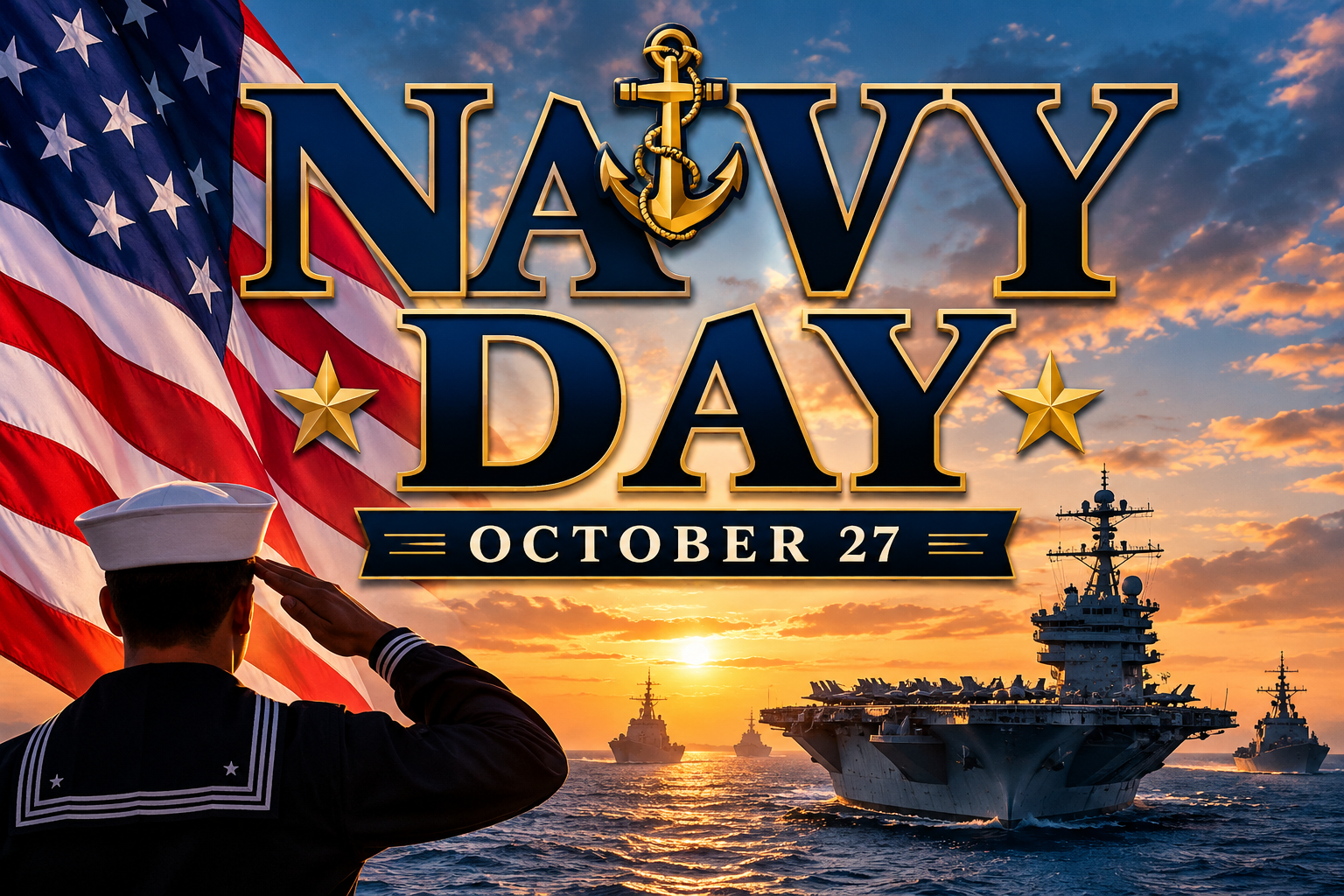
Every year on October 27, Americans observe Navy Day, a special occasion dedicated to recognizing the bravery, dedication, and sacrifices of the men and women who serve and have served in the United States Navy. It is a day to celebrate the Navy’s remarkable history, honor its veterans, remember those who made the ultimate sacrifice, and appreciate the important role naval forces play in protecting the nation.
For generations, the United States Navy has stood as a symbol of strength, courage, discipline, and commitment. From historic naval battles to modern humanitarian missions, sailors have answered the call to serve their country, often spending months away from their families and loved ones.
Navy Day reminds us that freedom comes with responsibility and sacrifice. Behind every ship, submarine, aircraft, and naval operation are individuals who have dedicated their lives to something greater than themselves.
When Is Navy Day Celebrated?
Navy Day is observed annually on October 27 in the United States.
While the Navy’s official birthday is celebrated on October 13, Navy Day is a separate historical observance that recognizes the service, achievements, and contributions of the United States Navy.
The distinction between these two dates is important.
-
October 13 – U.S. Navy Birthday: Commemorates the establishment of the Continental Navy in 1775.
-
October 27 – Navy Day: A traditional observance established to honor the Navy and its contributions to national security.
Both occasions provide opportunities to recognize America’s naval heritage and thank those who have served.
The History of Navy Day
Navy Day was first established in 1922 by the Navy League of the United States, an organization dedicated to supporting America’s sea services and educating the public about their importance.
The organization selected October 27 for two historical reasons.
First, the date was traditionally associated with an early 1775 report supporting the creation of a Continental naval force during the American Revolution.
Second, October 27 was the birthday of President Theodore Roosevelt, who was born in 1858.
Roosevelt was a strong advocate for naval power and believed that maintaining a capable Navy was essential to protecting American interests and preserving national security.
During his presidency, Roosevelt helped modernize and expand the Navy. One of his most famous initiatives was the Great White Fleet, a group of American battleships that traveled around the world between 1907 and 1909.
The voyage demonstrated America’s growing naval capabilities and emphasized the importance of maintaining a strong maritime presence.
Navy Day became an opportunity for communities across the country to celebrate naval achievements through ceremonies, educational programs, public gatherings, and patriotic events.
Although the Department of Defense later encouraged greater emphasis on Armed Forces Day, Navy Day has continued to be recognized by organizations, veterans, and communities that appreciate America’s naval traditions.
Why Navy Day Matters
Navy Day represents much more than military ships and advanced technology. It honors the people whose service makes naval operations possible.
Every sailor takes on responsibilities that require discipline, teamwork, resilience, and personal sacrifice.
Many spend extended periods at sea, separated from their spouses, children, parents, and friends. They miss birthdays, holidays, anniversaries, and important family milestones.
Their families also make sacrifices, managing everyday responsibilities while worrying about the safety of their loved ones.
Navy Day gives Americans an opportunity to recognize both those serving and the families standing behind them.
It also reminds us of the importance of remembering naval veterans who served during previous generations.
Their courage and commitment helped shape the nation we know today.
The Role of the United States Navy
The United States Navy is responsible for protecting American interests at sea, maintaining maritime security, supporting national defense, and responding to emergencies around the world.
Its responsibilities extend far beyond combat operations.
1. Protecting National Security
The Navy helps defend the United States by maintaining a presence across the world’s oceans.
Aircraft carriers, destroyers, submarines, and other naval vessels support military readiness and help deter potential threats.
2. Maintaining Freedom of Navigation
International waters play a major role in global trade and transportation.
The Navy supports maritime security and helps protect access to important shipping routes.
3. Responding to Natural Disasters
Naval forces frequently assist during hurricanes, earthquakes, tsunamis, and other emergencies.
Ships and aircraft can deliver food, water, medical supplies, and emergency personnel to communities in need.
4. Supporting Humanitarian Missions
The Navy participates in humanitarian operations that provide medical assistance and other essential services.
Hospital ships and medical personnel have supported relief efforts in communities around the world.
5. Supporting Military Operations
The Navy works alongside the Marine Corps, Army, Air Force, Space Force, Coast Guard, and allied forces to support national defense objectives.
These missions require coordination, professionalism, and a shared commitment to protecting others.
Famous Moments in United States Navy History
The history of the United States Navy includes remarkable achievements and moments of extraordinary courage.
The American Revolution
The Continental Navy was established on October 13, 1775, during the American Revolutionary War.
Although its resources were limited, it helped challenge British maritime operations and laid the foundation for the modern United States Navy.
The War of 1812
American naval victories during the War of 1812 helped strengthen national pride.
The USS Constitution became one of the most recognizable ships in American history, earning the nickname Old Ironsides after demonstrating remarkable resilience in battle.
The Battle of Midway
During World War II, the Battle of Midway in June 1942 became a major turning point in the Pacific War.
American naval forces defeated a powerful Japanese carrier force, significantly changing the strategic balance in the Pacific.
The battle remains one of the most studied naval engagements in military history.
The Cold War
Throughout the Cold War, the Navy maintained a significant global presence.
Submarines, aircraft carriers, and other naval forces played important roles in deterrence, intelligence gathering, and international security.
Modern Naval Operations
Today, the Navy continues adapting to changing security challenges.
Advanced submarines, modern aircraft, unmanned systems, and sophisticated technology help sailors perform missions across the globe.
Despite these technological advances, the Navy’s greatest strength remains the people who serve.
10 Meaningful Ways to Celebrate Navy Day
You do not need to live near a naval installation or have military experience to participate in Navy Day.
Here are ten meaningful ways to recognize the occasion.
1. Thank a Navy veteran. Take a moment to express appreciation to someone who served.
2. Learn about naval history. Explore the important events, ships, and individuals that helped shape America’s Navy.
3. Display the American flag. Show your appreciation for military service and national heritage.
4. Visit a naval museum. Learn about historic ships, submarines, and naval traditions.
5. Support military families. Offer encouragement or practical assistance to families with loved ones serving overseas.
6. Share a veteran’s story. Help preserve the memories and experiences of those who served.
7. Honor fallen sailors. Remember the individuals who lost their lives while serving their country.
8. Teach children about Navy Day. Explain the importance of military service, courage, and sacrifice.
9. Support veteran organizations. Consider volunteering or contributing to reputable organizations that assist veterans and their families.
10. Attend a remembrance ceremony. Participate in a local event recognizing naval service and military history.
Even a small gesture of appreciation can carry tremendous meaning.
Interesting Facts About the United States Navy
The Navy has a long and fascinating history filled with traditions, achievements, and innovations.
-
The Continental Navy was established on October 13, 1775.
-
The USS Constitution, launched in 1797, is the world’s oldest commissioned warship still afloat.
-
The United States Navy operates nuclear-powered aircraft carriers and submarines.
-
Navy ships frequently participate in humanitarian and disaster relief missions.
-
The Navy’s official motto is often associated with the Latin phrase Non sibi sed patriae, meaning “Not for self, but for country,” although the Navy has no single officially adopted motto.
-
The Navy’s traditional colors are blue and gold.
-
Sailors serve in a wide range of careers, including aviation, engineering, medicine, cybersecurity, and logistics.
-
Navy Day and the Navy’s official birthday are separate observances.
These facts highlight the Navy’s remarkable evolution from a small revolutionary force into a modern maritime service.
Honoring Navy Veterans and Their Families
One of the most important aspects of Navy Day is recognizing the lasting impact military service has on individuals and their families.
For many veterans, leaving active duty does not mean leaving behind the memories of their service.
They carry experiences of friendship, sacrifice, responsibility, and sometimes profound loss.
Some remember the excitement of visiting distant countries and building lifelong friendships.
Others remember dangerous assignments, difficult deployments, or fellow sailors who never returned home.
Military families carry their own memories.
They remember the long separations, missed celebrations, anxious nights, and joyful homecomings.
Navy Day should honor all these experiences.
It is an opportunity to listen to veterans, acknowledge their sacrifices, and remind them that their service continues to matter.
Remembering Those Who Never Came Home
Not every sailor who leaves home returns.
Throughout American history, countless Navy personnel have lost their lives during combat operations, accidents, and other dangerous assignments.
Behind every fallen sailor is a family whose life changed forever.
There are parents who lost sons and daughters, spouses who lost their partners, children who grew up without a mother or father, and friends who continue carrying memories of someone they loved.
Their sacrifices deserve more than a passing acknowledgment.
They deserve remembrance, respect, and gratitude.
Navy Day is an opportunity to honor those who gave their lives in service and recognize the families who continue living with their absence.
Their loved ones may be gone, but their stories and contributions remain part of America’s history.
The Importance of Teaching Future Generations
As time passes, the stories of earlier generations can gradually fade unless they are preserved.
Teaching young people about Navy Day helps ensure that the courage and sacrifices of naval personnel are not forgotten.
Parents and educators can share stories about historic naval battles, humanitarian missions, military traditions, and the responsibilities of service members.
Children can also learn that serving one’s country involves more than physical strength.
It requires integrity, teamwork, compassion, responsibility, and the willingness to help others.
These values extend beyond military service and can inspire people in everyday life.
By remembering the past, future generations can develop a deeper appreciation for the people who helped protect their freedoms.
Navy Day Quotes to Inspire Gratitude and Patriotism
These original reflections capture the spirit of Navy Day.
1. “A sailor’s courage is measured not only by the storms faced at sea, but by the sacrifices made for those waiting at home.”
2. “Behind every Navy uniform is a story of dedication, service, and sacrifice.”
3. “The ocean may separate sailors from their families, but love and loyalty keep them connected.”
4. “Freedom is protected by ordinary people willing to make extraordinary sacrifices.”
5. “A nation’s strength is reflected in the courage of those who answer its call to serve.”
6. “The legacy of a sailor lives on through the lives they protected and the people who remember them.”
7. “Honor the sailor, remember the sacrifice, and never forget the family waiting at home.”
8. “True service is not measured by recognition, but by commitment to something greater than oneself.”
9. “Every naval journey carries a story of courage, resilience, and hope.”
10. “On Navy Day, we remember that behind every mission are people whose dedication deserves our gratitude.”
A Special Thank You to Those Who Serve
To every active-duty sailor, Navy veteran, and military family: thank you.
Thank you for the sacrifices that often go unnoticed.
Thank you for the holidays spent away from home, the difficult deployments, the dangerous assignments, and the commitment to serving others.
Thank you to the families who support their loved ones through uncertainty and separation.
And to the families of those who never returned, may your loved ones always be remembered with honor and gratitude.
Your sacrifices are part of the nation’s story.
Final Thoughts: Celebrating Navy Day on October 27
Navy Day is a reminder that the strength of the United States Navy comes not simply from its ships, aircraft, submarines, or advanced technology, but from the courage and dedication of the people who serve.
From the earliest days of American independence to modern missions around the world, sailors have demonstrated resilience, teamwork, and a willingness to put service before personal comfort.
October 27 gives us an opportunity to recognize their contributions, remember those who made the ultimate sacrifice, and appreciate the families who stand beside them.
Whether you thank a veteran, learn about naval history, support a military family, or simply take a moment of remembrance, your recognition helps keep the Navy’s legacy alive.
Happy Navy Day to all who have served, all who continue to serve, and all the families whose sacrifices deserve our gratitude.
How will you honor the brave men and women of the United States Navy this Navy Day?



Leave a Reply