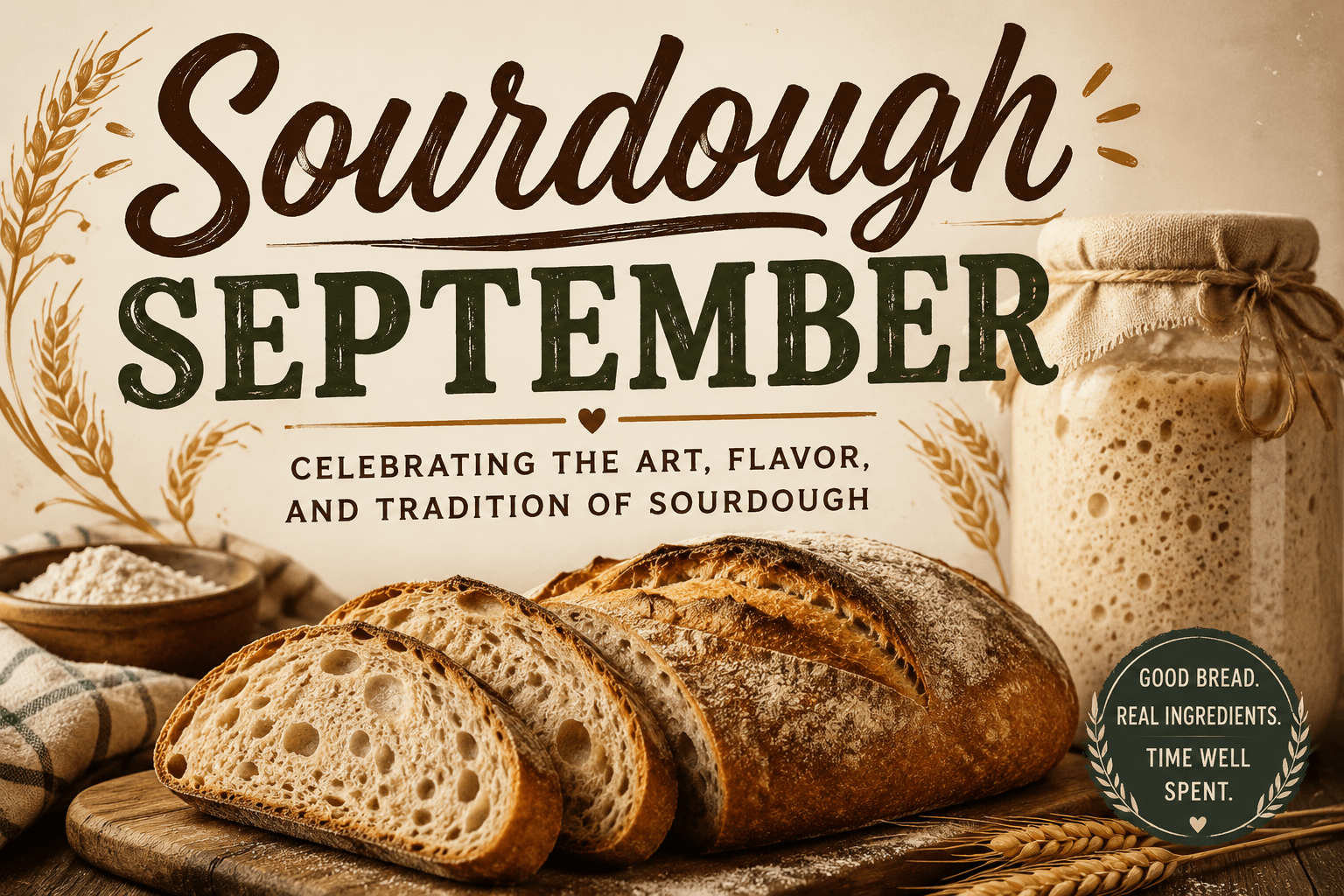
September is a month of changing seasons, cooler mornings, comforting foods, and the return of baking to many kitchens. It is also the perfect time to celebrate one of the oldest and most beloved forms of breadmaking: sourdough.
Sourdough September is a month-long celebration of naturally fermented bread, traditional baking techniques, sourdough starters, and the bakers who keep this centuries-old craft alive. Whether you have maintained the same starter for years or have never baked a loaf in your life, September offers an opportunity to discover what makes sourdough so special.
From its distinctive tangy flavor and chewy texture to the fascinating fermentation process behind every loaf, sourdough is much more than bread. It represents patience, tradition, creativity, and the simple satisfaction of making something from scratch.
What Is Sourdough September?
Sourdough September is an annual celebration designed to encourage people to discover, bake, buy, and enjoy genuine sourdough bread.
Rather than relying primarily on commercial baker’s yeast for a quick rise, traditional sourdough uses a starter containing flour, water, wild yeasts, and beneficial bacteria. Maintaining that living culture and allowing dough sufficient fermentation time are central parts of the sourdough process.
The result can be bread with a wonderfully complex flavor, crisp crust, airy interior, and unmistakable character.
Throughout September, home bakers can experiment with starters and recipes, while bakeries have an opportunity to showcase their sourdough creations. Even those who have no interest in becoming bakers can participate simply by supporting a local bakery and enjoying a freshly baked loaf.
An Ancient Tradition
Sourdough may feel trendy today, but naturally fermented bread is anything but new.
Long before packages of commercial yeast appeared on grocery-store shelves, people relied on naturally occurring microorganisms to ferment dough. Early bakers discovered that mixtures of flour and water left under suitable conditions could begin bubbling and fermenting.
When some of that fermented mixture was incorporated into fresh dough, it could help the dough rise.
Over generations, bakers learned how to maintain these cultures and pass them from one batch of bread to another. What began as practical food preparation eventually developed into an art.
Different regions created their own bread traditions based on available grains, climates, water, techniques, and local tastes.
The Magic of a Sourdough Starter
At the heart of traditional sourdough is the starter.
A basic starter can begin with something remarkably simple: flour and water.
Given time and proper care, naturally occurring yeasts and lactic acid bacteria establish themselves within the mixture. The baker periodically feeds the starter with additional flour and water, keeping the microbial community active.
A healthy starter may become bubbly, rise after feeding, and develop a pleasantly fermented aroma.
The starter is then used to ferment bread dough.
There is something particularly satisfying about maintaining a starter because it turns breadmaking into an ongoing relationship rather than a single recipe. You feed it, observe it, learn how it behaves, and gradually understand when it is ready to bake.
Some bakers even name their starters.
Why Sourdough Takes Time
Modern life encourages speed. Sourdough encourages patience.
Depending on the recipe, starter strength, temperature, flour, and desired results, making a loaf can stretch across many hours or even into the following day.
There are periods of mixing, resting, folding, fermenting, shaping, proofing, and finally baking.
That may sound inconvenient, but the slow process is part of sourdough’s appeal.
You cannot completely rush fermentation.
Instead, you learn to watch the dough rather than simply watching the clock.
Is it rising?
Are bubbles developing?
Has the dough become smoother?
Does it feel elastic?
Is it ready to shape?
Sourdough baking teaches observation and patience—two qualities that can sometimes feel increasingly rare in a world built around instant results.
Why Does Sourdough Taste Different?
Fermentation creates many of the flavors associated with sourdough.
Wild yeasts and bacteria transform the dough as it ferments, producing acids and other compounds that contribute to its aroma and taste.
Not every sourdough loaf is intensely sour, however.
Flavor can range from mild and slightly tangy to noticeably acidic. The final result depends on numerous factors, including fermentation time, temperature, starter characteristics, flour selection, hydration, and baking technique.
That variety is one reason sourdough remains endlessly interesting.
Two bakers can begin with similar ingredients and still create loaves with noticeably different personalities.
The Beauty of a Freshly Baked Loaf
Few kitchen experiences compare with removing a loaf of sourdough from the oven.
The crust may crackle as the bread cools. The kitchen fills with the aroma of toasted grain. Then comes perhaps the hardest part of the entire process: waiting before slicing it.
Cutting into a properly cooled loaf reveals the crumb inside.
Some sourdough breads have large, irregular holes. Others have a tighter crumb perfect for sandwiches. Neither style automatically makes one loaf better than another.
What matters most is that the bread tastes good and serves its intended purpose.
And when you have mixed, fermented, shaped, scored, and baked the loaf yourself, that first slice can feel like a genuine accomplishment.
Sourdough Goes Far Beyond a Basic Loaf
One of the best parts of Sourdough September is discovering just how versatile sourdough can be.
A starter can become the foundation for an incredible variety of foods, including:
- Rustic artisan bread
- Sandwich bread
- Baguettes
- Dinner rolls
- Pizza crust
- Focaccia
- Bagels
- English muffins
- Pancakes
- Waffles
- Crackers
- Pretzels
- Cinnamon rolls
- Biscuits
- Flatbreads
Bakers also experiment with additions such as roasted garlic, herbs, cheese, olives, seeds, dried fruit, cinnamon, chocolate, and jalapeños.
Once you understand the fundamentals, sourdough becomes a playground for creativity.
Don’t Forget About Sourdough Discard
Maintaining a starter sometimes leaves bakers with excess starter, commonly called discard.
Despite the name, it does not always need to end up in the trash.
Sourdough discard can be incorporated into numerous recipes, particularly pancakes, waffles, crackers, muffins, pizza dough, quick breads, and other baked goods.
Using discard is another way to experiment with sourdough while reducing kitchen waste.
It can also make maintaining a starter more enjoyable because feeding day can become an excuse to make something delicious.
Sourdough and San Francisco
In the United States, few places are as closely associated with sourdough as San Francisco.
The city’s sourdough tradition became especially famous during and after the California Gold Rush era, when bread was an important staple and sourdough cultures were valuable to bakers and prospectors.
Over time, San Francisco sourdough became known for its characteristic tang and developed into part of the city’s culinary identity.
Today, sourdough bread bowls, sandwiches, artisan loaves, and bakery displays remain closely associated with San Francisco food culture.
However, sourdough belongs to a much larger global history. Naturally fermented breads have existed in many cultures for generations, each shaped by local ingredients and traditions.
Starting Your Own Sourdough Journey
Sourdough can look intimidating on social media.
You may see perfectly round loaves with elaborate scoring patterns and dramatic open crumbs. It is easy to assume you need professional equipment and years of experience.
You don’t.
Your first loaf does not need to look like something from an artisan bakery.
Start with the basics.
Flour.
Water.
Salt.
Starter.
Time.
Learn how your starter behaves. Learn how dough changes during fermentation. Bake a loaf. See what happens.
Maybe it spreads too much.
Maybe the crumb is dense.
Maybe the crust gets darker than you expected.
Bake another one.
Sourdough is learned through repetition.
Eventually, your hands begin recognizing what properly fermented dough feels like, and the process becomes much more intuitive.
Support Your Local Sourdough Bakeries
You don’t have to bake bread to celebrate Sourdough September.
September is also an excellent time to visit independent bakeries and artisan bread makers.
Ask whether they make naturally fermented sourdough. Try a loaf you have never purchased before. Explore different grains and styles.
You might discover sourdough made with whole wheat, rye, spelt, seeds, herbs, cheese, olives, or other ingredients.
Supporting local bakeries also helps preserve traditional breadmaking skills that require considerable time, knowledge, and labor.
A real artisan loaf represents hours of work that often begins long before customers walk through the bakery doors.
Host a Sourdough Taste Test
For a fun Sourdough September activity, gather several different loaves and organize a tasting.
Try breads from different bakeries or compare homemade versions.
Pay attention to the differences.
How thick is the crust?
How chewy is the interior?
How strong is the sour flavor?
Can you taste the grain?
Which loaf works best with butter?
Which would make the best sandwich?
Which would you choose for toast?
A simple tasting can demonstrate how dramatically sourdough can vary from one baker or recipe to another.
What to Eat With Sourdough
A good loaf does not need much.
A warm slice with butter can be enough.
But sourdough also pairs beautifully with countless foods. Try it with soups and stews, eggs, avocado, cheese, olive oil, roasted vegetables, jams, honey, grilled meats, or your favorite sandwich fillings.
Sourdough also makes excellent toast.
Top it with avocado and a poached egg for breakfast, peanut butter and banana for a quick snack, or ricotta and honey for something slightly sweeter.
And don’t throw away a loaf simply because it has become a little stale. Day-old sourdough can be transformed into croutons, breadcrumbs, bread pudding, French toast, stuffing, or grilled sandwiches.
How to Celebrate Sourdough September
There are plenty of ways to join the celebration throughout September:
- Bake your first sourdough loaf.
- Create or obtain a sourdough starter.
- Learn how to properly feed and maintain a starter.
- Visit an artisan bakery.
- Try several varieties of sourdough.
- Make sourdough pizza.
- Experiment with a sourdough discard recipe.
- Give a loaf to a friend or neighbor.
- Teach someone else how to maintain a starter.
- Try a new flour or grain.
- Make sourdough French toast.
- Host a bread-and-cheese night.
- Share photos of your baking adventures.
- Learn more about the history of naturally fermented bread.
You could even make September a personal sourdough challenge and bake something different each week.
More Than Just Bread
Perhaps the greatest lesson sourdough offers has nothing to do with food.
Sourdough reminds us that some worthwhile things cannot be rushed.
A starter needs time.
Fermentation needs time.
Learning needs time.
Even mistakes become part of the process.
A loaf that doesn’t turn out perfectly still teaches you something that can make the next loaf better.
In that way, sourdough feels particularly appropriate for September. As summer begins giving way to fall, the season encourages us to slow down, return to comforting traditions, and appreciate simple things.
Celebrate Sourdough September
Sourdough September is an invitation to celebrate one of humanity’s oldest and most enduring food traditions.
You can spend the month maintaining your own bubbling starter, attempting your first loaf, perfecting a recipe you have baked dozens of times, or simply buying fresh sourdough from a neighborhood bakery.
However you participate, take a moment to appreciate what goes into every loaf: flour, water, salt, microorganisms, knowledge, patience, and time.
Sometimes the simplest ingredients create the most extraordinary results.
So this September, slice into a crusty loaf, spread on some butter, share bread with someone you care about, and celebrate the delicious tradition of sourdough.
Happy Sourdough September!
Leave a Reply