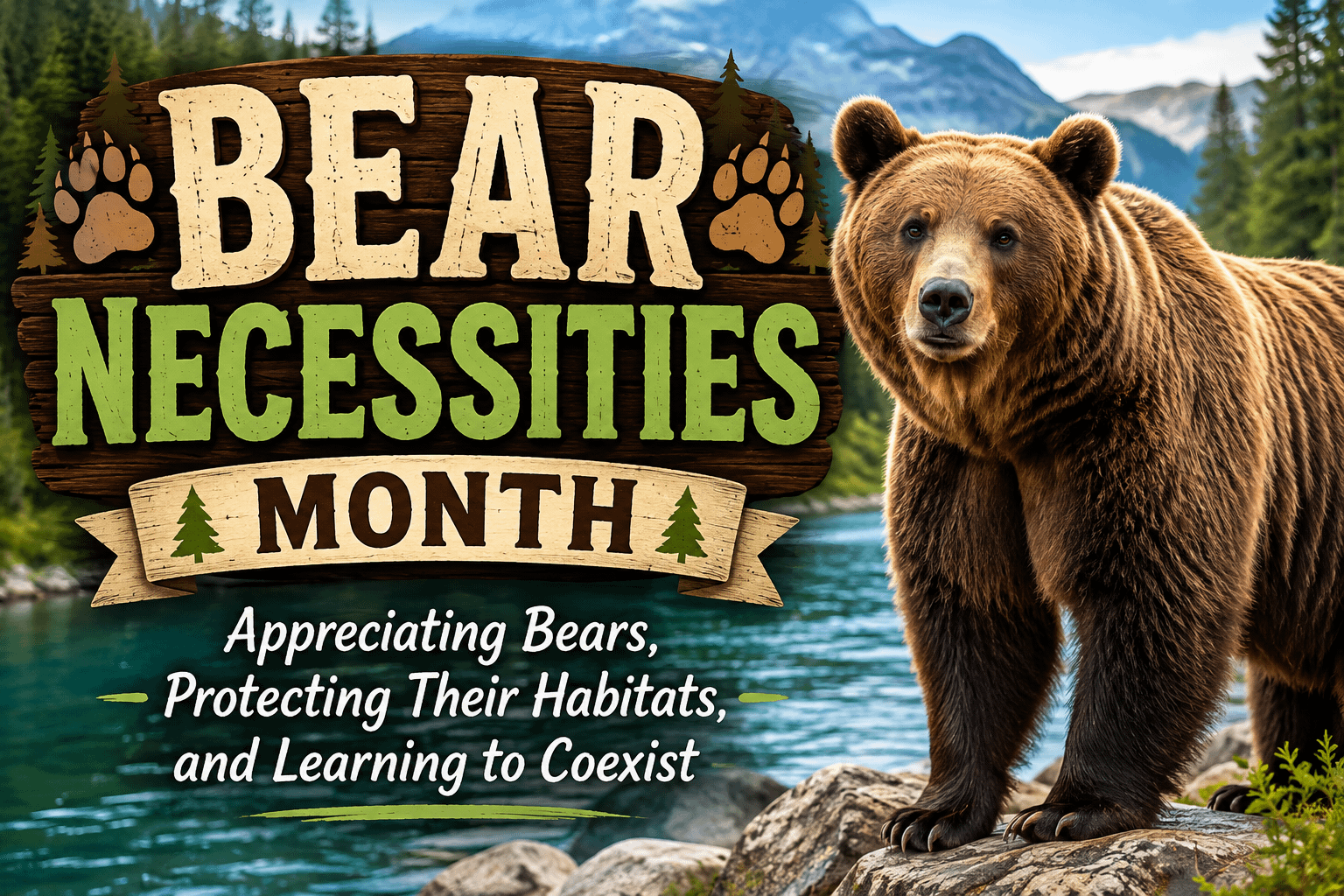
Every September, Bear Necessities Month offers an opportunity to learn more about one of nature’s most recognizable and fascinating animals. Bears have captured the human imagination for generations. They appear in folklore, children’s stories, movies, sports mascots, and cultural traditions, yet the real animals are far more remarkable than their fictional counterparts.
Bear Necessities Month is a great time to move beyond the teddy bears and storybook characters and discover how bears actually live, what they need to survive, and what people can do to help protect them.
From the forests of North America to the frozen Arctic, bears occupy dramatically different environments. Despite their strength and adaptability, many bear populations face challenges including habitat loss, changing food supplies, human development, and conflicts with people.
This month reminds us that protecting bears ultimately means protecting the wild places they depend upon.
Meet the Bears
There are eight recognized living species of bears around the world:
- American black bear
- Brown bear, which includes grizzly bears
- Polar bear
- Asian black bear
- Giant panda
- Sloth bear
- Sun bear
- Spectacled bear
Each has developed characteristics that allow it to survive in its particular environment.
Polar bears are remarkably adapted to Arctic conditions and depend heavily on marine ecosystems. Giant pandas are famous for a diet dominated by bamboo. Sun bears live in the tropical forests of Southeast Asia, while spectacled bears are native to South America.
In North America, the American black bear is the most widespread bear species. Despite its name, a black bear isn’t necessarily black. Depending on the region and individual animal, its coat can appear brown, cinnamon, blond, or nearly black.
Brown bears are another iconic group. The grizzly bear is a North American population of the brown bear and has become a powerful symbol of wilderness.
Bears Are More Intelligent Than Many People Realize
Bears aren’t simply large animals wandering through forests looking for their next meal. They are intelligent, curious creatures capable of learning and adapting.
Their excellent memories can help them remember locations where food has been available in previous seasons.
Unfortunately, that intelligence can sometimes create problems when bears discover human food.
A bear that finds an unsecured garbage container, campground cooler, pet food bowl, or other easy meal may remember the location and return. That is one reason responsible food and waste storage is so important in bear country.
Preventing bears from associating humans with food helps protect both people and bears.
What Do Bears Eat?
The answer depends heavily on the species, location, and season.
Many bears are omnivores and consume combinations of plant and animal foods.
Their diets can include:
- Berries and fruits
- Nuts and seeds
- Roots and grasses
- Insects
- Fish
- Small animals
- Carrion
- Honey and other available foods
Some bears spend significant portions of the year searching for calorie-rich foods that will help them survive periods when food becomes scarce.
During seasons when berries, nuts, fish, or other foods become abundant, bears may spend many hours each day feeding.
Their survival is closely connected to healthy ecosystems that provide enough natural food.
The Incredible Sense of Smell
One of a bear’s greatest abilities is its sense of smell.
Bears rely heavily on scent to explore their surroundings, locate food, detect other animals, and recognize potential danger.
That powerful sense of smell is another reason food storage matters so much when camping or living in bear country.
Something that seems securely packaged to a person may still smell extremely interesting to a bear.
Campers should always follow local regulations regarding food, garbage, toiletries, and other scented items.
Bears and Winter
When people think about bears, one of the first behaviors that often comes to mind is hibernation.
However, winter behavior varies among species and environments.
Bears living in colder climates may enter dens and dramatically reduce their activity during winter. Their bodies undergo impressive physiological changes that allow them to survive for long periods while relying on stored energy.
Pregnant females may also give birth while denning, with tiny cubs spending their earliest weeks protected inside the den.
Not every bear species follows the same winter pattern. Bears living in warmer climates may remain active throughout much or all of the year.
Mother Bears and Their Cubs
Few wildlife sights are as memorable as a mother bear traveling with her cubs.
Bear cubs depend heavily on their mothers during the beginning of their lives. Mothers teach their young where to find food, how to navigate their environment, and how to recognize potential threats.
That protective relationship has also contributed to the popular image of the fiercely protective “mama bear.”
For people observing bears in the wild, however, seeing cubs should be a reminder to maintain plenty of distance.
Never approach a bear cub.
Its mother may be nearby even when you cannot see her.
Why Bears Matter to Ecosystems
Bears aren’t just impressive animals. They can also play important ecological roles.
Their feeding and movement can influence the environments where they live. Bears that consume berries and fruits may spread seeds through their waste. Bears digging for roots, insects, or other foods can disturb soil and contribute to ecological processes.
In ecosystems where bears catch migrating salmon, portions of those fish may eventually provide nutrients to surrounding forests and other wildlife.
Large animals such as bears are part of complicated ecological relationships that have developed over thousands of years.
Protecting bears therefore isn’t only about saving a charismatic animal.
It can also contribute to protecting entire ecosystems.
The Growing Challenge of Human-Bear Conflict
As human communities expand into areas that were once predominantly wild, interactions between people and bears can become more common.
A bear may wander into a neighborhood because it smells garbage, fruit trees, birdseed, outdoor pet food, livestock feed, or another potential meal.
Once bears learn that human communities provide reliable food, they may repeatedly return.
That creates dangerous situations.
The best solution is often prevention.
Communities in bear country can reduce attractants by securing garbage, feeding pets indoors, responsibly managing compost, harvesting ripe fruit, cleaning outdoor cooking equipment, and following local wildlife recommendations.
The simple principle is:
Don’t intentionally or unintentionally teach a wild bear that people provide food.
Keeping bears wild gives them a better chance of remaining safe.
Respect Bears From a Distance
Seeing a bear in the wild can be unforgettable, but wildlife observation should always be done responsibly.
Never approach a bear for a photograph.
Never attempt to feed one.
Never encourage a bear to move closer.
Use binoculars or a camera lens to appreciate wildlife from a safe distance and follow guidance provided by parks and wildlife authorities.
Different bear species and environments require different safety practices, so visitors should familiarize themselves with recommendations for the area they are visiting.
Respecting wildlife means allowing animals to remain wild.
Bear Necessities When Camping
Bear Necessities Month is also an excellent opportunity for hikers and campers to refresh their bear-safety knowledge.
Before traveling into bear habitat:
Research the area. Learn which bear species live there and follow the recommendations of local land managers.
Store food correctly. Use approved food-storage methods required by the campground, park, or wilderness area.
Keep a clean campsite. Food scraps and cooking residue can attract wildlife.
Never keep food in your tent. Follow local guidance regarding scented products as well.
Give bears space. If you encounter one, follow the recommendations for that species and location.
Good outdoor habits protect more than the people visiting the wilderness. They also prevent bears from developing dangerous associations with humans.
Bears Aren’t the Monsters We Sometimes Imagine
Movies and sensational stories can make bears seem like animals constantly searching for opportunities to attack people.
Reality is much more complicated.
Bears are powerful wild animals and should always be treated with caution and respect, but they generally have their own priorities: finding food, raising young, protecting themselves, and navigating their environment.
Learning about bear behavior can replace unnecessary fear with informed respect.
That doesn’t mean becoming careless around bears.
It means recognizing them for what they are—wild animals that deserve distance, understanding, and responsible human behavior.
How to Observe Bear Necessities Month
You don’t have to travel into the wilderness to participate in Bear Necessities Month.
Use September as an opportunity to learn something new about bears and the environments they inhabit.
Watch a reputable wildlife documentary. Read a book about bears. Visit an accredited zoo, wildlife center, national park, or nature museum. Learn which bear species live in your state or region.
Families can turn the month into an educational experience for children by studying the world’s eight bear species and comparing their habitats, diets, sizes, and adaptations.
You can also learn more about organizations working to conserve bear habitats and support wildlife conservation.
And if you live in bear country, one of the most meaningful things you can do is examine your own property for potential wildlife attractants.
Protecting Habitat Protects Bears
Bears need space.
Depending on the species, they may require enormous territories containing adequate food, water, shelter, and places to raise their young.
When natural habitat becomes increasingly fragmented by roads, development, and other human activity, wildlife may have greater difficulty moving between feeding and breeding areas.
Habitat conservation therefore remains one of the most important parts of long-term bear conservation.
Protecting forests, mountains, wetlands, Arctic environments, and other ecosystems benefits countless species besides bears.
Healthy bear populations can serve as reminders that wild ecosystems still have room for large animals to survive.
More Than the Bear Necessities
The phrase “bear necessities” may sound playful, but the basic needs of wild bears are serious.
They need healthy habitat.
They need natural food.
They need room to roam.
And increasingly, they need people who understand how to coexist with them.
Bear Necessities Month gives us a reason to appreciate these magnificent animals while recognizing our responsibility to protect the environments they call home.
Bears have survived changing landscapes for thousands of years. Their future will depend partly on the decisions people make about wildlife, wilderness, development, and conservation.
This September, celebrate Bear Necessities Month by learning something new about bears, sharing that knowledge with someone else, and remembering one simple rule:
Admire bears. Respect bears. Protect their habitat. And always let wild bears remain wild.
Which bear species fascinates you the most—black bears, grizzlies, polar bears, pandas, or another species—and why?
Leave a Reply