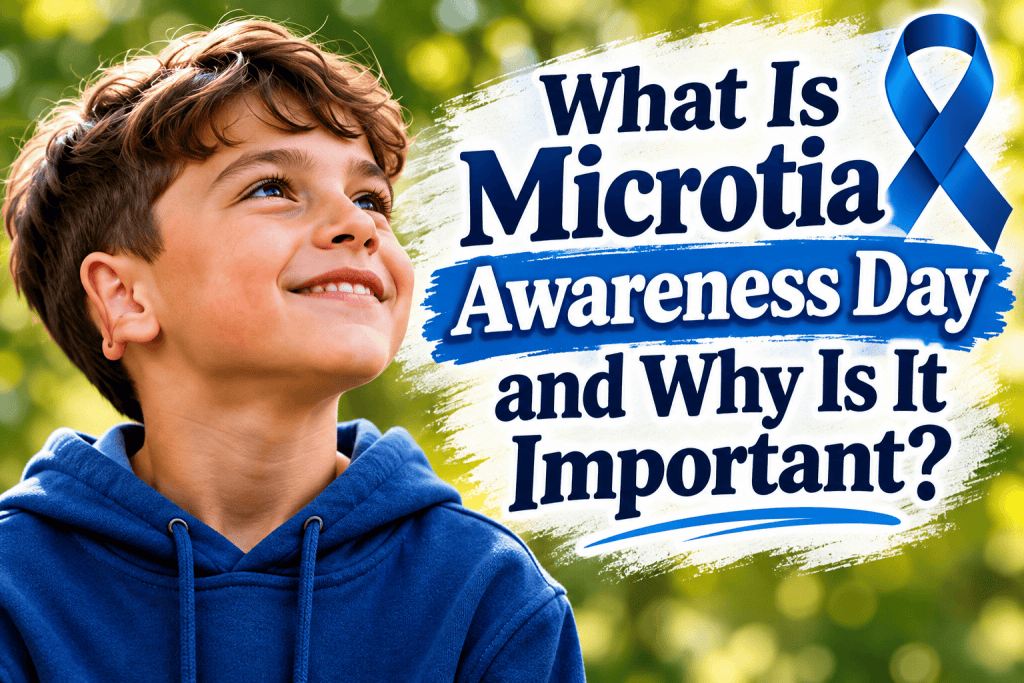
Every year on November 9, people around the world come together to recognize Microtia Awareness Day, an important observance dedicated to raising awareness about a rare congenital condition that affects the development of the outer ear. For children born with microtia and their families, this day represents much more than a medical condition. It is about acceptance, understanding, inclusion, and celebrating the strength of individuals who experience the world a little differently.
Although microtia is relatively uncommon, its impact can extend beyond physical appearance. Children and adults living with the condition may face hearing difficulties, emotional challenges, social misunderstandings, and decisions about medical treatment. Microtia Awareness Day helps bring these experiences into the conversation while encouraging communities to embrace differences rather than judge them.
Understanding what microtia is, how it affects individuals, and why awareness matters can help create a more compassionate and inclusive society.
What Is Microtia Awareness Day?
Microtia Awareness Day is observed annually on November 9 to educate the public about microtia and aural atresia, two conditions that can affect the development of the ear.
The observance was established in 2016 by Melissa Tumblin, founder of the nonprofit organization Ear Community, to help families affected by microtia and atresia feel supported, informed, and connected.
The word “microtia” comes from Greek roots meaning “small ear.” The condition occurs when the external ear does not develop completely during pregnancy.
Some individuals are born with a smaller-than-average ear, while others may have an ear that is significantly underdeveloped or absent.
Microtia can affect one ear or both ears, and the severity varies from person to person.
Microtia Awareness Day encourages people to learn about these differences and recognize that individuals born with microtia deserve the same opportunities, respect, and acceptance as everyone else.
When Is Microtia Awareness Day Celebrated?
Microtia Awareness Day takes place every year on November 9.
In 2026, Microtia Awareness Day falls on Monday, November 9.
The annual observance provides an opportunity for families, healthcare professionals, educators, advocacy organizations, and communities to share information about the condition.
Throughout the day, supporters may participate in awareness campaigns, educational events, community discussions, and social media activities.
Many families also use the occasion to celebrate their children’s accomplishments and share personal experiences that help others better understand life with microtia.
What Causes Microtia?
Microtia develops during early pregnancy when the structures that form the outer ear do not develop as expected.
The exact cause is not always known.
Researchers believe that microtia can result from a combination of genetic, environmental, and developmental factors.
In many cases, the condition occurs without any identifiable family history.
Certain genetic syndromes can include microtia as one of their characteristics, but many individuals with microtia have no associated syndrome.
Some maternal health conditions and pregnancy-related exposures have also been associated with an increased risk.
However, it is important to understand that most families never receive a definitive explanation for why their child was born with microtia.
Parents should not automatically assume that something they did or failed to do during pregnancy caused the condition.
How Common Is Microtia?
Microtia is considered a rare congenital condition.
Estimates vary by population and geographic region, but it is commonly reported to affect approximately 1 to 5 out of every 10,000 live births.
The condition occurs more frequently in one ear than in both ears.
Unilateral microtia affects only one side, while bilateral microtia affects both sides.
The right ear is affected more frequently than the left in many reported populations.
Although microtia is uncommon, thousands of families worldwide are affected by the condition.
Awareness campaigns help these families recognize that they are part of a larger community with shared experiences, resources, and support.
What Are the Different Types of Microtia?
Microtia is generally classified into four grades based on the development of the external ear.
Grade I: Mild Microtia
In Grade I microtia, the outer ear is smaller than usual but retains most of its recognizable structures.
The ear canal may be normal or narrower than expected.
Hearing ability varies depending on the development of the ear canal and middle ear.
Grade II: Moderate Microtia
Grade II microtia involves a partially developed outer ear with some recognizable features.
The ear canal may be narrow or absent.
Hearing difficulties are more likely when the canal or middle ear structures are affected.
Grade III: Severe Microtia
Grade III microtia is one of the most commonly identified forms.
The external ear typically appears as a small remnant of skin and cartilage rather than a fully developed ear.
The ear canal is frequently absent, which can result in conductive hearing loss.
Grade IV: Anotia
Grade IV microtia, also called anotia, involves the complete absence of the external ear.
The ear canal may also be absent, and hearing difficulties are common.
Despite these physical differences, many individuals with microtia develop effective communication skills and lead active, fulfilling lives.
What Is Aural Atresia, and How Is It Related to Microtia?
Aural atresia is a congenital condition in which the external ear canal does not develop normally or is absent.
It frequently occurs alongside microtia.
When the ear canal is missing or closed, sound cannot travel through the outer and middle ear in the usual way.
This can cause conductive hearing loss.
However, the inner ear may still function normally, allowing individuals to benefit from certain hearing technologies.
Not everyone with microtia has aural atresia, and not everyone with aural atresia has significant external ear differences.
Understanding the relationship between these conditions is important because medical care often involves evaluating both ear development and hearing ability.
Does Microtia Affect Hearing?
Microtia can affect hearing, but the degree of hearing loss varies.
Some individuals have normal hearing, particularly when the ear canal and middle ear structures are unaffected.
Others experience conductive hearing loss because sound cannot efficiently reach the inner ear.
Children with unilateral microtia may hear well through their unaffected ear but still experience difficulties understanding speech in noisy environments or identifying where sounds originate.
Children with bilateral microtia and associated hearing loss may require earlier and more extensive hearing support.
Audiologists and ear, nose, and throat specialists can evaluate hearing and recommend appropriate care.
Early hearing assessments are especially important for infants because hearing plays a major role in speech, language, and communication development.
Why Is Microtia Awareness Day Important?
Microtia Awareness Day matters because it addresses several challenges faced by individuals born with the condition.
1. It Educates the Public About a Rare Condition
Many people have never heard of microtia.
Without accurate information, visible ear differences may lead to uncomfortable questions, incorrect assumptions, or unwanted attention.
Education helps people understand that microtia is a congenital difference rather than something contagious or caused by an injury.
Greater awareness can reduce confusion and encourage respectful interactions.
2. It Helps Prevent Bullying and Social Isolation
Children with visible physical differences may experience teasing, staring, or exclusion.
For a child with microtia, these experiences can affect confidence and emotional well-being.
Microtia Awareness Day encourages parents, teachers, and classmates to promote kindness and inclusion.
Teaching children that physical differences are a normal part of human diversity can help prevent bullying before it begins.
3. It Connects Families With Support
Receiving a microtia diagnosis can leave parents with many questions.
Families may wonder about hearing development, treatment options, future surgeries, school accommodations, and emotional support.
Awareness initiatives introduce families to organizations, medical specialists, and other parents who understand these experiences.
Connecting with people facing similar circumstances can provide reassurance and practical guidance.
4. It Encourages Early Hearing Evaluations
Because microtia may occur alongside hearing loss, early diagnosis and assessment are important.
Newborn hearing screening, follow-up testing, and appropriate specialist referrals can help identify hearing needs.
Early intervention can support communication, learning, and development.
5. It Celebrates Individual Differences
One of the most meaningful messages of Microtia Awareness Day is that a person’s value is not determined by physical appearance.
Individuals with microtia have unique personalities, talents, ambitions, and abilities.
The observance provides an opportunity to celebrate those qualities rather than define someone solely by a medical diagnosis.
What Treatment Options Are Available for Microtia?
Treatment for microtia depends on the severity of the condition, hearing ability, age, medical circumstances, and personal preferences.
Not every individual with microtia needs or wants reconstructive treatment.
Some families choose medical or surgical interventions, while others prefer to leave the external ear unchanged.
Common options include the following.
Hearing Devices
Bone-conduction hearing devices can help certain individuals with conductive hearing loss by transmitting sound vibrations through the skull to the inner ear.
Some devices can be worn using a soft band, while others involve surgically implanted components.
The appropriate option depends on age, hearing evaluation, anatomy, and individual needs.
Ear Reconstruction Using Rib Cartilage
One reconstructive approach uses cartilage taken from the patient’s ribs to create an external ear framework.
This procedure is generally considered when a child is older and has sufficient cartilage development.
The process may involve multiple surgical stages.
Synthetic Framework Reconstruction
Another surgical option uses a biocompatible framework to create the shape of an external ear.
This approach may be available at younger ages than rib-cartilage reconstruction in selected patients.
As with any surgery, benefits and potential complications should be discussed with an experienced specialist.
Prosthetic Ears
Some individuals choose a custom-made prosthetic ear designed to resemble a natural ear.
Prosthetic ears may be attached using medical adhesive or implant-supported systems.
They can provide a realistic appearance without requiring the same type of reconstructive surgery.
Choosing No Reconstruction
Some people with microtia are comfortable with their natural appearance and decide against external ear reconstruction.
This is also a valid choice.
Treatment decisions should reflect the individual’s medical needs, preferences, and long-term well-being rather than pressure to look a certain way.
How Does Microtia Affect Children Emotionally?
The emotional effects of microtia differ from one child to another.
Some children feel confident about their appearance and rarely think about their ear difference.
Others may become self-conscious, especially as they grow older and become more aware of how classmates and strangers react.
Potential challenges include unwanted attention, teasing, difficulty participating in conversations, and anxiety about appearance.
Parents and caregivers can help by creating an environment where children feel comfortable discussing their experiences.
Encouraging open conversations, recognizing accomplishments, and providing opportunities to connect with other children who have microtia can support confidence.
When emotional challenges become significant, counseling or peer support may also be helpful.
The goal is not to convince children that their differences do not exist.
Instead, it is to help them understand that those differences do not diminish their worth.
How Can Schools Support Students With Microtia?
Schools play an important role in helping children with microtia feel included and supported.
Teachers should understand that even a child with normal hearing in one ear may struggle in noisy classrooms.
Helpful accommodations can include preferential seating, reducing background noise, providing written instructions, and checking that important information has been understood.
Some students may benefit from classroom microphone systems or other hearing-assistance technology.
Educators should also address bullying and encourage respectful discussions about physical differences.
Depending on the student’s needs and applicable laws, formal educational accommodations may be available through a Section 504 plan or an Individualized Education Program.
A supportive classroom environment helps students focus on learning rather than worrying about being misunderstood or excluded.
How Can You Celebrate Microtia Awareness Day?
There are many meaningful ways to participate in Microtia Awareness Day on November 9.
Share educational information. Help friends, relatives, and community members understand what microtia is and how it affects individuals.
Support awareness organizations. Consider contributing to nonprofit organizations that provide resources, advocacy, and assistance to families affected by microtia and atresia.
Listen to personal stories. Individuals living with microtia and their families can offer valuable perspectives about daily experiences, challenges, and achievements.
Encourage inclusion. Speak up against bullying and help create welcoming environments for people with visible differences.
Start conversations at school. Parents and educators can use age-appropriate discussions to teach children about kindness, respect, and acceptance.
Recognize healthcare professionals. Audiologists, surgeons, therapists, and other specialists contribute to the care and support of individuals with microtia.
Celebrate individuals with microtia. Recognize their accomplishments, talents, and contributions without reducing their identities to their condition.
Even small actions can help increase awareness and make someone feel more understood.
What Organizations Support People With Microtia?
Several organizations provide education, advocacy, and resources for individuals with microtia and their families.
One of the best-known is Ear Community, a nonprofit organization dedicated to supporting people with microtia and aural atresia.
The organization helps connect families, raises public awareness, and provides educational resources about hearing and treatment options.
Hearing-loss advocacy organizations and craniofacial support programs may also offer valuable assistance.
Hospitals with pediatric audiology, otolaryngology, and craniofacial teams can help families understand medical options and available services.
Support groups can be especially valuable for parents who want to speak with others who have navigated similar decisions.
Frequently Asked Questions About Microtia Awareness Day
Is Microtia Awareness Day a National Holiday?
Microtia Awareness Day is an awareness observance rather than a federal public holiday in the United States.
Schools, businesses, and government offices generally operate on their normal schedules.
Is Microtia a Disability?
Microtia itself is a physical congenital difference. Whether it is considered a disability depends on the individual’s functional limitations and the relevant legal or educational context.
Associated hearing loss may qualify someone for accommodations or disability-related services.
Can Someone With Microtia Hear Normally?
Yes. Some individuals with microtia have normal or near-normal hearing, while others experience varying degrees of hearing loss.
Hearing ability depends on the development of the ear canal, middle ear, and inner ear.
Can Microtia Be Corrected?
External ear reconstruction and prosthetic options can change the appearance of the ear.
Hearing devices and certain surgical procedures may improve hearing in appropriate cases.
However, treatment does not always restore normal hearing, and not everyone chooses reconstruction.
Is Microtia Hereditary?
Microtia can sometimes have a genetic component, but many cases occur without a known family history.
Genetic counseling may be recommended when microtia occurs alongside other congenital differences or when a hereditary syndrome is suspected.
Can Children With Microtia Live Normal Lives?
Yes. Many children and adults with microtia participate fully in school, employment, sports, relationships, and everyday activities.
Appropriate hearing support, educational accommodations, and emotional encouragement can help address challenges when they arise.
What Color Represents Microtia Awareness?
Blue is commonly associated with microtia awareness campaigns, although colors and promotional materials may vary among organizations.
Why Is November 9 Important for Microtia Awareness?
November 9 is the annual date chosen for Microtia Awareness Day. It provides a consistent opportunity to educate communities, connect families, and advocate for people affected by microtia and aural atresia.
Why Awareness and Acceptance Matter Beyond November 9
Although Microtia Awareness Day takes place once a year, the need for understanding continues every day.
A child born with microtia may face questions about appearance, hearing, and medical treatment throughout childhood.
Adults with the condition may also encounter misconceptions or social situations where their differences attract unnecessary attention.
Awareness helps replace assumptions with knowledge.
Acceptance helps create an environment where people feel comfortable being themselves.
For families, knowing that others understand the condition can make medical decisions, school experiences, and everyday conversations easier to navigate.
For individuals with microtia, greater public awareness can mean fewer uncomfortable encounters and more opportunities to be recognized for who they are.
These changes begin with education, empathy, and a willingness to listen.
Final Thoughts: What Is Microtia Awareness Day and Why Is It Important?
Microtia Awareness Day, observed every November 9, is an opportunity to recognize individuals born with microtia, educate communities about the condition, and support families navigating hearing differences and medical decisions.
While microtia affects the development of the external ear, it does not define a person’s intelligence, potential, character, or worth.
The importance of this observance extends beyond medical education. It reminds us that everyone deserves to feel accepted, respected, and included, regardless of physical differences.
By sharing accurate information, supporting families, encouraging early hearing care, and promoting kindness, communities can make a meaningful difference.
Ultimately, Microtia Awareness Day carries a simple but powerful message: Being born different does not mean being any less capable, valuable, or deserving of belonging.
And that is a message worth sharing not only on November 9, but every day of the year.



Leave a Reply