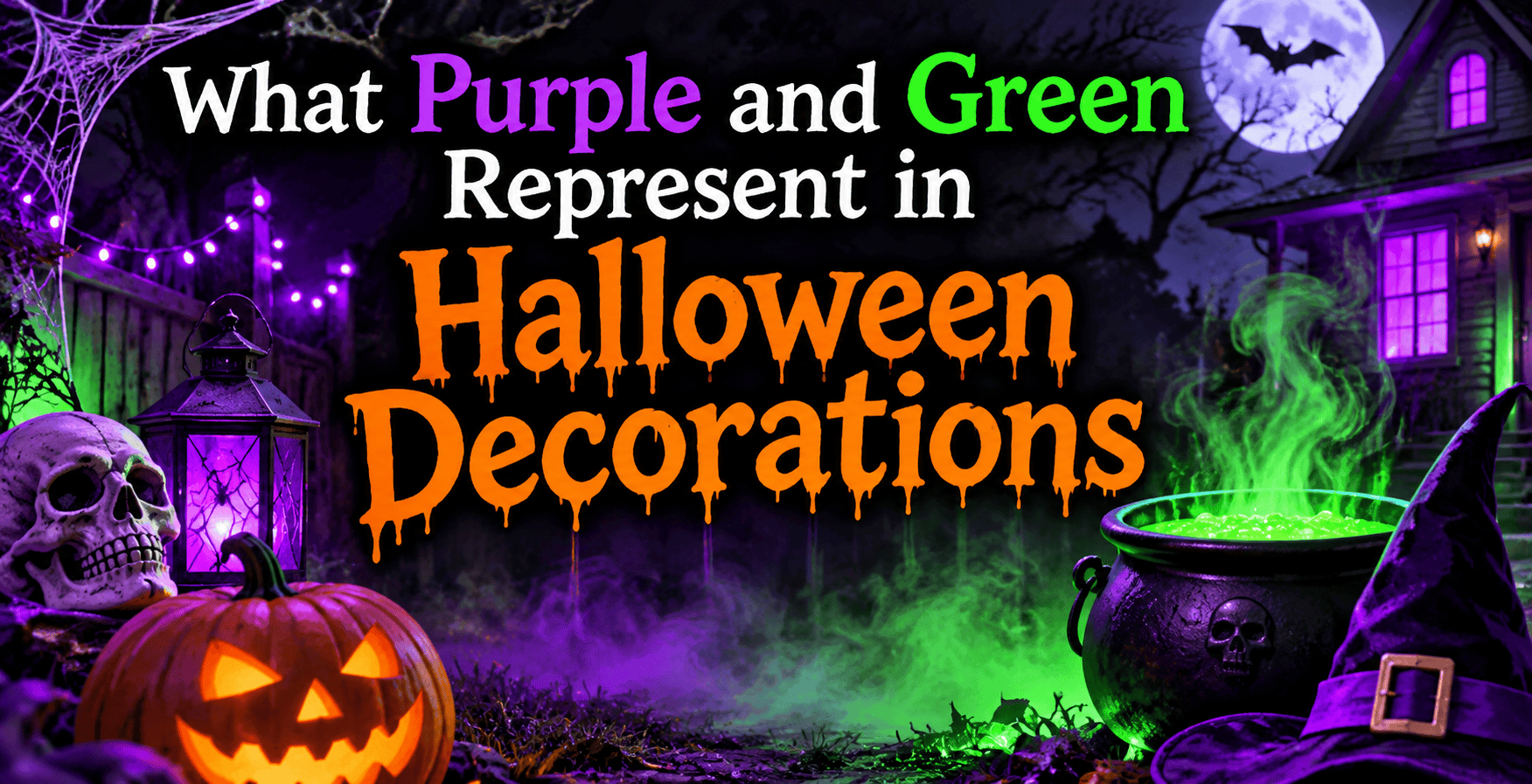
When Halloween arrives, neighborhoods transform into colorful displays of glowing pumpkins, spooky skeletons, mysterious witches, and haunted houses. While orange and black have traditionally dominated Halloween decorations, two other colors have become increasingly popular: purple and green.
From eerie green lighting and bubbling witch cauldrons to purple string lights and mysterious decorations, these colors help create the supernatural atmosphere associated with Halloween.
But what do purple and green actually represent in Halloween decorations?
Both colors carry symbolic meanings connected to magic, mystery, supernatural creatures, and the unknown. Their popularity also reflects how Halloween decorations have evolved from traditional autumn imagery into elaborate displays inspired by folklore, fantasy, horror movies, and popular culture.
Understanding the meaning behind purple and green can reveal why these colors have become essential parts of modern Halloween celebrations.
Why Are Purple and Green Popular Halloween Colors?
Purple and green have become popular Halloween colors because they complement the holiday’s themes of mystery, magic, monsters, and supernatural activity.
Unlike orange, which represents pumpkins and the autumn harvest, or black, which symbolizes darkness and death, purple and green are strongly associated with the fantasy and supernatural elements of Halloween.
Purple often suggests enchantment, mystery, and magical powers, while green frequently represents witches, monsters, eerie substances, and unnatural glowing effects.
When combined, these colors create a distinctive visual atmosphere that feels both playful and frightening.
They are especially popular in Halloween decorations involving witches, haunted houses, graveyards, ghosts, and magical creatures.
Although neither color has a single universally accepted Halloween meaning, their modern associations have become recognizable through decorations, entertainment, and seasonal traditions.
What Does Purple Represent in Halloween Decorations?
Purple is commonly associated with mystery, magic, supernatural powers, and the unknown.
Its connection to Halloween comes largely from its ability to create an atmosphere that feels unusual, enchanting, and slightly unsettling.
1. Purple Represents Mystery and the Unknown
One of purple’s strongest Halloween associations is mystery.
Deep purple shades resemble the colors sometimes visible in the sky during twilight, when daylight fades and darkness begins.
This transition between day and night creates a natural connection to the mysterious atmosphere of Halloween.
Purple lighting can make ordinary decorations appear more unusual and supernatural.
A porch illuminated with purple lights may feel mysterious, while purple fog effects can transform a simple yard into something resembling an enchanted landscape.
Because Halloween celebrates the strange and unexplained, purple fits naturally into its visual identity.
2. Purple Symbolizes Magic and Witchcraft
Purple is frequently used to represent magic in Halloween decorations.
Witches, spellbooks, magical potions, and enchanted objects are often surrounded by purple colors or glowing purple effects.
In fantasy stories and popular entertainment, purple is commonly used to illustrate magical energy.
A witch casting a spell may be surrounded by purple light, while an enchanted crystal ball might glow with a mysterious violet hue.
These visual conventions have influenced Halloween decorations.
Purple witch hats, candles, lights, and potion bottles help create an atmosphere associated with supernatural powers.
However, purple’s connection to witchcraft is primarily a modern decorative and entertainment convention rather than an ancient universal tradition.
3. Purple Represents the Supernatural
Purple is also associated with ghosts, spirits, and supernatural experiences in modern Halloween imagery.
Although ghosts are traditionally depicted in white, purple lighting can make ghost decorations appear more mysterious.
Haunted house displays frequently use purple illumination to create shadows and unusual visual effects.
Purple can also suggest an environment where ordinary rules no longer apply.
This makes it particularly effective for decorations involving haunted mansions, magical portals, and supernatural creatures.
4. Purple Has Historical Associations With Royalty and Luxury
Long before purple became a Halloween decoration color, it was associated with royalty, wealth, and power.
In parts of the ancient Mediterranean world, certain purple dyes were extremely expensive to produce.
As a result, purple clothing became connected with status and authority.
These historical associations do not directly explain purple’s use at Halloween, but they contribute to its broader symbolism of power and importance.
Modern fantasy imagery sometimes extends these associations to powerful witches, sorcerers, and magical characters.
5. Purple Creates a Spooky Atmosphere Without Being Too Frightening
Purple is especially useful for Halloween decorations because it can appear mysterious without necessarily being terrifying.
Families decorating for young children often use purple alongside orange, green, and black to create colorful displays.
Purple string lights, decorative pumpkins, and illuminated ghosts can provide a playful Halloween appearance.
For more frightening displays, darker purple shades can create dramatic shadows and an ominous atmosphere.
This versatility makes purple suitable for everything from family-friendly Halloween parties to elaborate haunted attractions.
What Does Green Represent in Halloween Decorations?
Green has several recognizable Halloween associations, including witches, monsters, poisonous substances, decay, and supernatural energy.
Although green normally symbolizes nature, growth, and renewal, Halloween decorations often use it in very different ways.
Bright, unnatural shades of green can suggest that something is strange, dangerous, or otherworldly.
1. Green Represents Witches
One of the most recognizable uses of green in Halloween decorations is the green-skinned witch.
Modern Halloween witches are frequently portrayed with green faces, pointed hats, long noses, and dark clothing.
This image was strongly popularized by the 1939 film The Wizard of Oz, which featured the Wicked Witch of the West with green skin.
Although witches had appeared in folklore and artwork for centuries, green skin was not a universal historical characteristic.
The film’s memorable portrayal helped establish the green-faced witch as a familiar figure in popular culture.
Today, green witch masks, decorations, and costumes remain common Halloween items.
2. Green Represents Poison and Dangerous Potions
Green is frequently associated with poisonous liquids and magical potions in Halloween imagery.
Witch cauldrons often contain bubbling green substances, while potion bottles may be filled with bright green liquids.
These colors suggest mysterious ingredients and potentially dangerous magical mixtures.
In reality, poisonous substances are not universally green.
However, cartoons, fantasy films, and Halloween decorations have established bright green as a visual symbol for toxins, slime, and unusual chemical reactions.
A glowing green cauldron instantly communicates the idea of witchcraft or supernatural experimentation.
This association makes green one of the most recognizable colors in Halloween displays.
3. Green Represents Monsters and Unnatural Creatures
Green is also closely associated with monsters.
Creatures such as zombies, goblins, and fictional laboratory creations are frequently depicted with green skin or glowing green features.
This color helps distinguish supernatural creatures from ordinary humans.
Green monster imagery has become particularly familiar through horror movies, cartoons, comic books, and Halloween merchandise.
The traditional green-skinned appearance of Frankenstein’s monster, for example, was influenced by film portrayals and popular illustrations rather than the original novel’s description alone.
Today, green remains a common color for monster masks, costumes, and decorations.
4. Green Can Symbolize Decay and Disease
Although green is normally connected with healthy plants and natural growth, certain greenish shades can also suggest decay, illness, or decomposition.
This contrast makes green useful for horror-themed Halloween decorations.
Green lighting can make skeletons, zombies, and graveyard displays appear more unsettling.
A green glow around a tombstone may suggest something supernatural emerging from beneath the ground.
Similarly, green-tinted makeup can create the appearance of an unhealthy or undead creature.
These visual effects help explain why green is so common in haunted houses and horror attractions.
5. Green Represents Eerie Supernatural Energy
Bright green lighting is frequently used to create the appearance of paranormal activity.
Ghostly green glows, illuminated skulls, and glowing eyes are familiar elements of modern Halloween decorations.
Green light can make a room or outdoor display appear unnatural, especially when contrasted against darkness.
For example, a skeleton illuminated from below with green lighting may look more frightening than the same skeleton under ordinary white light.
Green can also create the illusion of strange mist, radioactive substances, or mysterious energy.
These effects have made green a popular choice for electronic Halloween decorations and special lighting displays.
Why Are Purple and Green Used Together for Halloween?
Purple and green work especially well together because they represent different but complementary supernatural themes.
Purple often suggests mystery and magic, while green suggests monsters, witches, and eerie supernatural activity.
When combined, the colors create an atmosphere that feels magical and unsettling.
Their visual contrast also makes decorations stand out.
A bright green cauldron surrounded by purple lights immediately creates a recognizable Halloween scene.
Similarly, purple lighting behind green-faced witches can produce a dramatic effect.
These colors are especially effective against black backgrounds, which make both shades appear more vivid.
Modern Halloween decorations frequently use all three colors together to create a coordinated supernatural theme.
How Did Purple and Green Become Halloween Colors?
Halloween’s color traditions developed gradually rather than through a single historical event.
Orange and black became especially recognizable because of their connections to autumn harvest imagery, darkness, and seasonal celebrations.
Purple and green gained prominence as Halloween decorations increasingly incorporated witches, monsters, haunted houses, and fantasy-inspired themes.
During the twentieth century, horror films, animated entertainment, advertising, and mass-produced decorations helped establish familiar visual conventions.
Green-skinned witches, glowing monster eyes, purple magical effects, and colorful haunted houses became common images.
As Halloween grew into a major decorating and entertainment holiday, manufacturers expanded beyond traditional orange and black decorations.
Purple and green offered additional ways to create colorful and dramatic displays.
Today, these colors are widely recognized as part of Halloween’s modern visual identity.
However, there is no single documented moment when purple and green officially became Halloween colors.
Their popularity developed through changing artistic styles, commercial decorations, and entertainment influences.
How Purple and Green Compare With Traditional Halloween Colors
Halloween decorations commonly feature four major colors, each with different associations.
| Color | Common Halloween meaning |
|---|---|
| Orange | Pumpkins, autumn, harvest, and warmth |
| Black | Darkness, death, fear, and the unknown |
| Purple | Mystery, magic, enchantment, and supernatural powers |
| Green | Witches, monsters, potions, decay, and eerie energy |
These meanings are cultural associations rather than fixed rules.
A particular decoration may use a color simply because it looks attractive or creates a desired lighting effect.
Nevertheless, these associations help explain why certain combinations appear so frequently during Halloween.
Popular Purple Halloween Decorations
Purple is especially effective for decorations designed to create a mysterious or enchanted atmosphere.
Common examples include purple string lights, illuminated pumpkins, witch hats, artificial flowers, candles, spiderwebs, and decorative potion bottles.
Purple lighting is also frequently used in haunted houses and outdoor Halloween displays.
Deep purple shades can make graveyards and ghost decorations appear eerie, while brighter violet tones create a more playful magical appearance.
Purple decorations are particularly popular for witch-themed parties, enchanted forests, and supernatural fantasy displays.
Popular Green Halloween Decorations
Green decorations often focus on witches, monsters, and eerie glowing effects.
Common examples include green witch faces, bubbling cauldrons, monster masks, glowing skulls, slime decorations, zombie figures, and green LED lights.
Bright green lighting can dramatically change the appearance of a Halloween display.
For example, placing a green spotlight near artificial tombstones can create an unnatural glow that makes a graveyard scene appear haunted.
Green decorations are also popular for mad scientist laboratories, monster parties, and spooky potion-making themes.
Why Do Purple and Green Lights Look So Spooky?
Lighting plays an important role in how people experience Halloween decorations.
Purple and green lights can make familiar environments appear strange because they change the colors of objects and create unusual shadows.
Purple lighting may produce a mysterious, dreamlike atmosphere.
Green lighting can make faces and objects appear unnatural, particularly when used from unexpected angles.
Both colors can also contrast sharply with darkness.
This contrast makes decorations more visually dramatic at night.
For example, a porch decorated with purple lights and green illuminated pumpkins may look ordinary during the day but become much more striking after sunset.
Haunted attractions use similar lighting techniques to create suspense and influence how visitors perceive their surroundings.
Are Purple and Green Traditional Halloween Colors?
Purple and green are established modern Halloween colors, but they do not have the same long-standing seasonal associations as orange and black.
Orange is closely connected with pumpkins, autumn leaves, and harvest celebrations.
Black represents darkness and other themes associated with Halloween night.
Purple and green became more prominent as supernatural and fantasy imagery grew in popularity.
Their use is especially connected with twentieth-century entertainment and modern commercial decorating styles.
It would therefore be misleading to claim that purple and green have always carried specific Halloween meanings dating back to ancient Celtic celebrations.
The historical roots of Halloween are complex, and modern decorative color symbolism should not automatically be attributed to ancient customs.
Creative Ways to Decorate With Purple and Green for Halloween
Purple and green can be combined in several Halloween decorating themes.
Witch-Themed Halloween Decorations
Use purple string lights, green bubbling cauldrons, black witch hats, and decorative broomsticks.
This combination creates a magical atmosphere that works well for porches, entryways, and Halloween parties.
Haunted Graveyard Decorations
Place green spotlights around tombstones and use purple lighting behind skeletons or ghost figures.
The contrasting colors can make an outdoor graveyard display appear mysterious and unsettling.
Monster Laboratory Decorations
Use bright green liquids, purple lighting, artificial spiderwebs, and fictional scientific equipment.
This theme works especially well for Halloween parties inspired by classic monster movies.
Family-Friendly Halloween Decorations
Combine purple pumpkins, green decorations, orange lights, and smiling ghost figures.
Brighter colors can make Halloween displays festive and playful without relying on frightening imagery.
Enchanted Forest Decorations
Use purple fairy lights, green glowing plants, artificial mushrooms, and mysterious woodland creatures.
This theme emphasizes Halloween’s magical and fantastical side rather than traditional horror.
Do Purple and Green Have Spiritual Meanings at Halloween?
Some people associate purple with spirituality, intuition, and the unseen world.
Green may represent nature, transformation, renewal, or magical energy in certain spiritual and artistic traditions.
However, these meanings vary widely across cultures and belief systems.
There is no universally accepted spiritual interpretation of purple and green specifically for Halloween.
Modern decorations often use the colors because of their visual impact and familiar associations with fantasy entertainment.
While individuals may attach personal spiritual meanings to them, those interpretations should not be confused with established historical facts.
Why Purple and Green Remain Popular Halloween Colors
Purple and green have remained popular because they allow Halloween decorations to move beyond traditional pumpkins and autumn imagery.
They can create an atmosphere that feels magical, mysterious, frightening, or playful.
Purple provides a sense of enchantment and the unknown.
Green introduces associations with witches, monsters, strange potions, and supernatural energy.
Together, they help create some of the most recognizable visual effects in modern Halloween decorating.
Their versatility also allows them to work in a wide variety of settings, from children’s Halloween parties to elaborate haunted houses.
As lighting technology and seasonal decorations continue to evolve, purple and green remain effective choices for creating dramatic Halloween displays.
Final Thoughts: What Do Purple and Green Mean at Halloween?
Purple and green represent two important sides of modern Halloween imagery.
Purple symbolizes mystery, magic, enchantment, and the supernatural, while green is associated with witches, monsters, eerie potions, decay, and unnatural glowing effects.
Although these associations are largely shaped by modern entertainment and decorating traditions, they have become an important part of Halloween’s recognizable appearance.
Together with orange and black, purple and green create the colorful atmosphere that makes Halloween decorations so distinctive.
Whether they appear in glowing pumpkins, witch cauldrons, haunted houses, or outdoor lighting displays, these colors help transform ordinary spaces into mysterious Halloween scenes.
And that is what makes purple and green such memorable Halloween colors: they bring the strange, magical, and supernatural side of the holiday to life.
When you decorate for Halloween, do you prefer the traditional orange and black colors, or do you enjoy the mysterious combination of purple and green?
Leave a Reply