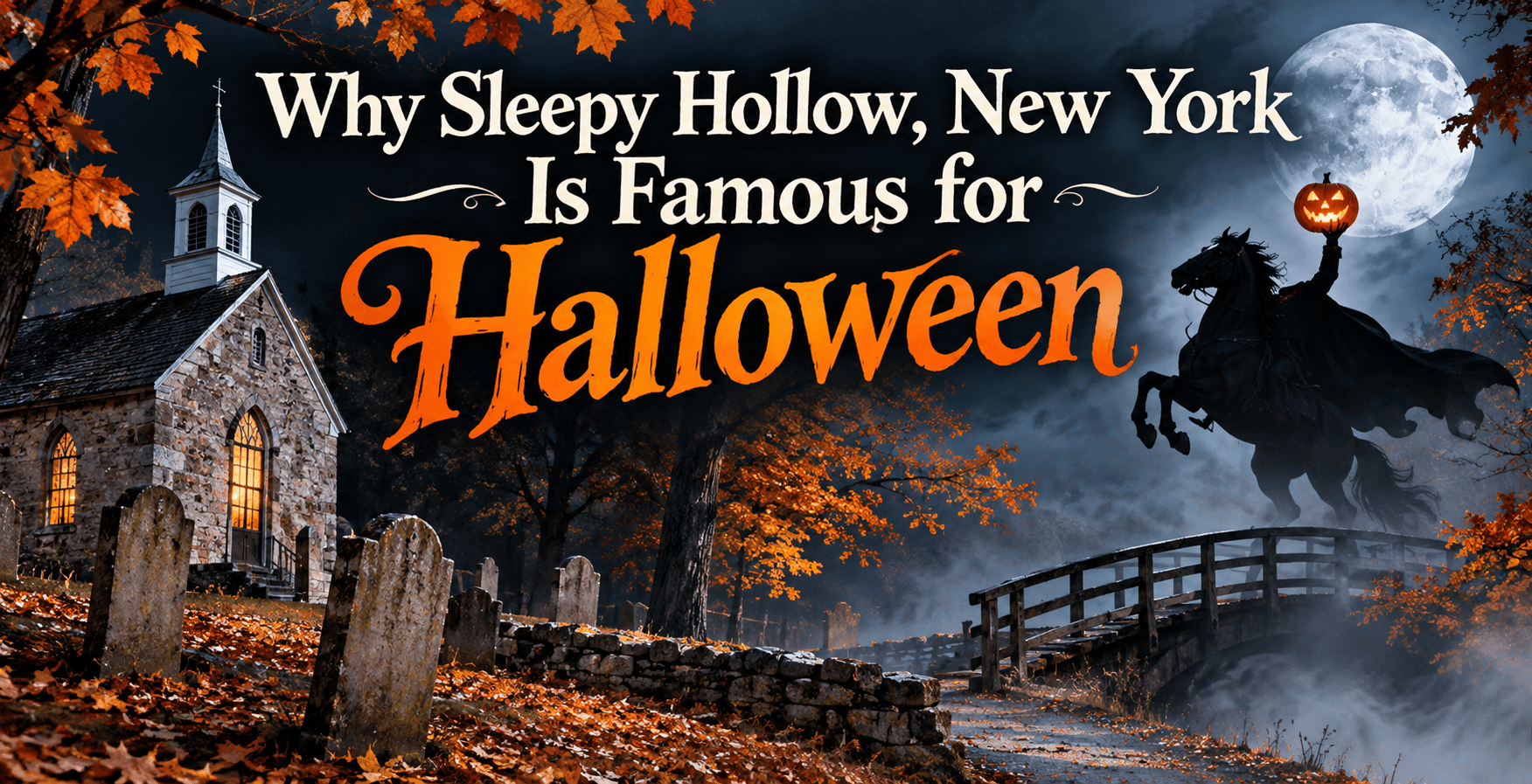
When people think about Halloween, they often imagine haunted houses, glowing jack-o’-lanterns, mysterious graveyards, and ghostly figures wandering through the darkness. But few places in America capture the spirit of Halloween quite like Sleepy Hollow, New York.
This historic village in the Hudson Valley has become one of the most recognizable Halloween destinations in the United States. With its centuries-old cemetery, mysterious legends, historic landmarks, and famous Headless Horseman, Sleepy Hollow offers an atmosphere that feels like something straight out of a ghost story.
But why is Sleepy Hollow so closely associated with Halloween? The answer begins with a famous American writer, a terrifying fictional horseman, and a community that embraced its spooky literary heritage.
Where Is Sleepy Hollow, New York?
Sleepy Hollow is a small village in Westchester County, New York, located along the eastern bank of the Hudson River, approximately 25 miles north of New York City.
Originally known as North Tarrytown, the village officially changed its name to Sleepy Hollow in 1996, embracing the identity made famous by Washington Irving’s classic story.
The surrounding Hudson Valley is known for its historic estates, wooded hills, old churches, and scenic river views. During autumn, the landscape transforms into a colorful mixture of red, orange, and golden leaves.
These natural surroundings help create the perfect setting for Halloween celebrations.
Unlike modern Halloween attractions built entirely around artificial scares, Sleepy Hollow combines authentic American history with centuries of folklore and literary imagination.
Visitors can walk through historic cemeteries, explore landmarks associated with Washington Irving, and experience the same landscape that inspired one of America’s most famous ghost stories.
The Legend of Sleepy Hollow Made the Village Famous
The primary reason Sleepy Hollow became associated with Halloween is Washington Irving’s famous short story, The Legend of Sleepy Hollow.
First published in 1820 as part of The Sketch Book of Geoffrey Crayon, Gent., the story introduced readers to the nervous schoolteacher Ichabod Crane and the terrifying Headless Horseman.
Set in a quiet Dutch-influenced community near the Hudson River, the story follows Ichabod Crane, a superstitious teacher fascinated by ghost stories and local legends.
Ichabod becomes romantically interested in Katrina Van Tassel, the daughter of a wealthy farmer. However, he faces competition from Brom Bones, a strong and mischievous local man.
After attending a gathering at the Van Tassel home, Ichabod travels through the dark countryside on horseback.
Along the way, he encounters a mysterious rider who appears to have no head.
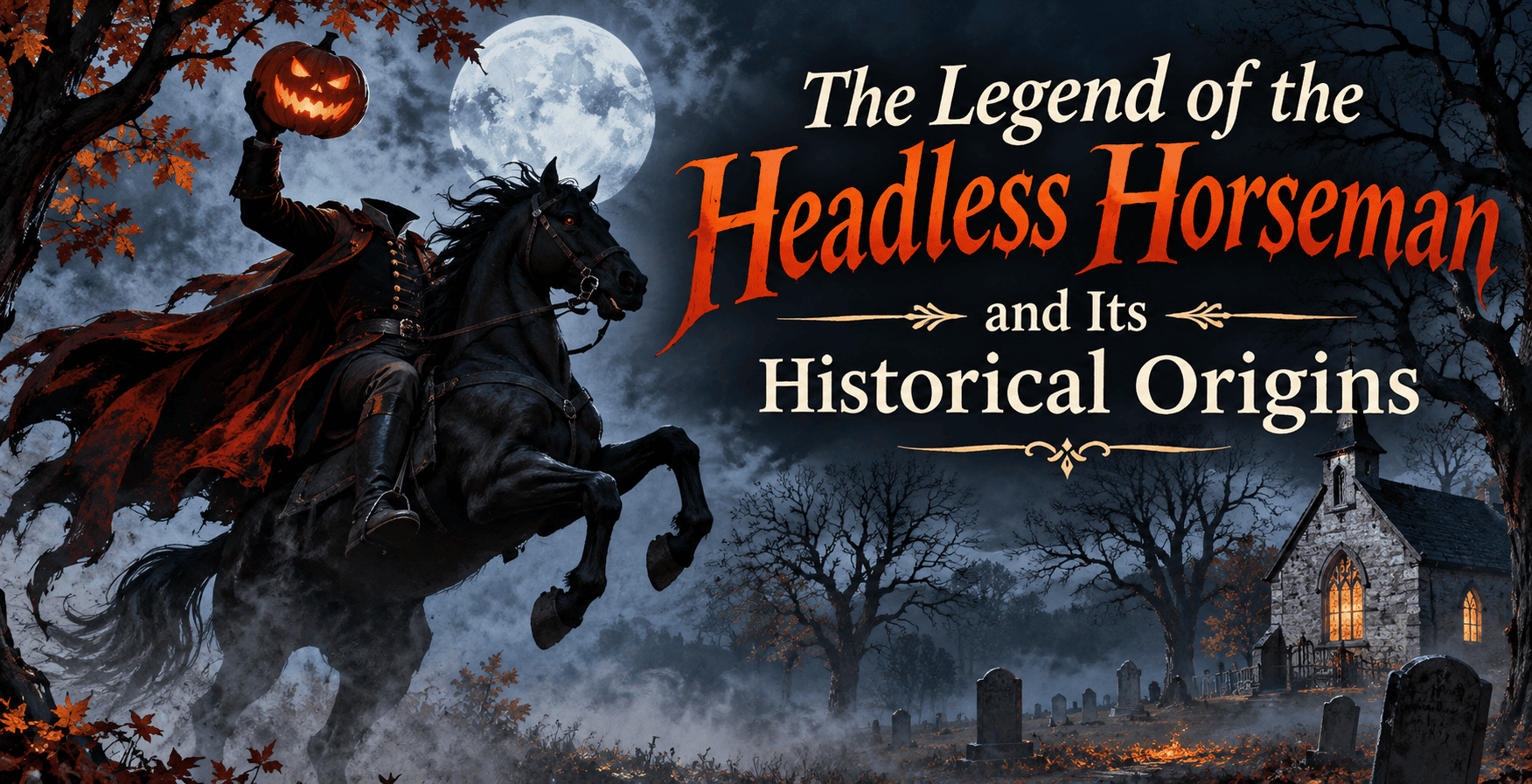
According to the local legend within Irving’s story, the Headless Horseman is the ghost of a Hessian soldier who lost his head to a cannonball during the Revolutionary War.
The ghost supposedly rides through the countryside at night searching for his missing head.
As Ichabod races toward a bridge near the old church, the mysterious horseman pursues him.
The rider eventually throws what appears to be his severed head toward Ichabod.
The next morning, Ichabod has disappeared, leaving behind his horse, saddle, and a shattered pumpkin.
Irving deliberately leaves readers wondering whether Ichabod encountered a real supernatural figure or became the victim of an elaborate prank.
That uncertainty helped make the story an enduring American classic.
Why the Headless Horseman Became a Halloween Icon
The Headless Horseman is one of the most recognizable figures in American Halloween folklore.
Although Washington Irving did not invent stories about headless riders, his version became especially influential in American literature and popular culture.
The image of a dark horse galloping through a misty forest while its rider carries a pumpkin is both frightening and unforgettable.
Several elements helped connect the Headless Horseman to Halloween:
-
His appearance as a mysterious ghostly rider.
-
His association with cemeteries and dark country roads.
-
The eerie autumn setting of the story.
-
The presence of a pumpkin near Ichabod’s disappearance.
-
The uncertainty surrounding whether the haunting was real.
Interestingly, The Legend of Sleepy Hollow was not originally written as a Halloween story.
Its association with the holiday developed over time as Halloween celebrations increasingly embraced ghosts, pumpkins, supernatural legends, and frightening storytelling.
Today, the Headless Horseman is a defining symbol of Sleepy Hollow’s Halloween identity.
The Historic Sleepy Hollow Cemetery
One of the village’s most famous attractions is Sleepy Hollow Cemetery.
Established in 1849 as Tarrytown Cemetery and renamed Sleepy Hollow Cemetery in 1865, this historic burial ground contains elaborate monuments, winding pathways, and the graves of several notable Americans.
Washington Irving himself is buried there.
Other famous individuals buried in the cemetery include Andrew Carnegie, William Rockefeller, and Elizabeth Arden.
During the Halloween season, the cemetery becomes particularly popular with visitors interested in history, folklore, and the supernatural.
Guided tours explore the cemetery’s remarkable architecture, notable residents, and local stories.
The cemetery is a real historic burial ground, not merely a Halloween attraction, which gives the experience a different atmosphere from a typical haunted house.
Its connection to Irving and the nearby setting of his famous story makes it an essential part of Sleepy Hollow’s identity.
The Old Dutch Church and Its Connection to the Legend
Another important landmark is the Old Dutch Church of Sleepy Hollow.
Built around 1685, the church is among the oldest surviving church buildings in New York State.
Its historic burial ground is closely connected to the setting of The Legend of Sleepy Hollow.
In Irving’s story, the churchyard and nearby bridge play important roles in the tale of the Headless Horseman.
The ghostly rider is said to haunt the area around the church, while Ichabod desperately attempts to reach the bridge that supposedly marks the boundary of the horseman’s nightly pursuit.
The real church and burial ground remain important reminders of the region’s Dutch colonial history.
Visitors often come to see the location that helped inspire Irving’s fictional world.
The old gravestones, historic architecture, and surrounding landscape create an atmosphere that feels particularly appropriate during autumn.
However, the Headless Horseman remains a character of folklore and literature rather than a documented historical ghost.
Washington Irving’s Home at Sunnyside
Washington Irving’s connection to the Hudson Valley extends beyond his famous story.
His former home, Sunnyside, is located in nearby Tarrytown.
The picturesque estate overlooks the Hudson River and features distinctive architecture influenced by Dutch colonial and romantic styles.
Irving purchased the property in 1835 and transformed it into a charming country residence.
Today, Sunnyside is preserved as a historic site celebrating the author’s life and literary achievements.
Visitors can learn about Irving’s writing, his travels, and his influence on American literature.
Although The Legend of Sleepy Hollow was written before Irving acquired Sunnyside, the estate remains closely associated with his legacy.
For literature enthusiasts, visiting Sunnyside provides additional insight into the writer who helped turn Sleepy Hollow into a legendary place.
Why Halloween Celebrations Are So Popular in Sleepy Hollow
Sleepy Hollow’s Halloween celebrations attract visitors because the community offers something different from ordinary seasonal attractions.
Instead of relying solely on haunted houses and costumes, the village uses its historic surroundings and literary traditions to create an immersive experience.
Throughout the autumn season, Sleepy Hollow and neighboring communities host a variety of Halloween-themed events.
These may include storytelling performances, cemetery tours, haunted attractions, family activities, and seasonal celebrations.
Many events draw inspiration from the Headless Horseman and Washington Irving’s classic tale.
The area’s popularity also benefits from its location near New York City, making it accessible to both local visitors and tourists.
For many Halloween enthusiasts, visiting Sleepy Hollow feels like stepping inside a famous American ghost story.
The Great Jack O’Lantern Blaze
One of the Hudson Valley’s best-known Halloween-season attractions is the Great Jack O’Lantern Blaze.
Held at Van Cortlandt Manor in nearby Croton-on-Hudson, this seasonal event features thousands of illuminated, hand-carved pumpkins arranged into elaborate displays.
Visitors follow a walking trail through glowing pumpkin installations that can include enormous creatures, imaginative sculptures, and intricate artistic scenes.
The event has become a major autumn attraction in the region.
Although it is not located in Sleepy Hollow itself, it is frequently included in Halloween trips to the surrounding Hudson Valley.
The Great Jack O’Lantern Blaze demonstrates how the region has expanded its Halloween traditions beyond ghost stories into large-scale seasonal entertainment.
The Headless Horseman in Movies and Television
Sleepy Hollow’s reputation has grown significantly through film, television, and other forms of entertainment.
Washington Irving’s original story has inspired numerous adaptations, each introducing the legend to new generations.
One of the most famous is Disney’s animated adaptation of The Legend of Sleepy Hollow, released in 1949 as part of The Adventures of Ichabod and Mr. Toad.
The animated version helped establish the Headless Horseman as a frightening but memorable figure for family audiences.
In 1999, director Tim Burton released Sleepy Hollow, starring Johnny Depp as Ichabod Crane.
The film reimagined the story as a gothic supernatural mystery filled with dark forests, eerie landscapes, and terrifying encounters.
Although Burton’s film differs significantly from Irving’s original tale, it helped renew public interest in Sleepy Hollow.
The television series Sleepy Hollow, which premiered in 2013, offered another interpretation by combining the Headless Horseman legend with supernatural mysteries and modern-day adventures.
These adaptations have helped keep the village’s name familiar to audiences around the world.
Is Sleepy Hollow Actually Haunted?
One of the most common questions visitors ask is whether Sleepy Hollow is genuinely haunted.
The village has a long association with ghost stories, supernatural folklore, and mysterious legends.
Some visitors describe its old cemeteries, wooded roads, and historic buildings as eerie, particularly after dark.
However, there is no reliable scientific evidence demonstrating that the Headless Horseman or other supernatural figures haunt Sleepy Hollow.
The village’s haunted reputation primarily comes from Washington Irving’s fiction, regional folklore, and generations of storytelling.
That does not make the legends any less fascinating.
In fact, the combination of real history and fictional mystery is one of the reasons Sleepy Hollow remains so appealing.
Visitors can appreciate the atmosphere and enjoy the stories without needing to believe that ghosts actually roam the countryside.
The Connection Between Sleepy Hollow and the American Revolution
Another interesting aspect of Sleepy Hollow’s history is its connection to the American Revolutionary War.
The surrounding Hudson Valley played an important strategic role during the conflict.
British, American, and Hessian soldiers operated throughout the broader region, and the area experienced military activity and uncertainty.
Irving drew on this historical background when creating the legend of the Headless Horseman.
In the story, the ghost is believed to be a Hessian soldier whose head was taken off by a cannonball during a battle.
Hessian troops were German soldiers who served alongside British forces during the Revolutionary War.
By incorporating a Revolutionary War soldier into his ghost story, Irving connected supernatural folklore with a recognizable chapter of American history.
This historical foundation helped make the fictional legend feel believable to nineteenth-century readers.
However, the specific Headless Horseman of Irving’s story is not established as a real historical individual.
Why Autumn Makes Sleepy Hollow Even More Special
Sleepy Hollow’s Halloween appeal is closely connected to the natural beauty of the Hudson Valley during autumn.
As the weather cools, the region’s forests turn brilliant shades of orange, red, and yellow.
Fallen leaves cover old pathways, and the shorter days bring an atmosphere that complements the area’s mysterious reputation.
The Hudson River, historic bridges, wooded hills, and centuries-old buildings create a picturesque setting.
This landscape resembles the environment described in Irving’s story.
For visitors, that connection between literature and scenery can make the experience particularly memorable.
Even without attending a Halloween event, exploring the village during the fall offers a chance to experience the atmosphere that has inspired generations of storytellers.
How Sleepy Hollow Became a Halloween Tourism Destination
Sleepy Hollow’s transformation into a Halloween destination developed gradually.
The process began with the publication of Irving’s story in 1820.
As The Legend of Sleepy Hollow became a classic of American literature, the region gained recognition for its association with the Headless Horseman.
The preservation of historic landmarks helped maintain that connection.
Later, films, television adaptations, tourism campaigns, and seasonal celebrations introduced the story to wider audiences.
The village’s 1996 name change from North Tarrytown to Sleepy Hollow further strengthened its public identity.
Over time, Halloween became an important part of the area’s cultural and tourism calendar.
Local organizations, historic sites, and businesses developed experiences that celebrate both the legend and the community’s history.
Today, Sleepy Hollow’s appeal comes from the combination of literary heritage, authentic historic places, and seasonal festivities.
What Makes Sleepy Hollow Different From Other Halloween Towns?
Many American communities celebrate Halloween with festivals, haunted attractions, and elaborate decorations.
Sleepy Hollow stands apart because its reputation is rooted in one of the nation’s most influential works of supernatural fiction.
Its connection to the holiday is not based solely on modern commercial attractions.
Instead, the village has a recognizable literary identity supported by real historic landmarks.
Visitors can explore places associated with Washington Irving, learn about early American history, and experience a landscape that inspired a famous ghost story.
The Headless Horseman provides a unifying symbol that connects these experiences.
For Halloween enthusiasts, this creates a sense of authenticity that can be difficult to reproduce elsewhere.
When Is the Best Time to Visit Sleepy Hollow?
October is the most popular time to visit Sleepy Hollow, especially during the weeks leading up to Halloween.
The combination of autumn foliage, seasonal events, and the village’s famous folklore makes this period particularly attractive.
However, visitors should expect larger crowds during weekends and around October 31.
Some Halloween attractions require advance reservations, and popular tours may sell out.
September can offer an opportunity to enjoy early seasonal festivities with potentially smaller crowds, depending on the event schedule.
November may provide a quieter experience for visitors primarily interested in the village’s history and literary connections.
Historic landmarks can also be enjoyed outside the Halloween season, although opening hours and guided tour schedules vary.
Interesting Facts About Sleepy Hollow, New York
Here are several facts that help explain the village’s unusual place in American culture.
1. The village was once called North Tarrytown. It officially adopted the name Sleepy Hollow in 1996.
2. The famous story was published in 1820. Washington Irving’s The Legend of Sleepy Hollow has remained popular for more than two centuries.
3. The Headless Horseman was not originally a Halloween character. His strong association with the holiday developed through later cultural traditions and adaptations.
4. Washington Irving is buried in Sleepy Hollow Cemetery. His gravesite remains an important destination for literary visitors.
5. The Old Dutch Church dates to the seventeenth century. Its historic burial ground is closely associated with the fictional legend.
6. Sleepy Hollow is located along the Hudson River. The surrounding landscape helped inspire Irving’s atmospheric descriptions.
7. The story combines history and folklore. Its Revolutionary War references and supernatural elements helped create an enduring American legend.
8. The village attracts visitors beyond Halloween. Its architecture, cemeteries, literary heritage, and scenic surroundings remain interesting throughout the year.
9. Several famous screen adaptations have renewed interest in the legend. Disney’s animated version, Tim Burton’s film, and the television series helped introduce Sleepy Hollow to different generations.
10. The story leaves its central mystery unresolved. Readers are never given a definitive explanation of what happened to Ichabod Crane.
Why Sleepy Hollow Remains a Symbol of Halloween
More than 200 years after Washington Irving published his famous story, Sleepy Hollow continues to capture the imagination of people who love Halloween.
The village represents a fascinating intersection of American literature, history, folklore, and seasonal tradition.
Its old cemeteries, historic church, wooded landscapes, and connection to the Headless Horseman create an atmosphere that feels inseparable from the holiday.
But Sleepy Hollow’s enduring appeal goes beyond frightening stories.
It reminds us that Halloween has always been connected to imagination, mystery, and the stories people pass from one generation to the next.
The Headless Horseman may be fictional, but his influence on American culture is very real.
Through literature, movies, television, and annual celebrations, the legend continues to ride through the public imagination.
Final Thoughts
Sleepy Hollow, New York, is famous for Halloween because it is the setting of one of America’s most enduring ghost stories.
Washington Irving’s The Legend of Sleepy Hollow transformed a quiet Hudson Valley community into a place forever associated with the mysterious Headless Horseman.
Over the generations, historic landmarks, seasonal attractions, and popular entertainment have strengthened that connection.
Today, Sleepy Hollow offers visitors the opportunity to experience a unique combination of American history and Halloween folklore.
Whether someone visits to explore the old cemetery, learn about Washington Irving, enjoy autumn celebrations, or simply imagine the sound of ghostly hoofbeats on a dark country road, the village continues to live up to its legendary reputation.
And perhaps that is the greatest reason Sleepy Hollow remains so famous for Halloween: it is a place where history and imagination meet, and where one unforgettable ghost story has kept the spirit of Halloween alive for more than two centuries.
Have you ever visited Sleepy Hollow, New York, during Halloween, or would you like to experience the town made famous by the Headless Horseman?
Leave a Reply