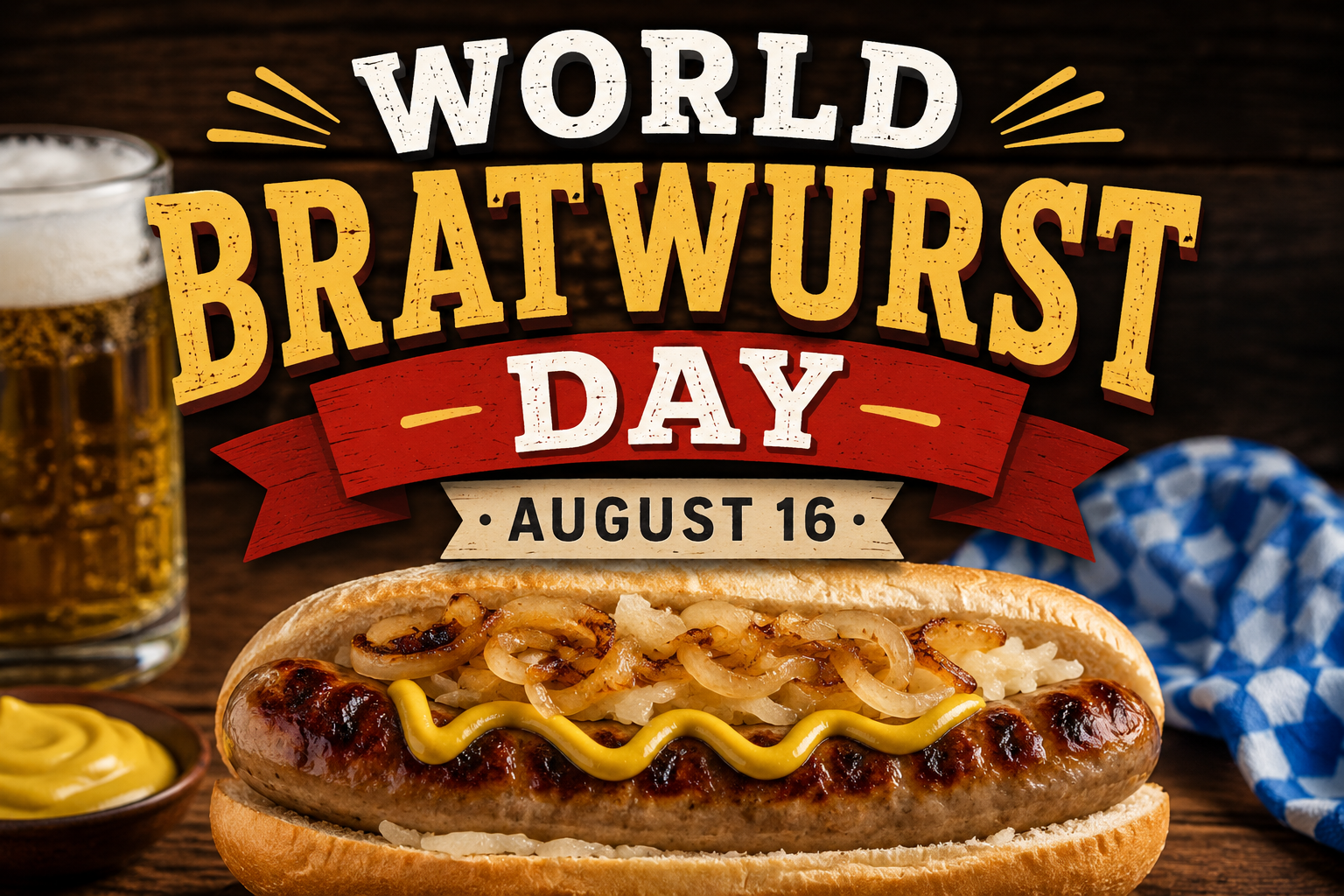
Few foods say summer quite like the sound of bratwurst sizzling over a hot grill. The aroma of seasoned sausage, toasted buns, grilled onions, and mustard can instantly bring to mind backyard cookouts, festivals, sporting events, and warm afternoons spent sharing food with family and friends.
World Bratwurst Day, celebrated on August 16, gives bratwurst lovers the perfect reason to fire up the grill and enjoy one of the world’s most recognizable sausages.
But bratwurst is much more than convenient cookout food.
Behind every brat is a culinary tradition stretching back centuries. Germany developed numerous regional varieties of bratwurst, each with its own combination of meat, seasonings, size, and preparation. German immigrants later carried those traditions around the world, including to the United States, where bratwurst became especially popular throughout the Midwest.
Today, you can find brats at neighborhood barbecues, restaurants, butcher shops, fairs, festivals, tailgates, stadiums, and family gatherings.
World Bratwurst Day is an opportunity to enjoy a delicious meal while appreciating the history and culture behind this humble sausage.
What Exactly Is Bratwurst?
Many Americans use the word “brat” to describe a thick sausage placed inside a bun, but bratwurst actually represents a much broader sausage-making tradition.
Bratwurst originated in Germany and is generally made using pork, beef, veal, or combinations of those meats.
Seasonings vary depending on the recipe and regional tradition. Salt, pepper, nutmeg, marjoram, caraway, coriander, garlic, ginger, and other herbs and spices may appear in different preparations.
That’s one reason two bratwursts can taste completely different.
Some are mildly seasoned and allow the meat to remain the dominant flavor. Others have distinctive herbal or spicy characteristics.
They can also vary tremendously in appearance.
One bratwurst might be long and thin, while another is short and thick. Some are pale, while others develop darker coloring depending on their ingredients and preparation.
Rather than thinking of bratwurst as one specific recipe, it is better to think of it as an entire family of sausages.
Centuries of Bratwurst Tradition
Sausage-making has existed for centuries because it offered people a practical way to use available cuts of meat efficiently.
In earlier times, wasting food could have serious consequences. Families and communities developed methods for using as much of an animal as possible, and sausage-making became an important part of that tradition.
National Sausage Month: Celebrating a Flavorful Food Tradition
Germany became particularly famous for its sausages.
Different towns and regions developed their own methods, recipes, and traditions. Ingredients could vary depending on what was locally available, and recipes were often passed between generations.
Over time, some regional sausages became closely associated with particular cities and areas.
Bratwurst became one of the best-known examples.
Today, Germany’s sausage traditions remain an important part of the country’s culinary identity, and bratwurst is recognized far beyond its place of origin.
The Meaning Behind the Name
The word “bratwurst” comes from German.
Despite a common assumption, the “brat” portion doesn’t simply mean that the sausage is intended for grilling. Its linguistic roots are connected with minced or finely chopped meat, while “Wurst” means sausage.
Over centuries, bratwurst developed into numerous distinctive regional forms.
The result is something food lovers should appreciate: there isn’t just one authentic bratwurst experience.
Exploring the different varieties is part of the fun.
Germany’s Regional Bratwurst Traditions
Germany is home to many bratwurst varieties, and regional identity plays an important role in sausage culture.
Some varieties are relatively small and slender. Others are larger and heartier. Seasoning can range from subtle to distinctly herbal.
Preparation methods also vary.
A bratwurst might be grilled over charcoal, pan-fried, roasted, or served alongside traditional accompaniments.
Traveling through Germany can therefore mean discovering different versions of what Americans casually call a “brat.”
That regional diversity is a reminder that traditional foods rarely have just one story. They develop over generations as communities adapt ingredients and techniques to local tastes.
How Bratwurst Became an American Favorite
Bratwurst’s popularity in America is closely connected to German immigration.
German immigrants brought their culinary traditions with them, including sausage-making techniques and recipes. Communities with strong German heritage helped keep those traditions alive.
Over generations, bratwurst moved beyond German-American communities and entered mainstream American food culture.
This was particularly noticeable throughout the Midwest.
Wisconsin developed an especially strong connection with bratwurst, where brats became associated with cookouts, tailgating, sporting events, festivals, and community celebrations.
Eventually, bratwurst became a familiar sight throughout much of the United States.
Walk through the meat section of almost any major supermarket today and you’ll probably find several varieties.
Wisconsin and America’s Love of Brats
If Germany is the historical home of bratwurst, Wisconsin could make a convincing argument for being its American home.
German immigration had an enormous influence on Wisconsin’s food culture, and bratwurst became part of that heritage.
Over time, brats became closely connected with summer cookouts and sporting culture.
A Wisconsin-style brat experience might include grilled sausage, a substantial roll, mustard, onions, sauerkraut, and perhaps a beer on the side for adults.
Beer also found its way into brat preparation itself.
That brings us to one of America’s most famous brat traditions.
The Famous Beer Brat
Beer brats have become a cookout favorite, particularly throughout the Midwest.
There are several methods for preparing them, and asking passionate cooks which method is “correct” can quickly start a friendly debate.
One common technique involves gently simmering bratwurst in beer with sliced onions before finishing the sausages over the grill.
Another approach is to grill the sausages first and then place them into a warm mixture of beer and onions to hold them before serving.
The goal is similar: combine the savory flavors of bratwurst, onions, and beer into one satisfying meal.
For anyone who doesn’t want to cook with alcohol, there are plenty of alternatives. Broth, apple juice, nonalcoholic beer, or other flavorful liquids can be used.
How to Grill a Better Bratwurst
World Bratwurst Day falls right in the middle of summer, making grilling one of the most natural ways to celebrate.
A great grilled brat should have an appetizing browned exterior and juicy interior.
One common mistake is cooking bratwurst over extremely high heat.
Because brats can be fairly thick, intense heat may burn the outside before the center has cooked properly.
Moderate heat gives you more control.
Place the bratwurst on the grill and turn periodically so each side cooks evenly. Avoid repeatedly piercing the casing because doing so can allow flavorful juices to escape.
Patience pays off.
You want that beautifully browned exterior without sacrificing the juicy texture inside.
Because bratwurst is commonly made from ground meat, proper cooking is important. Follow food-safety recommendations and any preparation instructions included with the sausage you’re using.
Toast the Bun
Never underestimate what a good bun can do for a bratwurst.
A soft but sturdy sausage roll is ideal because it can hold the brat and toppings without immediately falling apart.
Take things one step further by lightly toasting it.
Place the open bun briefly over the grill until the inside becomes slightly crisp and golden.
Toasting adds another layer of flavor and texture while helping the bread stand up to juicy toppings such as sauerkraut, onions, relish, and mustard.
It only takes a minute, but it can noticeably improve the final result.
Mustard: The Classic Bratwurst Companion
Ketchup may dominate many American hot dogs, but mustard is one of the classic partners for bratwurst.
And there are plenty of mustards to explore.
Try:
- Yellow mustard
- Dijon mustard
- Spicy brown mustard
- Whole-grain mustard
- Hot German mustard
- Sweet mustard
- Beer mustard
- Honey mustard
You could even turn World Bratwurst Day into a mustard tasting.
Put several mustards on the table and let everyone determine which one pairs best with their brat.
Sauerkraut and Bratwurst
Few combinations are as recognizable as bratwurst and sauerkraut.
Sauerkraut’s tart, fermented flavor helps cut through the richness of the sausage, producing a satisfying contrast.
Serve sauerkraut cold, warm it separately, or cook it with onions and seasonings.
Pile it directly onto your brat or serve it alongside the sausage.
If you’ve always skipped sauerkraut because you think you don’t like it, World Bratwurst Day might be the perfect opportunity to give it another chance.
Don’t Forget the Onions
Onions and bratwurst belong together.
You can grill thick onion slices, slowly caramelize onions in a skillet, sauté them in butter, or cook sliced onions in a beer mixture.
Each method produces a different result.
Grilled onions develop smoky charred flavors.
Caramelized onions become soft and sweet.
Beer-cooked onions soak up additional flavor.
Raw diced onions provide a sharper bite.
There really isn’t a wrong answer.
Create the Ultimate Bratwurst Bar
Hosting friends or family for World Bratwurst Day?
Instead of deciding how everyone’s brat should be prepared, create a build-your-own brat bar.
Start with freshly grilled bratwurst and toasted buns.
Then set out toppings such as:
- Sauerkraut
- Grilled onions
- Caramelized onions
- Raw onions
- Pickles
- Relish
- Jalapeños
- Banana peppers
- Bell peppers
- Shredded cheese
- Cheese sauce
- Coleslaw
- Barbecue sauce
- Hot sauce
- Several varieties of mustard
Everyone gets to build a brat exactly the way they like it.
You could even create a friendly competition and vote on the most creative combination.
Creative Bratwurst Topping Combinations
Want to move beyond mustard and sauerkraut?
Try experimenting.
The German-Inspired Brat
Top your brat with sauerkraut, spicy mustard, and caramelized onions.
The Spicy Brat
Add jalapeños, pepper jack cheese, grilled peppers, and hot mustard.
The BBQ Brat
Pile on barbecue sauce, crispy onions, cheddar cheese, and coleslaw.
The Loaded Brat
Add grilled onions, peppers, melted cheese, mustard, and pickles.
The Sweet-and-Savory Brat
Combine caramelized onions with a touch of sweet mustard.
The possibilities are practically endless.
Bratwurst Doesn’t Need a Bun
Although bratwurst and buns make an iconic combination, there are many other ways to enjoy this sausage.
Slice cooked bratwurst and serve it alongside roasted potatoes and vegetables.
Add it to a skillet with potatoes, onions, and peppers.
Chop it and add it to scrambled eggs.
Mix slices into macaroni and cheese.
Use bratwurst in soups and stews.
Add it to pasta.
Make a bratwurst casserole.
Create a sheet-pan dinner with sausage and vegetables.
You can even serve sliced bratwurst as an appetizer with several dipping mustards.
Bratwurst and Potatoes
If you’re looking for an easy dinner combination, bratwurst and potatoes are difficult to beat.
Cut potatoes into chunks and roast them with onions, peppers, seasonings, and sliced bratwurst.
Everything cooks together, allowing the flavors to mingle.
Serve with mustard on the side and you’ve got a hearty dinner requiring relatively little cleanup.
It’s also an excellent way to enjoy bratwurst when outdoor grilling isn’t an option.
What Goes Well With Bratwurst?
A bratwurst cookout can be as simple or elaborate as you want.
Popular side dishes include:
- German potato salad
- Sauerkraut
- Roasted potatoes
- Potato pancakes
- Soft pretzels
- Coleslaw
- Cucumber salad
- Grilled vegetables
- Corn on the cob
- Baked beans
- Macaroni salad
- Pasta salad
- French fries
- Potato wedges
- Pickles
- Garden salad
For dessert, consider apple strudel, German chocolate cake, Black Forest cake, or another favorite treat.
Make It a German-Inspired Feast
World Bratwurst Day can become more than a cookout.
Turn dinner into a celebration of German-inspired foods.
Begin with soft pretzels and mustard.
Serve bratwurst as the main attraction alongside sauerkraut, German-style potato salad, red cabbage, or potato pancakes.
Finish with apple strudel or Black Forest cake.
You can even use dinner as an opportunity to learn about German history, geography, and regional food traditions.
A simple food holiday can become a fun cultural experience for the entire family.
Visit a German Restaurant
Don’t feel like cooking?
World Bratwurst Day is an excellent excuse to support a local German restaurant, pub, deli, butcher shop, or specialty market.
Look for bratwurst you’ve never tried before.
Ask about regional varieties or house-made sausages.
A butcher may also be able to explain the different seasonings, meats, and preparation techniques used in their brats.
Supporting local food businesses is a great way to celebrate while discovering something new.
Have a Bratwurst Taste Test
For an especially fun celebration, buy several types of bratwurst.
Prepare each variety the same way so everyone can compare the flavors.
Cut each sausage into smaller portions and label them.
Then rate them based on:
Flavor
Seasoning
Texture
Juiciness
Best topping combination
Overall favorite
You might be surprised by which variety wins.
This can be particularly fun if your local butcher offers several house-made flavors.
Bratwurst for Breakfast?
Why not?
Leftover cooked bratwurst can make an excellent addition to breakfast.
Slice it into rounds and brown it in a skillet with potatoes and onions.
Add eggs and cheese for a hearty breakfast skillet.
You can also chop bratwurst and fold it into an omelet or breakfast burrito.
World Bratwurst Day leftovers don’t need to go to waste.
A Perfect Food for Tailgating
Bratwurst has become closely associated with sporting events and tailgating for good reason.
They’re easy to grill, easy to serve, and easy to customize.
Set up a portable grill, prepare toppings ahead of time, and let everyone assemble their own brat.
They work particularly well when feeding groups because the basic meal can remain simple while guests customize their toppings.
Add chips, potato salad, pickles, and cold drinks and you’ve got an easy tailgate spread.
A Great Excuse for a Summer Cookout
August is prime grilling season across much of the United States.
The days are still long, summer hasn’t quite disappeared, and families are trying to enjoy those remaining warm evenings before fall routines take over.
That makes August 16 a fitting time to invite a few people over.
You don’t need an elaborate party.
Set up some chairs outside, fire up the grill, put out a few toppings, turn on some music, and enjoy the evening.
Sometimes the simplest gatherings become the most memorable.
Food Has a Way of Connecting Generations
Traditional foods carry stories.
A recipe may remind someone of a grandparent.
A particular smell might bring back memories of childhood summers.
A sausage prepared a certain way may connect a family to its cultural heritage.
Bratwurst has traveled across generations and continents while maintaining strong connections to its German origins.
That is one reason food celebrations can be meaningful.
They encourage us to look beyond what is on our plate and consider where a dish came from, how it developed, and why people continue making it.
Bratwurst Around the World
Although bratwurst originated in Germany, its popularity has spread internationally.
German restaurants and festivals have helped introduce bratwurst to audiences around the globe.
At the same time, cooks in different countries have adapted bratwurst to their own tastes.
That means you might encounter traditional preparations alongside distinctly modern versions featuring unconventional seasonings and toppings.
It is a great example of how food traditions evolve.
A dish can maintain a connection with its origins while still becoming part of new culinary cultures.
Bratwurst and Community Festivals
Bratwurst also has a strong connection with festivals and community gatherings.
German heritage festivals, Oktoberfest-style celebrations, church festivals, county fairs, and community events frequently feature sausages hot off the grill.
There is something naturally social about bratwurst.
People gather around grills, stand in line at food booths, compare toppings, and eat together.
The meal itself becomes part of the experience.
Tips for Hosting a World Bratwurst Day Cookout
You don’t need to overcomplicate your celebration.
Choose two or three varieties of bratwurst, provide sturdy buns, and offer several toppings.
Prepare cold side dishes beforehand so you’re not stuck in the kitchen while everyone else is outside.
Set up a self-serve topping station.
Keep plenty of napkins nearby—loaded brats can get messy.
Offer nonalcoholic drinks such as lemonade, iced tea, sparkling water, or soda alongside any adult beverages.
Most importantly, enjoy your guests.
A cookout shouldn’t feel like work.
Fun Ways to Celebrate World Bratwurst Day
There are countless ways to enjoy August 16.
You could:
- Grill bratwurst for dinner.
- Try a brat variety you’ve never eaten before.
- Make beer brats and onions.
- Create a bratwurst topping bar.
- Host a backyard barbecue.
- Visit a German restaurant.
- Support a local butcher.
- Make German potato salad.
- Try homemade sauerkraut.
- Compare several different mustards.
- Learn about German sausage traditions.
- Have a bratwurst taste test.
- Prepare bratwurst without a bun.
- Make a brat-and-potato skillet.
- Invite friends over for dinner.
- Share your creation using #WorldBratwurstDay.
You don’t need an elaborate celebration.
Sometimes the best way to recognize a food holiday is simply to sit down and enjoy the food.
Why Food Holidays Are Worth Celebrating
Food holidays may seem lighthearted—and that’s exactly part of their appeal.
Daily life can become filled with schedules, responsibilities, deadlines, and routines.
A celebration such as World Bratwurst Day gives us an excuse to do something a little different.
Try a new recipe.
Cook outside.
Invite someone over.
Visit a restaurant you’ve never tried.
Learn something about another culture.
Share dinner with family.
Small celebrations can create enjoyable moments in otherwise ordinary days.
World Bratwurst Day Is Really About Sharing Good Food
The history of bratwurst may stretch back centuries, but the reason people continue enjoying it is wonderfully simple:
It tastes good, it’s versatile, and it’s a food that naturally brings people together.
Think about where we commonly encounter bratwurst—cookouts, festivals, sporting events, family gatherings, tailgate parties, neighborhood celebrations, and restaurants.
These are social places.
Bratwurst often shows up when people are gathering.
And perhaps that is the best reason to celebrate World Bratwurst Day.
It isn’t only about the sausage.
It’s about sitting around a table, standing beside a grill, talking with friends, laughing with family, and enjoying a meal together.
Celebrate World Bratwurst Day on August 16
On August 16, fire up the grill and celebrate World Bratwurst Day with one of Germany’s most famous culinary creations.
Keep things traditional with mustard, sauerkraut, and onions, or experiment with cheese, peppers, barbecue sauce, hot sauce, and your own favorite toppings.
Try beer brats.
Explore a regional German variety.
Visit a local butcher.
Support a German restaurant.
Invite friends over for a cookout.
Or simply grill a couple of brats for dinner and enjoy them exactly the way you like them.
From centuries-old German sausage-making traditions to modern American backyard barbecues, bratwurst has traveled an impressive journey while remaining a wonderfully simple food.
A hot grill.
A juicy brat.
A toasted bun.
Your favorite toppings.
And someone to share the meal with.
Sometimes that’s all you need for a celebration.
So this World Bratwurst Day, raise your brat, pile on the toppings, and enjoy every delicious bite.
Happy World Bratwurst Day!
Engagement Question
How do you build the perfect bratwurst? Are you keeping it classic with mustard and sauerkraut, loading it with grilled onions and peppers, making beer brats, or creating your own combination? Share your favorite brat toppings!



Leave a Reply