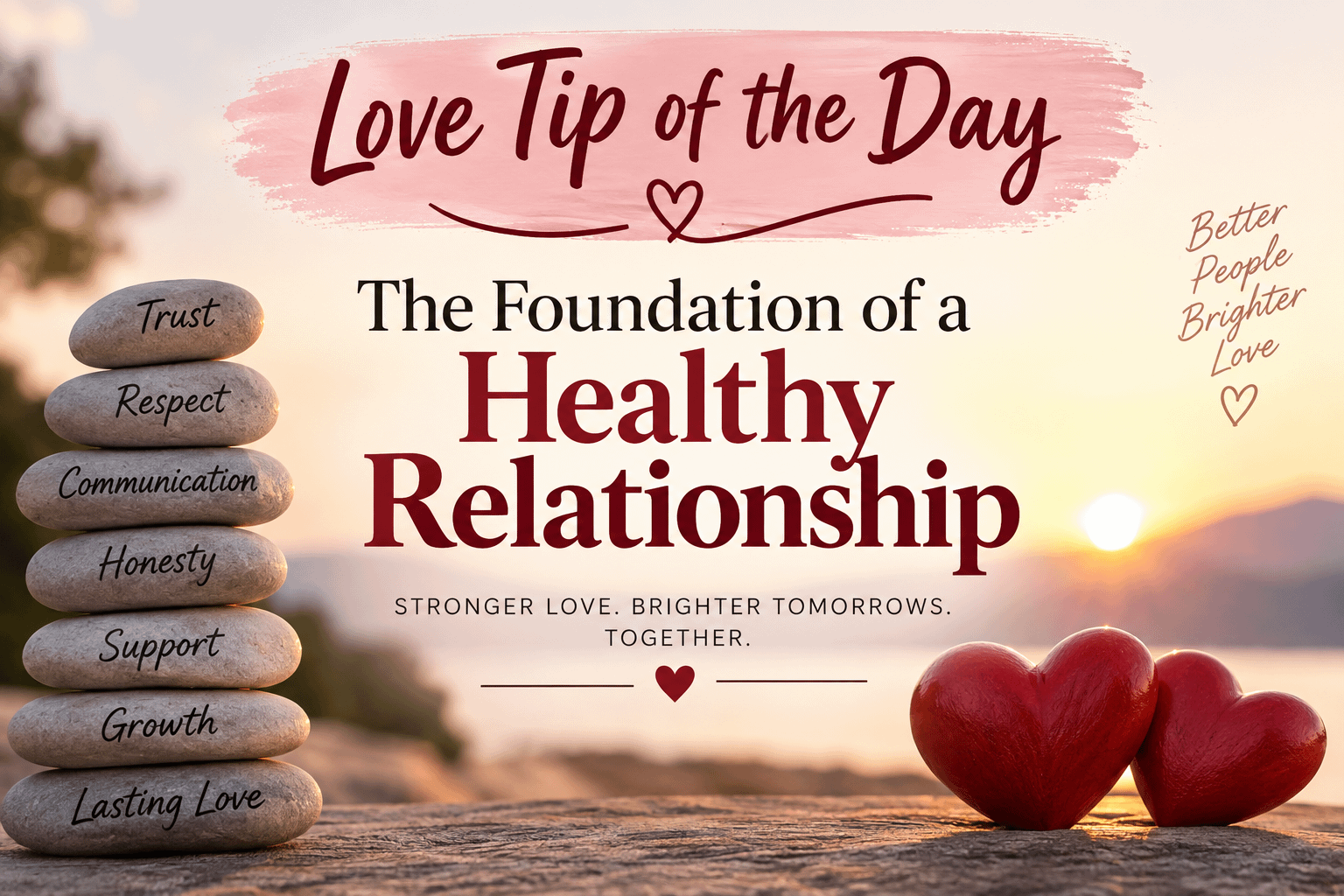
A healthy relationship is not built on love alone.
Love may bring two people together, but what keeps them together is something deeper: trust, respect, communication, honesty, consistency, friendship, forgiveness, emotional safety, and the willingness to keep choosing each other.
Relationships rarely become strong because everything is perfect. They become strong because two people learn how to handle the imperfect moments together.
Anyone can feel close when life is easy. The true foundation of a relationship is revealed when there is stress, disappointment, disagreement, financial pressure, family problems, personal struggles, grief, uncertainty, or change.
A healthy relationship says:
We may not always agree, but we will respect each other.
We may become frustrated, but we will communicate instead of trying to hurt each other.
We may make mistakes, but we will take responsibility for them.
Life may become difficult, but we will face it as partners instead of opponents.
That is where lasting love begins.
Love Is the Beginning, Not the Entire Foundation
Falling in love can happen quickly. Building a healthy relationship takes time.
There is an important difference between loving someone and knowing how to love someone well.
You can genuinely love another person and still struggle with communication. You can love someone and have difficulty trusting because of past experiences. You can love someone and unintentionally hurt them because you have never learned how to express your emotions in a healthy way.
That is why strong relationships require growth.
Love provides the motivation.
Healthy habits provide the structure.
Both people must be willing to learn what makes the other person feel valued, respected, safe, and appreciated.
You are not simply building a romance. You are building a partnership.
And partnerships require participation from both people.
Trust Holds Everything Together
Trust is one of the strongest pillars of a healthy relationship.
Without trust, even small situations can become sources of anxiety, suspicion, jealousy, and conflict.
Trust means knowing that your partner’s words and actions generally match. It means believing they will protect the relationship even when you are not around.
Trust also creates freedom.
You should not have to constantly investigate the person you love. You should not need to analyze every message, question every absence, or wonder whether you are being told the truth.
Healthy love creates reassurance through consistent behavior.
Trust is built through hundreds of seemingly small choices:
Keeping promises.
Being honest.
Showing up when you say you will.
Admitting mistakes.
Maintaining appropriate boundaries.
Being dependable.
Protecting private conversations.
Remaining faithful to commitments.
Telling the truth even when the truth is uncomfortable.
Trust can take years to build and moments to damage, which is why it should never be treated casually.
When someone gives you their trust, protect it.
Respect Must Remain Even During Disagreements
You will disagree.
Every couple does.
A healthy relationship is not one where arguments never happen. It is one where disagreements do not destroy respect.
There is a major difference between saying:
“I disagree with you.”
and communicating:
“I don’t respect you.”
Healthy couples learn to separate the problem from the person.
You can be angry without insulting your partner.
You can disagree without humiliating them.
You can express disappointment without attacking their character.
You can ask for space without using silence as punishment.
You can defend your position without trying to emotionally destroy the person standing across from you.
When respect disappears during conflict, emotional wounds can remain long after the argument ends.
Words spoken in anger do not magically disappear once everyone calms down.
Protect the dignity of the person you love, especially when you are upset with them.
Communication Is More Than Talking
Communication is often described as one of the keys to a successful relationship, but communication involves much more than simply talking.
Healthy communication requires listening.
Sometimes your partner is not asking you to solve the problem.
They are asking you to understand how the problem made them feel.
Instead of immediately becoming defensive, try listening for what is underneath their words.
Maybe they are saying:
“I need reassurance.”
“I feel forgotten.”
“I don’t feel heard.”
“I miss spending time with you.”
“I need more affection.”
“I am overwhelmed.”
“I need to know that we’re okay.”
When couples learn to hear the emotion underneath the words, conversations can become opportunities for connection rather than battles over who is right.
Being right should never become more important than understanding each other.
Emotional Safety Changes Everything
One of the most beautiful things you can give someone is a place where they feel safe being themselves.
Your partner should be able to talk about their fears, insecurities, dreams, mistakes, frustrations, and emotions without constantly worrying that those vulnerabilities will someday be used against them.
If someone tells you something deeply personal during a vulnerable moment, protect it.
Do not bring it back during an argument as ammunition.
Do not mock it.
Do not share it with other people without permission.
Do not make them regret trusting you.
Emotional safety allows intimacy to deepen because both people know they can lower their defenses.
A healthy relationship should feel like somewhere you can breathe.
Friendship Matters More Than People Realize
Romance is wonderful, but friendship often carries a relationship through the ordinary seasons of life.
Ask yourself:
Do you genuinely enjoy spending time together?
Can you laugh together?
Can you have conversations about nothing important?
Can you be silly?
Can you sit quietly without feeling uncomfortable?
Can you support each other’s interests?
Can you enjoy ordinary errands, road trips, meals, evenings at home, or lazy weekends?
Long-term relationships contain far more ordinary days than extraordinary ones.
You cannot build an entire relationship around vacations, anniversaries, expensive dinners, or romantic gestures.
Sometimes love looks like sitting together after a long day.
Sometimes it is bringing your partner something to drink without being asked.
Sometimes it is sending a message saying, “Thinking about you.”
Sometimes it is laughing about something ridiculous that only the two of you understand.
Never underestimate the importance of actually liking the person you love.
Consistency Is More Powerful Than Occasional Grand Gestures
Big romantic gestures are memorable.
Consistency is what makes someone feel secure.
Flowers are wonderful.
So is asking how their day went.
Vacations are exciting.
So is making time for each other on an ordinary Tuesday.
Anniversary gifts are meaningful.
So is showing appreciation throughout the year.
Healthy relationships are usually built through small acts repeated consistently.
A kiss goodbye.
A hug when someone gets home.
A thoughtful text.
Holding hands.
Saying thank you.
Checking in.
Remembering something important.
Offering encouragement.
Helping without being asked.
These small actions quietly communicate:
You matter to me.
Honesty Creates Real Intimacy
You cannot build genuine intimacy while hiding who you are.
Healthy relationships need honesty about feelings, expectations, boundaries, finances, mistakes, fears, future plans, and needs.
That does not mean every thought must immediately become a conversation.
It means you should not create a false version of yourself simply to keep someone interested.
Eventually, the masks have to come off.
Healthy love says:
“This is who I am.”
“This is what I struggle with.”
“This is what I need.”
“This is what scares me.”
“This is where I need to grow.”
And then both people decide whether they can continue building something together.
Honesty may create uncomfortable conversations, but dishonesty creates unstable relationships.
Never Stop Appreciating Each Other
One of the quiet dangers in long-term relationships is becoming accustomed to someone’s presence.
What once felt special can slowly become expected.
The calls.
The meals.
The affection.
The help.
The companionship.
The sacrifices.
The little things.
Eventually, people can stop saying thank you because they assume their partner already knows they are appreciated.
Say it anyway.
Tell them what you appreciate.
Notice their effort.
Thank them for the small things.
Compliment them.
Remind them why you chose them.
Never assume someone knows how much they mean to you simply because they have been beside you for years.
People need to hear that they matter.
Give Each Other Room to Grow
Healthy relationships involve togetherness without completely losing individuality.
Your partner should still be allowed to have dreams, hobbies, friendships, interests, and goals.
Supporting someone’s growth does not mean they are growing away from you.
Sometimes the strongest couples are two people who continue becoming better individuals while building a life together.
Encourage each other.
Celebrate accomplishments.
Support new goals.
Believe in your partner when they doubt themselves.
Be the person who reminds them what they are capable of becoming.
Love should not make someone’s world smaller.
Healthy love helps both people’s worlds become richer.
Learn How to Apologize
Two imperfect people cannot build a relationship without eventually hurting each other’s feelings.
The question is not whether mistakes will happen.
They will.
The question is what happens afterward.
A sincere apology requires more than saying, “I’m sorry you feel that way.”
It means recognizing your part in what happened.
“I was wrong.”
“I understand why that hurt you.”
“I shouldn’t have spoken to you that way.”
“I should have handled that differently.”
“I’m sorry.”
And most importantly:
“I will work on changing that behavior.”
An apology without changed behavior eventually becomes meaningless.
Taking responsibility is not weakness.
It demonstrates maturity and respect for the relationship.
Forgiveness Matters, but So Do Boundaries
Forgiveness is important in relationships because everyone makes mistakes.
But forgiveness does not mean accepting repeated disrespect.
Healthy relationships need boundaries.
There should be clear lines regarding how you speak to one another, how you handle outside relationships, privacy, finances, family involvement, personal space, and unacceptable behavior.
Boundaries are not walls designed to keep someone away.
They help define what is necessary for the relationship to remain healthy.
Love should never require someone to continuously abandon their dignity just to keep another person around.
Do Not Keep Score
Relationships become exhausting when everything becomes a competition.
“I did this, so you owe me that.”
“I apologized last time.”
“I always do more.”
“I was right about the last argument.”
Healthy relationships require balance, but constantly keeping score can turn love into a transaction.
There will be seasons when one person carries more.
Someone may become sick.
Someone may lose a job.
Someone may experience grief.
Someone may struggle emotionally.
Someone may simply have a terrible week.
Partnership means recognizing that sometimes the balance will temporarily shift.
You help carry each other when life becomes heavy.
Protect Your Relationship From Outside Interference
Not everyone needs access to every detail of your relationship.
Friends and family can provide valuable support and perspective, especially when something serious is happening, but constantly sharing every disagreement can create additional problems.
Some issues should first be discussed between the two people involved.
Protect your partner’s privacy.
Protect your shared vulnerabilities.
Protect the trust you have created.
A relationship needs enough privacy to develop its own identity.
Make Time for Each Other
Relationships rarely fall apart because someone intentionally decided to stop caring.
Sometimes they slowly become neglected.
Work becomes demanding.
Bills need to be paid.
Children need attention.
Phones consume free time.
Schedules become complicated.
Everyone becomes tired.
Suddenly two people who once talked for hours barely have meaningful conversations.
Connection requires intention.
You do not always need elaborate dates.
Put the phones down for a while.
Take a walk.
Cook together.
Watch a movie.
Sit outside.
Have coffee together.
Go for a drive.
Ask each other questions.
Reconnect.
Time is one of the most valuable gifts you can give another person because time is something you can never get back.
Choose Each Other in the Ordinary Moments
One of the biggest misconceptions about lasting love is that you will always feel intensely romantic.
Relationships have seasons.
Some seasons are exciting.
Some are peaceful.
Some are difficult.
Some are exhausting.
Some require rebuilding.
Some are filled with laughter.
Others may involve tears.
Long-term love is not simply about maintaining a feeling.
It is about repeatedly making choices that protect the relationship.
Choosing patience.
Choosing honesty.
Choosing kindness.
Choosing communication.
Choosing affection.
Choosing forgiveness.
Choosing loyalty.
Choosing effort.
Choosing each other.
Be Each Other’s Safe Place
The world can be difficult enough.
Your relationship should not become another place where you constantly feel judged, rejected, manipulated, or attacked.
Be the person your partner can come home to emotionally.
Celebrate their victories.
Sit beside them during their failures.
Listen when they are overwhelmed.
Hold them when words are not enough.
Remind them that they do not have to face everything alone.
There is something incredibly powerful about knowing that when life becomes difficult, someone is standing beside you saying:
“We’ll figure this out together.”
Healthy Love Requires Two People
One person cannot build a healthy relationship alone.
One person cannot do all the communicating.
One person cannot do all the forgiving.
One person cannot provide all the affection.
One person cannot constantly make sacrifices while receiving nothing in return.
One person cannot be the only person trying to repair every disagreement.
Both people must participate.
The effort may not always be exactly 50/50 every single day, but there should be a shared commitment to the relationship.
Healthy love is mutual.
Both people should feel valued.
Both should feel heard.
Both should feel respected.
Both should feel loved.
Both should know that their feelings matter.
The Foundation of a Healthy Relationship
There is no perfect relationship.
There are simply two imperfect people learning how to love each other better.
The strongest relationships are not necessarily the ones without problems. They are often the ones where both people remain committed to addressing those problems without destroying each other in the process.
Build your relationship on:
Trust.
Respect.
Honesty.
Communication.
Friendship.
Consistency.
Affection.
Forgiveness.
Boundaries.
Emotional safety.
Appreciation.
Shared effort.
And most importantly, continue choosing each other.
Do not wait until the relationship is struggling to start appreciating what you have.
Say “I love you.”
Say “thank you.”
Give the hug.
Hold their hand.
Listen to their story.
Put down the phone.
Make the time.
Keep dating each other.
Keep laughing together.
Keep learning about each other.
Keep creating memories.
Keep showing up.
Because a healthy relationship is not built during one unforgettable romantic moment.
It is built in thousands of ordinary moments when two people repeatedly show each other: I love you, I respect you, I value you, and I am still choosing us.
What is one thing you and your partner can do today to make the foundation of your relationship a little stronger?
Leave a Reply