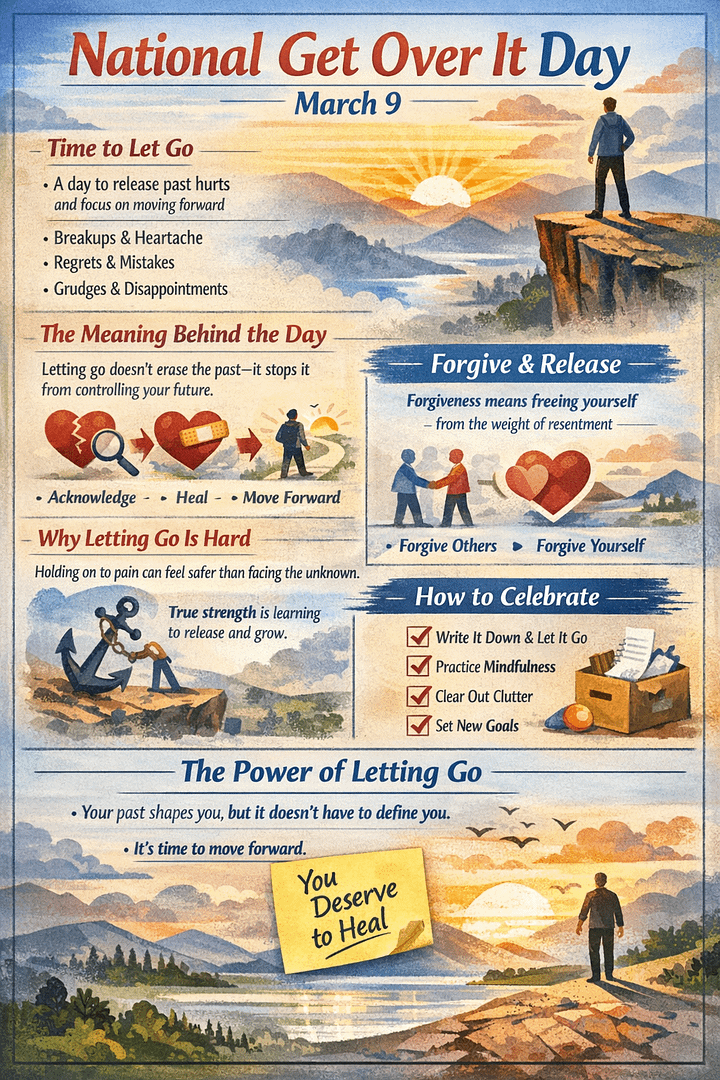
Every year on March 9, people observe National Get Over It Day, a day that encourages individuals to release the emotional weight of the past and focus on moving forward. At first glance, the phrase “get over it” can sound blunt or even insensitive. However, the spirit of this observance is not about dismissing feelings or rushing through pain. Instead, it is about recognizing when it is time to stop letting past hurt, regret, or disappointment control our present.
Life is filled with moments that leave lasting impressions on our hearts and minds. Some of those moments bring joy, while others leave wounds that take time to heal. National Get Over It Day offers a reminder that while we cannot change what has happened, we can choose how much power it continues to have over our lives.
It is a day about healing, self-awareness, forgiveness, and the courage to move beyond what once held us back.
The Deeper Meaning Behind the Day
Everyone carries emotional baggage in some form. It might be a failed relationship that left unanswered questions, a mistake that continues to haunt our thoughts, or resentment toward someone who caused pain. These experiences can linger in our minds long after the moment itself has passed.
The idea behind National Get Over It Day is not to deny those feelings, but to encourage reflection on whether continuing to hold onto them is helping or harming us. Emotional wounds deserve acknowledgment and time to heal, but sometimes people become trapped in cycles of replaying painful memories over and over.
This day reminds us that healing often involves a decision—a conscious moment when we choose to release the grip of the past and begin focusing on what lies ahead.
Letting go does not mean the experience never mattered. It simply means we refuse to let it define the rest of our lives.
Why Holding On Can Be So Powerful
Human beings are naturally wired to remember emotional experiences, particularly painful ones. Our minds often replay difficult moments as a way of trying to understand them or prevent similar situations in the future. Unfortunately, this mental loop can keep people stuck in the past.
Sometimes people hold onto pain because it feels safer than moving forward. Letting go can feel like stepping into the unknown. In other cases, people fear that releasing anger or sadness may somehow invalidate their experience.
But holding onto emotional pain for too long can quietly shape how we see the world. It can create barriers to trust, prevent new relationships from forming, and drain emotional energy that could otherwise be used for growth and happiness.
National Get Over It Day invites people to consider a different path: learning from the past without being trapped by it.
Learning the Difference Between Healing and Suppression
An important message behind this observance is that “getting over it” does not mean ignoring emotions or pretending everything is fine. True healing involves acknowledging pain, processing it, and allowing time for recovery.
Suppressing emotions can actually make them stronger over time. The goal of National Get Over It Day is not emotional avoidance—it is emotional release.
That process might involve talking with trusted friends, journaling about past experiences, seeking therapy, or simply giving oneself permission to forgive and move forward. Each person’s path to healing is unique.
For some, moving on may happen quickly. For others, it may take months or even years. What matters is the willingness to eventually move toward a healthier place.
The Role of Forgiveness
One of the most powerful ways people “get over” painful experiences is through forgiveness. Forgiveness does not mean excusing harmful behavior or pretending something did not hurt. Instead, it means choosing to release the emotional grip that resentment can have on our lives.
Sometimes forgiveness is directed toward another person who caused pain. Other times, it must be directed inward. Many people struggle with regret over past mistakes, holding themselves to impossible standards of perfection.
National Get Over It Day can be an opportunity to practice self-forgiveness. Recognizing that everyone makes mistakes—and that growth often comes from those mistakes—can be incredibly freeing.
Letting go of guilt and resentment can open the door to peace and emotional clarity.
Turning Pain Into Growth
One of the most empowering perspectives behind National Get Over It Day is the idea that difficult experiences can become powerful teachers. Many people discover that their greatest challenges eventually lead to personal growth, resilience, and deeper empathy for others.
Heartbreak can teach us about what we truly value in relationships.
Failure can teach us perseverance and determination.
Regret can teach us wisdom and humility.
When we allow painful experiences to transform into lessons rather than lifelong burdens, they begin to serve a positive role in our lives.
In this way, “getting over it” does not erase the past—it reframes it as part of a larger journey of growth.
Simple Ways People Observe the Day
People celebrate National Get Over It Day in many personal and meaningful ways. Some activities are symbolic, while others involve real steps toward emotional healing.
Common ways people observe the day include:
Writing down something they are ready to release and discarding the paper
Reflecting on lessons learned from past experiences
Practicing meditation or mindfulness
Reconnecting with supportive friends or family
Letting go of physical reminders tied to painful memories
Starting a new hobby, project, or personal goal
Even small gestures can represent a powerful emotional shift. Sometimes the act of acknowledging that you are ready to move forward is the most meaningful step of all.
A Cultural Reminder to Focus on the Future
In today’s fast-paced world, people often carry emotional stress without taking the time to process it. National Get Over It Day acts as a cultural reminder to pause and reflect on what we are holding onto.
The day encourages individuals to look toward the future rather than constantly revisiting the past. It reminds us that every new day brings opportunities for change, renewal, and growth.
No matter what someone has been through—heartbreak, disappointment, mistakes, or loss—the future is still unwritten.
Choosing to move forward can be one of the most empowering decisions a person can make.
The Power of Letting Go
Letting go is rarely easy, but it is often necessary. Carrying unresolved pain can weigh heavily on the heart, while releasing it can create room for peace, joy, and new experiences.
National Get Over It Day reminds us that our past may shape us, but it does not have to define us. We are not limited by our worst moments or the things that once hurt us.
Each person has the ability to decide when they are ready to take the next step forward.
Sometimes healing begins with a simple thought:
I deserve to move on.
And sometimes, that single decision can change everything.
Read More Holidays & National Days
Leave a Reply