Blog

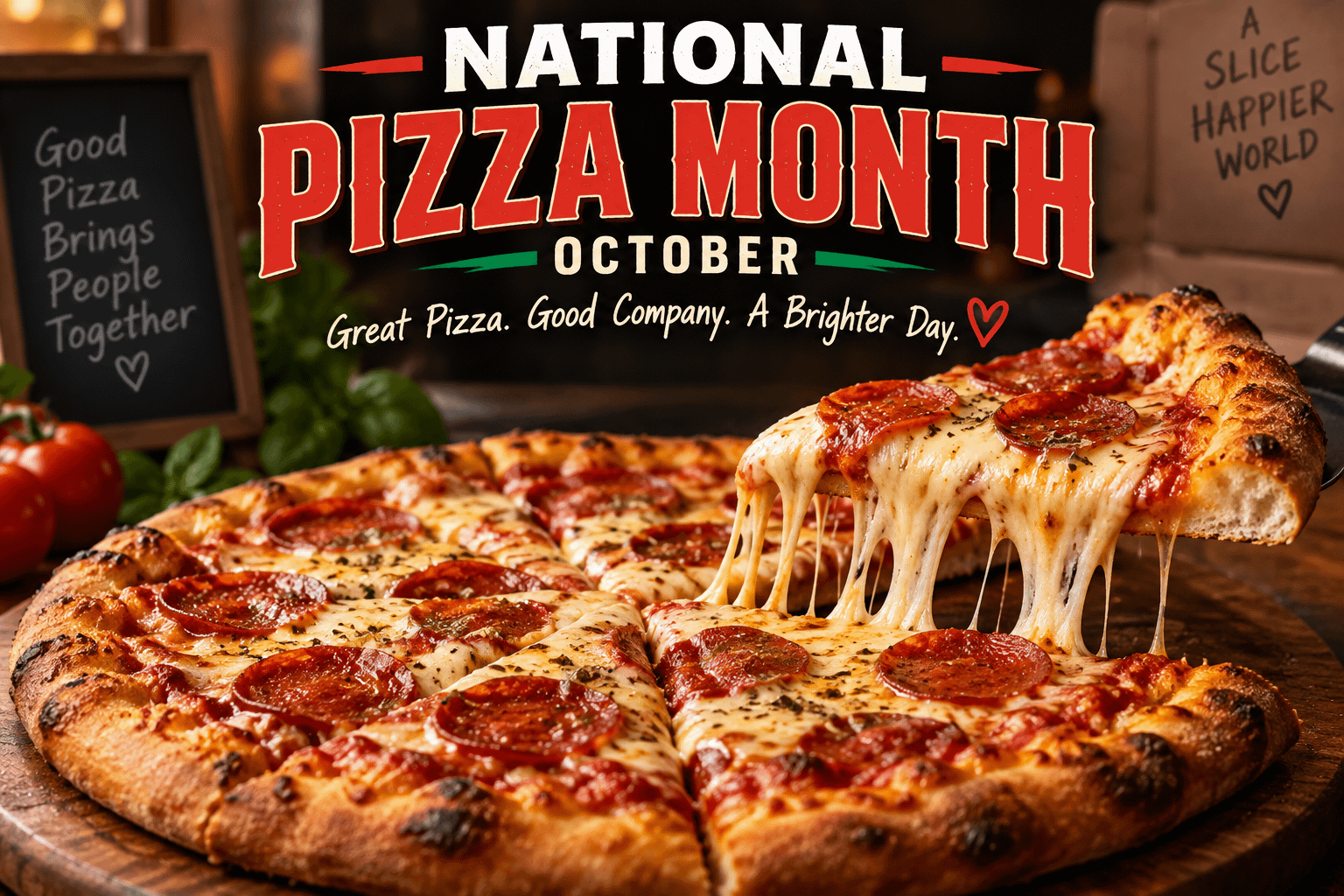
  • National Pizza Month: Celebrating America’s Love for the Perfect Slice

    National Pizza Month: Celebrating America’s Love for the Perfect Slice

    Few foods can bring people together quite like pizza. Whether it is a classic pepperoni pizza fresh from the oven, a deep-dish pie loaded with cheese, a thin and crispy slice folded in half, or a homemade creation covered with your favorite toppings, pizza has earned a special place at the table.

    That is exactly what National Pizza Month, celebrated throughout October, is all about.

    For an entire month, pizza lovers have an excuse to appreciate one of the world’s most recognizable and beloved foods. It is a celebration of the neighborhood pizzeria, the family pizza night, the delivery driver arriving at the door, the homemade pizza experiment, and those late-night slices that somehow taste even better than expected.

    Pizza is more than something we eat. For many of us, it is connected to birthdays, sporting events, school parties, family gatherings, fundraisers, first dates, celebrations, and countless ordinary nights when nobody felt like cooking.

    National Pizza Month gives us a chance to celebrate all of it.

    The History Behind National Pizza Month

    National Pizza Month dates back to 1984, when Gerry Durnell, publisher of Pizza Today magazine, helped establish October as a month dedicated to celebrating pizza and the people who make it.

    What began as an industry celebration grew into something much bigger.

    Today, October gives pizza restaurants, home cooks, food lovers, and families an opportunity to celebrate pizza in nearly every imaginable form.

    The timing could hardly be better. As temperatures begin cooling in much of the country and people start spending more evenings indoors, a hot pizza covered with melted cheese makes for an especially comforting meal.

    But America’s relationship with pizza began long before National Pizza Month.

    From Italy to an American Favorite

    Pizza’s history reaches back centuries, although the dish we recognize today is closely associated with Naples, Italy.

    Flatbreads topped with different ingredients existed in ancient cultures, but Naples became famous for creating the style of pizza that eventually spread around the world. Pizza was inexpensive, convenient, flavorful, and easy to eat, making it particularly popular among working people.

    Italian immigrants later brought their pizza-making traditions to the United States.

    As Italian-American communities grew during the late 19th and early 20th centuries, pizzerias began appearing in American cities. Eventually, pizza moved beyond Italian neighborhoods and became part of mainstream American food culture.

    After World War II, its popularity expanded dramatically.

    Today, pizza is available almost everywhere imaginable—from independent neighborhood restaurants and major pizza chains to grocery store freezers, school cafeterias, food trucks, sporting events, and home kitchens.

    And despite its simplicity, we still cannot seem to agree on what makes the perfect pizza.

    Maybe that disagreement is part of the fun.

    What Makes Pizza So Special?

    At its most basic, pizza can be incredibly simple: dough, sauce, cheese, and toppings.

    Yet those few ingredients can produce thousands of different combinations.

    Change the crust and you change the entire experience.

    A thin crust can be crisp and light. A hand-tossed crust offers a chewy middle ground. Deep-dish pizza transforms the meal into something thick, rich, and filling. Detroit-style pizza delivers a rectangular pie with a crispy, caramelized cheese edge.

    Then there is the sauce.

    Traditional tomato sauce may be the standard, but pizza can also feature garlic sauce, pesto, barbecue sauce, buffalo sauce, Alfredo sauce, or even no sauce at all.

    Cheese provides another world of possibilities.

    Mozzarella remains the classic choice, but provolone, Parmesan, ricotta, cheddar, goat cheese, feta, and countless other cheeses can completely transform a pizza.

    And then we reach the subject capable of starting an argument at almost any pizza party:

    The toppings.

    The Great Pizza Topping Debate

    Pepperoni remains one of America’s most familiar pizza toppings, and it is easy to understand why. The slightly spicy slices become crispy around the edges while releasing flavorful oils across the melted cheese.

    But pepperoni is only the beginning.

    Popular pizza toppings include sausage, mushrooms, onions, bell peppers, olives, bacon, ham, chicken, meatballs, tomatoes, spinach, garlic, jalapeños, and extra cheese.

    Then there is pineapple.

    Few pizza toppings generate stronger opinions.

    Some people love the sweet-and-savory combination of pineapple and ham. Others believe fruit has absolutely no business anywhere near their pizza.

    National Pizza Month might be the perfect opportunity to settle the argument—or make it even worse.

    Instead of ordering your usual pizza, try something completely different.

    You might discover a new favorite.

    America’s Many Styles of Pizza

    One of the most interesting things about pizza in the United States is how different regions have created their own interpretations.

    New York-style pizza is known for its large, thin slices that are often folded before eating.

    Chicago deep-dish pizza features a thick crust baked in a deep pan with generous layers of cheese, toppings, and tomato sauce.

    Detroit-style pizza is rectangular with a thick, airy crust and crispy cheese baked along the edges.

    St. Louis-style pizza typically features an extremely thin, cracker-like crust cut into squares rather than traditional triangular slices.

    New Haven-style pizza, often called apizza, is known for its thin, charred crust produced by extremely hot ovens.

    Other cities and regions have developed their own pizza traditions as well.

    There really is no single correct way to make pizza.

    That diversity is one of the reasons National Pizza Month can be so much fun.

    Pizza Is Food Made for Sharing

    Think about some of the moments when pizza appears.

    Birthday parties.

    Sleepovers.

    Football games.

    Office lunches.

    School celebrations.

    Fundraisers.

    Family movie nights.

    Team parties.

    Graduation celebrations.

    Moving day.

    Game night.

    Pizza has a way of showing up whenever people gather.

    Part of its appeal is convenience. Put several pizzas on a table and everyone can grab a slice. There are no complicated serving instructions, and people can easily choose different toppings.

    But there is something else happening too.

    Pizza encourages people to gather around the same table.

    A pizza box opens, people reach for slices, conversations begin, and suddenly a simple meal becomes part of a memory.

    Sometimes the foods we remember most are not the fanciest meals we ever ate.

    They are the foods connected to people.

    Pizza has created a lot of those moments.

    Support Your Local Pizzeria

    National Pizza Month is also an excellent opportunity to support local restaurants.

    Independent pizza shops often become fixtures in their communities. Owners and employees get to know families, schools, businesses, sports teams, and community organizations.

    Your neighborhood pizza restaurant may sponsor a Little League team, donate pizzas to an event, host school fundraisers, employ local teenagers, or provide dinner for families after a long day.

    Supporting these businesses can be as simple as ordering dinner.

    Try a locally owned pizza restaurant you have never visited before. Recommend your favorite pizzeria to a friend. Leave a thoughtful review after receiving good food and service.

    Small actions can make a meaningful difference to local businesses.

    Have a Family Pizza Night

    One of the easiest ways to celebrate National Pizza Month is by creating a family pizza night.

    Instead of ordering pizza, make it together.

    Set out pizza dough along with bowls of sauce, cheese, meats, vegetables, and other toppings. Give everyone their own section of the pizza—or individual dough—to create whatever combination they want.

    Children can participate too.

    They can spread sauce, sprinkle cheese, arrange pepperoni, or create funny designs using vegetables.

    The pizzas might not look restaurant-perfect.

    That does not matter.

    The memory of making them together may end up being better than the pizza itself.

    Create a Pizza Challenge

    Want to make October more interesting?

    Create your own National Pizza Month challenge.

    Try a different pizza style every week during October. You could start with New York-style pizza, move on to Chicago deep dish, try Detroit-style pizza, and finish with a homemade creation.

    Another idea is to try one topping you have never ordered before.

    You could even create a blind taste test with friends or family. Order cheese or pepperoni pizzas from several local restaurants without telling everyone which pizza came from which restaurant.

    Then have everyone choose their favorite.

    Just remember that pizza preferences are subjective. The pizza one person loves might be completely different from another person’s favorite.

    That is part of what makes pizza interesting.

    Make Your Own Signature Pizza

    National Pizza Month is also the perfect time to invent your own pizza.

    Start with your crust.

    Then choose a sauce.

    Add cheese.

    Finally, experiment with toppings.

    You could create a barbecue chicken pizza with red onions and cilantro.

    Try a breakfast pizza with eggs, sausage, bacon, and cheese.

    Make a taco-inspired pizza with seasoned beef, cheese, tomatoes, jalapeños, and crushed tortilla chips.

    Create a buffalo chicken pizza with buffalo sauce, chicken, mozzarella, and a drizzle of ranch or blue cheese dressing.

    Or keep things simple with fresh mozzarella, tomatoes, basil, and olive oil.

    Give your creation a name.

    If it is good enough, it might become your family’s new pizza-night tradition.

    Pizza Can Bring Communities Together

    Pizza also has a long connection with community fundraising.

    Schools, youth sports organizations, clubs, nonprofits, churches, and other community groups frequently work with pizza restaurants to raise money.

    It makes sense.

    Families already need dinner, and restaurants want to support their communities.

    A fundraiser night can turn something as ordinary as ordering pizza into an opportunity to help a local organization.

    National Pizza Month can therefore be about more than celebrating food.

    It can also be about celebrating community.

    Consider organizing a pizza night that supports a local school, sports team, charity, or community organization.

    A slice of pizza might seem small, but when an entire community participates, those individual purchases can add up.

    Don’t Forget the Leftover Pizza

    There is another important question every pizza lover eventually encounters:

    What is the best way to eat leftover pizza?

    Some people love it cold straight from the refrigerator.

    Others insist it must be reheated.

    A skillet can help restore some crispness to the crust. An oven or toaster oven works well too. An air fryer has also become a popular way to bring yesterday’s pizza back to life.

    And then there is the microwave.

    It is fast and convenient, even if the crust does not always cooperate.

    Whatever method you choose, leftover pizza proves one of pizza’s greatest qualities:

    It can be just as enjoyable the next day.

    Sometimes even for breakfast.

    No judgment during National Pizza Month.

    Ways to Celebrate National Pizza Month

    There are countless ways to make October a month filled with pizza. You could:

    • Order from a locally owned pizza restaurant.
    • Make homemade pizza with your family.
    • Try a pizza style you have never eaten before.
    • Experiment with an unusual topping.
    • Host a pizza party.
    • Organize a pizza taste test.
    • Create your own signature pizza.
    • Visit a famous pizzeria while traveling.
    • Hold a pizza fundraiser for a local organization.
    • Learn how to make homemade pizza dough.
    • Try making your own pizza sauce.
    • Share your favorite pizza with someone who has never tried it.
    • Surprise someone with a pizza dinner.
    • Have a pizza-and-movie night.
    • Ask friends to share their favorite pizza combinations.

    You could even dedicate every Friday in October to pizza night.

    There are worse traditions to start.

    More Than Just Dough, Sauce, and Cheese

    National Pizza Month ultimately celebrates something much bigger than food.

    Pizza has become part of our celebrations, traditions, communities, and everyday lives.

    It is the pizza ordered after a Little League game.

    It is the stack of boxes arriving at a birthday party.

    It is the late-night slice shared between friends.

    It is the Friday-night dinner when the family finally has time to sit together.

    It is the meal delivered when nobody has the energy to cook.

    It is the local pizza shop that remembers your usual order before you even finish saying it.

    Those moments are what turn food into memories.

    Celebrate National Pizza Month One Slice at a Time

    October gives us an entire month to appreciate one of the world’s most versatile and enjoyable foods.

    Order your favorite pizza.

    Try something new.

    Support a local pizzeria.

    Make pizza with your family.

    Host a pizza party.

    Use pizza night to support a school, sports team, nonprofit, or community organization.

    Most importantly, share a few slices with people you care about.

    Because the best pizza is not necessarily the one with the perfect crust, the most expensive ingredients, or the largest pile of toppings.

    Sometimes the best pizza is simply the one sitting in the middle of the table while people you care about are gathered around it.

    How are you celebrating National Pizza Month—and what toppings belong on your perfect pizza?
  • National Substance Abuse Prevention Month: Prevention, Awareness, and the Power of Hope

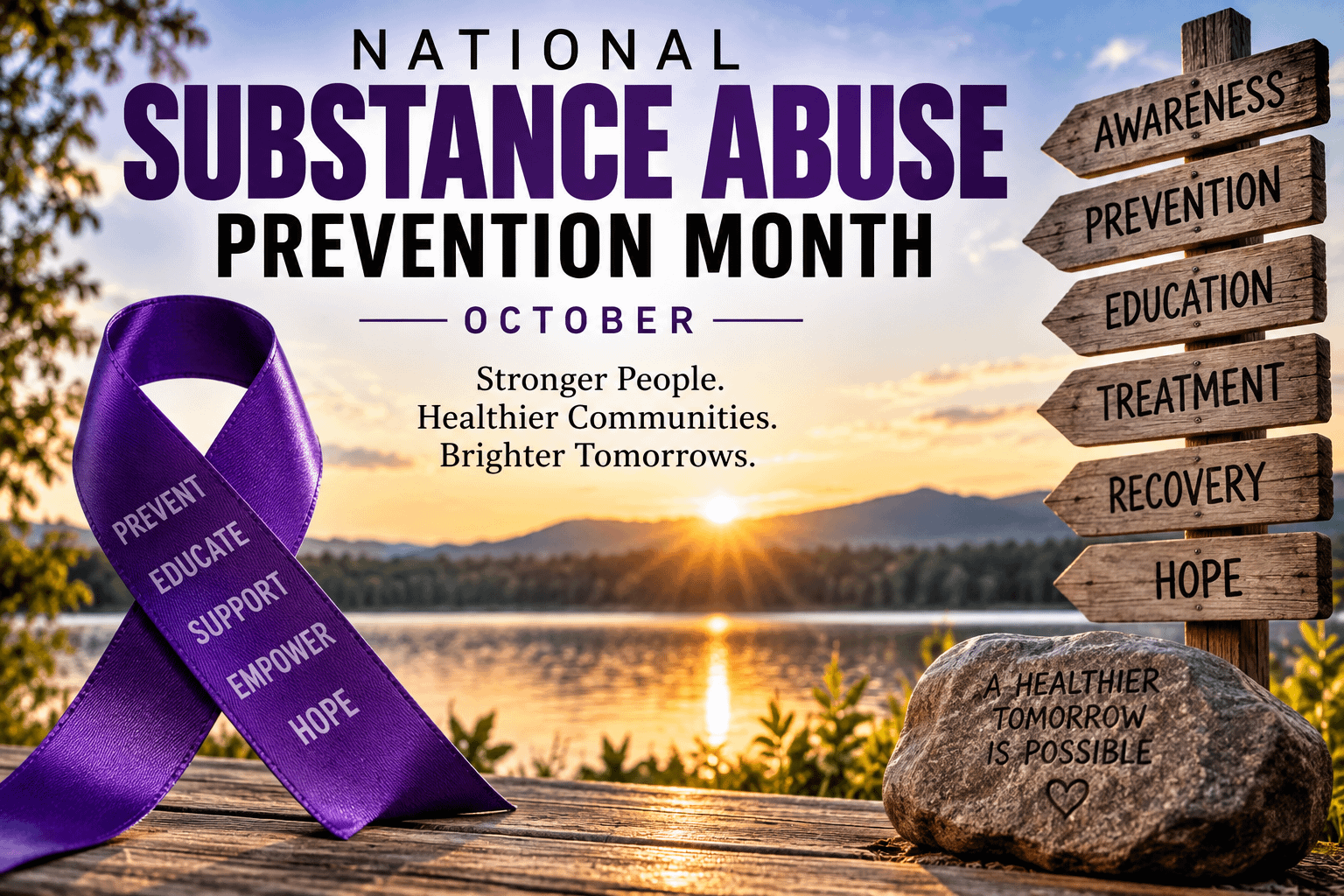
    National Substance Abuse Prevention Month: Prevention, Awareness, and the Power of Hope

    Every October, National Substance Abuse Prevention Month brings attention to an issue that affects individuals, families, schools, workplaces, and communities across the country. It is a time to increase awareness about substance misuse, strengthen prevention efforts, encourage honest conversations, and remind people that help and recovery are possible.

    Substance misuse does not affect only one type of person or one kind of family. It can touch people from every background, age group, income level, and community. Sometimes the warning signs are obvious. Other times, a person may be struggling privately while continuing to work, attend school, raise a family, and appear as though everything is fine.

    That is one reason prevention and awareness matter so much.

    National Substance Abuse Prevention Month is not simply about telling people to avoid drugs or alcohol. Effective prevention also involves understanding why people may turn to substances, recognizing risk factors early, strengthening protective factors, supporting mental and emotional well-being, and making sure people know where they can turn when they need help.

    Why Substance Abuse Prevention Matters

    Substance misuse can have consequences far beyond the individual using a substance.

    Families may experience broken trust, financial difficulties, conflict, fear, and emotional exhaustion. Children can be affected by instability within their homes. Friendships and relationships may suffer. Work and school performance can decline. Physical and mental health problems can become more serious.

    In the most tragic circumstances, substance use can contribute to overdose and death.

    Prevention gives us an opportunity to intervene before those consequences become severe.

    Prevention can begin with something as simple as education. When young people understand the risks associated with substance use and have healthy coping skills, trusted adults, supportive environments, and meaningful opportunities in their lives, they may be better prepared to make safer decisions.

    Adults need prevention resources too.

    Stress, grief, loneliness, trauma, chronic pain, relationship problems, financial pressure, and mental health struggles can sometimes contribute to unhealthy patterns of substance use. Learning healthier ways to cope and seeking support early can make an enormous difference.

    Understanding the Reasons Behind Substance Misuse

    It is easy to look at substance misuse only as a behavior. But behind that behavior there may be a much deeper story.

    Someone may be attempting to escape emotional pain.

    Someone may be dealing with unresolved trauma.

    Another person may be overwhelmed by anxiety, depression, loneliness, grief, or stress.

    Some people begin using substances socially and gradually develop a pattern they did not expect. Others may become dependent after exposure to certain medications or substances.

    There is rarely one simple explanation that applies to everyone.

    That is why conversations about prevention should include compassion along with accountability and education.

    Shame rarely creates the kind of environment where people feel comfortable admitting they need help. When someone believes they will immediately be judged or rejected, they may hide what is happening.

    A supportive response can open a different door.

    It can say:

    You can talk about what is happening.

    You can ask for help.

    Your life still has value.

    Recovery is worth pursuing.

    Prevention Starts With Conversation

    Families sometimes avoid discussing drugs and alcohol because they are uncomfortable topics.

    Silence, however, does not protect people.

    Age-appropriate conversations can help children and teenagers understand the risks they may encounter. These conversations do not always need to be dramatic lectures. They can happen naturally over time.

    Parents and caregivers can ask questions, listen carefully, establish clear expectations, and create an environment where young people know they can talk about difficult situations without immediately being attacked or humiliated.

    Young people may encounter pressure from friends, social situations, online content, or environments where substance use has become normalized.

    Knowing they have someone trustworthy to call can be incredibly important.

    That same principle applies to adults.

    Sometimes a simple conversation between friends can become the beginning of change.

    “Are you doing okay?”

    “I’ve noticed you haven’t seemed like yourself lately.”

    “Do you want to talk?”

    Those words may seem small, but they communicate something powerful:

    I see you, and I care about what happens to you.

    Learn the Warning Signs

    There is no single sign that proves someone is experiencing a substance-use problem. However, significant or unexplained changes can sometimes indicate that something is wrong.

    Possible warning signs can include changes in behavior or personality, withdrawing from family and friends, declining performance at work or school, changes in sleep patterns, unexplained financial difficulties, increased secrecy, neglecting responsibilities, risky behavior, or continuing to use substances despite negative consequences.

    Some of these signs can also be associated with other physical or mental health concerns.

    The goal should not be to diagnose someone based on one behavior.

    Instead, noticeable changes can be a reason to check in, listen, and encourage professional help when appropriate.

    Mental Health and Substance Use

    Mental health deserves an important place in substance abuse prevention.

    For some people, substance use becomes an attempt to manage difficult emotions or experiences.

    A person dealing with depression may want temporary relief from emotional pain. Someone struggling with anxiety may use alcohol or another substance because they believe it helps them relax. Someone living with trauma may try to numb painful memories.

    Grief can also leave people searching for ways to escape feelings that seem unbearable.

    But temporary relief can eventually create additional problems.

    Supporting mental health, therefore, can also be an important part of prevention.

    Counseling, peer support, healthy relationships, exercise, sleep, stress-management techniques, meaningful activities, community involvement, and professional treatment can all play roles in helping people develop healthier ways of coping.

    Asking for help should be viewed as a responsible action, not a weakness.

    Parents and Caregivers Have an Important Role

    Parents cannot control every decision their children will eventually make, but they can create strong foundations.

    Children and teenagers benefit from knowing that adults care about where they are, who they spend time with, and what is happening in their lives.

    Clear boundaries matter.

    Communication matters.

    Consistency matters.

    But connection matters too.

    Young people should know that making a mistake does not mean they have lost the love of their family.

    They should know that if they find themselves in a dangerous situation, they can call someone they trust.

    Sometimes prevention is not one major conversation.

    It is hundreds of small conversations that happen throughout childhood and adolescence.

    Communities Can Make a Difference

    Substance abuse prevention is not solely the responsibility of families.

    Schools, healthcare professionals, community organizations, faith communities, youth programs, coaches, businesses, local leaders, and neighbors can all contribute.

    Communities can support prevention through educational programs, youth activities, mentoring opportunities, mental health resources, safe medication storage and disposal efforts, overdose education, treatment referrals, and recovery-support programs.

    When communities work together, people have more opportunities to receive help before reaching a crisis.

    Reduce the Stigma Around Asking for Help

    One of the biggest barriers someone may face is fear of what other people will think.

    They may worry about disappointing their family.

    They may fear losing friendships.

    They may feel ashamed.

    They may convince themselves that they should be able to solve the problem alone.

    That isolation can make an already difficult situation worse.

    We can help change that culture by talking about substance-use disorders and recovery with dignity and compassion.

    A person struggling with substance use is still a person.

    They are someone’s child, parent, sibling, spouse, friend, coworker, or neighbor.

    Their struggle should not erase their humanity.

    Recovery Is Possible

    Prevention is important, but National Substance Abuse Prevention Month should also carry a message for people who are already struggling:

    It is not too late to seek help.

    Recovery may look different from one person to another. It may involve medical care, counseling, treatment programs, peer-support groups, medication when clinically appropriate, lifestyle changes, supportive relationships, or a combination of approaches.

    Recovery may also include setbacks.

    A setback does not have to become the end of someone’s story.

    People can return to treatment.

    They can rebuild relationships.

    They can rediscover purpose.

    They can create healthier routines.

    They can learn how to face difficult emotions without depending on substances.

    They can begin again.

    Remembering Those We Have Lost

    National Substance Abuse Prevention Month is also a time to remember the people whose lives have been lost because of substance-related causes and overdose.

    Behind every statistic is a human being.

    Someone had a favorite song.

    Someone made people laugh.

    Someone had dreams.

    Someone had people who loved them.

    Someone’s family still notices the empty chair.

    Remembering those lives should strengthen our commitment to prevention, treatment, compassion, and education.

    Their lives were more than the circumstances surrounding their deaths.

    What You Can Do During National Substance Abuse Prevention Month

    You do not have to be a healthcare professional to contribute to prevention.

    Educate yourself about substance misuse and addiction. Talk openly with the young people in your life. Learn about resources available in your community. Safely store medications and properly dispose of medications you no longer need.

    Pay attention when someone’s behavior suddenly changes.

    Check on the friend who has become unusually quiet.

    Listen before judging.

    Encourage professional help when someone is struggling.

    Support people who are working toward recovery.

    And perhaps most importantly, remind people that they do not have to face difficult moments completely alone.

    One Conversation Can Matter

    We may never know which conversation becomes the turning point in someone’s life.

    It could be a parent talking with a teenager before they face peer pressure.

    It could be a teacher noticing that a student is struggling.

    It could be a friend asking another friend whether everything is okay.

    It could be someone finally admitting:

    “I need help.”

    That moment deserves compassion.

    National Substance Abuse Prevention Month reminds us that prevention is not only about substances.

    It is about people.

    It is about creating families and communities where people feel supported, informed, connected, and valued.

    It is about addressing problems before they become tragedies.

    It is about making treatment easier to seek and recovery easier to talk about.

    And it is about continuing to spread one message that someone may desperately need to hear:

    There is hope. There is help. And your story does not have to end here.

    What is one thing we can do in our families or communities to make it easier for someone struggling with substance use to ask for help?

  • National Domestic Violence Awareness Month: Breaking the Silence, Supporting Survivors, and Creating Change

    National Domestic Violence Awareness Month: Breaking the Silence, Supporting Survivors, and Creating Change

    Every October, National Domestic Violence Awareness Month brings attention to an issue that often remains hidden behind closed doors. It is a time to recognize survivors, remember those whose lives have been lost to domestic violence, educate communities about abuse, and encourage people to speak up when someone may need help.

    Domestic violence can affect people from every background. It can happen regardless of age, gender, income, education, race, religion, profession, or social status. Sometimes there are visible injuries, but many forms of abuse leave no physical marks at all.

    Behind what may appear to be a normal relationship can be fear, intimidation, manipulation, isolation, financial control, threats, humiliation, or violence.

    National Domestic Violence Awareness Month reminds us that these experiences should not be ignored.

    Most importantly, it reminds survivors that they deserve safety, dignity, respect, and support.

    What Is Domestic Violence?

    Domestic violence is not limited to physical assault.

    It generally involves a pattern of abusive or controlling behaviors used by one person against an intimate partner or family member. The behaviors can take many forms, and several types of abuse may occur simultaneously.

    Physical abuse can include hitting, pushing, kicking, choking, restraining, throwing objects, destroying property, or other forms of physical harm or intimidation.

    Emotional and psychological abuse can involve constant criticism, humiliation, insults, threats, intimidation, manipulation, or making someone believe they are worthless.

    Verbal abuse may include screaming, degrading comments, threats, name-calling, or language deliberately used to frighten or diminish another person.

    Financial abuse can involve controlling someone’s money, preventing them from working, taking their earnings, restricting access to bank accounts, damaging their credit, or deliberately making them financially dependent.

    Sexual abuse can include unwanted sexual activity, coercion, pressure, or violations of consent.

    Digital abuse may involve monitoring someone’s phone, demanding passwords, tracking their location, controlling social media activity, or using technology to threaten, harass, or intimidate them.

    Isolation can also be a powerful form of control. An abusive partner may gradually separate someone from friends, relatives, coworkers, or other sources of support.

    These behaviors often have one thing in common: control.

    Abuse Does Not Always Begin With Violence

    One reason abusive relationships can be difficult to recognize is that they do not necessarily begin with obvious violence.

    A relationship may initially seem loving and attentive. Controlling behavior can develop gradually.

    Jealousy may initially be presented as love.

    Constant texting may appear to be concern.

    Wanting to know where someone is every minute may be described as protection.

    Discouraging friendships may be framed as wanting more time together.

    Controlling money may be presented as simply managing the household finances.

    Over time, boundaries can continue to disappear.

    A person may eventually realize that they are changing their behavior because they are afraid of how their partner will react.

    That fear matters.

    Healthy relationships should allow both people to maintain their dignity, independence, friendships, opinions, boundaries, and sense of safety.

    Why Leaving Can Be Complicated

    People sometimes ask a survivor a question that sounds simple:

    “Why didn’t you just leave?”

    But leaving an abusive relationship can be extremely complicated and, in some situations, dangerous.

    A survivor may fear retaliation. They may worry about children, pets, housing, finances, immigration concerns, employment, or where they will go.

    They may have been isolated from everyone who once supported them.

    They may not have access to their own money.

    They may still love their partner and hope that things will change.

    They may have been repeatedly told that nobody else will believe them or care about them.

    Some survivors may also experience threats directed toward themselves, their children, relatives, friends, or pets.

    Years of emotional abuse can dramatically affect someone’s confidence and ability to imagine life outside the relationship.

    Instead of asking why someone stayed, a more compassionate question is:

    “What made leaving so difficult, and how can we help make safety possible?”

    Warning Signs Should Be Taken Seriously

    Domestic violence can look different in every relationship, but there are behaviors that deserve attention.

    A partner may constantly monitor someone’s whereabouts, become extremely jealous, attempt to control friendships, restrict access to money, demand passwords, threaten self-harm or violence to maintain control, destroy belongings, frequently humiliate their partner, or make them afraid to disagree.

    Someone experiencing abuse may become unusually withdrawn.

    They might stop spending time with friends.

    They may frequently cancel plans without explanation.

    They may seem nervous when their partner calls or texts.

    They may have unexplained injuries or regularly make excuses for their partner’s behavior.

    None of these signs alone necessarily proves abuse is occurring. However, patterns of fear, control, intimidation, and isolation should not simply be dismissed.

    Supporting Someone Experiencing Domestic Violence

    When someone reveals that they are experiencing abuse, the way we respond matters.

    Listen.

    Believe what they are telling you.

    Avoid blaming them.

    Do not pressure them into making immediate decisions unless there is an urgent safety emergency requiring intervention.

    Statements such as “Why didn’t you leave sooner?” can unintentionally reinforce the shame an abusive person may already have created.

    Instead, communicate something much more important:

    “I believe you. You don’t deserve to be treated this way. I’m here to support you.”

    Ask what they need.

    Sometimes they may need help finding professional resources.

    Sometimes they need transportation.

    Sometimes they need a safe place to keep important documents.

    Sometimes they simply need one trustworthy person who will listen without judging them.

    Support does not mean taking control of someone’s decisions. Abuse already involves having control taken away. Whenever possible, supporting a survivor means helping them regain choices and independence.

    The Invisible Wounds of Abuse

    Physical injuries can sometimes heal long before the emotional wounds.

    Survivors may continue struggling with fear, anxiety, shame, difficulty trusting others, disrupted sleep, painful memories, or a damaged sense of self-worth long after an abusive relationship ends.

    Recovery does not happen according to a timetable.

    There may be good days followed by difficult ones.

    Someone can rebuild their life and still experience moments when memories return.

    Healing can involve counseling, advocacy services, supportive relationships, community resources, faith communities, or other forms of assistance depending on what the survivor finds helpful.

    What matters is understanding that surviving abuse is not the end of the story.

    People can rebuild.

    They can rediscover independence.

    They can experience healthy relationships.

    They can find joy again.

    And they can create a future in which fear no longer controls their everyday life.

    Teaching the Next Generation About Healthy Relationships

    Domestic violence prevention cannot begin only after abuse occurs.

    Young people should learn what healthy relationships look like.

    They need to understand that jealousy is not proof of love.

    Control is not protection.

    Possessiveness is not devotion.

    Fear is not respect.

    Love should never require someone to surrender their identity.

    Healthy relationships involve communication, trust, consent, boundaries, independence, accountability, and mutual respect.

    Teaching these lessons early can help young people recognize unhealthy behaviors before those patterns become normalized.

    Adults also have a responsibility to model these values.

    Children learn about relationships partly by watching the relationships around them.

    Showing kindness, resolving disagreements without intimidation, respecting boundaries, apologizing when necessary, and treating others with dignity can help demonstrate what healthy relationships should look like.

    Men Can Be Survivors Too

    Domestic violence conversations should leave room for every survivor.

    Women experience a substantial burden of intimate partner violence, but men can also experience domestic abuse.

    Men who are abused may hesitate to seek assistance because they fear embarrassment, disbelief, or being told that they should simply be able to handle the situation themselves.

    Those attitudes can leave people suffering silently.

    No survivor should have to prove that their experience matters.

    Abuse is abuse.

    Anyone living with violence, threats, coercion, intimidation, or controlling behavior deserves the opportunity to seek help without shame.

    Remembering Those We Have Lost

    National Domestic Violence Awareness Month is also a time to remember people whose lives have been taken through domestic violence.

    Behind every statistic is a human life.

    A parent.

    A son or daughter.

    A brother or sister.

    A friend.

    A coworker.

    A neighbor.

    Someone who mattered deeply to other people.

    Remembering victims means refusing to allow their lives to become nothing more than numbers.

    Their stories are another reason communities must continue improving prevention, intervention, education, and survivor support.

    Awareness Must Lead to Action

    Posting a purple ribbon or sharing an awareness message can help start conversations, but meaningful change requires more.

    Schools can provide education about healthy relationships.

    Workplaces can develop policies and resources for employees experiencing domestic violence.

    Healthcare professionals can receive training in recognizing signs of abuse and responding appropriately.

    Communities can support shelters and survivor-service organizations.

    Friends and relatives can learn how to respond when someone asks for help.

    Individuals can challenge jokes, comments, and attitudes that normalize controlling or violent behavior.

    Even small actions can help create a culture where abuse is recognized rather than ignored.

    You Never Know Who May Need to Hear Your Words

    One reason awareness campaigns matter is that we rarely know everything happening in another person’s life.

    Someone reading a domestic violence awareness post may be quietly wondering whether what they are experiencing is actually abuse.

    Someone may be gathering the courage to tell a friend.

    Someone may be planning how to safely leave.

    Someone may have escaped years ago but still carries the emotional scars.

    Someone else may realize that behaviors they previously considered normal are actually controlling or harmful.

    That is why talking about domestic violence matters.

    Silence protects abuse.

    Education helps people recognize it.

    Compassion makes it easier for survivors to speak.

    Resources can help people find pathways toward safety.

    There Is Life After Abuse

    A person who has experienced domestic violence is more than what happened to them.

    Their story does not have to end with fear.

    Survivors can rediscover parts of themselves they thought they had lost. They can rebuild confidence, reconnect with people they love, pursue dreams that were once discouraged, and learn what it feels like to make everyday decisions without being afraid of another person’s reaction.

    Healing may take time.

    There may be setbacks.

    But there can also be freedom.

    There can be laughter.

    There can be peace.

    There can be healthy love.

    There can be mornings when someone wakes up and realizes that they no longer have to live afraid.

    National Domestic Violence Awareness Month

    This October, take time to learn more about domestic violence.

    Listen to survivors.

    Support organizations helping people escape dangerous situations.

    Teach young people about healthy relationships.

    Pay attention when someone seems afraid or isolated.

    And never underestimate what compassionate words can mean to someone who feels trapped and alone.

    If you are experiencing domestic violence, consider reaching out to a trusted person or a domestic-violence organization when it is safe to do so. If you are in immediate danger, contact emergency services where you live.

    No one should have to live in constant fear of the person who claims to love them.

    National Domestic Violence Awareness Month is more than an awareness campaign. It is a reminder that communities have a responsibility to recognize abuse, support survivors, remember those who have been lost, and work toward relationships built on dignity and respect.

    Sometimes the first step toward change is simply letting someone know:

    You deserve to feel safe. You deserve to be treated with respect. And your voice deserves to be heard.

    What can each of us do to help create a community where survivors feel safe enough to speak and supported enough to rebuild their lives?

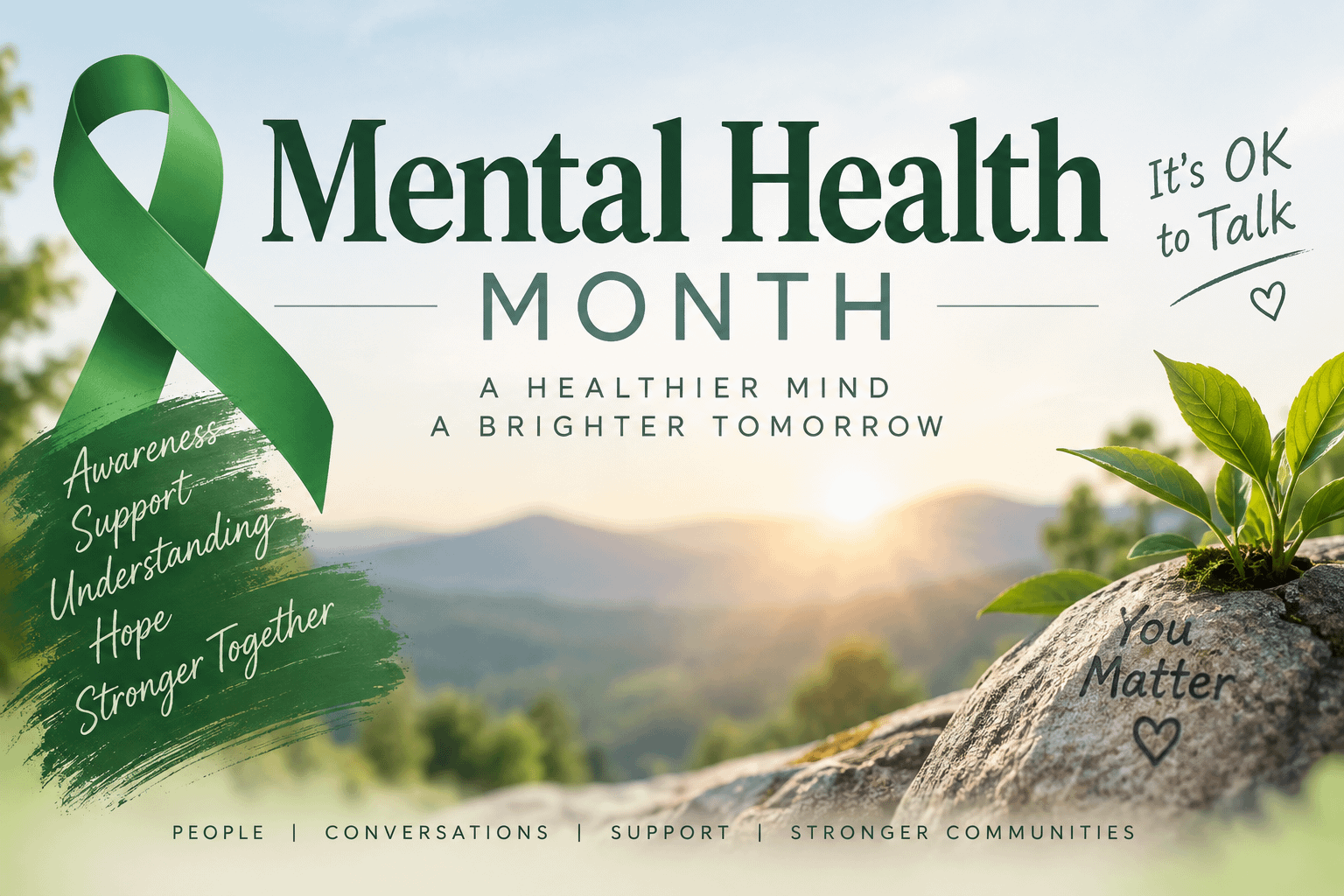
  • Mental Health Month: Breaking the Silence, Finding Support, and Taking Care of Your Mind

    Mental Health Month: Breaking the Silence, Finding Support, and Taking Care of Your Mind

    Mental health is part of every person’s life. It affects how we think, feel, respond to stress, build relationships, make decisions, and handle the challenges placed in front of us. Yet for generations, conversations about mental health were often avoided, hidden, or treated as something people should simply deal with on their own.

    Mental Health Month gives us an opportunity to change that.

    Observed each May in the United States, Mental Health Month is a time to raise awareness about mental health, encourage people to seek support when they need it, challenge stigma, and remind ourselves that taking care of our emotional and psychological well-being deserves attention throughout the entire year.

    Mental health struggles do not always look dramatic from the outside. Someone can go to work, take care of their family, laugh with friends, post photographs online, and appear perfectly fine while privately carrying anxiety, depression, grief, loneliness, trauma, exhaustion, or overwhelming stress.

    That is one reason awareness matters.

    Sometimes the person who seems the strongest is carrying a battle nobody else can see.

    What Is Mental Health Month?

    Mental Health Month has been observed in the United States since 1949, when Mental Health America and its predecessors began the annual observance to educate the public about mental health and encourage greater understanding of mental wellness and mental illness.

    Over the decades, society’s understanding of mental health has changed considerably. Conversations that once happened almost entirely behind closed doors are becoming more common in families, schools, workplaces, communities, and public life.

    There is still work to do.

    Stigma can prevent people from talking about what they are experiencing. Some fear being judged as weak. Others worry people will treat them differently. Some convince themselves their problems are not serious enough to deserve help.

    Mental Health Month reminds us that emotional suffering does not have to reach a breaking point before it deserves attention.

    Mental Health Is Health

    One of the most important messages of Mental Health Month is simple: mental health is part of overall health.

    Most people understand the importance of caring for their physical bodies. We are encouraged to eat nutritious foods, exercise, sleep, attend medical appointments, and pay attention when something hurts.

    Our minds need care too.

    Stress can accumulate. Grief can change us. Anxiety can become overwhelming. Depression can drain motivation and energy. Trauma can affect how safe the world feels. Loneliness can quietly wear someone down.

    Ignoring these experiences does not necessarily make them disappear.

    Taking care of mental health can mean recognizing when something has changed and responding instead of pretending everything is fine.

    You Cannot Always See What Someone Is Carrying

    Mental health struggles are often invisible.

    You might walk past someone at the grocery store who recently lost somebody they loved.

    Your coworker might be dealing with severe anxiety while continuing to meet every deadline.

    A friend who stopped answering messages might be struggling with depression.

    A parent cheering at a child’s sporting event might be overwhelmed by responsibilities at home.

    A grieving father might return to work and appear composed while feeling shattered inside.

    We rarely know the complete story of another person’s life.

    That should encourage us to lead with compassion.

    A little patience, kindness, or understanding may mean far more than we realize.

    Grief and Mental Health

    Grief deserves an important place in conversations about mental health.

    Losing someone you love can affect virtually every area of life. Grief can influence sleep, concentration, appetite, motivation, relationships, work, energy, and a person’s sense of identity and purpose.

    The death of a child can be particularly life-altering for a parent.

    There is no timetable that determines when someone should be “over” such a loss. Love does not disappear because time passes, and grief can return unexpectedly through birthdays, anniversaries, holidays, songs, photographs, familiar places, or ordinary moments.

    A person can learn to live forward while still missing someone every day.

    Supporting grieving people often begins with allowing them to be honest about their feelings without trying to rush them through their pain.

    Sometimes they need advice.

    Sometimes they need professional support.

    And sometimes they simply need someone willing to sit beside them and listen.

    Men and Mental Health

    Mental Health Month is also an opportunity to talk about the barriers many men face when discussing emotional pain.

    Some men grow up hearing messages such as “be strong,” “don’t cry,” or “handle your problems yourself.” Strength and resilience can be valuable qualities, but they should not require someone to suffer silently.

    There is strength in admitting when life hurts.

    There is strength in talking to someone.

    There is strength in asking for help.

    There is strength in saying, “I’m struggling.”

    A man does not become less of a man because he experiences depression, anxiety, grief, loneliness, or emotional exhaustion.

    Real strength can include recognizing when carrying everything alone is no longer working.

    Signs That You May Need More Support

    Everyone experiences difficult days. However, emotional or behavioral changes that persist, interfere with daily life, or feel increasingly difficult to manage deserve attention.

    These can include persistent sadness, excessive worry, irritability, hopelessness, difficulty concentrating, changes in sleeping or eating patterns, loss of interest in activities once enjoyed, withdrawing from friends or family, increased substance use, or feeling emotionally overwhelmed.

    These experiences can have many possible causes and do not automatically mean someone has a particular mental health condition.

    They can, however, be signals worth paying attention to.

    Talking with a qualified healthcare or mental health professional can help someone understand what they are experiencing and what kinds of support may be appropriate.

    Small Ways to Support Your Mental Health

    Taking care of mental health does not always require making enormous changes overnight.

    Sometimes improvement begins with small, consistent actions.

    Getting enough sleep can help your mind and body recover. Regular movement can support physical and emotional well-being. Eating regularly and staying hydrated can help maintain energy. Spending time outdoors may provide a welcome change of environment.

    Human connection matters too.

    Call someone you trust.

    Have coffee with a friend.

    Spend time with family.

    Join a support group.

    Participate in a community activity.

    Talk with someone who understands what you are experiencing.

    Isolation can make difficult emotions feel even heavier.

    It can also help to create moments when your mind can slow down. Prayer, journaling, reading, music, breathing exercises, hobbies, gardening, walking, or simply sitting somewhere peaceful can provide opportunities to decompress.

    Different approaches work for different people. The goal is not perfection. The goal is finding healthy practices that help you function and feel supported.

    Give Yourself Permission to Rest

    Modern life often celebrates constant productivity.

    We are expected to work, answer messages, take care of responsibilities, maintain relationships, accomplish goals, and keep moving regardless of what is happening internally.

    But human beings need rest.

    Rest is not the same thing as giving up.

    Sometimes you need an evening without obligations.

    Sometimes you need to turn your phone off.

    Sometimes you need to say no.

    Sometimes you need to sleep.

    Sometimes you need a quiet afternoon without feeling guilty for not accomplishing something.

    Your worth is not determined by how productive you are every minute of every day.

    Talk About What You Are Feeling

    One of the most powerful things someone can do for their mental health is talk honestly with a safe person.

    You do not have to explain everything perfectly.

    You can simply say:

    “I’m having a difficult time.”

    “I haven’t felt like myself lately.”

    “I’m overwhelmed.”

    “I’m grieving.”

    “I’m anxious.”

    “I think I need someone to talk to.”

    Opening up can feel uncomfortable, especially if you are accustomed to keeping your emotions private. But allowing someone into your world can reduce the feeling that you must carry everything alone.

    That person might be a trusted friend, family member, pastor, counselor, therapist, physician, support group member, or another qualified professional.

    The important thing is finding appropriate support.

    Check on the People Around You

    Mental Health Month should not only be about examining our own well-being. It is also an opportunity to pay closer attention to the people around us.

    If someone seems unusually quiet, withdrawn, overwhelmed, or different from their normal self, check on them.

    Ask how they are doing.

    Then give them room to answer honestly.

    Instead of automatically saying, “Everything will be fine,” consider listening first.

    You do not have to solve another person’s problems to support them.

    Sometimes simply knowing that someone cares enough to listen can make an enormous difference.

    And do not be afraid to check on the person who always seems strong.

    Strong people need support too.

    Stop Comparing Your Struggles

    One of the easiest ways to dismiss our own emotional needs is comparison.

    “Other people have it worse.”

    “I shouldn’t be upset.”

    “I have a good life, so I shouldn’t feel this way.”

    “My problems aren’t serious enough.”

    Someone else’s suffering does not invalidate yours.

    You do not have to win a competition in pain before you are allowed to ask for support.

    If something is affecting your ability to live your life, relationships, work, sleep, or emotional well-being, it deserves attention.

    Professional Help Can Be Part of Taking Care of Yourself

    Friends and family can provide tremendous support, but sometimes professional care is needed.

    Mental health professionals can help people understand patterns in their thoughts, emotions, and behaviors; develop coping strategies; process traumatic or painful experiences; and navigate challenges such as anxiety, depression, grief, or major life transitions.

    Seeking professional support should not be viewed as failure.

    It can be one of many practical ways of taking care of yourself.

    Just as someone might see a physician for persistent physical symptoms, seeking help for persistent emotional distress can be an appropriate health decision.

    When Someone Is in Crisis

    Mental Health Month also reminds us to take serious emotional crises seriously.

    If someone talks about suicide, expresses that they do not want to live, says others would be better without them, or appears to be in immediate danger, do not dismiss those statements.

    In the United States, people experiencing a suicidal, mental health, or substance-use crisis can call or text 988 to reach the 988 Suicide & Crisis Lifeline. If there is an immediate life-threatening emergency, call 911 or seek emergency medical care.

    Reaching out during a crisis can save a life.

    Mental Health Awareness Should Last Beyond One Month

    May gives us a reason to put mental health conversations in the spotlight, but people struggle during every month of the year.

    Depression does not follow a calendar.

    Neither does anxiety.

    Neither does grief.

    Neither does trauma.

    Neither does loneliness.

    That means compassion should not end when Mental Health Month does.

    We can continue checking on friends.

    We can keep talking openly.

    We can continue challenging harmful stereotypes.

    We can encourage people to seek appropriate support.

    And we can continue paying attention to our own emotional health.

    One Conversation Can Matter

    You may never know how much a simple conversation means to someone.

    A text saying, “I’ve been thinking about you.”

    An invitation to grab coffee.

    A phone call.

    A genuine question: “How are you really doing?”

    These actions seem small, but sometimes small acts of connection arrive exactly when someone needs them.

    We cannot always fix another person’s pain.

    We can remind them they do not have to face it completely alone.

    Mental Health Month Is About Hope

    Mental Health Month is not only about mental illness.

    It is also about hope, understanding, compassion, recovery, connection, and reminding people that their emotional well-being matters.

    Life can become incredibly heavy.

    People experience heartbreak.

    Families experience loss.

    Plans fall apart.

    Relationships end.

    Financial problems happen.

    People become sick.

    Loved ones die.

    Sometimes life changes in a single moment and never returns to what it was before.

    Yet even during difficult seasons, support is possible.

    Healing can happen gradually.

    New meaning can be discovered.

    Relationships can deepen.

    People can learn healthier ways to cope.

    Someone who feels completely overwhelmed today may eventually look back and realize how far they have come.

    A Final Reminder

    During Mental Health Month, remember that you never truly know everything another person is carrying.

    Be patient.

    Be compassionate.

    Check on people.

    Listen without immediately judging or trying to fix everything.

    And remember to extend some of that same compassion toward yourself.

    You do not have to pretend every day is a good day.

    You do not have to have every answer.

    You do not have to carry every burden alone.

    Taking care of your mental health can begin with something as simple as acknowledging what you are feeling and deciding that it deserves attention.

    Sometimes asking for help is one of the strongest decisions a person can make.

    And sometimes one honest conversation can become the beginning of something better.

    How can you make mental health a priority—not only during Mental Health Month, but throughout the entire year?

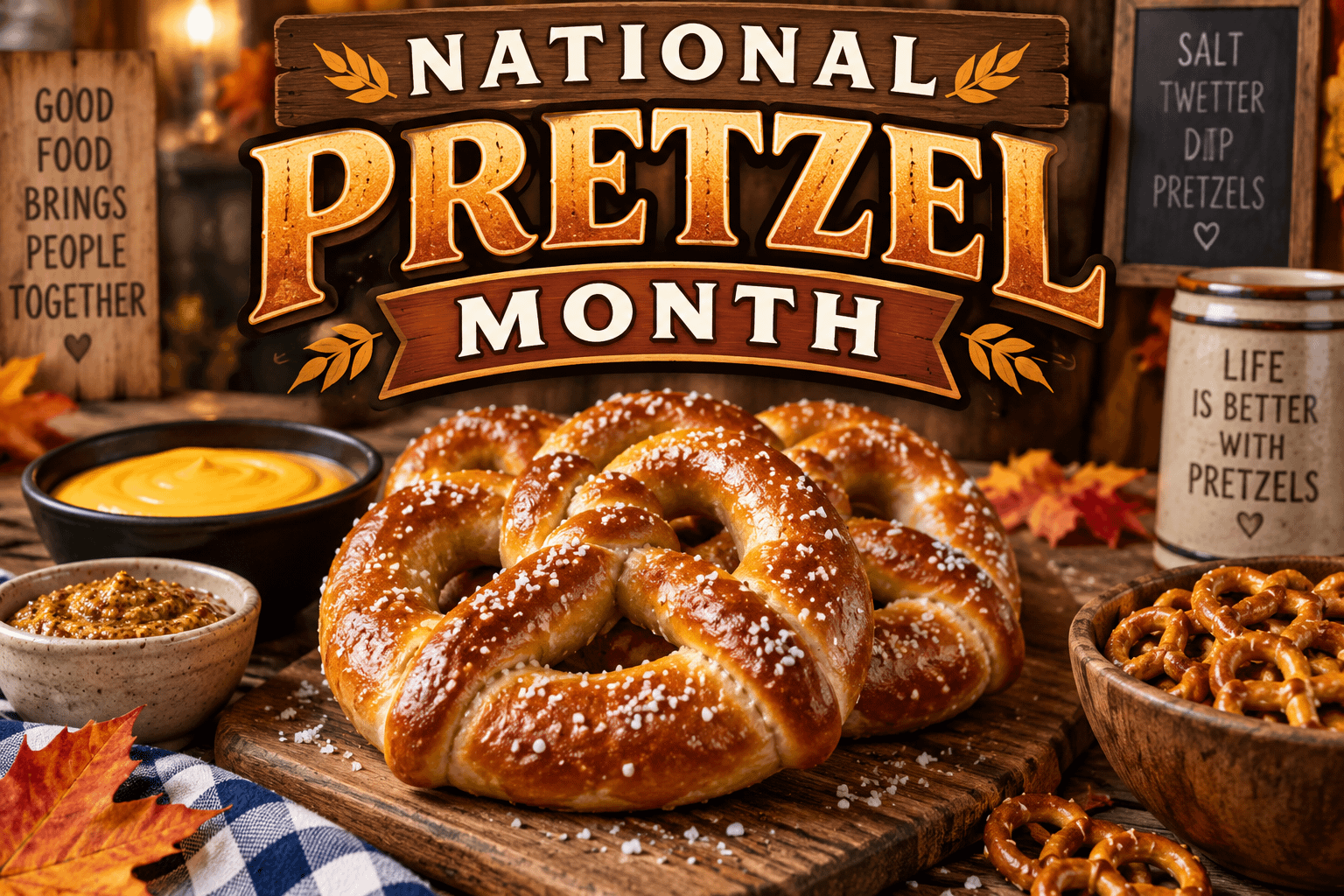
  • National Pretzel Month: Celebrating the Twists, Tradition, and Irresistible Flavor of Pretzels

    National Pretzel Month: Celebrating the Twists, Tradition, and Irresistible Flavor of Pretzels

    Few snacks are as instantly recognizable as the pretzel. With its distinctive twisted shape, golden-brown exterior, and satisfying combination of salty and savory flavors, the pretzel has earned a permanent place in snack culture.

    National Pretzel Month is an opportunity to celebrate everything we love about this classic treat. From warm, soft pretzels served with mustard or cheese to crunchy pretzel twists grabbed by the handful, there are countless ways to enjoy them.

    Pretzels are also incredibly versatile. They can be sweet, salty, spicy, cheesy, chocolate-covered, stuffed, dipped, crushed into desserts, or even used as the foundation for sandwiches.

    So grab your favorite pretzel and get ready to celebrate a snack with centuries of history behind every twist.

    A Snack With a Long History

    The exact origin of the pretzel is surrounded by legends, and several different stories have been told about how its famous shape was created.

    One of the most popular traditions connects early pretzels with European monasteries. According to the story, monks created pieces of dough shaped to resemble arms crossed in prayer and gave them as rewards to children.

    Whether every detail of that story is historically accurate is difficult to determine, but pretzels unquestionably developed deep roots in European baking traditions.

    German-speaking regions became especially associated with pretzel making. Over generations, pretzels became an important part of German food culture and eventually traveled with immigrants to other parts of the world.

    German immigrants helped introduce pretzel traditions to America, particularly in Pennsylvania.

    Today, Pennsylvania remains strongly associated with American pretzel production, especially hard pretzels.

    What began as a relatively simple combination of flour, water, yeast, and salt eventually became one of America’s most recognizable snack foods.

    Why Are Pretzels Shaped That Way?

    The pretzel’s shape is part of what makes it special.

    You can put a bowl of different snacks on a table, and the pretzel will immediately stand out. Its looping design is recognized almost everywhere.

    The traditional shape is made by rolling dough into a long rope, creating a loop, twisting the ends, and bringing them back toward the bottom.

    The result is the familiar pretzel shape we know today.

    There are many variations, however.

    Pretzels can be made as twists, sticks, rods, nuggets, bites, rings, buns, rolls, and even sandwich bread.

    No matter the shape, that combination of browned dough and salt remains unmistakably pretzel.

    Soft Pretzels vs. Hard Pretzels

    One of the great pretzel debates isn’t really a debate at all because both varieties deserve a place at the table.

    Soft Pretzels

    A freshly baked soft pretzel can be difficult to beat.

    The outside has a beautiful golden-brown finish while the inside remains warm, chewy, and tender.

    Coarse salt scattered across the surface adds another layer of flavor.

    Soft pretzels are commonly served with dipping sauces such as:

    • Yellow or spicy mustard
    • Beer cheese
    • Warm cheddar sauce
    • Honey mustard
    • Garlic butter
    • Ranch
    • Cinnamon icing
    • Chocolate sauce

    A traditional salted pretzel with mustard may be simple, but sometimes simple food is exactly what you want.

    Hard Pretzels

    Hard pretzels bring something completely different.

    They’re crunchy, portable, easy to store, and perfect for snacking.

    Pretzel twists may be the most familiar version, but pretzel sticks, rods, nuggets, and thin crisps have become equally popular.

    They’re great straight from the bag, but they can also become ingredients in recipes.

    Crushed pretzels can be used for pie crusts, cheesecake crusts, chicken coatings, snack mixes, dessert bars, and toppings.

    The Magic Behind a Pretzel’s Crust

    Pretzels aren’t simply ordinary bread dough twisted into an unusual shape.

    An important part of traditional pretzel making happens before baking.

    Pretzel dough receives an alkaline treatment that helps create the characteristic dark brown exterior, distinctive aroma, and recognizable pretzel flavor during baking.

    Home recipes often use baking soda-based methods as a more accessible approach.

    That treatment, combined with high heat in the oven, helps transform relatively basic dough into something completely different.

    The contrast between the browned exterior and soft interior is especially noticeable with freshly baked soft pretzels.

    And then comes the salt.

    Those large grains of salt aren’t simply decoration. They provide bursts of salty flavor that complement the slightly chewy, browned dough.

    Pretzels Are Made for Dipping

    Part of the fun of National Pretzel Month is experimenting with different dipping sauces.

    Mustard is one of the classics.

    Regular yellow mustard works beautifully, but you can also experiment with spicy brown mustard, Dijon mustard, honey mustard, or whole-grain mustard.

    Then there’s cheese.

    A warm soft pretzel dipped into creamy cheese sauce is one of those combinations that seems almost designed for each other.

    You can take things even further with:

    • Jalapeño cheese sauce
    • Bacon cheddar dip
    • Buffalo cheese dip
    • Garlic Parmesan sauce
    • Creamy horseradish dip
    • Barbecue sauce
    • Caramel
    • Peanut butter
    • Melted chocolate

    Create several sauces and suddenly an ordinary bowl of pretzel bites becomes a party platter.

    Sweet Pretzels Deserve Some Attention Too

    Pretzels don’t always have to be savory.

    The salty flavor of pretzel dough works surprisingly well with sweet ingredients.

    Cinnamon-sugar soft pretzels are a great example. Brush a warm pretzel with melted butter, coat it with cinnamon and sugar, and serve it with vanilla icing.

    Chocolate-covered pretzels are another classic.

    The combination of crunchy, salty pretzels and rich chocolate creates the perfect sweet-and-salty balance.

    Try coating pretzel rods or twists with:

    • Milk chocolate
    • Dark chocolate
    • White chocolate
    • Caramel
    • Peanut butter coating

    Then add crushed cookies, chopped nuts, sprinkles, coconut, or candy pieces.

    They’re easy to customize for holidays, birthdays, parties, and special occasions.

    Pretzels Can Become an Entire Meal

    Pretzels aren’t limited to snack bowls.

    Pretzel buns have become a popular alternative to traditional hamburger and sandwich buns.

    Their slightly chewy texture and deeper flavor pair especially well with burgers, grilled chicken, pulled pork, bratwurst, and deli sandwiches.

    Pretzel dough can also be used to make:

    • Pretzel-wrapped hot dogs
    • Pretzel pizzas
    • Ham and cheese pretzel pockets
    • Pretzel breakfast sandwiches
    • Stuffed cheese pretzels
    • Pepperoni pretzel rolls

    You can even make miniature pretzel sliders for parties.

    National Pretzel Month is a great excuse to experiment.

    Make Homemade Soft Pretzels

    One of the best ways to celebrate is to make pretzels from scratch.

    You don’t need to be a professional baker.

    A basic homemade pretzel dough usually begins with flour, yeast, warm water, a little sugar, salt, and butter.

    After the dough rises, divide it into portions and roll each piece into a long rope.

    Shape the rope into the traditional pretzel design.

    After the pretzels receive their alkaline treatment, arrange them on a baking sheet, sprinkle them with coarse salt, and bake until beautifully browned.

    The smell filling the kitchen may be the best part.

    Eat them while they’re still warm.

    Add mustard or cheese sauce and you’ve created one of the simplest and most satisfying homemade snacks imaginable.

    Build a Pretzel Bar

    If you’re having friends or family over during National Pretzel Month, create a pretzel bar.

    Start with warm pretzels or bite-sized pretzel pieces.

    Then provide several dipping sauces.

    For savory choices, try cheese sauce, mustard, ranch, buffalo sauce, garlic butter, and barbecue sauce.

    For dessert, offer melted chocolate, caramel, vanilla icing, or peanut butter.

    Guests can mix and match their favorite combinations.

    It’s inexpensive, easy to prepare, and works particularly well for game nights, movie nights, birthdays, football parties, or casual family gatherings.

    Make Your Own Pretzel Snack Mix

    Pretzels are also one of the best foundations for homemade snack mixes.

    Start with pretzel twists or mini pretzels.

    Then add whatever you enjoy.

    You could combine pretzels with popcorn, cereal squares, crackers, peanuts, almonds, chocolate candies, raisins, dried cranberries, or cheese crackers.

    For a sweet version, drizzle everything with melted chocolate.

    For something savory, season the mixture with ranch seasoning, garlic, Parmesan, barbecue spices, or another favorite seasoning blend.

    Every batch can be different.

    Pretzels and Game Day

    Pretzels seem perfectly at home around sports.

    Maybe it’s because they’re easy to share. Maybe it’s because they pair so naturally with mustard and cheese. Whatever the reason, pretzels have become a reliable game-day snack.

    Instead of simply putting out a bowl of pretzel twists, make a large platter.

    Include soft pretzel bites, cheese sauce, mustard, sliced sausage, pickles, vegetables, and other finger foods.

    You can also serve pretzel-wrapped mini hot dogs or pretzel sliders.

    Suddenly the humble pretzel becomes the centerpiece of the table.

    Ways to Celebrate National Pretzel Month

    You have an entire month to celebrate, so there’s no reason to limit yourself to just one pretzel.

    Make homemade soft pretzels for the first time.

    Try a pretzel flavor you’ve never had before.

    Buy pretzels from a local bakery.

    Create a pretzel dipping board.

    Make chocolate-covered pretzels with the kids.

    Use crushed pretzels to make a dessert crust.

    Replace regular hamburger buns with pretzel buns.

    Create homemade pretzel bites for movie night.

    Or simply grab your favorite bag of crunchy pretzels and enjoy them exactly as they are.

    There really isn’t a wrong way to participate.

    A Simple Snack That Keeps Reinventing Itself

    That’s part of what makes the pretzel so interesting.

    At its core, it remains an incredibly simple food.

    Yet people continue finding new ways to transform it.

    Pretzels can be traditional or creative. They can be a quick afternoon snack or part of an elaborate party spread. They can be dipped in mustard at a sporting event or covered in chocolate for dessert.

    Few foods move between savory and sweet quite as easily.

    And despite all those variations, the familiar twisted pretzel remains immediately recognizable.

    Celebrate Every Delicious Twist

    National Pretzel Month gives us an excuse to appreciate a snack that has traveled through generations, cultures, bakeries, kitchens, stadiums, festivals, restaurants, and countless lunchboxes.

    Whether your favorite is a giant soft pretzel covered with coarse salt, a crunchy handful straight from the bag, a pretzel bun piled high with a burger, or a chocolate-covered pretzel for dessert, there’s something for nearly everyone.

    Try making your own. Experiment with a new dipping sauce. Visit a bakery. Create a pretzel board for friends and family.

    Or keep things wonderfully simple.

    Grab a pretzel, enjoy that first salty crunch or warm chewy bite, and celebrate one of the world’s most recognizable twisted treats.

    What’s your favorite way to eat a pretzel—warm with mustard, dipped in cheese, covered in chocolate, or crunchy straight from the bag?

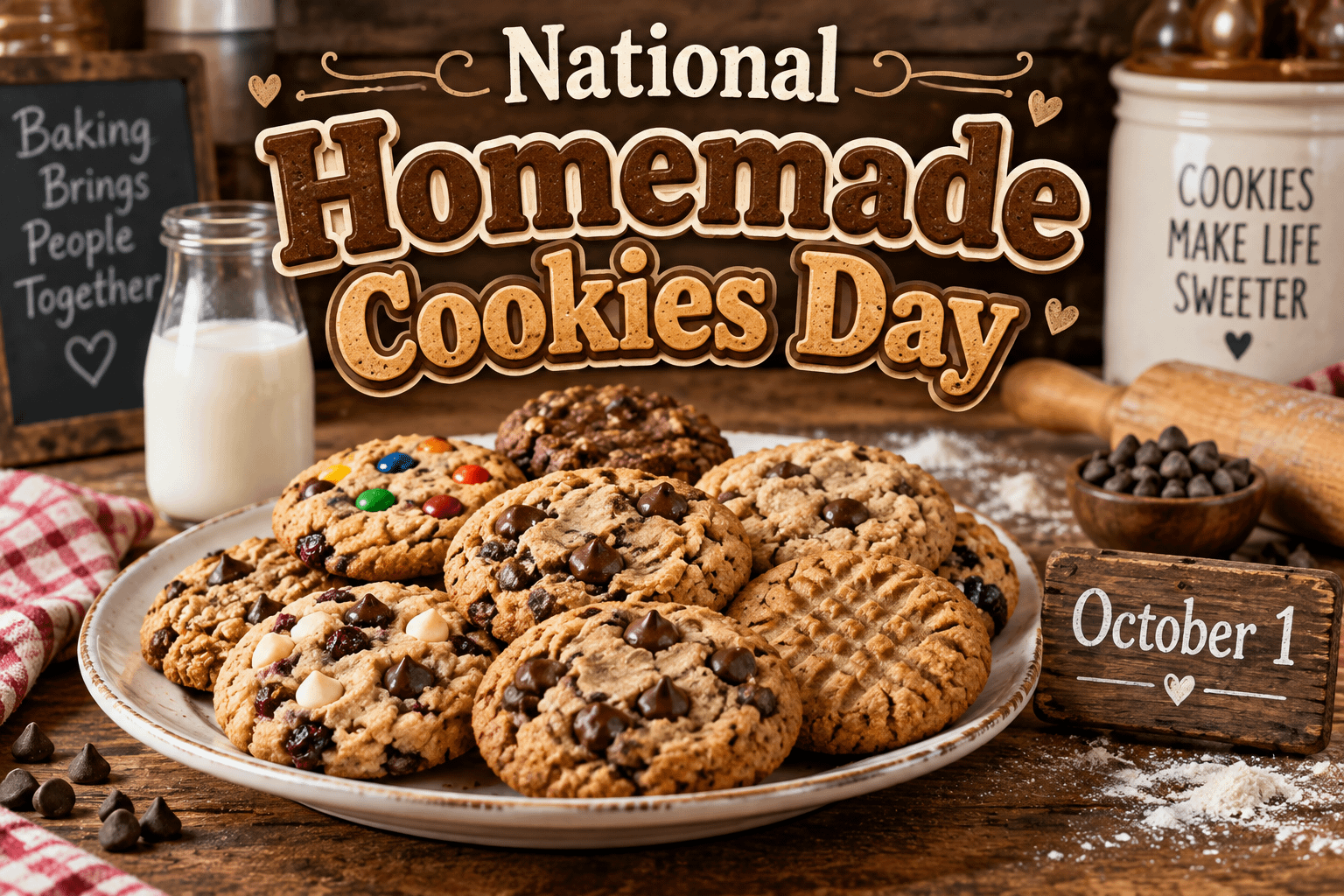
  • National Homemade Cookies Day – October 1

    National Homemade Cookies Day – October 1

    There is something special about the smell of homemade cookies baking in the oven. The warm scent of butter, sugar, vanilla, cinnamon, or chocolate can fill an entire house and instantly make it feel a little more comfortable. On October 1, National Homemade Cookies Day celebrates those simple treats made in our own kitchens and the memories that often come with them.

    Homemade cookies are about more than dessert. They can remind us of childhood afternoons, holidays spent with family, recipes handed down through generations, baking with our children, or simply sitting down with a warm cookie and a cold glass of milk.

    National Homemade Cookies Day is the perfect excuse to pull out a mixing bowl, preheat the oven, and make a batch from scratch.

    Why Homemade Cookies Are So Special

    You can walk into almost any grocery store and find an entire aisle filled with cookies. They are convenient and can certainly satisfy a craving, but homemade cookies have something packaged cookies cannot completely duplicate.

    Part of the experience is making them.

    It begins with gathering the ingredients. Butter gets softened. Flour gets measured. Eggs are cracked into the bowl. Chocolate chips mysteriously disappear before making it into the dough.

    Then comes the anticipation.

    The cookie dough goes into the oven, and within minutes the smell begins traveling through the kitchen and into the rest of the house.

    Finally, the oven door opens and a tray of freshly baked cookies comes out.

    Sometimes they are perfectly round.

    Sometimes they spread into each other.

    Sometimes one batch gets a little too crispy around the edges.

    And sometimes they look nothing like the picture in the recipe.

    It doesn’t really matter.

    They are homemade.

    Cookies Can Carry Memories

    Food has an incredible ability to connect us to memories, and cookies are particularly good at it.

    Think about the cookies you remember from childhood.

    Maybe a parent or grandparent had a cookie jar that always seemed to be full. Perhaps there was one particular cookie that appeared every Christmas. Maybe you remember standing on a chair next to the kitchen counter helping someone mix the dough.

    Sometimes a single bite can bring those memories rushing back.

    Recipes can also become part of a family’s history. A handwritten cookie recipe tucked inside an old cookbook might not look particularly valuable to anyone else, but to the family that owns it, that piece of paper can be priceless.

    The handwriting itself can become a connection to someone we love.

    That is one of the beautiful things about homemade food.

    Recipes can outlive the people who originally made them.

    When we continue making those recipes, we continue a small part of their story.

    The Chocolate Chip Cookie

    If there is one cookie that deserves a place of honor on National Homemade Cookies Day, it might be the chocolate chip cookie.

    The combination is beautifully simple: buttery cookie dough filled with pieces of chocolate.

    Yet small changes can produce dramatically different cookies.

    Some people love thin, crispy chocolate chip cookies.

    Others want them thick and chewy.

    Some want a soft center with slightly crispy edges.

    Then there are endless additions.

    Walnuts.

    Pecans.

    White chocolate.

    Dark chocolate.

    Peanut butter chips.

    Caramel pieces.

    Toffee.

    A sprinkle of sea salt.

    Everyone seems to have an opinion about what makes the perfect chocolate chip cookie, which is part of the fun.

    More Homemade Cookies Worth Baking

    Of course, chocolate chip cookies are only the beginning.

    National Homemade Cookies Day gives you permission to explore practically every corner of the cookie jar.

    There are classic peanut butter cookies, often recognizable by the crisscross fork pattern pressed across the top.

    Oatmeal raisin cookies combine chewy oats with sweet raisins and warm spices such as cinnamon.

    Sugar cookies provide a simple buttery canvas that can be decorated with frosting and sprinkles.

    Snickerdoodles roll soft cookie dough in cinnamon sugar before baking.

    Double chocolate cookies are perfect when ordinary chocolate chips simply aren’t enough chocolate.

    You could also bake shortbread, ginger cookies, molasses cookies, oatmeal chocolate chip cookies, thumbprint cookies, macadamia nut cookies, lemon cookies, coconut cookies, or classic butter cookies.

    And then there are the family recipes that don’t necessarily have famous names.

    Those may be the best cookies of all.

    A Simple Homemade Chocolate Chip Cookie Recipe

    If you want to celebrate National Homemade Cookies Day with a classic, try making a basic batch of chocolate chip cookies.

    Ingredients

    • 2¼ cups all-purpose flour
    • 1 teaspoon baking soda
    • ½ teaspoon salt
    • 1 cup softened butter
    • ¾ cup granulated sugar
    • ¾ cup packed brown sugar
    • 2 large eggs
    • 2 teaspoons vanilla extract
    • 2 cups semisweet chocolate chips

    Directions

    Preheat your oven to 375°F.

    Combine the flour, baking soda, and salt in a bowl and set it aside.

    In a separate large mixing bowl, cream together the softened butter, granulated sugar, and brown sugar until smooth and fluffy.

    Beat in the eggs one at a time, then mix in the vanilla.

    Gradually add the dry ingredients to the butter mixture until a cookie dough forms.

    Fold in the chocolate chips.

    Drop rounded spoonfuls of dough onto an ungreased or parchment-lined baking sheet, leaving enough room between cookies for them to spread.

    Bake for approximately 8–11 minutes, depending on the size of the cookies and how soft or crispy you prefer them.

    Remove the cookies when the edges are lightly golden but the centers still look slightly soft.

    Allow them to cool on the baking sheet for a few minutes before transferring them to a cooling rack.

    Then comes the hardest part:

    Trying not to eat half the batch while they’re still warm.

    Make the Cookies Your Own

    One advantage of baking at home is that you control what goes into your cookies.

    Start with a basic recipe and experiment.

    Replace some chocolate chips with chopped pecans.

    Add white chocolate and dried cranberries.

    Mix chocolate chips with peanut butter chips.

    Add crushed pretzels for a salty crunch.

    Try caramel pieces with a small sprinkle of flaky salt.

    Add cinnamon or another favorite spice.

    You can even divide one batch of dough into several bowls and make different variations from the same recipe.

    Baking doesn’t always have to be about following a recipe perfectly. Once you understand the basics, experimenting can be half the fun.

    Bake Cookies With Your Children or Grandchildren

    National Homemade Cookies Day can also become an opportunity to spend time together.

    Children don’t care if every cookie is perfectly shaped.

    In fact, the mess might become their favorite part.

    Let them measure ingredients, pour chocolate chips into the bowl, stir the dough, use cookie cutters, or decorate finished cookies.

    There will probably be flour on the counter.

    There might be sprinkles on the floor.

    Someone will probably try to sneak cookie dough.

    That’s okay.

    Years from now, nobody is going to remember whether the kitchen stayed perfectly clean.

    They might remember baking cookies together.

    Those ordinary moments often become some of our most meaningful memories.

    Share a Batch With Someone

    Cookies are also one of the easiest foods to share.

    You don’t need a special occasion.

    Bake an extra dozen and bring them to a neighbor.

    Take some to work.

    Give them to a teacher, first responder, caregiver, friend, or family member.

    Bring cookies to a community gathering.

    Surprise someone who has been having a difficult week.

    You don’t need an expensive gift or elaborate presentation. A small container filled with homemade cookies and a handwritten note can communicate something very simple:

    I was thinking about you.

    Sometimes that is exactly what someone needs.

    Host a Homemade Cookie Exchange

    Another fun way to celebrate October 1 is by organizing a cookie exchange.

    Ask several friends, relatives, neighbors, or coworkers to bake their favorite cookies. Everyone brings enough to share, and each person leaves with an assortment.

    You could even ask participants to bring copies of their recipes.

    Suddenly National Homemade Cookies Day becomes more than a food holiday. It becomes an opportunity for people to connect.

    You might even discover a new favorite cookie.

    Cookies and the Beginning of Fall

    The October 1 date makes National Homemade Cookies Day especially appropriate.

    Fall has arrived.

    Temperatures begin cooling in many parts of the country. Pumpkin, cinnamon, apples, maple, caramel, pecans, and other autumn flavors start returning to our kitchens.

    It’s the beginning of baking season.

    Try making fall-inspired cookies with ingredients such as pumpkin puree, cinnamon, nutmeg, maple, apple pieces, caramel, toasted pecans, or brown butter.

    Pair warm cookies with apple cider, coffee, hot chocolate, tea, or a cold glass of milk.

    Sometimes happiness really can be that simple.

    Homemade Doesn’t Have to Mean Perfect

    Social media can make cooking and baking look intimidating.

    Every cookie appears perfectly shaped. Every dessert looks professionally decorated. Every kitchen seems spotless.

    Real kitchens don’t always work that way.

    Cookies burn.

    Dough sticks.

    Flour gets everywhere.

    The first batch might spread too much.

    You might forget an ingredient.

    Your cookies might look completely different from the recipe photograph.

    Bake them anyway.

    National Homemade Cookies Day isn’t about producing bakery-window perfection.

    It’s about making something.

    Create Your Own Family Cookie Tradition

    Consider using National Homemade Cookies Day to begin a tradition that happens every October 1.

    Maybe everyone in the family chooses one cookie.

    Perhaps you try a completely new recipe every year.

    You could start a family cookie cookbook and add one new recipe each National Homemade Cookies Day.

    Write down who chose the recipe, whether everyone liked it, and any changes you made.

    Over the years, those pages will become more than recipes.

    They will become memories.

    You may eventually have children or grandchildren flipping through the book and discovering cookies that were first baked decades earlier.

    That’s how simple traditions grow.

    How to Celebrate National Homemade Cookies Day

    There are plenty of ways to enjoy the day. Bake your favorite cookies from scratch, try a recipe you’ve never made before, recreate a family recipe, invite your children or grandchildren into the kitchen, organize a cookie exchange, or deliver a batch to someone who could use a surprise.

    You can also ask friends and family members about the cookies they remember growing up. You might uncover an old recipe or family story you have never heard before.

    And, of course, you can simply bake a dozen cookies, pour yourself something to drink, sit down, and enjoy one while it’s still warm.

    No complicated celebration required.

    A Sweet Way to Begin October

    National Homemade Cookies Day arrives at just the right time.

    October brings cooler evenings, changing leaves, fall gatherings, Halloween preparations, and the beginning of a season filled with food traditions.

    A warm batch of cookies feels right at home.

    But perhaps the best thing about homemade cookies isn’t the chocolate, sugar, butter, frosting, or sprinkles.

    It’s what happens around them.

    Conversations happen while cookies bake.

    Children learn recipes from parents and grandparents.

    Old traditions continue.

    New traditions begin.

    Neighbors become friends.

    Someone having a difficult day receives an unexpected container of cookies.

    And sometimes we simply get twenty quiet minutes in the kitchen to make something with our own hands.

    That is worth celebrating.

    So on October 1, preheat the oven, pull out your favorite recipe, and celebrate National Homemade Cookies Day.

    Make chocolate chip cookies. Bake your grandmother’s recipe. Experiment with something completely new. Share a batch with someone you care about.

    And don’t worry if they’re not perfect.

    Homemade rarely is.

    That’s part of what makes it special.

    What homemade cookie would you choose if you could have a warm batch coming out of the oven right now?

  • World Sake Day: Celebrating Japan’s Iconic Drink on October 1

    World Sake Day: Celebrating Japan’s Iconic Drink on October 1

    Every year on October 1, sake lovers, brewers, restaurants, and Japanese culture enthusiasts come together to celebrate World Sake Day, also known as Nihonshu no Hi or Sake Day.

    It is a day dedicated to one of Japan’s most recognizable traditional beverages and the centuries of craftsmanship behind it. From small family-run breweries to modern sake producers experimenting with new techniques and flavors, sake represents a fascinating combination of history, agriculture, craftsmanship, and culture.

    World Sake Day is also an opportunity for people who have never tried sake to learn more about what it actually is.

    Although sake is sometimes called “rice wine,” its production process is considerably different from winemaking. Sake is brewed from rice, water, yeast, and koji, a specially cultivated mold that helps convert the rice’s starches into sugars that yeast can ferment.

    That unusual brewing process gives sake its distinctive character and allows brewers to produce an enormous variety of styles.

    Whether you already appreciate a chilled glass of premium sake or you are simply curious about Japanese food and culture, October 1 is the perfect occasion to discover something new.

    What Is World Sake Day?

    World Sake Day is celebrated annually on October 1.

    In Japan, the occasion is commonly known as Nihonshu no Hi, which can be translated as “Sake Day.”

    The observance was established by the Japan Sake and Shochu Makers Association in 1978 as a celebration of sake and the people responsible for producing it.

    October also traditionally marks an important period in Japan’s sake-making calendar. Historically, the beginning of October was associated with the start of the brewing season following the rice harvest.

    Today, World Sake Day has expanded beyond Japan.

    Sake breweries, Japanese restaurants, bars, cultural organizations, and sake enthusiasts around the world celebrate with tastings, dinners, educational events, brewery tours, and special releases.

    A Drink With Centuries of History

    Sake has an incredibly long history in Japan.

    Its exact origins are difficult to pinpoint because fermented rice beverages existed in different forms centuries before modern sake developed.

    Over generations, Japanese brewers gradually improved their techniques for polishing rice, cultivating koji, managing fermentation, filtering the finished beverage, and controlling temperature.

    Brewing eventually became a highly specialized craft.

    Traditionally, the person responsible for overseeing the brewing process is known as a toji, or master brewer.

    The toji works with a brewing team to manage every stage of production. Temperature, water quality, rice preparation, koji development, fermentation, and timing can all influence the final sake.

    Modern technology has made the process more precise, but many breweries continue to preserve traditions passed down through generations.

    That connection between old and new is one of the most interesting things about sake.

    How Sake Is Made

    Sake begins with surprisingly simple ingredients:

    Rice, water, koji, and yeast.

    Turning those ingredients into sake, however, requires considerable skill.

    The process generally begins by polishing rice.

    Ordinary table rice retains most of the outside portion of the grain. Rice intended for premium sake may be polished considerably further.

    Removing the outer layers can reduce proteins, fats, and other components that influence flavor.

    After polishing, the rice is washed, soaked, and steamed.

    A portion of the steamed rice is then used to produce koji.

    Koji plays an essential role because yeast cannot directly ferment the starch contained in rice. Koji enzymes break those starches into sugars.

    The yeast then converts the available sugars into alcohol.

    One of sake’s most fascinating characteristics is that these processes can occur simultaneously during fermentation.

    This technique is known as multiple parallel fermentation.

    After fermentation, the sake is typically pressed to separate the liquid from the remaining rice solids. Depending on the style, it may then be filtered, pasteurized, diluted, matured, or bottled.

    Small differences throughout this process can create dramatically different results.

    Understanding Different Types of Sake

    Walking into a sake shop or looking at a Japanese restaurant’s sake menu can initially feel overwhelming.

    Terms such as Junmai, Ginjo, Daiginjo, Nigori, and Honjozo may be unfamiliar.

    Learning a few basic categories makes exploring sake much easier.

    Junmai

    Junmai sake is produced from rice, water, koji, and yeast without added distilled brewing alcohol.

    These sakes can vary considerably, but many have rich, savory, or rice-forward characteristics.

    Ginjo

    Ginjo is a premium category produced using rice that has been polished to a greater degree.

    Ginjo sake is often associated with delicate aromas and flavors that can include fruit, flowers, herbs, or subtle sweetness.

    Daiginjo

    Daiginjo generally represents an even higher level of rice polishing and careful brewing.

    These sakes can be exceptionally aromatic, elegant, and refined.

    Because their flavors can be delicate, many people prefer drinking premium Daiginjo sake slightly chilled.

    Honjozo

    Honjozo sake contains a small amount of distilled brewing alcohol added during production.

    This isn’t necessarily done to make the beverage significantly stronger. The addition can help extract aromatic compounds and create a lighter, smoother drinking experience.

    Nigori

    Nigori sake is recognizable by its cloudy appearance.

    It contains fine rice particles that remain after coarse filtration.

    Nigori can have a creamy texture and may taste sweeter than many clear sake styles, although sweetness varies considerably between producers.

    Sparkling Sake

    Sparkling sake has become increasingly popular.

    These beverages contain carbonation and are often lighter and sweeter than traditional sake, making them approachable for people trying sake for the first time.

    Hot or Cold?

    One of the most common questions about sake is whether it should be served hot or cold.

    The answer is:

    It depends on the sake.

    Some varieties are best enjoyed chilled because cooler temperatures help preserve their delicate aromas.

    Others can become richer and more comforting when gently warmed.

    Some sake can even be enjoyed at room temperature.

    Rather than assuming that all premium sake should be cold or all traditional sake should be hot, consider the brewer’s recommendation.

    Experimenting with temperature can be part of the experience.

    Try the same sake chilled and then slightly warmer. You may be surprised by how dramatically its aroma, texture, and flavor change.

    Sake and Food

    Another reason sake has attracted fans around the world is its versatility with food.

    Sushi and sashimi are obvious combinations, but sake can accompany considerably more than Japanese cuisine.

    Depending on the style, sake may complement:

    • Sushi and sashimi
    • Grilled seafood
    • Tempura
    • Yakitori
    • Ramen
    • Teriyaki dishes
    • Dumplings
    • Roasted vegetables
    • Chicken
    • Pork
    • Steak
    • Cheese
    • Chocolate
    • Fruit-based desserts

    The enormous range of sake styles makes experimentation worthwhile.

    A light, aromatic sake may pair beautifully with seafood, while a fuller-bodied Junmai can stand alongside richer foods.

    The goal does not have to be finding a technically “perfect” pairing.

    Sometimes the best pairing is simply the combination you enjoy.

    The Importance of Rice and Water

    Two of sake’s simplest ingredients are also among its most important.

    Different varieties of rice are cultivated specifically for sake production. These are often called sakamai, or sake rice.

    One of the best-known varieties is Yamada Nishiki, which is highly regarded by many brewers.

    Water is equally important.

    Sake is primarily water, and breweries historically developed around locations with reliable access to suitable water sources.

    Mineral composition can affect fermentation and influence the character of the finished sake.

    This means that sake can reflect where it was produced in subtle ways.

    The Meaning of “Kanpai”

    If you celebrate World Sake Day with friends, you may hear someone say:

    Kanpai!

    It is the Japanese equivalent of saying “Cheers!”

    Sharing sake can be about more than simply drinking alcohol. In Japan, sake has long appeared in celebrations, ceremonies, festivals, meals, and important social occasions.

    That cultural connection is one reason World Sake Day isn’t merely another drinking holiday.

    It celebrates the traditions surrounding the beverage as well.

    How to Celebrate World Sake Day

    There are many ways to enjoy October 1.

    You could visit a Japanese restaurant and order a sake you have never tried before. Ask about the different styles available and see what pairs well with your meal.

    Another option is organizing a small sake tasting.

    Choose three or four different styles and compare them side by side. You might select a Junmai, Ginjo, Daiginjo, and Nigori.

    Pay attention to:

    Appearance: Is it clear, cloudy, or sparkling?

    Aroma: Do you notice fruit, flowers, rice, herbs, or something else?

    Flavor: Is it dry, sweet, savory, rich, or delicate?

    Texture: Does it feel light, creamy, smooth, or full-bodied?

    You can also celebrate without drinking.

    World Sake Day is an excellent opportunity to learn about Japanese brewing traditions, watch a documentary about sake production, explore Japanese cuisine, or read about the history of breweries in different regions of Japan.

    Visit a Sake Brewery

    If you have the opportunity, visiting a sake brewery can provide an entirely different appreciation for the beverage.

    Seeing polished rice, steaming equipment, fermentation tanks, koji rooms, and the people responsible for production makes it easier to understand the work involved.

    Many breweries in Japan welcome visitors, while sake breweries have also appeared in other countries as interest in the beverage has expanded internationally.

    A brewery tour can turn something you previously thought of as simply a drink into a lesson in chemistry, agriculture, history, and craftsmanship.

    Sake Continues to Evolve

    Tradition remains extremely important in the sake industry, but that does not mean brewers have stopped experimenting.

    Modern producers are exploring different yeast strains, rice varieties, fermentation techniques, aging methods, sparkling styles, lower-alcohol varieties, and creative approaches to serving sake.

    Bartenders have also begun incorporating sake into cocktails.

    This innovation introduces sake to people who might never have ordered a traditional serving.

    The interesting part is watching centuries of brewing knowledge interact with modern tastes.

    Sake doesn’t have to choose between tradition and innovation.

    It can embrace both.

    Supporting the People Behind the Bottle

    World Sake Day is also an opportunity to recognize the farmers, brewers, distributors, restaurant workers, educators, and others who keep sake culture alive.

    Every bottle represents a chain of people.

    Rice must be cultivated.

    Brewers must transform it.

    Distributors bring bottles to new markets.

    Restaurants introduce customers to different varieties.

    Educators help people understand what they are drinking.

    And sake enthusiasts keep exploring and sharing their discoveries.

    When you find a sake you enjoy, take a moment to learn about the brewery that produced it.

    There is often an interesting story behind the label.

    Drink Responsibly

    Because sake is smooth and often served in small cups, it can be easy to underestimate its alcohol content.

    Many traditional sakes are around 15–16% alcohol by volume, although strength varies.

    Small cups do not mean the beverage is weak.

    Enjoy sake slowly, drink water alongside it, eat while drinking, understand your limits, and never drive after consuming alcohol.

    World Sake Day should be about appreciating the beverage and its culture—not excessive drinking.

    A Toast to World Sake Day

    World Sake Day on October 1 offers an opportunity to discover one of Japan’s most fascinating culinary traditions.

    Behind every glass is a remarkable process involving rice, water, koji, yeast, fermentation, patience, and generations of accumulated knowledge.

    You don’t need to be a sake expert to participate.

    Try a style you have never tasted.

    Pair sake with a favorite meal.

    Learn about a Japanese brewery.

    Discover how sake is produced.

    Or simply raise a glass with friends and appreciate the people and traditions behind it.

    The world of sake is far more diverse than many people realize, and World Sake Day provides the perfect excuse to explore it.

    Kanpai!

    How will you celebrate World Sake Day this October 1?

  • Sausage Day: Celebrating One of the World’s Most Versatile and Flavorful Foods

    Sausage Day: Celebrating One of the World’s Most Versatile and Flavorful Foods

    Few foods can match the incredible variety, history, and comforting flavor of sausage. From a sizzling breakfast link beside eggs and pancakes to a bratwurst fresh from the grill, sausage has earned a place at tables around the world.

    Sausage Day is the perfect opportunity to celebrate this incredibly versatile food and perhaps try a variety you have never tasted before. Sausage can be grilled, smoked, baked, fried, simmered, sliced into casseroles, added to pasta, piled onto sandwiches, or served alongside your favorite breakfast foods.

    Whether you prefer spicy Italian sausage, smoky kielbasa, traditional bratwurst, breakfast sausage, chicken sausage, or another regional favorite, there is no shortage of ways to celebrate.

    A Food With an Ancient History

    Sausage might feel like an everyday modern food, but the idea behind it is thousands of years old.

    Before refrigeration existed, people needed reliable methods for preserving meat. Salting, drying, smoking, and curing became important techniques that allowed meat to last longer. Sausage provided another practical solution because smaller pieces of meat could be combined with salt, herbs, spices, and other ingredients before being preserved.

    Over generations, sausage making evolved from a practical method of food preservation into a culinary tradition.

    Different regions developed their own recipes based on the meats, spices, herbs, and preservation techniques available locally. That is one reason there are now so many different types of sausage around the world.

    Sausage tells a culinary story.

    The seasonings inside a sausage can often tell you something about where the recipe originated and the people who created it.

    Sausage Around the World

    One of the most interesting things about sausage is how many cultures have created their own versions.

    Germany is particularly famous for its sausages, including bratwurst and numerous regional specialties. Bratwurst is commonly made with pork, beef, veal, or combinations of meats and seasonings.

    Poland is known for kielbasa, a broad term associated with Polish sausages. Different varieties may be fresh, cooked, smoked, or dried.

    Italy has given us many flavorful sausages, including the Italian sausage commonly found in American supermarkets. Sweet or mild Italian sausage often features fennel or anise-like flavors, while hot versions add red pepper for extra heat.

    Spain and Portugal have their own traditions involving chorizo and other seasoned sausages. Different styles can have dramatically different flavors depending on how they are seasoned, cured, smoked, and prepared.

    The United States has also developed strong regional sausage traditions influenced by generations of immigrants and local food cultures.

    Louisiana is famous for andouille, particularly in Cajun and Creole cooking. Andouille adds smoky, savory flavor to dishes such as gumbo and jambalaya.

    Throughout the country, you can also find breakfast sausage, smoked sausage, hot links, bratwurst, Italian sausage, chicken sausage, turkey sausage, and countless specialty varieties.

    Why Sausage Became So Popular

    Part of sausage’s popularity comes from its versatility.

    You can serve it for breakfast, lunch, or dinner. Depending on the recipe, sausage can be the centerpiece of a meal or simply an ingredient that adds additional flavor.

    For breakfast, sausage pairs naturally with eggs, biscuits, pancakes, waffles, potatoes, and gravy.

    At lunch, sliced or grilled sausage works wonderfully in sandwiches, wraps, soups, and salads.

    For dinner, sausage can become part of pasta dishes, casseroles, rice dishes, pizzas, stews, sheet-pan meals, and grilled dinners.

    It also works beautifully at backyard cookouts.

    Put sausages on the grill, set out buns and toppings, and everyone can create their own combination.

    The Classic Grilled Sausage

    Sometimes the simplest preparation is one of the best.

    A hot sausage straight from the grill has everything you need: a flavorful exterior, juicy interior, and smoky aroma.

    Serve it inside a toasted bun and the possibilities become almost endless.

    Try toppings such as grilled onions, sautéed peppers, mustard, sauerkraut, relish, cheese, jalapeños, barbecue sauce, or caramelized onions.

    You can even create a sausage bar for a party.

    Grill several varieties of sausage and provide different buns, cheeses, sauces, vegetables, and toppings. Guests can build their own creations and experiment with combinations they might not normally try.

    Sausage and Peppers

    One classic way to enjoy sausage is with peppers and onions.

    Italian sausage works particularly well for this dish.

    Cook sliced onions and bell peppers until they begin to soften and caramelize. Add cooked sausage and allow everything to finish together so the flavors combine.

    Serve the mixture by itself, over rice, with pasta, or inside a toasted roll.

    For extra flavor, add garlic, Italian seasoning, crushed red pepper, or a little tomato sauce.

    It is simple comfort food that can easily feed a family.

    Sausage for Breakfast

    Breakfast sausage deserves its own celebration.

    There is something satisfying about the combination of savory sausage and traditional breakfast favorites.

    Try sausage alongside scrambled eggs and toast, or make a breakfast sandwich with sausage, egg, and cheese.

    You can also crumble cooked sausage into breakfast potatoes or use it in an omelet.

    For a larger family breakfast, make a breakfast casserole using sausage, eggs, cheese, potatoes, or bread.

    And then there is sausage gravy.

    A generous serving of creamy sausage gravy poured over warm biscuits is classic American comfort food.

    Sausage and Pasta

    Sausage can completely transform a simple pasta dinner.

    Remove Italian sausage from its casing, crumble it into a skillet, and cook it thoroughly. Add garlic, onions, tomatoes, tomato sauce, or cream depending on the type of pasta you want to create.

    Combine everything with pasta and finish with Parmesan cheese.

    You can also add spinach, mushrooms, peppers, broccoli, or zucchini.

    Spicy sausage provides extra heat, while mild sausage creates a more traditional savory flavor.

    Sausage and Potatoes

    Few combinations are as comforting as sausage and potatoes.

    Cut potatoes into bite-sized pieces and roast them with sliced sausage, onions, and peppers.

    Season everything with garlic, black pepper, paprika, or your favorite herb blend.

    You have a complete dinner on one pan with relatively little cleanup.

    It is also an easy recipe to customize. Add carrots, Brussels sprouts, green beans, sweet potatoes, or whatever vegetables you already have available.

    Pizza and Sausage

    Sausage is also one of the classic pizza toppings.

    Crumbled Italian sausage works especially well with mozzarella and tomato sauce.

    Pair it with mushrooms, onions, peppers, olives, pepperoni, or jalapeños.

    You could celebrate Sausage Day by making homemade pizza and allowing everyone to build their own.

    Start with pizza dough, sauce, cheese, cooked sausage, and a selection of toppings. Then let everyone create their perfect combination.

    Try Something Different

    Sausage Day does not have to be limited to familiar favorites.

    Use the occasion as an excuse to explore.

    Visit a butcher shop, international grocery store, farmers market, or specialty food store and look for sausages you have never tried.

    You might discover a new favorite.

    Depending on what is available in your area, you could find sausages seasoned with garlic, herbs, peppers, cheese, fruit, wine, smoke, or unique spice combinations.

    There are also many chicken, turkey, and plant-based sausage options for people who want alternatives to traditional pork or beef sausage.

    Host a Sausage Tasting

    If you want to make Sausage Day more interesting, turn dinner into a tasting event.

    Choose several different varieties and cook small portions of each.

    For example, you could serve bratwurst, kielbasa, Italian sausage, chicken sausage, andouille, and another specialty sausage.

    Slice each one into bite-sized pieces and serve them with several mustards, sauces, cheeses, breads, pickles, sauerkraut, peppers, and onions.

    Then everyone can decide which variety they like best.

    It is an easy way to turn an ordinary dinner into something memorable.

    Build the Ultimate Sausage Sandwich

    Another fun way to celebrate is by creating your ultimate sausage sandwich.

    Start with a grilled sausage and a sturdy roll.

    Then start building.

    Add grilled peppers and onions for a classic combination. Melt provolone or mozzarella over the top. Add spicy mustard for some bite or barbecue sauce for sweetness.

    For extra heat, add jalapeños or hot peppers.

    You could even top your sausage with chili and cheese for an especially hearty meal.

    There really are no rules. The fun is creating something you enjoy.

    Make Homemade Sausage

    For adventurous home cooks, Sausage Day could also be an opportunity to learn about sausage making.

    Traditional sausage making can involve grinding meat, combining it with seasonings, and stuffing the mixture into casings. Because raw meat requires careful handling, food-safety practices and appropriate cooking temperatures are essential.

    But you do not necessarily need sausage-making equipment to experiment with flavors.

    Homemade breakfast sausage patties can be made by combining ground meat with seasonings and shaping the mixture into patties.

    Common seasonings might include sage, thyme, black pepper, garlic, and other herbs and spices.

    It gives you control over the flavor and allows you to experiment with your own recipe.

    Supporting Local Butchers and Sausage Makers

    Sausage Day can also be an opportunity to support local businesses.

    Independent butcher shops and specialty meat markets often make sausages using their own recipes.

    You might find combinations that are completely different from supermarket varieties.

    Ask what they make in-house and whether they have a specialty or customer favorite.

    Trying locally made sausage supports a small business while giving you the opportunity to experience something unique to your community.

    A Food Made for Sharing

    Some foods naturally bring people together, and sausage is one of them.

    Think about backyard barbecues, baseball games, Oktoberfest celebrations, family breakfasts, holiday gatherings, camping trips, and neighborhood cookouts.

    Sausage frequently appears at meals where people are gathered around a table or grill enjoying each other’s company.

    That may be one of the best reasons to celebrate Sausage Day.

    Food does more than satisfy hunger. It can create traditions and memories.

    The smell of breakfast sausage cooking might remind someone of weekend mornings with their family. A bratwurst sizzling on the grill might bring back memories of summer cookouts. A pot of gumbo with smoky andouille might remind someone of home.

    Those connections are part of what makes food meaningful.

    Ways to Celebrate Sausage Day

    Celebrating can be as simple or elaborate as you want.

    Grill your favorite sausage for dinner. Make sausage and peppers. Cook a big breakfast with sausage and eggs. Try a sausage you have never eaten before. Make homemade pizza topped with sausage. Visit a local butcher shop. Host a cookout or sausage tasting with friends and family.

    You could also explore sausage traditions from another country and learn about the history behind them.

    Food becomes even more interesting when you understand the traditions and people connected to it.

    Celebrating the Flavor and Tradition of Sausage

    Sausage has traveled through centuries of culinary history while constantly changing along the way.

    What began partly as a practical way to use and preserve meat developed into thousands of recipes and traditions around the world.

    Today, sausage can be simple breakfast food, backyard barbecue fare, street food, or an essential ingredient in elaborate regional dishes.

    That incredible variety is exactly what makes Sausage Day worth celebrating.

    Fire up the grill, heat the skillet, or try a new recipe. Whether your favorite is bratwurst, Italian sausage, kielbasa, breakfast sausage, andouille, chicken sausage, or something completely different, enjoy the day with a meal that brings plenty of flavor to the table.

    What is your favorite type of sausage, and what is your favorite way to cook it?

  • National Pumpkin Spice Day: Celebrating the Flavor of Fall

    National Pumpkin Spice Day: Celebrating the Flavor of Fall

    There are certain flavors that instantly remind us of a season. Watermelon tastes like summer, peppermint brings thoughts of Christmas, and pumpkin spice has become one of the unmistakable flavors of fall.

    National Pumpkin Spice Day is a celebration of the warm, comforting blend of spices that has become a seasonal favorite in coffee shops, bakeries, kitchens, and homes across the country. From pumpkin spice lattes and muffins to pancakes, cookies, candles, and even creative savory dishes, pumpkin spice seems to appear everywhere once autumn arrives.

    For some people, the first pumpkin spice drink of the year is almost an unofficial announcement that fall has begun.

    But what exactly is pumpkin spice? Why did it become so popular? And how can you celebrate National Pumpkin Spice Day beyond ordering a latte?

    Pour yourself something warm and discover what makes this famous fall flavor so special.

    What Is Pumpkin Spice?

    Despite its name, traditional pumpkin spice doesn’t necessarily contain pumpkin.

    Pumpkin spice—often called pumpkin pie spice—is a mixture of warming spices traditionally associated with pumpkin pie. Recipes vary, but the blend commonly includes:

    • Cinnamon
    • Ginger
    • Nutmeg
    • Cloves
    • Allspice

    Cinnamon usually provides the dominant flavor, while ginger adds warmth and a little bite. Nutmeg contributes an earthy sweetness, and cloves and allspice provide deeper aromatic notes.

    When these spices are combined, they create the familiar aroma many people immediately associate with freshly baked pumpkin pie.

    Actual pumpkin can certainly be added to recipes, but pumpkin spice itself refers primarily to the spices.

    The Connection to Pumpkin Pie

    Long before pumpkin spice became a coffee-shop phenomenon, cooks were combining warming spices with pumpkin.

    Pumpkins have been an important food in North America for centuries. As pumpkin pies and similar dishes developed, cooks experimented with combinations of cinnamon, ginger, nutmeg, cloves, mace, and other spices.

    Over time, those flavors became closely connected with pumpkin desserts and autumn cooking.

    Commercially prepared pumpkin pie spice eventually made things easier for home cooks. Instead of measuring several individual spices every time they baked a pie, they could purchase one convenient blend.

    What began as a practical baking ingredient eventually became something much larger.

    How Pumpkin Spice Became a Fall Phenomenon

    Pumpkin spice’s modern popularity cannot be separated from coffee culture.

    Seasonal pumpkin-flavored coffee drinks helped transform a traditional baking spice into a cultural symbol of autumn. The pumpkin spice latte became especially influential during the early 2000s, and the flavor combination rapidly spread beyond coffee.

    Soon pumpkin spice could be found in everything from cereal and cookies to creamers, doughnuts, protein products, ice cream, and snack foods.

    The flavor even moved outside the kitchen.

    Pumpkin spice-inspired candles, soaps, air fresheners, lotions, and other scented products became part of the seasonal marketplace.

    At some point, pumpkin spice stopped being merely an ingredient.

    It became an experience.

    Why Do We Associate Pumpkin Spice With Fall?

    Part of pumpkin spice’s popularity comes from timing.

    The spices commonly used in the blend are warm, aromatic, and comforting. Their fragrances complement the cooler weather and traditional foods of autumn.

    Think about the experiences commonly associated with fall:

    Cool mornings.

    Changing leaves.

    Sweaters.

    Football games.

    Pumpkin patches.

    Halloween.

    Thanksgiving.

    Freshly baked pies.

    Hot coffee.

    Family gatherings.

    Pumpkin spice fits naturally into that atmosphere.

    There is also an emotional component. Smell and taste can become strongly connected to memories. A particular aroma may remind someone of Thanksgiving at a grandparent’s house, baking with their parents, visiting a pumpkin patch with their children, or enjoying coffee during a crisp autumn morning.

    Sometimes we aren’t simply enjoying a flavor.

    We’re revisiting a memory.

    The Famous Pumpkin Spice Latte

    If there is one beverage responsible for turning pumpkin spice into a modern phenomenon, it is the pumpkin spice latte.

    The basic idea combines espresso or coffee with milk, pumpkin-inspired flavors, warming spices, and sweetness. Depending on the recipe, actual pumpkin puree may also be included.

    The drink is frequently topped with whipped cream and another sprinkle of spice.

    You don’t need to visit a coffee shop to enjoy one, either.

    A simple homemade version can be created with brewed coffee, warmed milk, pumpkin puree, pumpkin pie spice, vanilla, and your preferred sweetener.

    Blend or whisk everything together and top it with whipped cream and cinnamon for an easy autumn treat.

    Pumpkin Spice Isn’t Just for Coffee

    Coffee may get most of the attention, but pumpkin spice works beautifully in many foods and beverages.

    Try adding a small amount to pancakes, waffles, oatmeal, French toast, muffins, banana bread, cheesecake, cookies, cinnamon rolls, smoothies, milkshakes, hot chocolate, or apple cider.

    It can even be sprinkled over roasted nuts or mixed into homemade granola.

    One of the easiest options is pumpkin spice oatmeal. Prepare your favorite oatmeal and stir in pumpkin puree, cinnamon or pumpkin spice, maple syrup, and chopped pecans.

    You get the flavors of fall without having to bake anything.

    Make Your Own Pumpkin Spice Blend

    You can also make pumpkin pie spice at home.

    A simple blend can be created by combining approximately:

    4 tablespoons ground cinnamon
    1 tablespoon ground ginger
    2 teaspoons ground nutmeg
    2 teaspoons ground allspice
    1 teaspoon ground cloves

    Mix the spices thoroughly and keep the blend in an airtight spice jar.

    The exact proportions aren’t sacred. If you love cinnamon, increase it. If you enjoy the bold flavor of cloves, add a little more. If nutmeg isn’t your favorite, reduce it.

    Creating your own blend lets you adjust the flavor to your preferences.

    Pumpkin Spice and Actual Pumpkin Are Different

    This is one of the biggest misconceptions surrounding pumpkin spice.

    Pumpkin spice is not pumpkin.

    Pumpkin provides a mild, earthy flavor and creamy texture. Pumpkin spice supplies the aromatic flavors people typically associate with pumpkin pie.

    They work especially well together, which explains why they have become so closely connected.

    You can make something pumpkin-flavored without pumpkin spice, and you can make something pumpkin-spiced without pumpkin.

    Combine the two, however, and you get the classic fall flavor most people recognize.

    Easy Ways to Celebrate National Pumpkin Spice Day

    National Pumpkin Spice Day gives you an excuse to embrace autumn and experiment with this famous seasonal flavor.

    Start your morning with pumpkin spice pancakes or oatmeal. Add a little pumpkin spice to your coffee. Bake pumpkin muffins or cookies in the afternoon. Make pumpkin spice hot chocolate after dinner.

    You could also organize a pumpkin spice tasting with friends or family.

    Choose several pumpkin spice foods and beverages and see which ones everyone prefers. Include traditional choices alongside unusual ones for a little fun.

    If baking is your thing, make a pumpkin pie, pumpkin bread, pumpkin cheesecake, or pumpkin spice cinnamon rolls.

    And if you’re ready for fall but don’t want anything sweet, simply light a pumpkin spice candle and enjoy the aroma.

    Pumpkin Spice Pairs Well With Other Fall Flavors

    Pumpkin spice doesn’t have to stand alone.

    It pairs particularly well with:

    Apple: Pumpkin spice can add warmth to apple pie, apple crisp, cider, and baked apples.

    Maple: Maple syrup and pumpkin spice work beautifully together in coffee, oatmeal, pancakes, and desserts.

    Caramel: Caramel adds richness and sweetness to pumpkin spice drinks and baked goods.

    Chocolate: Pumpkin spice and chocolate can create a surprisingly satisfying combination in cookies, brownies, cakes, and hot cocoa.

    Vanilla: Vanilla softens some of the stronger spices and adds another layer of sweetness.

    Pecans: Toasted pecans bring crunch and a nutty flavor that complements pumpkin beautifully.

    Experimenting with these combinations is one of the best parts of fall cooking.

    More Than a Seasonal Trend

    It’s easy to joke about how quickly pumpkin spice takes over stores every autumn.

    But underneath all the marketing is something remarkably simple.

    People enjoy traditions.

    Seasons give us natural opportunities to create them.

    Maybe your tradition is buying your first pumpkin spice latte when September arrives. Maybe it’s baking pumpkin bread with your children. Perhaps it’s visiting a pumpkin patch, carving pumpkins before Halloween, or making pumpkin pie for Thanksgiving.

    Those seemingly small traditions can become important memories.

    Years later, the smell of cinnamon and nutmeg may suddenly transport you back to those moments.

    That’s one reason seasonal foods can mean more than we expect.

    Celebrate the Comfort of Fall

    National Pumpkin Spice Day isn’t really about arguing over whether pumpkin spice is amazing or overrated.

    It’s an opportunity to enjoy one of autumn’s most recognizable flavors.

    Make something you’ve never tried before. Bake an old family recipe. Visit your favorite local coffee shop. Experiment with your own pumpkin spice blend. Invite friends over for dessert. Sit outside on a cool evening with a warm drink.

    Autumn doesn’t last forever.

    That may be exactly why its traditions feel special.

    Pumpkin spice has become part of those traditions for millions of people—a simple mixture of spices that somehow manages to bring thoughts of changing leaves, cozy evenings, family gatherings, and holidays still to come.

    So on National Pumpkin Spice Day, sprinkle a little cinnamon and nutmeg into something you love and enjoy one of the signature flavors of the season.

    What’s your favorite pumpkin spice treat—coffee, pumpkin pie, cookies, pancakes, or something completely different?

  • International Raccoon Appreciation Day: Celebrating One of Nature’s Most Clever Creatures

    International Raccoon Appreciation Day: Celebrating One of Nature’s Most Clever Creatures

    Every year on October 1, International Raccoon Appreciation Day gives us an opportunity to recognize one of the most intelligent, adaptable, and misunderstood animals living alongside humans.

    Raccoons are instantly recognizable by their gray fur, ringed tails, pointed faces, and distinctive black markings around their eyes. Those markings have earned them nicknames such as “masked bandits,” especially because raccoons have developed a reputation for sneaking into garbage cans, gardens, campsites, and anywhere else they might discover an easy meal.

    But there is much more to raccoons than their talent for finding food.

    International Raccoon Appreciation Day encourages people to learn about these fascinating animals, understand the important role they play in ecosystems, appreciate wildlife responsibly, and consider how humans and wild animals can coexist.

    What Is International Raccoon Appreciation Day?

    International Raccoon Appreciation Day is observed annually on October 1.

    The day is dedicated not only to raccoons but also to increasing awareness of animals that are sometimes misunderstood, considered pests, or overlooked because they live so close to human communities.

    Raccoons are particularly good representatives of this idea.

    As cities and suburbs have expanded into natural habitats, raccoons have learned how to survive remarkably well around people. They may live in forests, wetlands, agricultural areas, suburbs, parks, and even densely populated cities.

    Seeing a raccoon wandering through a neighborhood at night can make it seem like the animal has invaded our territory. In reality, humans and wildlife increasingly share the same landscapes.

    International Raccoon Appreciation Day is an opportunity to look beyond the overturned garbage can and appreciate the animal responsible for it.

    Meet the Raccoon

    The common raccoon, scientifically known as Procyon lotor, is native to North America.

    Perhaps its most famous feature is its black facial mask. Combined with its ringed tail, the mask makes a raccoon easy to identify.

    Adult raccoons vary considerably in size depending on their environment, available food, sex, and geographic location. They have compact bodies, thick fur, sensitive paws, sharp claws, and excellent climbing abilities.

    Their front paws are especially impressive.

    Raccoons can manipulate objects with surprising precision. Their highly sensitive paws allow them to investigate food, containers, openings, and unfamiliar objects.

    Anyone who has watched a raccoon carefully inspect something understands just how curious these animals can be.

    Why Do Raccoons Look Like They Are Washing Their Food?

    One of the most famous behaviors associated with raccoons is their habit of placing food or other objects into water.

    This behavior has sometimes been described as “washing” food.

    That description can be misleading.

    Raccoons have extremely sensitive front paws, and interacting with objects in or around water may help them gather additional sensory information. They are not necessarily cleaning dinner the way a person washes an apple before eating it.

    Their scientific name even reflects the behavior historically associated with them. Lotor relates to washing.

    The familiar image of a raccoon sitting near water and manipulating food with its paws has become one of the animal’s defining characteristics.

    Raccoons Are Excellent Problem Solvers

    One reason raccoons thrive in changing environments is their intelligence.

    They are naturally curious and capable problem solvers.

    A raccoon encountering a closed container may investigate different ways of getting inside. If food is available behind a barrier, the animal may explore openings, handles, lids, or weak points until it discovers a solution.

    Unfortunately for homeowners, that intelligence can make an ordinary garbage can look like a puzzle waiting to be solved.

    It is also why simply placing a loose lid over garbage may not be enough to discourage a determined raccoon.

    Their ability to learn and adapt has helped raccoons survive dramatic changes to their environment.

    Masters of Adaptation

    Many wild animals struggle when natural habitats are replaced by roads, buildings, neighborhoods, and commercial development.

    Raccoons have demonstrated an extraordinary ability to adjust.

    Urban and suburban areas can provide many things raccoons need: food, water, shelter, trees, gardens, storm drains, sheds, attics, crawl spaces, and other protected areas.

    Human garbage can also become an easy food source.

    A raccoon doesn’t understand that a garbage can belongs to someone. It simply smells food and investigates.

    That distinction is important because many conflicts between people and raccoons can be reduced by removing whatever is attracting the animals.

    Securing garbage cans, bringing pet food indoors, cleaning outdoor eating areas, protecting gardens, and blocking access to potential denning locations can make properties less attractive to wildlife.

    What Do Raccoons Eat?

    Raccoons are omnivores, meaning they eat both plant and animal matter.

    Their diets can vary greatly depending on their habitat and season.

    They may eat fruits, berries, nuts, seeds, insects, worms, eggs, aquatic animals, and other available foods. In developed areas, raccoons may also take advantage of unsecured garbage, pet food, compost, and other human-associated food sources.

    This flexible diet is another major reason they are so adaptable.

    Rather than depending on a single food source, raccoons can change their eating habits according to what is available.

    Their adaptability is impressive, but intentionally feeding wild raccoons isn’t a good way to celebrate them.

    Wild animals are generally better off when they maintain a natural distance from people.

    The Famous Raccoon Mask

    Why does a raccoon have that famous black mask?

    The markings certainly make raccoons memorable, but researchers have proposed different ideas about their function.

    One possibility is that dark fur surrounding the eyes could potentially reduce glare or contribute to visual performance under certain conditions. Facial markings can also have roles in recognition or communication in some animal species.

    Whatever evolutionary advantages contributed to the pattern, the raccoon’s mask has become an unmistakable part of its appearance.

    Add the striped tail and there aren’t many animals that look quite like it.

    Raccoons Are Mostly Active at Night

    Raccoons are generally nocturnal, which means much of their activity occurs after sunset.

    Nighttime gives them opportunities to search for food while avoiding some threats and human activity.

    Their senses help them navigate darkness while investigating their surroundings.

    However, seeing a raccoon during daylight does not automatically mean that it is sick or has rabies.

    Raccoons can sometimes be active during the day for perfectly ordinary reasons, including searching for food or caring for young.

    Behavior matters.

    An animal that appears severely disoriented, unusually aggressive, unable to move normally, or obviously injured should be avoided, and the appropriate local wildlife or animal-control authority can be contacted.

    Never approach or attempt to handle a wild raccoon.

    Baby Raccoons

    Young raccoons are commonly called kits.

    Female raccoons raise their young in protected denning locations. Natural dens can include tree cavities and other sheltered areas, while raccoons living around humans sometimes discover attics, chimneys, sheds, or similar structures.

    Young raccoons depend heavily on their mother during the early part of their lives.

    As they grow, they begin exploring their surroundings and learning the skills necessary for survival.

    A mother raccoon traveling with several young kits can be an unforgettable sight, but people should admire the family from a safe distance.

    A protective mother is still a wild animal.

    Raccoons Are Excellent Climbers

    Look at a raccoon’s paws and claws and you’ll understand why trees provide such useful escape routes.

    Raccoons are strong climbers.

    They can climb trees to escape danger, rest, investigate food sources, or access potential shelter.

    Their climbing abilities can also create problems around homes.

    Tree branches near roofs, unsecured openings, damaged vents, chimneys, and other access points can provide routes into structures.

    Preventing access is usually far easier than dealing with a raccoon that has already decided your attic is a comfortable place to live.

    Their Role in Nature

    Raccoons aren’t simply nighttime troublemakers.

    Like other wildlife, they are part of larger ecosystems.

    Because raccoons consume a wide variety of foods, their feeding behavior connects them to numerous plants and animals within their habitats. They can function as both predators and scavengers.

    Scavenging is particularly important in nature.

    Animals that consume available organic material participate in the movement of nutrients through ecosystems.

    Raccoons are also part of the food web themselves.

    Understanding an animal’s ecological role doesn’t mean pretending conflicts never happen. It means recognizing that wildlife has a place in natural systems even when sharing space with humans becomes complicated.

    How to Appreciate Raccoons Responsibly

    International Raccoon Appreciation Day isn’t an invitation to put food outside and wait for raccoons to arrive.

    One of the best ways to appreciate wildlife is to allow it to remain wild.

    You can celebrate responsibly by:

    • Learning more about raccoons and other native wildlife.
    • Observing wild animals from a safe distance.
    • Keeping garbage containers securely closed.
    • Bringing pet food and water inside when appropriate.
    • Avoiding intentional feeding of raccoons.
    • Teaching children to respect wildlife rather than approach it.
    • Supporting reputable wildlife rehabilitation and conservation organizations.
    • Protecting natural habitat in your community.
    • Checking your home for potential wildlife entry points.
    • Sharing accurate information about raccoons instead of spreading myths.

    Responsible appreciation protects both people and animals.

    If You See a Raccoon

    If you encounter a raccoon outside, the simplest response is usually to give it space.

    Do not corner it.

    Do not attempt to pet it.

    Do not encourage children or pets to approach it.

    Never try to capture an injured or strangely behaving raccoon with your bare hands.

    If there is a legitimate safety concern, contact local animal control, wildlife officials, or a licensed wildlife professional for guidance.

    Keeping pets appropriately supervised and their rabies vaccinations current is also an important part of reducing wildlife-related risks.

    Living Alongside Wildlife

    International Raccoon Appreciation Day represents something larger than appreciation for one animal.

    It reminds us that wildlife hasn’t disappeared simply because humans built cities.

    Coyotes, squirrels, foxes, birds, opossums, raccoons, deer, and countless smaller creatures continue trying to survive in landscapes that humans have dramatically altered.

    Sometimes those interactions are beautiful.

    Sometimes they’re inconvenient.

    And occasionally they can become dangerous.

    Successful coexistence requires understanding animal behavior while reducing opportunities for conflict.

    A securely closed garbage container might not sound like wildlife conservation, but preventing animals from becoming dependent on human food can make a meaningful difference.

    Fun Facts About Raccoons

    Here are a few reasons raccoons deserve a little extra appreciation:

    Their paws are incredibly sensitive. Their front paws help them investigate and manipulate their environment.

    They’re excellent climbers. Trees provide raccoons with escape routes and shelter opportunities.

    They’re adaptable eaters. Raccoons can consume many different foods depending on what is available.

    Their tails are distinctive. The alternating rings make the raccoon one of North America’s easiest mammals to recognize.

    They’re clever problem solvers. Their curiosity and ability to manipulate objects help them navigate challenging environments.

    They’ve adapted remarkably well to cities. Urban environments present dangers, but they also provide food and shelter opportunities that raccoons have learned to exploit.

    A baby raccoon is called a kit. Several kits may remain with their mother while learning how to survive.

    Why Raccoons Deserve Appreciation

    It is easy to appreciate majestic wildlife.

    People travel long distances hoping to see whales, bears, eagles, elephants, and other iconic animals.

    Sometimes the animals living right outside our doors receive much less admiration.

    Raccoons remind us that nature doesn’t exist only in wilderness areas.

    It exists in neighborhood trees.

    It walks along creeks behind shopping centers.

    It moves through parks after dark.

    And sometimes, yes, it tries to open the garbage can.

    Raccoons have survived alongside expanding human communities because they are intelligent, curious, resourceful, and adaptable.

    Those qualities deserve recognition.

    Celebrating International Raccoon Appreciation Day

    On October 1, take a moment to appreciate the masked nighttime visitors that have become such a familiar part of North American wildlife.

    Learn something new about them.

    Teach children why wild animals should be respected.

    Make your property less attractive to wildlife by securing potential food sources.

    Support organizations that protect wildlife and natural habitats.

    Most importantly, remember that appreciating a wild animal doesn’t require touching, feeding, or taming it.

    Sometimes appreciation simply means understanding it.

    Raccoons may occasionally make a mess, steal something from a garden, or outsmart a supposedly secure garbage lid. But behind their mischievous reputation is an animal remarkably equipped to survive in a world constantly being changed by humans.

    International Raccoon Appreciation Day gives us the chance to see these familiar animals differently—not simply as masked bandits, but as intelligent and fascinating members of the natural world.

    What is the most memorable encounter you’ve ever had with a raccoon?